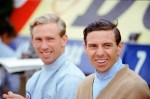
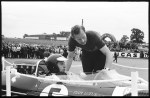
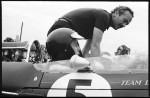
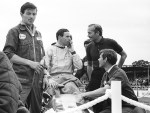
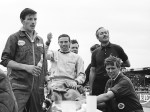
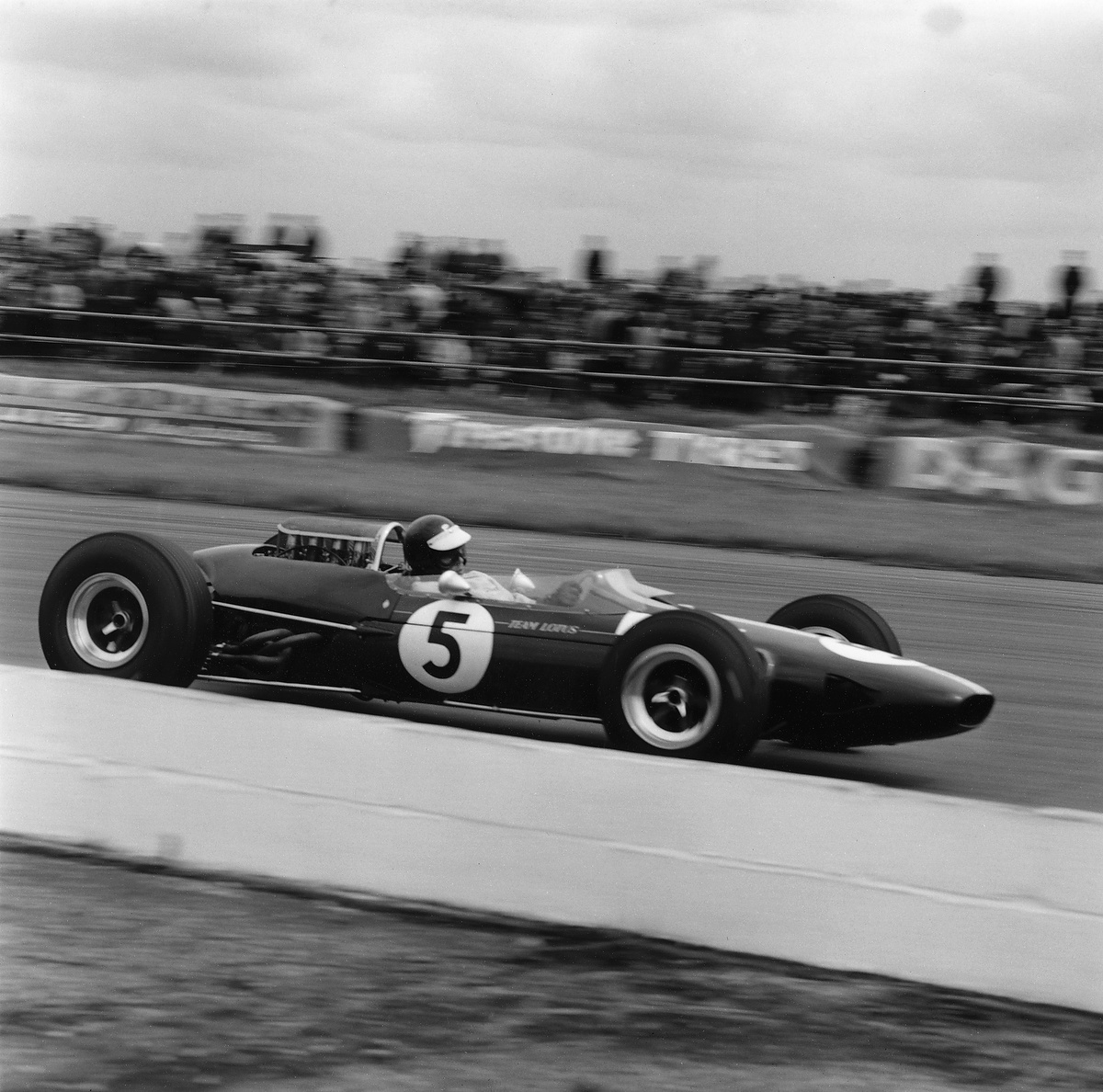
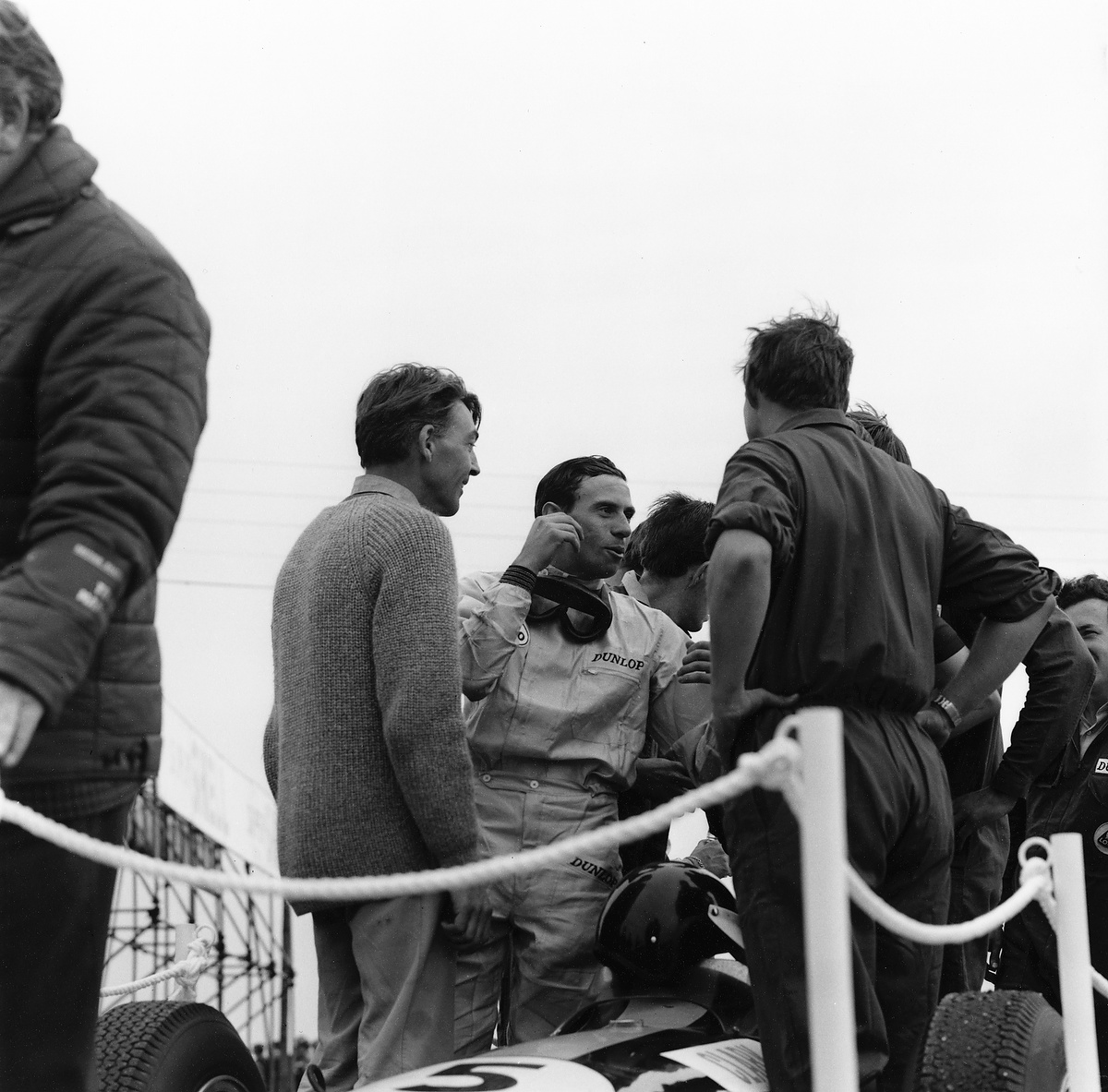
July 10, 1965. RAC British GP, Silverstone Jim Clark strolled onto the grid for the British GP wearing his fawn Sally Swart cardigan over his blue Dunlop overalls. As with all the drivers on all the cars that day, his name was big on the side of the car: “Clark”. In the red-upholstered seat of the 33B (now R11 again, with the four-valve Climax) sat his dark blue Bell Magnum with its crisp, white peak. For this race he chose tan kangaroo skin “Jim Clark” driving gloves (from a range that also included red and black). No-one in the Silverstone crowd denied they were about to see an absolute master again at work. It wouldn’t matter if the race was another Jim Clark walkover: that was as it should be. The home crowd accepted Clark for what he was – a quiet genius who was also a sheep farmer from the Borders. There were no complaints back then about the “lack of overtaking” or the “one or two place-changes” that would invariably characterise the race; in 1965, when the Beatles had yet to grow their hair long and Mini Coopers were genuinely mini – like the Mary Quant skirts – and the girls wore headscarves when they rode in open-topped MG Midgets, life was there to be touched, not consumed in ever-larger spoonfuls.
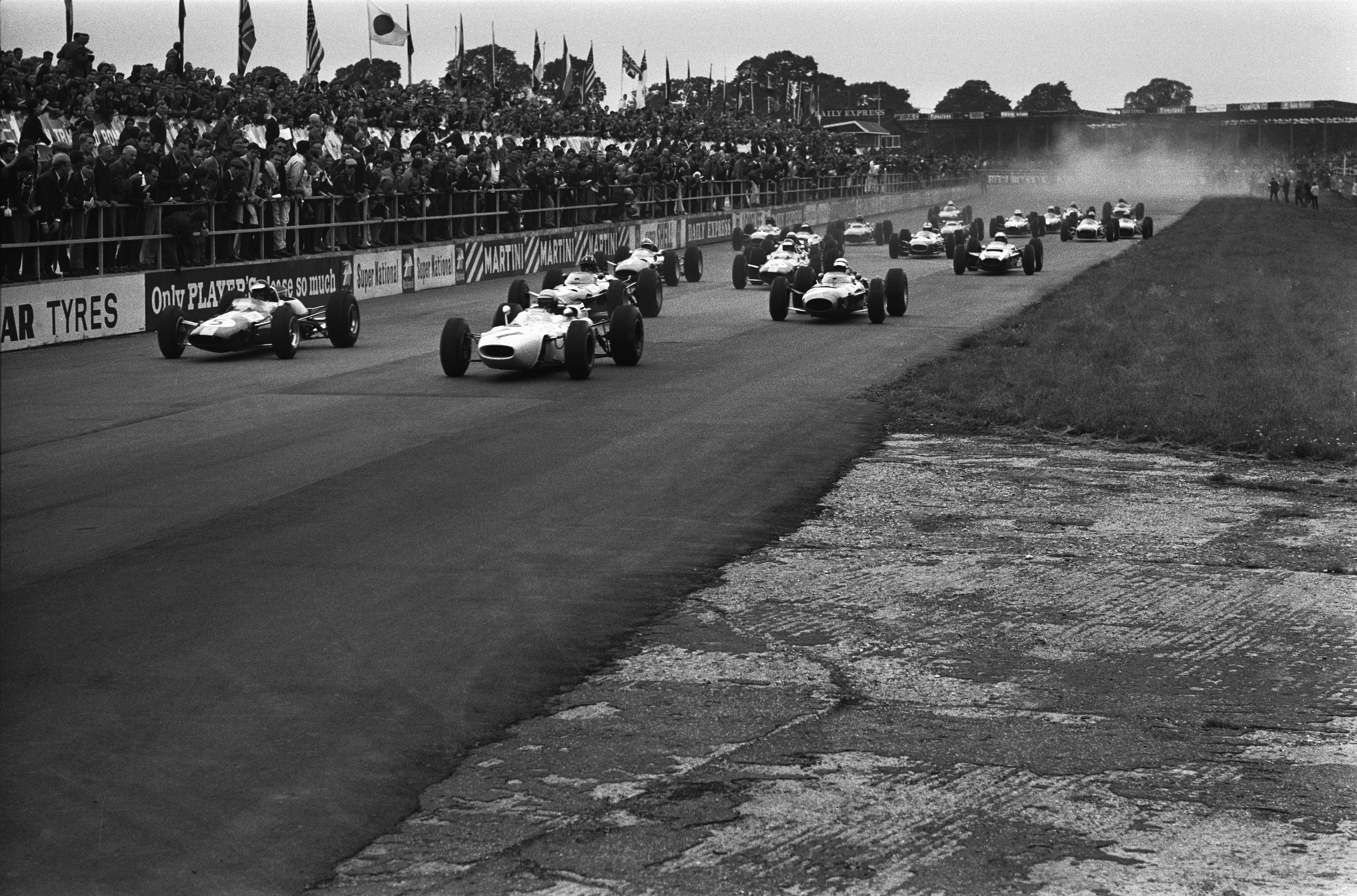
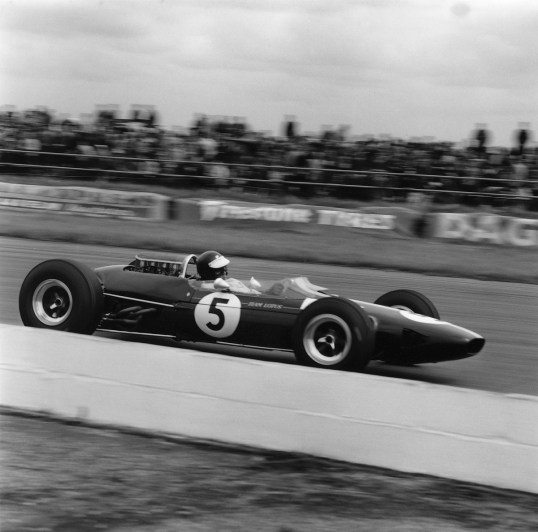 Jim qualified on the pole but only 0.2sec away from Graham Hill’s BRM. Richie Ginther was third in the much-improved Honda, fractionally quicker than Jackie Stewart in the other BRM. Richie was quickly away from the line in a nice demonstration of Honda power but Jim was soon in front.1965 British Grand Prix.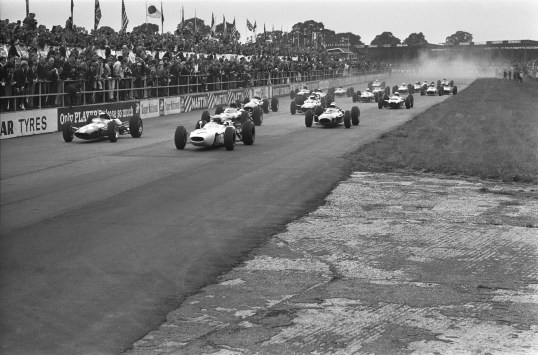
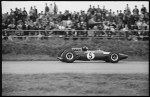
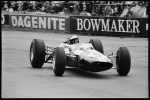
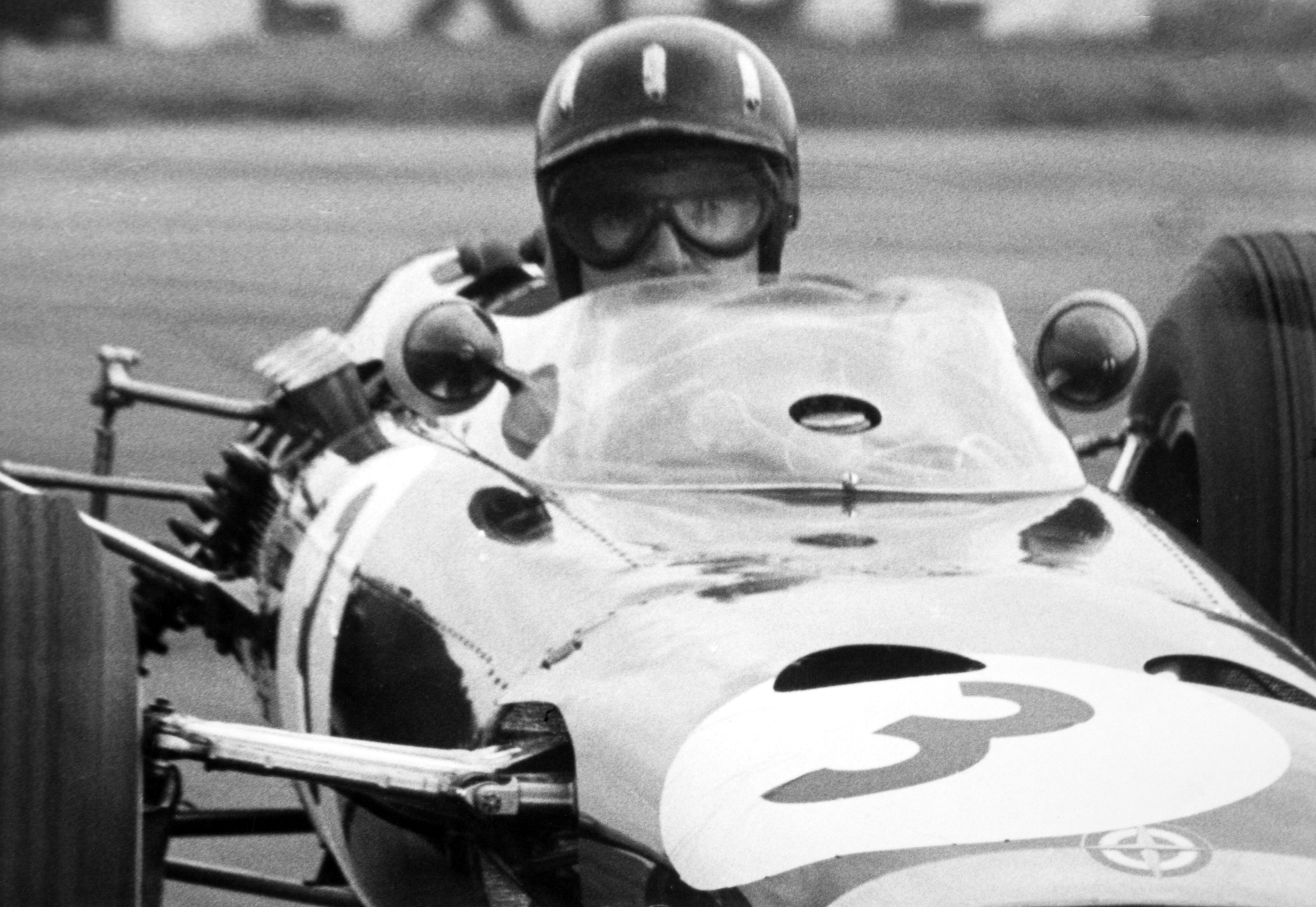
And for much of the distance the race indeed belonged to Clark and the Team Lotus 33B. Graham Hill, in the BRM – absolutely a part of the BRM, with his graceful opposite-lock slides and his London Rowing Club Everoak helmet looking as though they were the two key fixtures around which Tony Rudd had designed the car – pushed Jim hardest; Grahamby three-quarter distance, however, the race seemed clearly to be another one for Clark. By lap 64, with 16 to run, Hill, in brake trouble, was some 35 seconds away in second place.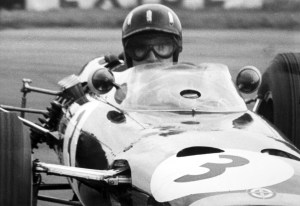
Then Jim’s Climax V8 began to lose oil pressure – first at Stowe, momentarily, and then at Club and Woodcote. On the straights the needle would flicker back to centre. With every passing lap, the plunges grew worse; a blow-up – a rare blow-up in this final year for Coventry Climax in Formula One – seemed inevitable. What to do? What to do?
Jim had no help from the pit wall other than the usual updates about the diminishing gap. With no radio communication, Colin Chapman was oblivious to the problem. They could hear reports of what seemed to be a mis-fire but on the pit straight the Climax engine sounded strong. Jim needed to think it out for himself – think it out with all his brainpower and with the experience of his days as a part-time mechanic in the Jock McBain garage, and the time spent in many a track- and roadside moment, mending broken cars. Even in 1965 Jim could often be seen helping with wheel changes or plug checks or obscure mis-fire diagnoses at major races throughout the world.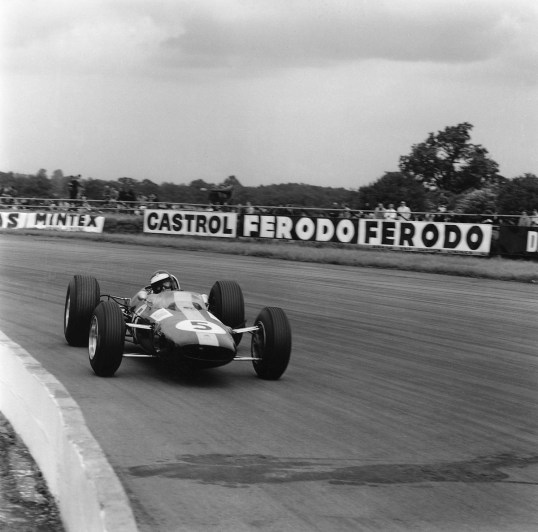
And so he decided on a cure: he decided to kill the engine through all the fast corners, thus minimising the piston or main bearing damage when the surge was at its greatest and the lubricant at its thinnest.
He would think it through and then he would do it: he would approach Stowe in top, brake and change down to fourth – and then find neutral at probably 130 mph before switching off the engine. He would have no throttle to help him balance a slide; he would not be able to apply any power until the 33B was straight. Instead, Jim realized that he was going to have to attempt an even earlier-than-normal approach to the corner – an approach based around exactly the right moment and speed at which to rotate the car; and then, when it was more or less straight, he was going to have to declutch it back to life. All this without losing the race to a fast-approaching Graham Hill. Prior to the problem, Jim had been lapping comfortably in the mid-1min 33s/34s. Now, in switch-off mode, his lap times were up in the 1min 35/36s.
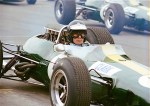
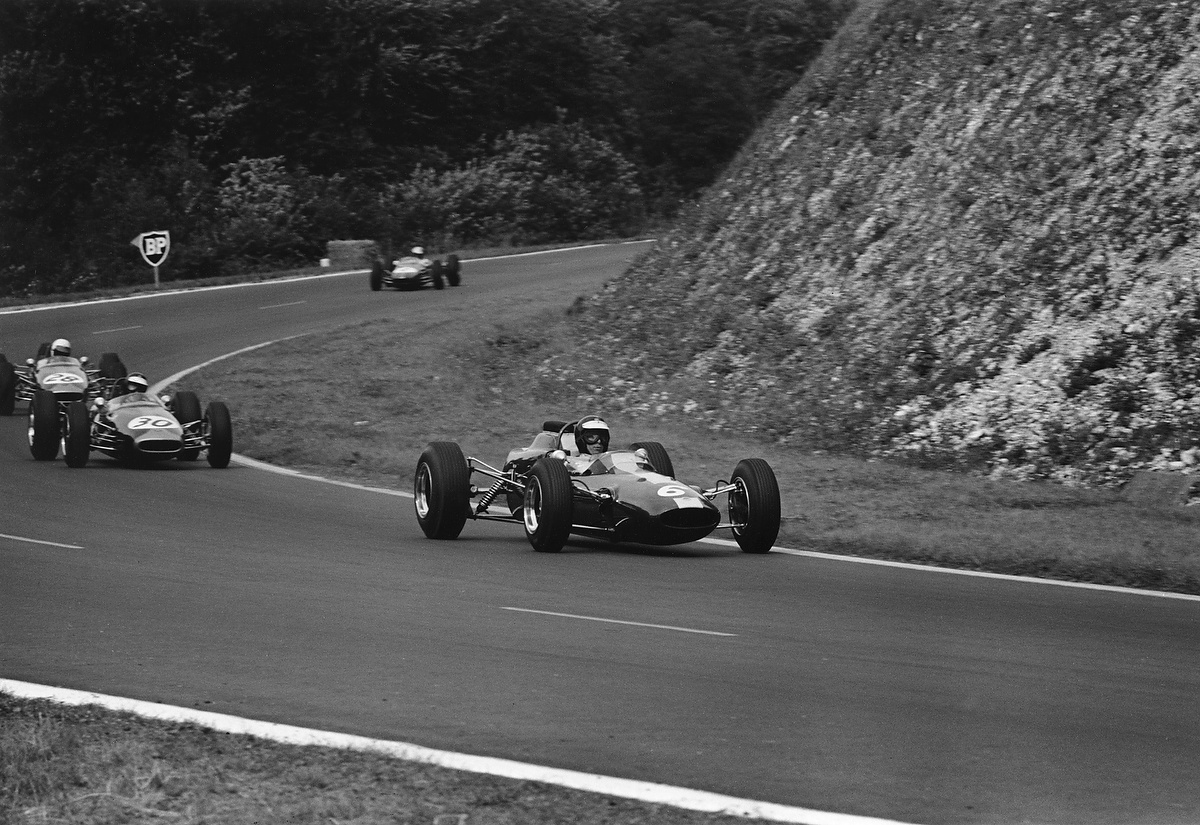
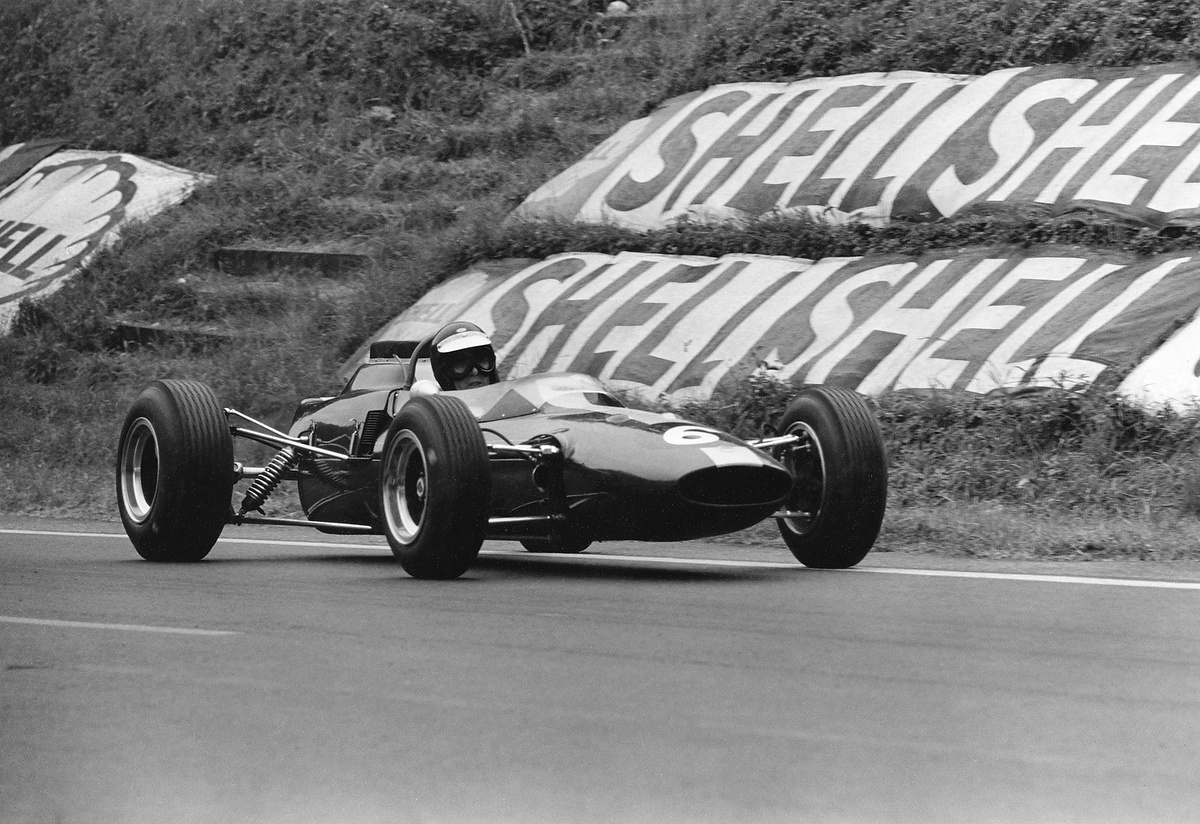
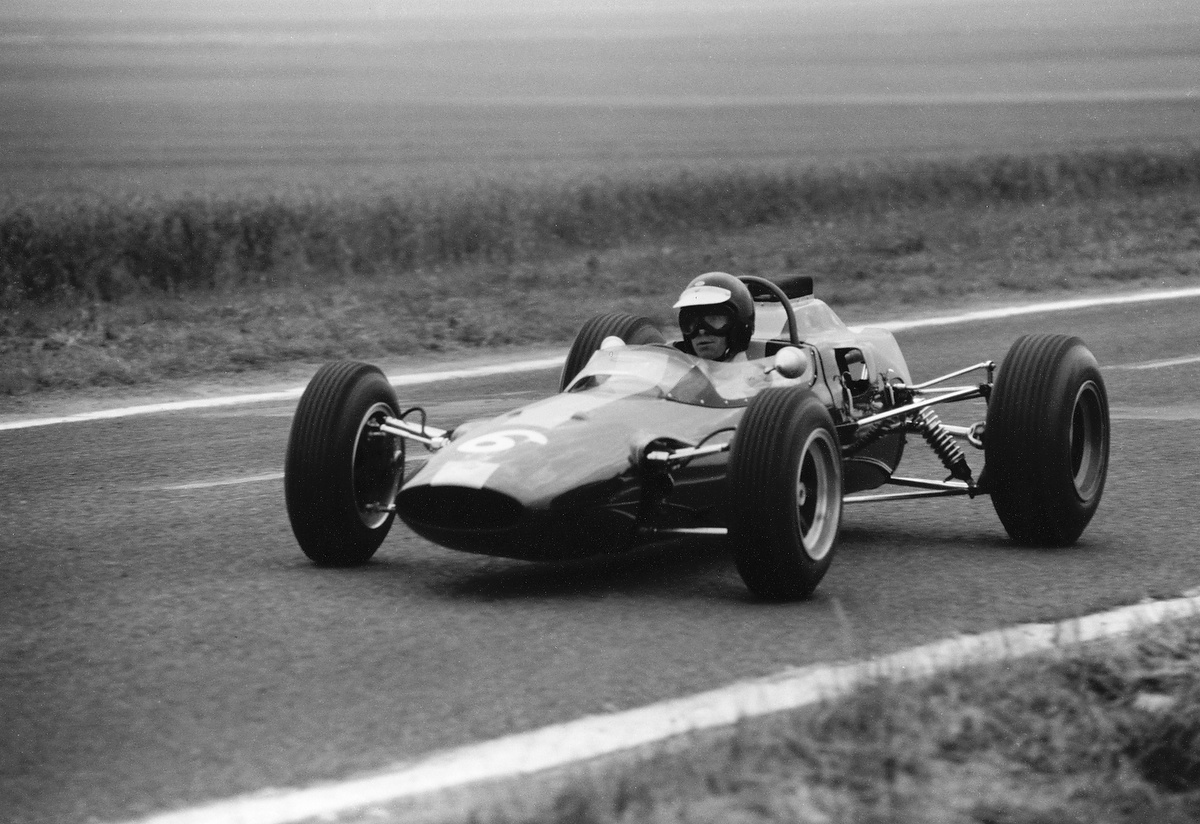
Stowe, Club, Woodcote…Jim focussed his de-clutching remedy on these three (long, fast) corners. At Copse and at Becketts he kept the engine running but again tried extending the straights as much as possible. Sometimes he fought oversteer (left); other is was understeer (below). Only the year before, when he had been giving Colin Chapman a ride around Silverstone in a Cortina-Lotus, had his boss been surprised by what he perceived to be Jim’s “very early” approach to the corners. Jim had replied that this was the way he always drove, regardless of whether he was in the F1 car, the Lotus 30, the Cortina or the F2 Lotus 35.
Now, in these excruciatingly long and dramatic closing minutes, he was turning in to all the corners even earlier. He could hear the Dunlop tyres scrubbing off speed in the bland silence of the cut engine, mid-Stowe – but only in the distance, as if he was vaguely aware of aircraft flying overhead. His mind, his concentration, was a tunnel. Feel the moment. Apply the steering lock…now…engage third…de-clutch…now.1965 British Grand Prix.
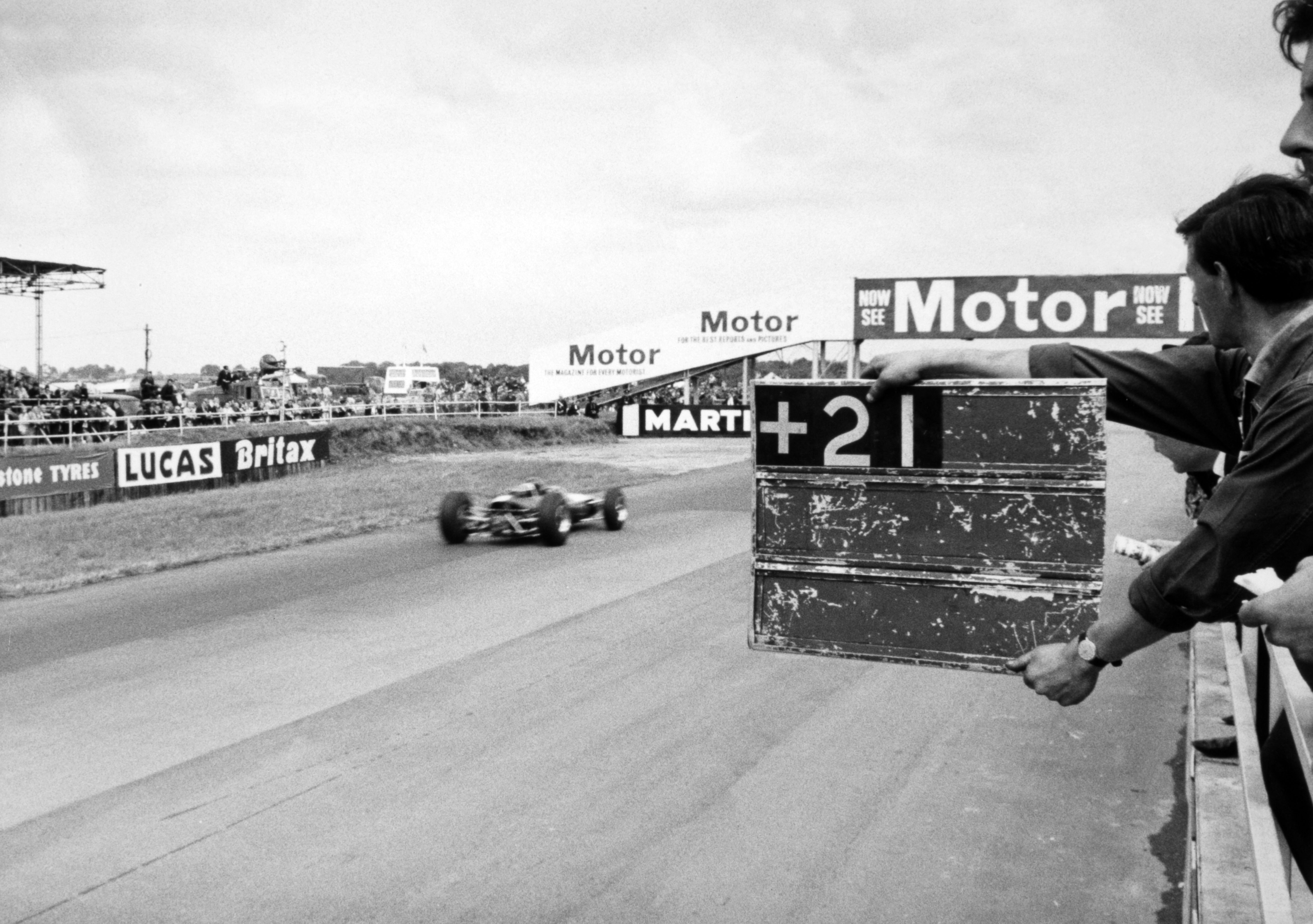
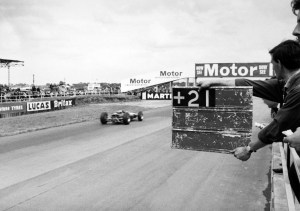 Those pit signals narrated a story he didn’t want to read. Once before – at the ’62 International Trophy – Graham had passed him on the line at Silverstone. Literally on the line. (Bruce McLaren had also pipped him the same way in a Mini race – but that was another story.) Today it was different. Today it was Jim Clark versus the failing engine. It was the Lotus 33B, with all its grip and balance and driveability, suddenly racing within itself. And he was the man in the middle.
Three laps to go. Two. He had consistently managed to keep his lap times about two and a half seconds adrift of par. Once or twice the engine had sputtered before screaming back to life. He could see Graham in his mirrors as he reached top gear on Hangar Straight. Concentrate. One more time around Stowe. Once more around Club. The crowd, in his peripheral vision, was a waving sea of arms. Graham was with him now, catching him assuredly. Jim re-lit the Climax one more time. Third. Fourth. Abbey Curve. Fifth. Down to Woodcote. Fourth. Extend the straight. Delay the lateral load. Power on.
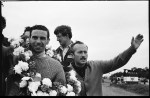
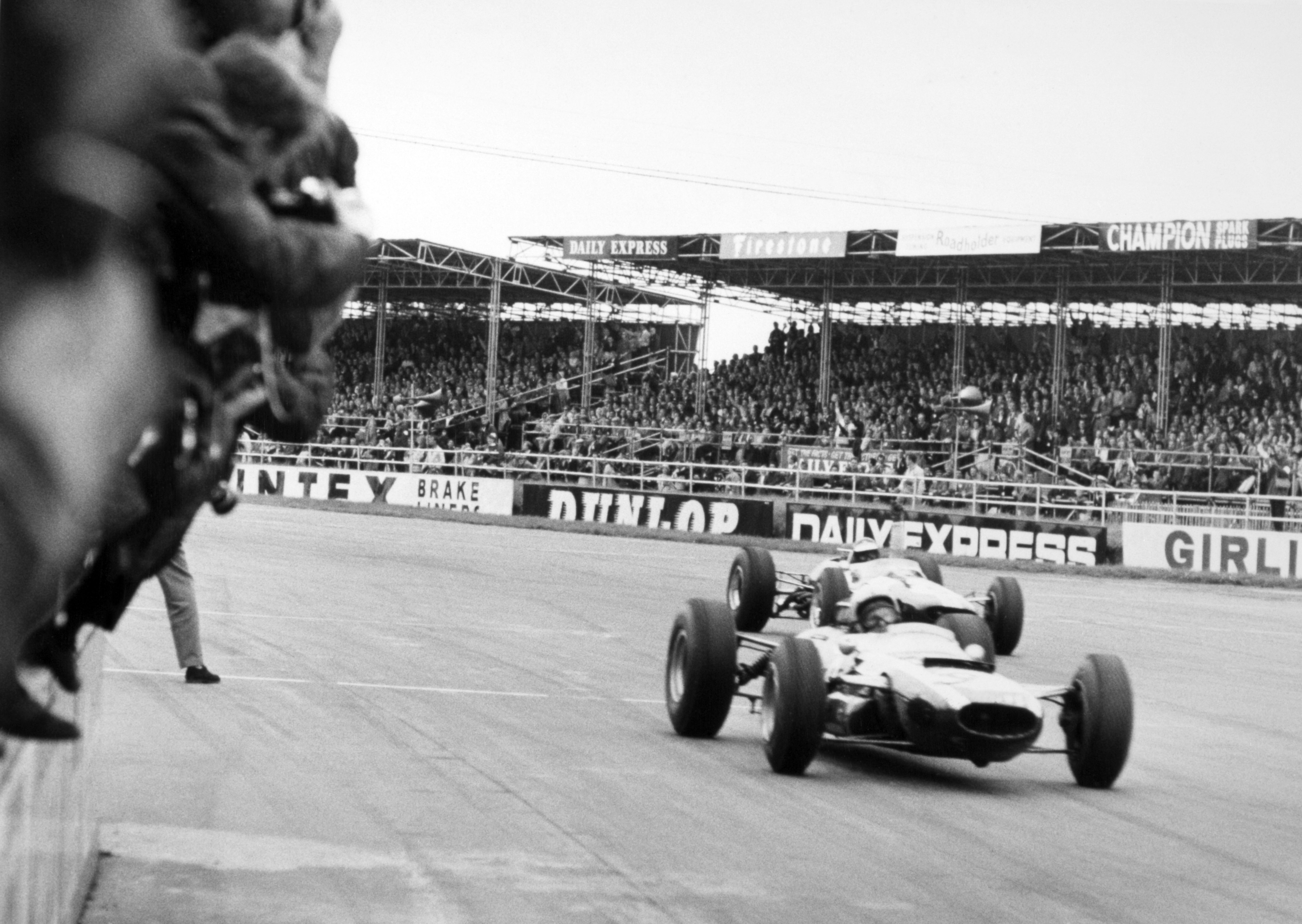
Chequered Flag. Last lap: 1min 36.8sec. Enough to win by 3.2 sec – a whole half-a-second more than the Clark-Hill margin in the 1964 British GP!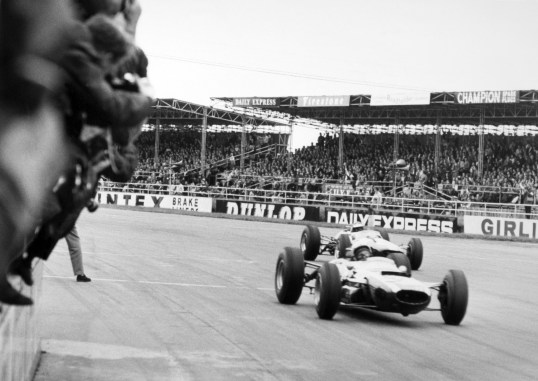
Cooper’s Bruce McLaren, whose British GP was dogged by a problem with fourth gear, was almost lapped for the third time as Jim took the chequered flag. He quipped later in his Autosport column: “At least I’m the only driver this year who can claim to have been in a photo finish with Jim Clark!”
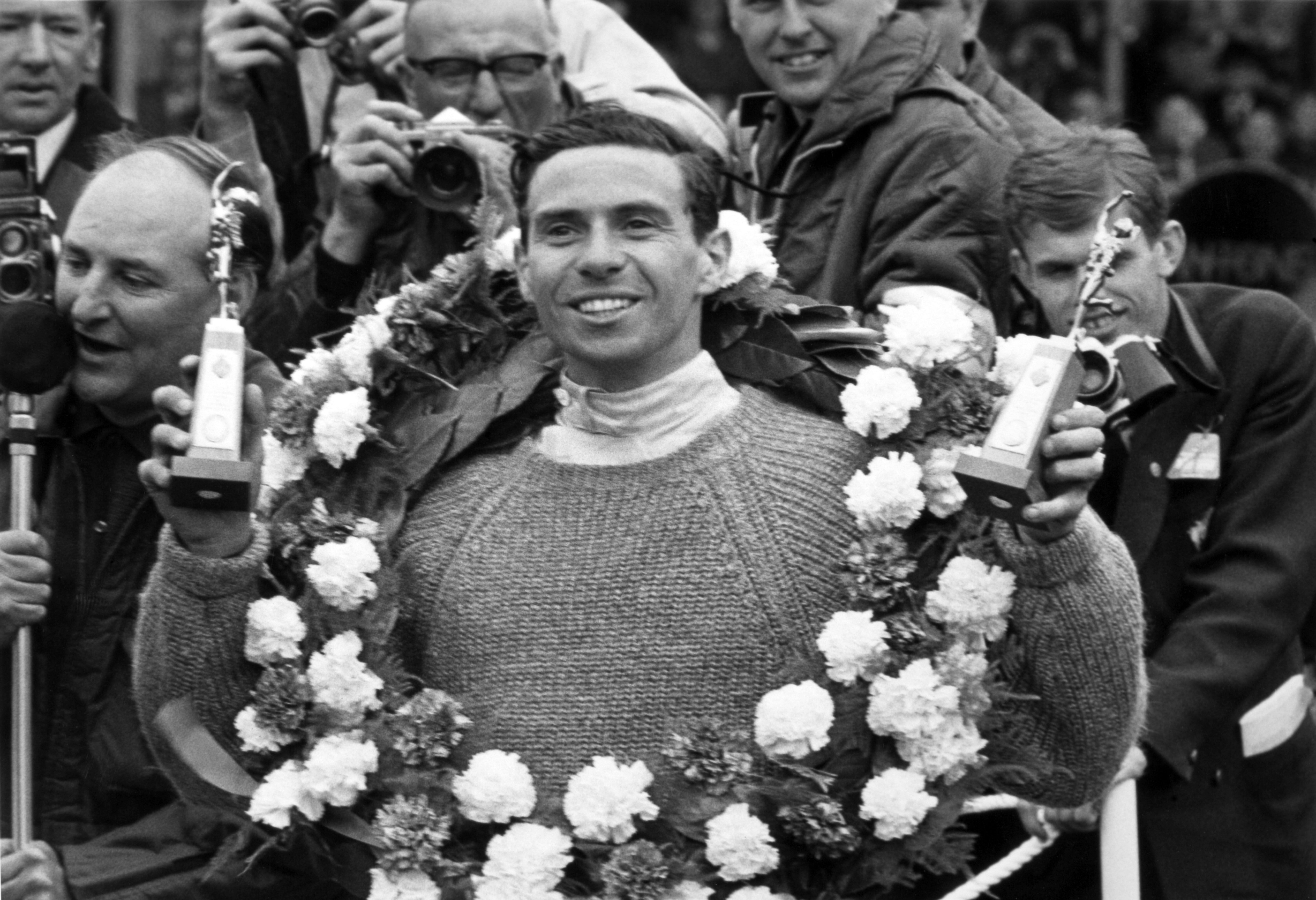
In the style of the day, the newspapers would report on Sunday that “Jim Clark was forced to nurse his engine in the closing laps due to a mechancial problem”, with emphasis on Graham’s fighting finish. Nothing more. Easy reading. Something about which to talk – a little. No-one suggested – as is clear now – that not a single other driver in the history of our sport, with the possible exception of Stirling Moss – could have won that race, that day, in the way that Jim Clark won at Silverstone.
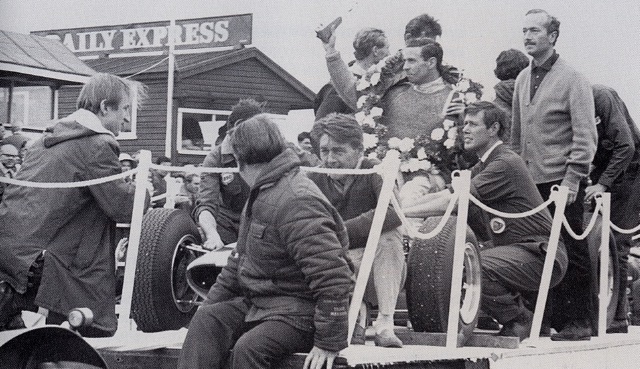
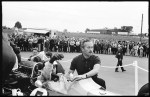
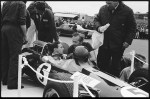
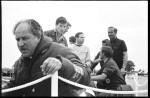
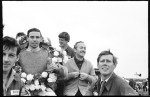
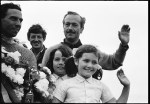
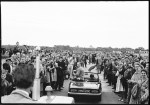
Afterwards, the 33B was pushed up onto a flat-top. Everyone clambered aboard – Colin, with his children, Sarah, Jane and Clive; Mike Spence, who had pushed John Surtees hard on the way to finishing an excellent fourth; all the Team Lotus mechanics; and Sally, of course. A Lotus Elan split the crowds ahead. The tractor chugged forwards. Jim, remarkably fresh, shivered as a late Saturday breeze feathered in from the north. He looked around for the cardigan that wasn’t there. Instantly, Jim Endruweit removed the (fawn) pullover he’d been wearing on the pit wall throughout the race. It was a perfect fit. Win No 25 (appropriately!)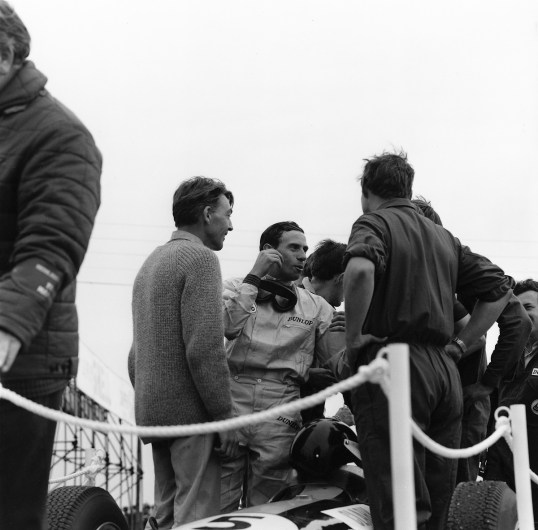
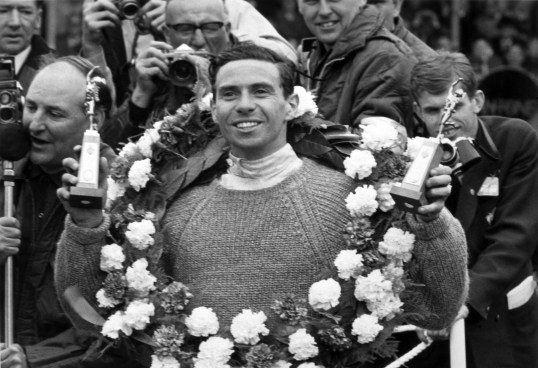
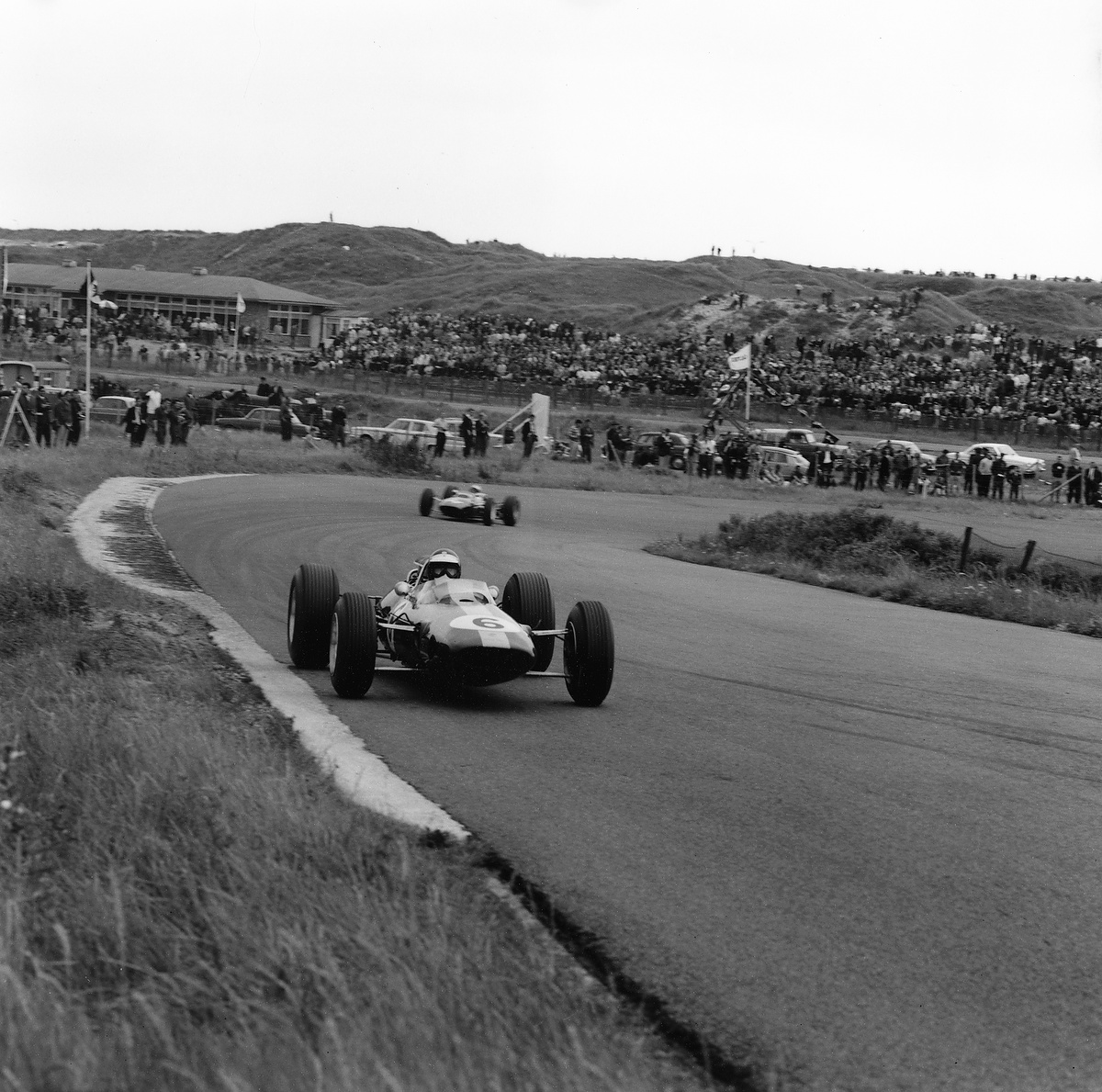 Zandvoort, Holland. July 18, 1965. Dutch GP Jim Clark’s amazing 1965 season continued unabated. Following his victories in the Silverstone-Rouen double-header, Jim returned quickly to London for Wednesday’s British Racing Automobile Club (BARC) function at the Grosvenor House hotel. Olympic Gold Medallist, Mary Rand, presented a special award to Jim for his Indy 500 win – but by this stage of the year it could just as well have been for his F1 success. He’d missed Monaco to win at Indy but he’d won every other GP of the season, plus the Tasman Series. Little was the time for relaxation, however, for the next day Jim flew to Zandvoort, Holland, for the Dutch GP. Jim headed the times on Friday, when the winds blew, and qualified second on Saturday in perfect conditions. Again, though, the new 32-valve Climax engine proved unreliable, obliging Clark to switch to the 16-valve spare car for the race. Thanks to British Pathe, we can now take a short look at the Dutch GP in the following video. Note a young Clive Chapman near the start, pensive in Mike Spence’s helmet and goggles. Win No 27























 peterwindsor.com