Unsullied at T4
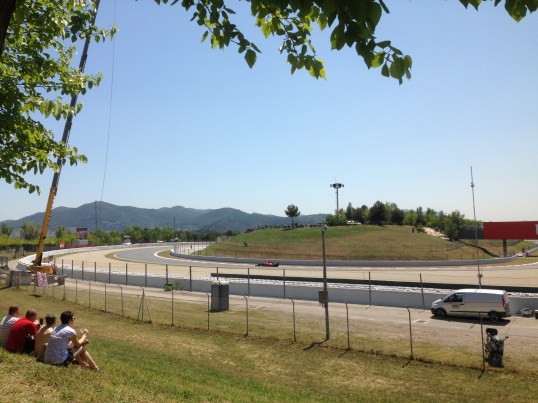 Barcelona’s Turn 4, that is, on a warm, captivating Friday
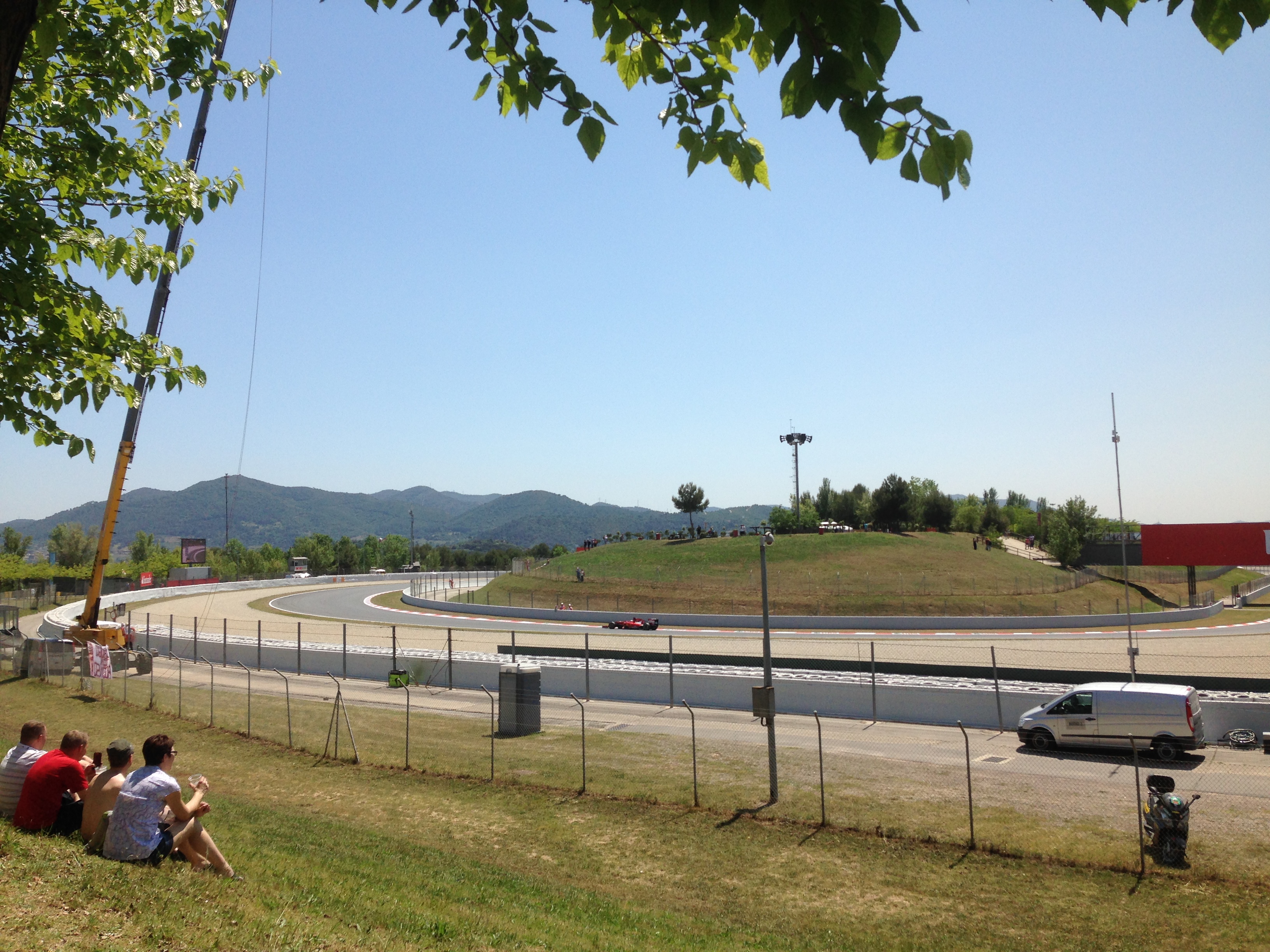
There are very few spectators lining the bank on the outside of Turn 4 this Friday, which is sad because it’s a long corner with plenty of scope for improvisation. Gone, too, is the big grandstand between Turn 4 and Turn 9, replaced, inevitably, by a string of impossibly-expensive “merchandise” shops, a roast chicken stall that never seems to open and a bouncy castle (additional fee required).
Jimbo Foley, ace cameraman, is shuffling his feet beside his huge hyrdraulic hoist. “It won’t work,” he says, shading his eyes against the early-morning sun. “No idea why. I’ll just have to wait,” he adds with a sparkle.
Pastor Maldonado is one of the first to run hard through Turn 4. The black and gold car zeroes into an early apex – “extends the straight,” in Rob Wilson-parlance – then hugs the inside as the driver trades brake pedal for steering rotation. I can’t see this dance from up on the bank – but I can see the result. As the corner begins to open out, the E22 is nicely middle-of-track. Pastor is able to accelerate hard, almost in a straight line, short-shifting quickly from third to fourth, avoiding the dust and marbles on the outside. The car looks taut and driveable – and Pastor is quickly into repetitions: it’s reliable, too.
Romain Grosjean, by contrast, turns in later and asks much more of the left-front. Two laps out of four he’s balancing slight understeer against throttle. He’s on the power sooner mid-corner but as he accelerates – without short-shifting – the back jumps out as he touches the marbles.
Sebastian Vettel seems fast and neat – Mr Vee – but then suddenly loses power. He waves to us from a monkey bike as he rides back to the pits and even the Alonso fans return the gesture. His RB10 – a new chassis for this race – has shorted out. The entire loom needs to be replaced; and, although RBR have a full four hours in which to change it and to have the World Champion back out for the final 30 minutes of FP2, there is no hope. To save weight, today’s looms are one-piece; and their installation is the first part of any car build. To replace them, the entire car has to be dismantled. Add the complications of a 2014 F1 car and you have Sebastian Vettel spectating for the rest of the day – which is crazy, I think, in these days of F1 being a show and drivers like Vettel being the stars. That loom would have been replaced in far less time on a 2013 RB9.
Lewis and Nico look very similar, although Lewis’s joins are slightly softer: both enter T4 right-of–centre; both have grip enough to rotate the Merc with astonishingly little loss of mid-corner speed. Both are patient for a half-second or so – and then both accelerate in straight-line bursts through the gears. The display of sheer power is breathtaking. Those joins – the most noticeable ones – are on the entry phase. You can see the moment Nico decides to turn the wheel; with Lewis, it is all-of-a-piece. The silver car leans into the corner.
Daniel Ricciardo is no less stellar. He is Nico at least and sometimes Lewis. And the RB10 has enough grip to give Daniel a decent exit even when he enters a tad too quickly. At T4, this Friday, it is impossible to see where the Mercs are quicker, other than that the Renault is slightly shorter-geared and asks Daniel either to short-shift or hold a gear (fourth or fifth) for a fraction longer than perhaps he would want. The Mercs are quicker, of course, so that to me adds up to still-superior power in the driveability department.
Ferrari. Red-bedecked Spaniards wave valiantly. And Fernando only once looks bad at T4. That is when he enters about 5mph too quickly, runs to the outside, tyres chirping, and then comes right out of the throttle to bring the thing back. Otherwise, he is a model of security and efficiency. There is nothing spectacular about Fernando here; there is, though, everything you need from a Ferrari driver extracting the repeatable most from his car. He vees the corner for lap after lap, extending the straight down the inside, running as if on rails to the outside, mid-corner, rotating the car with a boatload of patience and then accelerating out almost in a dead straight line. Two-thirds of the way through T4, Fernando is to the right of centre. Every other driver (with the possible exception of Sebastian Vettel, of whom we didn’t see enough) are either centre of the road (Maldonado, Massa, Perez, Hulkenberg, Ricciardo) or way out there, left of centre, accelerating hard through the gears still with massive lateral load pushing sideways through the rear tyres.
Is this the quickest way through T4? This is certainly the way Fernando has always driven it; it was the way he drove it when he shadowed Maldonado into second place in the 2012 Spanish GP. I think for the Ferrari as it is at present – developing less grip than the Mercs and Red Bulls and certainly with less of a front end – it is the way to maximise traction and reward the car’s stronger points. Whether it’s quicker is a question that may be answered over the rest of the weekend, when Sebastian Vettel takes on Daniel Ricciardo.
Kimi Raikkonen obviously doesn’t think so. He and Kevin Magnussen turned-in the earliest to T4 today and for most of the two sessions Kimi was looking for the harmony that would allow him then to rotate the car without having to float it out into Alonso territory. Time and again he was discordant, jabbing in the power in a series of ugly power-slides that said a million words, running too wide on exit, raising plumes of dust.
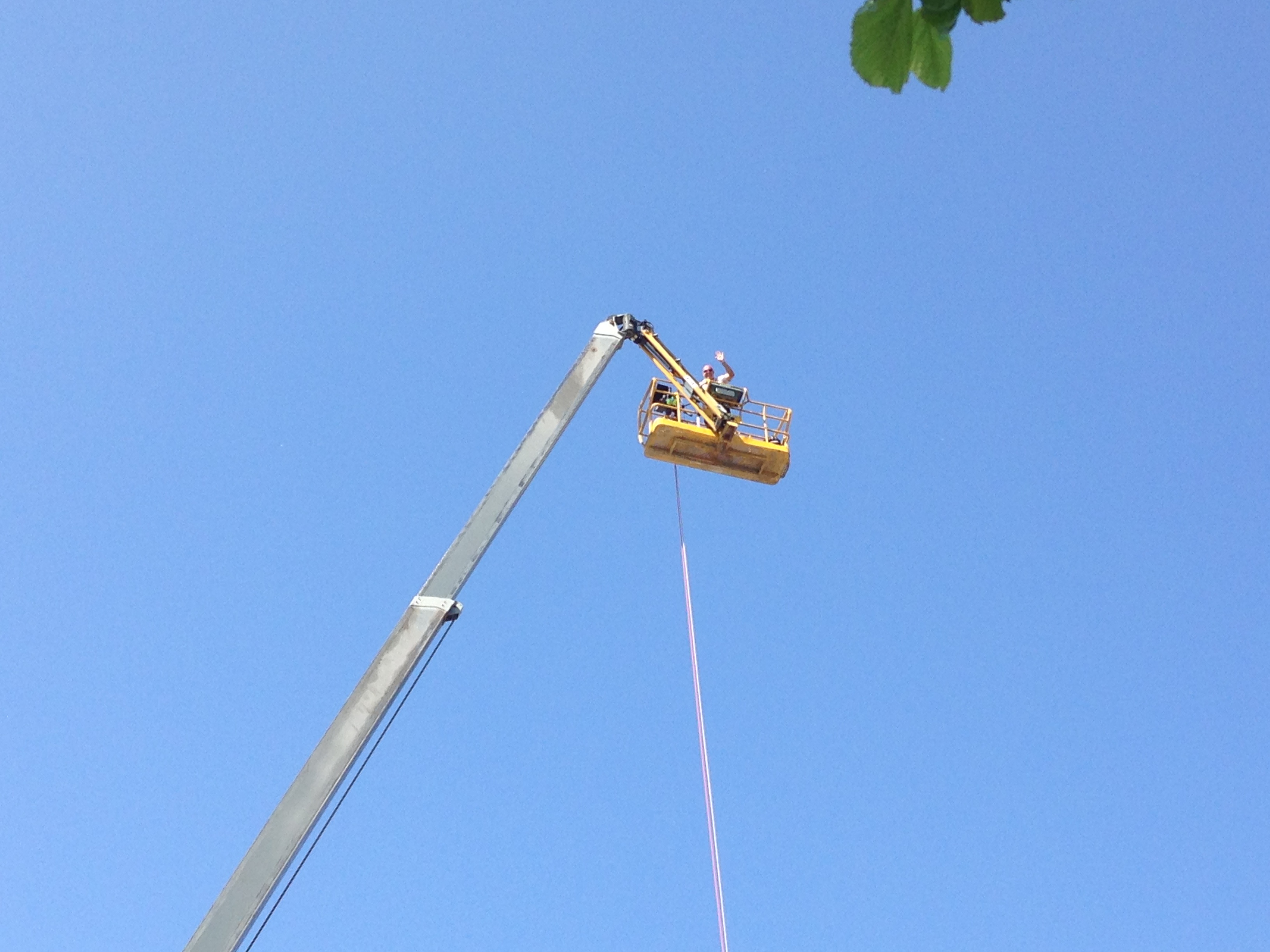 Then, with about 20 minutes to run in the afternoon, with Jimbo now perched up high, Kimi suddenly finds the way to join the dots with the F14. Early entry – right-front brushing the kerb. Squat, perfectly-timed rotation. Flat exit, without a hint of oversteer. Klassic Kimi. He said afterwards that the car finally is beginning to give him some front-end feel. We’ll see tomorrow and on Sunday if this is a thing that will stick.
Both Sahara Force India drivers appeared excellent through T4, with Perez looking slightly the neater and more consistent of the two, as in Bahrain. The lap times didn’t bear this out but to my eye it was clear: Perez is again driving within another of his relatively elusive sweet spots, looking like a driver who will qualify well (against his current run of form). Both extended the straight significantly into their braking areas; and both spent the right sort of time rotating the car for the cleanest of exits. SFI’s long gearing then made them look very good under hard acceleration.
Felipe Massa, I thought, drove beautifully this day – an easy match for Hulkenberg and Perez. Twice he came into T4 too quickly – and on exits, of course, he was having to short-shift in order not to overload the rears with the short gearing. Even so, this was vintage Felipe. There was nothing edgy about his driving, nothing (apart from those two lock-ups) remotely dramatic. Valtteri Bottas lost the morning to Felipe Nasr – and that may or may not have been the reason he always came by looking like a more ragged version of Felipe. He didn’t do a lot of laps – he was delayed by a problem with that Williams gearbox – so for now we should give him the benefit of the doubt.
Both Toro Rosso drivers followed similar paths – wide, late turn-ins that asked a million dollars from the left front followed by a tug-of-war with the throttle and steering, leaning now on the left rear. Daniil Kvyat is incredibly precise in the way he drives; it was a bit disappointing, therefore, not to see him trying something along the Alonso system, or even Daniel’s route. (Which begs the question: just how much time do rookie drivers actually spend watching the guys who obviously know how to do it? The answer, I fear, is “not much”, on the basis that he, the rookie, believes he knows what to do without looking at other drivers around him and his engineers relate only to the experienced driver in the other team car – as distinct from the best guys out there in rival teams. Crazy, I know; but true.)
Jenson Button was just as we have come to expect: wide, late entry; don’t-rush-me mid-corner; and then silky-smooth on exit, feeding in the power at just the right rate. Don’t ask me if he was quick or not: with Jenson it’s very difficult to judge. Kevin, by contrast, was always down in Kimiland on entry but then struggling thereafter. Where most of Kimi’s day was spent looking for that special harmony of rotation, Kevin seemed to spend most of the afternoon dabbing the throttle, running wide and holding slides. As such, he’s probably better off approaching the corner as Jenson does. At least he’ll have more room in which to manoeuvre. (Of course, the track should pick up grip as the weekend develops, so that, too, will be a factor.)
A quick round-up of the others: Kamui Kobayashi looked very good (Hulkenberg-good) into T4 but couldn’t resist mid-corner power applications that were about half-a-second too early on any given lap. The crowd loved him; the opposite lock and the dust became his trademark; but sadly I don’t think this will translate into “long run” consistency. Marcus Ericsson to my ear always seemed to select a gear too low, just before rotation. Probably this was a security thing; certainly it affected his momentum.
Adrian Sutil looked very, very good, I thought – if slightly less consistent than, say, Felipe Massa. Certainly this was the Adrian of which we used to see a lot – neat and early into an apex combined with a “shortening of the corner” via an efficient rotation, steering load against brake pedal. His occasional moments on exit I think we can put down to the Sauber’s punchy Ferrari gearbox (which runs the same casing as the works team but slightly different electronics). Esteban Gutierrez also lost his morning (to Giedo van der Garde) and seemed obviously to be in a rear brake problem, given the moments he was enduring into T4. Even so, he also looked very sharp mid-corner. Max Chilton turned-in earlier than Jules Bianchi but both were playing the Kevin Magnussen game by the time their entries were over.
I walk, then, back to the pits, where a crowd is milling around the Ferrari motorhome. “Spiderman!” I say, spying my old mate with Spanish TV3 (Catalunya’s free-to-air network station). He looks harassed. “How’s Fernando?” I ask, sure in the knowledge that he would already have had a few words. “How can we know?” he replies sadly. “Ferrari are not giving us Fernando. They say we cannot interview him because Spain is not an important country for Ferrari. I say to them but surely Santander is important to Ferrari and Santander is a Spanish company but they say that it makes no difference. Today they will not allow Fernando to talk to Spanish TV.”
The despair in his eyes is more than I want to see. F1 is struggling for ratings, for sponsors…and now this.
I leave quickly for my rental car. I want the day at T4 to remain unsullied.












 peterwindsor.com