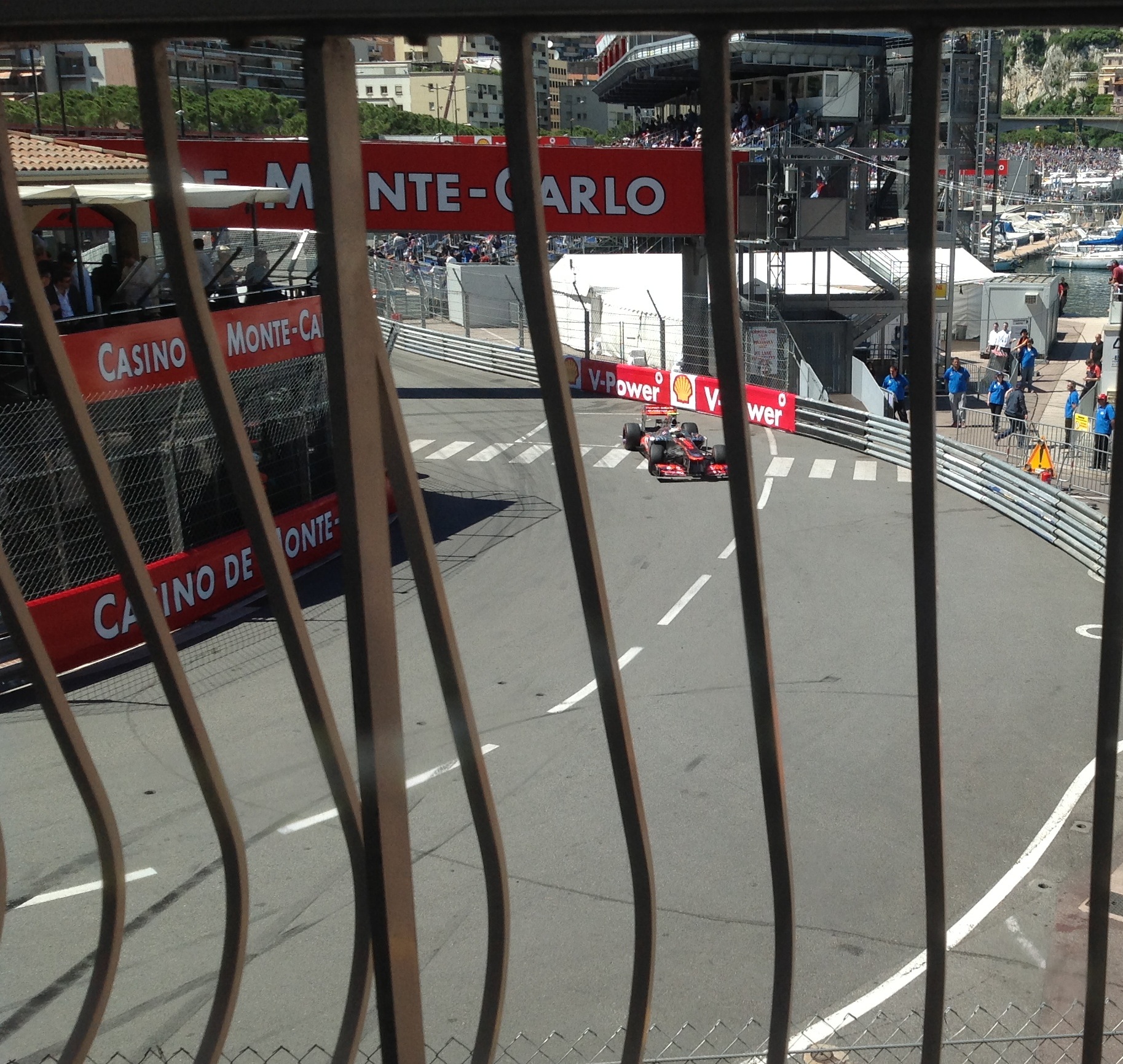
It was Spa – the old Spa. And it was wet. Atrociously wet. Thus Jim Clark scored his first World Championship win of 1963
 And so they went to Spa. Jim traditionally stayed at the Val d’Ambleve near Stavelot and did so in 1963: the 25s would be towed to and from the paddock area every day. Jim flew with Colin Chapman and Trevor Taylor on D-Day, June 6. The Ardennes forest had nineteen years before been ablaze with the Battle of the Bulge. Practice at Spa would begin on Friday.
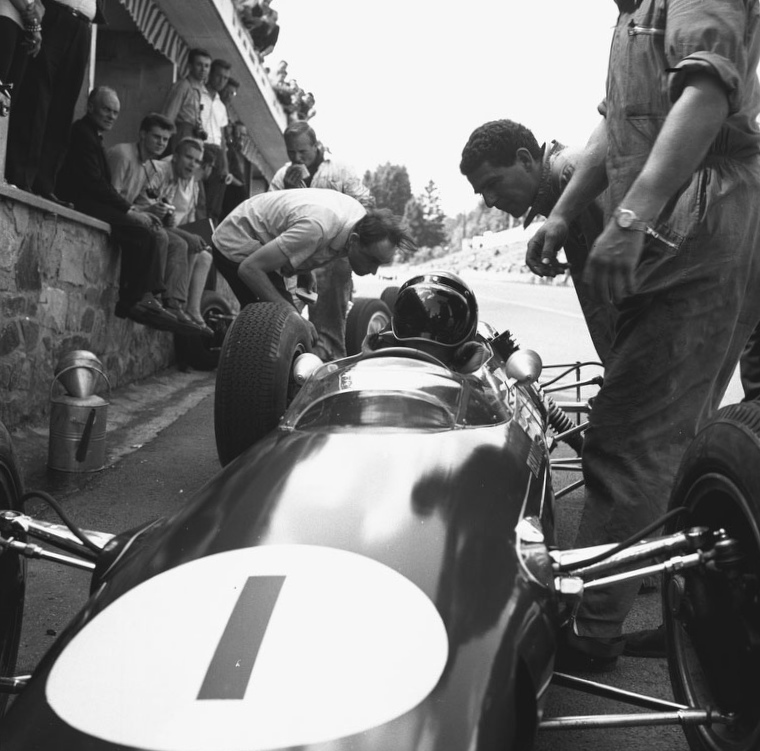
In the Clark track bag: his new, dark blue Bell Magnum helmet and rounded bubble visor Bell had given to him at Indy. All previous visors used by Jim had been attached to his Herbert Johnson or Everoak helmets by a crude strap and a single stud. After last year (1962), when the rush of air down the Masta straight had actually loosened Jim’s regular white helmet peak, obliging him to rip it off one-handed whilst winning the race, Jim was delighted to see that the new Bell visor was fastened by three big pop-on studs. With rain always on the agenda at Spa, this would be the perfect try-out. Left in the bag, therefore, was the white Bell peak he had used at Indy, Mosport and Crystal Palace (ready for Dan Gurney to borrow!). If it was dry, he would just run the helmet without the peak. If it was wet, and providing he liked it in practice, he would try the bubble visor.
Lotus had another airflow development, too: Colin’s latest idea involved a a large opening at the front of the screen and a lip on the cockpit surround. This would channel air up and over the driver, reducing buffeting and allowing the windscreen to be cut lower, thereby improving visibility. Again, the high-speed Spa circuit was the obvious venue on which to try the new device. In the dry, in 1962, Jim had won at an average of 133.98 mph – this on a lap that included a 40mph mid-corner speed at La Source hairpin. With more power from the flat-crank Climax, more grip from the Dunlop R6s and some significant re-surfacing, lap speeds – and top speeds – would be higher still in 1963.
It is hard to imagine today what it was actually like at Spa back then – out there on the old circuit, on a thin ribbon of public road bordered by such routine items as telegraph poles, phone boxes, concrete marker posts, sheer drops, clusters of trees and stone-walled houses. The drivers didn’t wear seat belts; the cars rattled and shook; and Jim, in the monocoque Lotus 25, was lying at about 25 deg to horizontal, his rear-vision mirrors right back near his helmet line so that he had some sort of angle of view. To see clearly in them, however, he had to turn his head consciously from side to side. This was another reason he avoided the helmet peak for Spa.
The right foot was held flat, hard down on the throttle, for minutes on end, even though the road was in reality only straight into and out of La Source, down the hill past the pits and on the sections of road immediately before and after the famous Masta kink (which was also taken flat in fifth – or sixth if you were a Ferrari or Richie Ginther trying BRM’s new six-speeder). The rest of the time, the drivers were threading their F1 cars through the needle, using all the road, accelerator against the stops. The lap length was 8.76 miles and the lap time was just under four minutes – or just over it, if you were Phil Hill in the new, disastrous, ATS, or Tony Settember in the new American F1 entry – the Scirocco-BRM.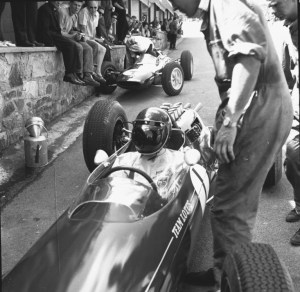
After the simplicity of of the 23 at Crystal Palace, the 25 around Spa initially felt appalling. The high-speed oversteer was frightening…and still the dreaded ZF transmission kept jumping out of gear. Mid-corner.
Adding to the feeling of foreboding on the circuit that Jim had hated since his first appearance there, in 1958, when Archie Scott-Brown had lost his life, and then 1960, when both Alan Stacey and Chris Bristow had been killed in Jim’s second F1 race, Trevor Taylor was also in trouble in the second 25. After finally discovering that his car had been running only on two-thirds throttle at Monaco and then in first practice at Spa, Trevor would be dispatched from the pit lane on Saturday with a rear suspension bolt still lose. Unsurprisingly, he crashed heavily when the rear wheel suddenly canted inwards. A stone marshals’ post took the impact; Trevor, amazingly, was able to step free with a badly torn thigh muscle. Hero that he was, Trevor still started the race on Sunday in the spare 25.
Jim’s car felt little better on Saturday. I think this was one of the first examples of Jim not giving 100 per cent until he really needed to do so: Spa was dangerous enough as it was without having to stretch the limit in practice. He would always give his maximum in the race but in practice, until he was comfortable, particularly at Spa, he would leave some margin. As a last resort, as it turned out, Cedric Selzer and the boys fitted to Jim’s car the gearbox from Trevor’s crashed 25.
In between times, Jim tried the new aeroscreen (which he liked) and the bubble visor (which he didn’t); it’s convex shaped distorted his peripheral vision. He would revert, wet or dry, to his regular Panorama goggles and he would try the aeroscreen again at Zandvoort, at the Dutch GP.
Jim qualified only seventh at Spa after those two days of practice. Graham Hill was on the pole for BRM, with Dan Gurney alongside him in his new Brabham. Then, third quickest, came the fiery Belgian, Willy Mairesse, playing the number two role to John Surtees at Ferrari. They formed up on a wet track.
As at Indy, I can do no better now that to hand over to Jim himself, this time as told to Graham Gauld in Jim Clark at the Wheel:
“I was right behind Willy on the grid. This set me thinking that he was inclined to be exuberant, to say the least, and that in his home race he would be rather anxious. I reasoned that a combination of an anxious Willy trying to take a Ferrari off the line in the wet at Spa was going to be exciting and that he might not take too good a job of it. I knew that if I got a good start I would have to take him on the pits side even if it meant going across the yellow baulk line. All this ran through my mind, sitting there, so that by the time the starter had raised his flag I had the Lotus on right lock and the clutch ready to bite. The flickered and came down, I let in the clutch with a bang, scooted forward and to the right of Willy, who, as I thought, was standing still with spray being sent up in the air by his spinning wheels. He just stood there without moving an inch. Mine was a legitimate start, but I didn’t expect, in my enthusiasm, to lead everyone away from the start from the front row but this is exactly what happened. As I went into Eau Rouge I glanced in the mirror and saw Graham Hill grimly on my tail and just pressed on. As I said earlier, it was wet and I enjoy driving in the wet, but, after all, this was Spa, and I kept well within my limits.
“At the end of the opening lap Graham was still on my tail but I didn’t know until later that we had both left everyone else behind and we had a ten-second lead. We stayed this way for quite a while and then I began to get the old gearbox trouble again. It started dropping out of top and on Spa this is not funny. You wind the car up to, say, 9,500rpm on the straight when suddenly all hell is let loose and you make a grab at the lever and pull it back into gear before you put the revs right off the clock. Once this happens you start waiting for it to happen again. By now, the problem was becoming acute. Here I was, with Graham Hill still on my tail, with a gearbox which threatened to do something nasty at any moment. I decided to drop 300rpm through the Masta kink for safety’s sake but I was still doing about 150mph. This meant that, as I approached the kink, I would be holding the gear lever in place with my right hand and moving my left hand down to the bottom of the steering wheel. 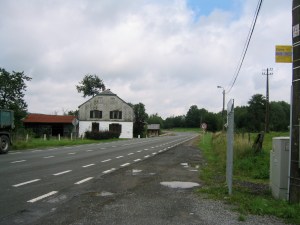 I did this because the car has a nasty tendency on this kink to move from one side of the road to the other and I often needed correction. By keeping my hand low on the wheel I could twirl the steering wheel round with one hand and hold the slide – but doing this for lap after lap was not funny.”
Jim still retained the lead. Graham Hill faded and then retired. As another precaution, Jim began to take fifth gear corners in fourth, luxuriating in the feel of being to hold the wheel with both hands.
Then, in true John Frankenheimer fashion, the rain grew more intense. Visibility disappeared. Standing water drowned the valley. Jim added a full three minutes to his lap times..but still pulled away.
This is how Bruce McLaren described the downpour in Autosport the following week:
“The rain was bouncing two or three feet off the road. We were crawling around in the spray – and, for once, it was just as bad in the pit area, so the crews could appreciate how bad it was on the rest of the circuit. The mechanics were sheltering under their signal boards but, with two laps to go, I saw mine pointing excitedly down the road in a fashion that said ‘you’re catching someone. Get with it!’
“So I got with it, and, in another half lap, I could make out two huge palls of spray – two racing cars ploughing along in front of me. There was so much spray that it was hard to tell how far they were ahead, but I knew that one would be Jim, who had lapped me earlier, and I guessed that the other would be the second-place man, Dan in the Brabham. As I got passed the first conglomeration of steam and spray I was that indeed it was Dan. I passed Jim further up the hill, just in case that it was him that my pit had been referring to, but by now he had backed off considerably, so I guessed that it wasn’t. By passing Jim I gave myself an extra lap to do and he received the chequered flag behind me as I went on to complete the lap and take second place.” (This result actually put Bruce into the lead of the 1963 Drivers’ Championship and Cooper on top of the Constructors’ table.)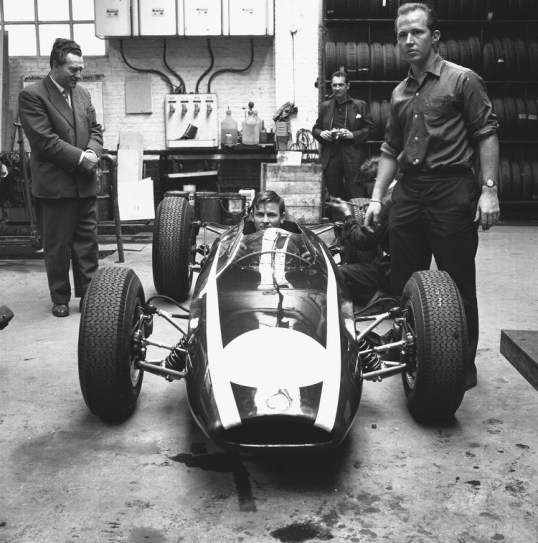
Bruce began that column thus:
“Relaxing on one of those after-race mornings with a cup of coffee on the patio of our hotel at Stavelot” (Jim’s hotel) “with the sun shining brilliantly and the birds feeling like Jim Clark and consequently singing…it was difficult to imagine that the previous afternoon we had driven though the worst thunderstorms I’d ever seen, let alone raced in.”
Jim was relieved to win – relieved to have survived. Both Tony Rudd (BRM) and Chapman (of course) had pleaded with the organizers to stop the race; Rudd had even sprinted across the track in order to speak to the Clerk of the Course face-to-face. Their requests had been denied. Jim stepped from the 25 smeared in oil, his blue Dunlops sodden. He quickly changed into dark chinos, a polo shirt and his Pure jacket (never mind the Esso sponsorship!). On the podium, up above the old pits, by the control tower, his wet hair slicked backwards, he cradled the traditional Spa bouquet. This was the first Grand Prix he had won more than once. A cup of tea – in the Esso caravan, of course! – was very much in order.
Zandvoort, two weeks later, was next on Jim’s agenda. There was at last time to return to London for a couple of days of fun – and then to see what was happening up on the farm.
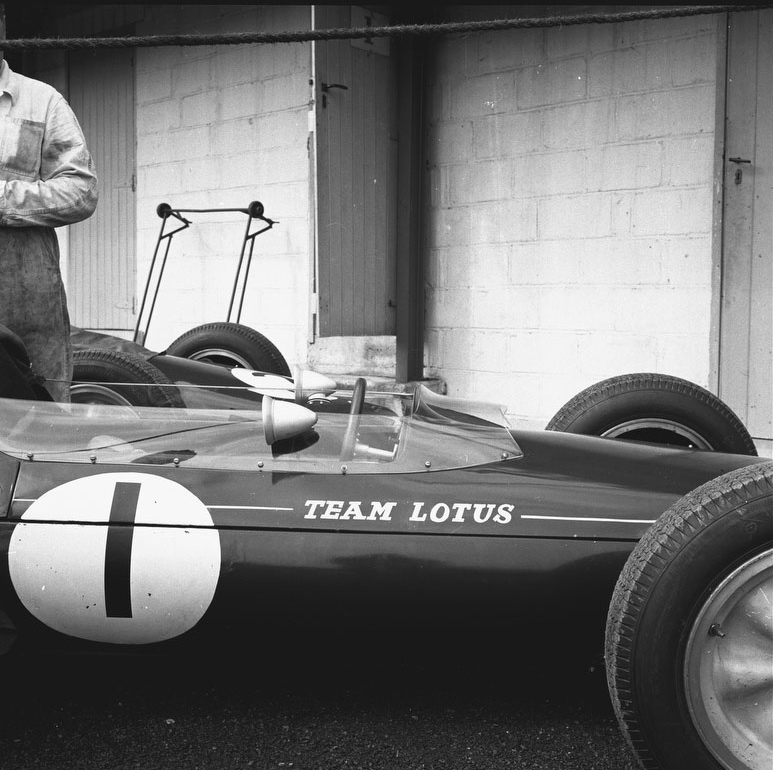
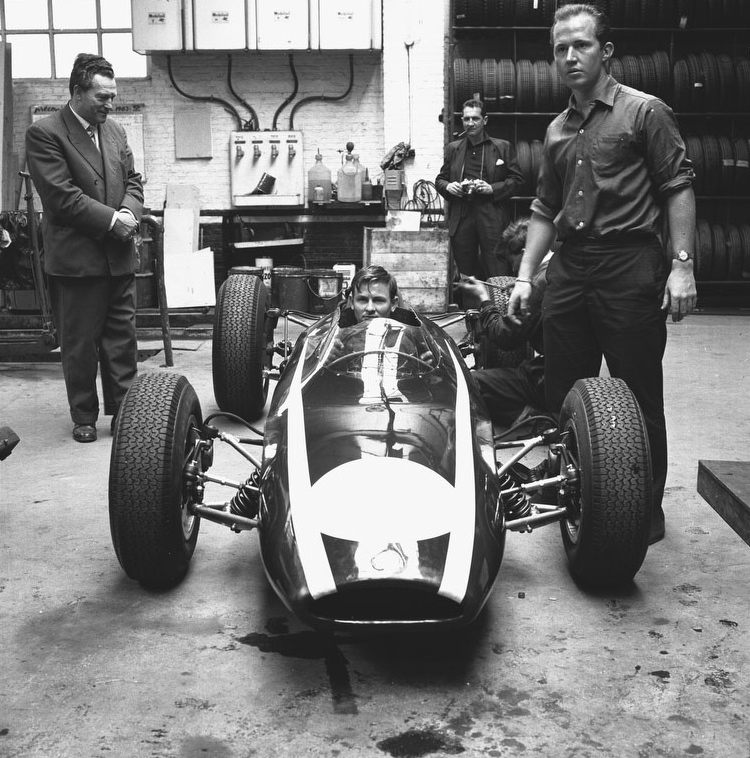
Images: LAT Photographic; Peter Windsor Collection Captions from top: Jim streams past the pits in the late-race deluge; the Val d’Ambleve as it is today – little changed but for a very nice-looking timber extension out the back; Jim tried the Bell Bubble and the new aeroscreen during dry practice; another shot of the new visor/windscreen – note the carburettored spare 25 in the background. Trevor Taylor would race this after his practice shunt; side view of the new aeroscreen – note thicker, rather odd-looking “Team Lotus” signwriting, probably a result of this entire new top section being prepared in a rush at the factory; while Jim Clark began a long streak of peakless races at Spa, Dan Gurney used a standard Bell white peak in this race instead of his regular black; the exit of the Masta kink as it is today; modern F1 drivers, if they do see the old circuit, cannot imagine that this was a part of it all; Bruce McLaren and the Cooper team in their Stavelot garage on a practice night. That’s Eoin Young on the right: Eoin was Bruce’s right-hand-man and Autosport ghost-writer. Now retired in his native New Zealand, he became one of the world’s pre-eminent motoring journalists
Posted in
F1,
Jim Clark's 1963 season and tagged
Belgian Grand Prix,
F1,
Ferrari,
Formula One,
Graham Hill,
Grand Prix,
Jim Clark,
Spa,
Stavelot,
Team Lotus
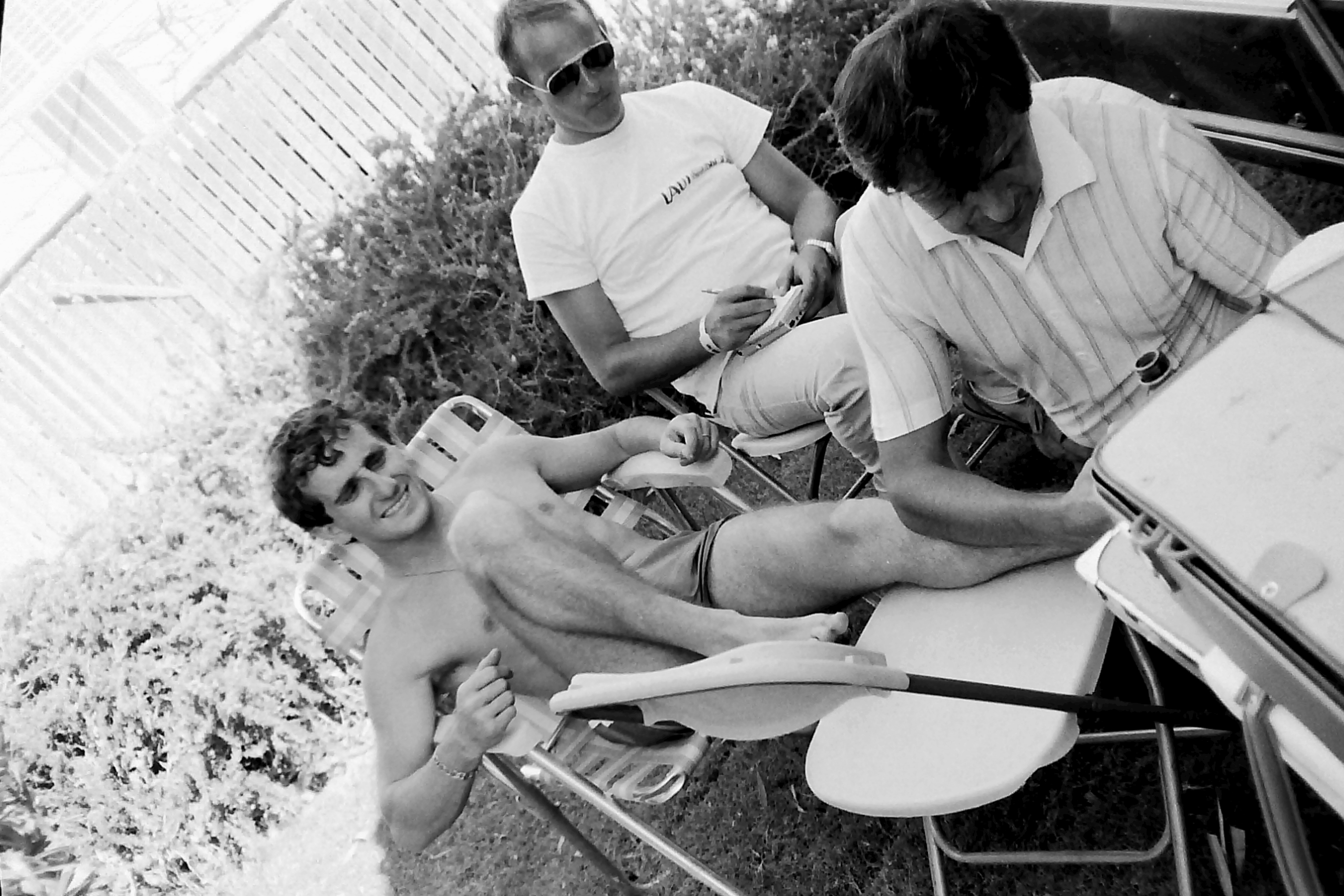 On our YouTube Channel (http://youtube.com/peterwindsor) you will find a short conversation I had today with Anthony Rowlinson, Editor of F1Racing magazine. We speak about The Verdict (enough said!), about the gentleness of Murray Walker – and about Renault’s new F1 engine (correction: “Energy Power Unit”) for 2014. Fresh from the creative RenaultF1 press conference at Le Bourget, at the Paris Air show, Anthony reported that Alain Prost believes that efficient cornering is going to be even more important from next year onwards, which prompted me to suggest that some teams could do a lot worse than to employ Alain again as a driver. I joke, of course, but the topic is a vivid reminder of how good Alain used to look in Renault turbos in the early 1980s; and this, in turn, induced me to scan another neg or two. The first is of Alain receiving some routine physio after a practice run at Imola in 1983. There were no closed doors or darkened windows back then; on the contrary: here was a chance to do a bit of sun-bathing. I particularly like this photograph because there in the background, interviewing Alain, is one of my favourite F1 writers – the French journalist, Gerard Flocon. Gerard used to write for the fabulously thick and glossy L’Automobile and was both astonishingly productive and studious in the way he went about his business. It was daunting, indeed, for someone like me to see just how much work was involved if ever I was to have a hope of becoming someone like him. The other shot is one I took of Alain unfastening his GPA helmet a few seconds after winning the 1983 Austrian GP for Renault Elf. I was a huge Prost fan, I have to confess – right from the days when he dominated the European F3 Championship. I got to know him well during his first McLaren years and we spoke a lot, back then, about the ins and outs of his switching to Renault. I don’t know for sure if Alain is smiling right at me in this photograph, but I like to think he is.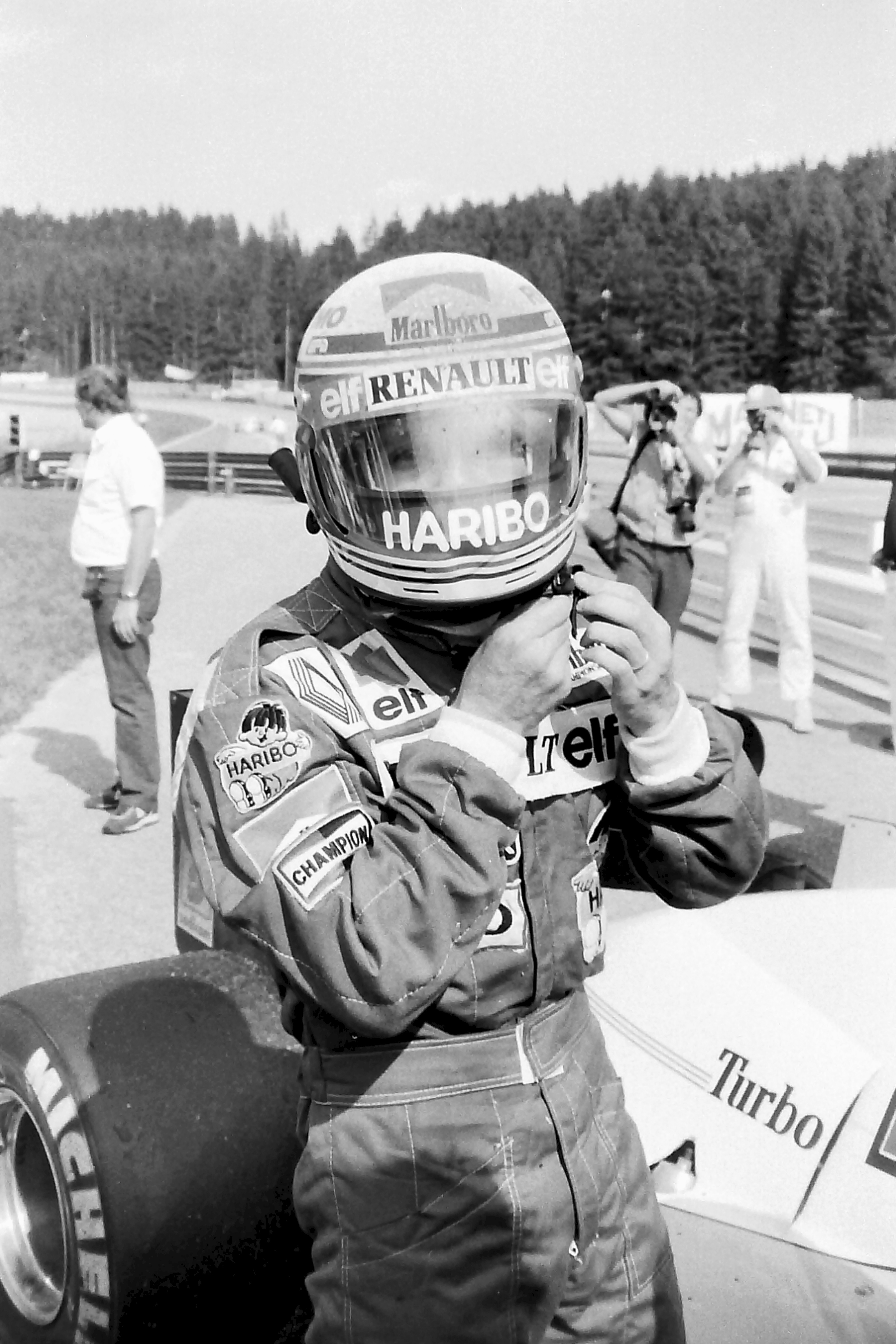




















 peterwindsor.com