peterwindsor.com

…chance doesn't exist; there's always a cause and a reason for everything – Elahi

Archive for the tag “Team Lotus”

The Battle of Reims

20172.tifJim Clark makes it three-in-a-row

The drive down to Reims was the usual cavalcade.  They left Zandvoort, after a celebratory dinner/cabaret at the Bouwes Hotel, early on Monday morning.  First practice for the French GP would commence on Wednesday afternoon (or just one clear working day from the Dutch GP.  As with Monaco now, there was a “free” day within the French GP schedule back then.  At Reims, this was on the Saturday, following three successive afternoons of official practice.  No thought, apparently, was given to the ‘double-header’ pressures facing the mechanics.)  At some point in the road trip Ian Scott-Watson joined Jim and Colin in their rental car and allowed Trevor Taylor behind the wheel of his yellow Elan.   Ian would thereafter spend much time telling the French police that, no, it wasn’t he who had been driving the English sports car at the time in question and that his friend, the culprit, had since flown to Canada…or anywhere…

This wasn’t the usual sun-baked French Grand Prix.  Showers muddied the paddock on Thursday, leaving the Wednesday and Friday sessions for grid-shaping;  Taylor, indeed, set his fastest lap on that Wednesday – and on Thursday, in the rain, neither Lotus driver completed a lap.  (One significant casualty that day was Ludovico Scarfiotti, who crashed heavily in the works Ferrari.  He was for the most part uninjured but shortly afterwards would announce his retirement from racing.  Rescinding this a few months later, he went on to win the 1966 Italian GP for Ferrari at Monza.  He would sadly lose his life in 1968, in a hill-climbing accident.  He was a good friend of Jim’s.)

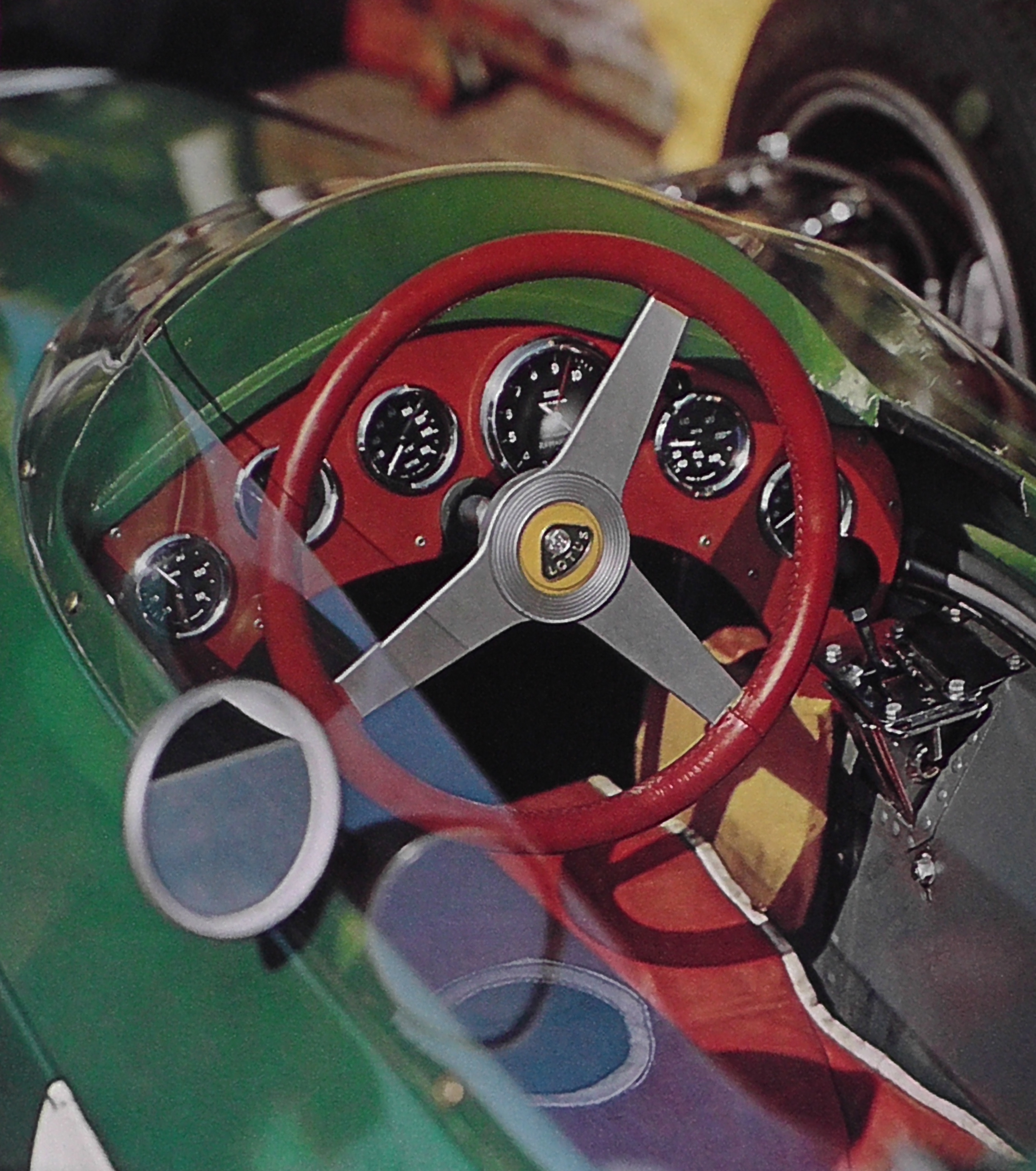
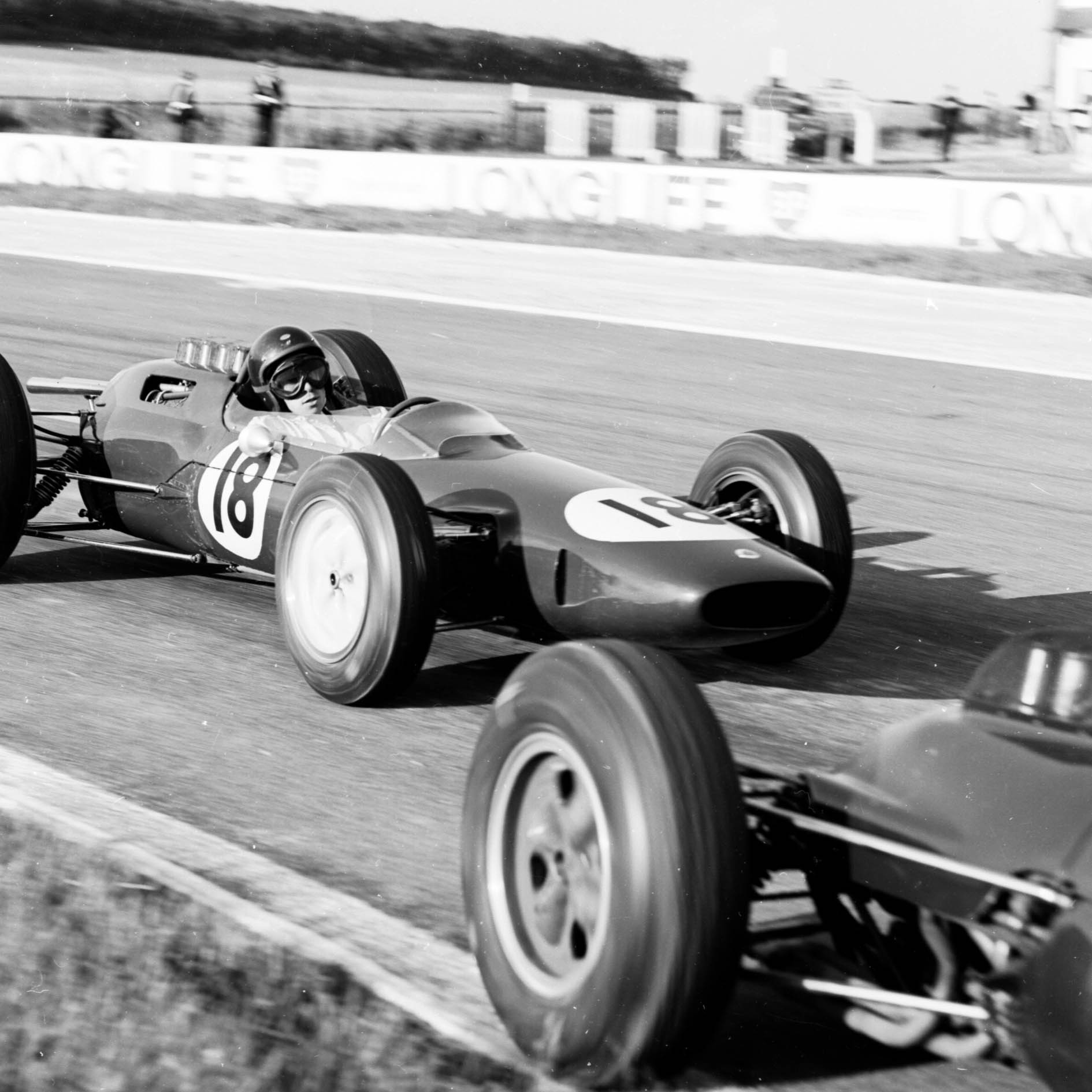
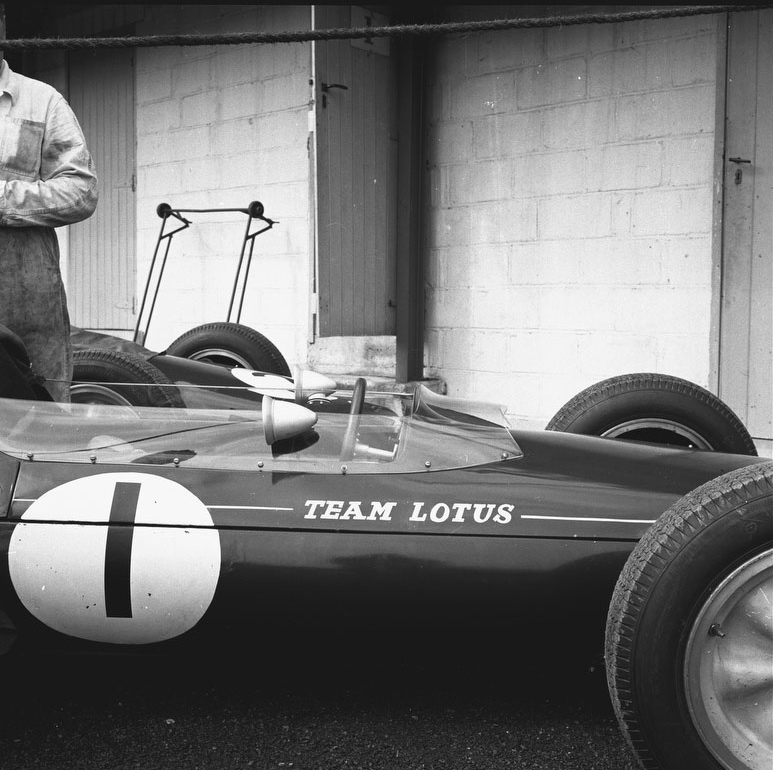
Wet or dry, flying stones were always an issue at Reims, inducing Lotus to revert to standard windscreens for this race.  With the aeroscreen, it was thought, there was always a risk of debris finding its way into the “jet”.  Slipstreaming on the long, ultra-fast (160mph) French public roads could gain you seconds per lap;  the trick in practice, if you were searching for the pole, was to keep your mirrors free.  Despite a considerable straight-line speed deficiency to the BRMs (including Innes Ireland’s BRP-BRM) and also to the Ferraris, Jim took the pole – and the local champagne that came with it.   In the 25, running the same set of Dunlop R6s he had raced at Monaco, Spa and Zandvoort, Jim found a sweetness in the balance on high-speed corners that he had not felt before – or would feel again in 1963.  “I could set the car up in a whacking great drift around the back, keep my foot it it and achieve cornering speeds that I wouldn’t have thought possible,” he would say later.  Very few photographers – if any – seemed to venture out to these corners in those days (they focussed on the “long” shots on the pit straight and the 90 deg right hander leading on to it) so we are left only to imagine what Jim describes as that “whacking great drift”.  To my mind, given the understeer with which he lived at the International Trophy race at May, the 25 at Reims was now far more neutral – neutral leading to oversteer.  I think it’s also probably significant that by this race Team Lotus seemed to have found some sort of fix for their gearbox drams.  Jim, at last, was able to drive the 25 with both hands on his red leather-rimmed wheel.1963 French Grand Prix. Ref-20133. World © LAT Photographic
Saturday was support-race day, which meant big sports cars and Formula Junior.  Jim was at the track, of course, primarily supporting the Normand Lotus 23Bs (Mike Beckwith and Tony Hegbourne) and Peter Arundell in the FJ race.  There had even been talk of Peter racing the third (spare) 25 in the Grand Prix but ultimately it was felt (when balancing prize money against running expenses!) that Peter should race the works (“mini-25”) 27 FJ.  Denny Hulme again won the FJ battle in the works Brabham, pulling away definitively from the second-place slipstreaming group and finally finishing ahead of Peter, Richard Attwood (MRP Lola), fellow Lotus drivers, Mike Spence and John Fenning, and David Hobbs (MRP Lola).  (As the 50th anniversary of the formation of Bruce McLaren Motor Racing Ltd approaches, it’s also worth noting that the talented American, Tim Mayer, finished eighth in this Reims FJ race in one of Ken Tyrrell’s Cooper-BMWs.  Tim and his brother, Teddy, would in the months that follow become an integral part of the new McLaren team.)

Tall and talented Mike Parkes should have won the sports car event with his formidable 4-litre Ferrari but a clutch problem early in the one-hour event effectively handed victory to Carlo Abate (also of powerboat fame) and his 3-litre Ferrari.  Lucien Bianchi (great uncle of Jules) placed third behind Dick Protheroe – and the tough Australian, Paul Hawkins, finished fifth overall with his Ian Walker Lotus 23.  Mike Beckwith had been right up there in third place in the early phase, when Jo Schlesser was leading with his 4-litre Aston, but he fell back a little after a slight “off”.  The small-car class was won by Jose Rosinski, who would go on to become one of the greatest of all French motor racing journalists.

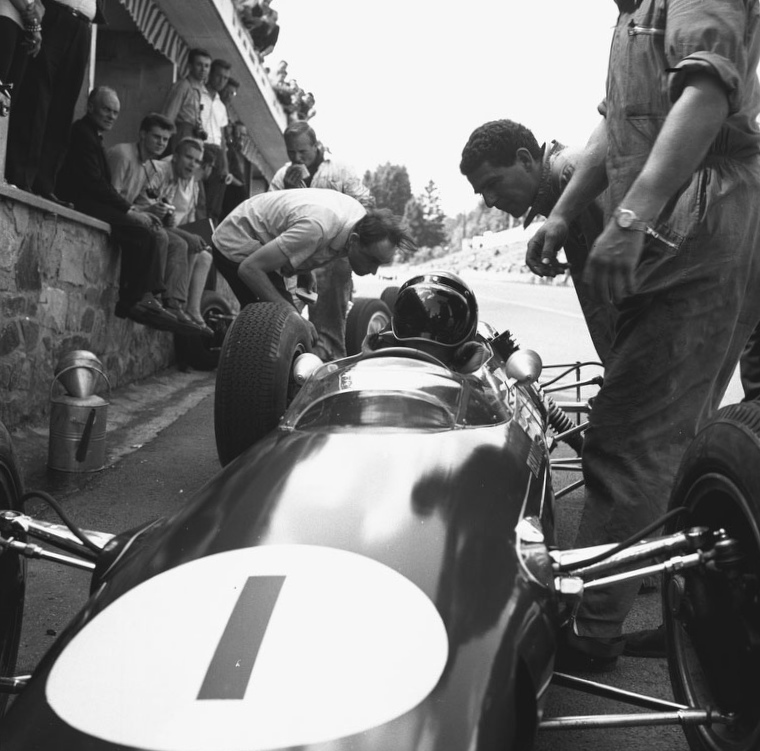
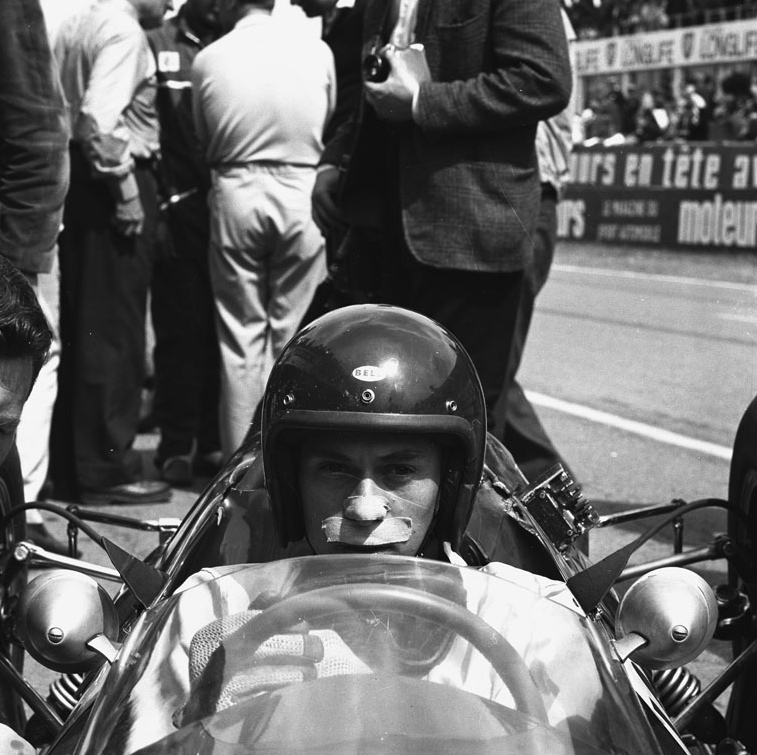
On Sunday – another overcast day – Jim prepared for a torrid French GP as a fighter prepares for a bout, applying white masking tape across his face for extra protection.  Even in the dry, this race would run for well over two hours.

The start, as they say, was the usual shambles.  A fuel vapour lock killed the engine in Graham Hill’s BRM.  Push-starts were forbidden by the regulations…but “Toto Roche”, the autocratic leader of French motor sport and official starter, instructed the BRM mechanics to push Hill’s car nonetheless.  The V8 now revving purely, Roche then quickly stepped away and dropped the flag – except that he dropped a red flag rather than the French national tricolor.   No-one was exactly sure what to do – but they went for it nonetheless.

Jim Clark accelerated hard through the gears to 9,600 (with a max set at 9,800) and then focused on driving the perfect lap:  “Before the race,” he would say later, “I had said to Colin that if I could make the fast corners in front I felt I could open a gap and break the tow.  If I wasn’t in front we agreed that it would be better if I just sat back for a while and let them get on with it…”

Jim was in the lead by the time he reached the first, quick right-hander.  And the second.  And the third.  Full tanks or not, he four-wheel-drifted the 25 with fluid inputs and pin-sharp judgement.  By the time he reached Muizon, the right-hand hairpin, he had free air behind him.  He could forget about his mirrors.ACT
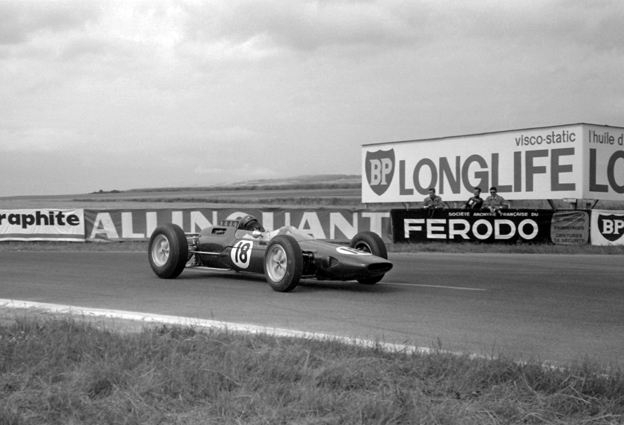
Jim’s standing lap was completed in 2min 31.0sec;  his Indy team-mate and friend, Dan Gurney, lay second a full 2.7sec behind.  Richie Ginther, powered by probably the best engine on the circuit that day, catapulted his BRM up to second place on lap two.  Even so, Jim was leading by nearly four seconds as he passed the Team Lotus signalling board, the 25 sitting on 9,600rpm.

And so it went on.  John Surtees (Ferrari), Dan and Jack (working together in the Brabhams), Bruce McLaren (Cooper), Trevor and Graham Hill scrapped over second place, swapping track space either in top gear, in the tow – or under braking.  At the front, Jim continued to pull away.   By lap 12 of the 53-lap race, he was 19 seconds ahead of Brabham.

Then, for Jim, it all seemed to go wrong.  His Climax engine began to mis-fire at 9,600rpm.  Jim immediately throttled back to 8,000 rpm, where he found a “sweet spot” around which the engine seemed to be half-ok.   He then concentrated even harder on those fast corners but was forced to sit back helplessly on the straights, waiting for the engine to blow – and/or for the next round of bad news on the pit board, for  Brabham was now catching him.  All around the circuit, what’s more, Jim could see parked cars.  Reims was forever tough on all mechanical components – so why was this circuit, on this day, going to be any different for him?

Because on this day – as it had been all week – it would rain.  Jim felt the grease on the track even before his goggles went smeary, for the grooves of the R6s were now worn virtually to slicks.  He was dancing on ice – focussing once again on those fast, very drifty corners where still the 25 felt perfect.  His lap times climbed by ten, 15 seconds;  Graham Hill’s ballooned by 20 seconds.  Maximum revs became irrelevant;  it was all about delicacy.

And so, maintaining that lead, Jim Clark crossed the line, acknowledging Toto Roche’s chequered flag with a raised left arm.  In the grandstands, umbrellas dominated the visage.  On the rev-counter of Jim’s 25, the tell-tale needle sat resolutely at 9,600rpm.  On the work bench later, back in Coventry, Jim’s engine was found to have two broken valve springs.  Trevor (who for this high-speed race, like Jim, raced without a peak on his helmet) might well have finished second had the crown-wheel-and-pinion not failed.  As it was, Graham Hill’s second place was subsequently disallowed due to that push start (subsequently, as in “by the time they got to Monza”.)  Tony Maggs therefore finished an excellent second for Cooper, catching and passing Hill in the closing stages when the monocoque BRM ran into both clutch and brake issues.  Jack took Graham’s third place, with Dan finishing fourth.

Post-race, there was more pandemonium:  a policeman suffered an epileptic fit as he was attempted to clear the crowds from the pit area.  Through the melee, though, Jim and Colin found their way opposite to “the press box”, where they chatted to journalists like Gregor Grant (Autosport), Philip Turner (Motor), Peter Garnier (Autocar) and several of the Fleet Street types.

Thus it was done.  A new era had begun.  Jim Clark and Team Lotus had won three in a row – Spa, Zandvoort and Reims – and had changed the face of Formula One.  The driver lay low in his monocoque car.  The speed, and the suppleness of that speed, was extraordinary.

Next:  the British Grand Prix at Silverstone.FH000006
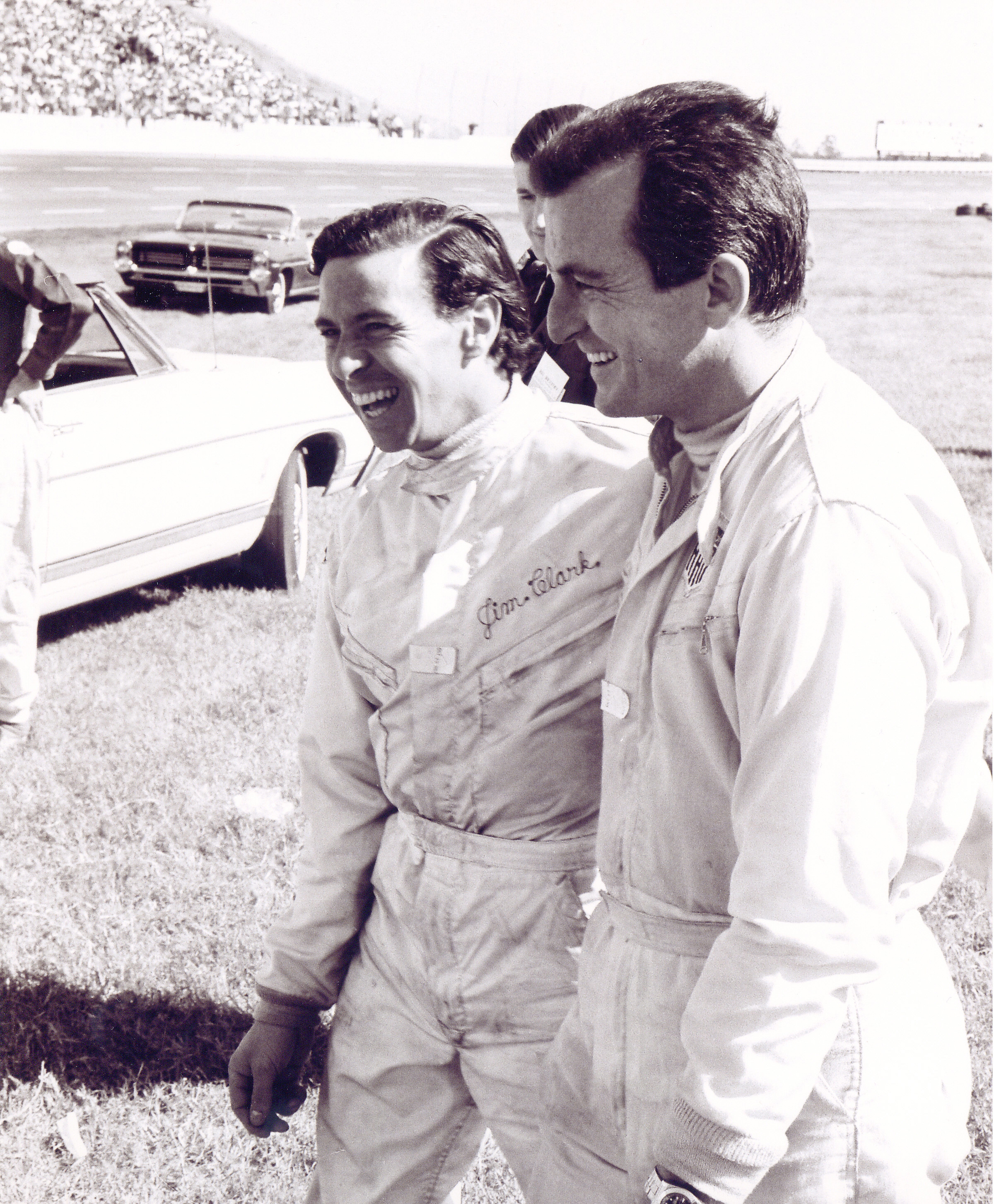
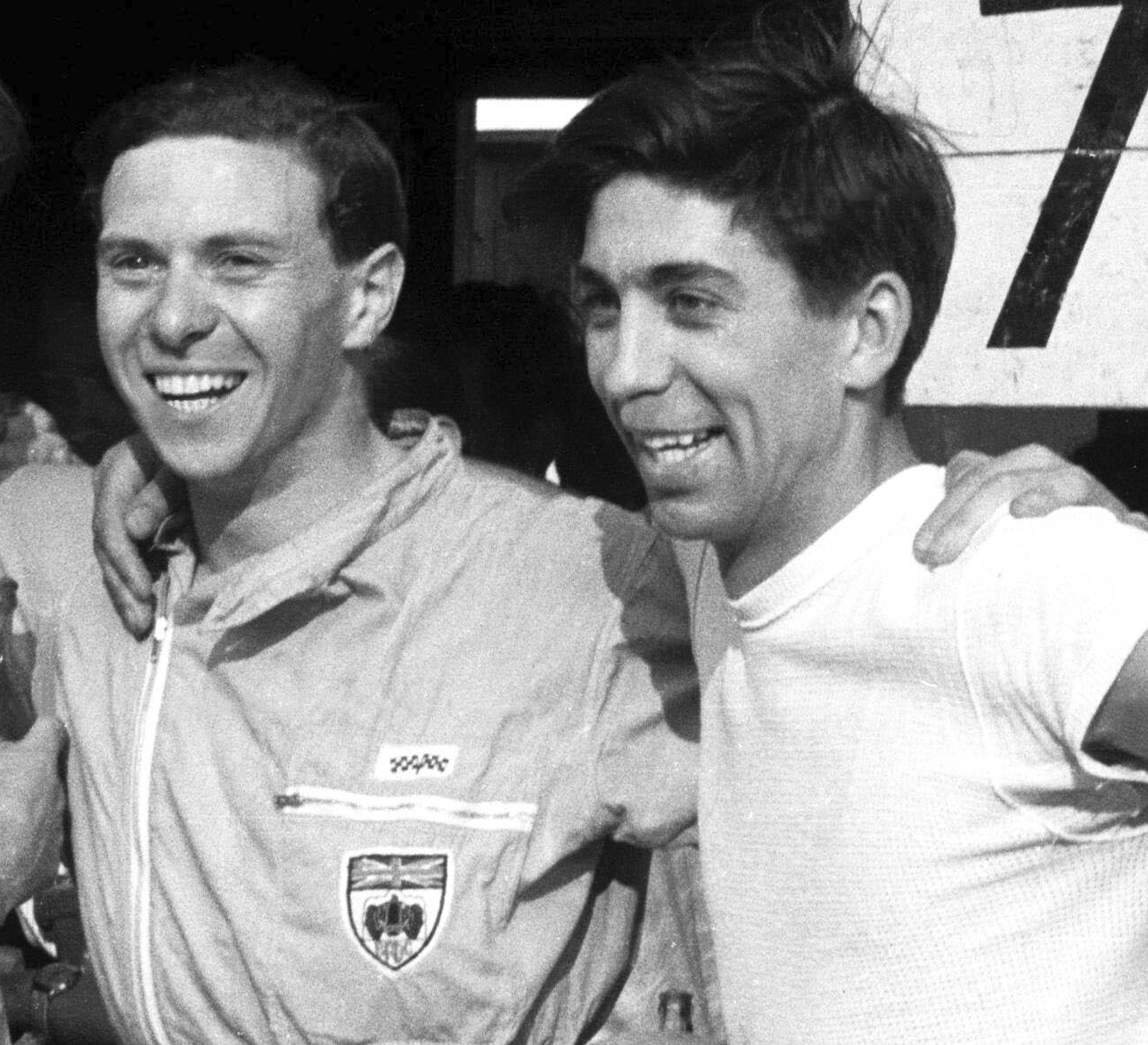
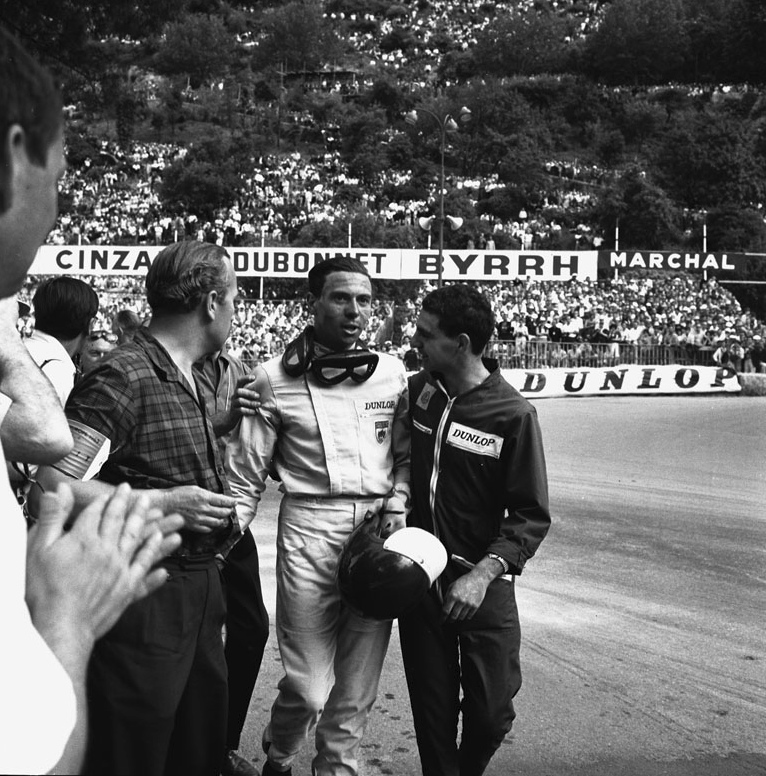
Captions from top: face taped to provide at least some protection from flying stones, Jim Clark readies for battle at Reims;  Reims practice shot of Jim in the aeroscreened 25; for the race, the conventional screen was used.  This was also the last race for a 25 sans yellow stripe; Jim and his friend, Ludovico Scarfiotti, photographed at the Rockingham NASCAR race in 1967  Images: LAT Photographic; Peter Nygaard Collection; Peter Windsor Collection
Artist at work: Jim Clark wins Dutch GP

19618.tifJim’s whirlwind 1963 season continued unabated – even when he wasn’t driving a racing car.  The Belgian Grand Prix had been a relief;  it had been tough and dangerous;  it had been nothing less than the usual forces of Spa.  At last, though, he had scored another F1 Championship win with the Lotus 25 (his last, prior to that, had been at Watkins Glen, the previous October).  At Spa the car had again been excessively temperamental – difficult to set-up and fragile (with the persistent gearbox problems still no nearer to being remedied).  Still, though, he had won with enough margin to be able to back away in the closing stages and to crawl around in the torrential rain.

Then came a nice, two-week break.  Jim returned first to London, to Balfour Place, where there was plenty to celebrate with Sir John Whitmore and his new wife, Gunilla, and also with the boys over at Cheshunt.S2600019  There were expense accounts to present to the ever-scrupulous Andrew Ferguson and there was Indy prize money to reconcile.   There was also a new, convertible, Lotus Elan S2 to collect and try.   Painstakingly assembled at the factory, this Elan would be Jim’s transport through to October, 1963.

Jim had appointed Bill Campbell to manage Edington Mains but now it was time for Jim to return to the Borders to catch up on the events – farm-related and otherwise – of the past six weeks or so.  More and more, there were additional interviews to be scheduled with local TV, radio, newspaper and magazine journalists.  Ian Scott-Watson, who had already invested £40,000 of his own money in Jim’s career – and was paying his own way to several European events in 1963 – was still very much in charge of Jim’s racing administration.  Graham Gauld, a local motoring journalist whom Jim had respected from the early Border Reiver days, was also in position to start preliminary work on Jim’s autobiography.  And then there were the farm matters.  The lamb sales were looming.  Cast ewes were to be bought.  Silage was in the first cut. Most days, with an interview or Lotus-related meeting scheduled at some point, Jim wore a shirt, tie, sports jacket, flat cap and Wellington boots as he strode around the farm.  Sometimes, if he could relax, he’d leave out the tie.  In short, Jim switched off for a while, although the inevitable Autosport and Motoring News were never far from his desk.  He would have smiled that week at the picture in Autosport of the USAC race official pointing to the oil leaking from Parnelli Jones’ car during his last pit stop and he would have spent a little time, too, reading about the Rover-BRM turbine car that Graham Hill and Richie Ginther would be racing at Le Mans the following weekend.  And, of course, he would have devoured the details of the previous week’s Scottish Rally (won by his fellow-Border farmer, Andrew Cowan).   Andrew and Jim – who were 27 and 26 at that point – had much to celebrate in Duns in the free weekend that followed.08-26-2010_45

All too soon, though, it was over:  ahead lay a Dutch and French Grand Prix double, followed two weeks later by the British Grand Prix.  With Ian driving his own, yellow Elan demonstrator to Zandvoort and then Reims, Jim drove south to travel to Holland with Colin by private aircraft from Panshanger Aerodrome in Essex.8-24-2010 16-55-24_095

A year on from their official race debut, the cars weren’t ready for first practice at Zandvoort – which, from Jim’s perspective, was no bad thing:  as much time as was needed to fix the gearbox problems, Cedric Selzer and the lads could have it.  As it was, Team Lotus brought a mixed bag to Holland:  Trevor Taylor would use a six-speed Colotti gearbox and Jim a modified five-speed ZF. The cars were also fitted with revised versions of the aeroscreen tried at Spa – this time with a larger opening and a steeper flare ahead of the dash.  Jim quickly found that, with the new design, buffeting had all but disappeared;  white helmet peak now confined to his bag (or lent to Dan Gurney!), he could lie even lower in the car.  So Jim raced it.  The 25’s Ultimate Look was almost complete.S2600001

For this race, thinking about the potential for dust and sand, Jim fitted an orange lens to his Panorama goggles, taping the top half, as usual.   He stayed with the team in a small bed-and-breakfast in the little holiday town of Zandvoort and went trampolining with Bruce McLaren on the beach after practice.  The Dutch Grand Prix was being staged later than normal.  The weather was warmer.  The crowds were huge.

Jim tried the Colotti in practice, then switched to the ZF.  He was unsettled to find that it was now jumping out of second gear rather than top.

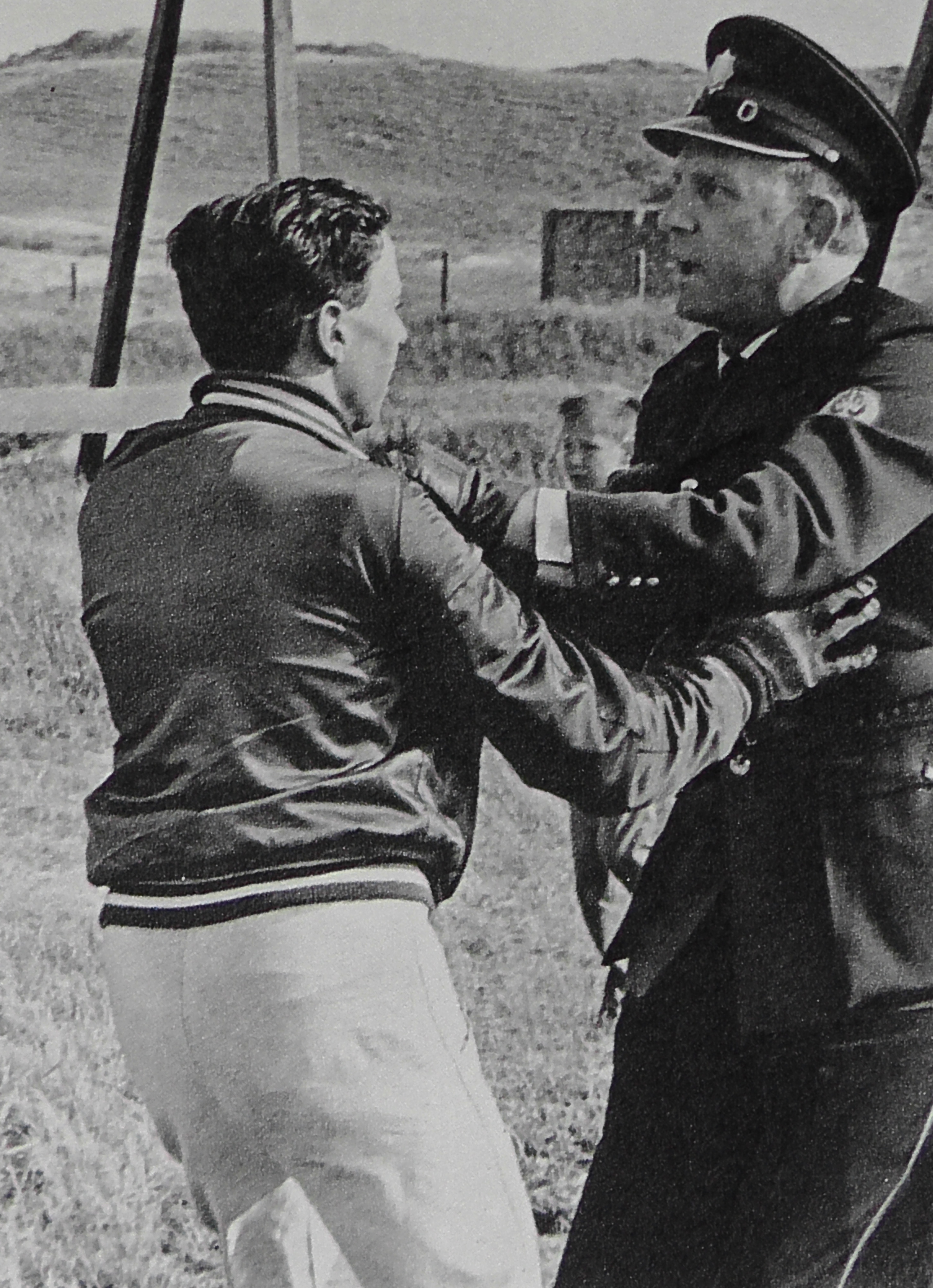
While waiting for his car to be adjusted during Saturday practice, Jim strolled out the back of the pits to watch the action.  Against a chill North Sea breeze, he wore his now-customary Pure jacket over his Dunlop blues and his regular string-backed driving gloves.  There he found his mate, Bruce McLaren, who was also in gearbox trouble with the Cooper-Climax (in this, a “comeback” race for John Cooper, who had been seriously injured in early April when he had crashed an experimental twin-engined Mini-Cooper on the Kingston by-pass).   The two were having a laugh, and comparing notes, when suddenly Bruce was grabbed by a policeman and dragged backwards towards the paddock.  Jim spun around in horror – only to see another policeman heading towards him with about the same step.  The issue at hand:  Bruce McLaren, without his Driver’s pass, was standing where only photographers could tread.  Jim was about to protest Bruce’s innocence when two big hands grabbed him by the Pure jacket and attempted to drag him too towards the shrubbery.  Jim’s Dunlop overalls were torn;  and a large crowd swarmed around, all shouting at the policemen to stop. S2600002 Jim had the correct pass! It was there, visible inside his jacket!  In time, there was little the police could do.  It took a reminder that Zandvoort was about to receive the GPDA’s “Best Organized” award, however (as voted by the members at Monaco), for Bruce to be released.

Although the story of Jim Clark’s Dutch GP weekend is thereafter a story of complete domination, of total command, there was, of course, another side to it: Jim felt that the revised Dunlop R6s brought to Zandvoort were an improvement but still he couldn’t persuade the 25 to handle well on both fast corners and slow:  although he headed every practice session and took the pole by 0.6 sec, he had to nurse understeer at Tarzan and – more importantly, at Hunze Rug, where the slow, downhill left-hander was followed by a long acceleration run through the sweepers.  Even so, he led the race from start to finish, lapping even Dan Gurney, who finished second for Brabham.  The sun shone, sand swirled – and still Jim drew quickly away from the pack.   His was a race of supreme concentration, for there was no-one around for him to race.  It was two hours, nine minutes of lone, artistic brilliance.S2600004

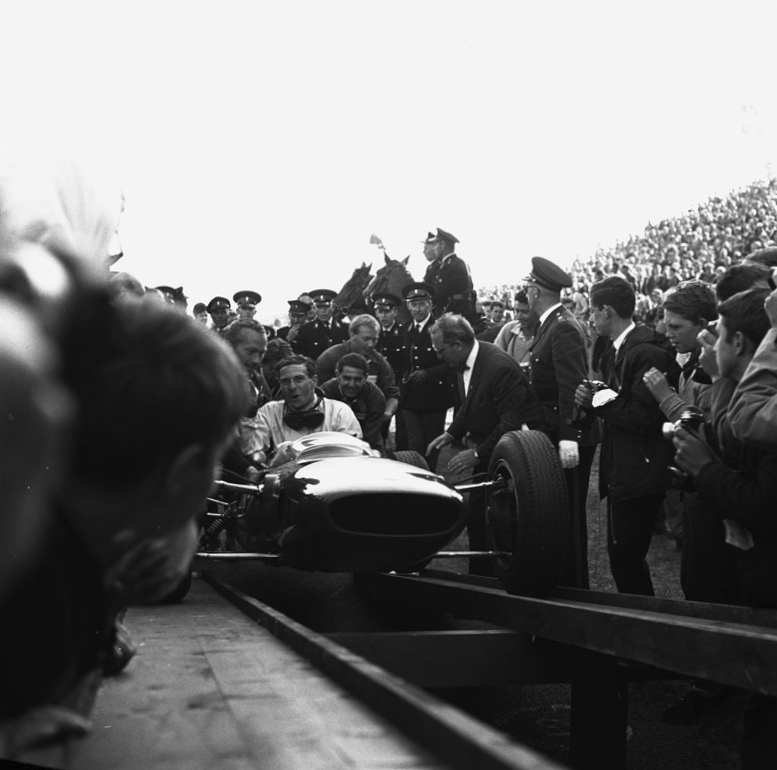
Justifying that GPDA Award, the Dutch organizers did a nice job with the post-race celebrations, ushering Jim and the 25 up between the crowds onto a trailer, where the new Championship points leader could be acknowledged by the fans opposite in the packed, signature grandstand.   Jim’s policeman friend from Friday reluctantly helped with the crowd control – but then had the last word when by preventing both Jim and Colin Chapman from entering a studio for post-race radio interviews. No-one dared ask why.

In another part of Europe, meanwhile, on this day in June, 1963 – on Hockenheim’s OstCurve, in Germany  – Heinz Schreiber was killed when his BMW slid into the trees.  In the aftermath, no-one even thought about the erection of guard-rails or of any sort of protective fencing.S2600003

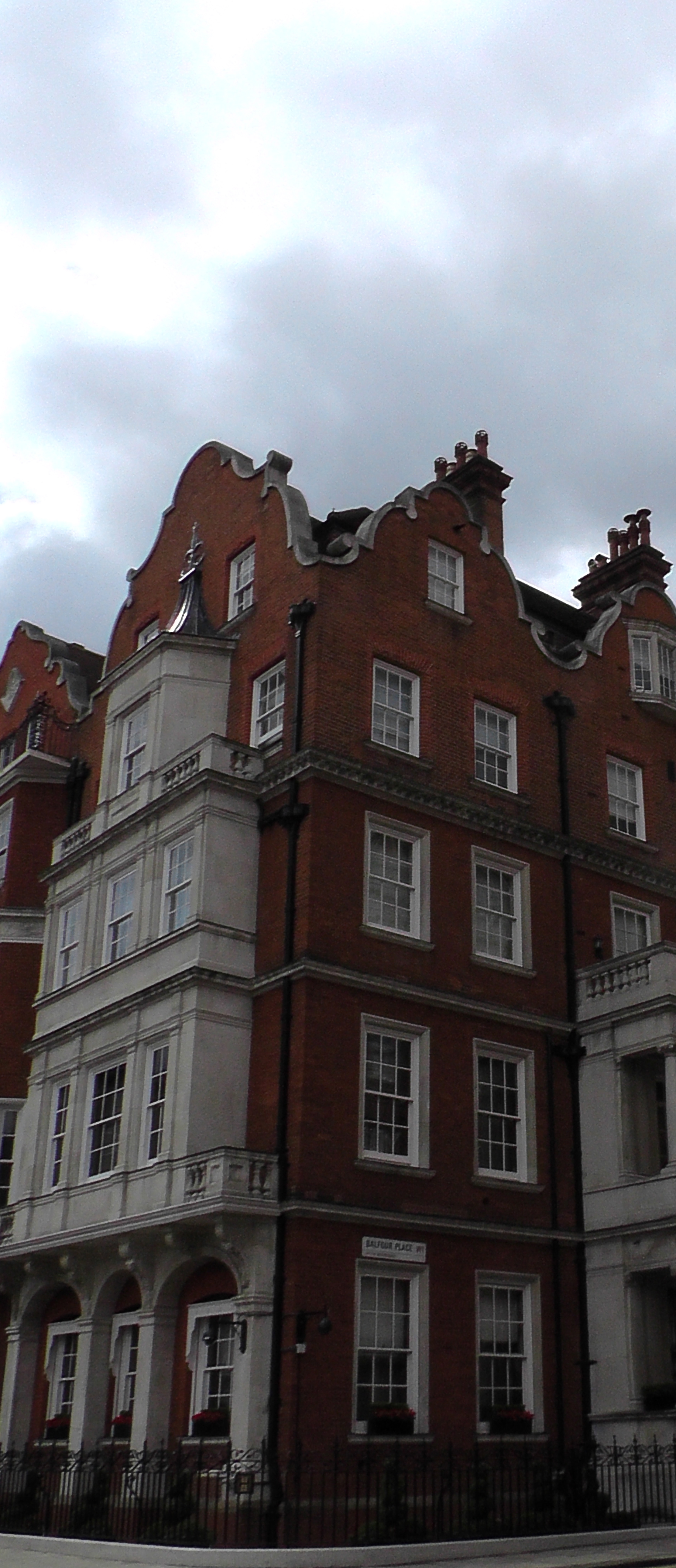
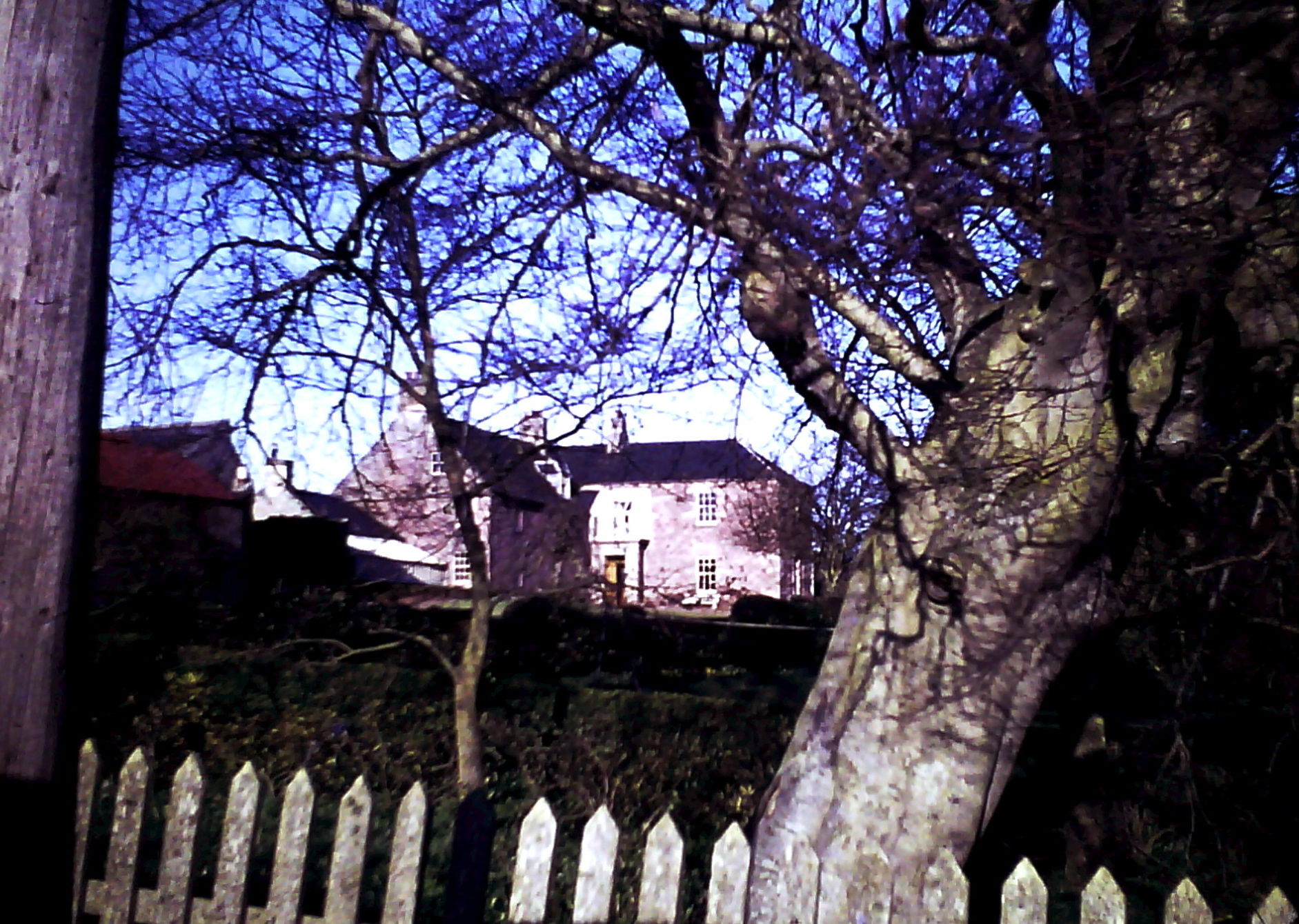
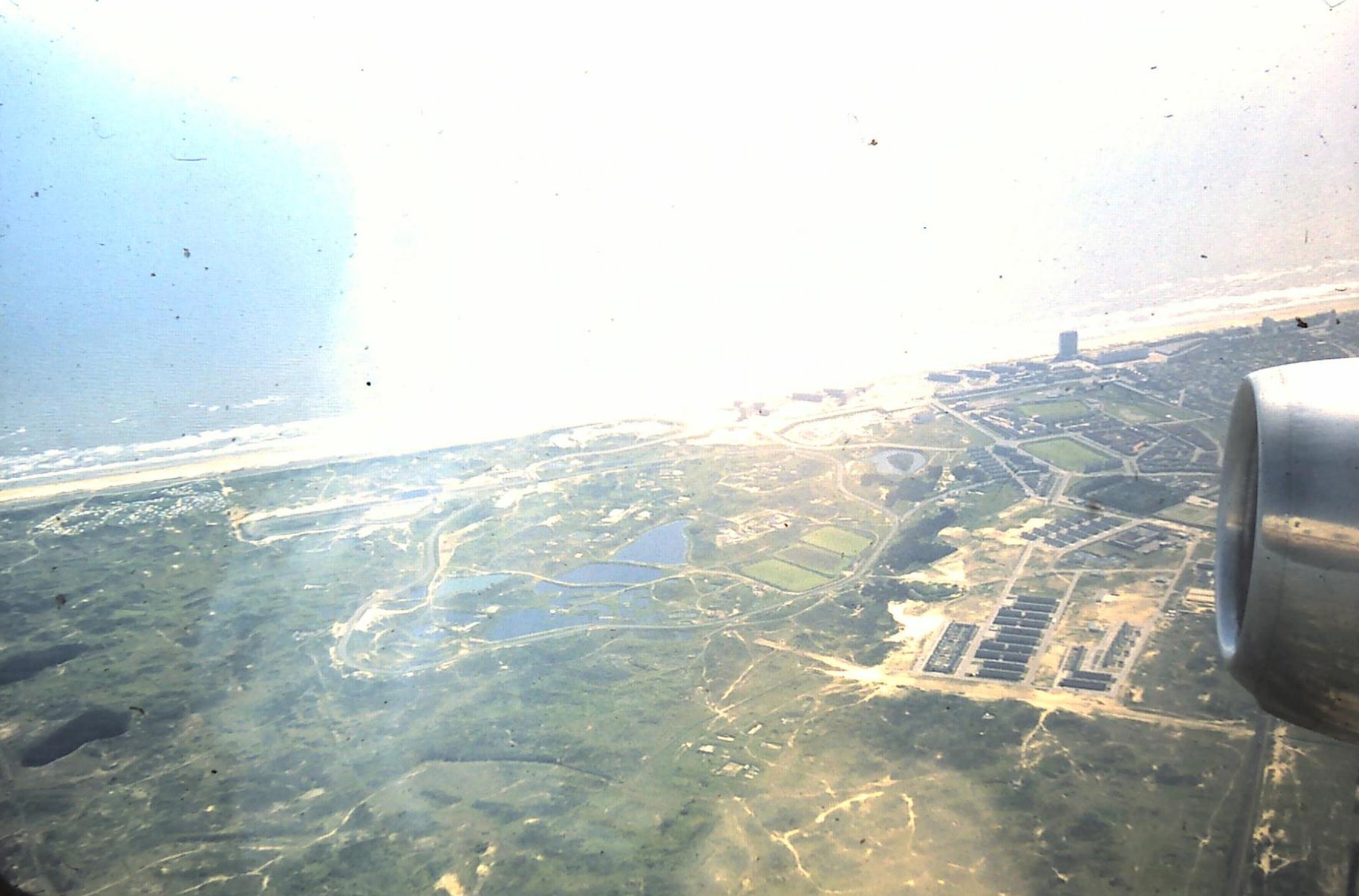
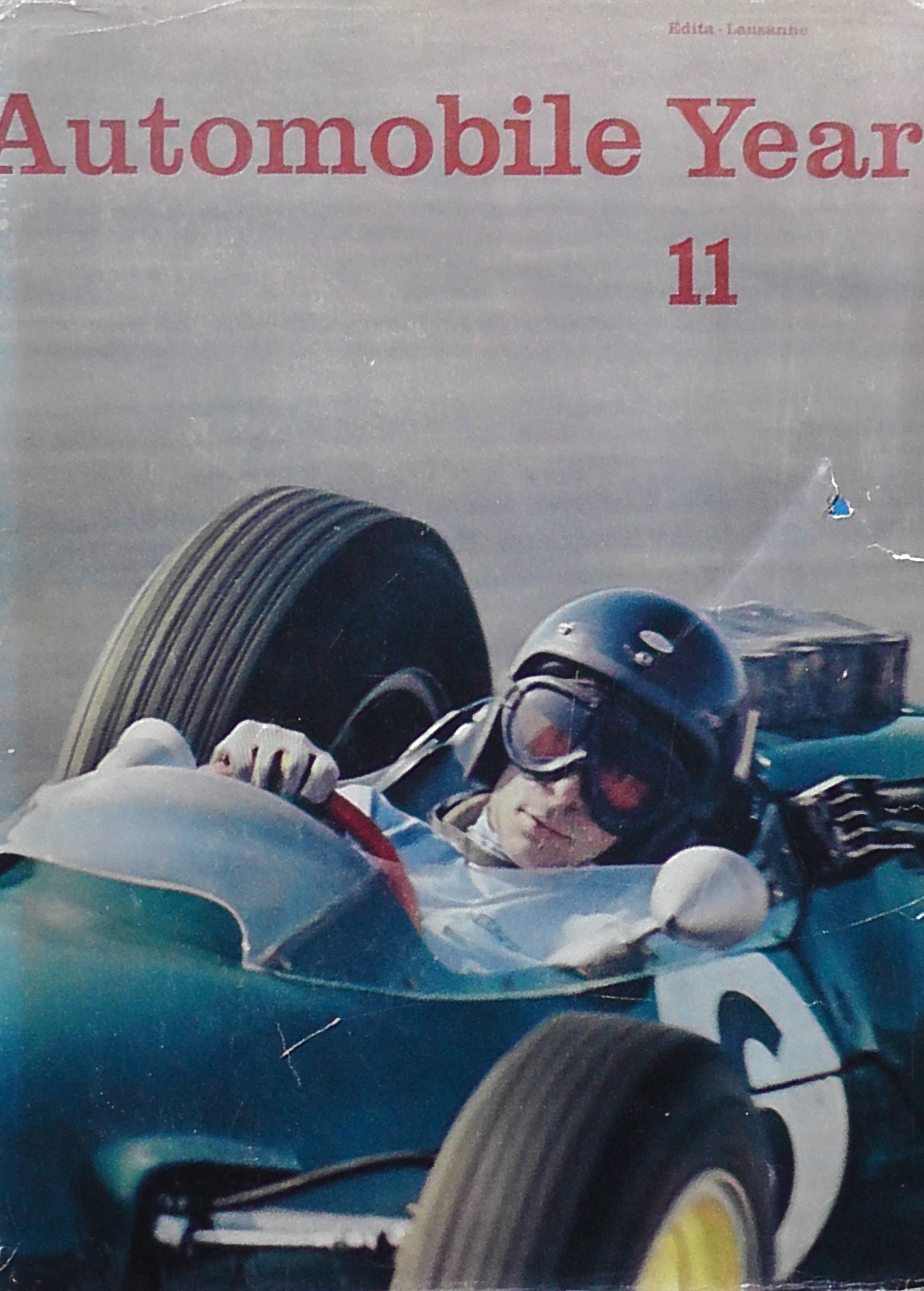
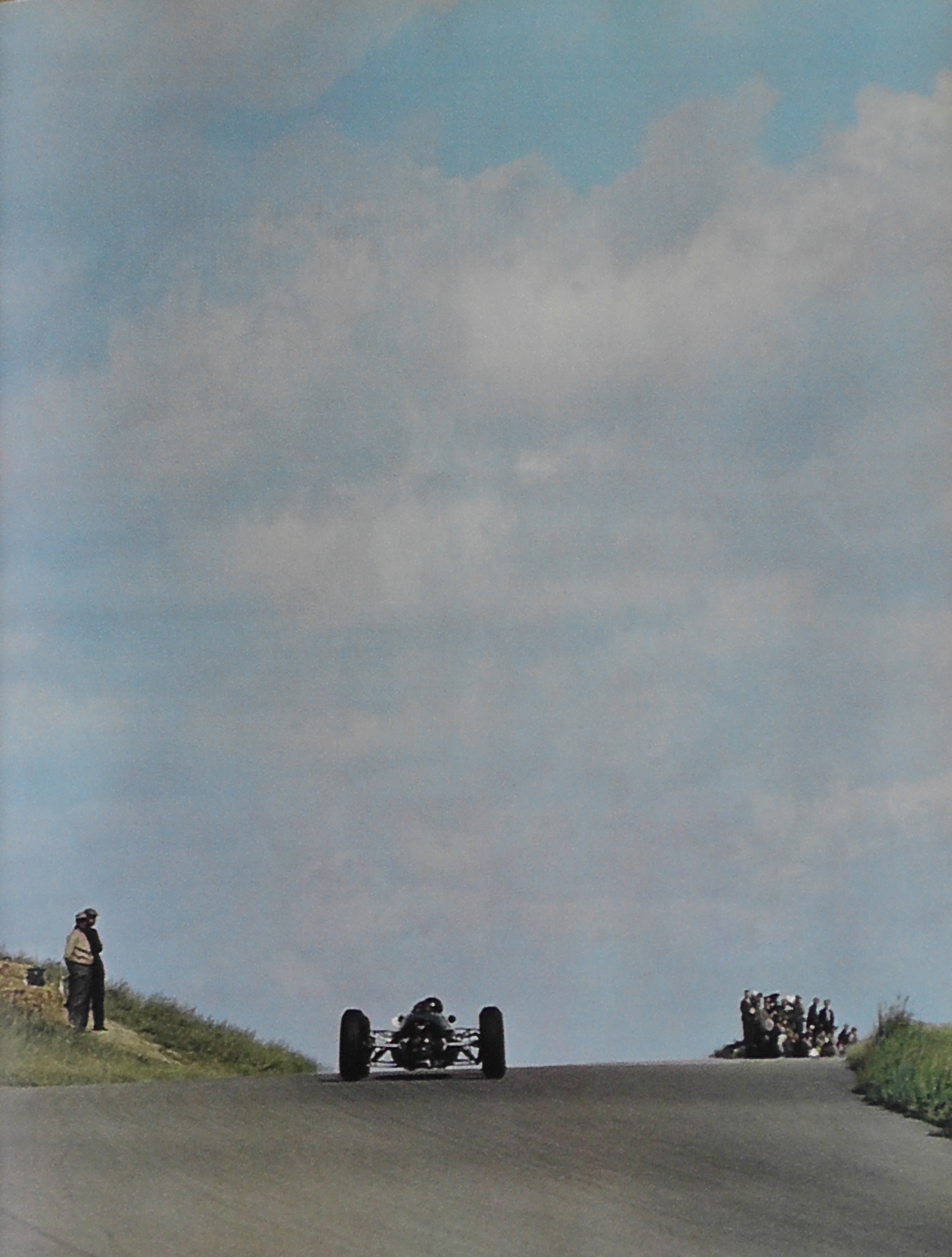
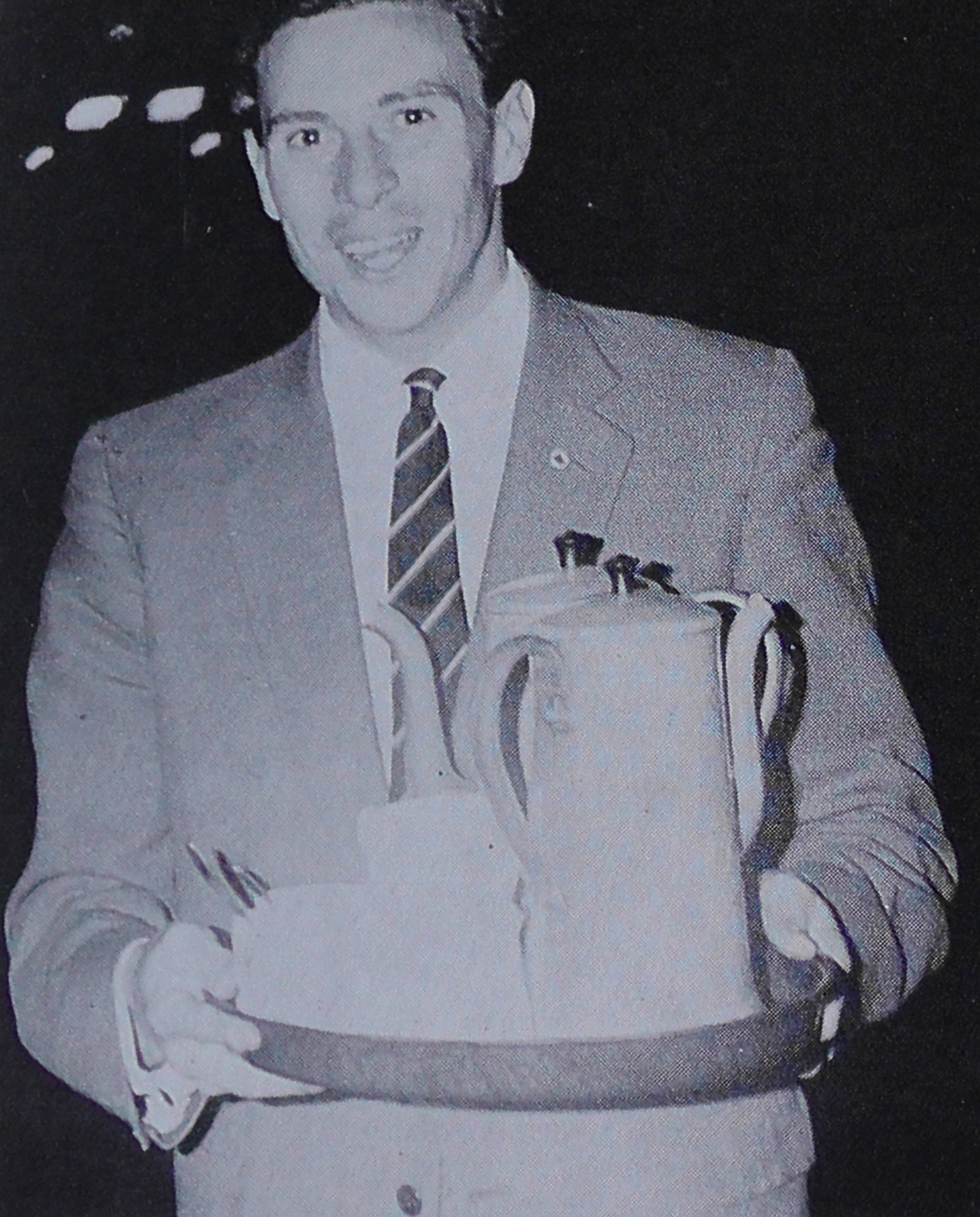
Captions (from top): Jim glides the 25 up the ramp for victory celebrations.  Note Cedric Selzer by left-rear Dunlop;  top-floor flat, 8 Balfour Place – Sir John Whitmore’s London pad, as frequented by Jim Clark.  Rob Slotemaker, the Dutch trickster, once completed a perfect 360 within the confines of this narrow road, much to the amusement of  Sirs Whitmore and Clark; Edington Mains as I photographed it in 1967; Zandvoort in 1967, as I saw it from a Boeing 707; Jim’s Dutch GP win, with all its aesthetic perfection, was perfectly-captured on the cover of the 1963 edition of Automobile Year; Jim and that famous scuffle; the 25’s cockpit also set timeless artistic standards; in a world of his own – Clark at Zandvoort, 1963; below – Saturday night, and Jim returns to the track after dining in Zandvoort.  The boys needed some coffee! Images: LAT Photographic, Peter Windsor CollectionS2620007

One-handed through the Masta kink…

It was Spa – the old Spa.  And it was wet.  Atrociously wet.  Thus Jim Clark scored his first World Championship win of 1963

19244_lowresAnd so they went to Spa.  Jim traditionally stayed at the Val d’Ambleve near Stavelot and did so in 1963:  the 25s would be towed to and from the paddock area every day.  Jim flew with Colin Chapman and Trevor Taylor on D-Day, June 6.  The Ardennes forest had nineteen years before been ablaze with the Battle of the Bulge.  Practice at Spa would begin on Friday.romantik-hotel-le-val-d-ambleve-ueberblick-01-original-114553

In the Clark track bag: his new, dark blue Bell Magnum helmet and rounded bubble visor Bell had given to him at Indy.  All previous visors used by Jim had been attached to his Herbert Johnson or Everoak helmets by a crude strap and a single stud.  After last year (1962), when the rush of air down the Masta straight had actually loosened Jim’s regular white helmet peak, obliging him to rip it off one-handed whilst winning the race, Jim was delighted to see that the new Bell visor was fastened by three big pop-on studs.  With rain always on the agenda at Spa, this would be the perfect try-out.  Left in the bag, therefore, was the white Bell peak he had used at Indy, Mosport and Crystal Palace (ready for Dan Gurney to borrow!).  If it was dry, he would just run the helmet without the peak. If it was wet, and providing he liked it in practice, he would try the bubble visor.19194_lowres

Lotus had another airflow development, too: Colin’s latest idea involved a  a large opening at the front of the screen and a lip on the cockpit surround.  This would channel air up and over the driver, reducing buffeting and allowing the  windscreen to be cut lower, thereby improving visibility.  Again, the high-speed Spa circuit was the obvious venue on which to try the new device.  In the dry, in 1962, Jim had won at an average of 133.98 mph – this on a lap that included a 40mph mid-corner speed at La Source hairpin.  With more power from the flat-crank Climax, more grip from the Dunlop R6s and some significant re-surfacing, lap speeds – and top speeds – would be higher still in 1963.

It is hard to imagine today what it was actually like at Spa back then – out there on the old circuit, on a thin ribbon of public road bordered by such routine items as telegraph poles, phone boxes, concrete marker posts, sheer drops, clusters of trees and stone-walled houses.  The drivers didn’t wear seat belts;  the cars rattled and shook; and Jim, in the monocoque Lotus 25, was lying at about 25 deg to horizontal, his rear-vision mirrors right back near his helmet line so that he had some sort of angle of view.  To see clearly in them, however, he had to turn his head consciously from side to side. This was another reason he avoided the helmet peak for Spa.

The right foot was held flat, hard down on the throttle, for minutes on end, even though the road was in reality only straight into and out of La Source, down the hill past the pits and on the sections of road immediately before and after the famous Masta kink (which was also taken flat in fifth – or sixth if you were a Ferrari or Richie Ginther trying BRM’s new six-speeder).  The rest of the time, the drivers were threading their F1 cars through the needle, using all the road, accelerator against the stops.  The lap length was 8.76 miles and the lap time was just under four minutes – or just over it, if you were Phil Hill in the new, disastrous, ATS, or Tony Settember in the new American F1 entry – the Scirocco-BRM.19195_lowres

After the simplicity of of the 23 at Crystal Palace, the 25 around Spa initially felt appalling.  The high-speed oversteer was frightening…and still the dreaded ZF transmission kept jumping out of gear.  Mid-corner.

Adding to the feeling of foreboding on the circuit that Jim had hated since his first appearance there, in 1958, when Archie Scott-Brown had lost his life, and then 1960, when both Alan Stacey and Chris Bristow had been killed in Jim’s second F1 race, Trevor Taylor was also in trouble in the second 25.  After finally discovering that his car had been running only on two-thirds throttle at Monaco and then in first practice at Spa, Trevor would be dispatched from the pit lane on Saturday with a rear suspension bolt still lose.  Unsurprisingly, he crashed heavily when the rear wheel suddenly canted inwards.  A stone marshals’ post took the impact;  Trevor, amazingly, was able to step free with a badly torn thigh muscle.  Hero that he was, Trevor still started the race on Sunday in the spare 25.

Jim’s car felt little better on Saturday.  I think this was one of the first examples of Jim not giving 100 per cent until he really needed to do so:  Spa was dangerous enough as it was without having to stretch the limit in practice.  He would always give his maximum in the race but in practice, until he was comfortable, particularly at Spa, he would leave some margin.  As a last resort, as it turned out, Cedric Selzer and the boys fitted to Jim’s car the gearbox from Trevor’s crashed 25.

In between times, Jim tried the new aeroscreen (which he liked) and the bubble visor (which he didn’t);  it’s convex shaped distorted his peripheral vision.  He would revert, wet or dry, to his regular Panorama goggles and he would try the aeroscreen again at Zandvoort, at the Dutch GP.19240_lowres

Jim qualified only seventh at Spa after those two days of practice.  Graham Hill was on the pole for BRM, with Dan Gurney alongside him in his new Brabham.19719_lowres  Then, third quickest, came the fiery Belgian, Willy Mairesse, playing the number two role to John Surtees at Ferrari.  They formed up on a wet track.

As at Indy, I can do no better now that to hand over to Jim himself, this time as told to Graham Gauld in Jim Clark at the Wheel:

“I was right behind Willy on the grid.  This set me thinking that he was inclined to be exuberant, to say the least, and that in his home race he would be rather anxious.  I reasoned that a combination of an anxious Willy trying to take a Ferrari off the line in the wet at Spa was going to be exciting and that he might not take too good a job of it.  I knew that if I got a good start I would have to take him on the pits side even if it meant going across the yellow baulk line.  All this ran through my mind, sitting there, so that by the time the starter had raised his flag I had the Lotus on right lock and the clutch ready to bite.  The flickered and came down, I let in the clutch with a bang, scooted forward and to the right of Willy, who, as I thought, was standing still with spray being sent up in the air by his spinning wheels.  He just stood there without moving an inch.  Mine was a legitimate start, but I didn’t expect, in my enthusiasm, to lead everyone away from the start from the front row but this is exactly what happened.  As I went into Eau Rouge I glanced in the mirror and saw Graham Hill grimly on my tail and just pressed on.  As I said earlier, it was wet and I enjoy driving in the wet, but, after all, this was Spa, and I kept well within my limits.

“At the end of the opening lap Graham was still on my tail but I didn’t know until later that we had both left everyone else behind and we had a ten-second lead.  We stayed this way for quite a while and then I began to get the old gearbox trouble again.  It started dropping out of top and on Spa this is not funny.  You wind the car up to, say, 9,500rpm on the straight when suddenly all hell is let loose and you make a grab at the lever and pull it back into gear before you put the revs right off the clock.  Once this happens you start waiting for it to happen again.  By now, the problem was becoming acute.  Here I was, with Graham Hill still on my tail, with a gearbox which threatened to do something nasty at any moment.  I decided to drop 300rpm through the Masta kink for safety’s sake but I was still doing about 150mph.  This meant that, as I approached the kink, I would be holding the gear lever in place with my right hand and moving my left hand down to the bottom of the steering wheel. Spa 04 002 I did this because the car has a nasty tendency on this kink to move from one side of the road to the other and I often needed correction.  By keeping my hand low on the wheel I could twirl the steering wheel round with one hand and hold the slide – but doing this for lap after lap was not funny.”

Jim still retained the lead.  Graham Hill faded and then retired.  As another precaution, Jim began to take fifth gear corners in fourth, luxuriating in the feel of being to hold the wheel with both hands.

Then, in true John Frankenheimer fashion, the rain grew more intense.  Visibility disappeared.  Standing water drowned the valley.  Jim added a full three minutes to his lap times..but still pulled away.

This is how Bruce McLaren described the downpour in Autosport the following week:

“The rain was bouncing two or three feet off the road.  We were crawling around in the spray – and, for once, it was just as bad in the pit area, so the crews could appreciate how bad it was on the rest of the circuit.  The mechanics were sheltering under their signal boards but, with two laps to go, I saw mine pointing excitedly down the road in a fashion that said ‘you’re catching someone. Get with it!’

“So I got with it, and, in another half lap, I could make out two huge palls of spray – two racing cars ploughing along in front of me.  There was so much spray that it was hard to tell how far they were ahead, but I knew that one would be Jim, who had lapped me earlier, and I guessed that the other would be the second-place man, Dan in the Brabham.  As I got passed the first conglomeration of steam and spray I was that indeed it was Dan.  I passed Jim further up the hill, just in case that it was him that my pit had been referring to, but by now he had backed off considerably, so I guessed that it wasn’t.  By passing Jim I gave myself an extra lap to do and he received the chequered flag behind me as I went on to complete the lap and take second place.”  (This result actually put Bruce into the lead of the 1963 Drivers’ Championship and Cooper on top of the Constructors’ table.)19232_lowres

Bruce began that column thus:

“Relaxing on one of those after-race mornings with a cup of coffee on the patio of our hotel at Stavelot” (Jim’s hotel) “with the sun shining brilliantly and the birds feeling like Jim Clark and consequently singing…it was difficult to imagine that the previous afternoon we had driven though the worst thunderstorms I’d ever seen, let alone raced in.”

Jim was relieved to win – relieved to have survived.  Both Tony Rudd (BRM) and Chapman (of course) had pleaded with the organizers to stop the race;  Rudd had even sprinted across the track in order to speak to the Clerk of the Course face-to-face.  Their requests had been denied.  Jim stepped from the 25 smeared in oil, his blue Dunlops sodden.  He quickly changed into dark chinos, a polo shirt and his Pure jacket (never mind the Esso sponsorship!). On the podium, up above the old pits, by the control tower, his wet hair slicked backwards, he cradled the traditional Spa bouquet. This was the first Grand Prix he had won more than once. A cup of tea – in the Esso caravan, of course! – was very much in order.

Zandvoort, two weeks later, was next on Jim’s agenda.  There was at last time to return to London for a couple of days of fun – and then to see what was happening up on the farm.

Images:  LAT Photographic; Peter Windsor Collection Captions from top: Jim streams past the pits in the late-race deluge; the Val d’Ambleve as it is today – little changed but for a very nice-looking timber extension out the back; Jim tried the Bell Bubble and the new aeroscreen during dry practice; another shot of the new visor/windscreen – note the carburettored spare 25 in the background.  Trevor Taylor would race this after his practice shunt;  side view of the new aeroscreen – note thicker, rather odd-looking “Team Lotus” signwriting, probably a result of this entire new top section being prepared in a rush at the factory; while Jim Clark began a long streak of peakless races at Spa, Dan Gurney used a standard Bell white peak in this race instead of his regular black; the exit of the Masta kink as it is today; modern F1 drivers, if they do see the old circuit, cannot imagine that this was a part of it all; Bruce McLaren and the Cooper team in their Stavelot garage on a practice night.  That’s Eoin Young on the right:  Eoin was Bruce’s right-hand-man and Autosport ghost-writer. Now retired in his native New Zealand, he became one of the world’s pre-eminent motoring journalists  
Jim Clark – Rookie of the Year

As we continue Jim Clark’s 1963 season as it happened, race by race, we find Jim back at Indy – this time for the 500 proper.  Monaco, on May 26, already seems an age away…S2580001

They made it back to Heathrow, Jim Clark, Dan Gurney and Colin Chapman – and then onwards to New York, Chicago and Indianapolis.  The frustrations of Monaco, by the time they checked-in to the Speedway Motel, already seemed an age away.  Now Jim was in another world – a world he wasn’t sure was him but which he saw as part of his professional life.  Interview after interview, autograph after autograph.  At the Team Lotus garage in Gasoline Alley the talk, as the race approached, was of pit stops, tyre wear and fuel consumption.  Lotus were set on a one-stop race.  The quick Offys, they knew, would probably have to stop three times.

In practice, Jim Endruweit and the boys had been changing three tyres (not the inside-front) and adding 40 gallons of fuel in about 20 seconds; now the Ford Motor Company decided to provide two additional wheel-changing “experts” for race day.  This unsettled the boys.  Mistakes began to creep in.

At this point I can do no better than to hand over to Jim himself and the lucid interview he gave to Alan Brinton shortly after the race:

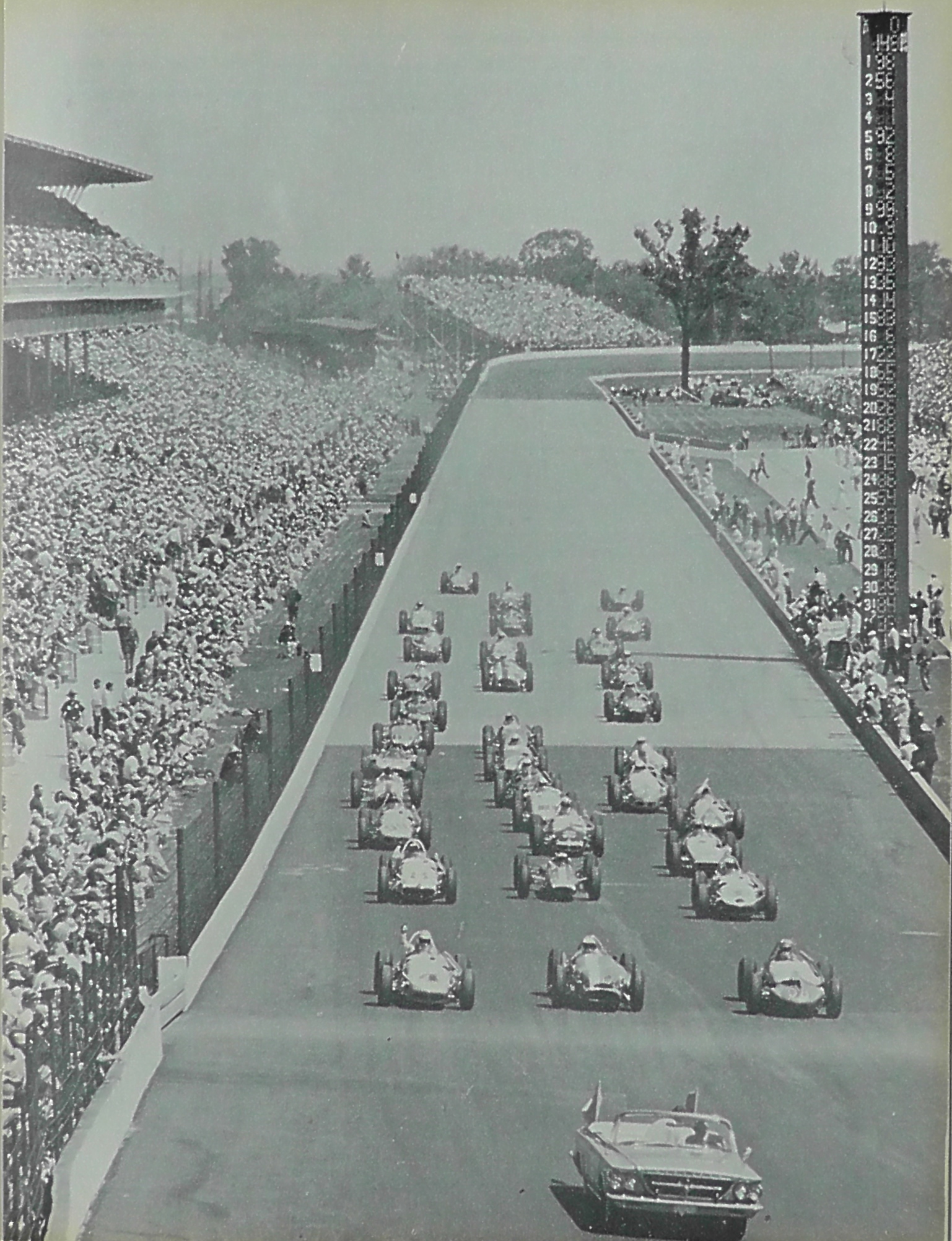
“The race came upon me rather as a surprise.  All of a sudden we were there with the thousands of spectators in the grandstands and all the promotion that goes on to make up this amazing event.  We all paraded round for one lap behind the Pace Car, which was driven at a very slow speed.  I couldn’t get the Lotus to run properly in bottom gear, so if we had used only third and fourth, like the regulars, we could have well been in real trouble right at the start.

“Jim Hurtubise, whose Novi was ahead of me on the front row, got stuck in gear as we crossed the start line, and I suddenly found myself right up his exhaust.  I backed off and slammed on the brakes.  There was a mad rush all around me.  Hurtubise got his gear sorted, disappeared into the distance, and I found myself right in the thick of the pack.

“Our cars are a lot lower than the Offys, and this meant that it was extremely difficult to see what was really going on.  There was also a great deal of smoke and dust (as well as a heck of a lot of noise!) and all this made for confusion.

“Anyway, all hell was let loose at the start, with 33 cars rushing round in a tight bunch.  After a couple of laps trying to keep out of everyone’s way I found myself sitting right behind Dan Gurney, who had made a good start in our other car.  This was something of a help, because, since his car was as low as mine, I could at least see what was going on ahead, and could keep an eye on the leaders.

“At this stage there were about a dozen of us going round together in the leading group.  This was a good position to be in, because we reckoned on picking up some useful time in the pit stops.  I found that I could run with the Offys on the straights and, being so much smaller and lower, I was getting a great tow.  Getting through the corners was an entirely different matter:  the Offys have one groove for the turns and there is no chance of beating them during the actual corner, even though our cars could have gone quicker through the turns.  So the general programme was to rushing up the straights and then go relatively quietly – for us, that is – through the corners.S2580003

“Throughout the race I was given signals about Parnelli Jones and his Watson-Offy because there is no doubt that he is far quicker than any other driver in these big Indy specials.  At one point it was obvious that he was getting away from me, so I pressed on for a bit to make up time.  I got past Dan after about 100 miles, and when Parnelli made his first stop after 62 laps we moved into first and second places.

“Parnelli’s stop was very quick and so he began to catch us again.  I held the lead until I came in after 95 laps to change three wheels and take on fuel.  We found we still had eight gallons left, so we could have started with less, as it turned out.  My stop took 33 seconds, however – and it felt even longer.  By the time I was back I had dropped to third.

“One of the extra chaps brought in by Ford was a huge, burly fellow with a long background with the Offys.  This chap forgot that I had a four-speed gearbox and tried to push me away from the pits as if I was in second.  As I shot forwards I could see him rolling over in my mirrors – he had gone flat on his face when I let in the clutch.  For a moment I thought I’d run over him!

“Parnelli extended his lead to about 40 seconds as he began to run on lighter tanks again and I worked my way back to second.  Unfortunately, the yellow light came on just as Parnelli was due in and he made his second pit stop without losing the lead.  We worked out later that he had gained something like 20 seconds on the road during that yellow light period!

“For his third and final stop Parnelli did the same thing – came in during a yellow period, when the rules say that no car must alter its position.  Now I realized that we had really gained nothing from our one-stop strategy.  It was plain that I was going to have to try to race Parnelli for victory.  The car was running beautifully and I got right up to him, catching him at about a second a lap.

“Then I noticed that his car was smoking.  My immediate thought was that he wasn’t going to last….but he just kept going, throwing out oil and smoke and leaving a trail around the track that made things incredibly slippery.  I had a big sideways moment and only just managed to collect the car.  On the next lap, Eddie Sachs spun right in front of me, also on the oil.  I managed to avoid him but it was close.

“I decided it would be more prudent to settle for second place.  From what I could work out, Parnelli’s car threw out a lot of oil for a short period and then pretty well stopped once the oil level had reached a certain point.

“Anyway, it was a disappointing finish to the race.  We might also have done better if we’d had a bit more local knowledge.  For example, when I was leading during a yellow light period, I had to put in nearly a whole lap before I got the green – even though the rule is that the leader should get the green first.  There’s also a question of whether you can improve your position under yellows in relation to the car in front of you or the car which is actually one ahead of you in the race as a whole.  “We didn’t protest – and I’m glad we didn’t.  I would have liked to have won but I wouldn’t have felt happy to have done so by getting Parnelli black-flagged.  Having said that, I don’t think Parnelli would even have been on the same lap as me at the end if there hadn’t been any yellows.   There were a lot of rows after the race.  Eddie Sachs came to blows with Parnelli but Colin and I were satisfied that we had at least shown that the Offys can be beaten by a European design.  As for Parnelli – and remembering that he, too, had to drive on his own oil – I think he did a damn fine job.”S2580002

I would add that Jim’s performance must also be seen in the context of the power differentials.  His modified Ford Fairlane engine developed about 350bhp.  The Offys and Novis produced about 400bhp – as seen by their one-lap pace in qualifying.  The post-race fisticuffs to which Jim refers actually occurred on the following morning, when Eddie “The Clown Prince” Sachs accused Parnelli of causing his spin.  Rufus Parnelli responded by whacking Sachs in the mouth.  In protest, neither Sachs nor Roger McCluskey attended the prizegiving.

David Phipps, who worked closely with Team Lotus at Indy in 1963, calculated later that the yellows were on for a total of about 50 minutes in the race and that in one yellow-light period Jones gained 27 seconds on Jimmy (not 20 sec).  Colin Chapman additionally reckoned that Jim lost about a minute in all the yellow light periods combined.   That’s unheard-of by today’s standards;  back then, though, with Team Lotus pioneering a new era, Jim and Colin were very wary of expecting too much too soon – politically speaking, at any rate.

Jim’s second-place prize money amounted to $56,238.00, or just over £20,000 at 1963’s rate of exchange.

Flying straight to Toronto, Jim left Indy immediately after that prize-giving, for he was scheduled – amazingly – to drive a poorly-prepared Lotus 23 at Mosport on Saturday, June 1.  From a Lotus 29-Ford to a Lotus 23 in two, hectic days.  Such was now the life of the sheep farmer from Duns, Scotland. In his Leston track bag, in company with his new Bell Magnum, smeared with oil, lay his Pure jacket and his Dunlop blues, neatly ironed and ready to go.

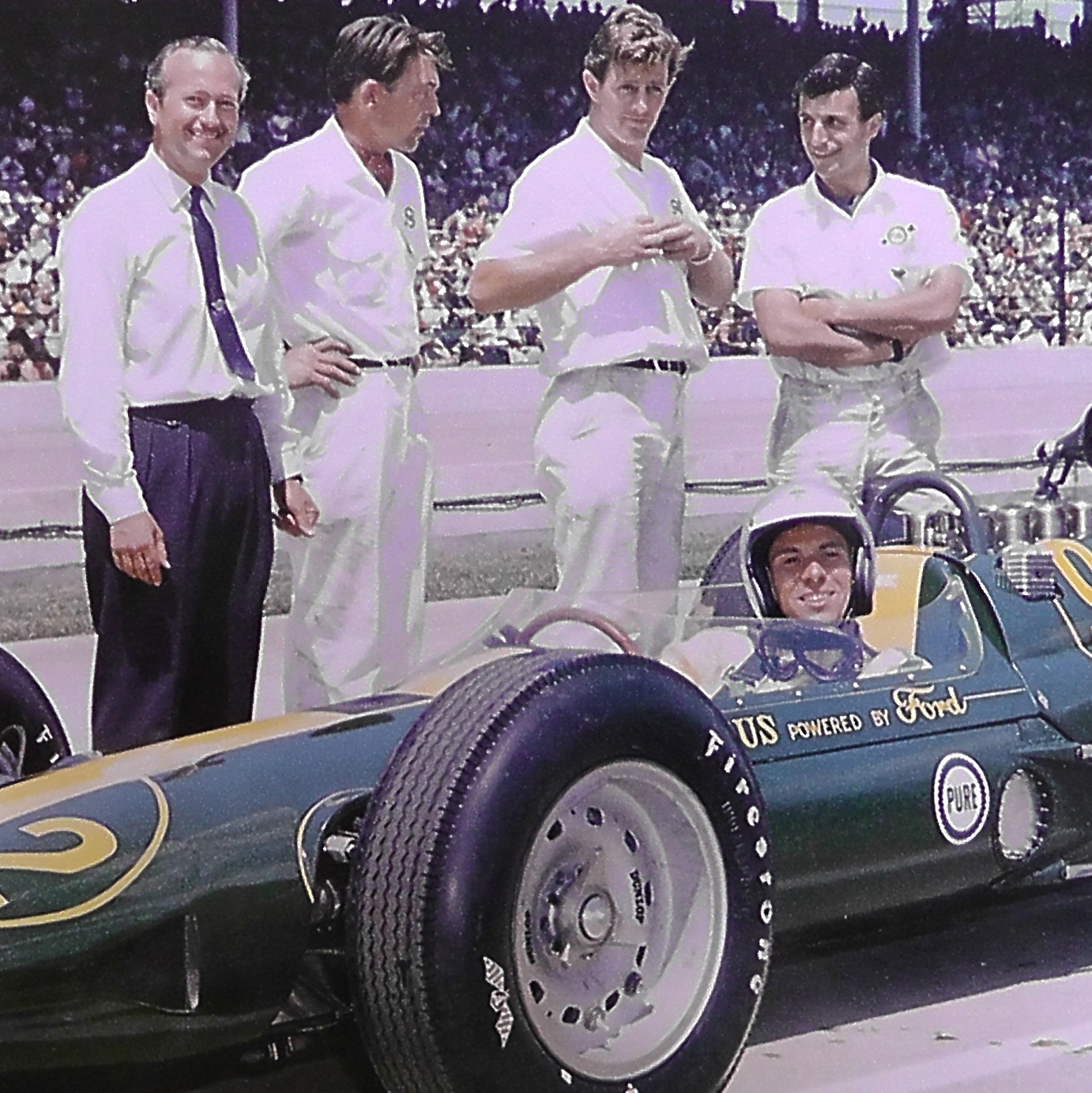
Captions, from top: Jim, in the middle of the second row, with his engine coughing a little, is concerned by the slow speed of the Studebaker Pace Car.  A few minutes later he would be boxed-in behind Jim Hurtubise’s slow-starting “Hotel Tropicana Special”;  flashback to late 1962, when it all began:  Jim peels his Indy Rookie stripes from the F1 Lotus 25-Climax; a traditional Scots welcome for Indy’s runner-up Photographs: Indianapolis Motor Speedway, Peter Windsor CollectionUSA-Canada 2006 149

La Bananeraie

1963 Monaco Grand PrixJim Clark’s 1963 season (continued)

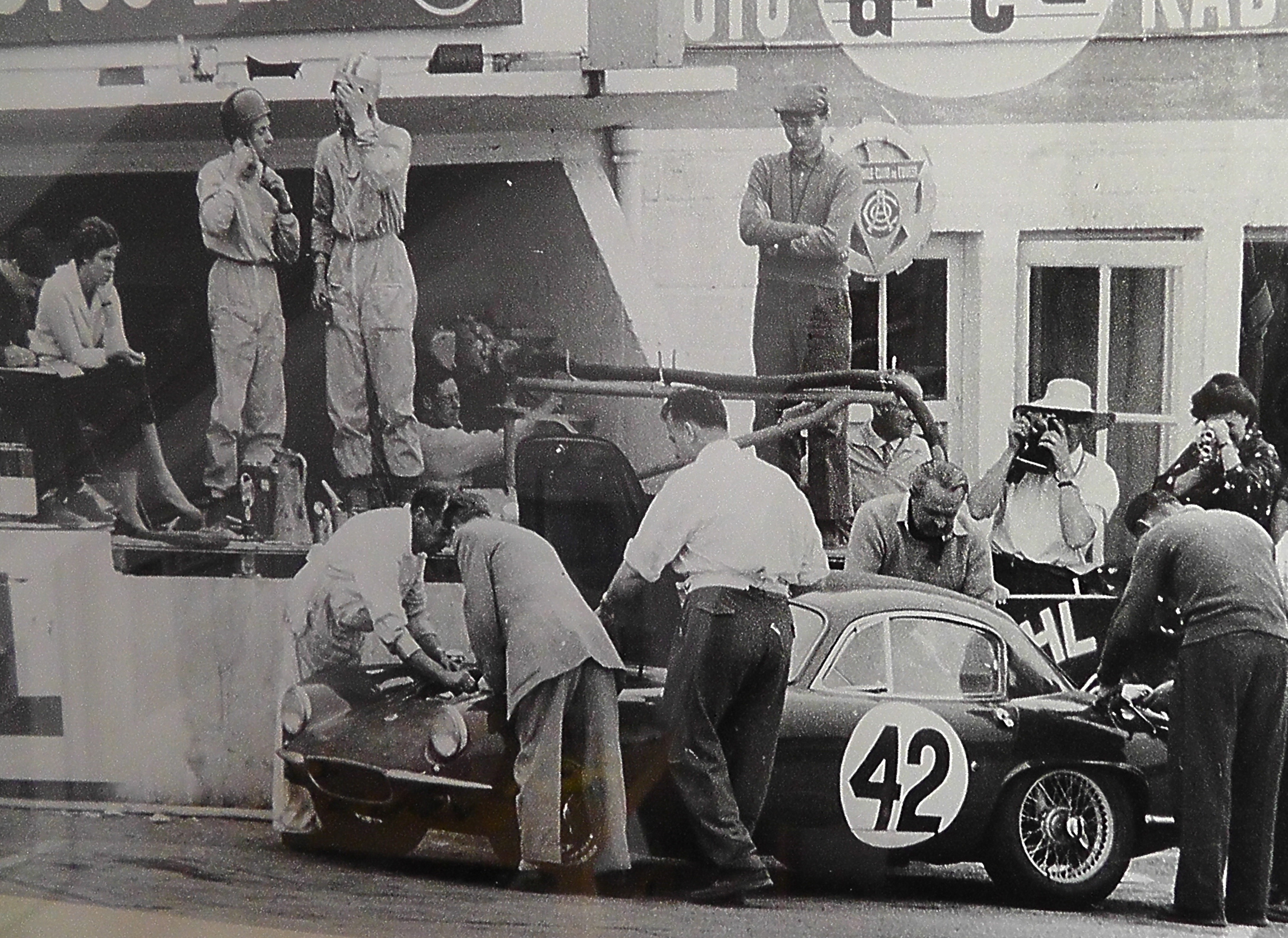
From Indy Qualifying, Jim flew to Nice from London, where he had been staying on Monday and Tuesday in the apartment of his friend, Sir John Whitmore.  They had first met in 1959, when they had shared Ian Scott-Watson’s Lotus Elite at Le Mans, and they had stayed in touch ever since.S2520004  Their bond, ironically, had been their shared despair after Alan Stacey’s death.  A farmer like John and Jim, Alan had been hugely helpful to Whitmore in the early years.  At Le Mans in ‘59, with Alan now on the verge of a full F1 career and driving at Le Mans a factory Lotus 17 with Keith Greene, the three of them had had a ball, with Alan very much playing the role of the mentor. Early in that Le Mans week, over dinner at the Team Lotus hotel in a little village away from the main town, John had read aloud a report in L’Equipe about one of the drivers having an artificial leg.  Jim, still very new to motor racing, was both appalled and disbelieving.  “Disgusting,” he said, making it unclear whether he was talking about the lies in the article or the concept itself.

Jim was up bright and early the following morning, in his usual way, and knocked on the door of the room being shared by John and Alan.

“Come on.  Wake up.  Rise and shine.  Time to get going.”  Then silence.  Jim had seen Alan’s prosthetic leg lying on the floor by the bed.  The next sound was of Jim’s feet, running as far away as possible.

A few days later, John and Alan were still laughing at Jim’s embarrassment…

Alan was killed at Spa the following year in a Team Lotus 18 – in the second Grand Prix of Jim’s career – when, it is said, he hit a bird at high speed.  (Some people close to Team Lotus are convinced that the steering column broke on Alan’s car and that the “bird” story was merely a cover.)  Jim was of course devastated – but thought instantly of John, who had been even closer to Alan.  Thus the mateship.600112_22

John’s small two-bedroom, two-bathroom flat was in Balfour Place, Mayfair – an ideal location for racing drivers on the move.  The Lotus factory at Cheshunt was half an hour away.  And London was great for Heathrow and Gatwick airports, Crystal Palace, Brands Hatch and of course the A1 – the road to Scotland.  After days – weeks – of non-stop travel, these two days in Mayfair for Jim offered a welcome break.  John’s wife, Ghinsella, caught up with Jim’s washing – including his blue Dunlop overalls – and Jim finalized the detail arrangements of his travel over the next few weeks.  He would return immediately to Indianapolis after Sunday’s Monaco Grand Prix;  then he would race at Mosport; then, two days later, he would race at Crystal Palace.  He’d return to Balfour Place at that point before leaving for Spa, for the Belgian GP.

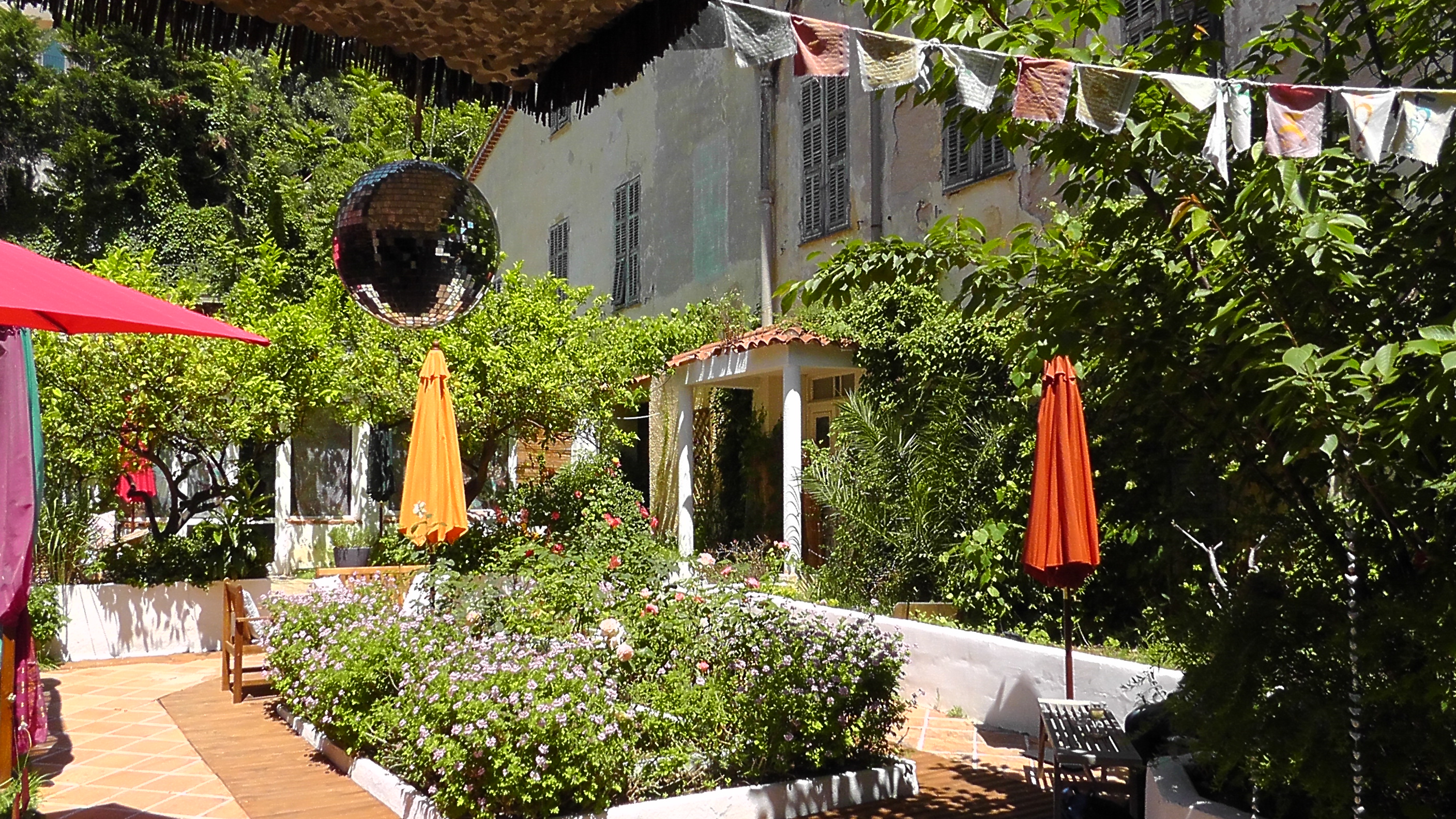
Nice was bright and sunny when Jim and Colin arrived on Wednesday, May 22.  They drove out to Monaco by the coast road, stopping on the way to check in to their regular hotel in Eze sur Mere.  S2550010Little more than a railway station and a small café today, Eze in 1963 was somewhat more prosperous, boasting a couple of good restaurants, a garage and a small market.  The Team Lotus hotel, La Bananeraie, was perfect for the group’s needs, boasting a spacious, secure, three-car garage out the back in which the Lotus 25s could be housed.  Towing race cars to circuits on public roads was not only normal back then;  it was a part of the show.  Spectators would line the streets, awaiting their favourites – and sometimes, if the travel distances was short, the cars would be driven under their own power.  Nothing clears a crowd faster than a quick blast of Ferrari V12…20179.tif

Jim had brought with him to Europe his newly-painted Bell Magnum helmet and wore it for the first time at Monaco on Thursday, when he was fastest.  The overall look was completely different:  it was as if the slightly thicker Bell had been specifically designed for the gorgeous, slow-slung lines of the Lotus 25.  And Jim again wore a white peak!  It was as if the ’63 season was entering a new phase, and the Jim Clark era was now upon us.

Jim was unnerved for a second or two on Thursday when he spied a black cat running across the track by the pits.  He wasn’t about to label himself “superstitious” but, in that world, back then, he wasn’t going to go out of his way to walk under ladders or spill salt on the table.  He was delighted, then, to see the car suddenly freeze and scamper back the way it had came.  Nor was he reluctant to tell a few of his friends about it, either!

Practice over – and the temporary pole secured – Jim then joined his fellow drivers in a GPDA meeting at the Hotel Metropole.  These gatherings had been a regular fixtures at F1 races ever since the drivers had first got together in a formal way at Monaco, in 1960.  As a group, they were now respected by the team owners and by the circuit organizers – something that couldn’t be said about the drivers’ group of the 1950s, the UPPI (Union of Professional Pilotes International).  Jo Bonner presided over the GPDA meetings;  Autocar’s Sports Editor, Peter Garnier, recorded the minutes for posterity.  As well as discussing important safety and organizational issues, the drivers also took time to talk to one another.  In Jim’s case, he was keen to learn about Dan Gurney’s first drive in the new Brabham (Dan had been eighth quickest on a troublesome day) and to discuss the growing shortage of Coventry Climax Mk 111 engines.  Just as Dan had been obliged to miss Silverstone, now Jack Brabham himself was flying straight back to England to pick up a replacement for the engine that had failed that morning.  There was also general chit-chat about the new, sticker Dunlop R6s, now re-designed around the 1962-spec 28 deg cord angle.  In theory, this greatly improved the tyre’s breakaway without detracting from its better adhesion.  A bit like Pirelli reverting to Kevlar casing in 2013!

Problem was, the new Dunlops were also in short supply.  The bulk of them would only reach Monaco, by truck, late on Thursday night.

Matters of Moment in that GPDA meeting:  the prize for the best-run Grand Prix would go to Zandvoort.  The Taffy von Trips trophy for the best private entrant would go to Count Carel de Beaufort; and Graham Hill would receive a Roy Nockolds painting for winning the 1962 World Championship.

F1 practice was also held on Friday back then – but at the absurdly early hour of 7:30am, by which time two Formula Junior sessions had also been staged.  The idea was to have everything over by 9:00am, thus allowing the town to go about its usual business.  The track was cold but Jim was faster still.  Then, with the day still ahead, it was all over.  Jim  joined other drivers on Carribee, the yacht hired by Ken Gregory (Stirling Moss’s manager) and the former driver, Mike McKee.  S2560001After a few hours in the sun, enjoying life with his mates Bruce McLaren, Dan Gurney and Lorenzo Bandini,  it was back to Eze for a look at the cars and an early dinner at La Bananeraie.S2550013  It turned out that Cedric Selzer and the boys had had a relatively easy day with the 25s – particularly as a nice blonde seemed to have joined the team as wheel-polisher and go-fer.  Jack Brabham, meanwhile, had flown his own single-engined Cessna 180 back to England to pick up a replacement Climax engine.  He planned to be back in Monaco by late afternoon but was held up by bad weather in France.  He didn’t make it until about 5:00pm on Saturday – by which time the Climax in Dan’s car had also burned a piston.

Jim was again quick on Saturday afternoon, when the session was run from 2:00pm – 3:15pm.  Perenniel gearbox worries aside, the 25 was running perfectly – so much so that Jim was happy to run full tanks for most of the afternoon while he pushed the R6s to the limit.  (With more grip on line, he was only a second slower than his Thursday, empty-tank, pole time.)  Jim also completed a few laps in the spare car (fitted with the old carburettored Climax engine), lapping as quickly as the Ferraris and fourth-fastest overall.  The Brabham engine issues remined dire but everyone was deeply moved when Jack stood aside to let Dan have the only spare Climax for the race on Sunday.  Drawn to Jack because of his decision to run a Lotus 24 for the first half of the previous season (while he was working on his own car) – and also because of the Indy ties with Dan – Colin Chapman then offered the spare Team Lotus 25 for Jack to race on Sunday.  The 1959-60 World Champion readily agreed, even though he would be unable to put in a single lap with it before the flag dropped.

Serious work over for the day  – Jim was on the pole from Graham Hill, John Surtees, Innes Ireland and Dan Gurney – everyone settled back to watch the Formula Junior race. An electrical problem had ruined his day when he was leading the FJ race by a mile in 1960, so he was not really surprised when Peter Arundell, who had won his heat in the Team Lotus 27, retired from the final early with a blown engine.  Richard Attwood went on to win in the MRP Lola from an excellent Frank Gardner (Brabham).S2550014

Sunday, May 26, 1963 was a gorgeous day – much like May 26, 2013.   There were no support races;  instead, great F1 drivers from the past were paraded in open sports cars.  Prince Rainier drove a few laps of the circuit in his Porsche Super 90.  The drivers, staring at 100 laps of Monaco, gathered in the pits beneath the trees.

Louis Chiron, Clerk of the Course, presided over a shambolic drivers’ briefing on the grid.  Photographers pushed and shoved;  some drivers listened, others joked with friends.  “Remember it is a sport,” said Chiron.  “Good racing, good driving, good amusement and God bless you.”  As Bruce McLaren later, “We knew how hot it was going to be and we knew that it wasn’t exactly going to be very amusing…”

Jim was instantly in trouble.  In total contrast to his full-tanks run on Saturday, his engine coughed badly under acceleration.  He couldn’t believe it.  Perhaps it was a plug or something.  Perhaps it would clear itself over the opening lap.

It did not.  The mis-fire persisted.  Graham had unsurprisingly out-dragged him into Ste Devote and down out of Casino Square, and into Mirabeau and the Station Hairpin, he was all over the BRM.  Out on the seafront, however, and on the fast run through Tabac and towards the Gasworks Hairpin, the BRM pulled away as it was a 2-litre car.

Jim couldn’t understand what was happening.  And so he just drove with the problem, trying to apply the power in different throttle loads – and trying, of course, to find ways of braking so late that he could sustain an attack.

It’s interesting to note, I think, that very, very few reports of the day mention Clark’s problems in this early phase of the race.  Observers and spectators were enthralled, instead, by Jim’s attempts to outbrake Graham and his BRM team-mate, Ritchie Ginther, into the Gasworks Hairpin – and by the BRM drivers always regaining the initiative under acceleration.  It never occurred to reporters that Clark was adjusting his driving in order to compensate for a problem.  They saw Jim hit the cement dust bags protecting a fire hydrant with the left rear wheel on about lap 15 and they put it down to “Clark under pressure”.   They saw Jim throwing the 25 around with armfulls of opposite lock and they just assumed he was having fun…

It was when the engine problem began to go away that Jim worked out for himself what had been happening:  “The trouble stemmed from the two little pipes which stuck up behind my head and above the engine.  These were fuel tank breathers and at the start, with full tanks, they tended to blow excess fuel out of the top whenever I accelerated hard.  This would blow fuel straight back down the injector pipes and thus richen the mixture.  The engine would bang and splutter.  It was murder.  Whenever I was out on my own with no-one around I could scramble through the corners and have the car running properly before anyone noticed but when, in the early phase of the race, I was fighting both Graham and Ritchie, I kept losing places.  I’d pass Ritchie into a corner and then there would be this bubble, bubble, snort, bang and while I was trying to clear the system Richie would pass me again.  Eventually, though, I managed to get with it, pass Ritchie and pull away.  Of course, as the race progressed, less and less fuel came up the breathers and the trouble gradually disappeared.”

Jim was leading easily – just as he had led the FJ race in 1960 and then again the Grand Prix in 1962 – when it all went suddenly, finally, wrong.  Wary of the gear selection trouble that had coloured the early-season races, he was now changing gear nice and precisely, easing the lever into the next slot without any strain.  Suddenly, into Tabac, changing from fourth to third, the gearbox jammed.  He still had drive – in fourth gear – but the gear lever was in “neutral”.  He tried the lever again – and suddenly the car was in second, spinning itself to a standstill in the middle of the Gasworks Hairpin. Declutching did nothing.  The car was locked in second.  Jim’s first reaction was to jump from the 25 and thus to warn a fast-approaching Graham Hill, who at that point was ten seconds behind.  Then, drained, he walked quickly back to the pits.

19069.tif

Thus ended Jim’s first Championship Grand Prix of 1963.  The gearbox problems would continue (both Trevor Taylor and Jack had transmission problems in the race) but Cedric Selzer was not slow in coming up with solution to the fuel mixture issue:  he fitted a motorcycle tap to the cockpit for Spa and gave Jim an instruction he would never forget:  “It’s like a factory.  It opens up and it closes down!”

They had an early night at La Bananeraie:  on Monday, May 27, Colin, Jim and Dan flew from Nice to London on the 6:00am BOAC Comet. From there, via New York and Chicago, they would fly again to Indianapolis.  The 500 would take place on Thursday, May 30.

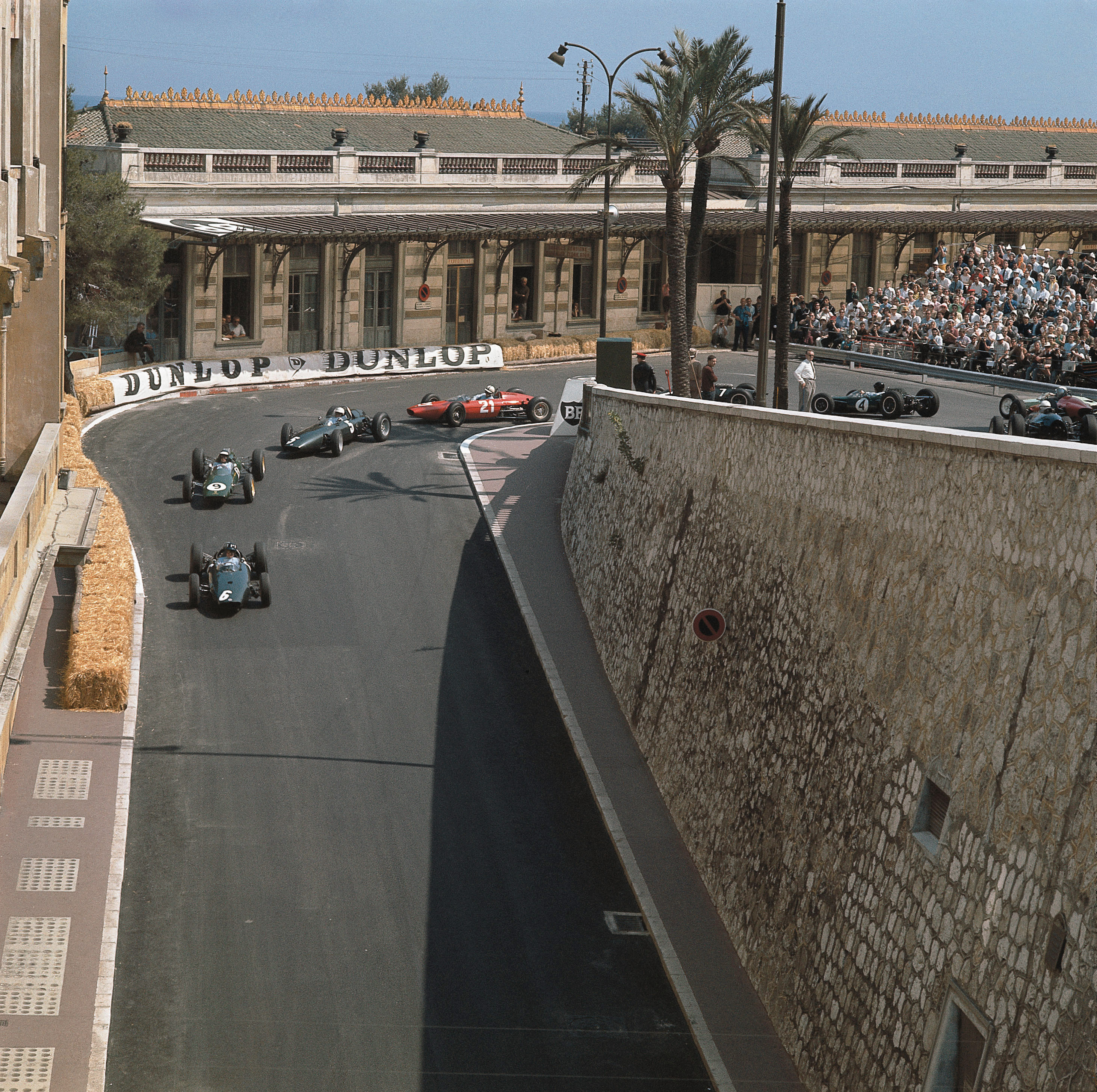
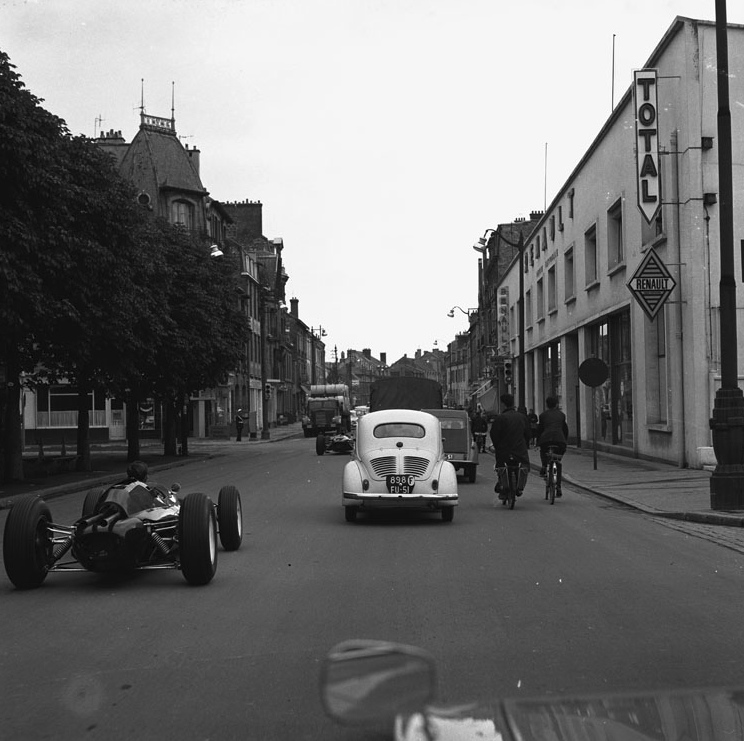
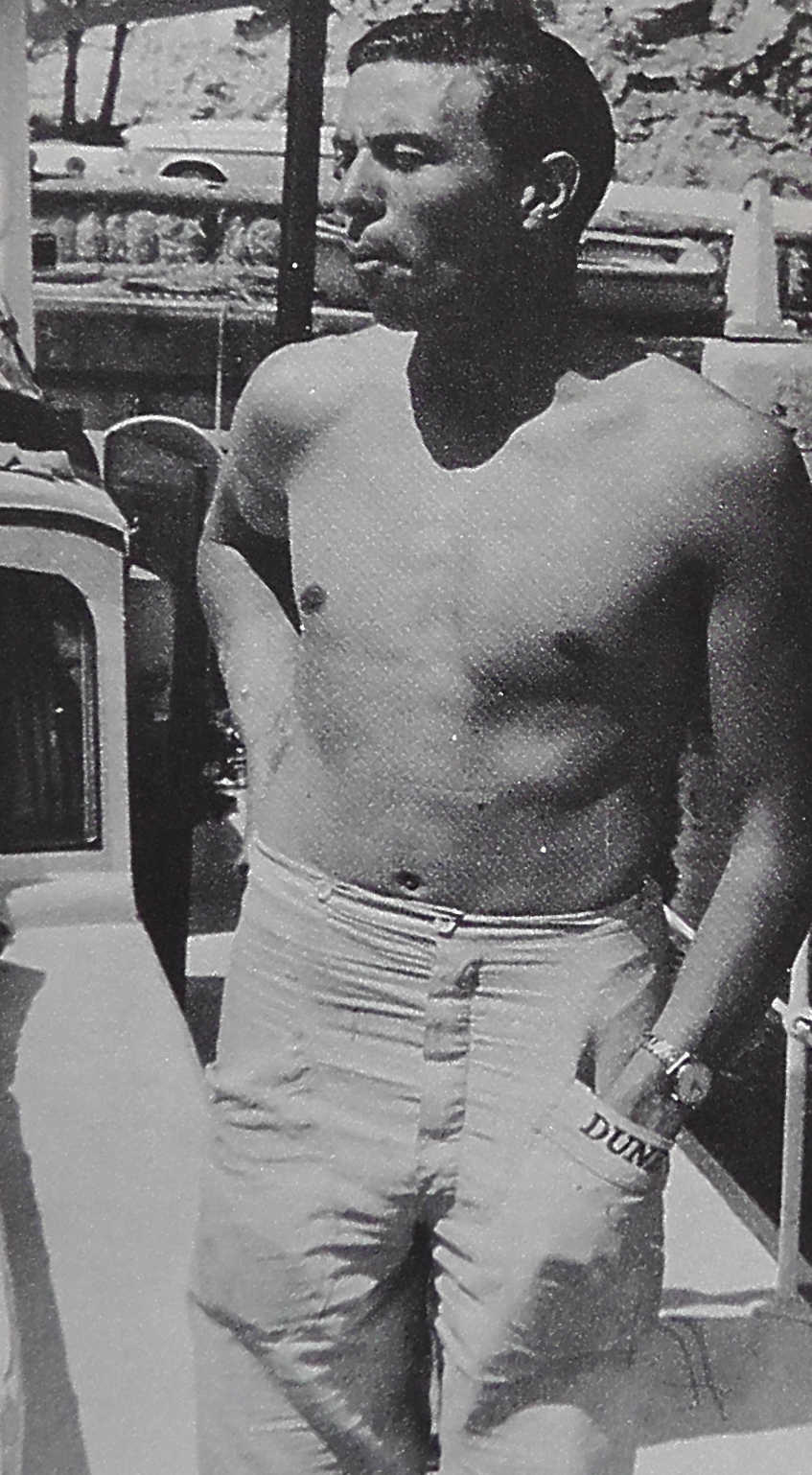
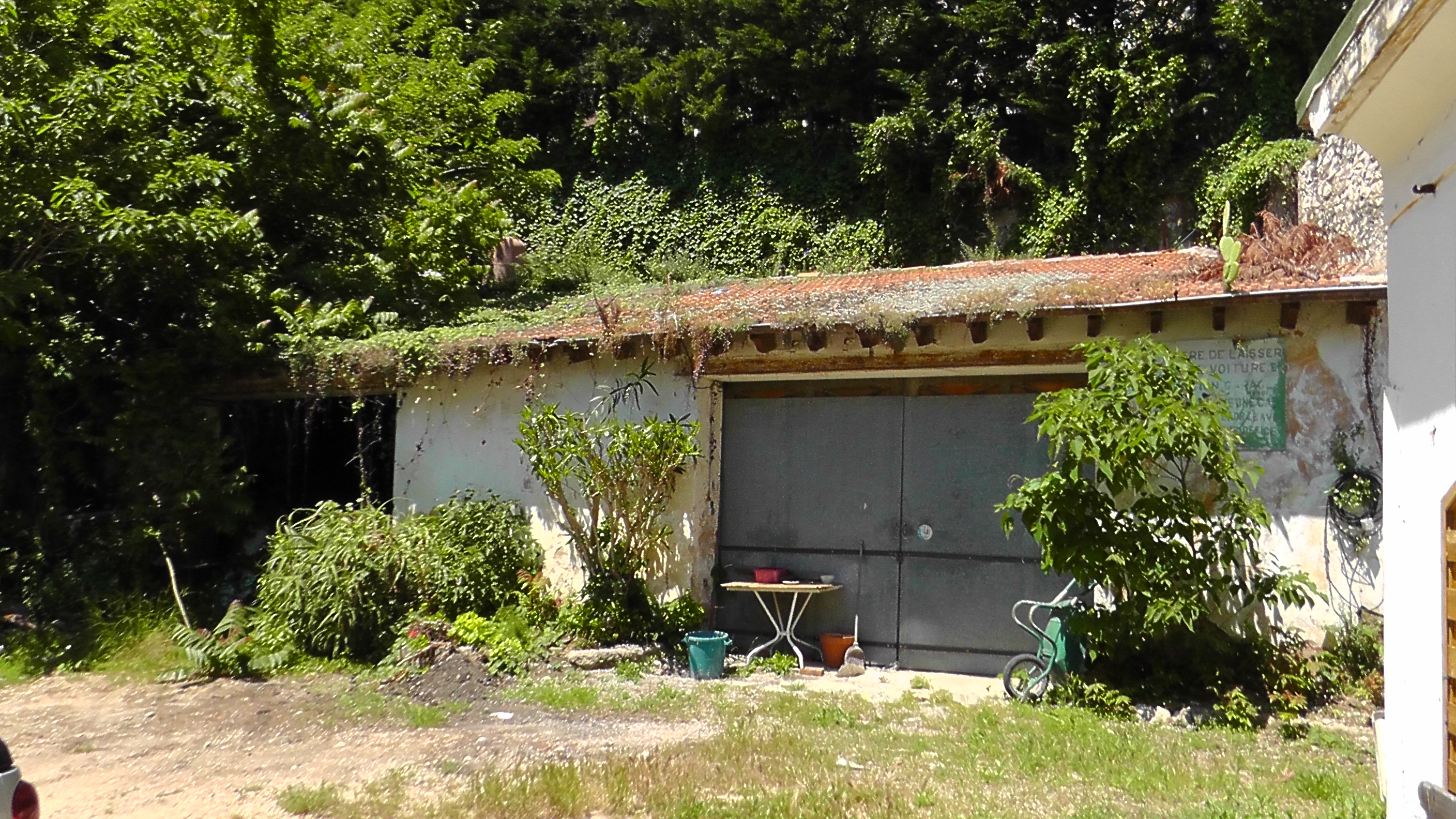
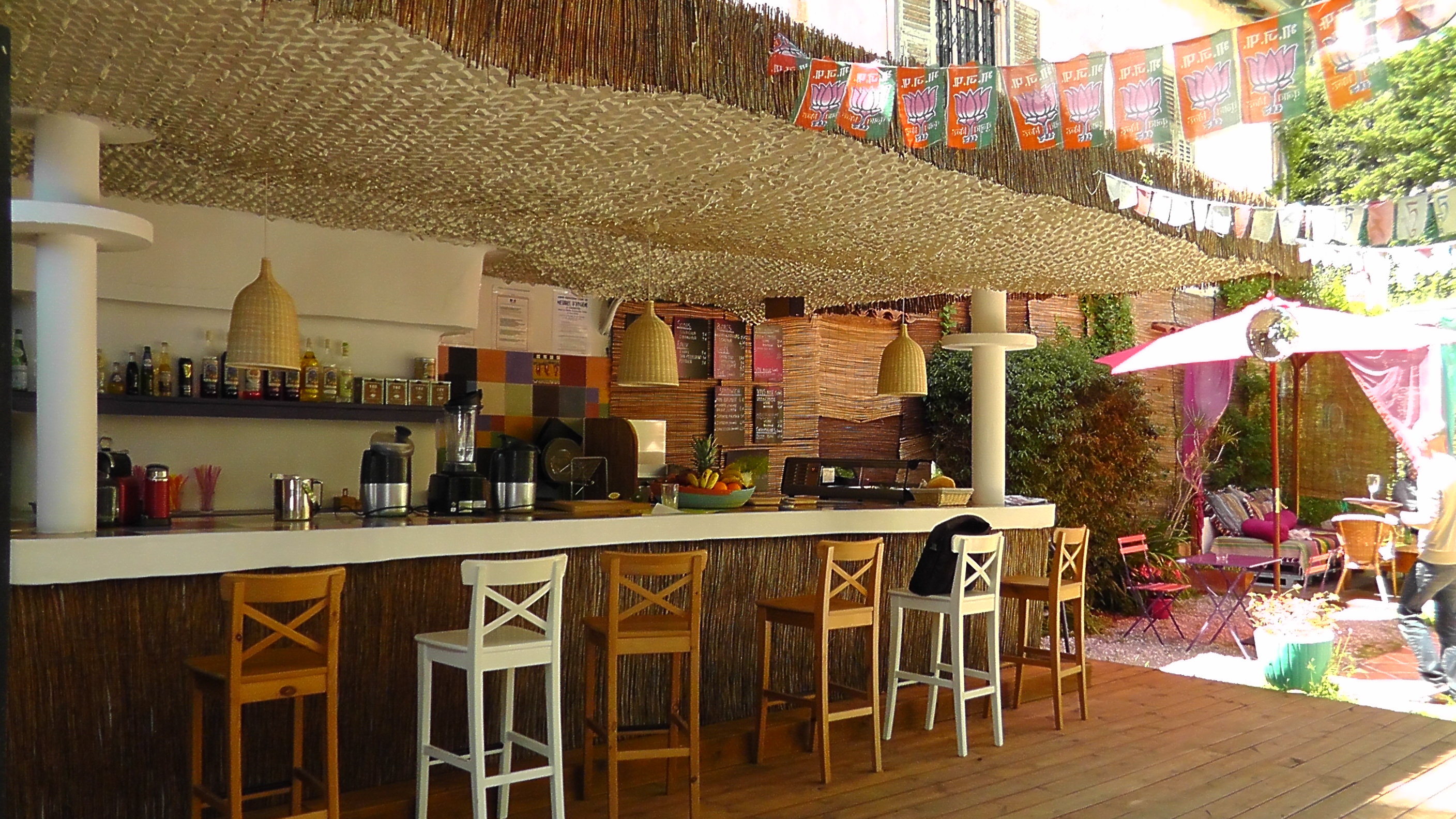
Captions, from top:  Lap one, Monaco, 1963.  Graham Hill leads for BRM, with Jim lying second in the mis-firing Lotus 25-Climax.  Then come Ritchie Ginther (BRM) and John Surtees (Ferrari);  Jim Clark and Sir John Whitmore compare notes at Le Mans in 1959 while Ian Scott-Watson’s Lotus Elite is given unscheduled attention.  Ian can be seen to the right of Sir John’s legs – and that’s Jabby Crombac with arms folded; Jim shares a laugh with the very excellent Alan Stacey;  La Bananeraie as it is today, now run by the grandson of the of the original owners.  It’s overgrown but Bohemian:  the bulk of the hotel is now an artist’s studio but the bar is still pretty much as it was; F1 cars often split the everyday traffic en route to the track.  This is (I think) Bernard Collomb’s Lotus 24; Louis T Stanley’s shot of Jim aboard the good ship Carribbee after early practice on Friday.  Note the Dunlop race trousers!; the garages around the back of La Bananarie; the bar/restaurant where Team Lotus refreshed in May, 1963; Cedric Selzer (right) and Colin Chapman (checked shirt) shepherd Jim back to the Lotus pit after his retirement. Photos: Sir John Whitmore, Louis T Stanley, LAT Photographic, Peter Windsor Collection

Indy: Second Row for rookie Jim Clark

moremsportshistorySilverstone and that dramatic escape behind him, Jim Clark returned to the cauldron they call Indianapolis, this time residing at the Speedway Motel.  He and Dan Gurney were ready to roll on Monday morning – and to apply, therefore, the finishing touches to their all-important qualifying attempts.  If they didn’t make it on this first weekend there would be no Monaco Grand Prix.  It was as simple as that.  And if there was no Monaco Grand Prix, Jim Clark’s 1963 F1 season was going to become unnecessarily tough.  After losing the title in 1962 by a single point, and now having won Pau, Imola and Silverstone in quick succession, he was keen to keep the momentum going.

Jim was delighted to find that Hinchman and Bell were true to their word.  His brand new overalls were, he thought, a little on the gaudy side – but this was Indy; and the race suit, critically, met all the USAC regulations for flame resistance.  Hinchman didn’t seem to be in the business of two-piece suits (of the Dunlop type to which Jim was now accustomed), so this one-piece overall featured a neat little belt with a silver clip-buckle.  Once he’d decided that regular shirts and pullovers were a little too casual, Jim had never worn anything but blue Dunlop overalls – first in one-piece form and, since 1962, with a separate topped tucked into the leggings.  Now, as he tried on the Hinchmans for the first time, he saw in the mirror a completely different person.  The shiny overalls were a base primrose-yellow with mid-blue stripes down the arms, pin-striped in red.  There seemed to be no logic to the colours but he liked them all the same.  His name was embroidered at an angle below the left chest zip pocked and on the right side was a Pure logo.  Jim shrugged and packed the suit into his Leston bag.  He’d wear it in the car but, between runs, he would change quickly back into his sea-island cotton polo and slacks or perhaps his shirt and tie.  He also found a new Pure jacket waiting for him in his hotel room.  He liked it.  It was dark blue – his colour – with blue and white cuffs and collar.   Very Border Reivers.  And the Pure badge was neat and tidy.  Without even thinking about the implications for Esso, he decided then that this jacket would not only be useful at Indy but also in Europe.images

The new Bell Magnum felt only slightly heavier than his Everoak but was considerably thicker all over.  A neat white peak was clipped into place by four big studs – a significant improvement over the strap/stud arrangement that had caused so much trouble at Spa the year before, when the peak on his Everoak had been blown loose by the rush of air at high speed.  Problem was, the Bell was finished in plain silver.  Jim wanted to wear it right away, enabling him to get used to it in the build-up to qualifying.  In the meantime he would see if Bell could prepare another Magnum in dark blue.  It wouldn’t be ready for qualifying but he’d be able to take it back with him to Europe to use at Monaco.

Jim was amazed by the size of the crowd at the Speedway that Monday – and in the days that followed.  More and more, he seemed to be in demand.  Whenever he was in a public area they jumped on him for autographs and in Gasoline Alley the media were all over him.  For the perspective of a fan at the time (albeit 1966), read Don Fitzpatrick’s comment associated with our 1963 Silverstone International Trophy report.

There was a shortage of Halibrand wheels at Indy – itself a function of the trend-setting 15in Firestones being run on the Lotus 29s;  Dan, not completely comfortable with his set-up, spun his blue-and-white car into the wall; and the wind gusted up as Jim’s qualifying run approached:  it was tense and it was time to go to work.

Jim described his qualifying run thus:

“On the day of qualifying there was a fair-sized wind blowing at Indianapolis.  I knew I wouldn’t get another opportunity, and, though quite a number of cars had been out and had failed to qualify because of the conditions, I had to make a real effort.

“It was a tense time, with the wind blowing in 35mph gusts and the car was very twitchy indeed.  Three hours previously I had been going around pretty steadily at about 151.5 mph, and Colin timed one lap at 153 mph;  but these speeds were not possible when I went out for the official trials.

“Dan’s practice crash had caused some embarrassment, because he wrote-off two of the wide-rimmed wheels I was due to use on my car for qualifying.  So I did my qualifying with none of the rims matching – two wide ones on the outside wheels and narrow ones on the inside.

“Anyway, after a few minutes of gritting my teeth and fighting the wind gusts, I eventually managed to qualify at 149.750 mph, which put me in the middle of the second row.tumblr_m1lr6nfOXQ1r53nlzo1_500  You know, it’s amazing what a difference the track temperature and air temperature make to lap speeds at Indianapolis.  I went out one day and couldn’t do anything better than 148 mph.  Colin was trying to sort out the reason, and though he did everything he knew, the car just couldn’t be got round any quicker.  We realized later that the speed was being cut by the heat, and we also realized that at that time all the other drivers had parked their cars away and weren’t troubling to go out.  Local knowledge does help!

“The technique for the lap was relatively straightforward:  I dabbed the brakes going into each turn and had to smack them pretty hard when I had a full load of fuel aboard.  The difficulties about Indianapolis are the lack of distinguishing features around the circuit and the fact that there is no apex on the four turns.”

Jim had made it – and so, in the spare Lotus 29, painted in Jim’s green and yellow colours, had Dan.  They could relax.  And they could begin the rushed trip, with Colin, back to Europe.  Practice for the Monaco Grand Prix would begin on Thursday, May 23.S2530001

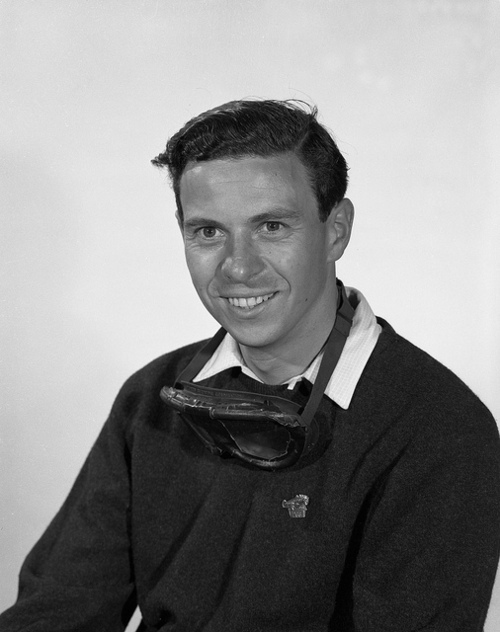
Captions from top: Jim, wearing new Hinchmans, in nail-biting mood as he listens to the pre-qualifying drivers’ briefing and draw; Middle: Jim loved the blue-and-white Pure jackets that came with the American oil company’s Indy sponsorship (via its Ford connections).  He wears it here over his Esso-badged blue Dunlops!; Above right: the official Indianapolis portrait of Jim Clark; Above: Jim, in the new silver Bell Magnum, after qualifying the Lotus 29 on the second row.  Around him, from left to right, are Colin Chapman, Jim Endruweit, David Lazenby and Colin Riley 

Pictures: Indianapolis Motor Speedway; Peter Windsor Collection; LAT Photographic

Post Navigation