peterwindsor.com

…chance doesn't exist; there's always a cause and a reason for everything – Elahi

Archive for the tag “Lotus”

“Jim Clark, rhythmically poised…”

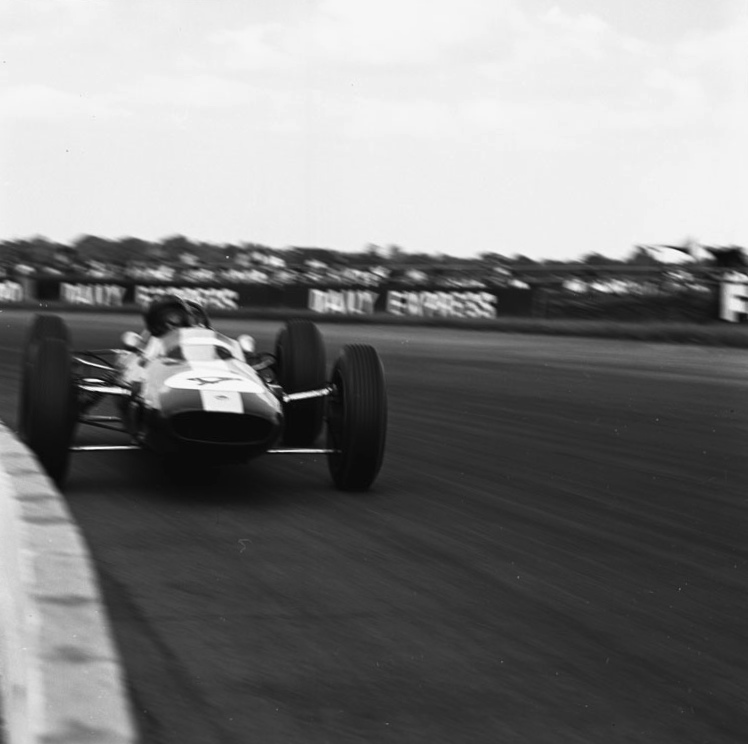
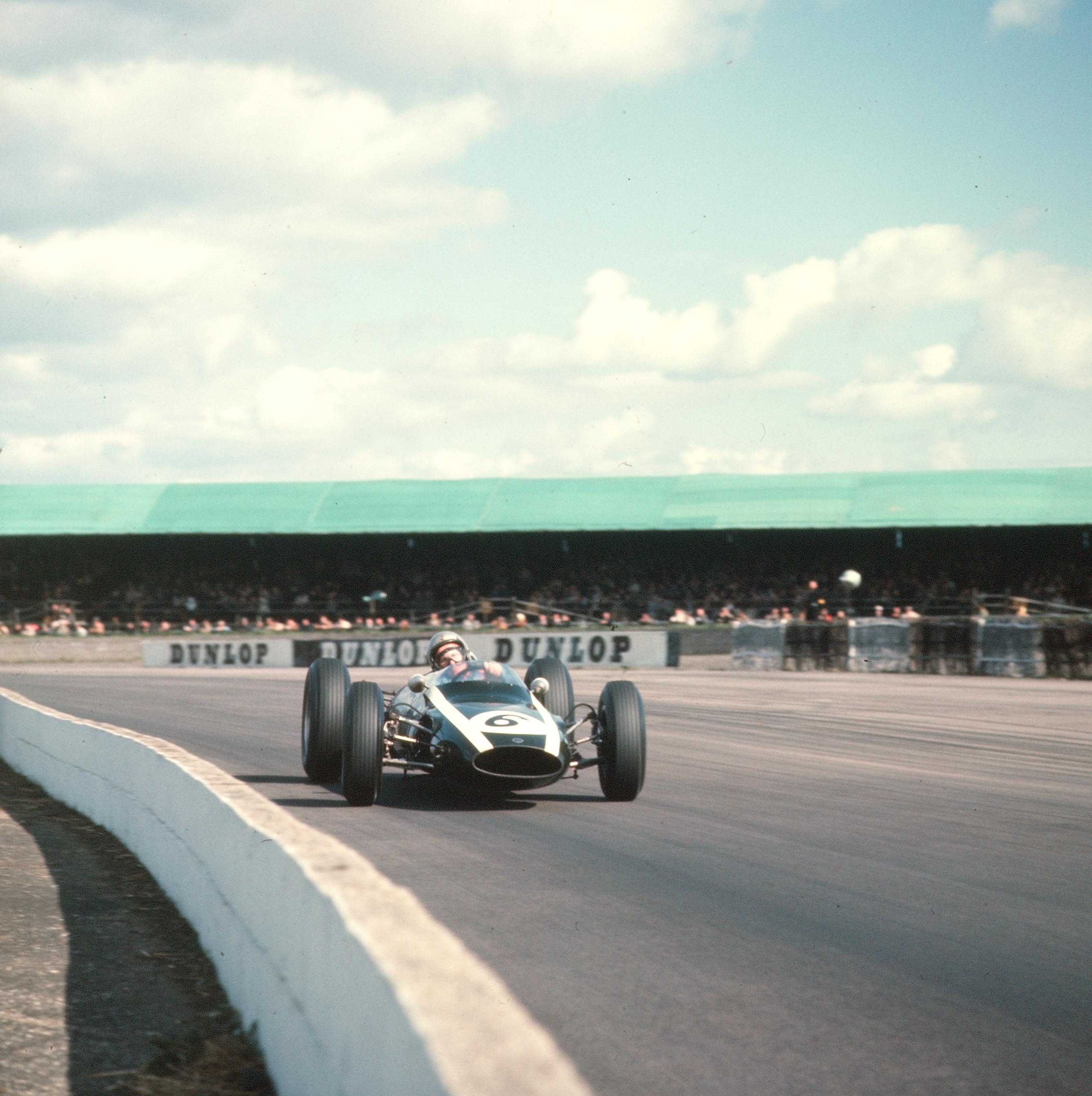
Perfectly balancing smaller diameter rear Dunlops on an oily Silverstone track surface, Jim Clark wins the British GP
20373.tifAfter a whirlwind start to the year Jim Clark was able to relax for a few days.   Three successive wins enabled him to enjoy the farm like never before; and, back in Balfour Place for a few days before the run up to Silverstone, Sir John Whitmore was full of Rob Slotemaker’s antics and all the recent racing news.  In between, however, there was the little matter of the Milwaukee test.  The Indy Lotus 29-Fords had basically been garaged at the Speedway since the race but, in the build-up to the Milwaukee 200 on August 18, rebuilds and further fettling took place at Ford’s headquarters in Dearborn, Michigan.  Jim flew to Chicago on July 10 and on July 12 completed a successful day at the one-mile Milwaukee oval, running through Dunlop tyre compounds and in the process raising the average lap speed – over one mile! – by nearly 5mph.

Dan Gurney, who also tested at Milwaukee, had meanwhile shared a Ford Galaxie with Jack Brabham in the Six-Hour Race at Brands Hatch on July 7.  A massive spin at Paddock in the rain (due to having to run Firestone wets on the front and Goodyear dries on the back) had cramped his style somewhat.  Mike Parkes had cleaned up at Silverstone in his GTO Ferrari but, worryingly, the day had been ruined by two fatal accidents – one (John Dunn) at Abbey in the Formula Junior race and another in the pit lane (Mark Fielden, whose stationary Lotus was hit by a car spinning its way out of Woodcote). The excellent Sheridan Thynne, who would later become Commerical Director of Williams F1, won his class and set fastest lap at Snetterton in a Mini and a few days later wrote poignantly to Autosport, suggesting that a Safety Committee be convened to look into all matters of motor racing safety “before they were underlined by fatal accidents”. Sadly, as ever, his words went unheeded: a third person (a pit lane scrutineer, Harald Cree) would be killed at Silverstone on British GP race day when the very talented Christabel Carlisle spun her Sprite into the Woodcote pit wall.  In another Woodcote incident, former driver and future Goldhawk Road car dealer, Cliff Davis, S2620005would exhibit immense bravery as he leapt onto the track to clear it of debris after an MGB rolled itself to destruction.  Davis was later deemed to have saved several lives. Lorenzo Bandini, who would finish an excellent fifth at Silverstone in his the old, red, Centro Sud BRM, had not only won for Ferrari in the big sports car race at Clermont-Ferrand but had also been a part of the first all-Italian win at Le Mans on June 15-16.  He co-drove a Ferrari 250P with Ludovico Scarfiotti; and, in the Formula Junior race at Clermont, Jo Schlesser had won from an amazing line-up of future stars – Mike Spence, Peter Arundell, Tim Mayer, Richard Attwood, David Hobbs, Alan Rees and Peter Revson.  John Whitmore himself had won the Mini race at Silverstone after a big dice with Paddy Hopkirk – and Tim Mayer, that FJ star and future McLaren driver – had even raced a Mini at Mallory Park, door-to-door with Paddy Hopkirk.  Whilst up in Scotland, Jim had been able to catch up with young Jackie Stewart, who had won at Charterhall in the Ecurie Ecosse Tojeiro on the same day as the French GP; and, finally, with the London premiere of Cleopatra set for July 31, Jim had thought it a good moment to ask Sally Stokes if she might be free for a night on the town…
The British Grand Prix was held on Saturday, July 20, (oh for a return to Saturday racing!) which meant that the big event of the weekend would undoubtedly be Graham Hill’s party at his Mill Hill house on the Sunday.  Prior to that, there was a little bit of business to which to attend.  Most of the F1 teams began testing on Tuesday, prior to practice on Thursday and Friday morning, and Jim was almost immediately on the pace.  I say “immediately”: a loose oil line lost him time on Thursday morning but he was quickest by a whole second from Graham Hill (spaceframe BRM) later that day and fractionally faster than his Indy team-mate, Dan Gurney (Brabham), on Friday.  Jim thus took the pole with a 1min 34.4sec lap of Silverstone, equaling Innes Ireland’s very fast practice times with the BRP Lotus 24-BRM at the International Trophy meeting on May 11.  (Years later, when I chatted to Jim Clark at some length, he re-iterated what he frequently said about the space-frame Lotus 24:  it was an easier car to drive than the 25 and in Jim’s view could just have capably have won races in both 1962 and 1963.  Indeed, Innes’ Goodwood-winning Lotus 24 was actually being advertised for sale by the time of the British GP, viewable at BRP’s headquarters in Duke’s Head Yard, Highgate High Street, London N6.  It wasn’t sold that year, as it turned out, and was raced again, in Austria and Oulton Park, by Innes. Jim Hall then drove it – for BRP – at Watkins Glen and Mexico.)

Still running a five-speed ZF gearbox (whilst team-mate Trevor Taylor persisted with the six-speed Colotti on carburettors), Jim’s trusty, fuel-injected Lotus 25/R4 had now blossomed into its ultimate, legendary 1963 form:  Colin Chapman had decided to run a wide yellow stripe down the car, front to rear, co-ordinating the yellow with the wheels and the “Team Lotus” lettering and pin-striping down the cockpit sides.  The car also ran the Zandvoort-spec aeroscreen.  Jim, as ever, wore his Dunlop blue overalls, his peakless Bell helmet, string-backed gloves, Westover boots and, for when he was out of the car, helping the mechanics or strolling over to the Esso caravan or the paddock cafe for a cuppa, his dark blue Indy Pure jacket.  The 25, meanwhile, finally wore a new set of Dunlops – around which revolved the usual number of discussion points.  On this occasion it was gear ratios:  as part of the compromise with the five-speed (but more reliable) gearbox, Jim and Colin decided to race smaller-diameter rear Dunlops.

Bruce McLaren, driving the beautiful, low-line works Cooper-Climax, stopped practice early on Friday to begin preparation for the race. 63GBMcLAREN1004cWhile John Cooper supervised the job list, Bruce, as was his style, took his new E-Type Jag down the infield runway to the apex of Club Corner, there to watch his peers.  At this point I can do no better than to record the words he later gave to Eoin Young for Bruce’s wonderful, regular, Autosport column, From the Cockpit:
“Dan Gurney had got down to a time equaling Jim’s best, and Jim was out to see if he could do better.  Graham was in danger of being knocked off the front row so he was out too, and for 15 minutes, while Jim, Graham and Dan pounded round, I was graphically reminded of the reason why people go to see motor racing.

“When you’re out in an F1 car you haven’t got time to think about the fact that you’re moving fast:  you’re concentrating on keeping the movement of the car as smooth and as graceful as possible, getting the throttle opened just that fraction quicker than last time and keeping it open all the way when you’ve got it there.

“At Silverstone you concentrate on shaving the brick walls on the inside, just an inch or two away, and you hold the car in a drift that, if it were any faster, would take you into a bank or onto the grass.  If you are any slower you know you are not going to be up with those first three or four.  You know perfectly well you are trying just as hard as you possibly can, and I know when I’ve done a few laps like this I come in and think to myself, well, if anyone tries harder than that, good luck to them.

“But you haven’t thought about the people who are watching.  At least I haven’t, anyway, but there at Club Corner the role was reversed and I was watching…

“Jim came in so fast and left his braking so late that I leapt back four feet, convinced that he wouldn’t make the corner, but when he went through, working and concentrating hard, I’m sure his front wheel just rubbed the wall.  I barely dared to watch him come out the other end.

“It struck me that Clark and Gurney’s experience at Indy this year may have had something to do with their first and second places on the grid.  Silverstone is just one fast corner after another, taken with all the power turned right on and the whole car in a pretty fair slide but, nevertheless, in the groove for that corner.  Something like Indy, I should imagine.

“I’ve seen a lot of motor racing and if I could get excited over this I can imagine how the crowd of 115,000 on Saturday must have felt.”

Saturday was one of those great sporting occasions in the United Kingdom.  One hundred and fifteen thousand people were crammed into Silverstone by 10:00am;  and by 2:00pm, by which time they’d seen Jose Canga two-wheeling a Simca up and down pit straight; Peter Arundell win the FJ race from “Sally’s MRP pair” (Richard Attwood and David Hobbs); Graham Hill demonstrating the Rover-BRM turbine Le Mans car; an aerobatic display and the traditional drivers’ briefing, everyone was ready for the big event.  Dan Gurney settled into his Brabham with Jim Clark to his right in the Lotus 25.  To Dan’s left, Graham Hill, the World Champion, lowered his goggles under the pit lane gaze of young Damon.  Making it four-up at the front, Dan’s team-mate, Jack Brabham, sat calmly in his BT7.  With but minutes to go, Jim asked for more rear tyre pressure:  Silverstone had felt decidedly oily on the formation lap.  The 25 had never been more oversteery.
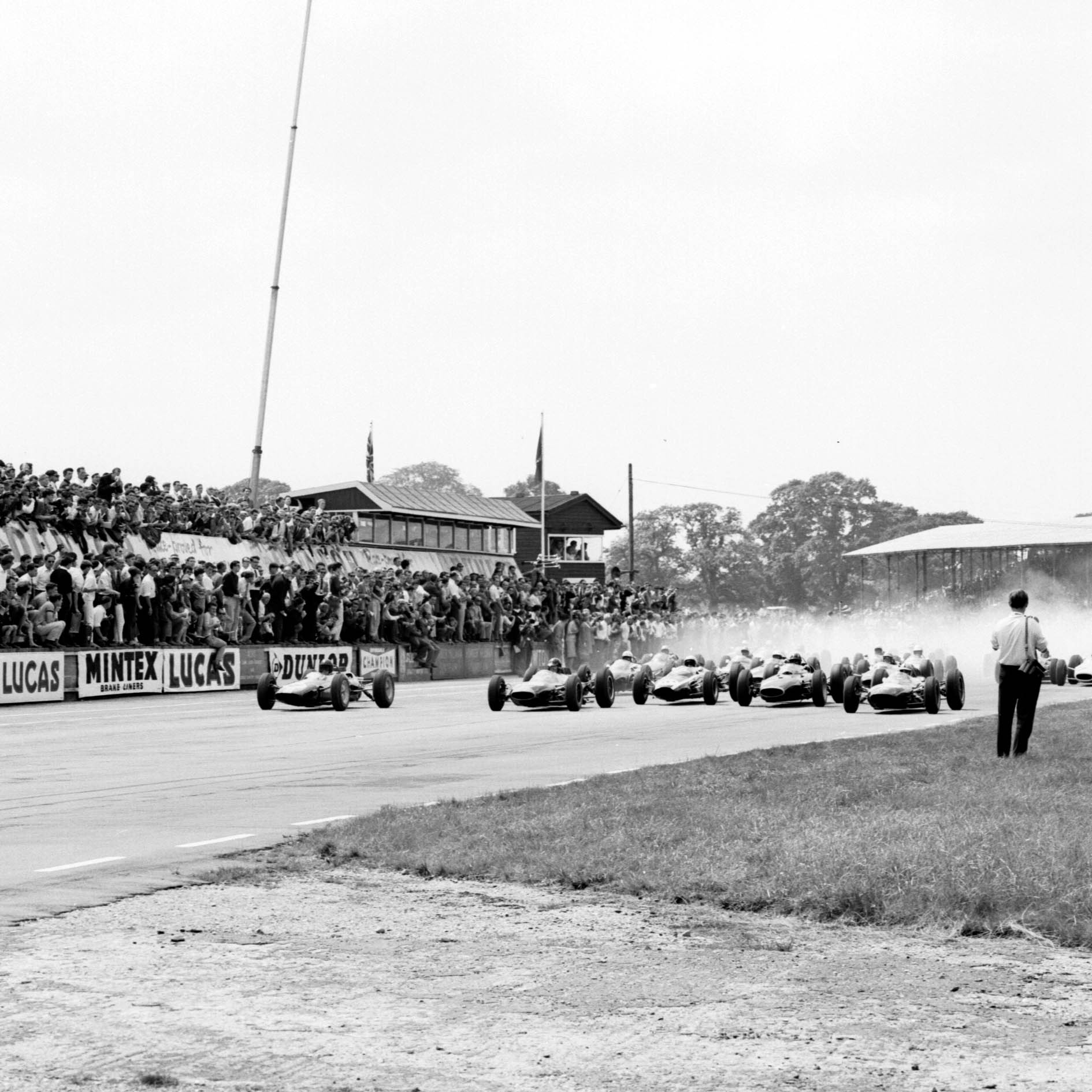
1963 British Grand Prix. Ref-20420. World © LAT PhotographicJim was slow away on this occasion:  wheelspin bogged him down.  He was swarmed by the lead pack as they headed out of Copse and then onwards to Maggotts and Becketts. The two Brabham drivers – showing how relatively closely-matched the top Climax teams were in 1963 – ran one-two;  then came Bruce McLaren in the svelte Cooper, then Hill and then Jim.  They were running nose-to-tail – and sometimes closer than that.  Gurney pitched the Brabham into oversteer at Club;  Jack, helmet leaning forwards, kicked up dirt at the exit of Woodcote.

The 25 was also tail-happy;  you could say that.  Jim felt the car to be little better than it had been before the start – particularly now, on full tanks.  Around him, though, everyone else seemed to sliding around.  Maybe it was just the circuit after all…

Jim began to dive deeper into the corners, to gain a tow – and then to pull out of that tow under braking.  By lap four he was in the lead and pulling away…whilst Bruce McLaren was pulling up on the entry to Becketts Corner, the Climax engine blown in his Cooper.   There was no quick rush back to the pits for Bruce, no beat-the-traffic early departure.  Instead, as on Friday, he stayed and watched, for that is what great athletes do.

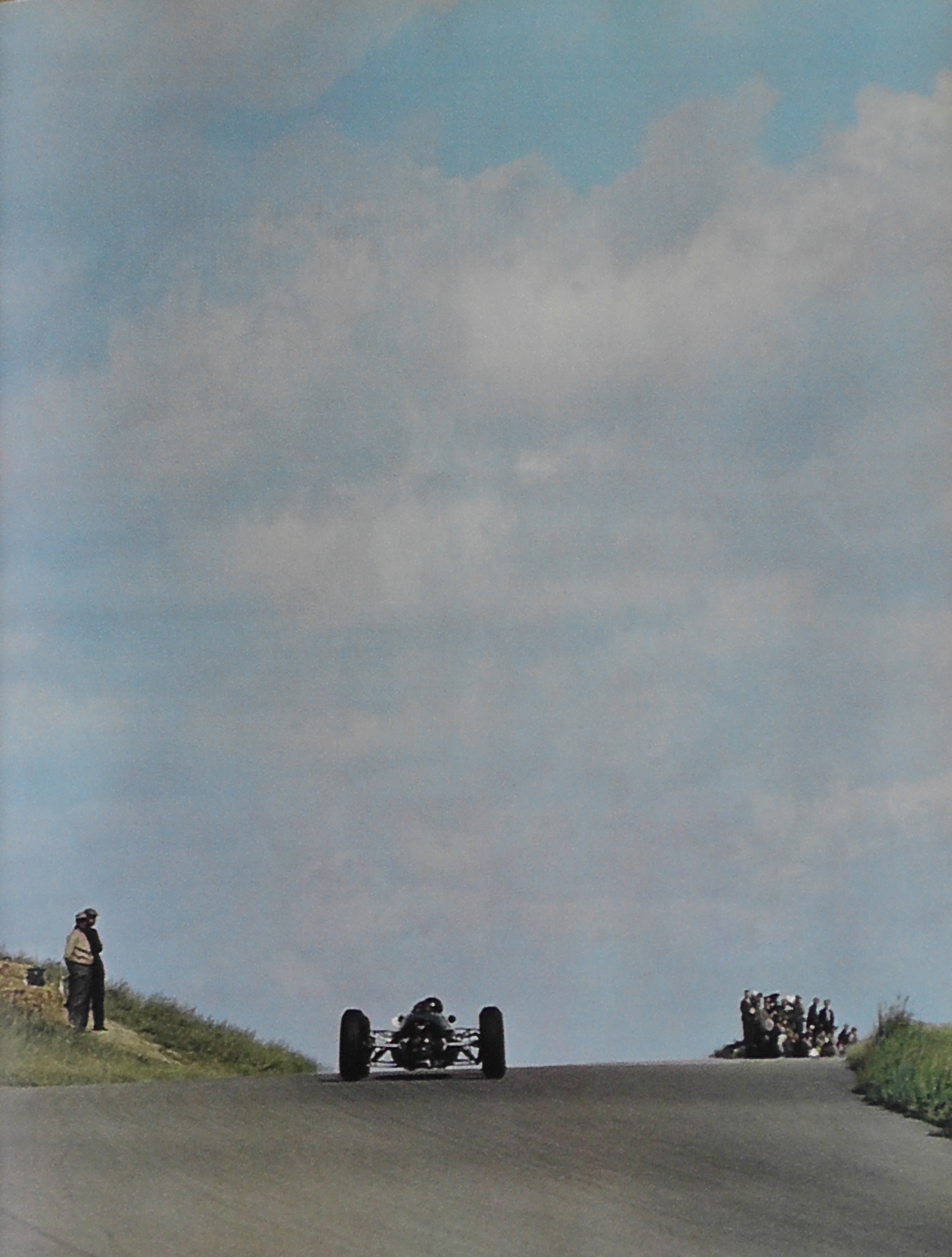
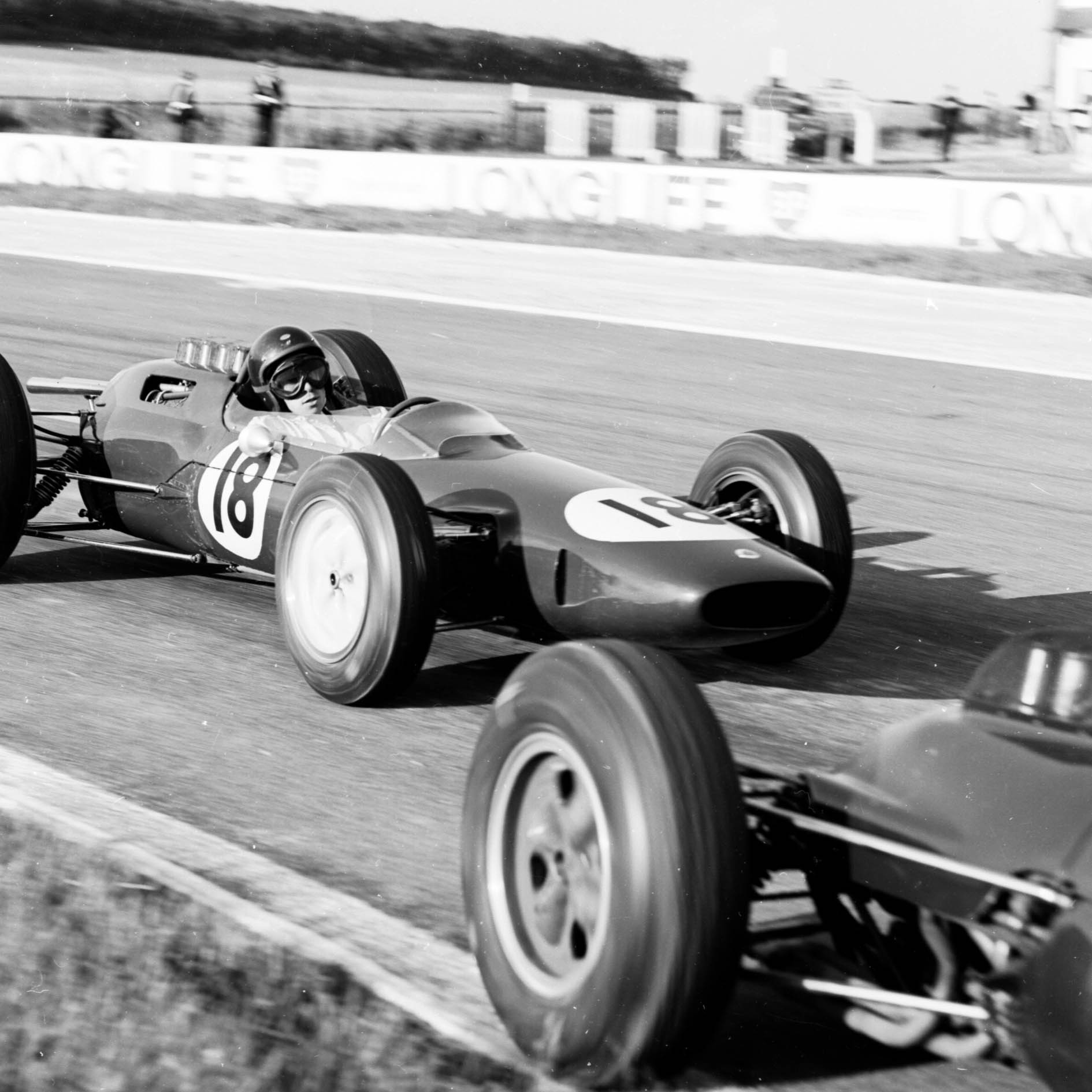
Bruce:  “Jimmy came through with his mouth open and occasionally his tongue between his teeth.  The tyres were holding a tenuous grip on the road with the body and chassis leaning and pulling at the suspension like a lizard trying to avoid being prized off a rock by a small boy.  Then Dan arrived, really throwing the Brabham into the corner, understeering and flicking the car hard until he had it almost sideways, then sliding through with the rear wheels spinning and the inside front wheel just on the ground…”Formula One World ChampionshipIt was a demonstration of four-wheel-drifts;  it was Jim Clark rhythmically poised like never before in an F1 car, the small-diameter Dunlops combining with the surface oil to produce a slide-fest of classic proportions.  There was no need for a score of passing manoeuvres to make this British GP “work” for the crowds;  there was no need for forced pit stops or for overtaking aids.  It was enough, this day at Silverstone, for the fans, and for drivers of the quality of Bruce McLaren, merely to see a genius at work.
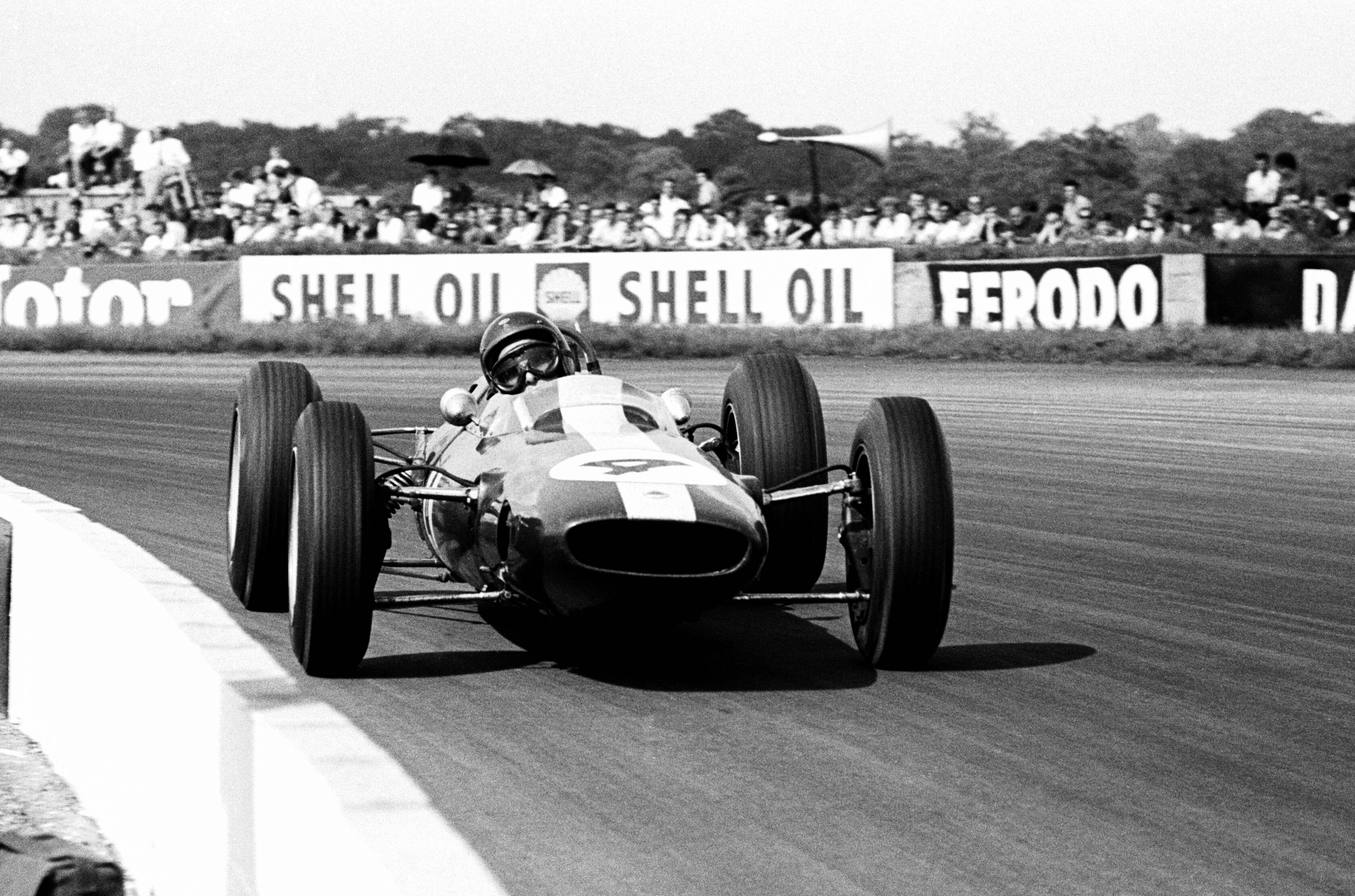
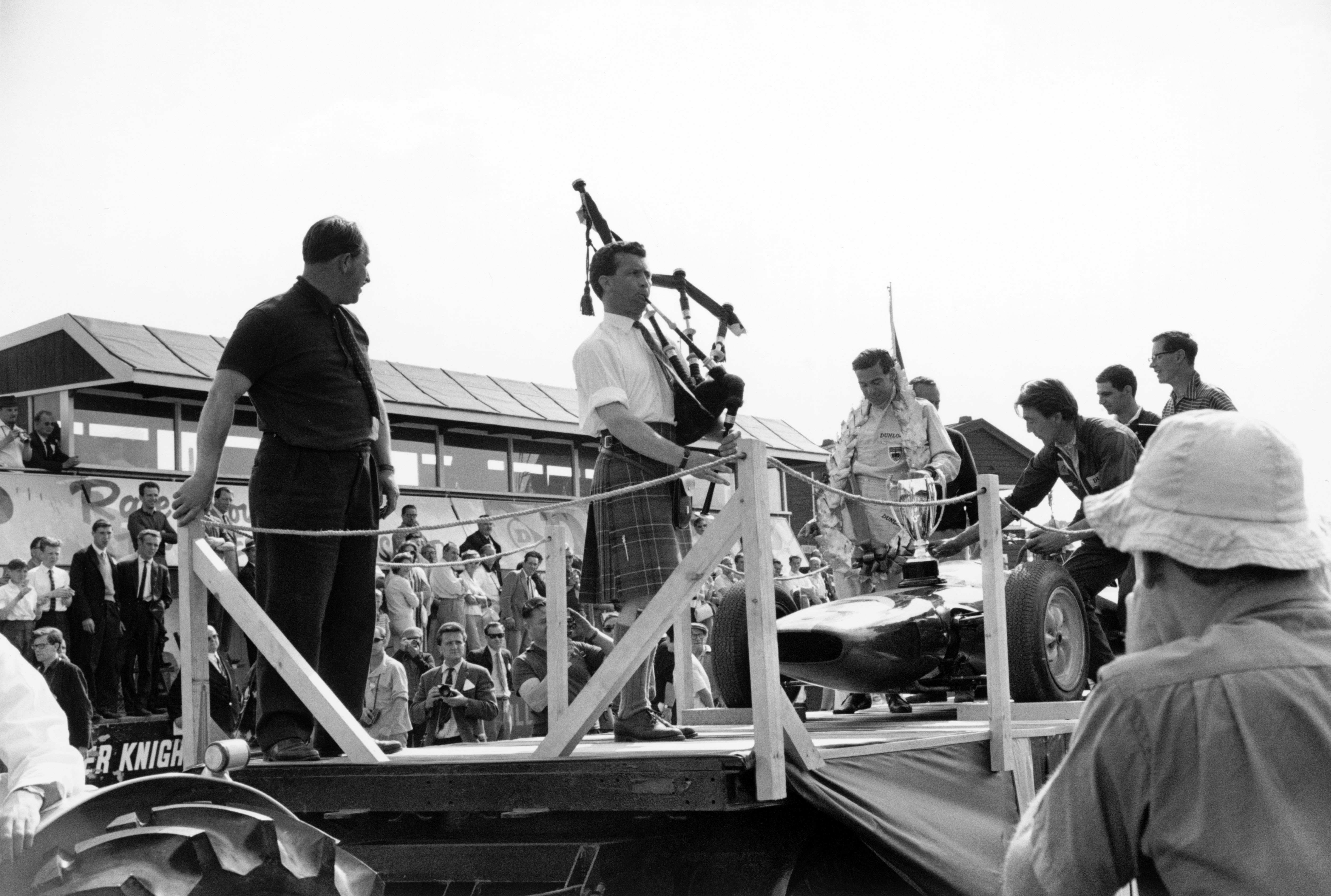
Archive00 37Jim won the British Grand Prix by 20sec from John Surtees’ Ferrari and Graham Hill’s BRM (for both Brabham drivers also lost their engines after excellent runs).  Graham, who, like Innes Ireland, was always fast at Silverstone, ran short of fuel on the final lap and was pipped by Big John, the lone Ferrari driver, on the exit from Woodcote.  The race was also notable for Mike Hailwood’s F1 debut – he finished an excellent eighth (or, in today’s parlance, “in the points”) with his Parnell Lotus 24, and for the seventh place of his exhausted team-mate, the 19-year-old Chris Amon. Chaparral creator/driver, Jim Hall, also drove well to finish sixth with his Lotus 24.  For this was a tough, hard race – 50 miles longer than the 2013 version and two and a quarter hours in duration.  Jim Clark waved to the ecstatic crowd on his slow-down lap (no raised digits from James Clark Jnr) and, to the sound of Scotland the Brave – a nice touch by the BRDC – and to the lucid commentary of Anthony Marsh, bashfully accepted the trophies on a mobile podium that also carried the 25. Colin Chapman wore a v-necked pullover and tie;  Jim looked exalted. He had won again at home.  He had won his fourth race in a row. He had the championship in sight.

To Mill Hill, then, they repaired – and then, for a change in pace, to the following weekend’s non-championship race at Solitude, near Stuttgart.British GP
Captions, from top: Jim Clark drifts the Lotus 25 on the greasy Silverstone surface; racing driver/flag marshal, Cliff Davis, whose selfless action at Silverstone saved several lives; Bruce McLaren finds slight understeer on the Cooper at Stowe; the two Brabham drivers, Gurney and Jack, together with McLaren and Hill, crowd Jim’s 25 at the start; classic four-wheel-drift from Jim Clark. The low apex walls were always a test at 1960s Silverstone; Scotland the Brave heralds the winner of a long, fast British Grand Prix.  Two hours, 14 min of brilliant motor racing  Images:  LAT Photographic. Our thanks to AP and Movietone News for the following superb, colour, video highlights:
The Battle of Reims

20172.tifJim Clark makes it three-in-a-row

The drive down to Reims was the usual cavalcade.  They left Zandvoort, after a celebratory dinner/cabaret at the Bouwes Hotel, early on Monday morning.  First practice for the French GP would commence on Wednesday afternoon (or just one clear working day from the Dutch GP.  As with Monaco now, there was a “free” day within the French GP schedule back then.  At Reims, this was on the Saturday, following three successive afternoons of official practice.  No thought, apparently, was given to the ‘double-header’ pressures facing the mechanics.)  At some point in the road trip Ian Scott-Watson joined Jim and Colin in their rental car and allowed Trevor Taylor behind the wheel of his yellow Elan.   Ian would thereafter spend much time telling the French police that, no, it wasn’t he who had been driving the English sports car at the time in question and that his friend, the culprit, had since flown to Canada…or anywhere…

This wasn’t the usual sun-baked French Grand Prix.  Showers muddied the paddock on Thursday, leaving the Wednesday and Friday sessions for grid-shaping;  Taylor, indeed, set his fastest lap on that Wednesday – and on Thursday, in the rain, neither Lotus driver completed a lap.  (One significant casualty that day was Ludovico Scarfiotti, who crashed heavily in the works Ferrari.  He was for the most part uninjured but shortly afterwards would announce his retirement from racing.  Rescinding this a few months later, he went on to win the 1966 Italian GP for Ferrari at Monza.  He would sadly lose his life in 1968, in a hill-climbing accident.  He was a good friend of Jim’s.)

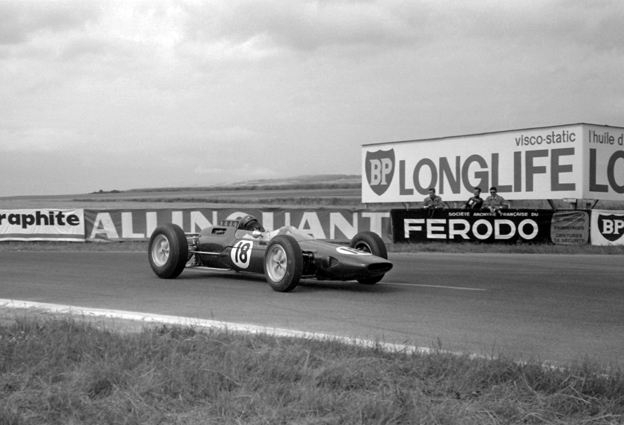
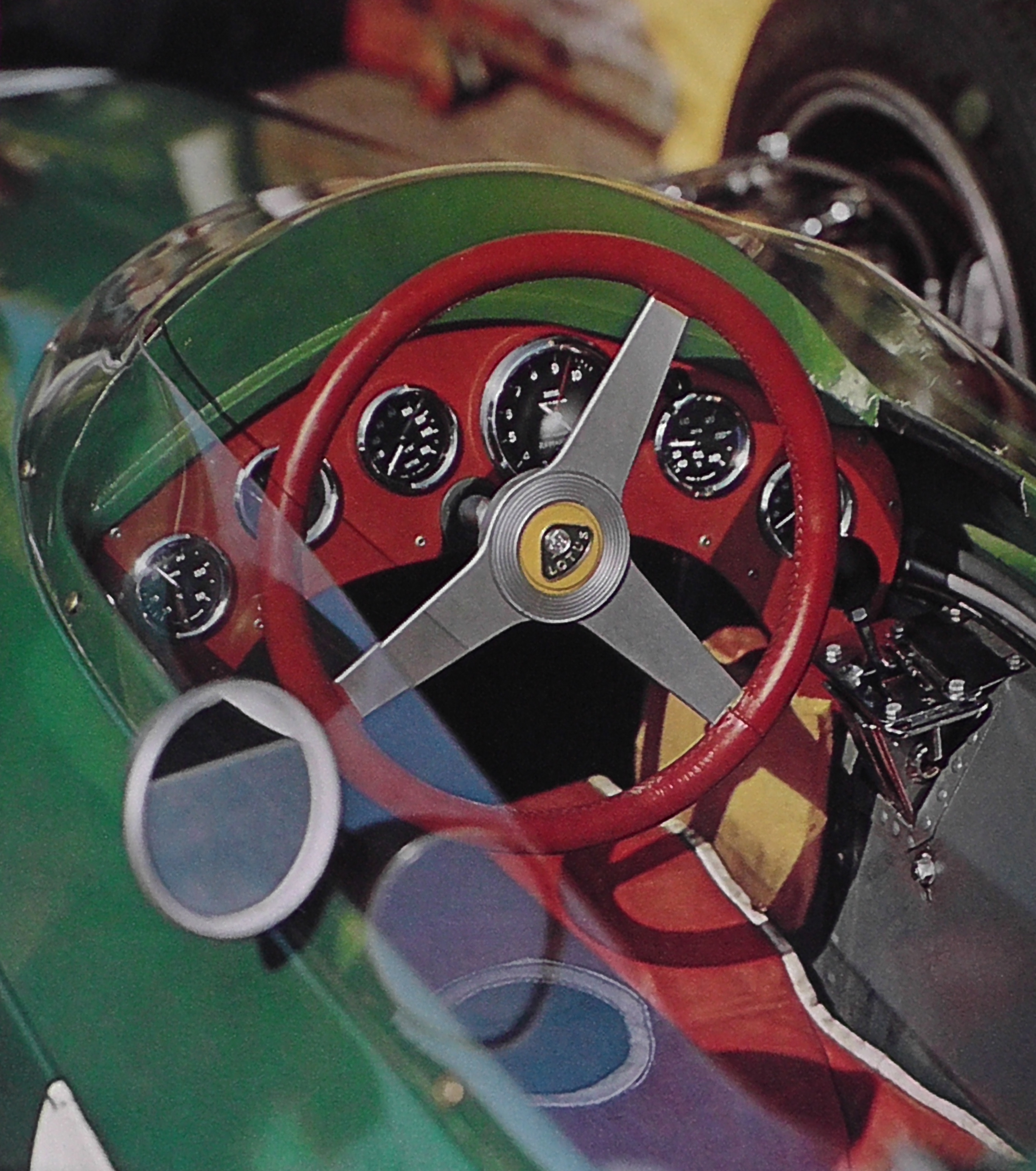
Wet or dry, flying stones were always an issue at Reims, inducing Lotus to revert to standard windscreens for this race.  With the aeroscreen, it was thought, there was always a risk of debris finding its way into the “jet”.  Slipstreaming on the long, ultra-fast (160mph) French public roads could gain you seconds per lap;  the trick in practice, if you were searching for the pole, was to keep your mirrors free.  Despite a considerable straight-line speed deficiency to the BRMs (including Innes Ireland’s BRP-BRM) and also to the Ferraris, Jim took the pole – and the local champagne that came with it.   In the 25, running the same set of Dunlop R6s he had raced at Monaco, Spa and Zandvoort, Jim found a sweetness in the balance on high-speed corners that he had not felt before – or would feel again in 1963.  “I could set the car up in a whacking great drift around the back, keep my foot it it and achieve cornering speeds that I wouldn’t have thought possible,” he would say later.  Very few photographers – if any – seemed to venture out to these corners in those days (they focussed on the “long” shots on the pit straight and the 90 deg right hander leading on to it) so we are left only to imagine what Jim describes as that “whacking great drift”.  To my mind, given the understeer with which he lived at the International Trophy race at May, the 25 at Reims was now far more neutral – neutral leading to oversteer.  I think it’s also probably significant that by this race Team Lotus seemed to have found some sort of fix for their gearbox drams.  Jim, at last, was able to drive the 25 with both hands on his red leather-rimmed wheel.1963 French Grand Prix. Ref-20133. World © LAT Photographic

Saturday was support-race day, which meant big sports cars and Formula Junior.  Jim was at the track, of course, primarily supporting the Normand Lotus 23Bs (Mike Beckwith and Tony Hegbourne) and Peter Arundell in the FJ race.  There had even been talk of Peter racing the third (spare) 25 in the Grand Prix but ultimately it was felt (when balancing prize money against running expenses!) that Peter should race the works (“mini-25”) 27 FJ.  Denny Hulme again won the FJ battle in the works Brabham, pulling away definitively from the second-place slipstreaming group and finally finishing ahead of Peter, Richard Attwood (MRP Lola), fellow Lotus drivers, Mike Spence and John Fenning, and David Hobbs (MRP Lola).  (As the 50th anniversary of the formation of Bruce McLaren Motor Racing Ltd approaches, it’s also worth noting that the talented American, Tim Mayer, finished eighth in this Reims FJ race in one of Ken Tyrrell’s Cooper-BMWs.  Tim and his brother, Teddy, would in the months that follow become an integral part of the new McLaren team.)

Tall and talented Mike Parkes should have won the sports car event with his formidable 4-litre Ferrari but a clutch problem early in the one-hour event effectively handed victory to Carlo Abate (also of powerboat fame) and his 3-litre Ferrari.  Lucien Bianchi (great uncle of Jules) placed third behind Dick Protheroe – and the tough Australian, Paul Hawkins, finished fifth overall with his Ian Walker Lotus 23.  Mike Beckwith had been right up there in third place in the early phase, when Jo Schlesser was leading with his 4-litre Aston, but he fell back a little after a slight “off”.  The small-car class was won by Jose Rosinski, who would go on to become one of the greatest of all French motor racing journalists.

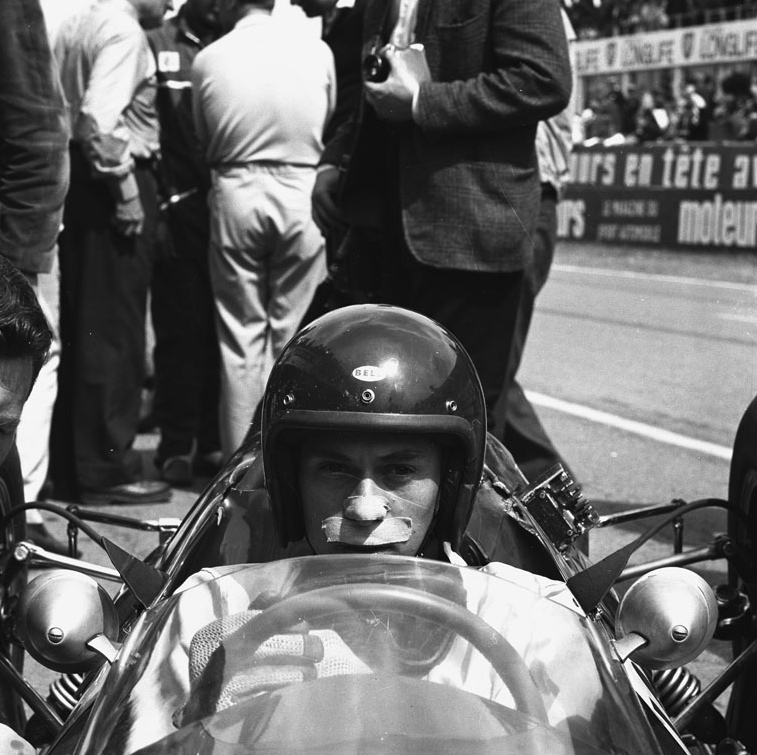
On Sunday – another overcast day – Jim prepared for a torrid French GP as a fighter prepares for a bout, applying white masking tape across his face for extra protection.  Even in the dry, this race would run for well over two hours.

The start, as they say, was the usual shambles.  A fuel vapour lock killed the engine in Graham Hill’s BRM.  Push-starts were forbidden by the regulations…but “Toto Roche”, the autocratic leader of French motor sport and official starter, instructed the BRM mechanics to push Hill’s car nonetheless.  The V8 now revving purely, Roche then quickly stepped away and dropped the flag – except that he dropped a red flag rather than the French national tricolor.   No-one was exactly sure what to do – but they went for it nonetheless.

Jim Clark accelerated hard through the gears to 9,600 (with a max set at 9,800) and then focused on driving the perfect lap:  “Before the race,” he would say later, “I had said to Colin that if I could make the fast corners in front I felt I could open a gap and break the tow.  If I wasn’t in front we agreed that it would be better if I just sat back for a while and let them get on with it…”

Jim was in the lead by the time he reached the first, quick right-hander.  And the second.  And the third.  Full tanks or not, he four-wheel-drifted the 25 with fluid inputs and pin-sharp judgement.  By the time he reached Muizon, the right-hand hairpin, he had free air behind him.  He could forget about his mirrors.ACT

Jim’s standing lap was completed in 2min 31.0sec;  his Indy team-mate and friend, Dan Gurney, lay second a full 2.7sec behind.  Richie Ginther, powered by probably the best engine on the circuit that day, catapulted his BRM up to second place on lap two.  Even so, Jim was leading by nearly four seconds as he passed the Team Lotus signalling board, the 25 sitting on 9,600rpm.

And so it went on.  John Surtees (Ferrari), Dan and Jack (working together in the Brabhams), Bruce McLaren (Cooper), Trevor and Graham Hill scrapped over second place, swapping track space either in top gear, in the tow – or under braking.  At the front, Jim continued to pull away.   By lap 12 of the 53-lap race, he was 19 seconds ahead of Brabham.

Then, for Jim, it all seemed to go wrong.  His Climax engine began to mis-fire at 9,600rpm.  Jim immediately throttled back to 8,000 rpm, where he found a “sweet spot” around which the engine seemed to be half-ok.   He then concentrated even harder on those fast corners but was forced to sit back helplessly on the straights, waiting for the engine to blow – and/or for the next round of bad news on the pit board, for  Brabham was now catching him.  All around the circuit, what’s more, Jim could see parked cars.  Reims was forever tough on all mechanical components – so why was this circuit, on this day, going to be any different for him?

Because on this day – as it had been all week – it would rain.  Jim felt the grease on the track even before his goggles went smeary, for the grooves of the R6s were now worn virtually to slicks.  He was dancing on ice – focussing once again on those fast, very drifty corners where still the 25 felt perfect.  His lap times climbed by ten, 15 seconds;  Graham Hill’s ballooned by 20 seconds.  Maximum revs became irrelevant;  it was all about delicacy.

And so, maintaining that lead, Jim Clark crossed the line, acknowledging Toto Roche’s chequered flag with a raised left arm.  In the grandstands, umbrellas dominated the visage.  On the rev-counter of Jim’s 25, the tell-tale needle sat resolutely at 9,600rpm.  On the work bench later, back in Coventry, Jim’s engine was found to have two broken valve springs.  Trevor (who for this high-speed race, like Jim, raced without a peak on his helmet) might well have finished second had the crown-wheel-and-pinion not failed.  As it was, Graham Hill’s second place was subsequently disallowed due to that push start (subsequently, as in “by the time they got to Monza”.)  Tony Maggs therefore finished an excellent second for Cooper, catching and passing Hill in the closing stages when the monocoque BRM ran into both clutch and brake issues.  Jack took Graham’s third place, with Dan finishing fourth.

Post-race, there was more pandemonium:  a policeman suffered an epileptic fit as he was attempted to clear the crowds from the pit area.  Through the melee, though, Jim and Colin found their way opposite to “the press box”, where they chatted to journalists like Gregor Grant (Autosport), Philip Turner (Motor), Peter Garnier (Autocar) and several of the Fleet Street types.

Thus it was done.  A new era had begun.  Jim Clark and Team Lotus had won three in a row – Spa, Zandvoort and Reims – and had changed the face of Formula One.  The driver lay low in his monocoque car.  The speed, and the suppleness of that speed, was extraordinary.

Next:  the British Grand Prix at Silverstone.FH000006

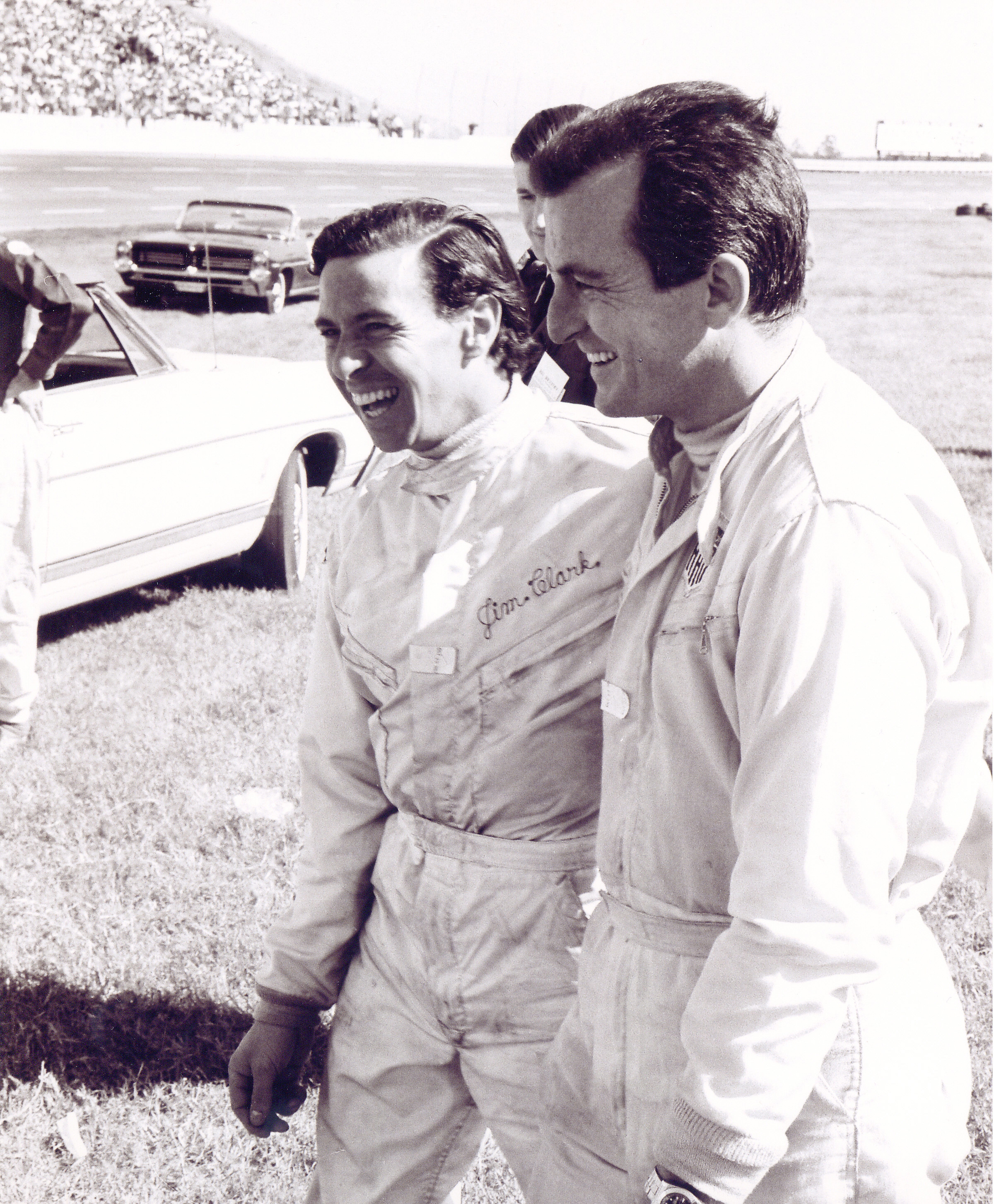
Captions from top: face taped to provide at least some protection from flying stones, Jim Clark readies for battle at Reims;  Reims practice shot of Jim in the aeroscreened 25; for the race, the conventional screen was used.  This was also the last race for a 25 sans yellow stripe; Jim and his friend, Ludovico Scarfiotti, photographed at the Rockingham NASCAR race in 1967  Images: LAT Photographic; Peter Nygaard Collection; Peter Windsor Collection

Artist at work: Jim Clark wins Dutch GP

19618.tifJim’s whirlwind 1963 season continued unabated – even when he wasn’t driving a racing car.  The Belgian Grand Prix had been a relief;  it had been tough and dangerous;  it had been nothing less than the usual forces of Spa.  At last, though, he had scored another F1 Championship win with the Lotus 25 (his last, prior to that, had been at Watkins Glen, the previous October).  At Spa the car had again been excessively temperamental – difficult to set-up and fragile (with the persistent gearbox problems still no nearer to being remedied).  Still, though, he had won with enough margin to be able to back away in the closing stages and to crawl around in the torrential rain.

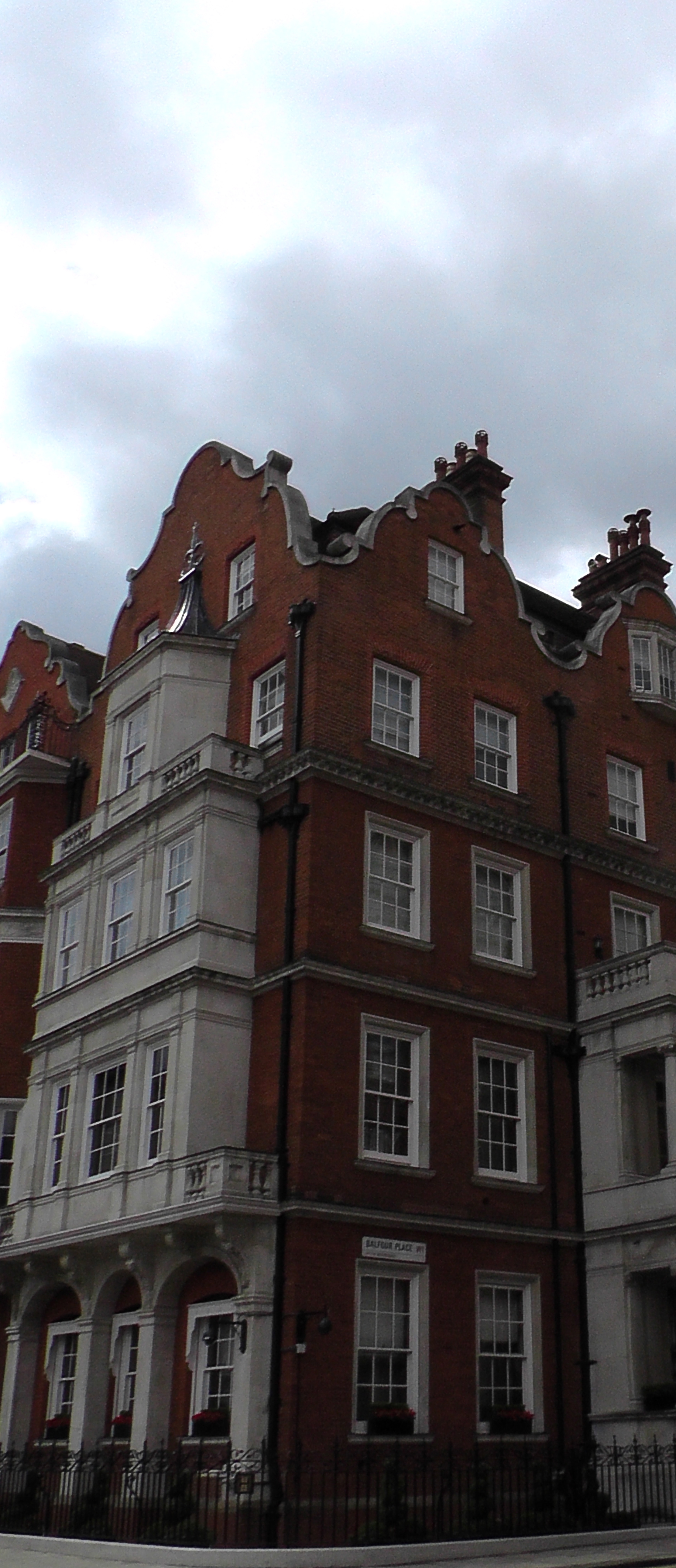
Then came a nice, two-week break.  Jim returned first to London, to Balfour Place, where there was plenty to celebrate with Sir John Whitmore and his new wife, Gunilla, and also with the boys over at Cheshunt.S2600019  There were expense accounts to present to the ever-scrupulous Andrew Ferguson and there was Indy prize money to reconcile.   There was also a new, convertible, Lotus Elan S2 to collect and try.   Painstakingly assembled at the factory, this Elan would be Jim’s transport through to October, 1963.

Jim had appointed Bill Campbell to manage Edington Mains but now it was time for Jim to return to the Borders to catch up on the events – farm-related and otherwise – of the past six weeks or so.  More and more, there were additional interviews to be scheduled with local TV, radio, newspaper and magazine journalists.  Ian Scott-Watson, who had already invested £40,000 of his own money in Jim’s career – and was paying his own way to several European events in 1963 – was still very much in charge of Jim’s racing administration.  Graham Gauld, a local motoring journalist whom Jim had respected from the early Border Reiver days, was also in position to start preliminary work on Jim’s autobiography.  And then there were the farm matters.  The lamb sales were looming.  Cast ewes were to be bought.  Silage was in the first cut. Most days, with an interview or Lotus-related meeting scheduled at some point, Jim wore a shirt, tie, sports jacket, flat cap and Wellington boots as he strode around the farm.  Sometimes, if he could relax, he’d leave out the tie.  In short, Jim switched off for a while, although the inevitable Autosport and Motoring News were never far from his desk.  He would have smiled that week at the picture in Autosport of the USAC race official pointing to the oil leaking from Parnelli Jones’ car during his last pit stop and he would have spent a little time, too, reading about the Rover-BRM turbine car that Graham Hill and Richie Ginther would be racing at Le Mans the following weekend.  And, of course, he would have devoured the details of the previous week’s Scottish Rally (won by his fellow-Border farmer, Andrew Cowan).   Andrew and Jim – who were 27 and 26 at that point – had much to celebrate in Duns in the free weekend that followed.08-26-2010_45

All too soon, though, it was over:  ahead lay a Dutch and French Grand Prix double, followed two weeks later by the British Grand Prix.  With Ian driving his own, yellow Elan demonstrator to Zandvoort and then Reims, Jim drove south to travel to Holland with Colin by private aircraft from Panshanger Aerodrome in Essex.8-24-2010 16-55-24_095

A year on from their official race debut, the cars weren’t ready for first practice at Zandvoort – which, from Jim’s perspective, was no bad thing:  as much time as was needed to fix the gearbox problems, Cedric Selzer and the lads could have it.  As it was, Team Lotus brought a mixed bag to Holland:  Trevor Taylor would use a six-speed Colotti gearbox and Jim a modified five-speed ZF. The cars were also fitted with revised versions of the aeroscreen tried at Spa – this time with a larger opening and a steeper flare ahead of the dash.  Jim quickly found that, with the new design, buffeting had all but disappeared;  white helmet peak now confined to his bag (or lent to Dan Gurney!), he could lie even lower in the car.  So Jim raced it.  The 25’s Ultimate Look was almost complete.S2600001

For this race, thinking about the potential for dust and sand, Jim fitted an orange lens to his Panorama goggles, taping the top half, as usual.   He stayed with the team in a small bed-and-breakfast in the little holiday town of Zandvoort and went trampolining with Bruce McLaren on the beach after practice.  The Dutch Grand Prix was being staged later than normal.  The weather was warmer.  The crowds were huge.

Jim tried the Colotti in practice, then switched to the ZF.  He was unsettled to find that it was now jumping out of second gear rather than top.

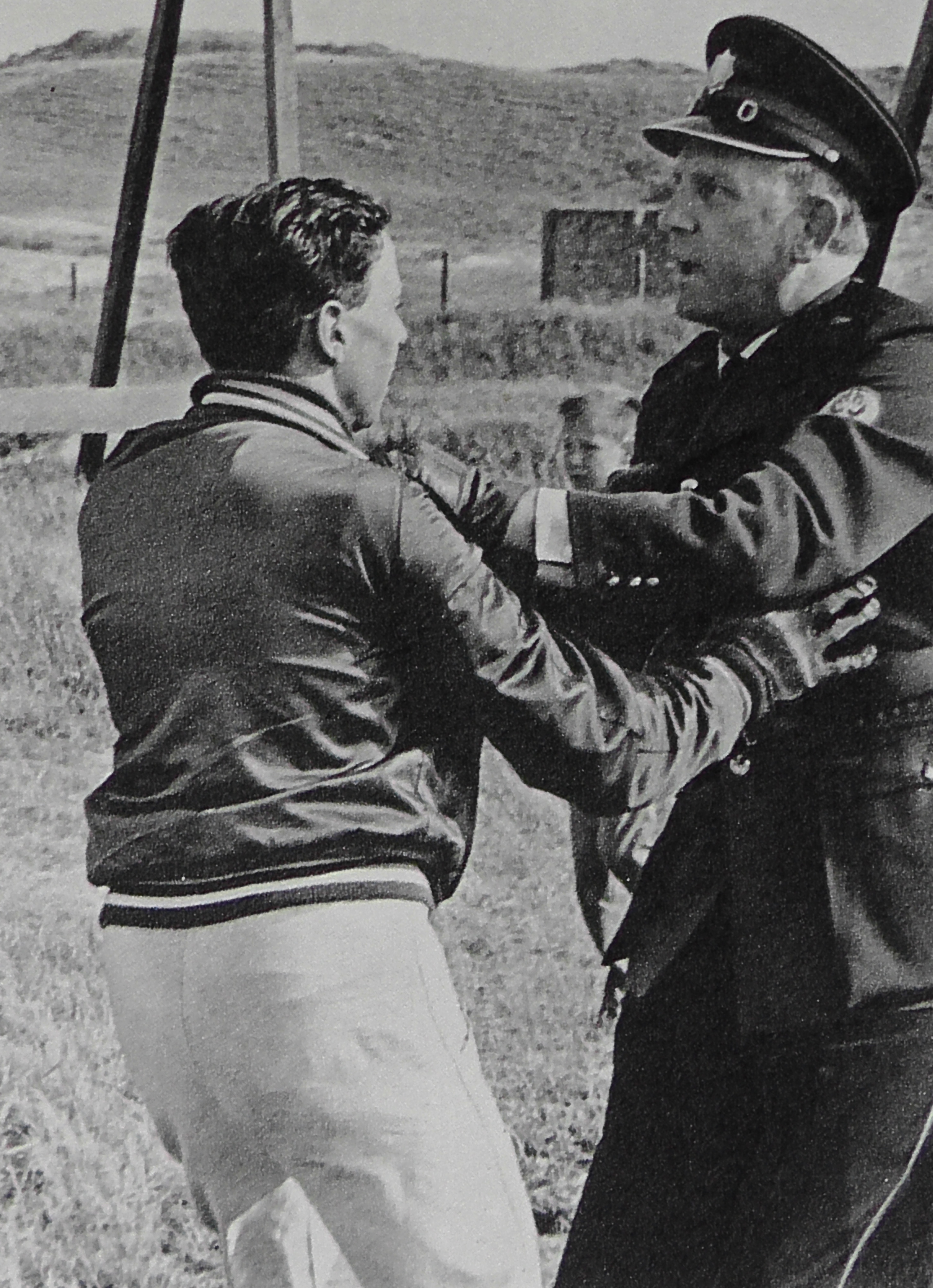
While waiting for his car to be adjusted during Saturday practice, Jim strolled out the back of the pits to watch the action.  Against a chill North Sea breeze, he wore his now-customary Pure jacket over his Dunlop blues and his regular string-backed driving gloves.  There he found his mate, Bruce McLaren, who was also in gearbox trouble with the Cooper-Climax (in this, a “comeback” race for John Cooper, who had been seriously injured in early April when he had crashed an experimental twin-engined Mini-Cooper on the Kingston by-pass).   The two were having a laugh, and comparing notes, when suddenly Bruce was grabbed by a policeman and dragged backwards towards the paddock.  Jim spun around in horror – only to see another policeman heading towards him with about the same step.  The issue at hand:  Bruce McLaren, without his Driver’s pass, was standing where only photographers could tread.  Jim was about to protest Bruce’s innocence when two big hands grabbed him by the Pure jacket and attempted to drag him too towards the shrubbery.  Jim’s Dunlop overalls were torn;  and a large crowd swarmed around, all shouting at the policemen to stop. S2600002 Jim had the correct pass! It was there, visible inside his jacket!  In time, there was little the police could do.  It took a reminder that Zandvoort was about to receive the GPDA’s “Best Organized” award, however (as voted by the members at Monaco), for Bruce to be released.

Although the story of Jim Clark’s Dutch GP weekend is thereafter a story of complete domination, of total command, there was, of course, another side to it: Jim felt that the revised Dunlop R6s brought to Zandvoort were an improvement but still he couldn’t persuade the 25 to handle well on both fast corners and slow:  although he headed every practice session and took the pole by 0.6 sec, he had to nurse understeer at Tarzan and – more importantly, at Hunze Rug, where the slow, downhill left-hander was followed by a long acceleration run through the sweepers.  Even so, he led the race from start to finish, lapping even Dan Gurney, who finished second for Brabham.  The sun shone, sand swirled – and still Jim drew quickly away from the pack.   His was a race of supreme concentration, for there was no-one around for him to race.  It was two hours, nine minutes of lone, artistic brilliance.S2600004

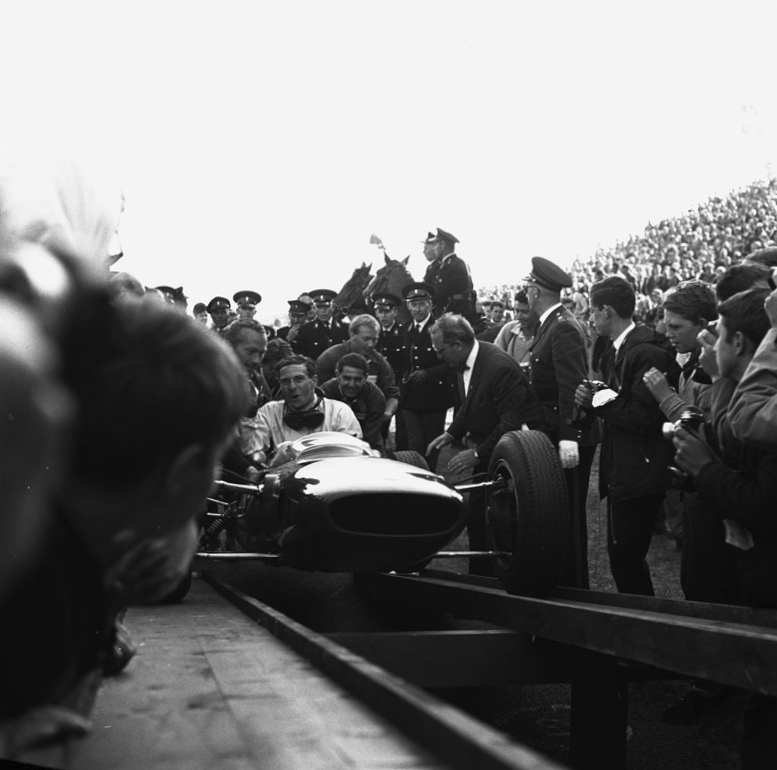
Justifying that GPDA Award, the Dutch organizers did a nice job with the post-race celebrations, ushering Jim and the 25 up between the crowds onto a trailer, where the new Championship points leader could be acknowledged by the fans opposite in the packed, signature grandstand.   Jim’s policeman friend from Friday reluctantly helped with the crowd control – but then had the last word when by preventing both Jim and Colin Chapman from entering a studio for post-race radio interviews. No-one dared ask why.

In another part of Europe, meanwhile, on this day in June, 1963 – on Hockenheim’s OstCurve, in Germany  – Heinz Schreiber was killed when his BMW slid into the trees.  In the aftermath, no-one even thought about the erection of guard-rails or of any sort of protective fencing.S2600003

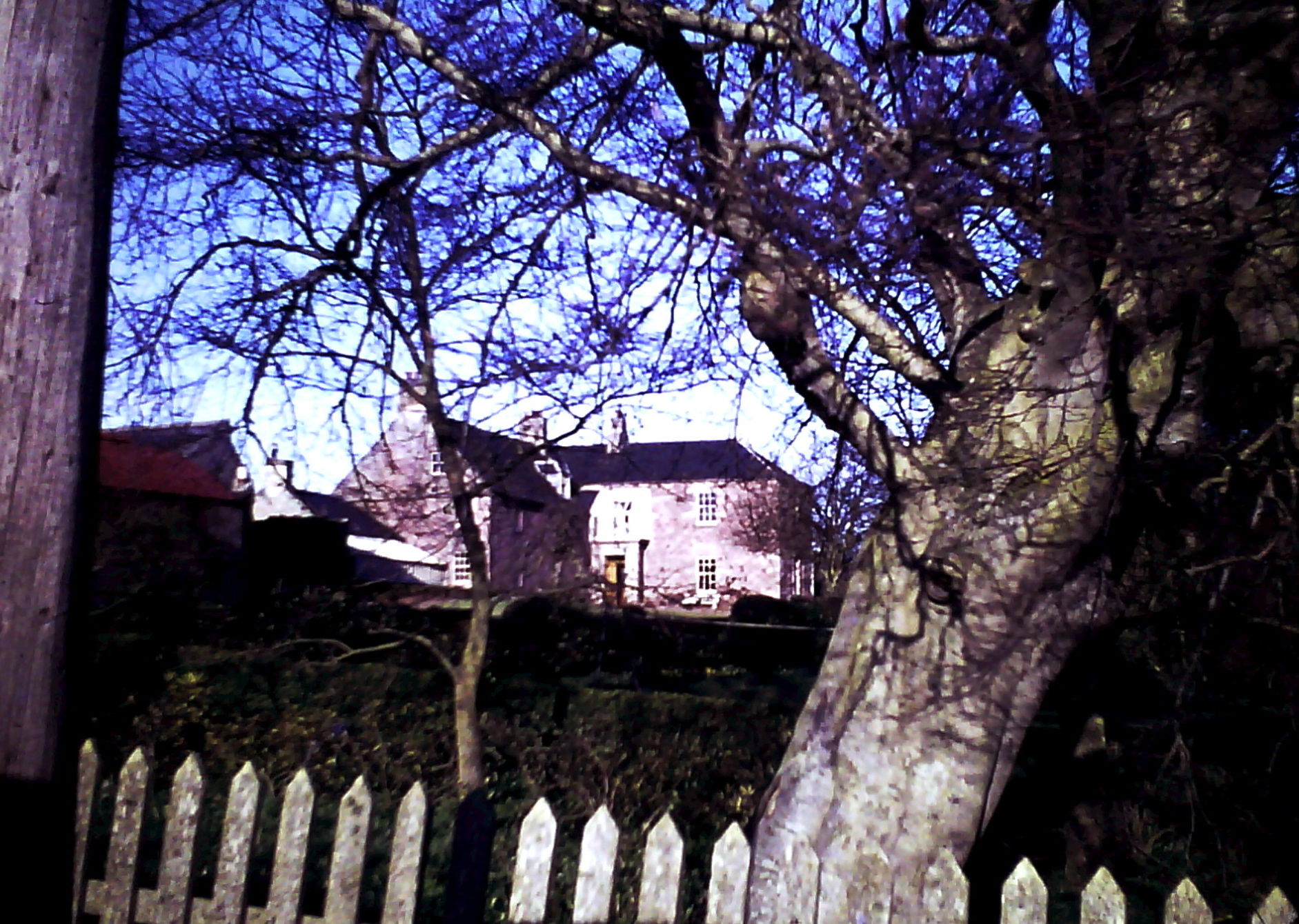
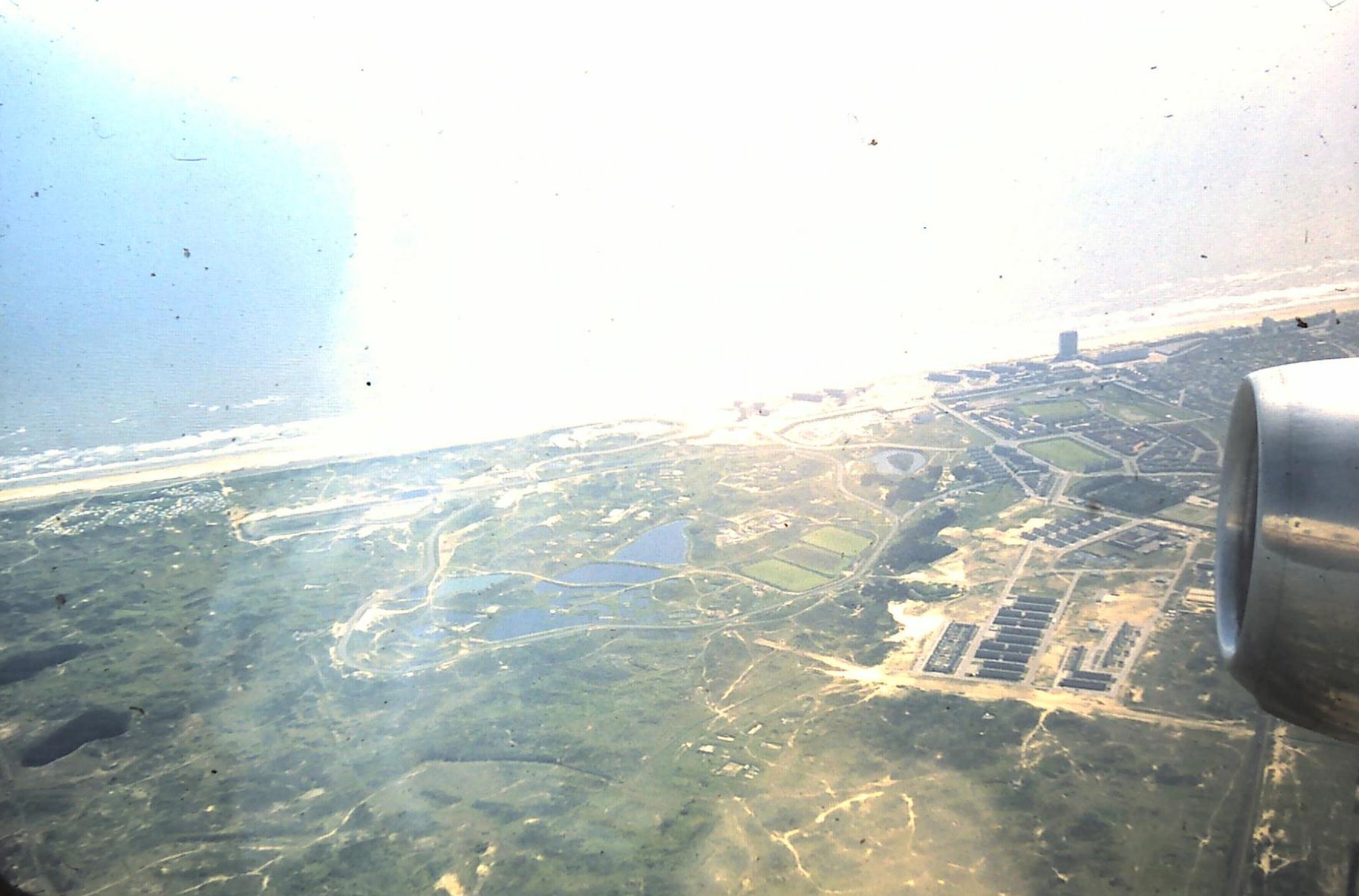
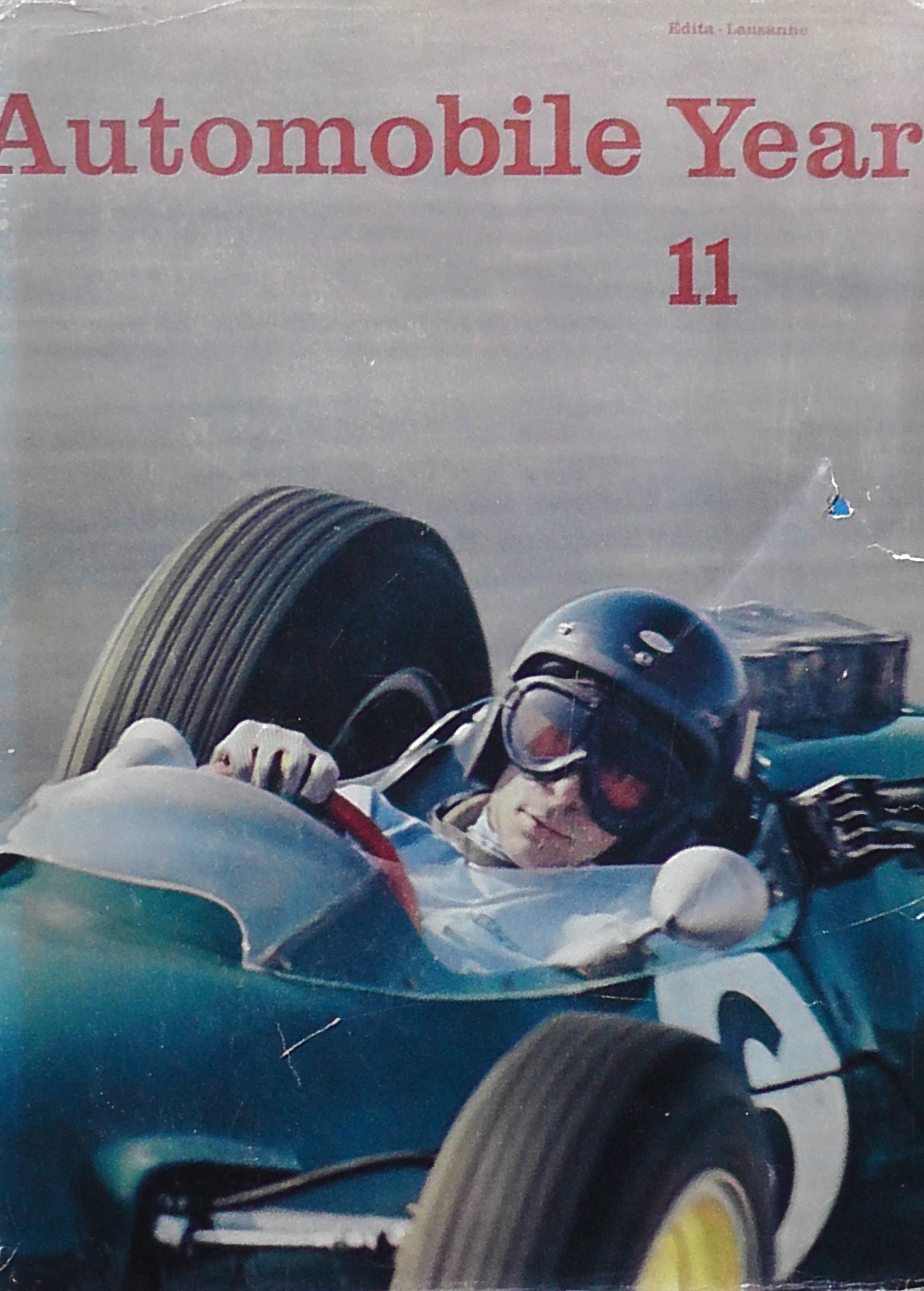
Captions (from top): Jim glides the 25 up the ramp for victory celebrations.  Note Cedric Selzer by left-rear Dunlop;  top-floor flat, 8 Balfour Place – Sir John Whitmore’s London pad, as frequented by Jim Clark.  Rob Slotemaker, the Dutch trickster, once completed a perfect 360 within the confines of this narrow road, much to the amusement of  Sirs Whitmore and Clark; Edington Mains as I photographed it in 1967; Zandvoort in 1967, as I saw it from a Boeing 707; Jim’s Dutch GP win, with all its aesthetic perfection, was perfectly-captured on the cover of the 1963 edition of Automobile Year; Jim and that famous scuffle; the 25’s cockpit also set timeless artistic standards; in a world of his own – Clark at Zandvoort, 1963; below – Saturday night, and Jim returns to the track after dining in Zandvoort.  The boys needed some coffee! Images: LAT Photographic, Peter Windsor CollectionS2620007

Indy, Mosport…and now the Palace

Capping a hectic triple-header, Jim Clark wins for Normand Racing at Crystal Palace

19148_lowresIt was remarkably straightforward, even for 1963.  The Boeing 707 carrying Jim, Sir John Whitmore, Graham Hill and Stirling Moss touched down at London airport on the morning of Sunday, June 2 – and Jim and John repaired quickly to John’s Mayfair flat for a wash and change.  Jim usually slept well on planes, particularly if he could find four free seats in economy, and this flight was no exception. Sunday was a free day – a day to regroup, to catch up and to enjoy England.   Tracks from Please Please Me were constantly being played on the radio.  I Saw Her Standing There; Twist and Shout; A Taste of Honey. The newspapers were full of Christine Keeler and the Profumo affair.  Chris Amon had said he knew someone who knew Christine…  Now, on this Sunday, he was delighted to be home, even if he wasn’t on the farm.

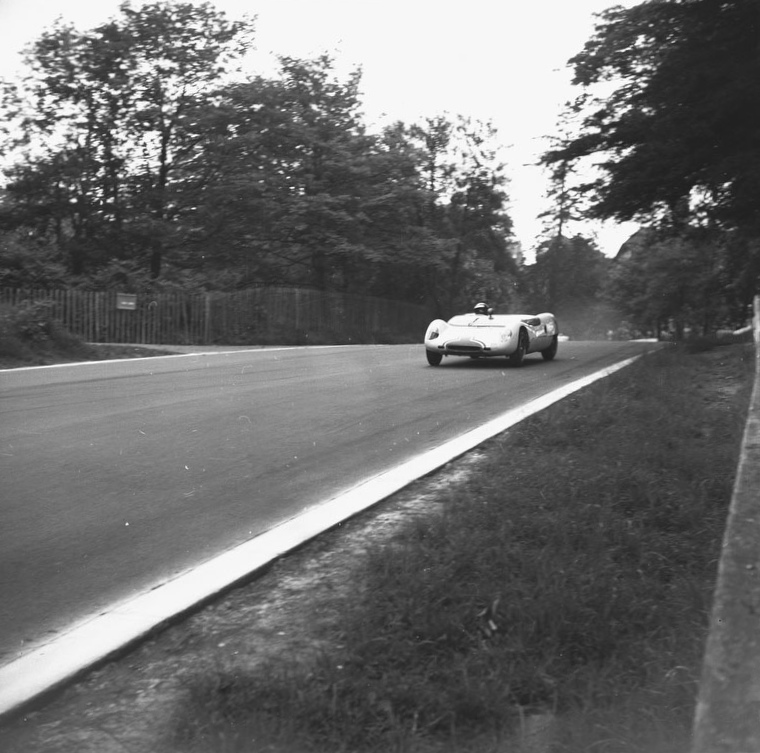
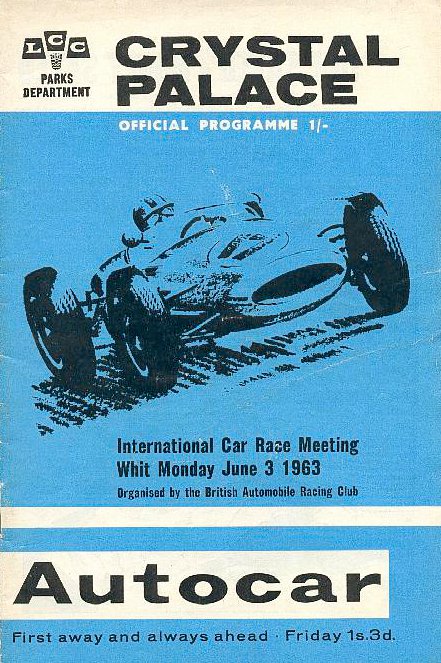
His Leston track bag packed with fresh Dunlops, his new blue Magnum and Westovers, Jim joined Sir John for the short drive to Crystal Palace in John’s Ford Zephyr early the following morning.  Jim was entered in the Normand Lotus 23B for the main race on this Bank Holiday Whitmonday (the sports car race counting for the Autosport Trophy), and John would be back again in his works Austin-Cooper.  Both did well in morning practice.  Jim, feted as something of an “Indianapolis hero”, qualified the 23 on the front row, beaten only by the much more powerful Tommy Atkins Cooper Monaco of Roy Salvadori.  John, too, was very sideways and very quick in the Austin-Cooper.

Thirty thousand people flocked to the Palace for the afternoon’s racing (entrance: five shillings for adults, two shillings for children), enticed by the presence of the reigning World Champion, Graham Hill (3.8 Jaguar), Jim Clark, Trevor Taylor, Jack Sears (Ford Galaxie), the best Mini racers in Europe and Salvadori.  This was, too, the tenth anniversary of Crystal’s re-opening since WWII.  The Indy 500 had not been shown on British TV (as in 2013!) but word of Jim’s brilliance had filtered through via the daily papers.

The atmosphere at this British Automobile Racing Club (BARC) international was relaxed and homely.  Indy, thought Jim, as he stood on a balcony overlooking the pit lane, officials below him in cloth caps, tweed jackets and ties, seemed much more than an ocean away – as did Mosport.  Here, at this lovely little circuit, full of fast corners and undulations, all was in order, all was as it should be. The 23 in Canada had been a handful.  The Normand 23Bs, overseen by Mike Beckwith, were immaculate.  The car was a delight to drive.  And there – over there – there was Autosport’s photographer, George Phillips.  He’d watch out for George during the race and give the 23 a bit of a tweak just to see if he was awake.  And who is this, standing with David Hobbs, Bill Bradley and the boys over at the MRP (Midland Racing Partnership) Formula Junior truck?  She looks nice…

Jim sauntered over, signing an autograph or two for the polite British enthusiasts.

“Jim!  Brilliant job at Indy!  Jim – have you met Sally Stokes…?”

Sally, the fashion model daughter of a military father, was at Crystal with friends in support of her local racing team (MRP).  She knew Bill, David and Richard Attwood.  Now she knew Jim Clark.

Jim made a better start than Salvo but the 2.7 litre Cooper-Climax ate the 1.6 litre twin-cam 23B for an early lunch as they hit the longer gears.  Jim fell into second place. Trevor initially filled his mirror with his red ARS (Auto Racing Service) 23 – but then it was Mike, driving beautifully and quickly, who made it a Normand two-three.  Trevor spun – and would spin again, late in the race, after a driving frantically back to fourth from P10.  Jim inherited a win when Salvadori’s Cooper lost its gears with ten laps to go.  Mike finished an excellent second and Keith Greene, of Gilby fame, finished third;  Keith would go on to become Team Manager of the F1 Brabham team.19161_lowres

The Minis were outstanding. Sir John won the blast but the tyre smoke and the door-handles were what the crowd took home:  Paddy Hopkirk pushed John all the way – as did the deliciously fast Christabel Carlisle.  Then came John Rhodes and John Fenning – outstanding talents both.  Jack Sears won again with the big Galaxie, from Roy Salvadori and Graham Hill;  and Denny Hulme continued his run in the Formula Junior race, leading home Frank Gardner, Alan Rees and David Hobbs.  Other drivers in the FJ race:  Peter Revson, Chris Amon, Richard Attwood, Paul Hawkins and Mike Spence.

So much talent;  so much fun.

Finally, as they sipped a beer or two in the paddock and pushed the racing cars back onto their trailers, and changed out of their overalls on the grass, by the back doors of their road cars, the day was over.  It was British motor racing at its best;  it was Jim Clark at his best – in a car as simple and as elegant as a Lotus 23, balancing slides with fingers and toes, absolutely on the limit, every corner, every lap, on an early-June Monday in London, in the tiny space that lay between the Indianapolis 500 and the Belgian Grand Prix at Spa.

It was Jim, wondering if John could arrange some sort of second meeting with Sally…

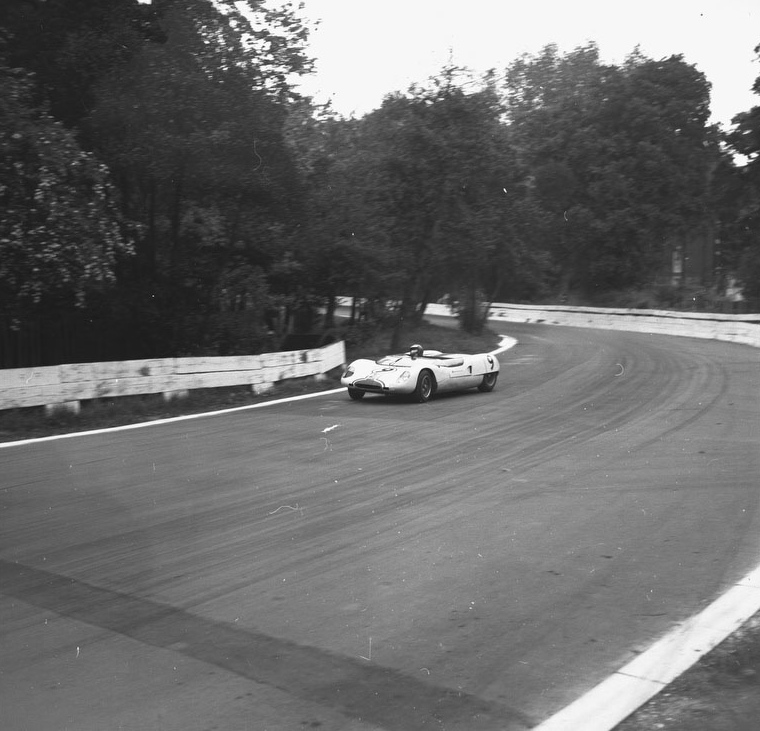
Captions from top:  Jim drifts the Normand 23B for the benefit of Autosport’s George Phillips;  almost airborne – again!  Indy, Mosport and now Crystal Palace – and in two days Jim would be off to Spa for the Belgian GP  Images: LAT Photographic1963pa

From the gloss of Indy to the switchbacks of Mosport

Indianapolis was barely over when Jim Clark left for Mosport – for the next race on his crammed 1963 calendar2_in_Chrono_Order

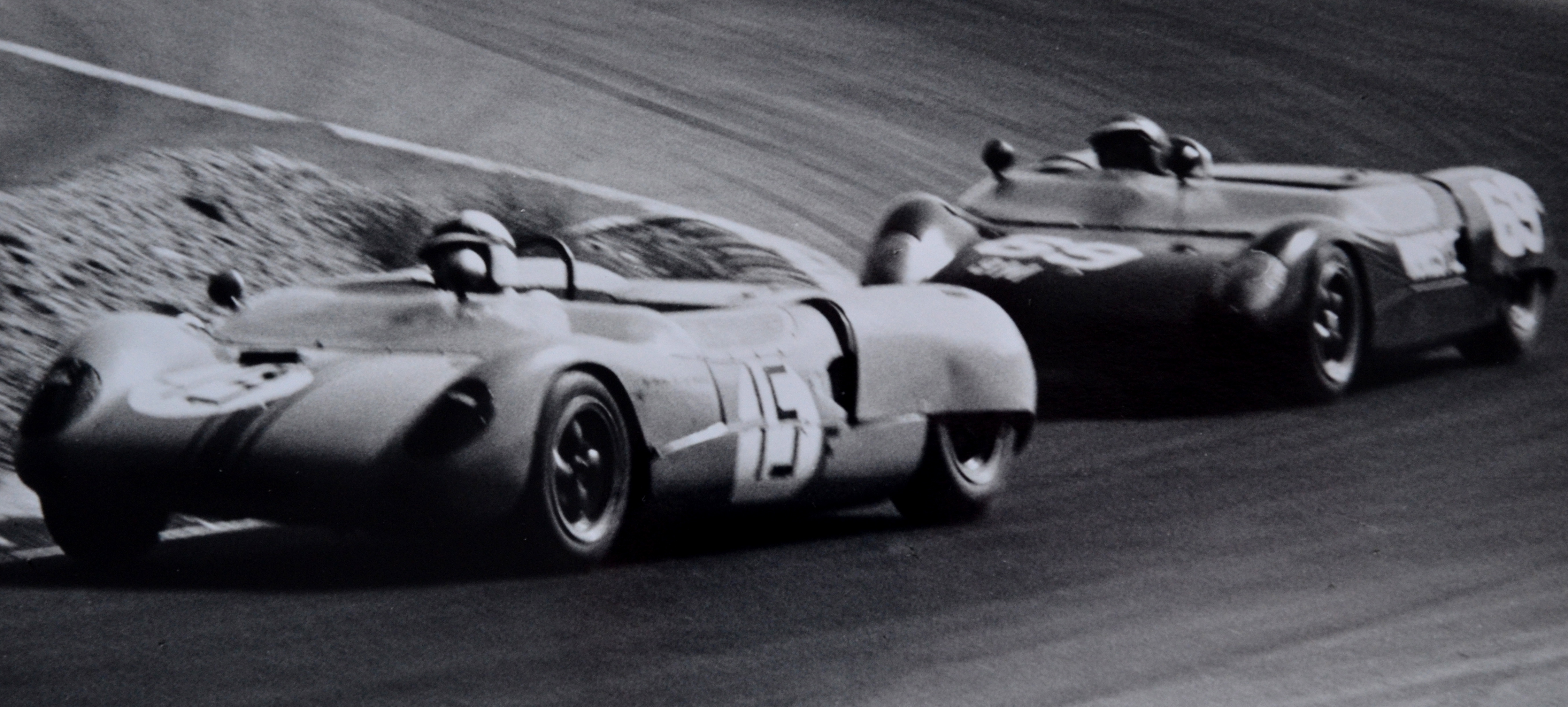
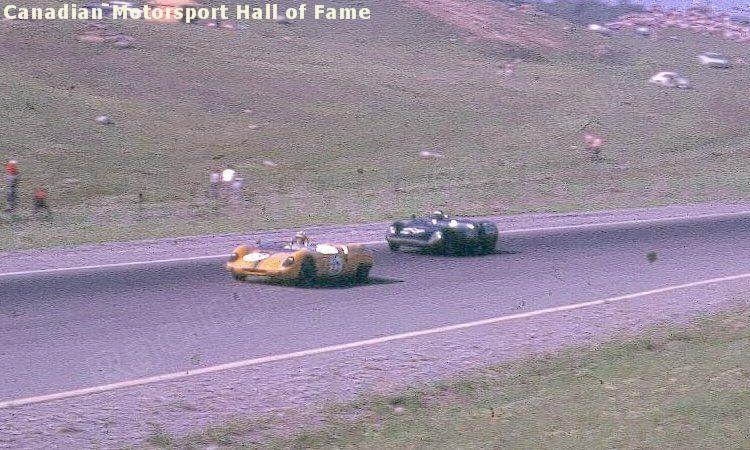
The young rookie, Skip Barber, in his ex-Ian Walker Lotus 23, leads Jim Clark’s similar, Al Pease-owned, Lotus 23 around Mosport Park

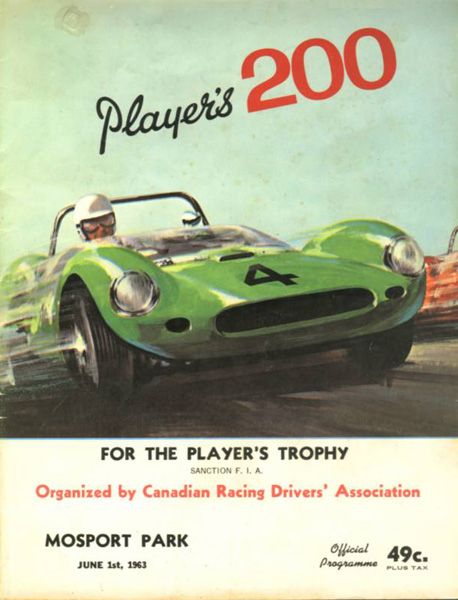
There were times when going to Mosport so soon after Indy did not seem like such a good idea.  It was a rush from beginning to end – but then Jim Clark was used to rushing.  It was what he did in order to earn his profession as a racing driver.  Starting money, particularly in North America, was beginning to look very appealing – and Jim had always been open to the idea of driving different cars in different locations.  In March, 1962 – long before Dan Gurney initiated the Indy plans –  Jim had been delighted when Colin Chapman had asked him to race a Lotus Elite at Daytona; whilst there, he had had no hesitation in accepting an invitation from “Fireball” Roberts to try a stock car on the banked tri-oval.   By 1963, with Indy elevating him to a new level of consciousness in the American racing psyche, Jim was open to all sorts of offers.  The Player’s 200 was one such.  The promoters would pay him decent starting money – and he could squeeze the race in between Indy and Crystal Palace back in England on Whitmonday. It also looked as though Team Lotus would be able to run the Milwaukee and Trenton USAC races later in the year.  Then there were the big-money sports car races at Riverside and Laguna Seca at the end of the season.  It all added up to an interesting, diverse and very busy year.  Jet lag, of course, had yet to be invented!

In the meantime, there was no time either to savour his second place at Indy – or to be frustrated about it; and that was probably a good thing.  He needed to be on that plane to Toronto.  Parnelli Jones, by contrast, cancelled his upcoming appearance in the Player’s 200 with Frank Harrison’s Lotus 23B and flew instead to New York:  he would be a guest on Johnny Carson’s Tonight show.

Jim had Dan Gurney for company on the flight to Canada but the trip felt less solid than usual.  Jim was plunging into the unknown with a Comstock Lotus 23 – a deal put together via Lotus North America –  and Dan with Timmy Mayer’s Cooper Monaco;  his regular, and super-quick, Arciero Lotus 19 would instead by driven by Chuck Daigh.   Both arrived tired and drained in Bowmanville, Ontario.  There was just time for a couple of exploratory practice laps before the two-part race on Saturday.  Dan was instantly fast – good enough to be fourth – but Jim was dismayed.  The car wouldn’t run.  He couldn’t even put a lap together.

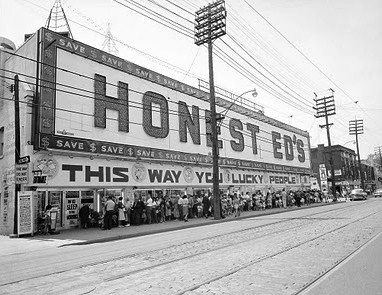
With Comstock’s support, Al Pease, an excellent “preparer” of cars who was originally going to race his own Lotus 23, quickly stepped in to offer Jim his seat.  Jim looked the car over – he knew 23s pretty well by then – and accepted straight away. He put in a lap that would enable him at least to qualify.  It would, I think, also be the first time that Jim drove a car sponsored by a company from outside the motor racing sphere:  Al had arranged backing from “Honest” Ed Mirvish, a Toronto-based discount store owner.  Jim was amused by the concept;  if he had time, he agreed that he would visit the shop before returning to the UK.f1257_s1057_it0465

This was a big event by Canadian – even North American – racing standards.  The driver line-up included Dan, of course, plus Jim Hall in the front-engined Chaparral, Lloyd Ruby, Daigh, a racer-mechanic who lived in Long Beach, Ca, Graham Hill (who had withdrawn from Indy and had flown to Canada from Monaco) in the rapid BRP Lotus 19, Jim’s friend, Sir John Whitmore, in the Frank Costin-re-bodied SMART (Stirling Moss Automobile Racing Team) Lotus Elan, and Roger Penske in Mecom’s Zerex Special (a car that Bruce McLaren would later use to kick-start his own team).  Even so, the media at the time made very little of Jim Clark’s appearance.  All the local talk was of drivers like Ruby, Gurney, Hall, Penske, Jerry Grant and Daigh – and of the reigning World Champion, Graham Hill.  Jim, “only” second at Indy two days before, and in a much less competitive 1.5 litre Lotus 23, earned but a footnote in the local newspapers.  After all the glitz and attention of Indy, Jim liked it that way.  The weather was gorgeous in Canada; he worked for two days at Mosport with his little team in the little-car section of the paddock.

I think this also highlights another side of Clark’s professionalism: Jim wasn’t concerned with always racing cars that made him look good in the public eye; he wasn’t afraid to finish second – or lower than second – if that’s the way things went:  his priority was always to give 100 per cent – and that meant driving with a team he could trust and in a car he liked.  Lotus never built the strongest cars in the world – but that was another subject.  Driving for Lotus – driving any Lotus – was about loyalty to Colin Chapman and about choosing a balance.  What Lotus gave away in reliability they usually made up for with speed.  Jim was prepared to accept that balance up to a certain level; and in Canada, in Al Pease’s Lotus 23, he found a level that at least represented par.  When Jim was out there, driving the unfamiliar black car in this relatively minor race (by F1 World Championship standards), he was nonetheless driving absolutely on the limit.  That was his code.TN_Mosport-1963-06-01-069

As it happened, Jim had a lot of fun in Canada.  He quickly began to race in company with a young American who had made his way with an Austin Healey Sprite and then a Turner, and was now having his first race outside the USA in a yellow, ex-Ian Walker, Lotus 23.  Skip Barber would go on to establish the biggest, and most successful, racing school in North America but on this Saturday, in late May, 1963, he was definitely a kid on a mission. “Mosport was a wonderful circuit,” he would say later.  “Blind brows, changes of camber and barriers close to the circuit – where there were barriers.   I trailored the 23 up from Connecticut, where I was based.  I was so new to it that I didn’t even realize that they used imperial gallons in Canada.  “I had bought one of the two Ian Walker 23s that raced in North American in 1962.  It was used-up but successful – yellow with a green stripe down the middle. The Player’s 200 was a big event in North America – and in Canada, particularly, where they had major races in the spring and then in the fall.  This eventually led to the Can-Am, of course.  There was good prize money and starting money.   And there was a big crowd at Mosport. The atmosphere was electric.

“Jim’s spec was identical to mine – a 23 powered by a 1500 Ford pushrod.  We had no chance against the twin-cams, let alone the big-bangers.  I’d only done two short races with the car before Mosport so this was definitely a step into the unknown.  I don’t remember meeting Jim during practice or before the first heat, but between races I asked Al if he could lend me, or sell to me, a new set of brake pads.  He replied that he would have to ask the driver (who happened to be standing right next to him!). Jim was extraordinarily gracious: he pretended to think about it for a second or two but clearly he was never going to say no. “This probably sounds a bit pretentious, but we had just had a tremendous, 100-mile race in which we had been separated by maybe three yards the whole time, with me in front.  WM_Mosport-1963-06-01-015He was very complimentary and very nice.  I remember him saying ‘I’ll see you in Europe’…but of course I didn’t even know where ‘Europe’ was.  Jim told a friend of mine later that he had thought about tapping me a few times during the race but my response was that he would have needed to have been a bit closer to have pulled that off.  In the second heat he passed me but then I re-passed him on the same lap.  We ran the same way almost until the end, when one of the RS61 Porsches blew up in front of me.  I went so far off the race track that I couldn’t find my way back.  I’m not kidding.  I was in the tunnel exit of the infield, buried in heavy grass.  After that, we just packed up and went home.  And Jim flew back to Europe.  It was as quick as that.  I never even thought about asking Jim to help me meet people, or even to introduce me to people in the paddock.  I never even considered it.”

Jim’s race was similar in essence to one he would enjoy a couple of years later at Lakeside, in February, 1965.  Like Barber, Australia’s Frank Matich would race that day wheel-to-wheel with Jim Clark – Jim in the works Lotus 32B-Climax, Frank in the powder blue Team Total Brabham-Climax.  Like Barber, Frank would forsake an international career for a racing life at home.  Both drivers earned Jim’s respect.

The 1963 Player’s 200 was won by Chuck Daigh;  Graham Hill retired with a blown engine.  Jim Hall was second, Dan third, Penske fourth.  Jim eventually finished eighth overall (and third in class). John Whitmore amazed the crowd (and Barber, who had never seen an inside wheel so far from the ground) before the differential seized on the SMART Elan.  John then drove with Jim back to Toronto and flew with him to London and thus on to the Mayfair flat.  The two of them were scheduled to race at Crystal Palace on Whitmonday, 24 hours later.

Captions, from top: Skip Barber in his ex-Ian Walker Lotus 23 leads Jim Clark in the Al Pease “Honest Ed’s” Lotus 23.  Jim is wearing his new Bell magnum, complete with white peak; Honest Ed’s discount store in Toronto (as it was in 1963);  the sponsor’s signwriting was relatively large by ’63 standards; Skip and Jim as they spent much of the Player’s 200 Photographs: Skip Barber Collection; Peter Windsor Collection_Mosport-1963-06-01

Indy: Second Row for rookie Jim Clark

moremsportshistorySilverstone and that dramatic escape behind him, Jim Clark returned to the cauldron they call Indianapolis, this time residing at the Speedway Motel.  He and Dan Gurney were ready to roll on Monday morning – and to apply, therefore, the finishing touches to their all-important qualifying attempts.  If they didn’t make it on this first weekend there would be no Monaco Grand Prix.  It was as simple as that.  And if there was no Monaco Grand Prix, Jim Clark’s 1963 F1 season was going to become unnecessarily tough.  After losing the title in 1962 by a single point, and now having won Pau, Imola and Silverstone in quick succession, he was keen to keep the momentum going.

Jim was delighted to find that Hinchman and Bell were true to their word.  His brand new overalls were, he thought, a little on the gaudy side – but this was Indy; and the race suit, critically, met all the USAC regulations for flame resistance.  Hinchman didn’t seem to be in the business of two-piece suits (of the Dunlop type to which Jim was now accustomed), so this one-piece overall featured a neat little belt with a silver clip-buckle.  Once he’d decided that regular shirts and pullovers were a little too casual, Jim had never worn anything but blue Dunlop overalls – first in one-piece form and, since 1962, with a separate topped tucked into the leggings.  Now, as he tried on the Hinchmans for the first time, he saw in the mirror a completely different person.  The shiny overalls were a base primrose-yellow with mid-blue stripes down the arms, pin-striped in red.  There seemed to be no logic to the colours but he liked them all the same.  His name was embroidered at an angle below the left chest zip pocked and on the right side was a Pure logo.  Jim shrugged and packed the suit into his Leston bag.  He’d wear it in the car but, between runs, he would change quickly back into his sea-island cotton polo and slacks or perhaps his shirt and tie.  He also found a new Pure jacket waiting for him in his hotel room.  He liked it.  It was dark blue – his colour – with blue and white cuffs and collar.   Very Border Reivers.  And the Pure badge was neat and tidy.  Without even thinking about the implications for Esso, he decided then that this jacket would not only be useful at Indy but also in Europe.images

The new Bell Magnum felt only slightly heavier than his Everoak but was considerably thicker all over.  A neat white peak was clipped into place by four big studs – a significant improvement over the strap/stud arrangement that had caused so much trouble at Spa the year before, when the peak on his Everoak had been blown loose by the rush of air at high speed.  Problem was, the Bell was finished in plain silver.  Jim wanted to wear it right away, enabling him to get used to it in the build-up to qualifying.  In the meantime he would see if Bell could prepare another Magnum in dark blue.  It wouldn’t be ready for qualifying but he’d be able to take it back with him to Europe to use at Monaco.

Jim was amazed by the size of the crowd at the Speedway that Monday – and in the days that followed.  More and more, he seemed to be in demand.  Whenever he was in a public area they jumped on him for autographs and in Gasoline Alley the media were all over him.  For the perspective of a fan at the time (albeit 1966), read Don Fitzpatrick’s comment associated with our 1963 Silverstone International Trophy report.

There was a shortage of Halibrand wheels at Indy – itself a function of the trend-setting 15in Firestones being run on the Lotus 29s;  Dan, not completely comfortable with his set-up, spun his blue-and-white car into the wall; and the wind gusted up as Jim’s qualifying run approached:  it was tense and it was time to go to work.

Jim described his qualifying run thus:

“On the day of qualifying there was a fair-sized wind blowing at Indianapolis.  I knew I wouldn’t get another opportunity, and, though quite a number of cars had been out and had failed to qualify because of the conditions, I had to make a real effort.

“It was a tense time, with the wind blowing in 35mph gusts and the car was very twitchy indeed.  Three hours previously I had been going around pretty steadily at about 151.5 mph, and Colin timed one lap at 153 mph;  but these speeds were not possible when I went out for the official trials.

“Dan’s practice crash had caused some embarrassment, because he wrote-off two of the wide-rimmed wheels I was due to use on my car for qualifying.  So I did my qualifying with none of the rims matching – two wide ones on the outside wheels and narrow ones on the inside.

“Anyway, after a few minutes of gritting my teeth and fighting the wind gusts, I eventually managed to qualify at 149.750 mph, which put me in the middle of the second row.tumblr_m1lr6nfOXQ1r53nlzo1_500  You know, it’s amazing what a difference the track temperature and air temperature make to lap speeds at Indianapolis.  I went out one day and couldn’t do anything better than 148 mph.  Colin was trying to sort out the reason, and though he did everything he knew, the car just couldn’t be got round any quicker.  We realized later that the speed was being cut by the heat, and we also realized that at that time all the other drivers had parked their cars away and weren’t troubling to go out.  Local knowledge does help!

“The technique for the lap was relatively straightforward:  I dabbed the brakes going into each turn and had to smack them pretty hard when I had a full load of fuel aboard.  The difficulties about Indianapolis are the lack of distinguishing features around the circuit and the fact that there is no apex on the four turns.”

Jim had made it – and so, in the spare Lotus 29, painted in Jim’s green and yellow colours, had Dan.  They could relax.  And they could begin the rushed trip, with Colin, back to Europe.  Practice for the Monaco Grand Prix would begin on Thursday, May 23.S2530001

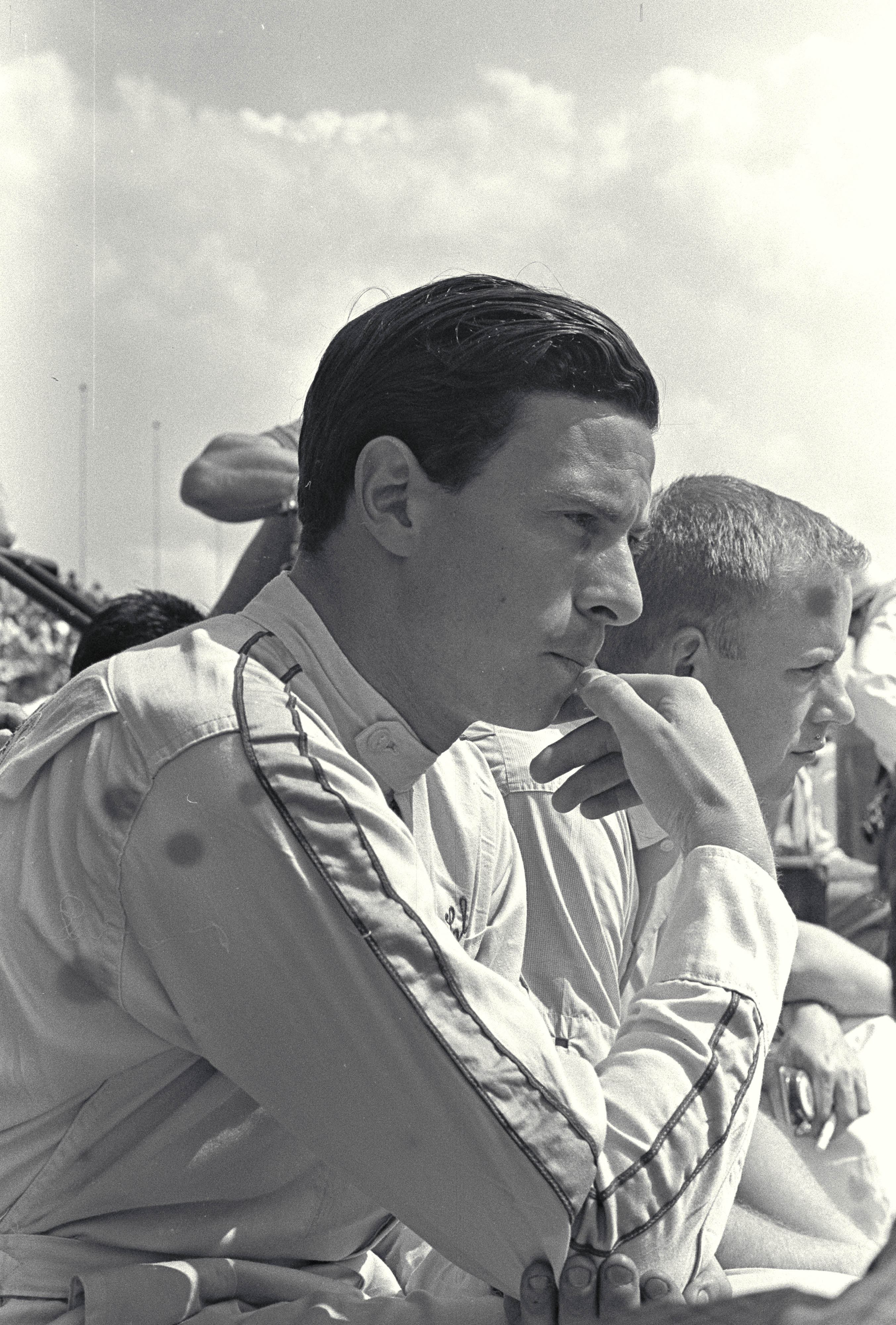
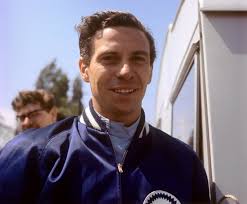
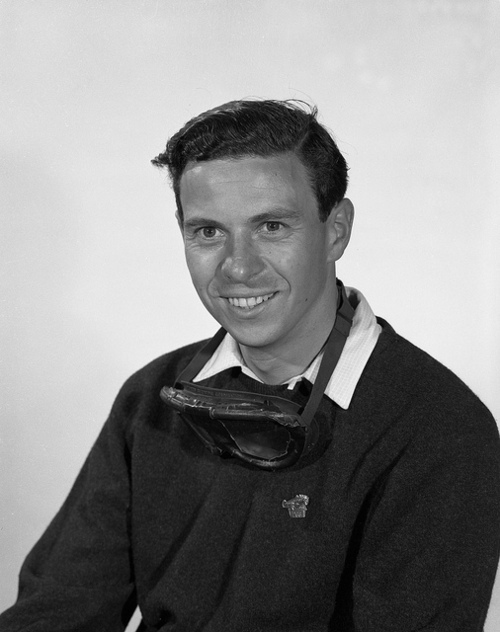
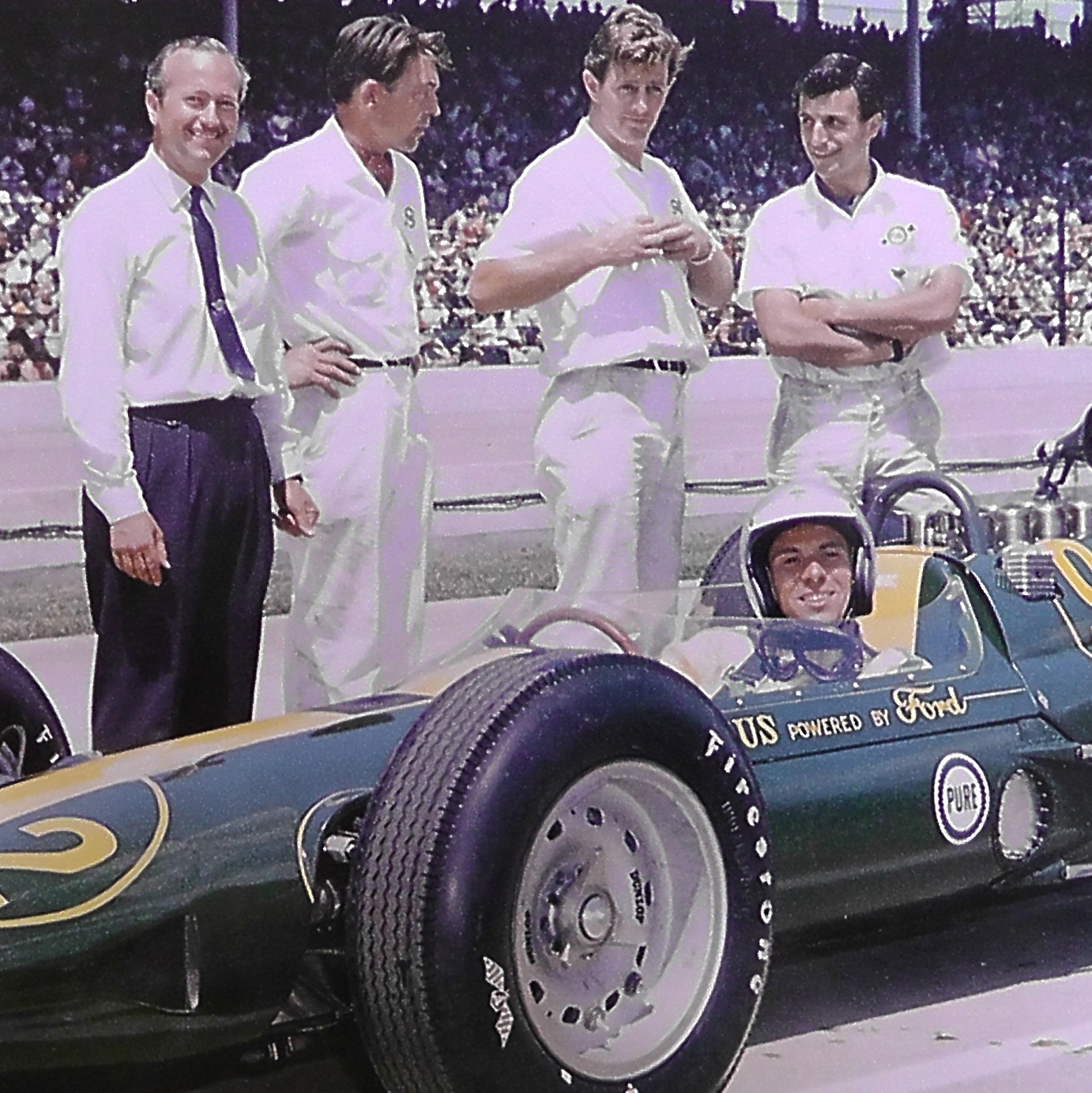
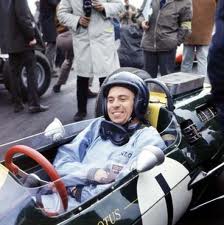
Captions from top: Jim, wearing new Hinchmans, in nail-biting mood as he listens to the pre-qualifying drivers’ briefing and draw; Middle: Jim loved the blue-and-white Pure jackets that came with the American oil company’s Indy sponsorship (via its Ford connections).  He wears it here over his Esso-badged blue Dunlops!; Above right: the official Indianapolis portrait of Jim Clark; Above: Jim, in the new silver Bell Magnum, after qualifying the Lotus 29 on the second row.  Around him, from left to right, are Colin Chapman, Jim Endruweit, David Lazenby and Colin Riley 

Pictures: Indianapolis Motor Speedway; Peter Windsor Collection; LAT Photographic

Post Navigation