As if it’s not enough to live without a French GP we’ve also had to survive this year minus a race in Germany. I suppose you could argue that France isn’t exactly a strong force in F1 at the moment – but no-one can deny the global allure of Mercedes, Sebastian Vettel and the Nicos Rosberg and Hulkenberg.True, Hockenheim is back on the calendar for 2016, but, in this of all (Mercedes) years, it does seem odd (to say the least) that we haven’t had the chance to see F1’s German stars performing in front of their home crowds…doing something, in the context of the history of our sport, that they’ve been doing since the 1920s.
In the absence of a 2015 German GP, therefore, and courtesy of AP, here are some brief reminders of what it used to like when F1 came to Germany…
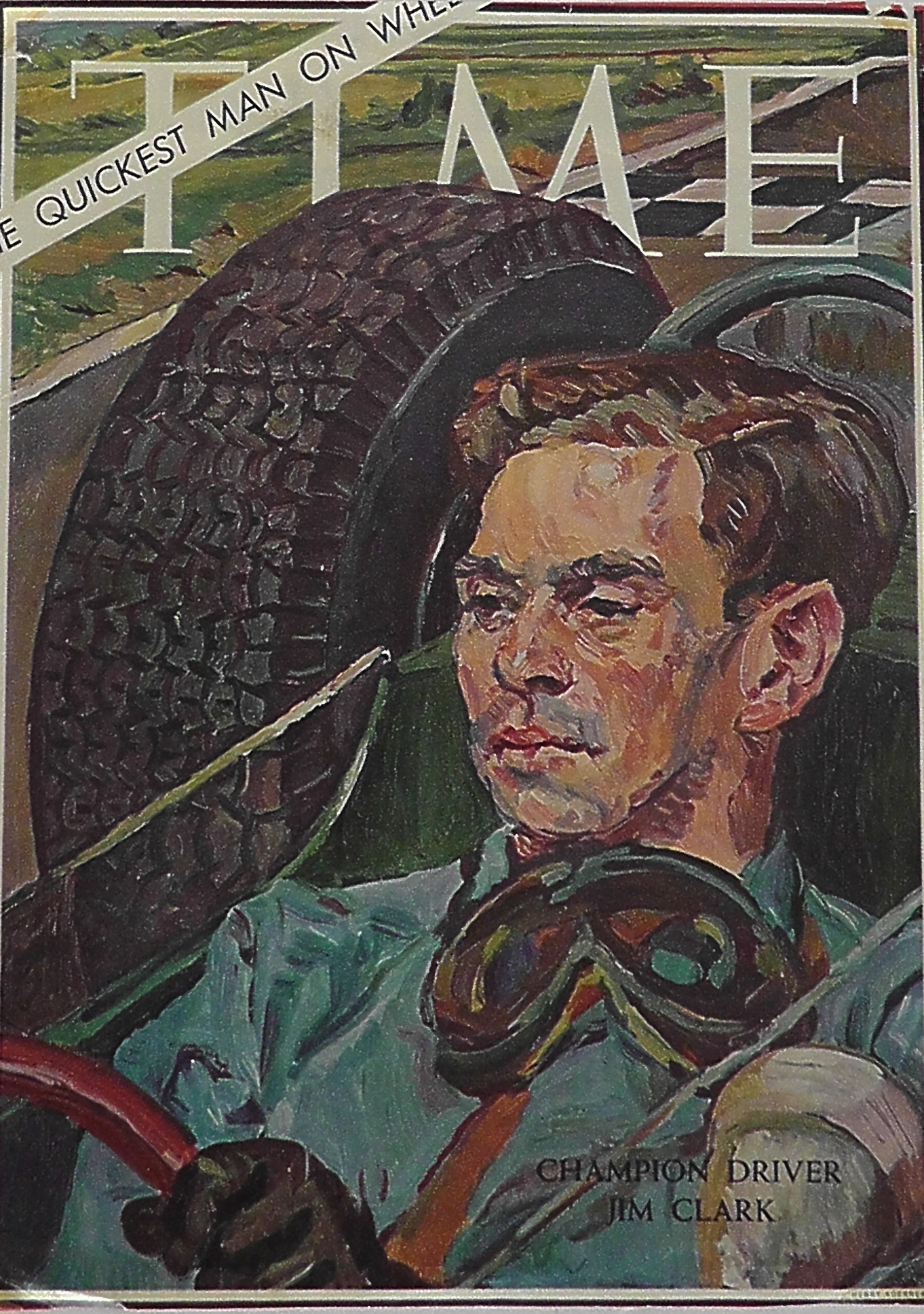
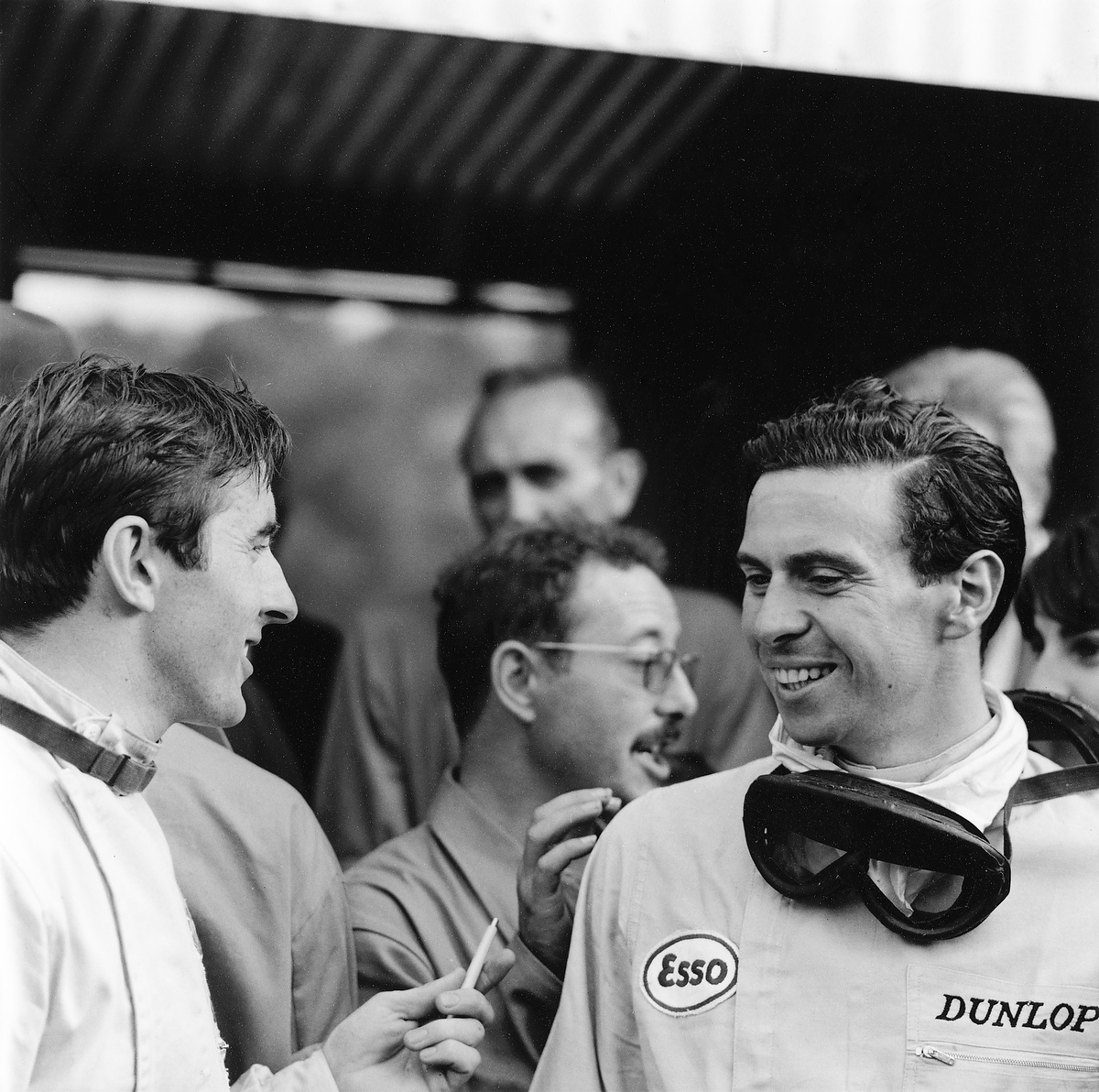
Jim Clark had been impressed by Jackie Stewart from the moment he saw him drive. Jackie hailed from Glasgow, Jimmy from the Borders; Jackie’s family ran a garage, Jim’s ran a farm: the differences were pronounced. In common, though, was their love of driving nice racing cars on the absolute limit. Quite what defined that limit, in their respective minds, is still an open question: Sir Jackie today remembers Jim saying very little to him about how he actually drove. “You knew, with Jimmy, when to push and when not to push,” he says. “He always gave me the impression that he didn’t want to talk about the very precise details. They were private to him – and I respected that. Of course we talked about cars and racing in general and strategy and those sorts of things…but Jimmy always kept a little bit in reserve. That was his nature.”
Their friendship blossomed in 1965. Jackie also became a familiar face at Sir John Whitmore’s Balfour Place apartment and in so doing opened Jim’s perspectives to a very different way of life. Jackie, even then, was both fashion- and financially-sophisticated. Jim was less so. The interesting thing, looking back, is that Jackie had no doubt about how to solve the high-earner’s tax problems: he would move to Switzerland and operate as a pro racing driver from that one, central base. Jim, despite his friendship with Jackie, continued to do his own thing with his own, local advisers. He would take the complicated option of moving his “goods and chattels” to Bermuda while residing for a full racing season in Paris.
By the mid-1965, Jackie had also finished second to Jim at Spa, Clermont and Zandvoort: the magazines were calling it a “Highland Fling” and referring to “The Flying Scotsmen” in the plural. None of this troubled Jim. On the contrary, he was delighted for Jackie – for that was his nature. Jim had persuaded Colin Chapman to give Jackie a quick F1 outing during practice for the 1964 British GP and Jackie had stood-in for Jim in the Rand GP later that year. With Jim’s Indy win paving the way for drivers like Jackie also to race in the States, motor racing north of the border had never looked healthier.
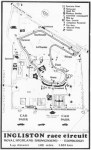
Thus the two friends attended a race meeting at the new Ingliston circuit in Edinburgh on July 25 – in the time between the Dutch and German GPs (at the vortex of what was already a breathlessly intense season). Already well-known to Jim as the site of the Royal Highland Showground, the new circuit was made up from in-field and perimeter roads. It wasn’t long or too demanding – but it was another motor racing circuit for Scotland. In many ways it was a product of Jim’s success.
The race meeting itself, organised by the Scottish Motor Racing Club, was relatively low-key, as you would expect. Jackie would have been interested in Bill Stein’s Ecurie Ecosse Tojeiro while Jim would have had a laugh with his old Normand team-mate and fellow F2 competitor, Mike Beckwith, who raced spectacularly at Ingliston in his Elan. The Rover-BRM turbine “hoover” was on-hand, fresh from Le Mans, for Jackie to demonstrate with Jim alongside him (!) and Jim, ever the man of detail, performed the start-line duties for the Guards Trophy event, stop watch in hand, flag accurately poised. It’s also worth noting that both Graham and Gerry Birrell raced on this day at Ingliston – both were quick and destined for greater things – and that Jock Russell was much in evidence: the irascible Scot would later buy Jim’s 1966 US GP-winning Lotus 43-BRM.
Click on the first image to open this short gallery of the Ingliston Interlude.
Both Jim and Jackie spent much of the day signing autographs
Jackie demonstrated the Rover-BRM turbine…with Jim in the passenger seat
The original Ingliston circuit
Jim talks motor racing at Ingliston. Graham Gauld, who at that point was in the process of updating “Jim Clark at the Wheel”, is on Clark’s right
The Scottish Motor Racing Club was instrumental at Ingliston and later at circuits like Knockhill. Bernard Buss, a key player at the SMRC (left) stands by the Elan owned in 1965 by Ian Scott-Watson (Jim’s mentor) and driven regularly by Jim in Scotland during this period
During Jim’s return trips to Scotland he always found time to catch up on the really important business of the day
The letter folder that sat on Jim’s desk at Edington Mains during this period. Jim was an industrious correspondent
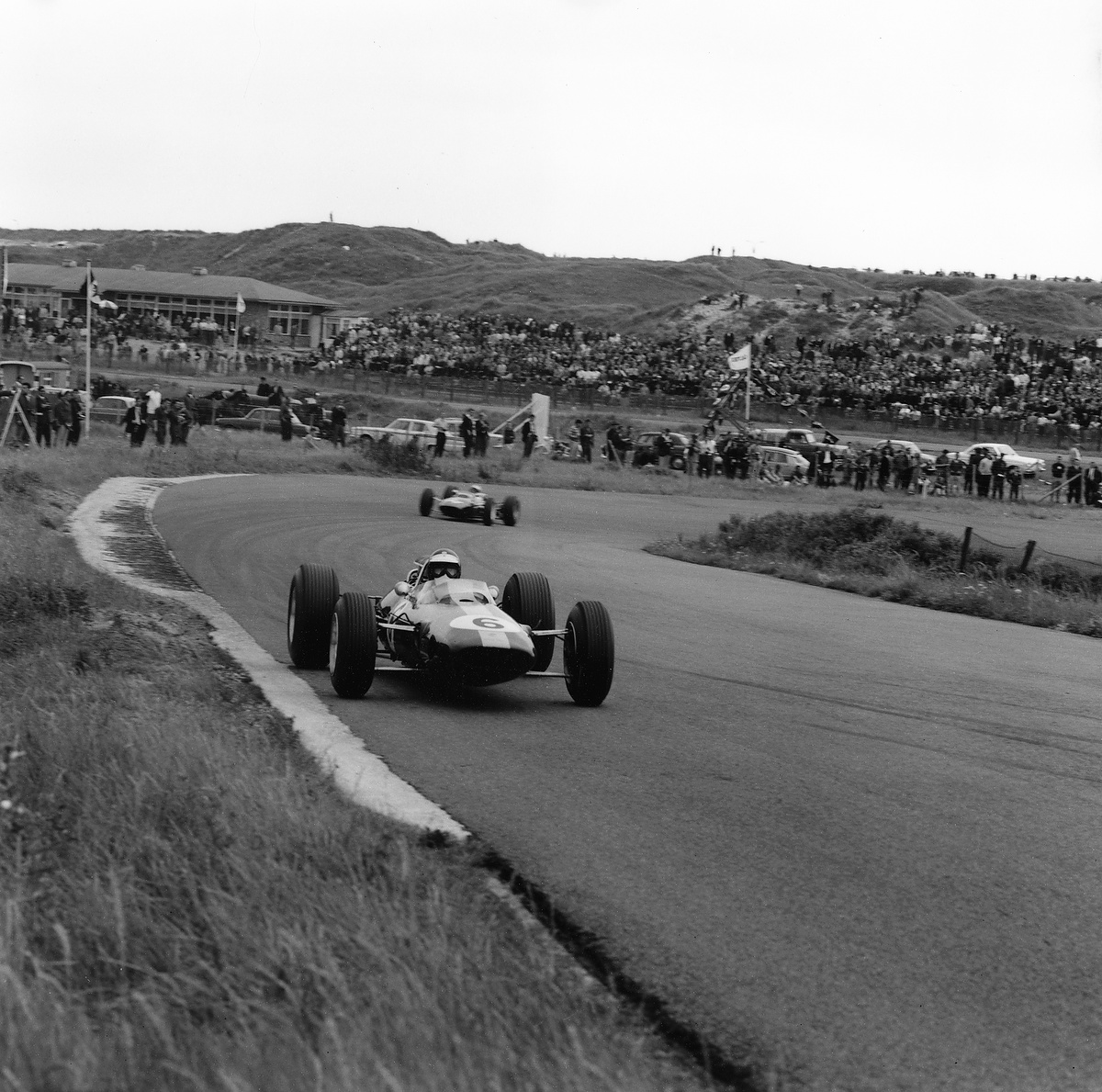
Zandvoort, Holland. July 18, 1965. Dutch GP Jim Clark’s amazing 1965 season continued unabated. Following his victories in the Silverstone-Rouen double-header, Jim returned quickly to London for Wednesday’s British Racing Automobile Club (BARC) function at the Grosvenor House hotel. Olympic Gold Medallist, Mary Rand, presented a special award to Jim for his Indy 500 win – but by this stage of the year it could just as well have been for his F1 success. He’d missed Monaco to win at Indy but he’d won every other GP of the season, plus the Tasman Series. Little was the time for relaxation, however, for the next day Jim flew to Zandvoort, Holland, for the Dutch GP. Jim headed the times on Friday, when the winds blew, and qualified second on Saturday in perfect conditions. Again, though, the new 32-valve Climax engine proved unreliable, obliging Clark to switch to the 16-valve spare car for the race. Thanks to British Pathe, we can now take a short look at the Dutch GP in the following video. Note a young Clive Chapman near the start, pensive in Mike Spence’s helmet and goggles. Win No 27
July 11, 1965. Rouen Grand Prix (F2) Incredibly, Jim had little or no time to enjoy the Silverstone win. He was due to race the following day (Sunday) at Rouen in another F2 event, again in the Ron Harris Lotus 35-Cosworth. Jim had always been very quick at the fast, demanding, sweeping, uphill-downhill Rouen circuit but to date had never won there: he had led both the 1962 and 1964 French GPs at Rouen before having to retire. Now he was returning with a nimble F2 car against the usual, formidable, opposition. Rouen was nothing less than a complete drivers’ circuit and Jim, his Silverstone victory still ringing in his ears, was as hungry as ever.
The logistics, with the passing of time, seem incredible: Jim (together with the other F1 drivers) practised at Rouen on the Wednesday before flying that night to Silverstone. They all then returned to Rouen a few hours after the British GP to be practising again at Rouen on Sunday morning for a race that afternoon. In the midst of all that, Jim’s Cosworth engine was flown from Rouen to Northampton on Wednesday night, completely rebuilt, and sent back to France on Saturday night.
Jim qualified on the pole but it was Jochen Rindt who led into the first, fast, downhill right-hander. Jim slipped past on the ultra-quick uphill section after the famous Nouveau Monde hairpin – then it was Rindt again, slipstreaming back into the lead before the final hairpin.
Again it was Clark versus the Winkelmann team, for Alan Rees was quickly up there too. The two Brabhams burst past the pits – then Jim drew gasps from the crowd as he darted out of the tow and dived for the inside for the flat-out right-hander. And so it went on – with Jack Brabham and Graham Hill joining the fight. The racing was spellbinding. It was slipstreaming…but on very fast, sweeping corners…
Jim’s concentration, given recent events, was astounding. Inch by inch, braking area by exit, his monotonous perfection began to give him some space. Jochen and Graham became enmeshed in a battle; Rees retired with a broken drive-shaft.
Suddenly Jim found himself on top. It was one of the best bits of driving he’d produced all year.
And yet…and yet…
In an eerie re-run of Silverstone, his Cosworth engine suddenly lost its edge with but two laps of the race to go. Graham Hill, in John Coombs’ Brabham-BRM, was catching him quickly. Colin Chapman jumped from the pit wall in disbelief. In the cockpit, Jim again nursed the engine, winding down the revs and saving it on downshifts. More than ever, he focused on massaging the dynamic weights, eliminating the lumps.
And he did it. He crossed the line to win a relatively minor F2 race in about the time it takes to win a Grand Prix today – 1hr 48min. In this amazing of seasons, it was win No 26. Images: LAT Photographic
Thanks to my colleague, Richard Wiseman, we can see a little of the action from Rouen in this short AP Archive newsreel. There’s no sound but there are some nice shots of Jim, Graham Hill and the Winkelmann Brabhams. It’s a huge field, too, that rushes down to the first corner. Note, at the end, Jim asking Graham Hill to join him on the podium. A nice touch in the days when three-driver podia were rare. http://www.aparchive.com/metadata/view/bcffc7a67072bdb29e559f55e7e19ca4?subClipIn=00:00:00&subClipOut=00:01:56
Note: with the exception of the Month of May at Indy, all of Jim Clark’s 1965 season – from East London, South Africa through to the Belgian GP at Spa – can be read on one post (entitled “Jim Clark’s epic 1965 season”). The four weeks at Indy have all been posted separately – and we will be doing so for the remainder of this year. All can be found under the category “Jim Clark’s 1965 season”. We take up the story as Jim prepares for the French Grand Prix…
Clermont-Ferrand, June 27, 1965. French GP (Grand Prix de l’ACF) After Spa, Jim was finally able to spend a week in Scotland. The changes were dramatic. On the back of Jim’s Indy win – and of his most recent success in the F1 car – the Border regions seemed to have gone motor sport-centric. And with Roger Clark – no relation! – also winning the Scottish Rally over the same weekend as Spa, the two Clarks were in much demand. Jim allowed TV cameras on the farm; entertained the famous Indy commentator, Tom Carnegie, together with his American film cameras and cameramen; added a postscript with Graham Gauld to Jim Clark at the Wheel; and welcomed Colin up in the Borders, reminding him, as he always did, to look for the “red roofs” on the farm barns when lining up the grass runway near Edington. There was also an approach from Hollywood: with John Frankheimer well advanced with pre-production for MGM’s upcoming movie, Grand Prix, starring James Garner, Jim was approached by Warner Bros and Brookdale Films about lending his name to a rival F1 film starring Steve McQueen. Day of The Champion was to shot primarily at the 1966 German GP and possibly after that at Oulton Park. Jim agreed to the proposal.
Racing-wise, there were other details to finalise. There was talk about running the Indy Lotus at Reims, ostensibly as a demonstration but also in an attempt to break the lap record there; thankfully that fell through due to a lack of starting money. Then came an idea to run the 38 at Silverstone, before the British GP. Jim quite liked this idea but again it came to nought: Ford, the new legal owners of the car, decided it would be of more use at the New York World’s Fair. Eventually Chapman signed a relatively lucrative deal to run a 38 in two Swiss hill-climbs at the end of August. Jim liked the sound of that. He’d last competed up a hill at Rest-and-be-Thankful back in 1958.
Too soon, it was back down the A1 – to London in the Lotus Cortina – first to Cheshunt, to go through the accounts with Andrew (now more complicated than ever due to the Indy win), and then to nearby Panshangar Airport to fly with Colin, Sally and Mike Spence to Clermont Ferrand. The glorious mountain circuit – home of Michelin – had never before staged the French GP. Now it was to play its role in F1 history as the “mini-Nuburgring”.
Upon arrival at the low-key Clermont airport, Jim and Colin were drawn to a crowd outside in the car park. Cameraman and newspaper journalists were in abundance, all focused on one man.
And, for once, it was not Jim Clark.
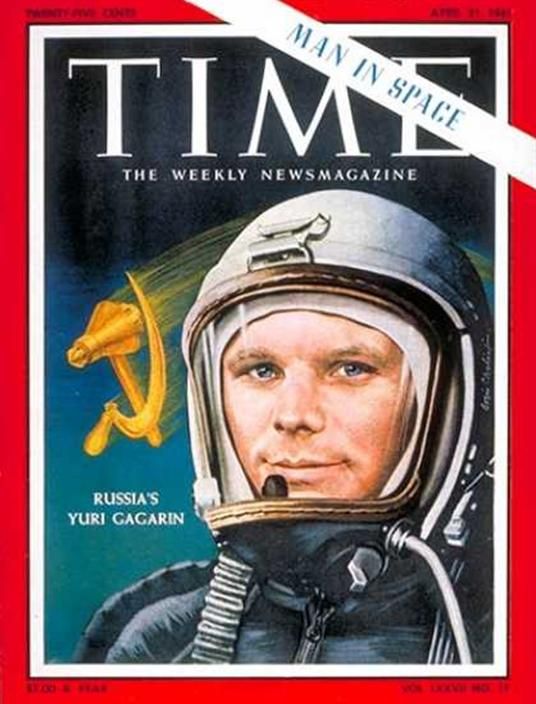
“That’s Yuri Gagarin!” said Colin, fascinated. “Come on. Let’s go and say hello…”
The Russian cosmonaut, at that stage on a USSR-sponsored world tour in honour of his 1961 orbit of the earth and other exploits, quickly appreciated the stature of Clark and Chapman. He invited them, indeed, to a reception being held that night in Clermont’s civic centre. Colin and Jim looked at one another, worked out that they could easily drive to their hotel in Charade later than night, and agreed to attend.
The evening sparkled. Jim and Yuri spoke through interpreters and quickly formed a bond: Jim was as fascinated by the space programme as Yuri was by the Lotus racing cars.
Then, later, the group of four set off in their rented Peugeot for the race hotel. Colin drove, with Sally him and Mike and Jim in the back.
Suddenly, in the middle of a slow, innocuous corner, the Peugeot swerved and lurched down a bank. “Is everyone all right?” gasped Colin as the car came to rest, windscreen shattered. “I think I’ve strained my thumb…”
Jim, uncoiling himself in the middle of the front seat, where he’d landed, replied in the affirmative. As did Mike, who had squashed up against the back of Colin’s seat.
“Sally?”
“I’m ok but I think I’ve cut my head or something,” she said, looking at the blood on her blouse and hands.
Jim looked across and began swaying from side to side. Then he fainted at the sight of the blood.
Eventually the Peugeot was pushed back onto the French road. The hotel was found; Sally was treated by a doctor in the dead of night; and Colin promised the medic a pit pass for the weekend in return for keeping the incident away from the media.
Despite a few light-hearted jibes from Jim about his suit being ruined, Sally recovered well enough to perform regular timing duties in the pits at Clermont. Colin’s thumb, however, remained a race weekend talking-point…
Jim showed no signs of the incident when practice began on Friday. Of far more import was the failure of his 32-valve Climax engine out on the circuit: Jim hitched a ride back to the pits, straddling the engine cover of John Surtees’ V8 Ferrari. As a result, Chapman decided to concentrate on the 1962-built R6 two-valve chassis (still in Lotus 25 form) rather than the 1964-built Lotus 33B R11.
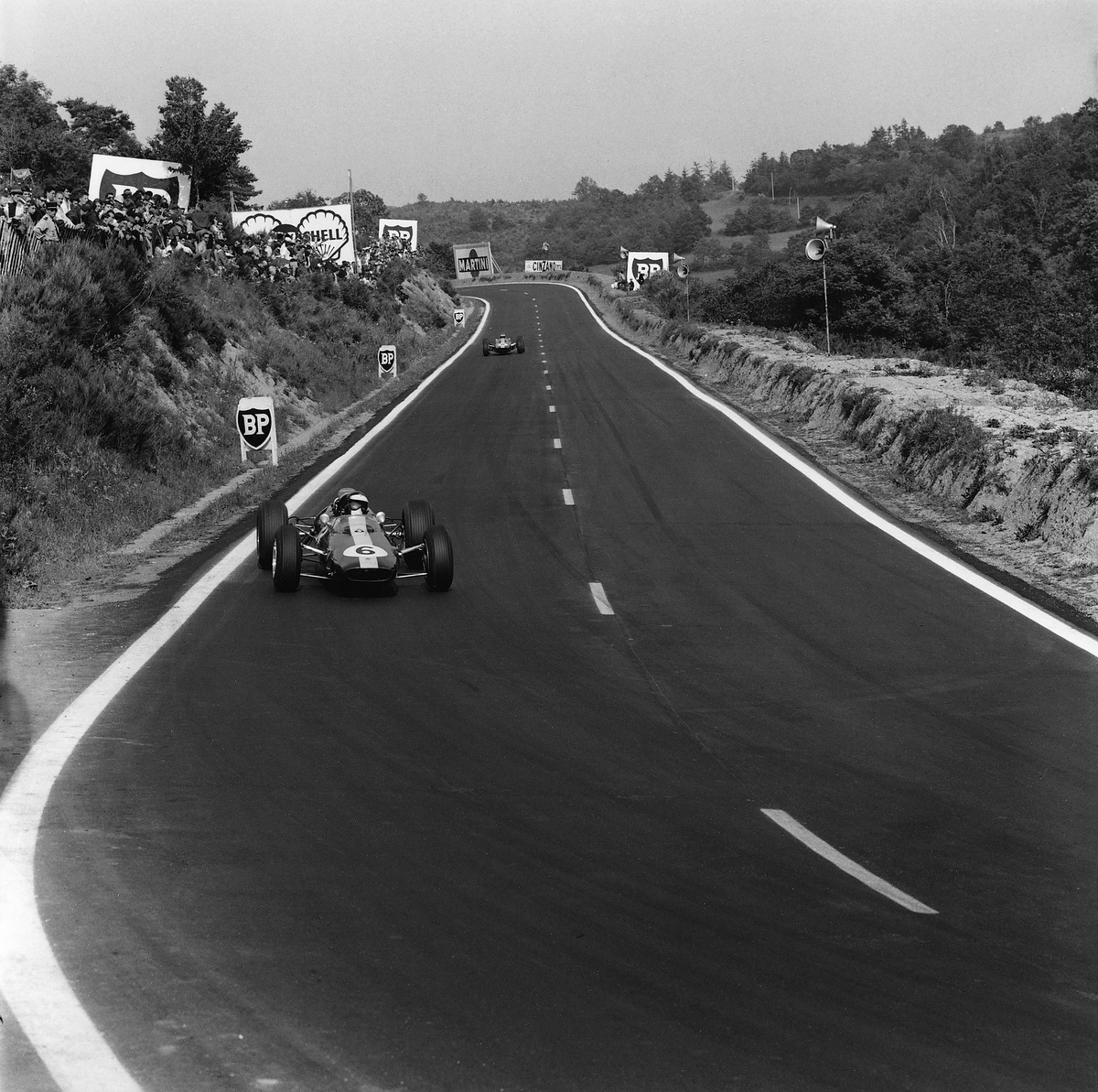
Jim qualified the old car on the pole, his 3min 18.3sec lap shading Jackie Stewart’s best for BRM by a mere half-second. Ferrari qualified three and four, with Lorenzo Bandini again controversially racing the faster flat-12 car and leaving the V8 for Surtees; and Denny Hulme, who had subbed for Dan Gurney in the International Trophy and at Monaco, celebrated his second Championship GP start by qualifying an excellent sixth for Brabham (and quickest on Friday). His compatriot, Chris Amon, would dominate (until a puncture intervened) the 1972 French GP at Clermont with the Matra V12, but gave clear indication seven years earlier of what was to come by qualifying a brilliant eighth in the evergreen Reg Parnell Lotus 25-BRM.
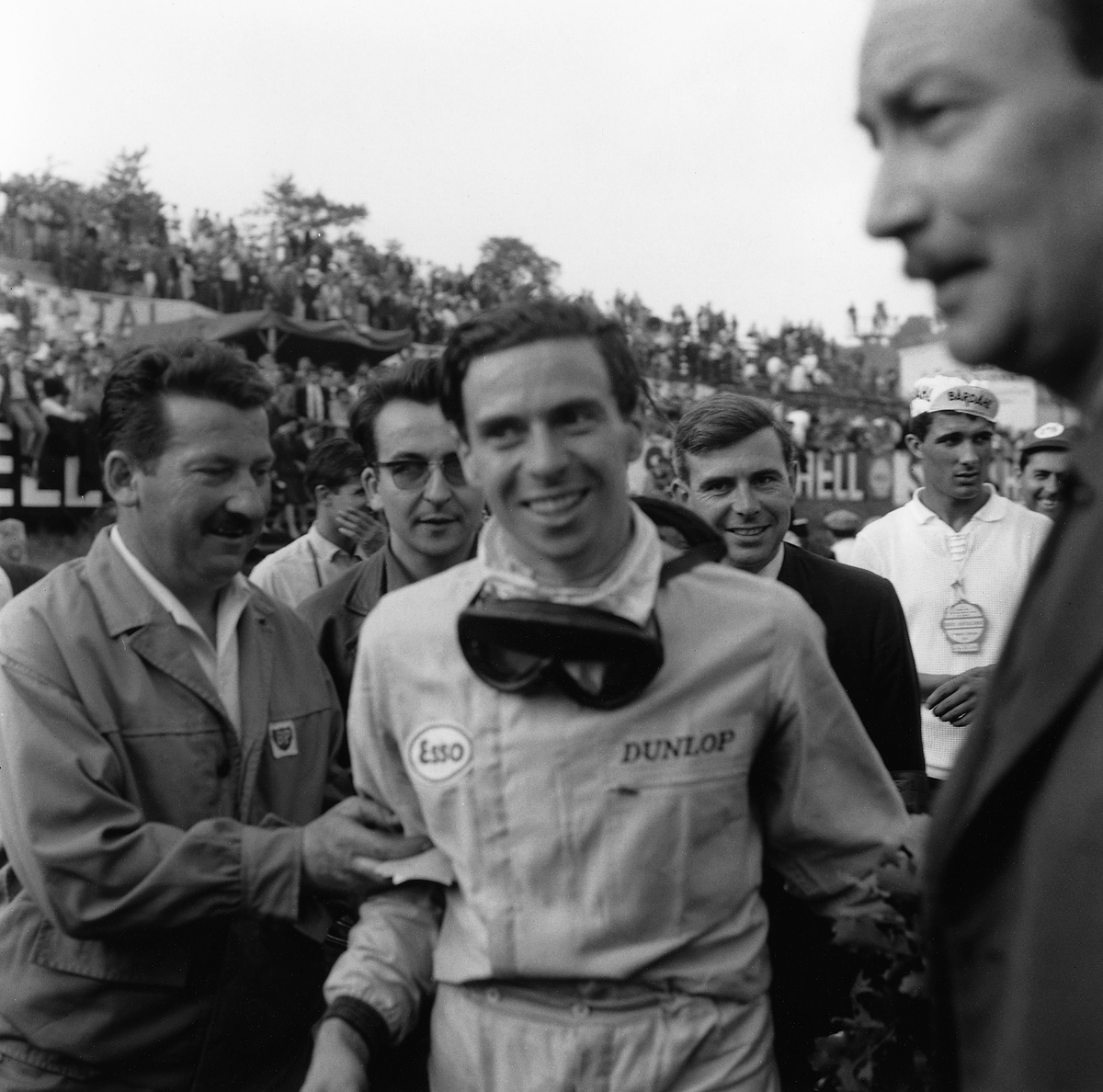
As he had done on several occasions since 1964, Jim wore a white handkerchief over his face for this race: stones and rubble lay trackside. The Dunlops and Goodyears of the time were stiff enough and strong enough not to be hugely puncture-prone but there was a real risk of being injured by the local flint. Best place to be, of course, was out in front….
A brass band and a shower of Michelin balloons lit up the grid as heavy clouds assembled on the horizon. Morning rain gave everyone déjà-vu but then out came the sun over the Auvergne as the 2:00pm start time appraoched. Jim anticipated the Toto Roche twitch but Lorenzo nearly lost the Ferrari as he floored the flat-12 in first. With clear air behind him, Jim Clark thus set off for the first of 40, daunting Clermont laps – a potential race time, in the dry, of some 2hrs 10min.
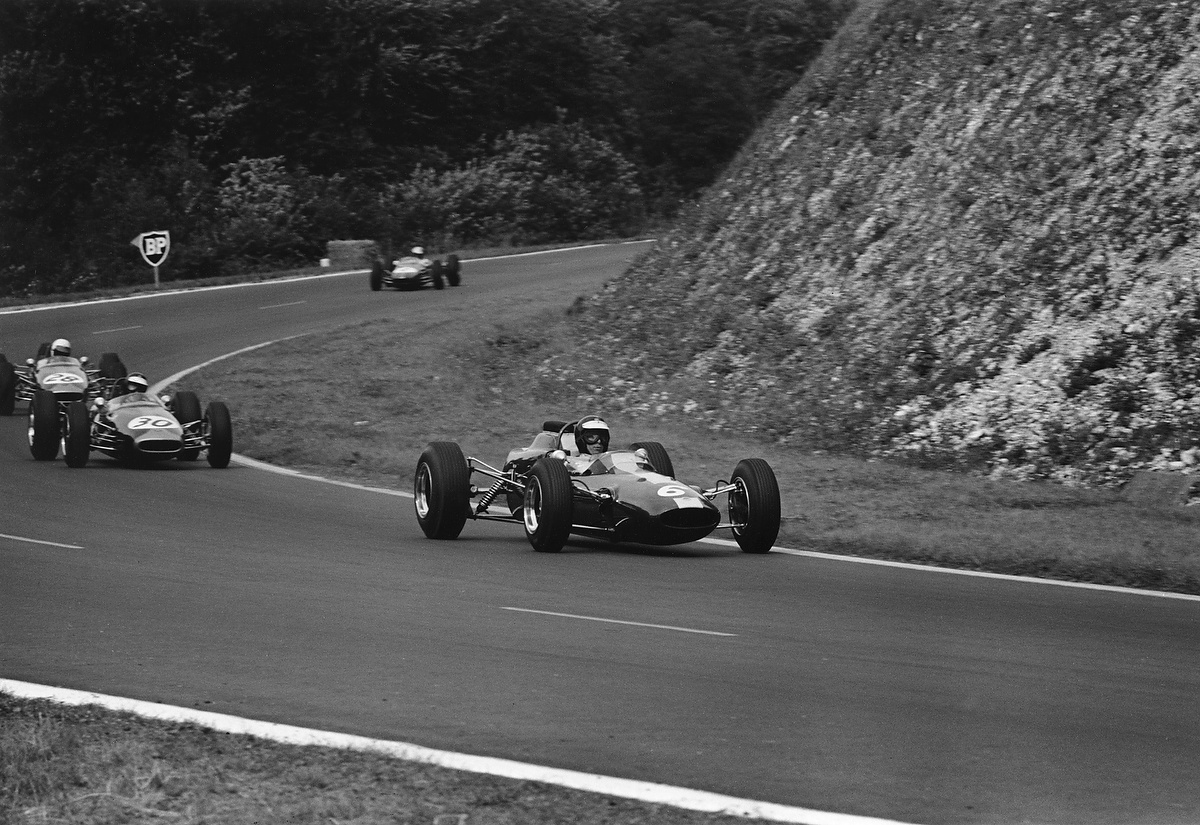
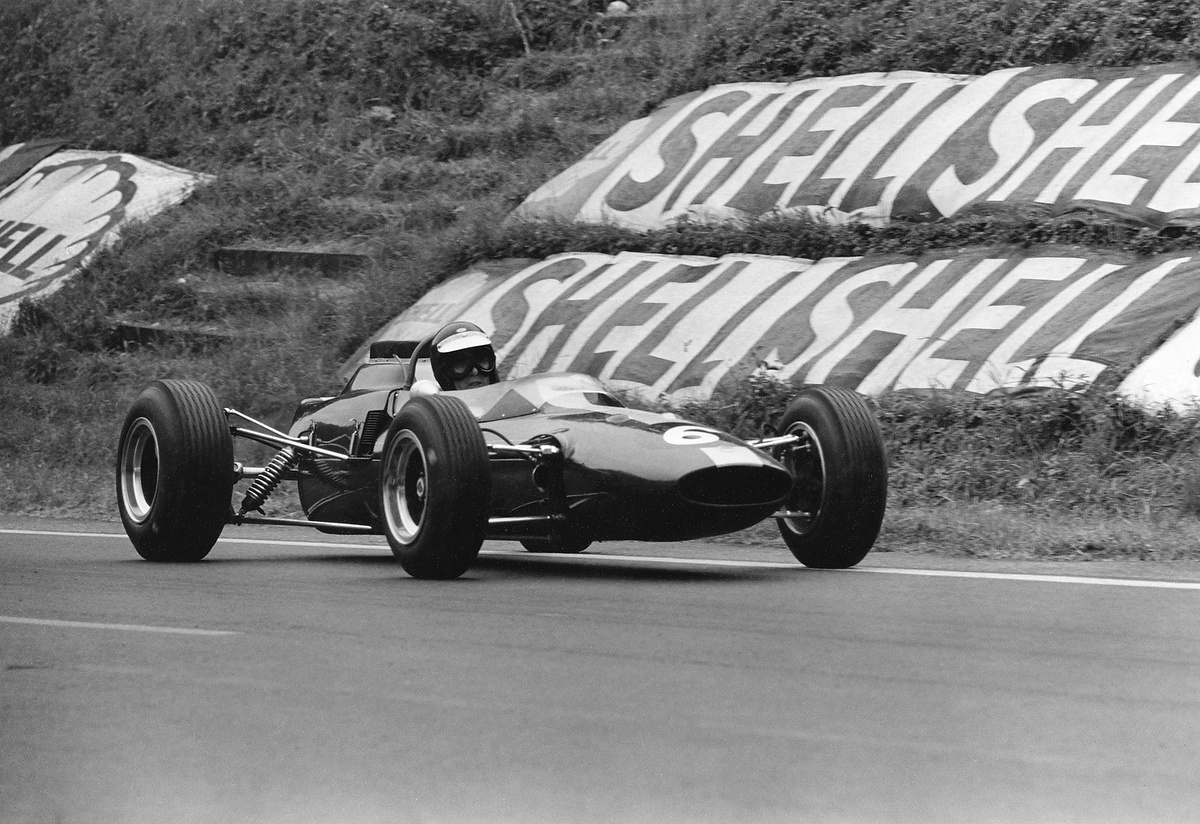
Jim’s lead over Lorenzo at the end of his opening lap was 3.5 sec; by lap two, with Jackie now in second place, he was ahead by six seconds. And so it went on. Perfect poetry in motion. Twin high-level chrome exhausts (rather than the 33B’s low, wide-spaced exhausts) distinguished Jim’s car on this occasion; otherwise, it was 1965 at its Jim Clark best: by half-distance, with Jackie still second, Jim was leading by 14 sec; by the end, heading another one-two for the Scots, Jim’s winning margin was nearly half a minute. John Surtees finished third after a quick pit stop (and after Lorenzo shunted in the closing laps!), and the brilliant Hulme was fourth after dropping as low as 14th on lap one. Overall, though, it was another consummate Clark performance. Pole position. Led from start to finish. Fastest lap.
And with not the hint of a whisper about what had transpired on the Thursday…Win No24; images: LAT Archives
Here are two short videos from the race, courtesy of British Pathe and British Movietone News. Apologies for the way the Pathe video has obviously been speeded-up. That’s also Jochen Rindt shunting the works Cooper-Climax (not Lorenzo in the Ferrari); and you can see Chris Amon briefly in the Parnell Lotus 25 after being lapped by Jackie Stewart’s BRM. The second video, the Movietone News film, has only recently been uploaded to YouTube and contains some excellent footage from the race
In celebration of Jim Clark’s historic win at the 49th Indianapolis 500, there is perhaps no better person to recount the occasion than Jim himself. This is what he wrote shortly after the race in the (rare) updated version of his autobiography, Jim Clark at the Wheel:
“Practice at Indianapolis often serves as a guide to ultimate performances, but it goes deeper than this because even such things as the time of day can influence your practice times. Also, you are not restricted to a particular grade of fuel, as you are in European racing, so it is quite easy to brew up some juice to give you a great deal more power. We tried a nitro mix in our fuel in practice and got ourselves an extra 50bhp but in the race we chose to run on alcohol and play safe. AJ Foyt, my greatest rival, ran nitro in the race.
“I found myself in the middle of the front row with AJ on the pole. Unlike 1963, however, this race was going to be run with different tactics. For one thing, I didn’t expect to change tyres at all during the race; we would stop only twice (for fuel). We had the Wood Brothers from NASCAR and we knew we were going to be able to load 60 gallons in just 16 seconds. Foyt was carrying more fuel – and was using more power to counteract that.
“I had heard that he had had some gearbox trouble with the car and I guessed that all this extra power and weight might make his car suspect in the race. This is how it turned out.
“I made a good start and was first into Turn One, which, I was later told, was the first time in Speedway history this had been done. This is just one of the statistics that is thrown at you at a race like this. I don’t think it means too much. On lap two Foyt was right behind me and I saw him pull out to pass. I let him go but quickly he began to slow down, and though I didn’t mind him running faster than me, I didn’t want him running slower. So I repassed him and kept the lead from that point onwards.
“I am often asked when I felt as thought the race was won and my stock reply is about 100 yards from the chequered flag. I did, though, begin to feel pretty confident after my first pit stop. I rejoined the track to find Parnelli Jones beside me and I didn’t know if he’d had his pit stop or whether he was a lap ahead of me. I set out and passed him and then a couple of laps later my pit board read ‘PLUS 58 PARNELLI’. I remember thinking ‘that’s good’ for, although we were actually running together, he was a lap behind me on the road. Then suddenly we shot past another car I didn’t recognize until I saw the number on the side: it was Foyt. He had just been in for his pit stop and when he saw us going past he got all gathered up again and started pushing hard. I let him past again and then shortly afterwards got another sign saying, ‘PLUS 58, PLUS 58’, telling me I was now a lap ahead of both of them.
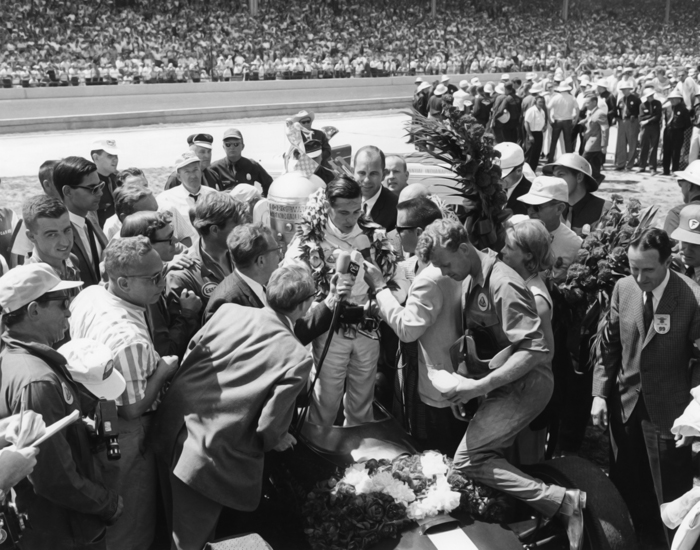
“As I write these words Indianapolis is only a matter of three weeks behind me and I am only just beginning to realize that I did actually win the race. I remember the crowds cheering, the interviews – oh, the interviews! – and of course the wild claims of the tremendous amount of money I am supposed to have earned. At this moment I haven’t the faintest idea what I have won but I know it will be nothing like the fantastic figures quoted.
“Having missed Monaco, I had some points to catch up in the World Championship table and so, for my part, Indianapolis was quickly forgotten in preparation for Spa and the Belgian GP…”
Let’s hear also from two members of Jim’s pit crew during the race – the very talented Australian marine engineer, Jim Smith, and Allan Moffat, the Canadian-Australian who went on to become one of the greatest racing drivers in Australian touring car history. Finally, in this Indy-related trilogy, Dick Scammell, Team Lotus Chief Mechanic in 1965, recalls how Jimmy gave him the actual gloves he used to win the Indy 500 and how he tuned in to the American Forces’ Network (AFN) radio station in order to listen to the race live in the UK.











 peterwindsor.com