peterwindsor.com

…chance doesn't exist; there's always a cause and a reason for everything – Elahi

Archive for the category “People”

Paolo Coloni – GP2 team and AutoGP series owner

Between running his own, race-winning, GP2 team and overseeing, with his father (Enzo), the burgeoning AutoGP series, Paolo Coloni is one of the busiest men in motor sport.  He took a brief pause to talk to us about his passion for racing – and for easing the path for talented young drivers

Jack Hawksworth – a Star is Born

For most young British racing drivers the choice is simple – especially if you’ve excelled in karts and won races in your first F Renault season:  you think GP3, GP2, F1.  Jack Hawksworth is no less ambitious – but he is also creative and wise enough to know that racing anything, anywhere, is a privilege afforded only to the very few.  Accordingly, he made plans in the autumn of last year to join the “Road to Indy” in 2012.  He joined Team Pelfrey in the ultra-competitive Star Mazda series – and has been instantly successful.  I spoke to him during his first, brief return to the UK

In Jack’s track bag:

  • A bag of Arai GP5 Tearoffs
  • My Torgoen Swiss watch (T29104)
  • 2 Pairs of Red Oakley Race Boots
  • 1 Pair of Black Oakley Race Gloves
  • 1 Pair of White Sparco Race Gloves
  • A light smoked visor
  • A Dark Blue tinted visor
  • A Clear visor
  • 3 Nomex Tops
  • 2 Balaclavas
  • 1 Arai GP5 painted with the design that I have carryed for most of my career with my Blue and Red colours and JH logo on both sides.
  • Helmet Cleaner
  • Helmet Wax
  • Visor Cleaner
  • 2 Pairs of ear plugs
  • FIA/MSA Licence
  • Indycar Hardcard
  • Spare set of Arai visor screws

I’m pretty obsessed about my race bag. I like everything to be in the right place and I actually quite enjoy preparing it all before I leave for a race meeting! I think it annoys all the guys in the team, though, as my bag is so big it pretty much takes over the majority of the truck. Sorry guys!


The Unforgettable Jim Clark

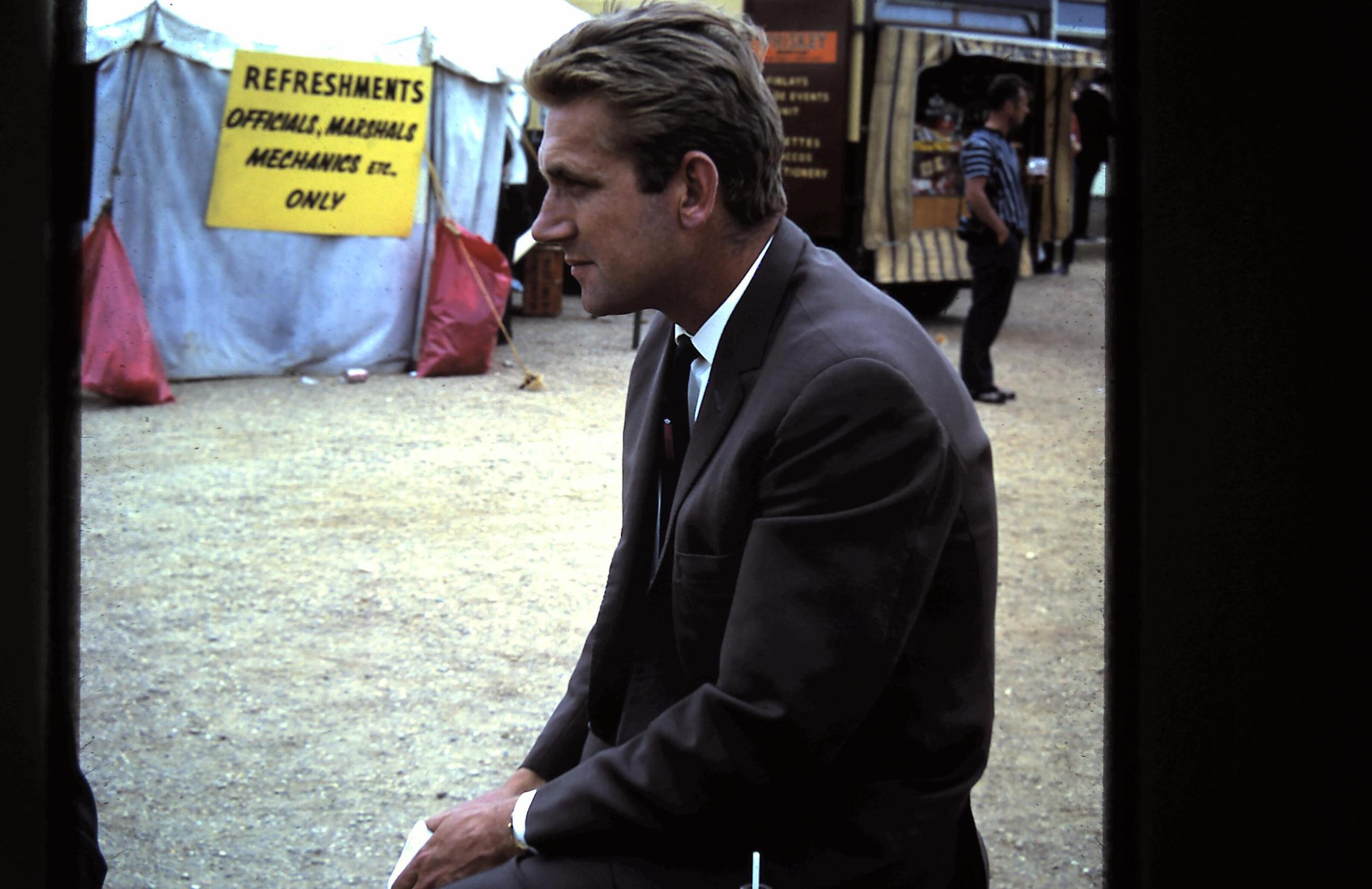
He was nibbling his nails the first time I saw him – just as they said he would be.  Not absently-mindedly but seemingly with aggression, palm turned upwards, free hand inspecting frequently.  He wore black sunglasses, square of frame – Rayban Wayfarers – fawn slacks and no shirt.  His shoulders were as broad as a boxer’s, yet he was short, even by my schoolboy standards.

And he walked with that amazing twinkle-toe lilt, springing upwards, like a Scots sword-dancer, with every step.  Jackie Stewart did likewise, we noticed – although his feet were splayed outwards.  (Was this their secret, we wondered?  Were these gaits the key to all that brilliance?)

Jim was lilting now towards the Lotus camp – to the tent which shaded his Lotus 32B-Climax.  The air was surprisingly still, the tempo unhurried.  There was no Colin Chapman in Australia – just Jim and the boys, led by Ray Parsons, the Team Lotus Cortina/Elan/F3 driver.  Standing there, on the Warwick Farm lawn, it all seemed like Fun in the afternoon Sun, not practice for the International 100.

Yet a Clark performance it was.  First there were the powder-blue Dunlop overalls, clean and freshly-ironed.  Then, for protection against flying stones, Clark tied a checkered handkerchief around his mouth and nose.  Next were the Pioneer goggles, heavily taped from the mid-point upwards.  Finally came the legendary helmet, the dark blue Bell Magnum with the white peak.  Clark stepped sideways into the red seat, pulled on a pair of his own-make red gloves and fitted the goggles over the famous eyes.  Down the side of the car, on flanks of emerald green, ran the neat yellow lettering:  Team Lotus.

That afternoon, in Australia, I watched him qualify on the front row, alongside the Brabhams of Graham Hill and Frank Matich.

And then, on Sunday, I saw him win.  He followed Hill for the first phase of the race – while he adapted to a car without third gear – then passed his friend under braking for Creek Corner.   “Copybook Clark” the headlines said the next day.

A few years later, still in Sydney, I joined a small band of people saying goodbye to him at Kingsford Smith Airport.  The last Tasman race had been run;  Jim was flying to Indianapolis via Chicago to test the new Lotus 56 turbine Indy car.  After drinks in the VIP lounge he disappeared through Customs; the crowd disbanded.  Clark had gone for another year.

Or had he?  His Qantas 707 halted at the threshold, then taxied back.  I was standing with my father in the Arrivals hall when Clark re-appeared, stewardess at this side.

“Plane’s been delayed,” he said.  “Come and have a drink.”

I asked him about why he’d used a dark blue peak (instead of white) in the 1964 Dutch and 1966 Mexican GPs.  (He said he’d broken the white one and that had been all that was available.)  I asked him about the wet race he’d just driven at Longford in the Lotus 49 (“It was crazy.  Only Piers Courage had the right tyres”) and about his chances in the F1 season to come.  I remember him talking wryly about soon having to drive a Ford Taunus down to Monaco for a Ford publicity stunt and, yes, I remember him describing what it had been like to have been hit in the face by a bird at Reims, 1966.  “It felt like a bloody great crow…” I recall him saying.  I told him that I wanted above all to work in motor sport – perhaps as a journalist.  “Just work hard and never give up,” he said.  “That’s the key.”

At the time, though, my appreciation of Clark’s talent, of his standing, was too youthful.  For me, live motor racing began with Clark – and the fact that he was so statistically successful was hardly the point.  I revered his character, his way of speaking, the way he presented himself, his home town of Chirnside, his shyness, his desire to drive anything, anywhere, his honesty, his respect for others.  I revered everything about Jim Clark.

Jim was not only a good person;  he was a genius amongst his peers.   The Standard.  When someone else won a race, they said, “So what happened to Clark?”  When you arrived late for practice, and you wanted to know the lap times, you asked, “So what’s Jim doing?”

I am not alone;  I know that.  Mention Jim Clark to your average racing person and even the most ardent Michael or Ayrton fan will say, “Yes.  Jim Clark.  He was another.”

As we record yet another anniversary of his passing, then, it is tempting to mark April 7 with some solemnity.  Equally, so many people still want to talk about Jim – to learn about him.

Here, then, are some views of people who knew him well – colleagues to whom I have spoken over the years in order to glean just a little more about the man and the driver who just might have been the very best we’re ever going to see. Read more…
From the desk of Jim Clark

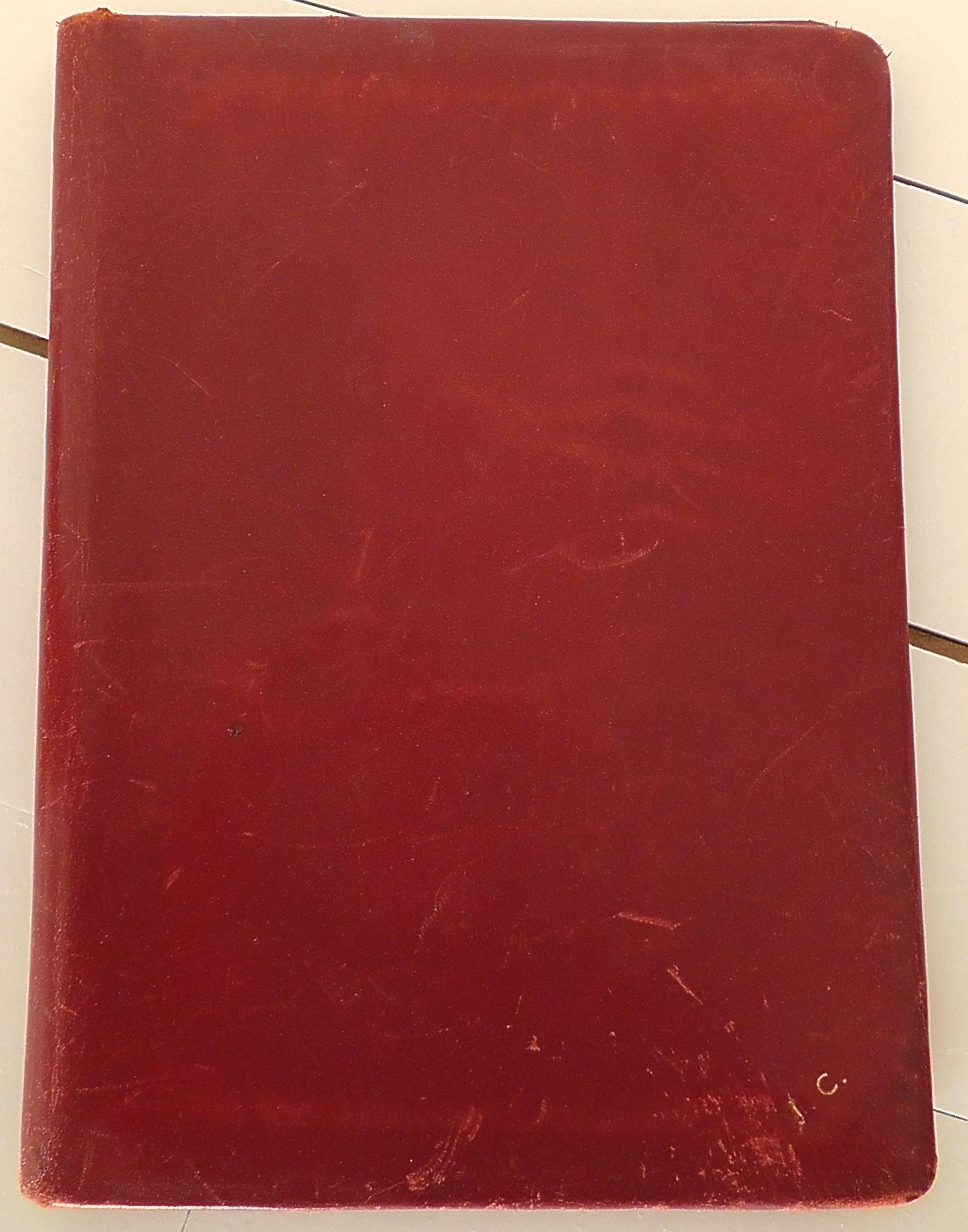
This was the Girling brakes letter folder that Jim Clark used for many years on his desk at Edington Mains.  Inside I keep a few of my favourite Jim Clark items and pictures…

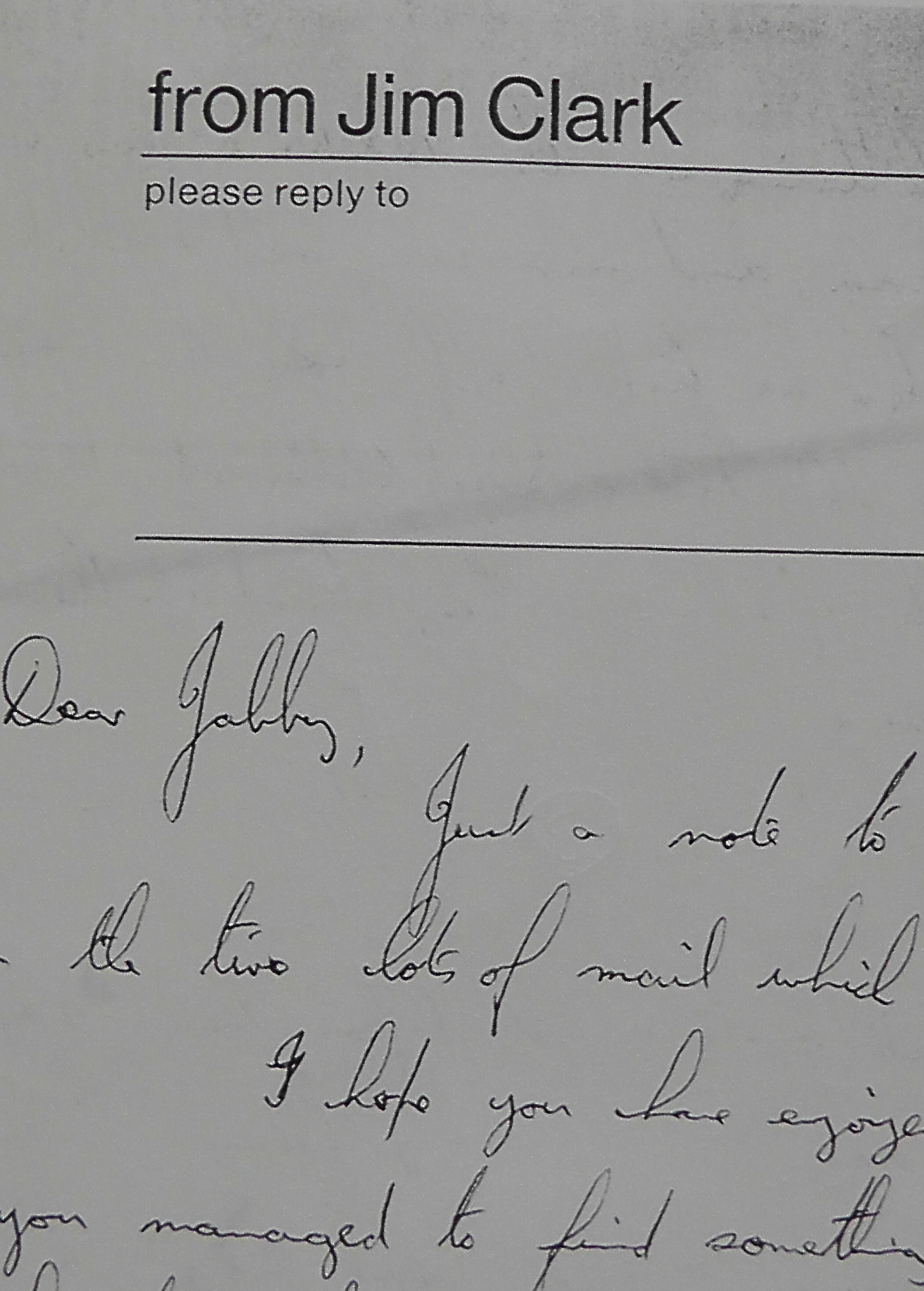
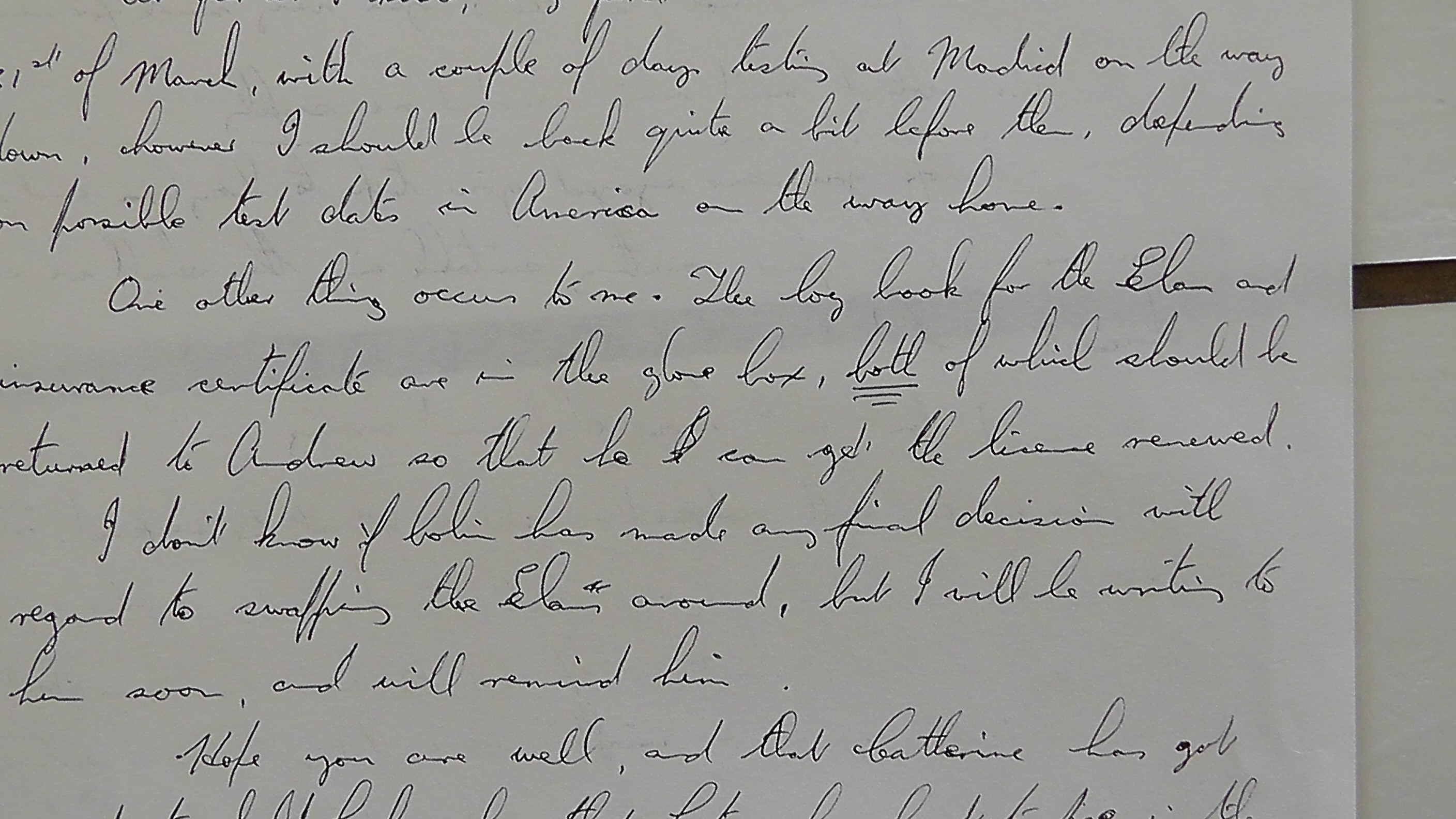
Left: Jim was a diligent letter-writer and thus carried his own notepaper when travelling.  This missive  was written from the Rushcutter’s Bay Travelodge on the eve of the 1968 International 100 at Warwick Farm, Sydney (which Jim won)

Below: So there he was, preparing for the big race – and what should cross his mind but the expired licence disc on his Lotus Elan , which at that time was garaged in Paris?  One wonders if any of today’s World Champions, in their hotel rooms before a race, would be similarly diligent about small, but important, details..

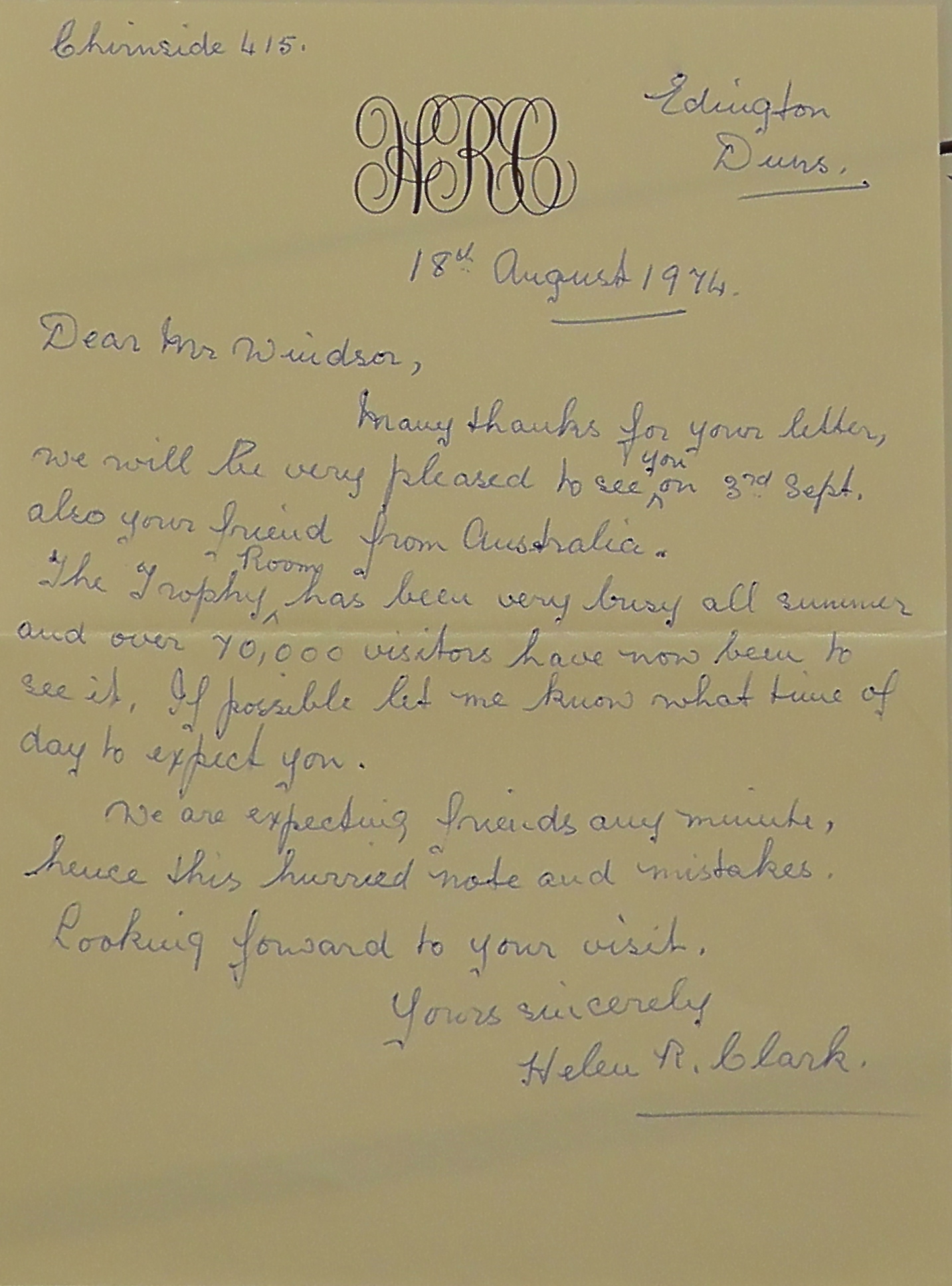
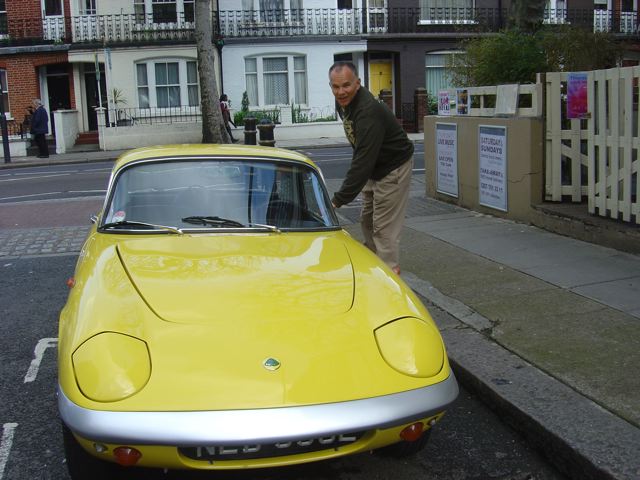
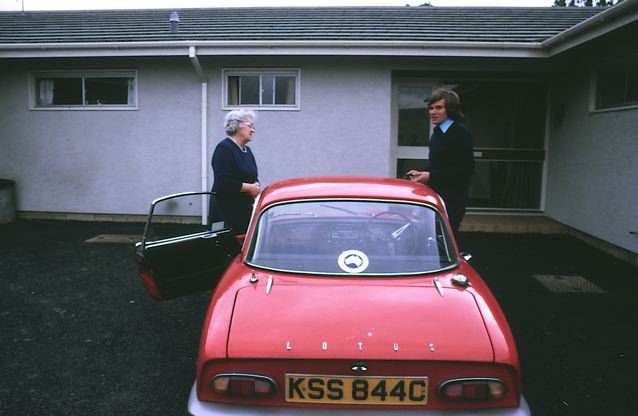
Above: This was a letter I received from Jim’s mother, Helen, after an article I wrote for Competition Car magazine in 1974.  I had just bought the red Lotus Elan S3 Coupe formerly owned by Jim’s manager, Ian Scott-Watson. As a result of this invitation, I drove it up to Edington Mains to meet Mrs Clark and to see the farm and Trophy Room. The Elan, which I still drive, ran like clockwork

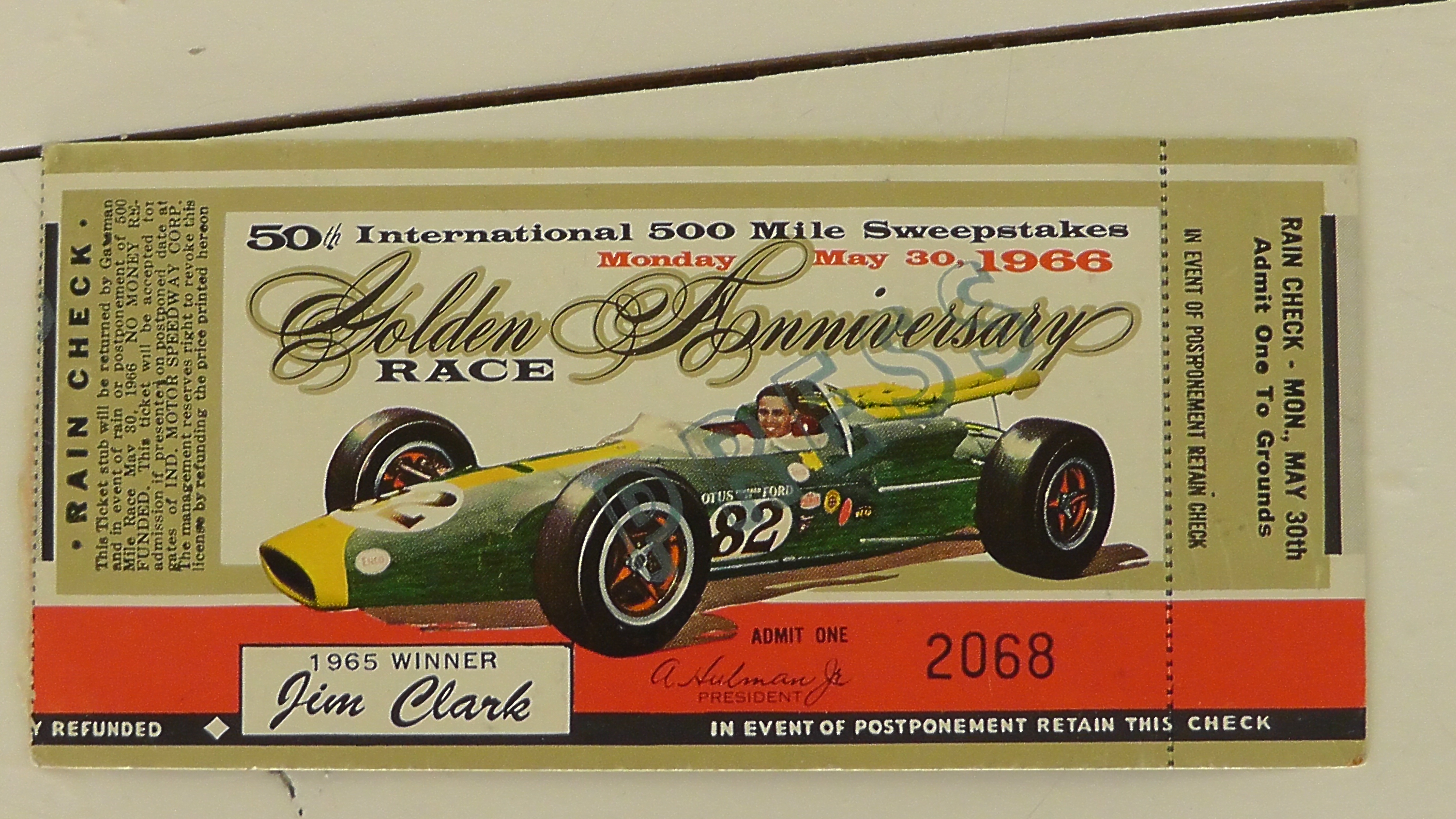
Below: As ever, the Indy organizers did a great job with the 500 race tickets for 1966 

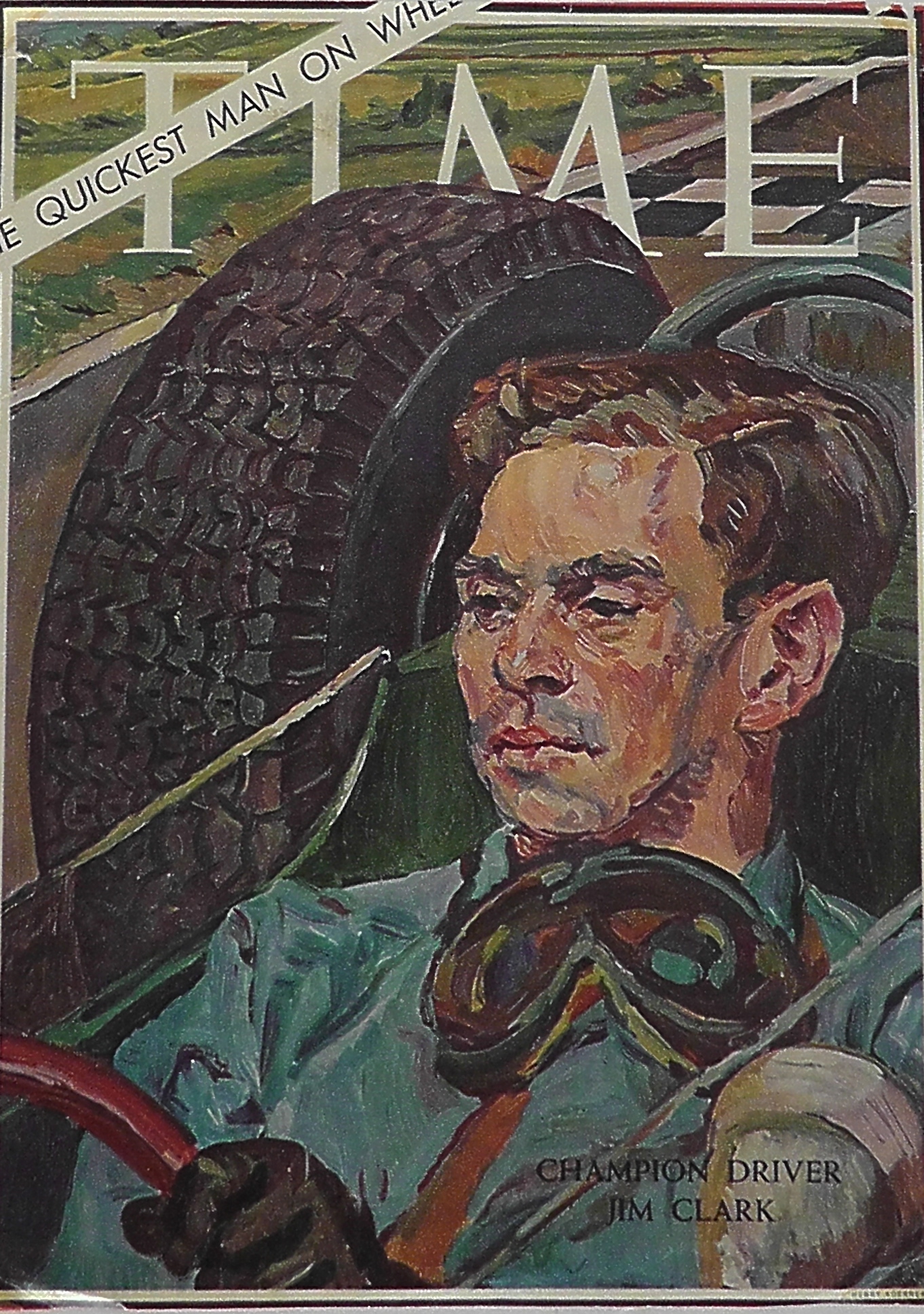
Jim made the front cover of Time – which was a huge thing in those daysI always liked their choice of words – “quickest” rather than the more predictable “fastest”

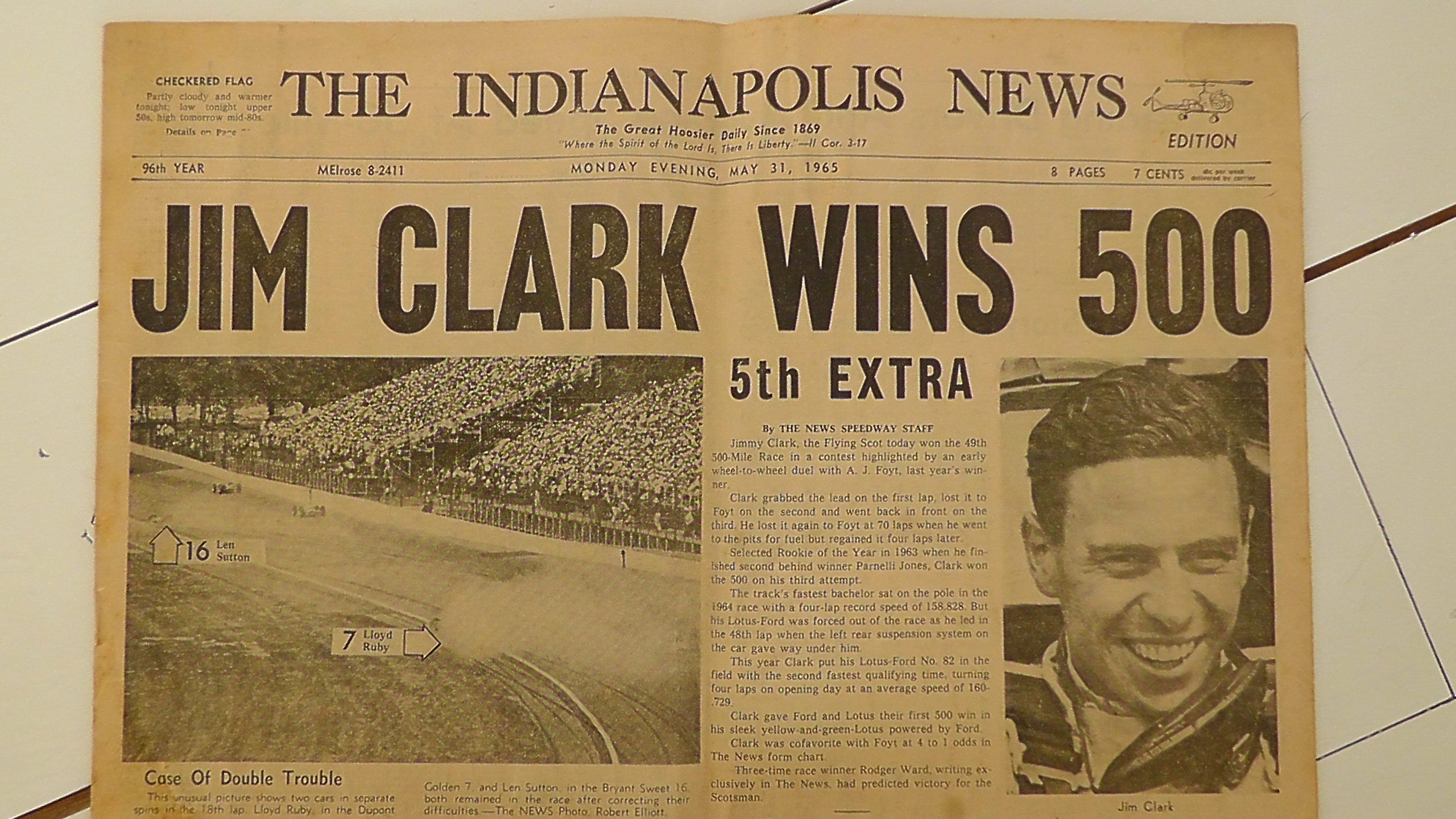
This is the edition of The Indianapolis News that Jim was able to hold in Victory Lane after winning the Indy 500 in 1965

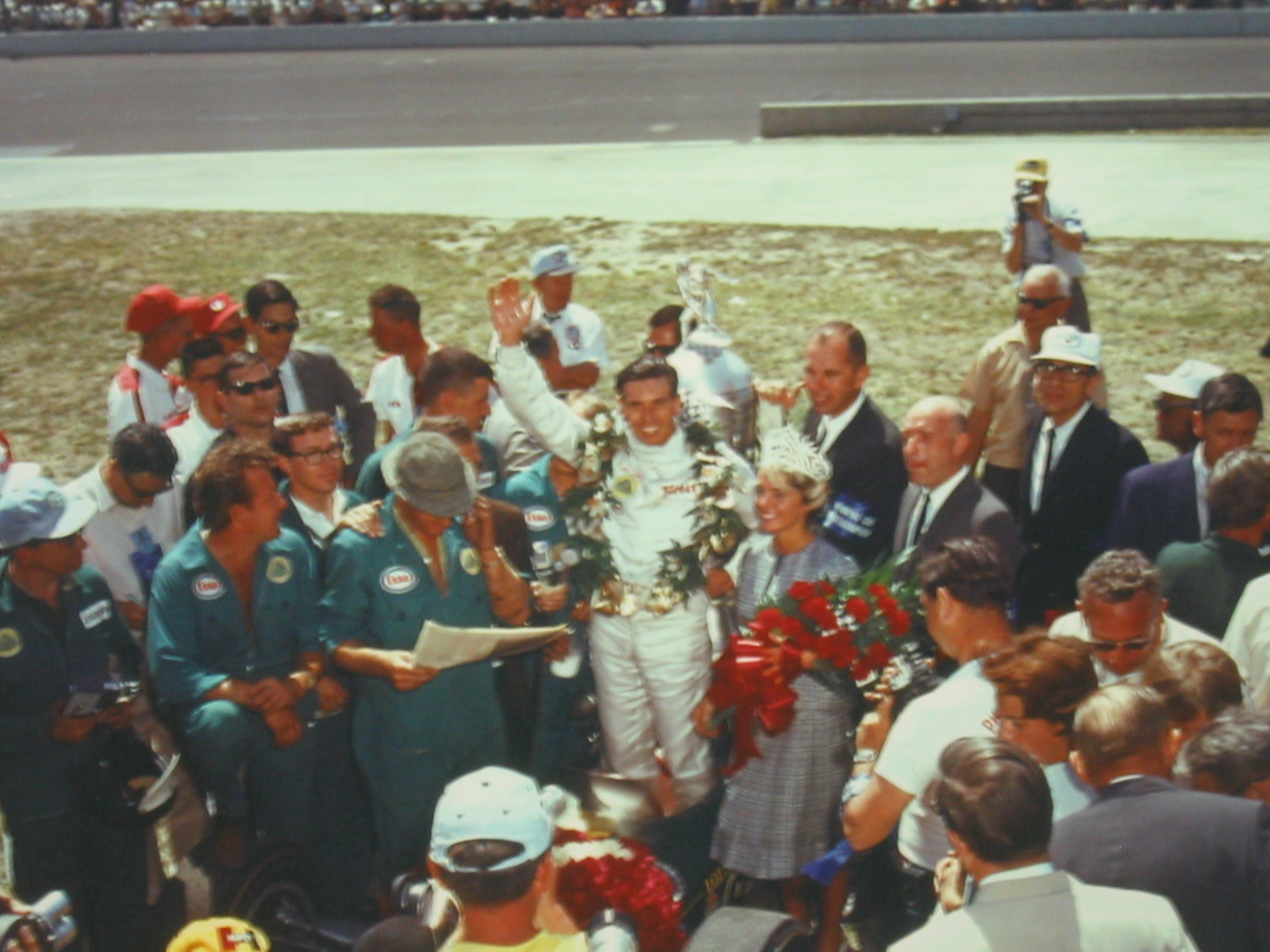
…and this is the not-so-famous photograph of that Victory Lane celebration.  Jim has already handed the newspaper to David Lazenby.  I love this shot because it includes two of my best buddies from Australia, both of whom worked on Jim’s car at Indy in 1965.  Second mechanic from the left is Jim Smith – and to his left is a young Allan Moffatt, the Canadian driver who would become an icon in Australian racing circles. Jim Smith was a marine engineer by trade and joined Lotus earlier that year after replying to an ad in the newspaper.  When Colin Chapman realized he was a transmission specialist he was quickly flown to Indy!

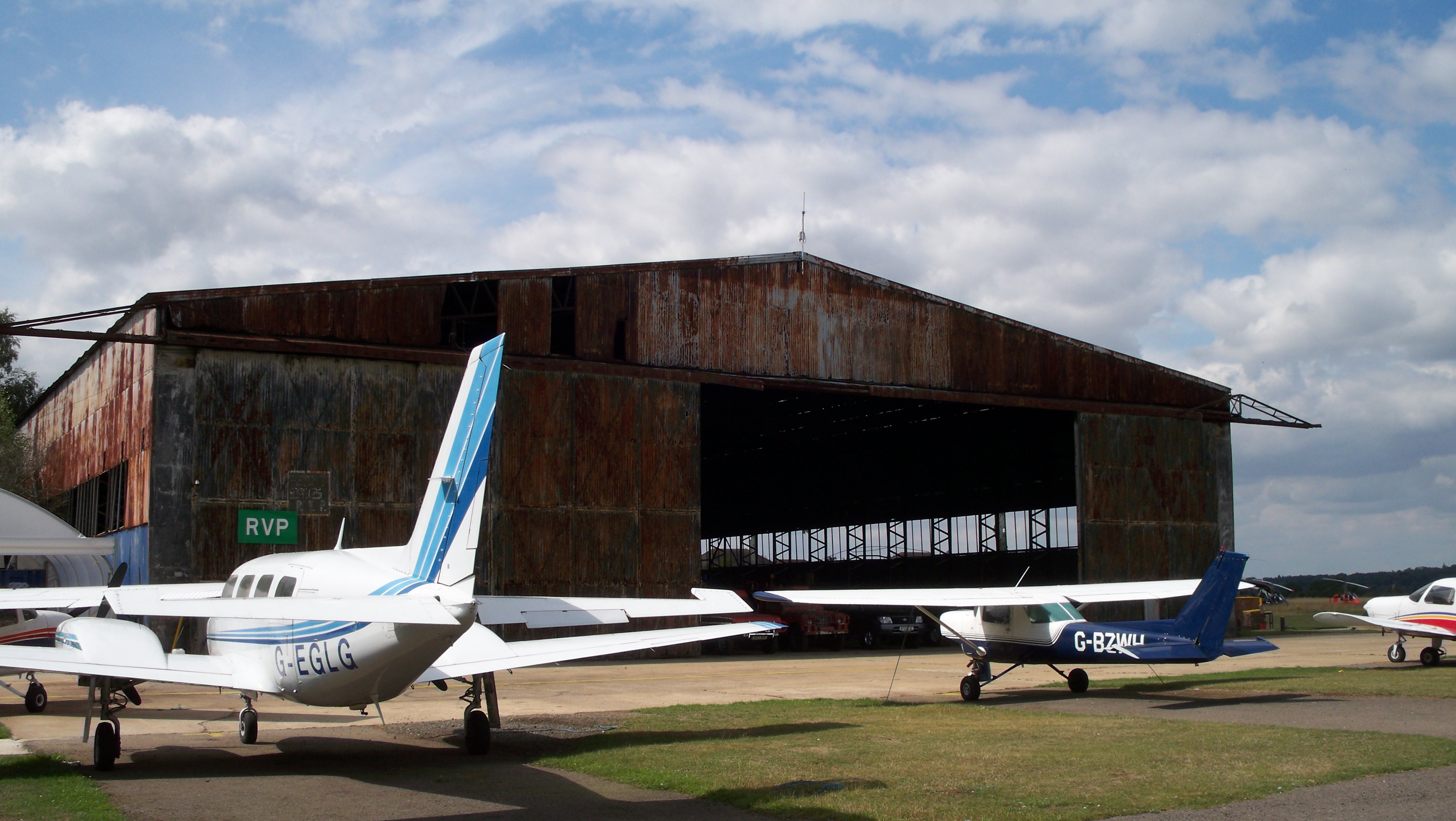
Panshanger Aerodrome, in Hertfordshire, North London, from which Jim and Colin Chapman did much of their flying in the Cheshunt Lotus factory days

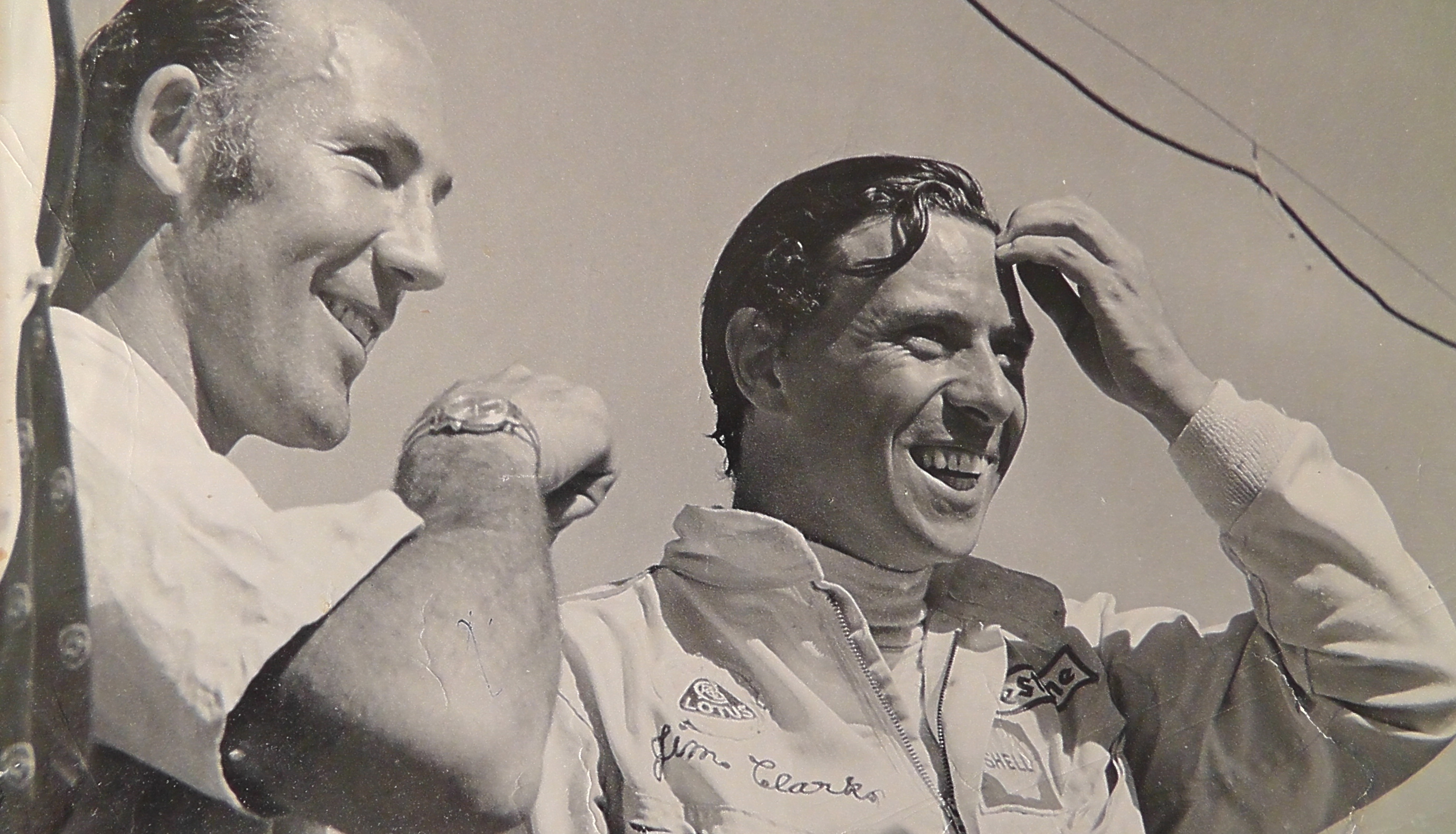
One of my favourite pictures of Jim.  It’s taken after the 1968 International 100 at Warwick Farm, which he won from his GLTL team-mate, Graham Hill.  Stirling Moss was present to help with the awards – and so two of the greatest F1 drivers of all time were able to smile and to laugh and to enjoy the moment.  It would be Jim’s second-last win

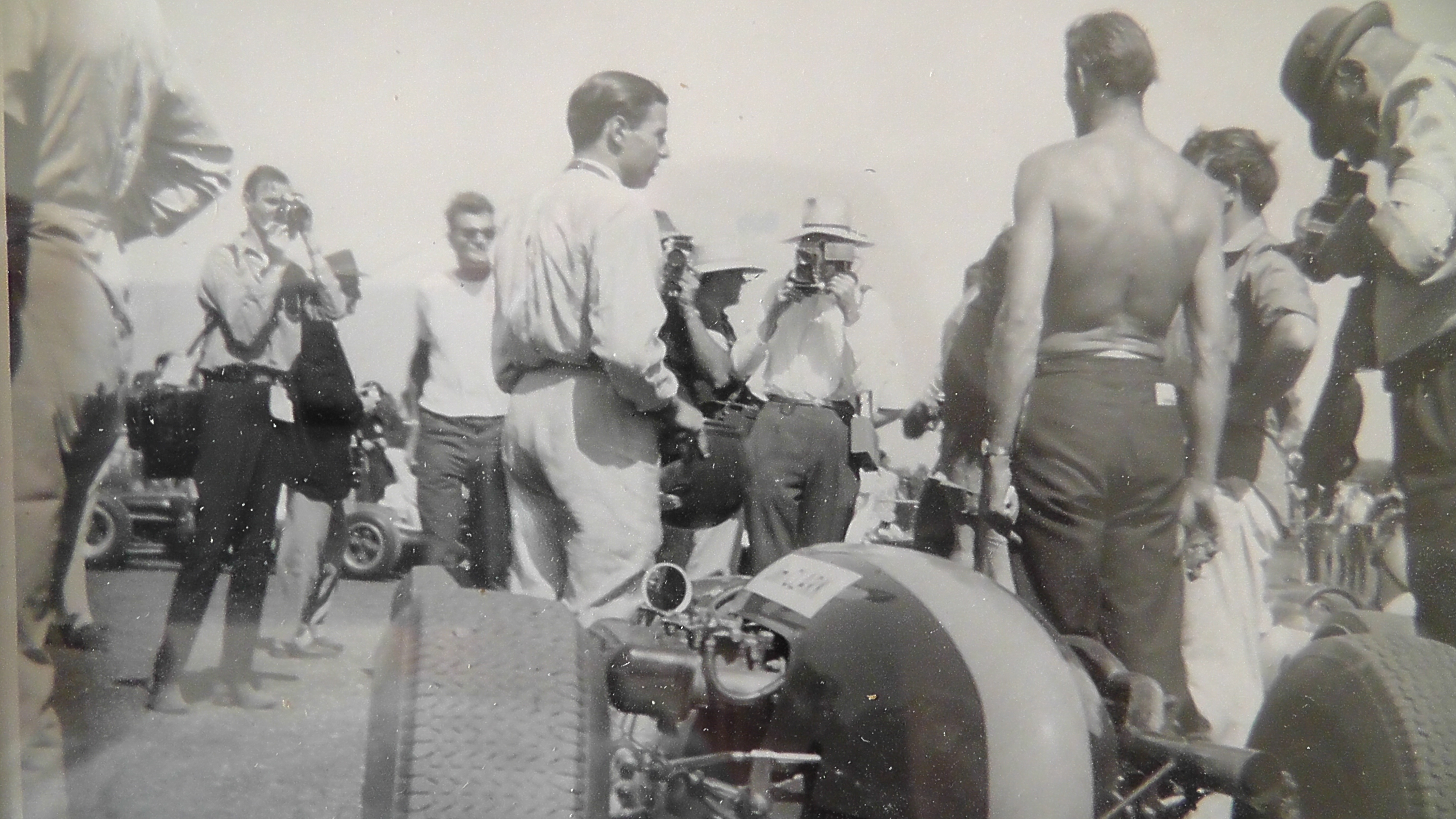
I took this shot of Jim with my Kodak Box Brownie camera just before Friday practice for the 1965 International 100 at Warwick Farm.  Jim is about to don his Bell Star and climb into the Lotus 32B-Climax.  That’s the brilliant photographer, Nigel Snowdon, on the left (much of Nigel’s work is now in the Sutton Images archives) and, to his left, in the white t-shirt, is Ray Parsons, sometime Team Lotus F3, Elan and Cortina driver, who on this occasion was acting as Team Manager

The left-hand-drive Lotus Elan S3 Coupe that Jim drove throughout Europe in 1967 – and about which he was concerned in his letter to Jabby (above).

The red, ex-Ian Scott-Watson Elan with Jim’s mother, Helen Clark, in September, 1974.  This car was beautifully built in kit form by Jock McBain’s mechanics in 1965 and was used regularly by Jim whenever he was up in Scotland in 1965-66

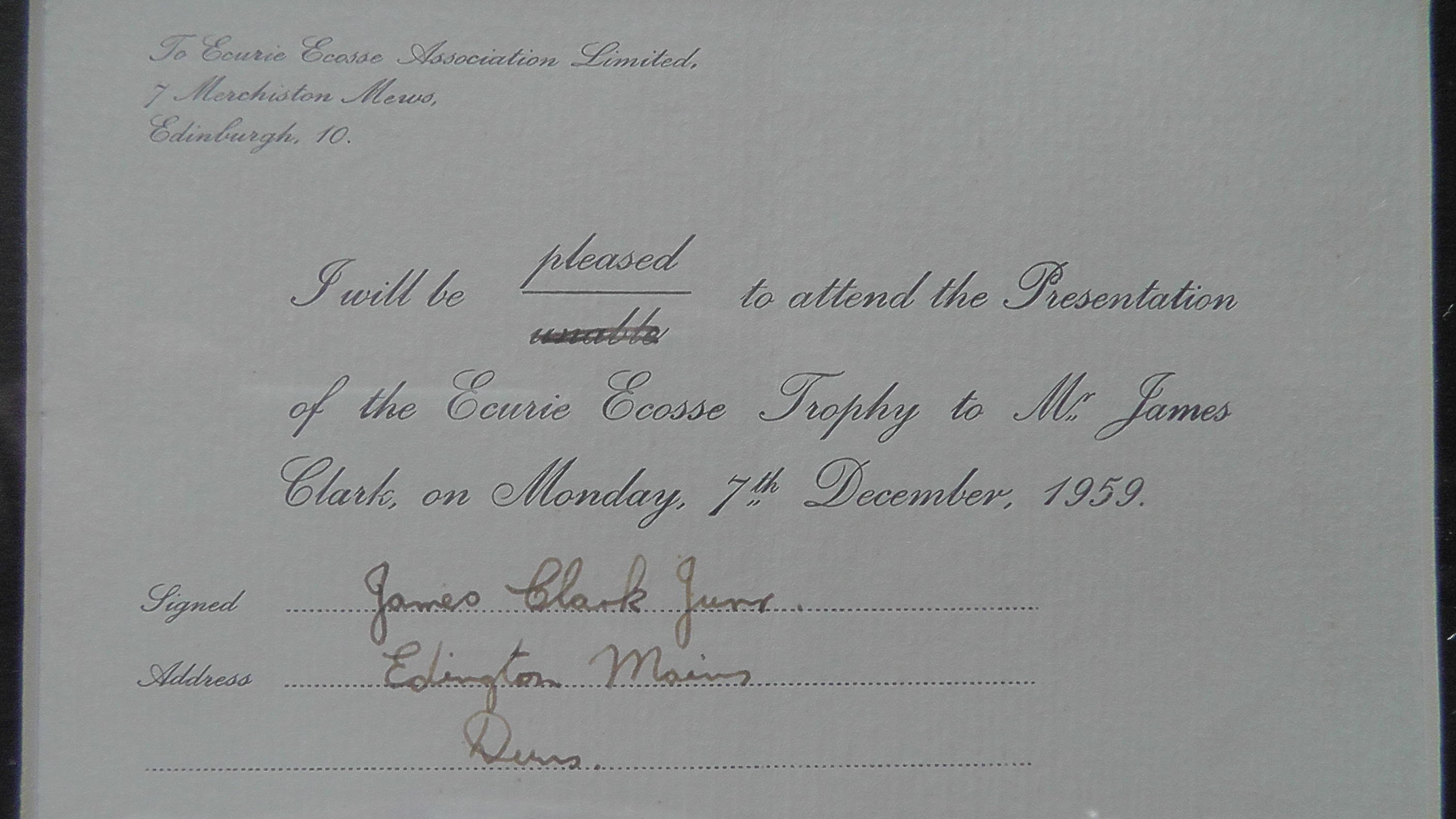
Over the years there’s been plenty of discussion about whether Jim liked to be called “Jim” or “Jimmy”.  Personally, I’ve always favoured “Jim” on the basis that he called his autobiography Jim Clark at the Wheel (and not Jimmy Clark at the Wheel).  Anyway, perhaps this reply card settles the argument.  Invited by Ecurie Ecosse to receive an award at the end of the 1959 season, Jim signed his RSVP “James Clark Jnr” – the name by which he was known in Scots Border farming circles before he became a celebrity.  Jim’s father was of course “James Snr.”  (It is also characteristic of Jim, I think, that he took the trouble to reply formerly to an invitation that in reality was only about him in the first place!)

Photos: The Colin Piper and Peter Windsor Collections

Farewell to a racing gentleman

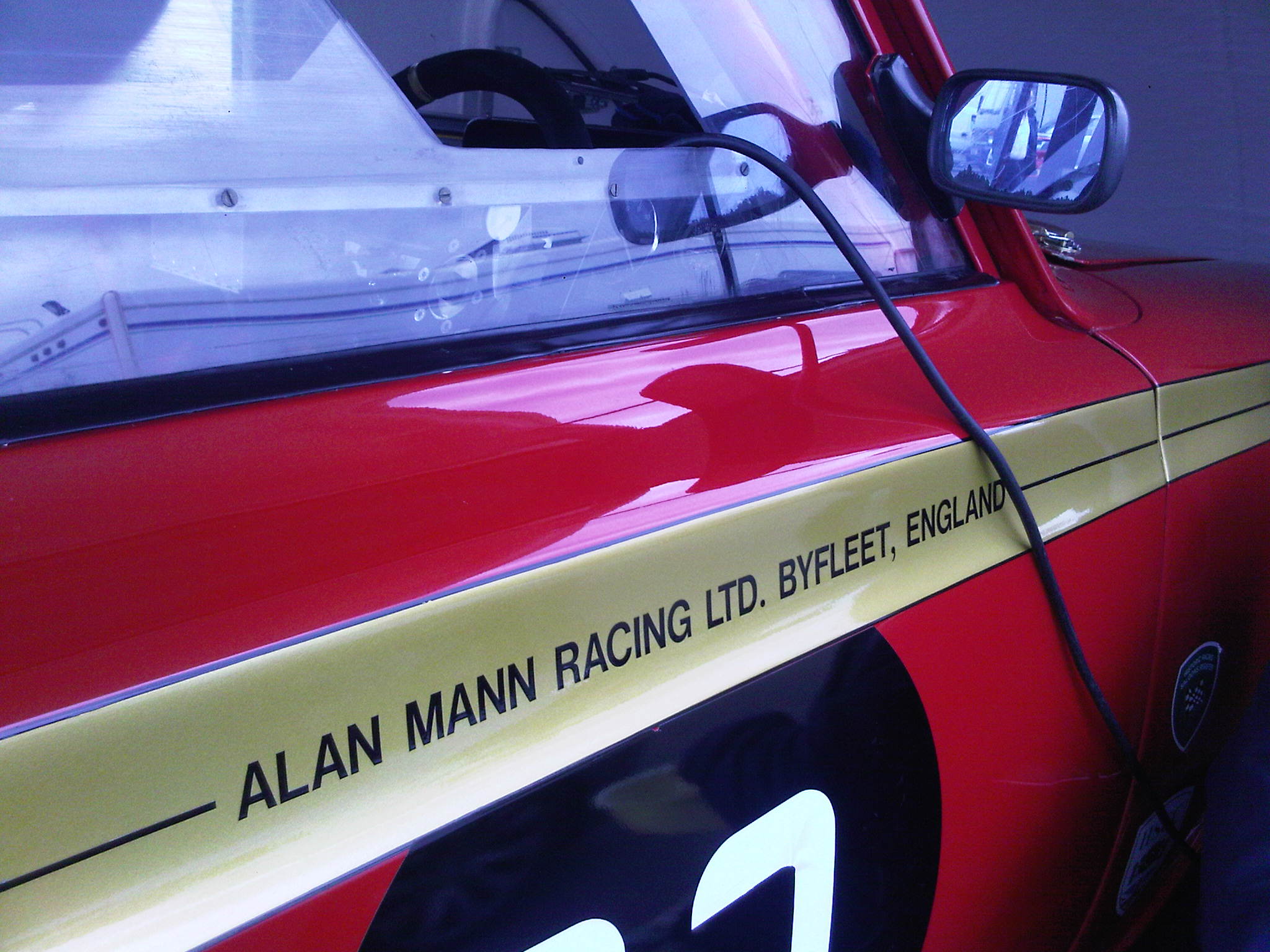
Alan Mann, who passed away yesterday, was one of those excellent racing people with whom it was always a privilege to spend time.  He knew how to run racing teams;  he knew how to prepare cars – and to present them beautifully;  he knew the aviation business;  he knew people.  I spoke to him not so long ago at Goodwood.  “Tell me about the Ford F3L,” I said, somewhat presumptuously.  Alan was a delight.  We spoke for 30 minutes or more.  Mike Spence, I recall, emerged from the conversation with a five-star rating.

He will be greatly missed.  It was only last night, still oblivious to the sad news, that  Sir John Whitmore’s voice sparkled at the other end of my phone.  Sir John won – make that dominated – the 1965 European Touring Car Championship with his Alan Mann Lotus-Cortina.  Those who watched him three-wheeling over the cobble stones of the Budapest street circuit still talk about it today, years after the event.  Alan Mann-Sir John Whitmore was one of the great racing combos of all time.  Hand-in-glove.  Always in synch.

Frank Gardner, too, was another Mann driver:  “If you’ve got the preparation taken care of, you can focus on the driving….” Frank used to say after another of his walkover wins in an Alan Mann Ford Falcon Sprint or Escort.

The picture I show here was taken in 1969 at the British GP by a great admirer of Alan’s.  Geoff Sykes, the Warwick Farm Tasman promoter, was in the UK to sign-up drivers for the upcoming Australian summer leg of the series.  I’ll never forget his words, upon his return to Sydney, as he described this shot of a contemplative Alan Mann in one of his regular “slide shows”:  ” Outstanding car preparation and presentation.  Knows what he’s talking about.  Knows his helicopters, too! A gentleman.”


Tiago Monteiro on the WTCC, Ocean’s GP2 and GP3 teams…and female racers

In the build-up to the GP2 season opener in Malaysia this weekend, I caught up with Tiego Monteiro, the former Portuguese F1 driver who now enjoys a vibrant career as a WTCC driver for SEAT and as Team Owner of the Ocean GP2 and GP3 teams. Spain’s Carmen Jorda has also recently signed to drive GP3 with Ocean so we talk, too, about the future of women in motor sport.

Post Navigation