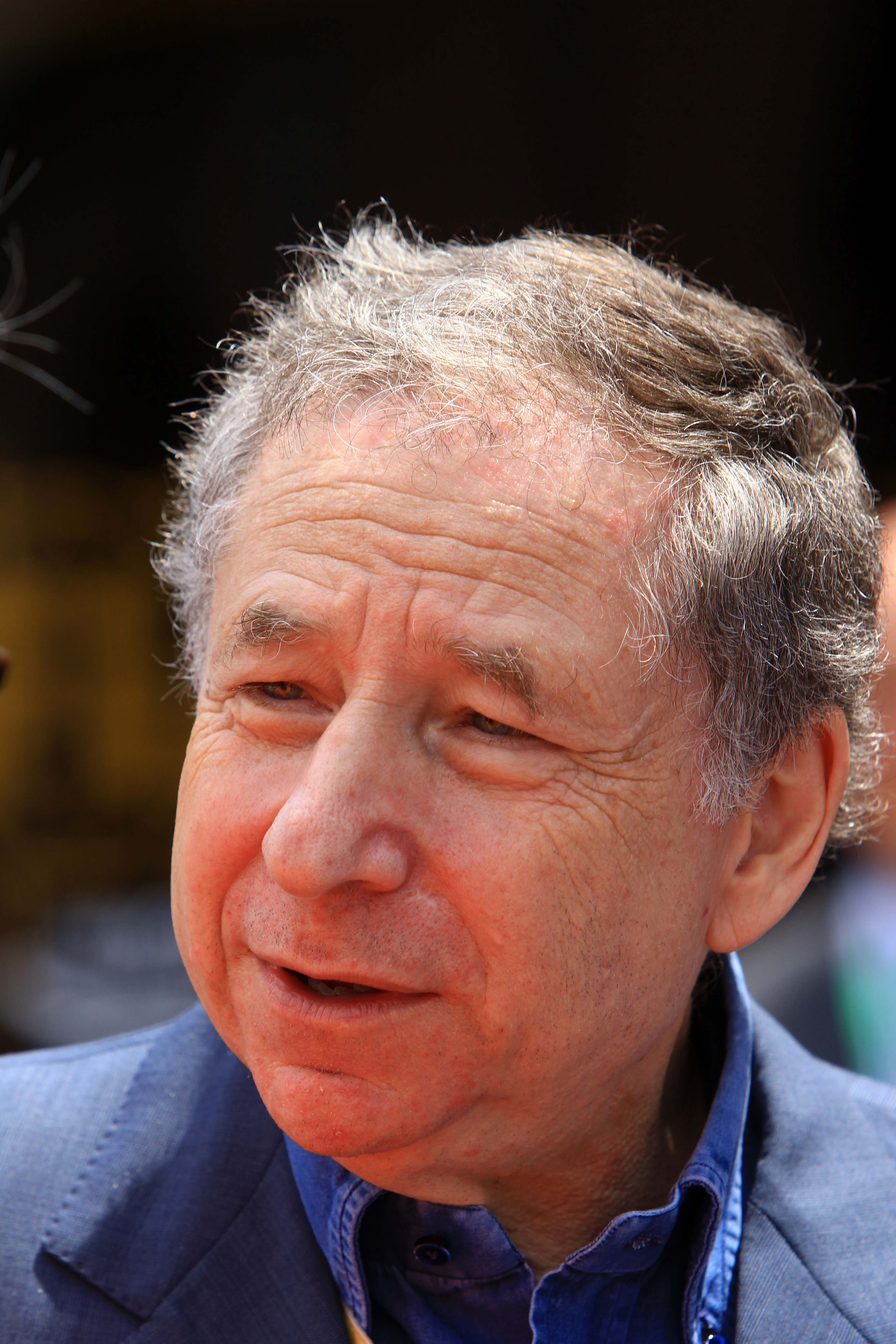
At the FIA’s Paris headquarters in la Place de la Concorde, I spoke recently to the FIA President about motor sport, the politics of motor sport and F1 in particular
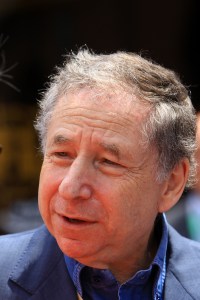 The august offices of the FIA are undergoing renovation. New floor tiles lie neatly stacked in the lobby entrance; workmen come and go, lugging timbers and assorted wiring through the narrow corridors and stairwells.
All, however, is calm. There is a serenity that suggests efficiency-combined-with-pace. Outside, la Place de la Concorde is still the centre-point of a world map you may like to draw, a cobblestoned tribute to architectural elegance that has transcended the ages. The pavements are wide, the Parisiens altogether in a hurry: the homeless are not avoided but then neither are they indulged.
I am greeted by Norman Howell, Jean Todt’s urbane, multi-lingual Communications Director. The conversation quickly turns to the nearby Jardin des Tuileries and its Galerie Nationale du Jeu de Paume – the exquisite ‘Palm Juice’ contemporary art gallery – in which many a short lunchhour has happily vanished.
It is difficult, in short, to picture now the F1 world-changing…conflagrations… that characterized the FIA’s tenure in this little corner of the world during the 80s, 90s and early 2000s. This is a different place. This is the old beauty restored.
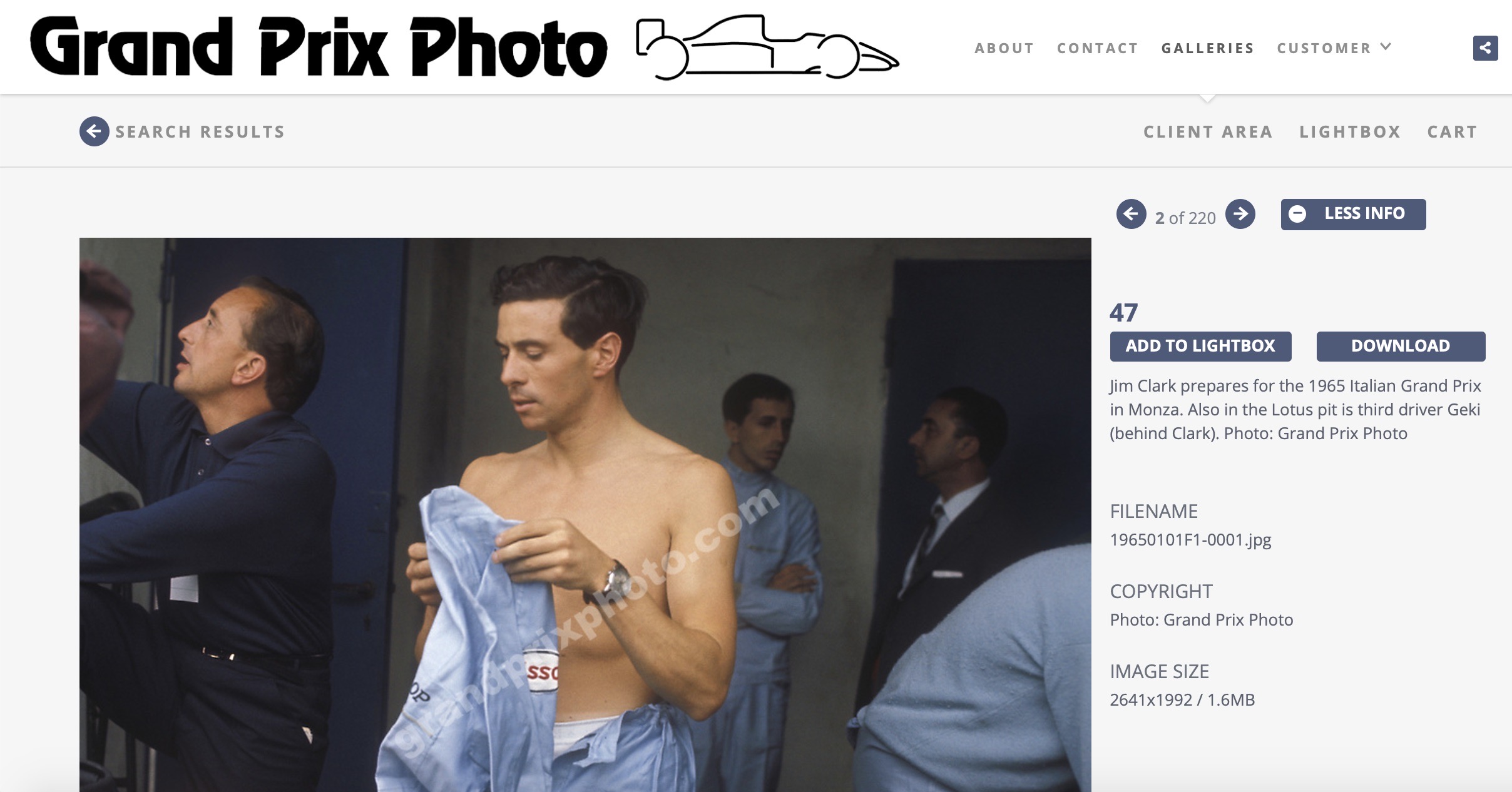
We walk into the office of M. Todt. The paint is new, the space vast. To the President’s left sits la Place de la Concorde, to his right a small courtyard. We are on the first floor. A few functionary items colour the expansive desk – a carriage clock, filing trays, Mont Blanc pens. Behind, a row of photographs bear testament to the President’s career. Alpine-Renaults and Peugeots in various states of rally wear mingle with Michael Schumacher’s Ferrari and the Le Mans-winning Peugeot. Jean Todt and Timo Makkinen beam from the bonnet of a mud-smeared Mercedes; and there, over the left, is Jim Clark. It looks like the 1965 German GP and the Lotus 33.
My previous experience with M Todt is unsettling. I once began a TV interview with him with the words, “M Todt. We’re now at the half-way point of the season so could we ask you for a mid-term assessment from Ferrari’s perspective?”
“Impossible,” he said tersely. “There are 17 races this year, so how can you call race eight the half-way point?”
“Ah,” Norman had said when I recounted the story over lunch. “M Todt is very precise with numbers. To his credit, he is numerically brilliant. Amazing brain. But he is a stickler for detail.”
M Todt is wearing a sports jacket, tie and grey slacks. He shakes hands, sits back in his chair and invites me to do likewise. All is quiet. I begin with a subject close to my heart:
“What do you think about the current route for young drivers to Formula One? Are there are too many championships, too many one-make series? And is it is too expensive for the returns offered by the non-F1 oriented media?
His eyes sparkle; he sits forward a little.
“We are really into that,” he says with the Franglais emphasis. “We are involved in many projects and it is amongst our priorities. The subject is addressed but not covered. So, for me, we have to create a strong link between the karting organizations and the new single-seater commission – a new commission that I created just over a year ago. Barry Bland was originally Chairman but when he realized that he couldn’t devote the necessary time to the work he was replaced by Gerhard Berger. We really want to build the ideal road from karting to F1. It is easy to say that; it is much more difficult to achieve it. We have to make an inventory of the situation and then build an action-plan and then apply that action-plan. So at the moment we are at the first step – the assessment of the situation. But the idea is quite clear and I am quite optimistic that, over the next five years, we will see a strong outcome.”
Other leaders in other worlds talk about “action-plans” and “assessments” in a way that clearly suggests they’ll never happen. With Todt, there is no such inference. He enunciates the words “action-plan” almost as if he is barking an order, underlining the “action”.
Thus it is refreshing to hear his words. He is not irretrievably wedded to the concept of the F1 world also controlling GP2 andGP3.
“Do you envisage just one championship in every tier?”
“Yes. Ideally – and again on paper – it’s very easy: karting, Formula 4, Formula 3, Formula 2, Formula 1. The problem is to assess the situation and to see how you can achieve that – and with whom you can achieve it.”
“So how do you feel about the current situation? F3 and GP3. WSR and GP2…?”
“In my opinion,” he says, “there are at the moment too many single-seater categories. So we need carefully to re-assess that. And motor racing is too expensive, so we have to address that, too. Then we will come to some conclusion and to an action-plan. But it’s too early to get into that now.”
Topic over. I move on.
“Why did you seek the FIA Presidency?” I ask.
“Maybe because I was crazy! No, seriously – you can see the photographs behind me. I was interested in motor racing since I was a boy. I was not able to forsee what I was able to do – and maybe I was hoping to do some things I did not do. I was elected President in 2009 but I first became involved as a co-driver in 1966, so I felt that after 43 years it was a good opportunity to go for the election. I did not know if was going to be elected; you cannot choose to do this job, so I was always very cautious. I thought it would be a good payback to an industry, to a sport, to which I had given a lot and from which I had gained a lot. So I think it was fair to give that back and, rather than criticising from the outside, I am in the position to contribute to constructive changes as I think they should be. That’s why I went for it. I was not thinking it would be so time- and brain-consuming. (You know, one of the reasons I stepped out from Ferrari was because it was difficult to achieve more and I wanted to have some time for ‘me’. As it has turned out, I probably have less time ‘for me’ than I had in the past, acting as a volunteer, but it’s a choice I made without maybe thinking about all that was behind.)”
“How different has reality been?”
“I was quite open in my mind before I began. I knew it was a difficult job, a difficult position. But I didn’t know a lot about the background, even though I had been in involved in the sport for a few decades. Until you get into the position you do not know all that is behind it. I can now say that it is a very complex, heavy organization, because you have the elected people, you have the management, you have one headquarters in Paris, one in Geneva, one organization in Brussels, another in the UK, you have the Mobility side, which is a side very unknown to outsiders, you have the sport organization. Myself, I committed to travel – to visit our clubs located in 132 different countries. So far, in the first two years, I’ve visited 104 countries, so hopefully by the end of the year I will have visited all of our FIA community – all of that combined with the daily work in Paris and Geneva and attending some F1, some raliies, some Endurance, some Touring Car, some GT….it makes life busy.”
Indeed. If I had a sense of M Todt’s work ethic in the Ferrari years I have it the more so now. For the first time, I concede to myself, I am intrigued by the President’s trademark Road Safety programme. How on earth has he found the time to energize it?
“You must be very humble, and that is why I took such a risk in getting so involved with road safety – to give some attention to road safety. The assessment is easy. You have 1.3m people who die every year on the road. 50m people are injured on the roads. If nothing is done properly by the governments, by 2020 we will have 2m dead and 80m people injured every year. Road accidents will be the world’s Number One cause of fatalities and injuries. In front of malaria – in front of every illness. The first responsibility does, of course, lie with each country. In developed countries like France and the UK a lot has been done and something still remains to be done. But, for example, I was recently in Kinshasa, Congo, where there are no roads and a modern car is at least ten years old. No education. No safety belts. Not enough fuel. No traffic lights. No helmets for bike riders who sit sometimes five on a bike because there is no public transport organization.
“At the FIA we must be realistic. I’m sure we can give a strong contribution by working very closely with the World Bank, working very closely with the World Health Organization, by talking with governments, talking with the Red Cross – talking with all the institutions. I don’t want to say that we can provide ‘leadership’ – because, again, that’s very presumptuous – but I really feel that we can have some good input, you know, to promote a bigger awareness. Sometimes people say, ‘financially, what can you do?’ The FIA has not the means but we can contribute with lobbying. For example, I’m quite happy to have initiated the combined support of all the sporting federations around the world, including the Olympic Committee and our top drivers and competitors, claiming Action for Road Safety. If you speak to any sort of sporting champion, if they drive their car now, they think they have a bigger responsibility. So, slowly, slowly, things have started to move. It’s such a big programme, but I think the first step is to take it into consideration and then to start to move slowly forwards with education, road infrastructure and vehicles. Those three parameters have to be worked together.”
At once, the rally co-driver who knew the East African Safari as well as he did the Rally of the Thousand Lakes or the Argentine Rally of the Codasur is mixing that earthiness with the skill of a politician honed by the French and seasoned by a over decade at Ferrari. Who else in the world of motor sport is thinking in terms of the World Bank or the Red Cross?
I am wonder, then, about M Todt’s feeling for the insular world that has become F1. It is effectively hermetically sealed (along with GP2 and GP3) from the rest of motor sport – and to some extent from the real world of Kinshasan road tolls. I ask him about his feelings for F1 and about recent developments – about DRS, for example.
“For me, F1 is at a very high level,” he says. “In all of sport, F1 is a very strong category. Obviously the different stakeholders have a responsibility to address the future – and the future is: how to reduce the costs; how to improve the show; and how you can implement new technologies. Because F1 is the pinnacle of motor sport it must also be an ambassador of motor sport. People will not understand if you do not put that on board. As for DRS, it’s an interesting new technology like the energy recovery system (KERS) and the new powertrain regulation from 2014. So all that goes in the right direction, so, if, on top of that, we can apply a strong message from the stakeholders to road safety then I think we can be optimistic for the future. But we have to consider very carefully the cost and the content of the technical and sporting regulations…and we are ‘on it’.”
“Are you ‘on it’ as much as you want to be?,” I ask, alluding to the autonomy of F1 and its stakeholders.
“The structure of F1 has taken quite a lot of influence of the FIA but this is something we are addressing and I must say we are building a very strong relationship with the teams and they are even asking themselves for support on cost control regulations that would be less demanding financially, so I feel we have started a very good partnership, if I may say so. I’m against being a dictator, because it’s better to guide with harmony, by people sharing their views rather than people imposing their views.”
“How specifically can F1 reduce costs?”
“You have to address the number of parts you change every year. I don’t think people on the outside would notice the difference if you limit the number of brake callipers or discs, for example – if you limit the things that do cost money. I think there is quite a potential there and it is something that we are now considering.”
Bernard Ecclestone has famously been less than civil about M Todt in recent months – “We don’t need Todt in F1” – so how is the President’s relationship with the man who epitomises the word “stakeholder”(even if, technically, the rights are today owned by CVC Capital Partners)?
“I’ve known Bernie for many years. In a way, he has been probably responsible for me joining F1 because I knew him from the sports and rally car times. We always had a good collaboration and he was the one who gave my name to the board of FIAT, as a result of which I joined Ferrari. Now I’m in a different position. Of course he was used to working with Max Mosley for 30, 40 – 50 years – and it has changed! But it is fine, you know. I do respect him, because I think he has built something amazing, which is one of the best sports in all categories taken together, and for me I do respect his position as commercial rights holder. My responsibility is to make sure that the FIA’s position is respected. So sometimes we may have some discussions; I’m not concerned with anything he may say about me. My main concern is to look after the interests of the FIA, and of the sport, and to have a good leadership in the organization.”
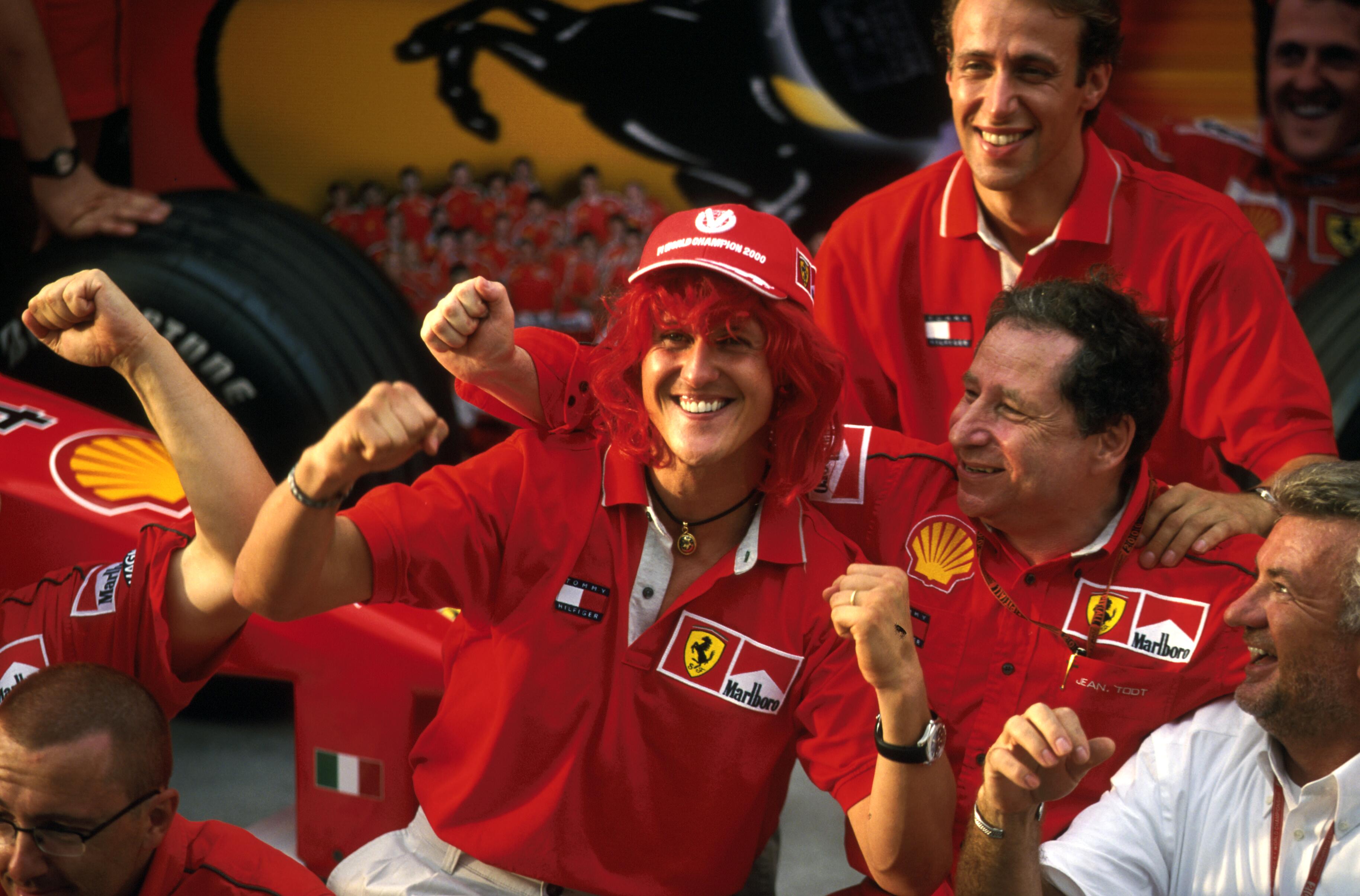
I ask about M Todt’s current feelings for Ferrari. How much as he been able to cut off from the team with which he won six World Drivers’ Championships (five with Michael, one with Kimi Raikkonen)?
“I love motor sport, so I follow any kind of category, and, in my position, it’s good because I have access to all the results, the times, etc. It was exactly the same when I left Peugeot. I was still interested in the results but it was behind me. It was a chapter of my life – as Ferrari has been a great chapter of my life. We have been suffering, sweating and enjoying, and now it’s something that I remember. I still have some friends at Ferrari but I’m not any more involved in the business. I always wish the best to everybody and I really wish the best to them. Michael is a personal friend. He’s a great human being, a great champion. To succeed in motor racing and in F1 you must first have the car and the team and then be able to exploit it. Now he is somewhere near having that” – we spoke prior to Michael’s pole at Monaco – “I hope for him, for Mercedes, that 2012 will be continue to be as competitive.”
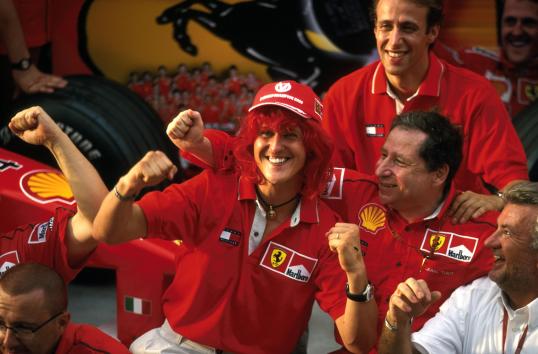
I ask if it saddened him at all to see Michael struggling to out-qualify and out-race his team-mate in 2010-11.
“No,” he says emphatically. “People are living for the media coverage every day. And every day there is something new. At first Michael was murdered, then it seems that he improved a little. One day it will be completely forgotten but what will never be forgotten is what he has won as a seven-times World Champion.”
The conversation turns to the new-look World Endurance Championship. Sports car racing has suffered over the past 20 years because of the growth of F1 and because of F1’s penchant for seizing the cream from every bottle. How important is the WEC to the new FIA President?
“I’m very happy, because that was one of the things I wanted to restore. The FIA World Endurance Championship now has a link with the ACO for them to be the promoter of one of the most dynamic races on our calendar – the 24 Hours of Le Mans. We must never forget that we are not yet over the world economic crisis and that there is still a strong interest for this category. It will not be easy. It’s never easy. But I’m confident that we are able to do a good job.”
With so much TV coverage directed towards F1, however, I ask M Todt how the WEC can in its own right generate the sort of media exposure it needs in order to prosper. His answer surprises me:
“We are just starting the business of New Media. I’m not familiar with it; I’m probably too old for it; I have not the culture. Internet, webtv, website, twitter, facebook….I’m sure there are a lot of developments here that will be very good for motor racing. Now we are addressing that and I’m optimistic that we will have good results.”
So here is a President who by his own admission has not embraced the internet – and who still carries his luggage because he feels that wheeled luggage is “too modern” – here he is, saying that New Media and the internet could yet be the new global audience for the WEC and other categories on the rise. (If ever you needed a sign of the changes in the air, this is it: our discussion did not embrace the future of the World Rally Championship, but I understand that the FIA are looking closely at developing their own web-based support coverage of the series. In this respect, of course, the F1 world lives on a very different planet. For them, network TV is everything.)
So what of Jean Todt the man? How does he view the future? How does he live his life?
“I’m elected for a further 19 months. I still have a lot of things to do before I can be asked whether I will stand for re-election or not.
I’m very fortunate in my life – particularly when virtually every day I can appreciate how lucky I am compared with most of the people in this world. So I would never complain. Saying that, it takes a lot of my time but I’m very lucky. I have a fantastic wife, a fantastic son, I have our Brain and Spinal Cord Institute, which is another pleasing development, so I’m in the category of lucky people. I’m healthy – although you never know what can happen – so I have nothing to complain about.”
Famous for wearing brown Tod’s slip-ons with his Ferrari uniform, Todt is his own man; no doubt about that. He is at once “modern” and a man of his generation. He is conscious of staying fit but jokes that he only has the willpower to exercise “when it’s convenient”. He regularly walks the five floors of stairs to his Paris apartment and the Geneva office. And he travels. Travels. Different time zones. Different cultures and foods.
What drivers – rally and racing – mean the most to him?
“It’s always a combination, as I said earlier: car and driver. Timo Makkinen. Hannu Mikkola. They were very talented drivers. I’ve been a co-driver for 20 drivers or even more. Maybe my most spectacular experience was the 1978 Round South America rally I did with Timo in a Mercedes. That is why I have a picture of it here. 30.000km in 30 days. Probably that was a very special rally in my career.
“When I was a teenager, Jim Clark was one of the drivers who made me fascinated with the sport. Jim and Dan Gurney, so, for me, they became the ‘profile’ of the driver. We were talking about Michael earlier, but when Michael joined Ferrari in 1996 he was just coming from two world championships. He then hardly managed to win three Grand Prix and he had to wait until 2000 to win the championship again. Was it because he wasn’t motivated? No. It was because he didn’t have the car to enable him to be World Champion.”
Practical and logical. Car and driver. We talk some more – about M Todt’s parents (his father was a doctor, his mother an artist); we talk about his perception of himself – “I’m a very structured and organized person and hopefully very reliable”; we talk about backgammon – his game of choice; and we talk about life – about the passage of time and the way he views it:
“I always like to live with what is going in front of me,” says M Todt, rising to bring the interview to a close.
Photographs: SuttonImages











 peterwindsor.com