peterwindsor.com

…chance doesn't exist; there's always a cause and a reason for everything – Elahi

Archive for the category “F1”

More thoughts on Goodwood, 2012

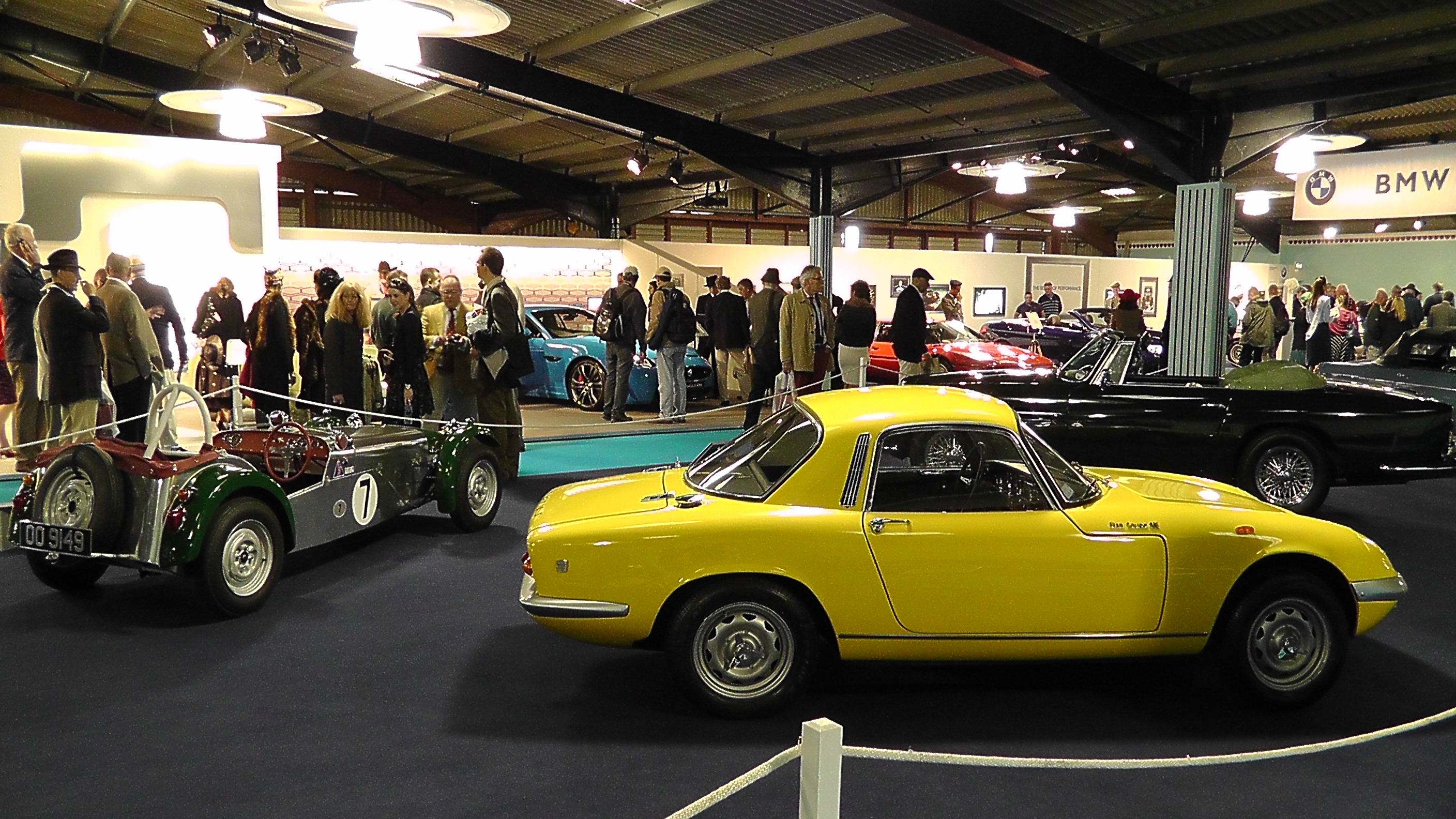
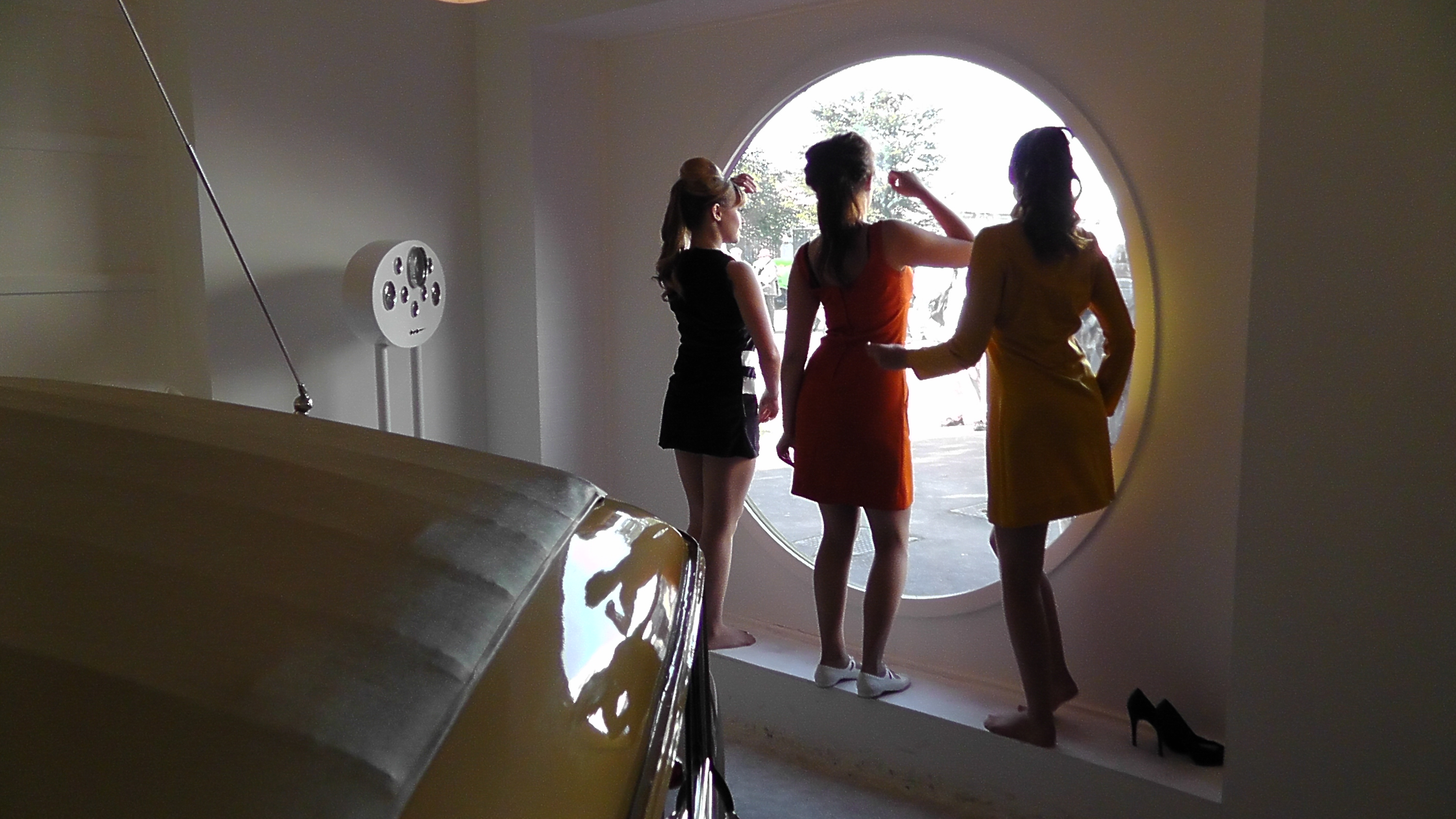
I loved it.  This was more than just an historic motor sport festival.  This event transcends the sport and sets standards that few of the other Great Occasions have matched.  For one thing, there didn’t seem to be a central “drinking area” (as there is at so many of today’s events). Yes, you could sink a cold beer or sip a Pimm’s or a glass of champers – but no-one seemed to be making that a pre-occupation. People were being nice to one another without being intoxicated. Was it because everyone was obliged to take more trouble than normal with his or her appearance?  Does this flow into the issue of good manners and courtesy (both of which were at Goodwood in abundance)?

I drove away from the airfield circuit feeling genuinely sad that the day had come to an end. There was not a single moment that I had not enjoyed – and, even then, I felt that I had scratched perhaps 15 per cent of the available surface.  Too many great people;  too much creativity from Lord March;  too many wonderful cars.

One final thought:  why is it that Goodwood has to do the appropriate, tear-jerking, brilliant celebration of Dan Gurney?  Or of Sir Stirling – or of many of the other drivers they have honoured over the years? Why doesn’t the F1 industry pay homage to its past heroes in the way Lord March does? Why aren’t selected F1 races also themed towards one outstanding driver of the past? For without the past there is no present, let alone a future, and we neglect our heritage at our peril. A sprinkling of today’s F1 people were at Goodwood of their own volition (ie, not driving a car or supporting a sponsor) but it was only a sprinkling. Why? Why wouldn’t anyone with racing blood in their veins want to see Tony Brooks in period helmet, or Sir Stirling in Birdcage Maser, or Sir Jackie in Dan’s ’62 Porsche?  Or Dan Gurney himself, eyes watery, standing upright while they played The Star Spangled Banner?

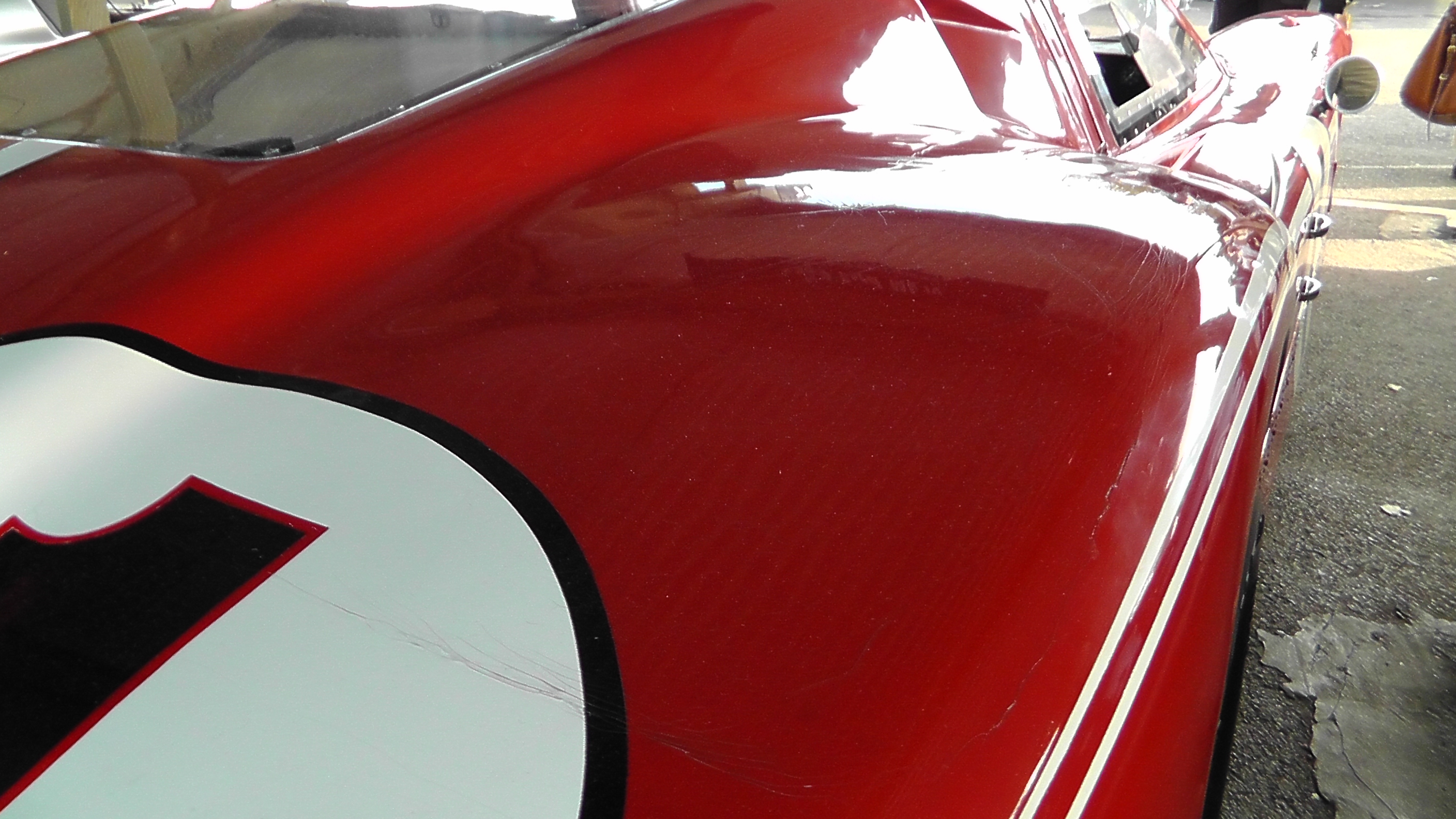
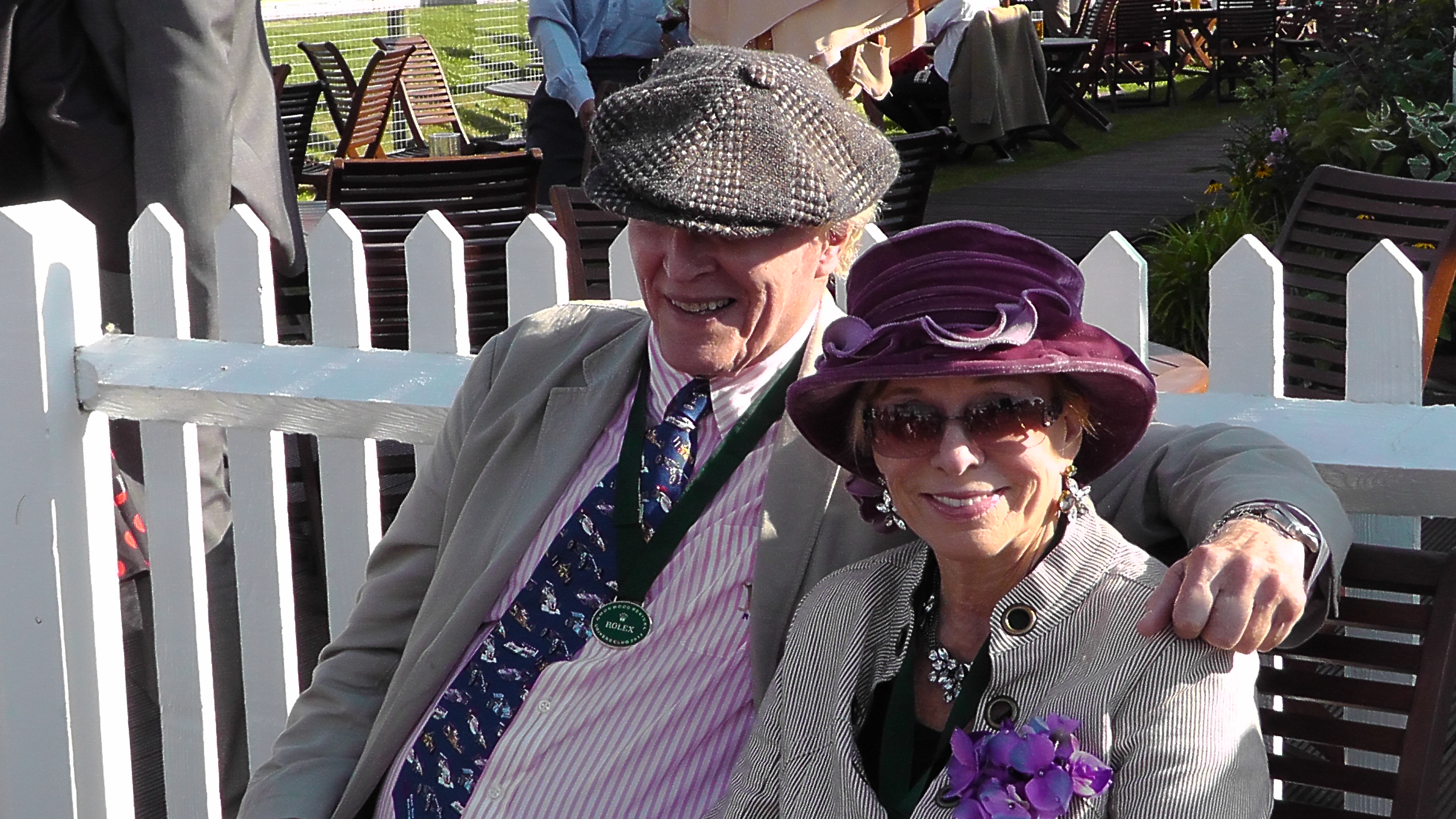
Here are a few more images that I shall take with me into the next 12 months – until, again, we can touch the sport at its heart.

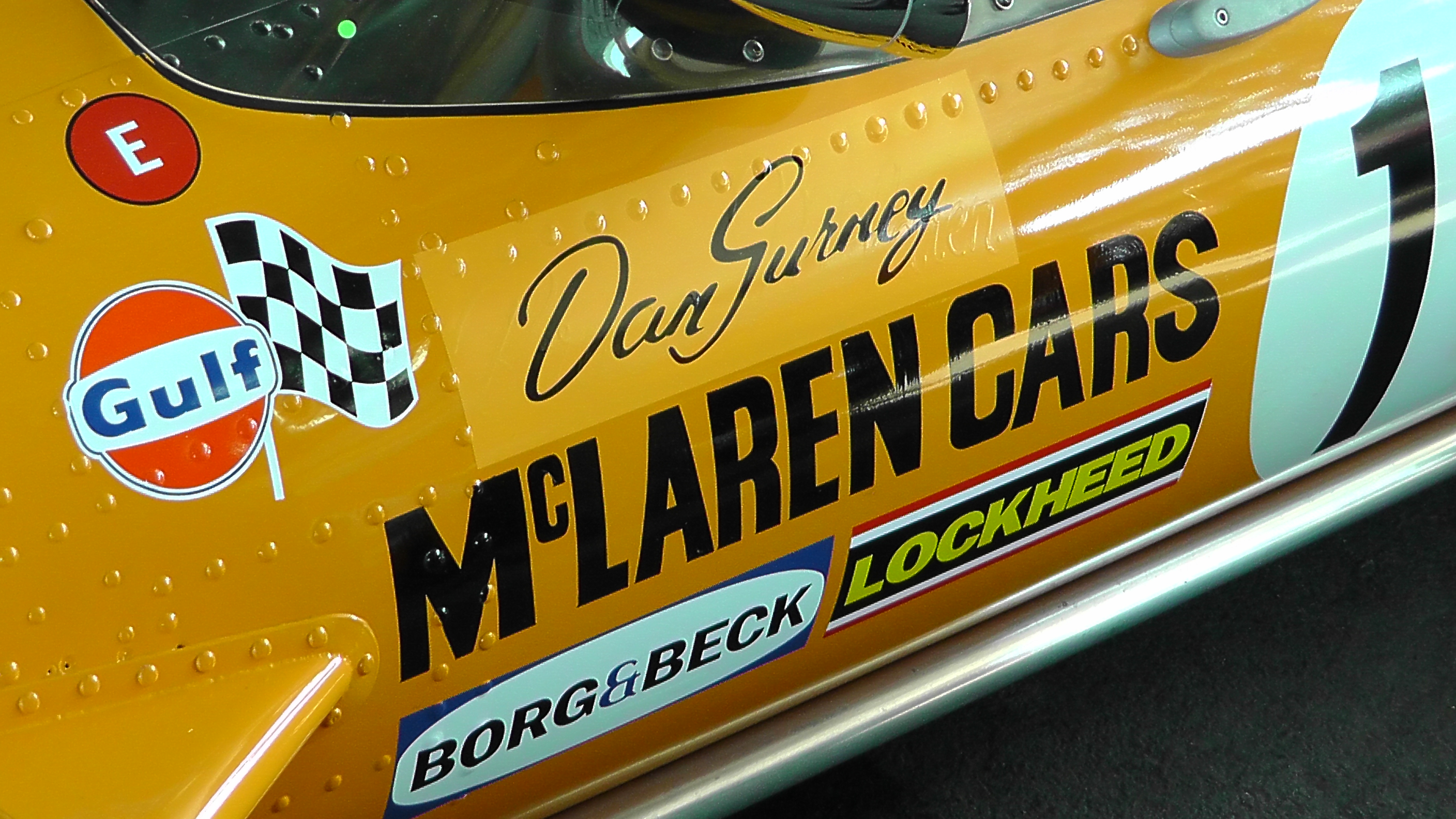
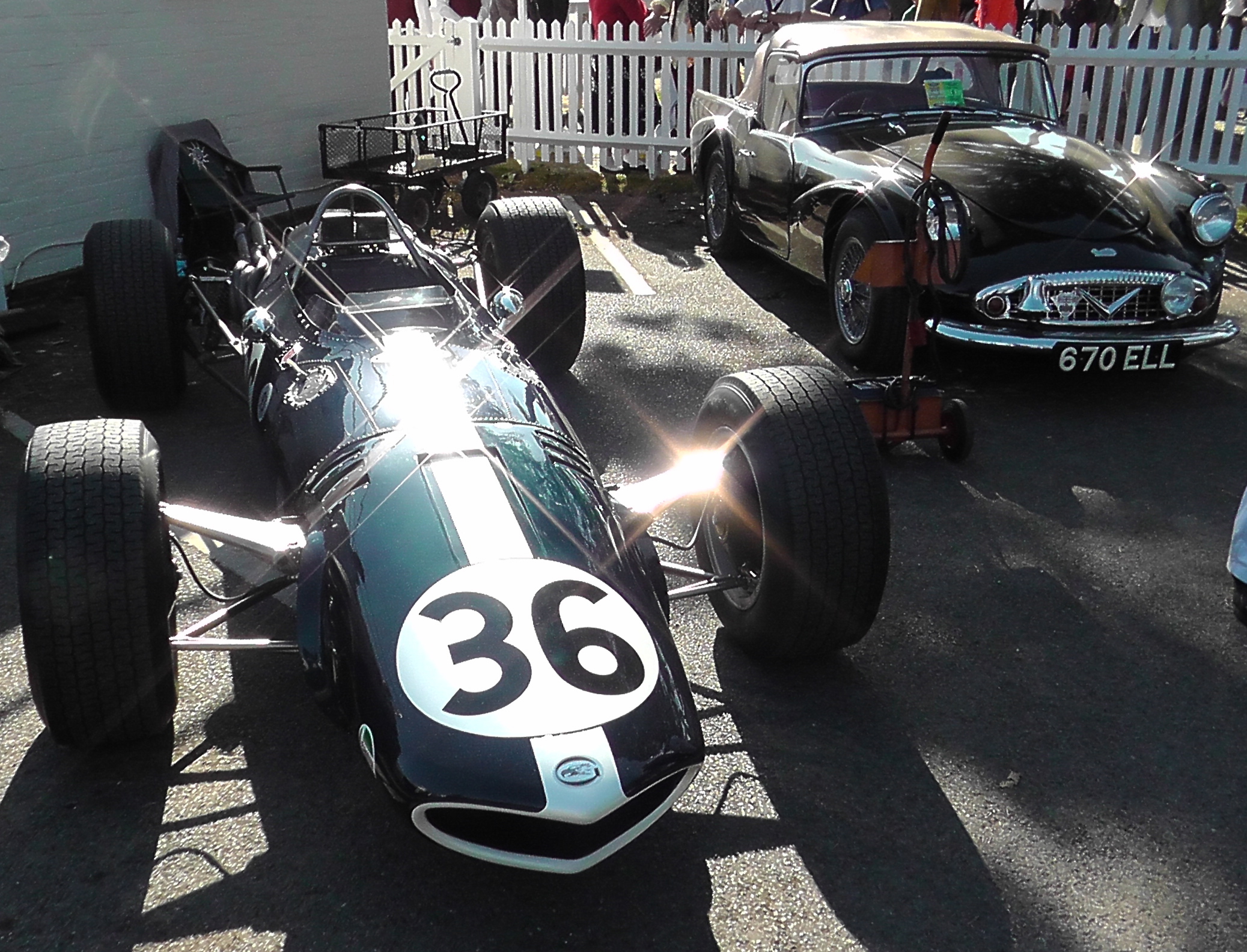
Goodwood Revival, 2012: celebrating Daniel Sexton Gurney


Look closely, and you can still see Bruce’s name under the tape.  This M14A was but one of many wonderful cars in the Gurney parade 

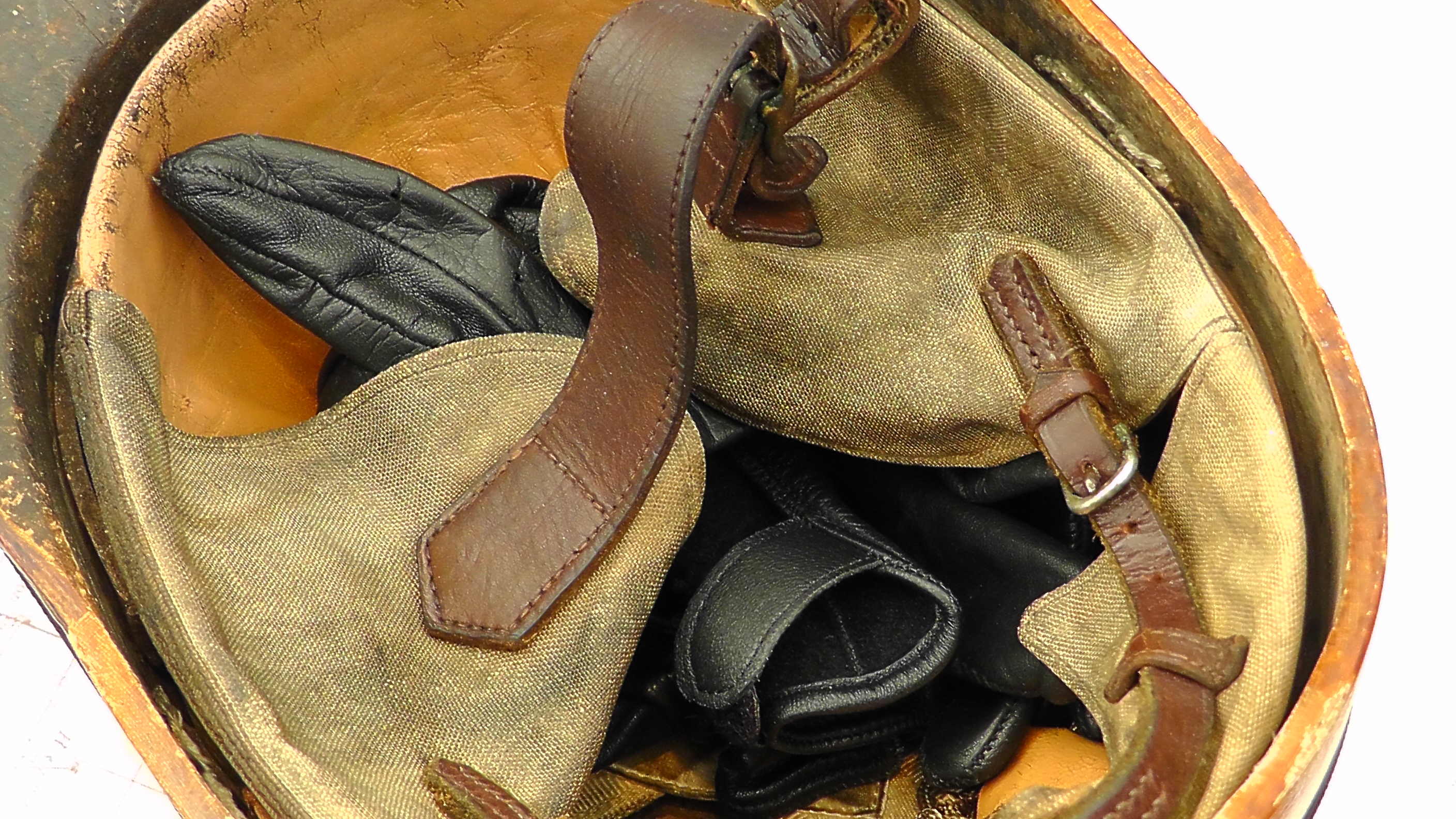
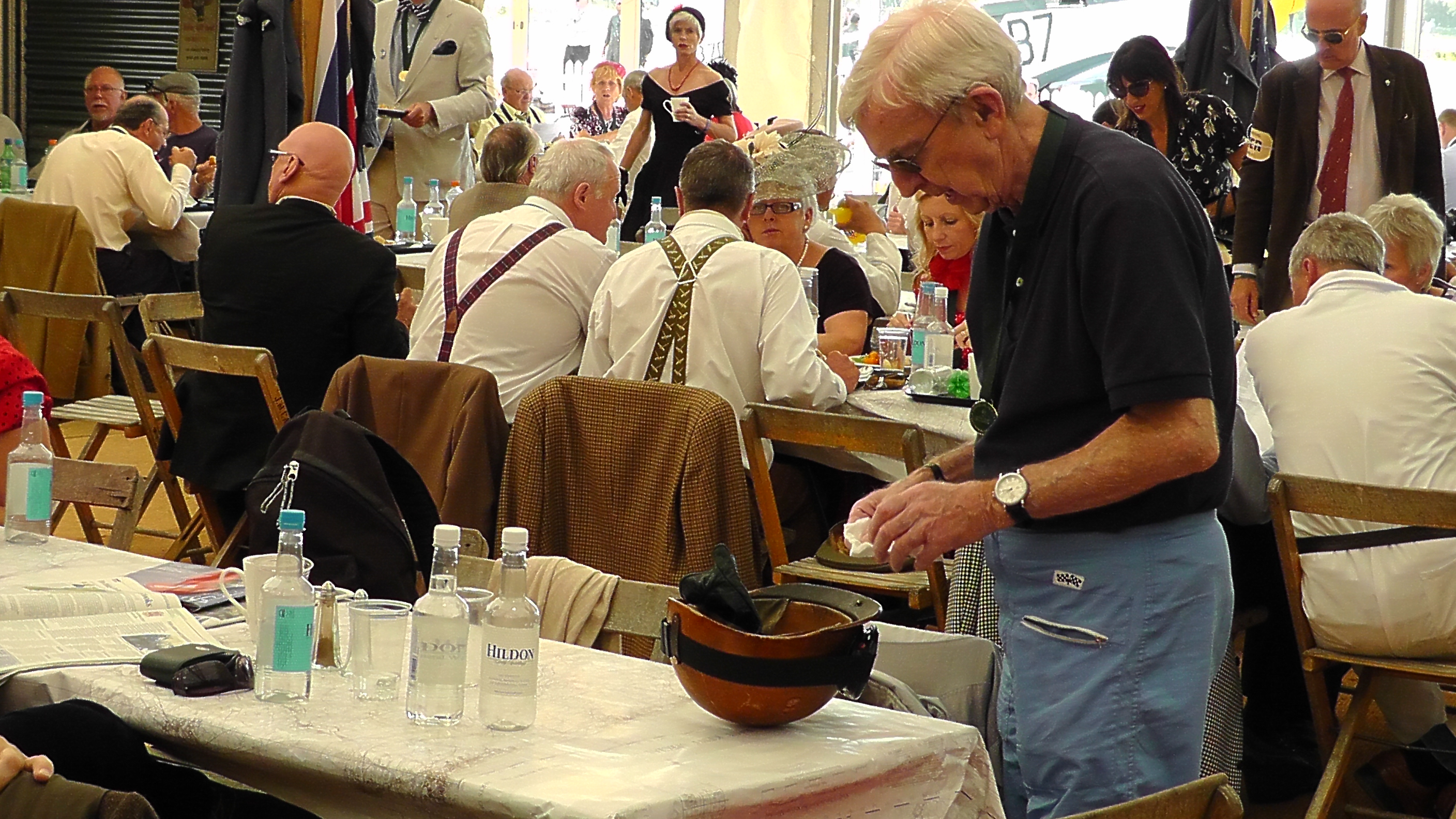
Left: Tony Brooks prepares for action in the Rolex Drivers’ Club

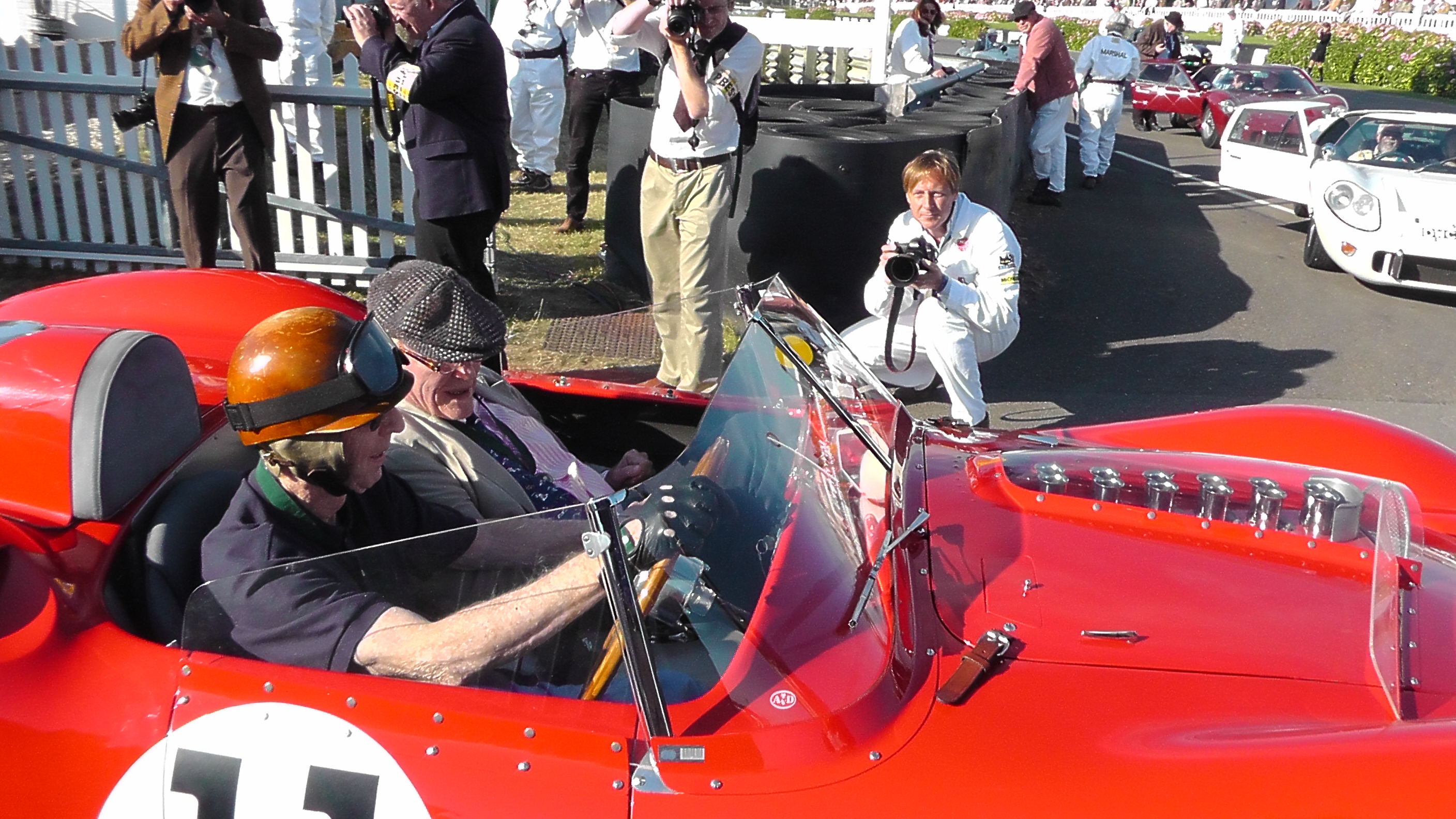
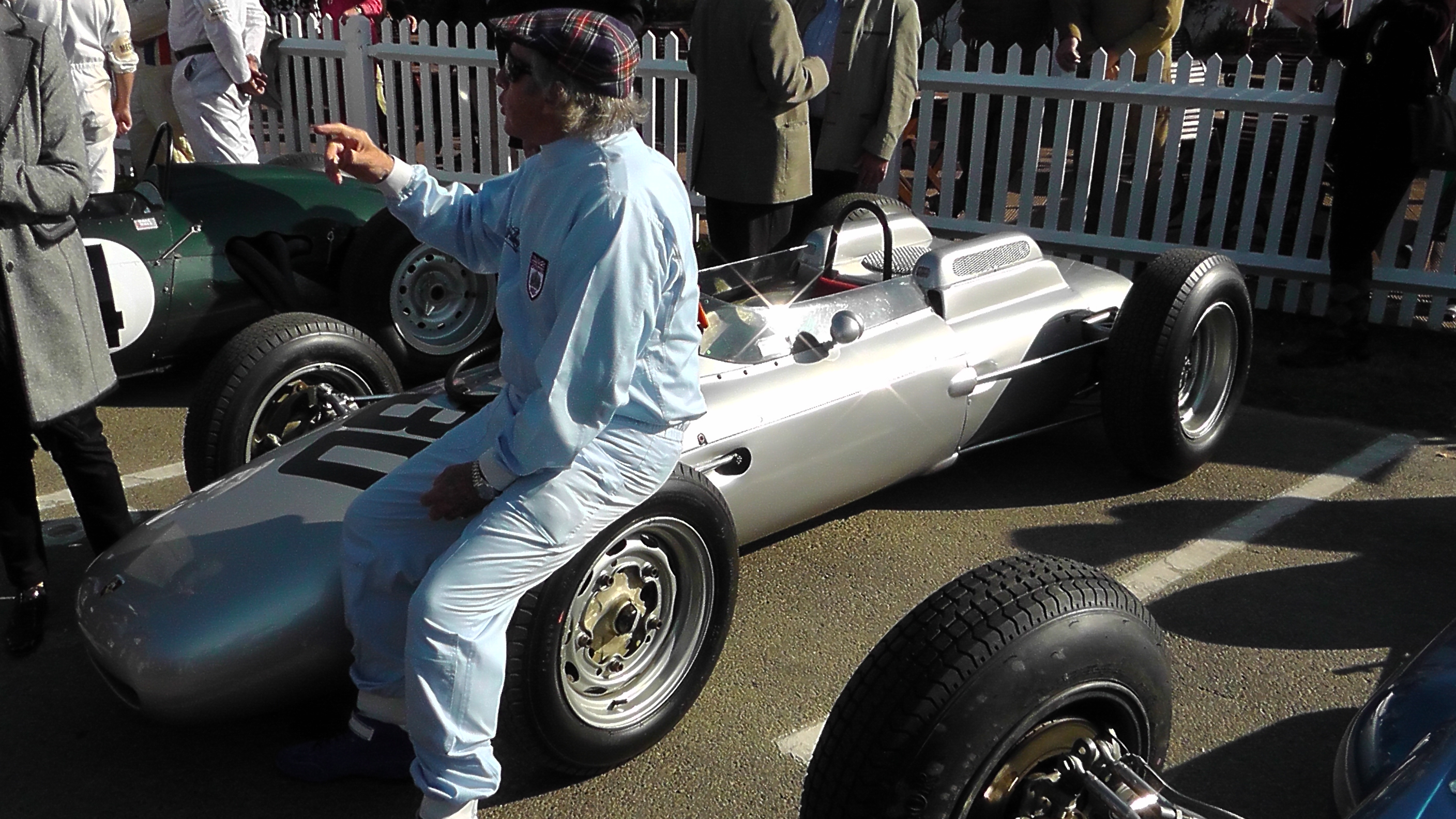
...which meant a couple of laps with Dan in the Ferrari 250 TR59/60 they shared in the 1959 TT at GoodwoodSir Jackie Stewart contemplates his run in the Porsche 804 with which Dan won the 1962 French Grand Prix at Rouen

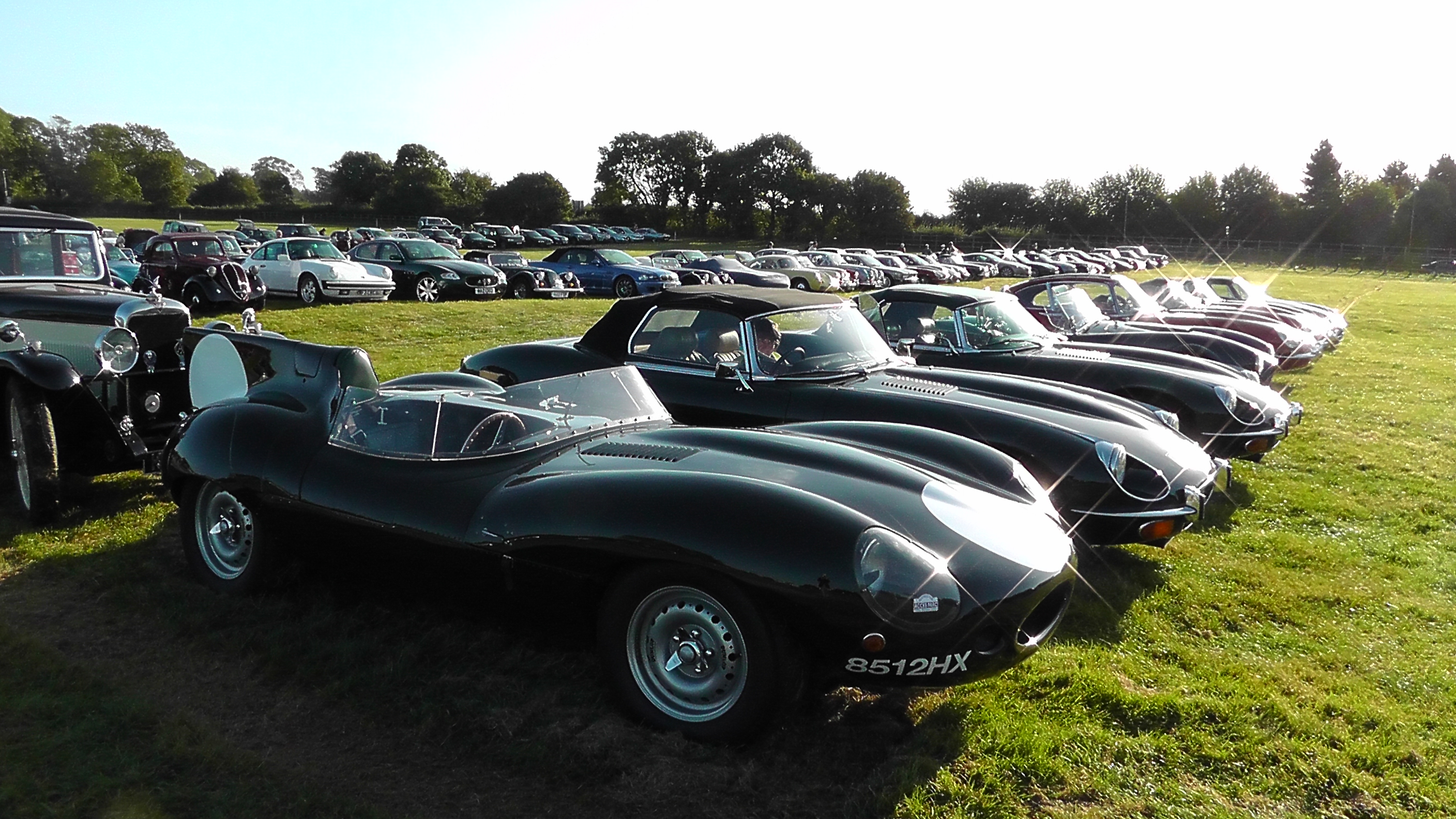
Some nice Jags greeted us in the car park in the early morning

Left: Plenty to see in Goodwood’s Earls Court-lookalike Motor Show

Below: Dan’s 1967 Le Mans-winning Ford MkIV (shared with AJ Foyt) still sets all sorts of standards

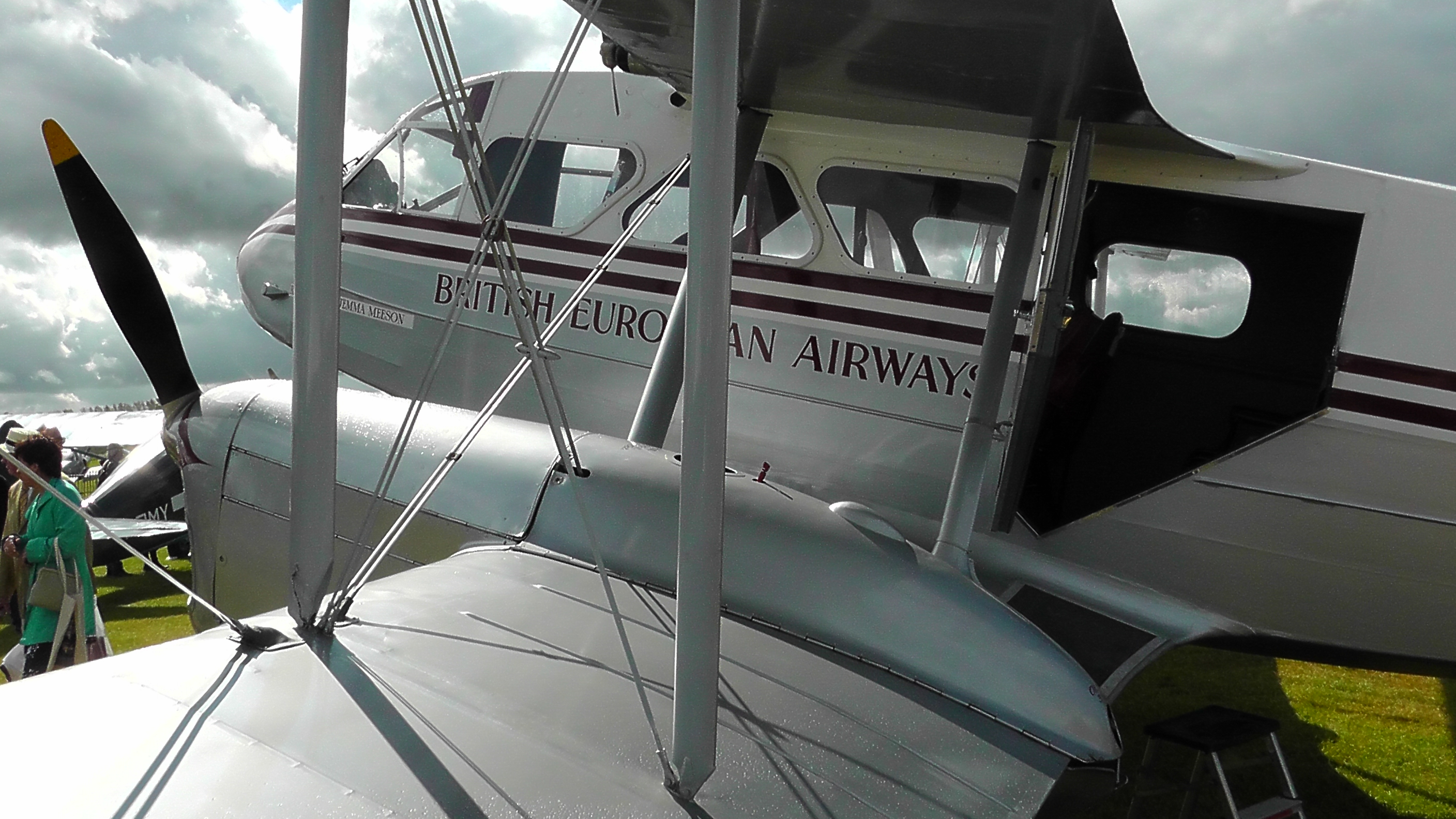
The Dragon Rapide caught plenty of fans


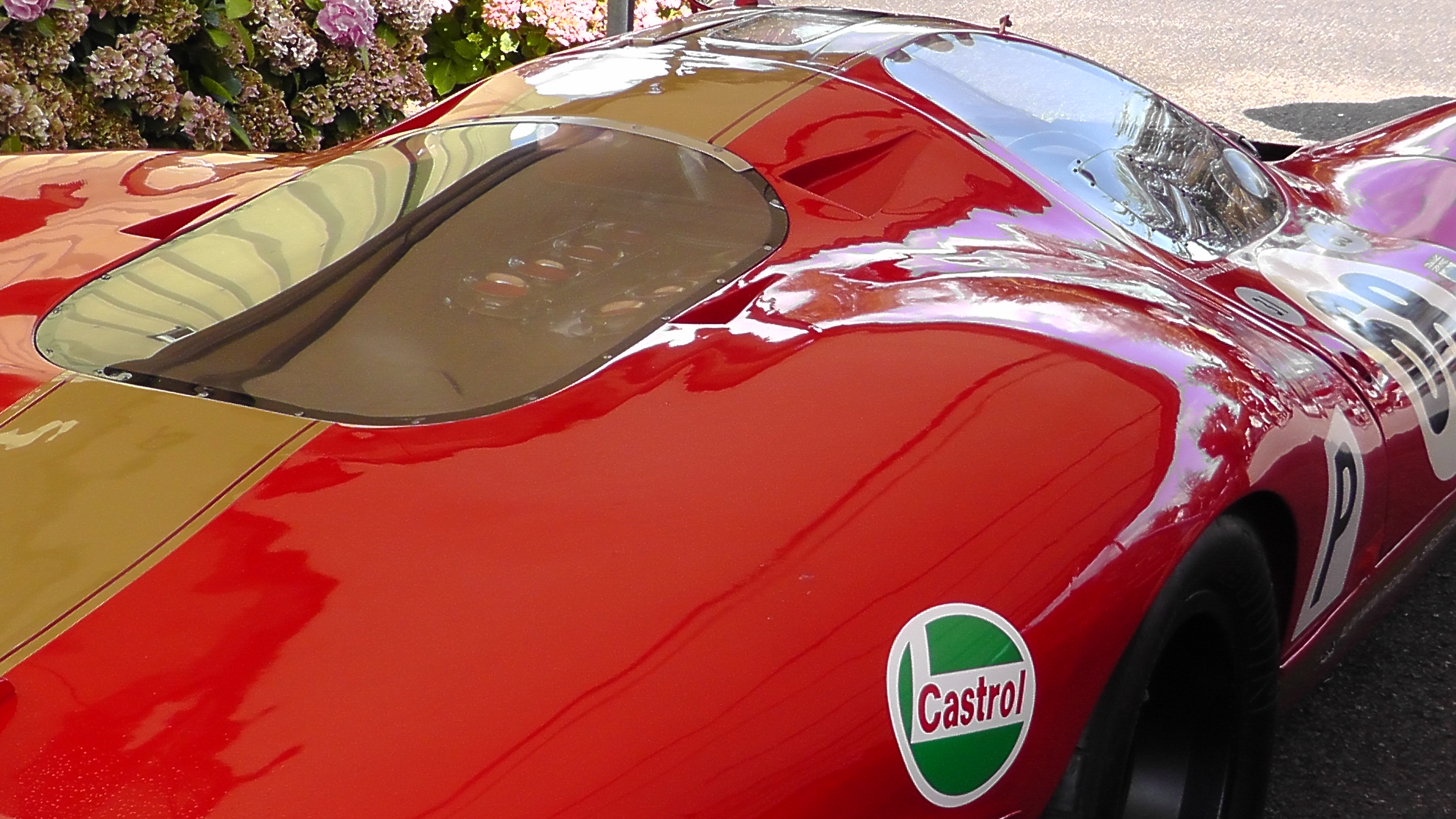
The timelessly gorgeous lines of the Alan Mann Ford F3L

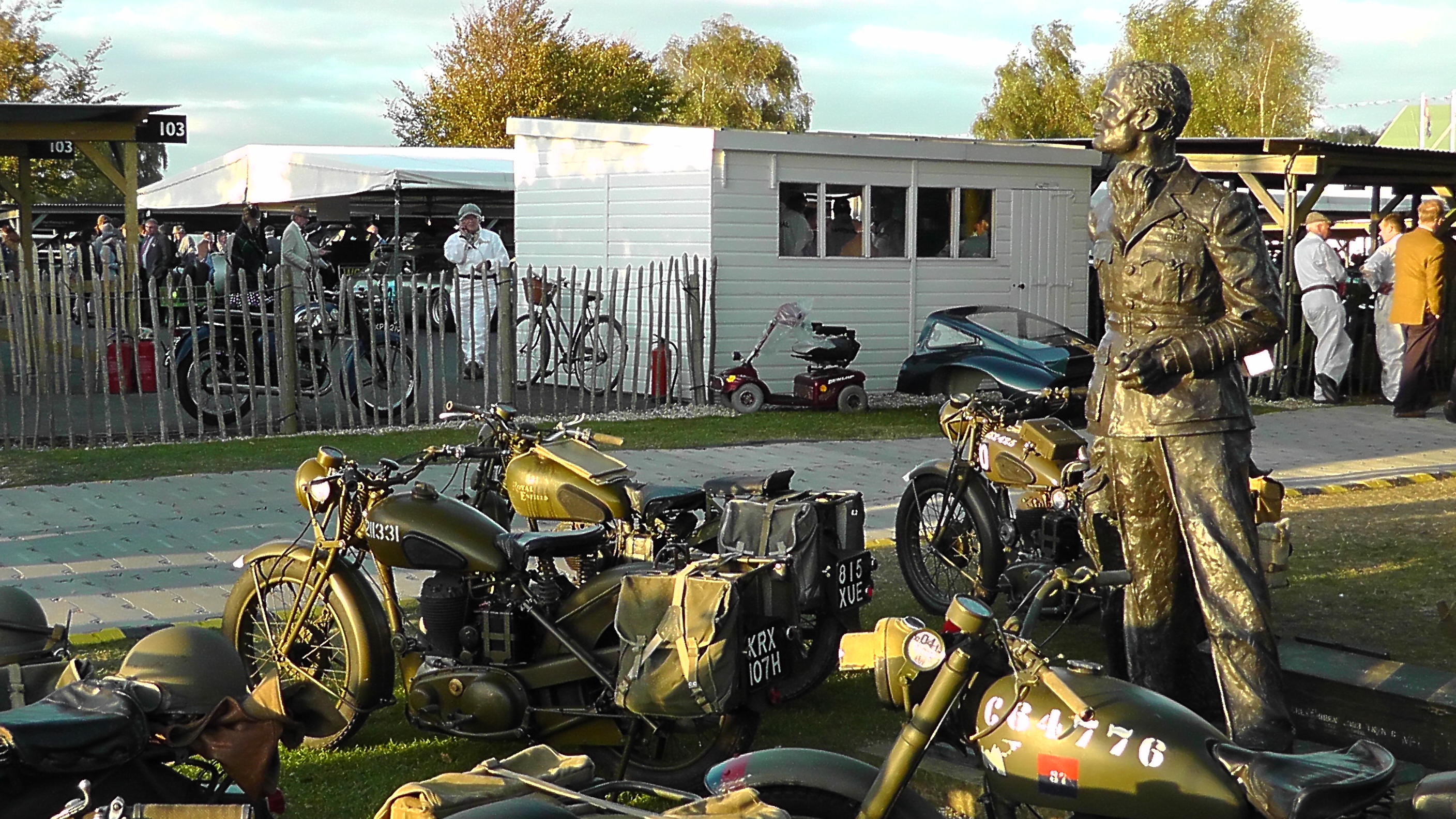
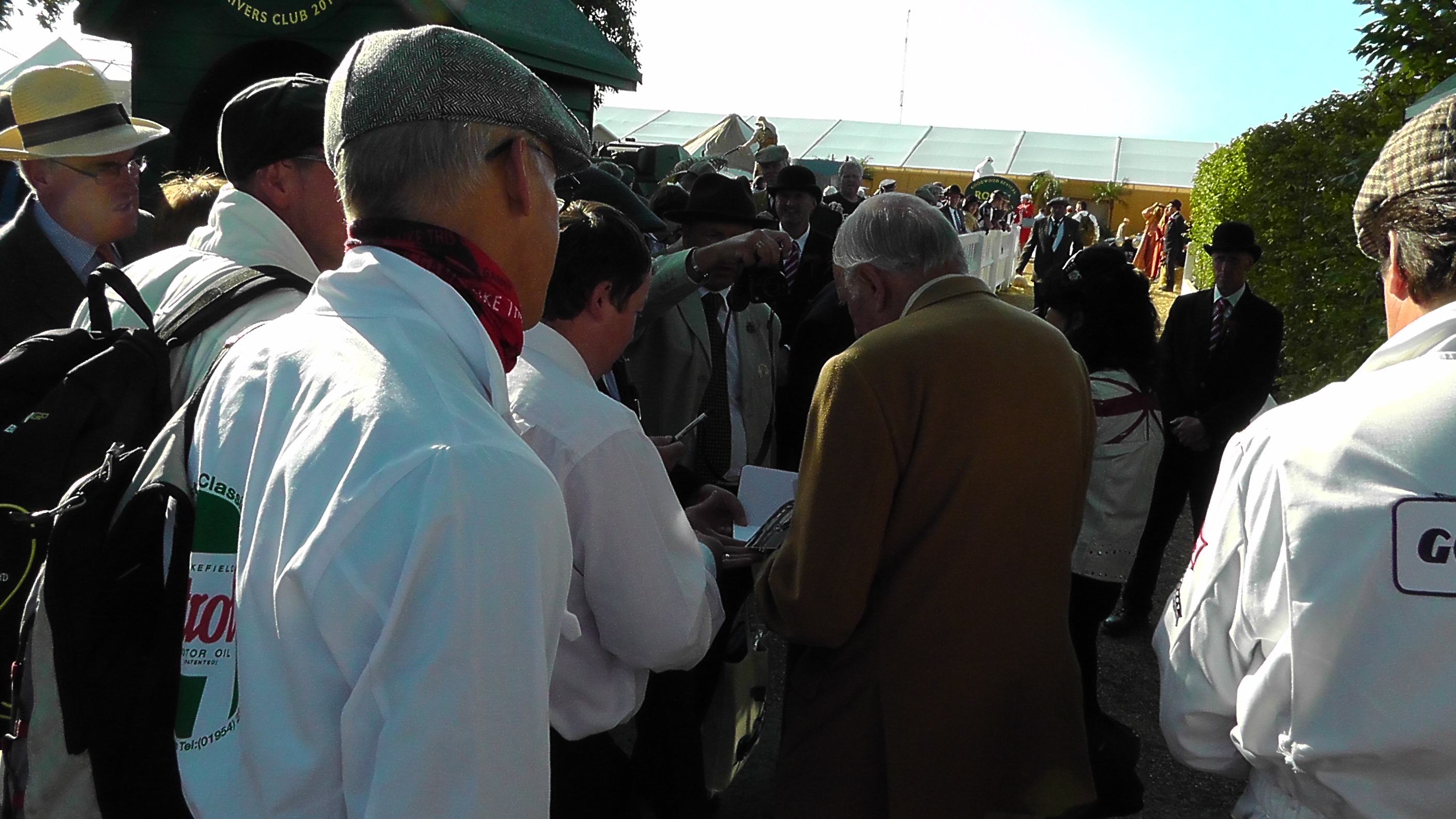
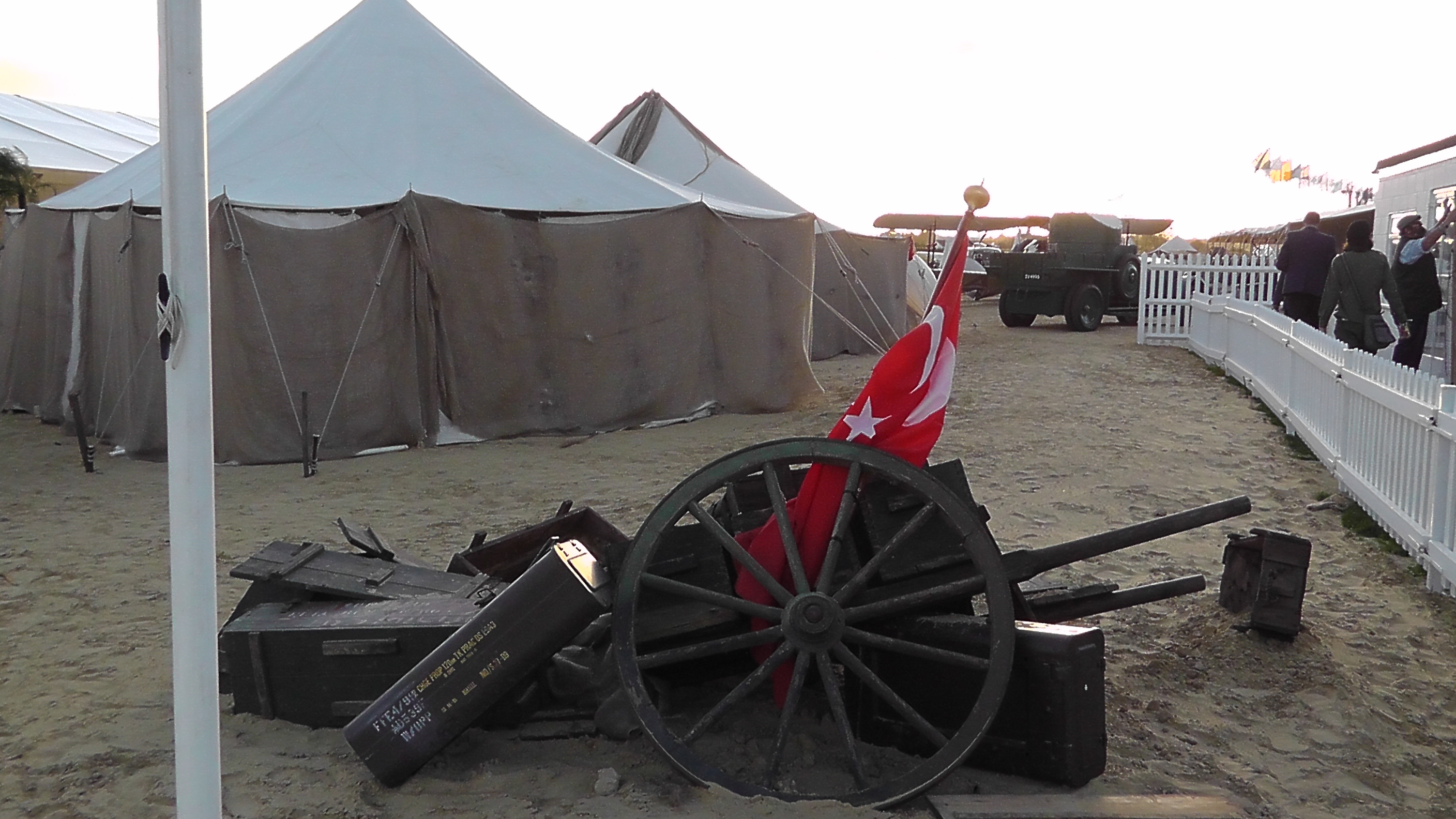
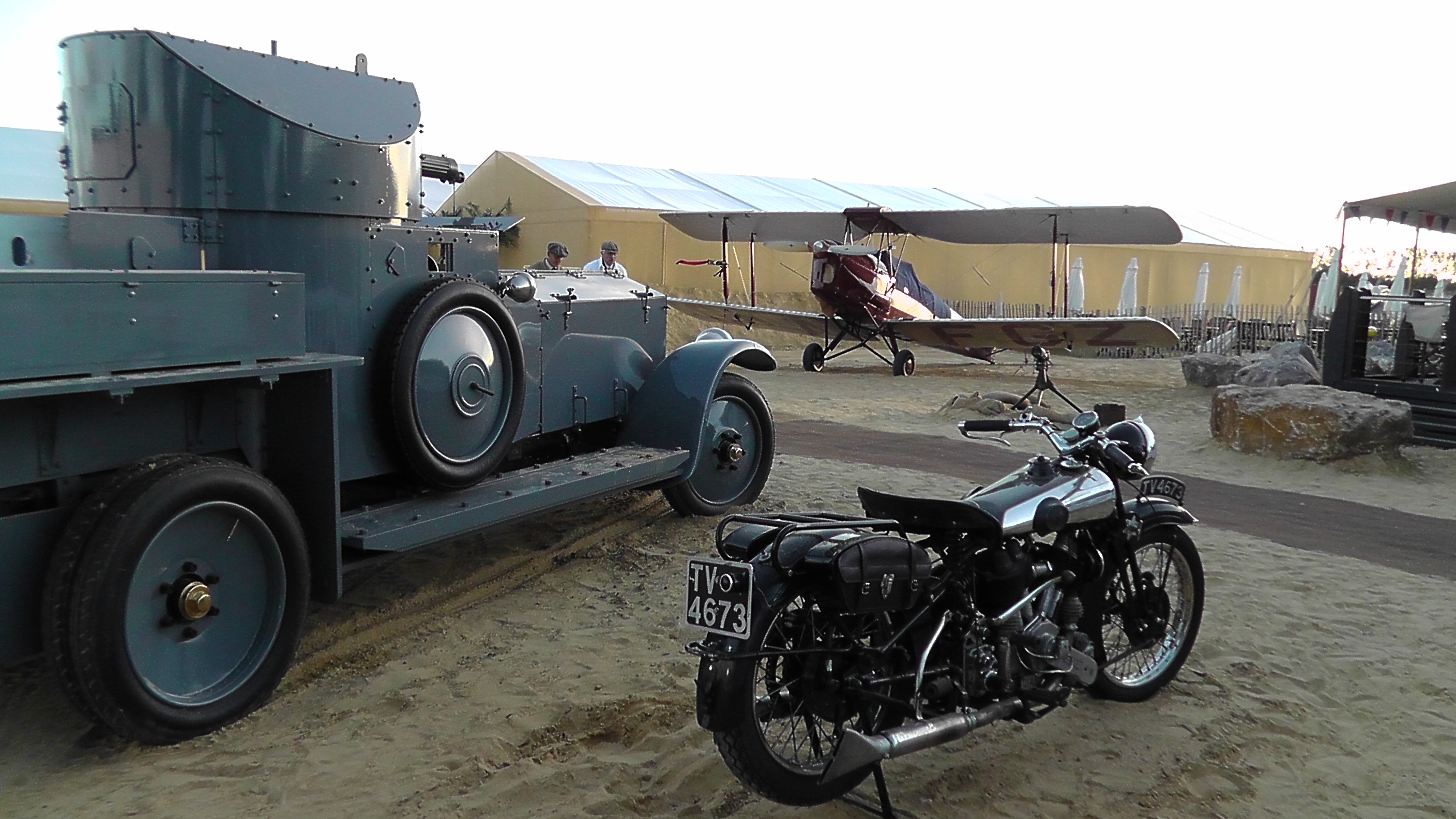
Plenty of Minis – and the genuine articles, tooGood to see Gentleman Jack Sears being mobbed by the fansSo much for the Young Turks:  this was the scene outside the Rolex ClubTE Lawrence’s Brough Superior looked very much at home in the Goodwood sand  – while Dan and Evi Gurney and the Eagles (below) just couldn’t stop smiling


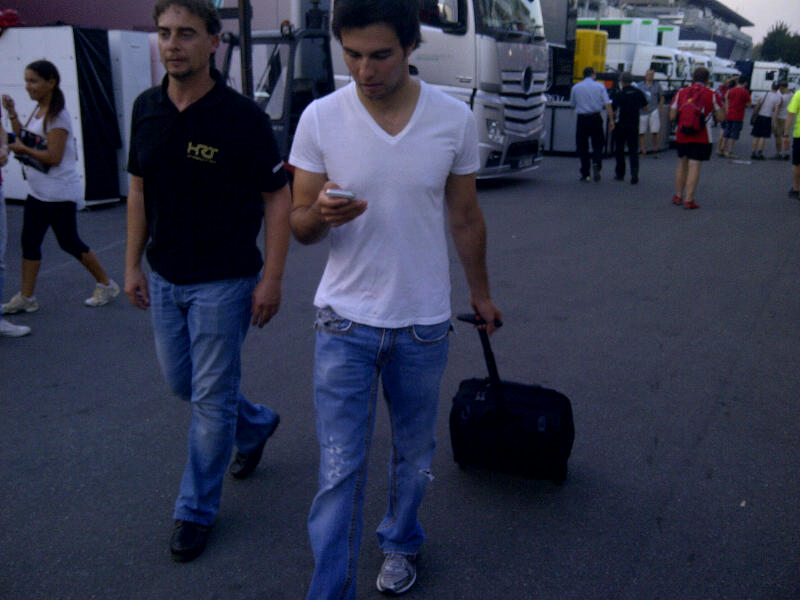
Just another Monza Monday…

Apologies, once again, for not being able to air The Flying Lap today:  unavoidable work in our Canadian production facility means that we have had to miss only our third show in 19 months.  We’ll be back again next week as we look forward to the Singapore GP.  In the meantime, I thought you might like to join me as I return to Monza on the day after the race before…

Notes from the Italian GP

You stand there amongst the trees, on the inside of the Parabolica, watching and listening – with emphasis on the music. Screaming revs, shrill and pure.  Then a millisecond-pause.  Then more revs as they play with the steering and brakes, “looking for the moment,” as Ayrton Senna used to say (when people asked him why he dabbed the throttle so) “when I can give it full power.”

You push your ear plugs in further;  you peer again up to Ascari, where a morning haze is already giving way to a golden Italian sun.

It’s red!  And the baby-blue helmet sits amidships.  Fernando keeps the F2012 tucked neatly to the right, parallel to the white line, as the car bursts up through the speed range – through fifth, sixth and then into seventh.  He sits at terminal for what seems like two seconds, maybe three  – and then he moves the car sharply to the left, for the approach to the Parabolica.  Where other drivers have seemed reflexy, wary of the dust off line (for Monza, sadly, is rarely used these days thanks to noise restrictions), Fernando is commandingly positive with his movements.  He talks, the Ferrari listens.  There’s no nonsense.  He doesn’t wander across track on the approach to the Parabolica in a conventional diagonal.  Everything is load-free and clean.   His helmet sits perfectly at low-drag height.  The Ferrari looks all-consumingly beautiful – functional and sharp – on this gorgeous day at Monza.

So when the problems arose – three of them, one after the other – engine, brakes, gearbox!  What the…!” – the Ferrari world stood still. The F2012 has been up and down this year but never fragile.  And now here, of all places, it seemed to be unravelling.  No matter that the engine and gearbox were no longer a part of the race cycle and could be replaced without penalty.  No matter that the Brembo boys quickly took charge of the brakes.  Fernando could manage only 17 laps in the afternoon.  At Monza.  In practice for the Italian Grand Prix.

What gear ratios to choose?  What downforce levels to run?  Decisions needed to be made that Friday afternoon.  The Ferrari felt quick,  the balance good, the grip level high for a circuit so fast;  Felipe, in the other, ultra-reliable car, confirmed the findings.  And so they opted to maintain that little extra downforce when it became time to register gear ratios with the FIA.  The pole – or the front row – were going to be critical.  Front wings could be lost in that tight first corner.  Fernando needed to aim for the best-possible lap, even if it did mean that he’d perhaps suffer on Sunday if he became embroiled in traffic.  The pole – or the front row – was the thing.  It was, despite the problems, very attainable.  A shorter seventh was registered. Fresh engines crackled up and down the pit lane on Saturday morning, for Monza is a spike in the schedule that must be scrupulously observed, an engine circuit in the old tradition.

And the Ferrari was brilliantly quick.  Down at Red Bull, where Sebastian Vettel and Mark Webber were complaining of having nothing like the same grip as 2012, the drivers were having to adopt to the compromise solution of longer gearing and less downforce.  “Now,” said a rival engineer ruefully, “Red Bull are back in the real world…”  At McLaren, where Lewis Hamilton and Jenson Button were enjoying their runs in the gorgeous low-drag-spec MP4-27As, Ferrari’s pace nonetheless remained a talking-point, a pivotal strategy marker.

Qualifying would be razor-close – perhaps a defining moment.  It would be Ferrari versus McLaren.  It would be Fernando, regaining momentum.  It would be Lewis or Jenson, McLaren-perfect.

Fernando felt the problem even as he drove his out-lap in Q3.  The back felt strange, sloppy.  A puncture?  He zapped the car a few more times, searching for temperature.  He gunned it down the pit straight. He braked perfectly for the first chicane.  He came out of the Brembos nice and smoothly, fed in the steering – and the back jolted away from him.  Gone!  Q3 gone!

On the radio they could hear them talking about a puncture.  He drove back in to the garage.  He sat there.  They talked and looked – and then came the news.  “Fernando.  We have a broken rear roll-bar mounting.  There’s nothing we can do now.  You’ll just have to go out and see if you can pick up a few grid places.”

Despite the problem, Fernando produced what to my eye was still a neat-looking lap.  He was a little more squirrelly out of Ascari, a little more reticent out of Parabolica.  1min 25.768sec.  He couldn’t pick up any places – he would start tenth – but he did drive the nuts off the thing, bringing to mind the performance of Jim Clark at Monaco in ’64, when his rear roll-bar mount broke, too – and still he led the race.  Having said that, a number of rival team engineers were intrigued to see how just how much difference – 1.5 sec – the broken rear roll-bar actually made to the F2012.  Read into that what you will.

Lewis and Jenson thus took the front row.  Felipe was an excellent third, ahead of Sahara Force India’s Paul di Resta, Michael in the Mercedes, Seb Vettel, Nico and then Kimi in the Lotus-Renault.  Then came Kamui Kobayashi’s Sauber and Mark Webber in the other Red Bull.   For the second successive race, Sergio Perez was behind his team-mate.  “I caught Bruno on my last Q2 run,” he said as I ran alongside him pre-race.  “He didn’t impede me or anything but I lost downforce.”  Interesting comment, that, bearing in mind that Bruno, too, said he lost downforce behind the Perez Sauber!  The Saubers weren’t brilliantly quick in a straight line at Monza but they were looked fast on the quick corners – as did the Force Indias.  There was lots of talk about “strong DRS” or “weak DRS” – and I guess we have to conclude that the Force India falls into the former catergory, given its relative superiority in qualifying.    The conventional wisdom of the Monza paddock was that Mercedes- and Ferrari-engined cars additionally enjoyed a marked advantage.  Examination of the post-qualifying speed trap showed the Lotus-Renaults right up there with the McLaren-Mercedes, possibly at the expense of some downforce, and so on this occasion I defer to the record of Renault at Monza:  it is not at all bad….

Nothing, though, this Saturday at Monza, was a distraction from the calamity that was the broken rear anti-roll bar mounting on Fernando’s Ferrari.  It was a black day for Maranello – and doubly-so because it was Monza.  It was a manufacturing fault, a slight glitch that was magnified a millionfold in the chaos of the afternoon.  Fernando was where he didn’t want to be:  in the first-corner traffic at Monza’s Turn One.

Pre-race, Fernando’s thoughts about that corner were “open”.  “I decided just to see how the start went,” he said later.  “If I made a good start I would see where I was.  If I didn’t it would be another story.”

Fernando didn’t make a good start;  he made a great one.  So did Felipe.  Felipe squeezed past Jenson and darted left into the braking area, crowding Lewis.  Fernando gained ground, found a bit of clear track ahead of him and so decided to “be aggressive”.  You can’t half-race if you’re Fernando.  You race.  He came out of the corner side-by-side with Kobayashi.  He did him at the next chicane.

Monza began to throb.  McLaren or no McLaren, Fernando was in it.  All was not lost.  P4 perhaps – maybe P3, although many were the cars to be passed.

There was the usual drama with Michael.  Be squeezed and then be squeezed again.  And then, holding back a little into the Parabolica, feed in the power just as Michael is twitching it, mid-corner.  Get a run on him.  Move earlier than he expects.  Put the car out there.  Look straight ahead into the braking area.  Brake late but brake perfectly, on the groove.  Let Michael look for grip down the inside.

Kimi, in comparison, had been an easier target. Seb Vettel, though, was not going to give him anything – and Fernando expected as much.  Last year Fernando had not made it easy for Seb when the Red Bull had caught him on the approach to the Curva Grande. Fernando hadn’t chopped him or moved on him;  on the contrary, he had just driven through absolutely in the middle of the road, giving Seb the option to choose to run to the left or to the right.

Now, as Fernando sat behind Seb, moving a little to the left here or the right there, feeling him out, Seb’s body language said it all:  this was going to be a drama.

Fernando waited and teased, waited and teased.  And then, drawn inexorably towards the Curva Grande after Seb’s slowish exit from the chicane, Fernando also moved to the outside.

Seb moved left, stealing the road.  Fernando, on the grass, fought with the steering even as he lifted only a fraction.  Monza momentarily ceased to breathe.

Fernando backed away and calmly pressed his radio button:  “OK.  That’s enough….”

He waited and teased, waited and teased, wondering now if he had damaged the underside at all.  The car felt slightly less grippy on the slow corners, slightly less stable under braking;  he needed to be super-precise with everything he did.

Then there came a more open door:  Seb, now “under investigation”, slowed markedly.  Fernando made the pass.  For easing Fernando off the road, Seb earned a drive-through.

Felipe would slow to let Fernando pass;  that was never in doubt – and Fernando was quicker, anyway, in the later stage of the race, when they were both on hard tyres.  Jenson lost a sure second place with a fuel pick-up problem.  Fernando would after all finish as high as P2.

Or would he? Monza had not yet released its grip on Fernando’s weekend.    Sergio Perez’s traffic issue in Q2 had allowed him to start on Pirelli primes.  He drove beautifully in his first stint, running longer even than the meticulously-driven McLarens, and thus alone amongst the high-end of the field – in this one-stop race – faced the closing laps on relatively fresh Pirelli options.  He maximised them.  He pumped out lap after brilliant lap, free road or otherwise.  He caught Felipe and passed him into the Parabolica, where he was perhaps five or six mph faster on entry.  To the dismay of Monza he did likewise to Fernando.  There was nothing to do;  Pirelli options, at that stage of the race, were a huge bonus, the more so because the fastest way to race Monza was with only one stop for tyres.   To put Sergio’s pace into perspective, though, imagine a race in which all of the Q3 runners had been able to start on primes and then switch to options.  That is what Kamui Kobayshi should be telling himself as he comes to terms with the differences between his own race and Sergio’s – although, in telling the Japanese media that he “did all that could have been expected of him at Monza”, he should perhaps also reflect on why Perez was able to pass him as early as lap seven, when he, Kamui, was on options and Sergio, of course, was on primes.  I guess one has to factor in Kamui’s lack of running on Friday (when for some unexplained reason he found the car undriveable even on the straights). Mark Webber, too, must be wondering why he started from P11 on options (although, having said that, he ran out of rear primes towards the end of the race: again, this puts Sauber’s performance into sparkling perspective).

Lewis from the start of the year has always been the driver most likely to race Fernando hardest to the 2012 World Championship – and so it proved at Monza, where he bit a ten-point chunk from Fernando’s lead.  It could have been more, though;  much more.   Fernando after all faced the podium crowd, TV camera aloft, with his day safe and secure.  Despite the problems on Friday or the roll-bar on Saturday.  Despite the gear ratios, despite the Vettel pass.   And Monza itself could rest again.  It’s quiet now, down at the Parabolica, down amongst the trees and the fallen leaves.  The track is empty, the litter swept away.  The red car, though, the blue helmet angled back slightly, still lingers, vivid in the memory.

Left: Fernando films his moment

Below: “Yes, Ma, I finished second…”
Notes from the Belgian GP

The frustrating thing about the glorious circuit in the Ardennes forest they call Spa-Francorchamps is that it’s very difficult to move yourself around it.   It’s big, it’s hilly and, these days, it’s full of plenty of “no admittance” signs. Watch at Eau Rouge and you can only imagine what they’re doing through Pouhon;  spend the morning out at Pouhon and the mysteries of Blanchimont – and the hard braking zone after it – remain exactly that.

So forgive me if you saw otherwise:  for my part, I can only say that not once – not in the wet on Friday nor in the dry thereafter – did I see Jenson Alexander Lyons Button even approach the zone we Philistines call “opposite lock”.  He was again Mr On-Rails, light of touch, nimble of step.  He was again the epitome of the racing driver’s art.

(Correction.  Of course there was a moment.  Silly me.  He flicked the wheel from side to side in adulation as the chequered flag flew.  For a millisecond, the rear of that beautiful McLaren broke lose.  Jenson, by his pit wall, allowed himself a slide.)

I mention this because we need to find some way of explaining Jenson’s two exemplary pole laps at Spa – laps that left him free of any first-corner skirmishes.  You can overtake at Spa – but you can also quickly run to ground at La Source if you qualify amongst the dross.  Pole, then – or the front row – is vital at Spa – as vital as it is at Monaco.

I watched qualifying, as it happens, from the exit of La Source – a relatively boring location, you may think, given the menu of corners from which to choose.  It was convenient, though –  and there is always something about that run through the gears down the hill, towards Eau Rouge, grandstands to the left of them, GP2 and GP3 stars to the right, that makes the blood tingle.

What we saw there was Jenson feeding on the power in perfect proportion to the unloading left rear.  We saw Jenson steering – not power-sliding – to the exit.  We saw Jenson’s gloved hands moving hardly at all.  We heard no ripples from the Merc engine as he reached the edge, for Jenson met the kerb; he didn’t ride it.  And then we saw his McLaren, straight and true, barking its way down the hill.

What we didn’t see, of course, was what Jenson had been doing on entry and mid-corner.  We didn’t see the decreasing brake pedal pressure against steering load;  we didn’t see the actual substance of the corner from Jenson’s perspective – the moment when he felt that he could rotate the car with maximum benefit to the rear;  where we were, we only caught the result.

Even so, the view was selective.  Lewis looked as smooth and as seamless in the other McLaren.  So did Kimi in the Lotus-Renault and Michael in the Mercedes.  Fernando, though, came into view with one slide already under half-control.  And then there was another – out there on the kerbs, as he gave it full throttle.  His wrists flicked to the left as the revs peaked in first, rippling their complaint as the Ferrari fanned the kerbs.   Romain was the same – perhaps more so.   Felipe, too – although his movements, like Romain’s, were a reaction to what was happening to the rear of the car rather than actions in anticipation.  Felipe’s and Romain’s exits were slightly more segmented than Fernando’s or Kimi’s.  You could see the joins;  the telemetry would show the spikes.

Then came Kamui Kobayashi.  This’ll be fun, we thought.  Not a bit of it.  In Q3, with but a minute to run, Kamui looked to be Kimi.  Car tightly wound mid-corner, when he burst into view, the throttle and steering were then released as one.  Perfectly.  It was Sergio Perez, in the other Sauber, who expended the arm energy.  He was Romain – all reflexes and reaction.  All tail-on-the-kerbs.

Out came Pastor Maldonado, having only just made it up from Q2 in the Williams FW34.  Minimal movement.  Wonderful release.  Lewis-like.  Paul di Resta had looked similarly poised (save for a last-millisecond twitch at the rear, nudging the Force India onto the exit kerb).  Nico Hulkenberg used more opposite lock from mid-corner to apex.  The flashes of steering correction quickly evolved into a di Resta exit, however, as if he was reminding himself of how it should be (rather than playing it how he wanted!).

Up there on the big screen to our left they were on-boarding with Mark Webber.  And you could see why the FOG (Formula One Group) Director had selected him:  Mark looked Fernando-quick were I stood at La Source;  and, that morning, during Third Practice, his RBR8 had had seemed particularly stable through Eau Rouge (relative to the twitchiness of the Ferraris).

The lap time, though, was not there.  As quickly as you can read this, the names appeared in order:  BUT, KOB, MAL.  No HAM!  No RAI!

In this sense, my vantage point had mattered not a jot.  My eye could discern no difference between, say, Jenson and Kimi.

It was only later, when we learned that Jenson had been running a lower-downforce set-up, that the quality of his driving came into focus.  If he was able to make the McLaren look that good on corners like La Source, what was he doing over the full lap of Spa, where the long straights and fast corners would reward less drag?  Lewis, it transpired, was using a higher-downforce wing that left him with almost zero feel for the road.  Under the circumstances, his La Source work was also a piece of art.  Kimi and Romain were not running the team’s new wing-stalling device (sadly) and were thus playing Lewis’s game.  Fernando was on the limit of grip-versus-top speed wherever he went.  The Ferrari was edgy, nervous.  The Williams was again a major contender – and Pastor was again maximizing it.  (Bruno didn’t make it out of Q2 but not for the want of trying:  a half-lift into a fast corner left the DRS still open;  a massive spin was the result.)  And the Saubers were amazingly quick “through the air” thanks to the genius of Willem Toet.  The job then for the drivers was to lose no time on the slower stuff.  This they did not.

You know what happened on Sunday.  Romain made a great start, headed for a diminishing gap…and didn’t back off, as young guys on big waves of expectation rarely back off.   Spacial awareness didn’t really come into it:  he was an arrow, heading for a tiny target.  It was going to be up to the others to give him room.  I think Romain will tell himself that he didn’t cause the accident because his right rear hit Lewis’s left front (ie, he was half-a length a head of the McLaren) and because he  made just the one legal move to the inside; but that’s the problem, of course, with too much legislation:  it takes away the common sense. Romain was the only driver out there in a position to prevent any sort of collision, given the dynamics and the positionings involved.  He could have backed off.  He could have given Lewis more room.

As it was, Lewis continued on his dead-straight, inside line from which he was under no reasonable obligation to back away – and inevitably the combined energies erupted.  I predicted last Wednesday, on The Flying Lap, that Fernando was likely to DNF at Spa because of some sort of drama at La Source – but I certainly never imagined the carnage that would actually take place.   Out went Lewis, Fernando and Sergio Perez – and Romain, of course  – and we can all be thankful that no-one was hurt, even though Fernando’s shoulder was a bit sore afterwards (whiplash) and for a few seconds he was in the wrecked car motionless, unable to breathe because of the extinguishent.

Into the void, driving beautifully from mid-grid, rose Sebastian Vettel.  The RBR8 was not a quick car in Sector Three on Saturday afternoon, but Seb belied its mediocre chicane grip with some gorgeous track craft and sumptuous passes on Sunday.  So good was he, indeed, that he induced the worst from Michael Schumacher – incited Michael’s last-second dart into the pit lane entry from the wrong side of the track in the path of said Seb Vettel.  It was appalling to see – not massively dangerous, as such, but clumsy and ugly and about as poor an example of track etiquette to which any well-meaning Formula Renault driver should ever be exposed.  Yes, they were both playing a game of “After you, Claude” re pit stops.  There’s no excuse for entering the pit lane from the outside, however – particularly if there’s a car alongside you.  Seb, in protest – and seeing Michael diving into the pit entry, manipulated his Red Bull into a semi-donut and drag-stripped it down the finishing straight.  His actions said a thousand words.

There were some great drives in this mangled race.  Jenson continued to do what he did on Saturday for corner after corner, lap after lap.  He stopped but once for Pirelli primes without losing the lead.  His margin of victory was 13.6 seconds but it could have been much more.  He wasn’t sweating when he climbed from the car;  and Union Jacks flew in abundance in the packed spectator banks and stands.  McLaren had won again at the venue on which it all began with Bruce back in 1968.  Seb finished an excellent second for Red Bull Racing; and Kimi, frustrated by a lack of top speed (repeat:  “Shame about the device!”) was third for Lotus-Renault.     Nico Hulkenberg drove superbly, I thought, to finish fourth for Sahara Force India;  and Felipe was fifth in the difficult Ferrari.   Both STR drivers looked good – particularly Jean-Eric Vergne on this occasion – but poor Kamui could finish only 13th after suffering bodywork damage at the first corner.  No matter:  Willem Toet is as confident as experienced racers can ever be confident about the next round of “flyaway” updates for the Sauber C31.  At Suzuka, particularly, the car should fly…and it shouldn’t be slow at Monza, either!  I should also mention both HRT drivers – Pedro de la Rosa and Narain Karthekayan.  Neither were out-classed by other back-of-the-griders.  Pedro hit first corner debris and and Narain’s race ended when the left-front wheel came adrift as he turned-in to Stavelot (lose wheel nut after his second pit stop).

And so Fernando has had his first DNF since Canada last year.  It had to happen eventually – and it was predictable that it would happen at La Source, where Fernando was always likely to be amongst the traffic.  I’ve maintained since January, however, that Fernando’s biggest rival for the World Drivers’ Championship will be Lewis Hamilton – and so, from that perspective, Spa was by no means a disaster for Fernando.     Now to Monza where, for the most part, the track is wide, fast and open.  There’s just that pesky little first chicane to negotiate on the first lap of this tightest of tight F1 seasons, in the year in which the top runners are separated by paper-thin margins.  Again, the pole is where you’ll want to be – where Ferrari and Fernando need to be if they are to insulate their hard-won half-season advantage.   The Tifosi , I’m sure, are secreting their way to Monza even as you read this…

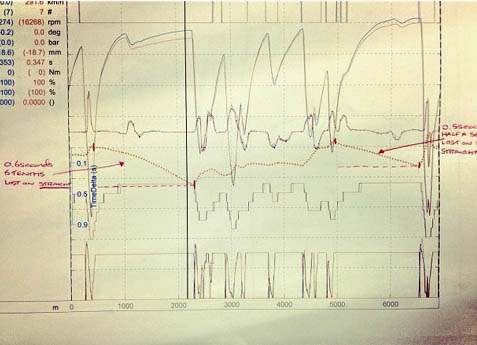
Lewis Hamilton posted this interesting telemetry overlay after qualifying, comparing his lap with that of Jenson Button.  The annotations speak for themselves – although they should of course be seen in the context of a first-class F1 team opting for two different aerodynamic solutions to a very demanding lap


Sir Frank

I recently put together the article below for the official journal of the (British) Motor Sports Association (MSA).  As the MSA magazine isn’t available on-line (it is sent to all British competition licence holders and industry figures) I thought you might like to see it here:

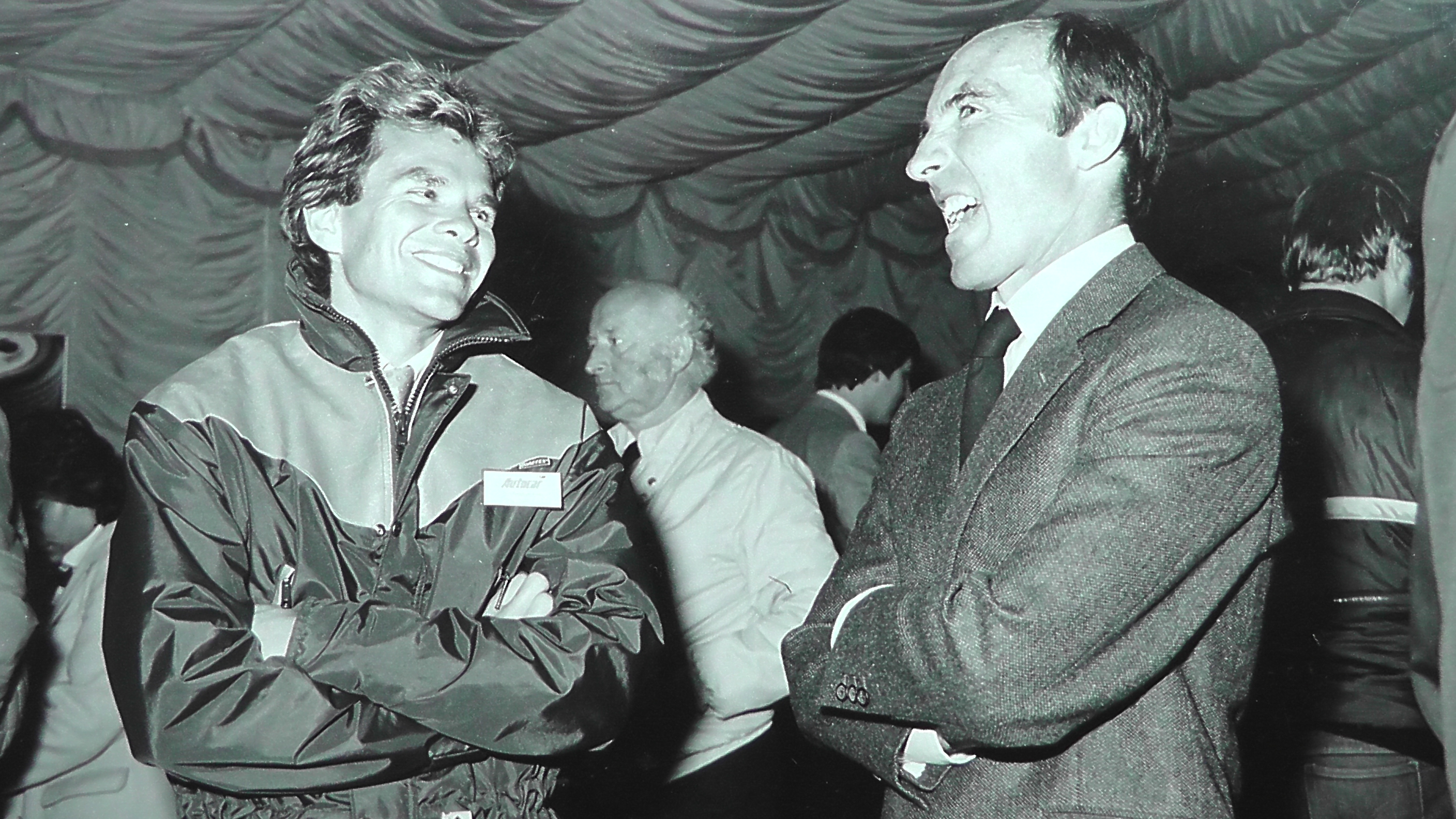
I had a lot of fun with Frank at the Goodyear track days that used to be staged before every British GP. Here, in 1981, we’re laughing about Nigel Mansell’s spin in the Lotus Esprit…when Frank was riding in the passenger seat….

IT WAS one of those regular Frank chats, born of a thinning pit lane and a dispersing Canadian crowd.  Frank, in wheelchair, wearing customary v-necked, dark blue pullover, grey trousers, black Rosettis.  Frank, a study in concentration, eyeing a Toro Rosso, a few yards from where he sat.

“How’s it going, Frank?  All good?”

“All wonderful, thanks Pete.  Just looking at the TR there.  Wonder why they’re struggling…”

“Indeed.  No telling who’s going to be quick.  One race to the next.”

Silence.  A Frank silence.  Says a thousand words.  As in:  “You may be right.  You may be wrong.  No point in speculating.  Just get on with it. Things to do, job lists to tick.”

“Do you need anything,” I ask, noticing that Frank’s PA has for the moment disappeared to the back of the garage.

“No.  Fine thanks.  Just enjoying the sunshine.”

Ah. The sunshine.  A memory filters through.  Buenos Aires, 1979.  The same sun is glowing hot, dominating an azure sky.  And Frank is in the forecourt of the Sheraton, sweat pouring from his tender English skin.  Wearing a singlet, short shorts and Nikes, he is alternately jogging and then stretching, jogging then stretching.


            “Frank!  How far?  How far you run?”


            It is Carlos Reutemann, king of Argentina, who speaks. 


            “Just a short one today.  Eight-miler.  Lovely there, down by the docks.  Saw Ken and Nora on the way…”


I look down at Frank, whose attention has now turned to the Lewis Hamilton McLaren being pushed down the pit lane towards Parc Ferme.  Again his is a face of contemplation.

It is Austria, 1985 – and we’re setting off for a run in the mountain foothills.  It is Saturday night.   A brief shower has passed.  The air is clear.


            “Must sign Nelson this weekend,” he says, breathing easily.  “Talk to him tomorrow.  Ask him to come to the caravan when he gets a moment.”


            “I spoke to him this morning,” I say, gasping a little.  “He’s fed up at Brabham.  He’s definitely ready to move.”


A spurt from a nearby wheelgun – the prelude to a Force India pit stop practice – jolts me back.  “How’s the sponsorship going, Frank?” I ask, intrigued as I am by the after-affects of Pastor’s recent win in Spain.

Frank again peers into the middle distance that, over the years, has become his friend and support.

“I think it’s looking pretty good,” he says, choosing each word with care.  “Spent a lot of time in the Middle East recently.  It’s not the old days.  You don’t wait for their response.  You provide a service.  That’s what it’s all about.  We’ve put a lot of effort into the base in Qatar.  We provide a service and from that things may grow.  That’s the way now.  Sponsorship is changing, Peter.  We have to maximize every part of the company – maximize what we can do.  I love this new aspect of the business.  Fascinating…”

I concede (to myself) that I am impressed.  McLaren appear to be the world leader in (another F1-word coined!) Applied Technology – in leveraging F1 expertise to generate income or product from other industries while simultaneously opening doors to new sponsors (Lucozade, via GlaxoSmithKline being a classic case in point)  – but WilliamsF1, to my eye, lies a strong second in this new race.

There’s the flywheel KERS technology Williams Hybrid supplied to the Le Mans-winning Audi team;  there’s the Williams-Jaguar C-X75 hybrid Supercar programme;  there’s the partnership with Kinetic Storage Systems for the development of low-carbon mass transit rail and grid networks;  there’s the Williams Technology Centre in Qatar, and its association with Silatech, the employment-generating company owned by the region’s royal family;  there’s the deal with the Canadian-based multi-national, Hatch, to supply F1 technology for mining, metal processing, energy and transportation; there’s the Qatar simulator deal with Mowasalat; there’s the partnership between Williams Hybrid and Go-Ahead to develop flywheel energy storing applications for buses; there’s the award-winning Williams Conference centre and Museum at Grove, Oxfordshire, and the afore-mentioned, similarly-impressive, facility in Qatar (venue of the global Tedx Summit in April);  and there are the nice little touches like the  “The Williams Story” topiary – the silhouette of car and pit personnel that won a Gold Medal at the Chelsea Flower Show eight days after Pastor’s win in Spain.

All busy, diverse stuff – most of which arose from 2010-11,  when Williams were in a racing slump.  It is a reminder that Frank always seems to be at his most creative, and at his most industrious, when things appear not to be moving along well.  We’d win the British GP but on Monday Frank would walk into the Race Shop with a face like thunder:

“What are those vans doing, parked in the truck bay?”

“Just the mini-vans, Frank, about to go back to the rental company.”

“I don’t care.  Get them moved.  Now.”

On a bad Monday, however – the day after the race you’d want to forget, Frank would be a different man:

“How’s the wife?  How’s the dog?  Anything you need?” Read more…

Post Navigation