peterwindsor.com

…chance doesn't exist; there's always a cause and a reason for everything – Elahi

Archive for the category “F1”

The beauty of Suzuka’s Esses

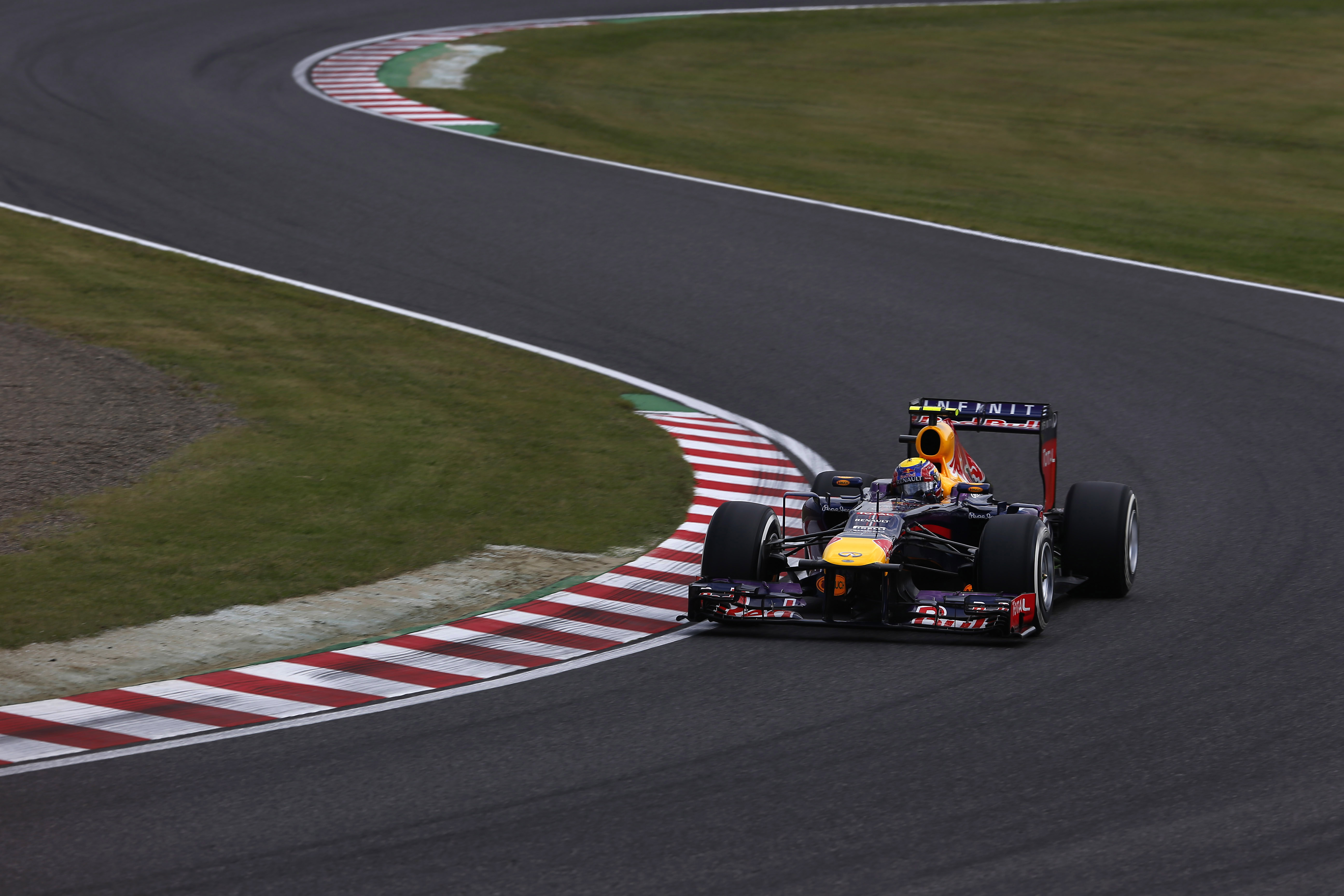
2013 Japanese Grand Prix - SaturdayIt’s always a pleasure to watch the uphill Esses section at Suzuka during qualifying – particularly during qualifying because race conditions frequently restrict a driver’s pace and movement to the car he is following. In qualifying, though, when usually the air is free, it is different.  And, for the most part, they’re all trying pretty hard.

I love this section of road not because of one particular corner, although Turn Six is, of course, critical: a perfect exit from T6 sets you up nicely for the straight that leads down to the two Degnas. I love it because it is impossible to be perfect through T6 unless you correctly manipulate the exit of T2, T3, T4 and T5.  The usual errors are to be too quick in these preceding places. We saw Nico Hulkenberg be consistently so on all his runs: he was either a fraction too fast out of T2 or having to use too much road out of T4.  He caught it all, of course;  Nico does that.  In a millisecond, though, he had “asked too much of the car”. Additional energy had poured into the loaded front or rear Pirelli (depending upon steering angle). Momentum, fractionally, had gone.

Romain was similarly slightly-over-the-top. He has this sumptuous way of being able to use the rear of the car to re-set the values but, in doing so, he also creates too much excess energy. He’s got torque and twist going on at the rear in the middle of, say, T4;  the E21 looks perfectly-poised…but in reality it’s not “flat” on the road. It’s a subtle thing, only visible when you see the car on the corner as a whole. You’d never touch it via the on-boards or via close-ups. Kimi?  Kimi on Saturday to my eye looked to be a slightly edgier version of the real one. He never demanded too much from the tyres but his inputs seemed strangely more angular than usual. Perhaps it’s just a Kimi thing these days:  the “real” guy gets out of bed on Sunday.

I’ll talk more about all this on next week’s show. Here, I’d like to say “chapeau” to Mark Webber. He consistently – from Friday onwards – found exactly the right balance between short-term, up-the-hill pace and perfection by T6. This was classic Webber, back where he used to beat Seb on equal terms. No pesky, dumb, chicanes; no boring corners. (The Suzuka Chicane, with it’s downhill, open-space approach, is actually quite an interesting section of road:  the key, after the rush of 130R, is not to brake too early.) Just a lovely section of medium-speed road with blind entries. Lewis similarly threaded the needle – and so, but to a slightly lesser extent, did Seb Vettel, Jenson Button and Valtteri Bottas, although Jenson seemed to want a little more from Ts 4 and 5 than they were ever going to give him. Perhaps that’s why he later described his laps as “fun”. I also liked Lewis’ “feel” for the wind change on Saturday at Suzuka. Trust him immediately to use this to his advantage; trust some others to use it as some sort of explanation as to why they were less-than-perfect.

Image of Mark Webber, Suzuka, Saturday, October 12: LAT Photographic

The ups of Sauber, the brilliance of Mike Conway…

…and the tough past few races for Sahara Force India

On this week’s edition of The Racer’s Edge I managed to catch up with the loquacious Tom McCullough of Doncaster, otherwise known as the Head of Track Engineering for the Sauber F1 Team. Tom joined Sauber late last year after several years on the pit wall with Williams and quickly made his mark.  He knew Nico Hulkenberg from his Willliams days, of course, but the rest of the challenge was all new:  new country, new people, new methodologies.  As I hope you will hear in the interview, Tom is one of those engineers who adapts quickly and loves his craft. It’s no surprise, indeed, that he has helped to convert Sauber’s mundane start to the season into one of the big talking-points of the past few weeks. The only question I didn’t ask, to be sure, is why Williams let him go in the first place – but I guess that’s another subject for another day. I also quiz Sahara Force India’s Chief Operating Officer, Otmar Szafnauer, about his team’s corresponding fall from pace. It’s linked to the mid-season change in Pirelli tyre constructions – but Otmar talks, too, about how F1 needs to retain it’s “unique” quality. “It’s done a good job of this in the past,” he says, “but now is the time to develop that further. F1 faces competition from a lot of other sports and entertainments. If we are going to continue to develop sponsorships for teams up and down the grid, we need to ensure that F1 sustains that ‘unique’ feel.”

I was also able to talk on-line with the brilliantly-talented Englishman, Mike Conway. Back in 2006, Mike seemed destined for F1 stardom. He dominated F3 not only during the season but also with wins at Pau and Macau. Think opponents like Romain Grosjean (and Lewis Hamilton in Formula Renault) and you have an idea of the standards about which we’re talking. His GP2 seasons dragged a little…and suddenly the momentum was lost. Mike turned his attention to IndyCar – and in 2010 he was very lucky to escape with recoverable injuries from a huge accident at Indianapolis. Mike, though, is a fighter who loves his craft just as much as Tom McC above. Despite shaking the US racing fraternity by announcing at the end of 2012 that he was no longer prepared to race on ovals, Mike this year has finally achieved the sort of results worthy of his skills. He scored a win and a third in the two Detroit IndyCar races and he’s just won the last two LMP2 races at Interlagos and Austin in an Oreca-Nissan run by Alan Docking. (Oreca is owned by Hughes de Chaunac, who used to run Martini in the days of Rene Arnoux.) Mike’s versatile, he’s quick, he’s now a globally-successful racing driver who is paid to do something he enjoys –  and he’s just bought an old, 1960s VW Beetle, complete with white sidewall tyres and roofrack.  Need I say more.

Episode 32 of The Racer’s Edge.  Enjoy.

The Glen ’63: “…he was given to understatement…”

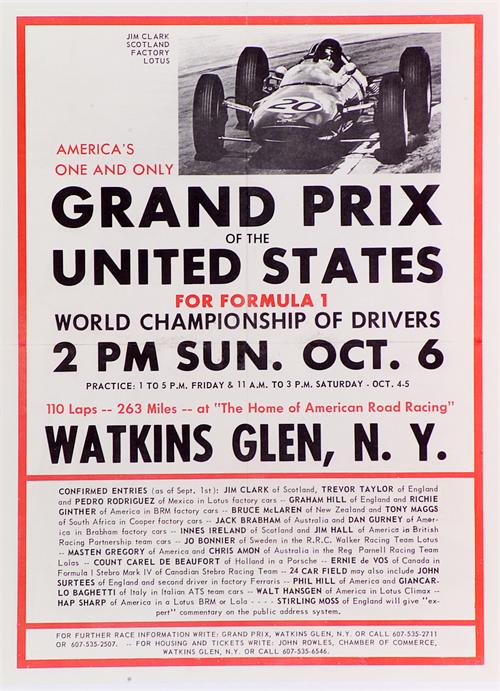
21699.tifFrom Trenton back to London; from London to New York and then on to Elmira, the small airport local to Watkins Glen.  The 1963 US GP would be Jim Clark’s first as World Champion.

Jim loved his days at The Glen;  everyone did.  The leaves had by now turned red and brown; there was a mist in the mornings that lifted only as the sun broke through before noon.  And this was a Grand Prix run by good, racing people – men like Cameron Argetsinger, who had brought motor racing to Watkins Glen in 1948,  Media Director, Mal Currie, and Chief Steward, Bill Milliken.  All had rich racing and automotive histories.  Milliken had been a Boeing test engineer during World War II and had joined the Cornell Aeronautical Laboratory (Calspan) in 1945.  As an avid Sports Car Club of America (SCCA) member and former driver/designer, Bill in 1960s and 1970s became the doyen of US automobile engineering research. He was, in short, the sort of Chief Steward in whose presence you doffed your cap. The drivers and key team people stayed nearby at the Glen Motor Inn, hard by the Seneca Lakes, where their hosts were Jo and Helen Franzese, the second-generation Italian couple who loved their F1.  Legends were born overnight at the Glen Motor Inn – and even at the old Jefferson hotel downtown. Lips, though, were always sealed.  Such was life that October week at The Glen.

Ford made a big splash, too, this year of the Lotus-Ford at Indy.  This was the US GP!  Sixty thousand fans were expected.  Cedric Selzer, hooking up with the Team Lotus “US guys” for this race, remembers the drive up from New York airport on the Tuesday before the race:  “We were given the keys of a saloon, a coupe and a convertible and made our way out of the city, heading for Watkins Glen.  When we stopped at traffic lights, people came over and asked us about the cars.  We told them we’d got them from the Ford Motor Company but it took us three days to realize that we’d all been given 1964 models than no-one had seen before.

“The following afternoon, Jim Endruweit hired a Cessna 180, with a pilot, and we flew over the Finger Lakes. It was autumn, and the seasonal colours were unbelievable.It seemed a shame when it was time to get back to the task of winning a motor race…”

Milliken remembers the pre-race party:  “High point of the festivities were the parties at the Argetsinger’s home in Burdette.  All drivers and officials were there in an atmosphere or pure fun and excitement, bolstered by great conversation, good food and dozens of magnums of champagne from the local vineyards.  The homespun hospitality led to permanent friendships and was never forgotten by the drivers or teams.”Watkins_Glen_Dec_2002_209.1
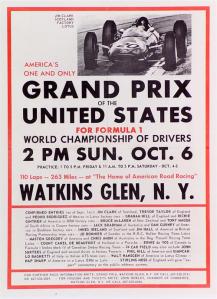
Practice took place over eight absorbing hours, split between two four-hour sessions on Friday (1pm-5pm) and again on Saturday (11am-3pm).  There was a bit of a fracas when, first, Peter Broeker’s Canadian-built four-cylinder Stebro-Ford began spewing – and continued to spew – oil around the circuit, and, second, when Lorenzo Bandini slowed down after a blind brow to talk to his sidelined Ferrari team-mate, John Surtees.  Richie Ginther and Jack Brabham narrowly missed the Number Two Ferrari, igniting a bit of finger-pointing back in the pits and plenty of  “I no-a speak-a di Eengleesh…”.

The Glen in 1963 featured the brand new Tech Centre on top of the hill behind the pits (which were then sited after today’s Turn One), allowing all the teams (except Ferrari, who continued to use Nick Fraboni’s Glen Chevrolet garage and therefore to truck their cars up from the town each morning), to work on their cars in situ, in communal spirit and to be energized by plenty of lighting and electric sockets. (The F1 teams were obliged to convert to the American standard 110volts. On the face of it, this didn’t seem to be a problem. As it turned out, it was.)  For a small incremental fee, race fans could also walk up and down the Kendall shed, looking at the cars at close hand.  GP2 could learn a thing or two from The Glen, 1963…

Jim, in relaxed mood, qualified second, 0.1 sec behind Graham Hill’s old space-frame BRM. Milliken also recalls in his excellent autobiography (Equations in Motion, with an introduction by Dan Gurney) that the timekeepers “always had problems with Colin Chapman. Colin timed his own entries and claimed his faster figures were correct, so Bill Close, one of our timers and a solid Scotsman, put two clocks on each Lotus…”

Trevor Taylor, whose car caught fire in the paddock on Saturday, qualified seventh; and Pedro Rodriguez, having his first F1 drive, and fresh from a win for Ferrari in the Canadian GP sports car event, was 13th in the carburettor-engined 25. This wasn’t a happy weekend for Trevor:  Chapman chose the US GP to tell him that he wouldn’t be retained for 1964. His place would be taken by Lotus’ FJ king, Peter Arundell.

Bruce McLaren lost most of the Saturday morning session when his Cooper-Climax lost oil pressure; and so – as at the British GP – he used his time to watch, learn and compare.  This from his notes in Autosport the following week:  “Graham Hill finished his braking relatively early and had the power on, and the BRM a bit sideways, well before the apex of the slow corner at which I was watching.  Jim Clark, on the other hand, braked hard right into the apex with the inside front wheel just on the point of locking as he started to turn.”

Jim’s race was defined on the dummy grid.  Due to what was later found to be a faulty fuel pump, his 25 wouldn’t start. And then, very quickly, the battery went flat. Selzer: “The truth is that the battery had not taken a proper charge overnight. We used a dry-cell aircraft battery made by Varley with six, white-capped cells. Somehow, we never got the hang of keeping them fully-charged. America was a special case as we had to borrow a 110 volt charger.  We used a ‘fast’ charger when actually what was required was a ‘trickle’ charger. As Jim was left way behind the grid proper, two of us ran over to him and changed the battery. This meant that Jim had to climb out whilst we removed the tail and nose sections of the car in order to get at the battery, which was under the seat.”

I recently bought an audio CD of the 1963 US GP and Stirling Moss provides an hilarious description of these moves whilst watching the start from the main control tower.

“I can see lots of people gathered around Jim Clark’s car.  Looks as though they’re trying to remove the bonnet…no…what is it that you Americans call it?  The hood? Yes, that’s right. The hood. They’re removing the hood. Meanwhile, I can see Graham Hill getting ready for the off….”

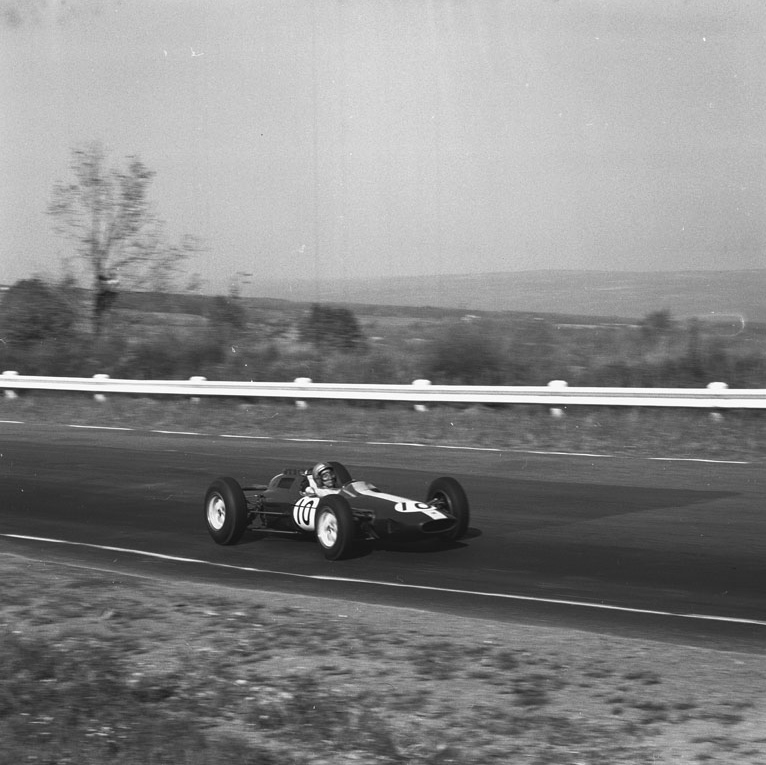
Jim eventually lit up the rear Dunlops just as the last-placed car completed its first flying lap. He would finish a brilliant third behind the two BRMs of Hill and Ginther (after Surtees’ V6 Ferrari broke a piston in the closing stages) – but it could have been even closer.  “That mishap on the grid was what I needed to put me back into a fighting mood,” remembers Clark in Jim Clark at the Wheel, “and so I set off after the field, knowing I was going to enjoy the race. I began to catch up the field, and to thread my way through, until I saw Graham Hill in front of me. I thought I was at least going to have a dice with my old rival, albeit with me being a whole lap behind him. This was not to be, for shortly afterwards the fuel pump started acting up and it became a struggle even to keep him in view. I ploughed on through the race, during which many cars dropped out, and finally finished third.”  Jim didn’t know it at the time but Graham, too, had been in major trouble:  a rear roll-bar mount had broken on the BRM. Even so, it is typical of Clark’s character that he should sum-up his US GP with the phrase “…and finally finished third.”  He was given to understatement; his mechanical sympathy in reality did the talking. 
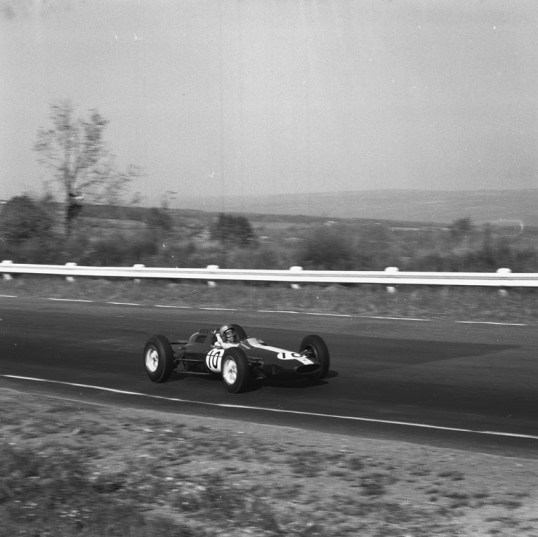
21700.tifNeither of the other Lotus 25s finished, although Pedro showed the promise of things to come by slicing his way up to sixth before retiring with a major engine failure. Given the financial support the Rodriguez family were giving Team Lotus for The Glen and then the Mexican GP, the mechanics had to work very hard to rebuild that engine within the next few days. A new timing chain and valves were found after long “phone-arounds” and other broken valves were repaired at a local machine shop.  David Lazenby, the lead “American” Team Lotus mechanic, returned to Detroit to begin installation of the four-cam Ford engine in the Lotus 29 – and he would be joined, once the Rodriguez engine rebuild was finished, by the F1 boys.  Chapman was always one for keeping his lads amused…21754.tif
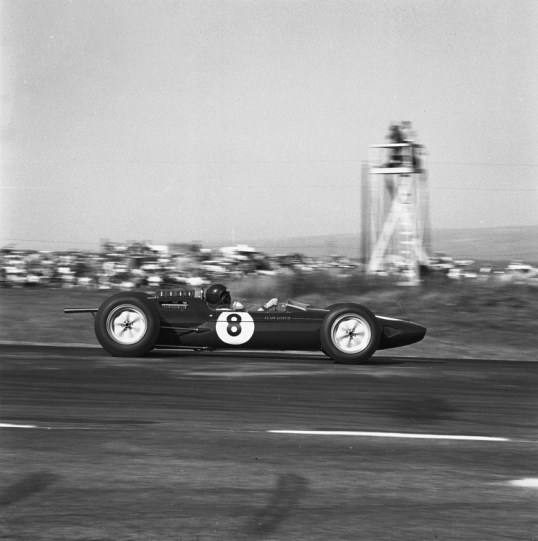
There was no podium at The Glen.  As in other races back in 1963, it was the winner alone who took the plaudits and the laurel wreath (and, in the case of the US GP, the kisses from the Race Queen.) The new World Champion, after yet another astonishing race, would have quietly donned his dark blue, turtle-necked sweater, had a soft drink or two, helped the boys in the garage and then repaired to the Glen Motor Inn for a bath and a good dinner.   The Mexican GP was three weeks away.  On the Monday, Jim would journey back to New York and then fly across the continent to Los Angeles.  Ahead, over the next two weekends, lay two sports car events for Frank and Phil Arciero, the wealthy (construction/wine-growing) enthusiasts from Montebello, California, who had already won many races with Dan Gurney. The first would be the LA Times Grand Prix at Riverside, where Jim’s “team-mate” would be his Indy sparring partner, Parnelli Jones.  Then, the following weekend, he would race in the Pacific Grand Prix at Laguna Seca.  On both occasions he would drive the Arciero’s new 2.7 Climax-engined Lotus 19….assuming it was ready.  On the radio in his room that night at The Glen, with the still, cool air from the Lakes reminding him that the European winter was  but a step away, Jim might have heard the Beach Boys chasing their Surfer Girl, or Peter, Paul and Mary Blowin’ In The Wind.

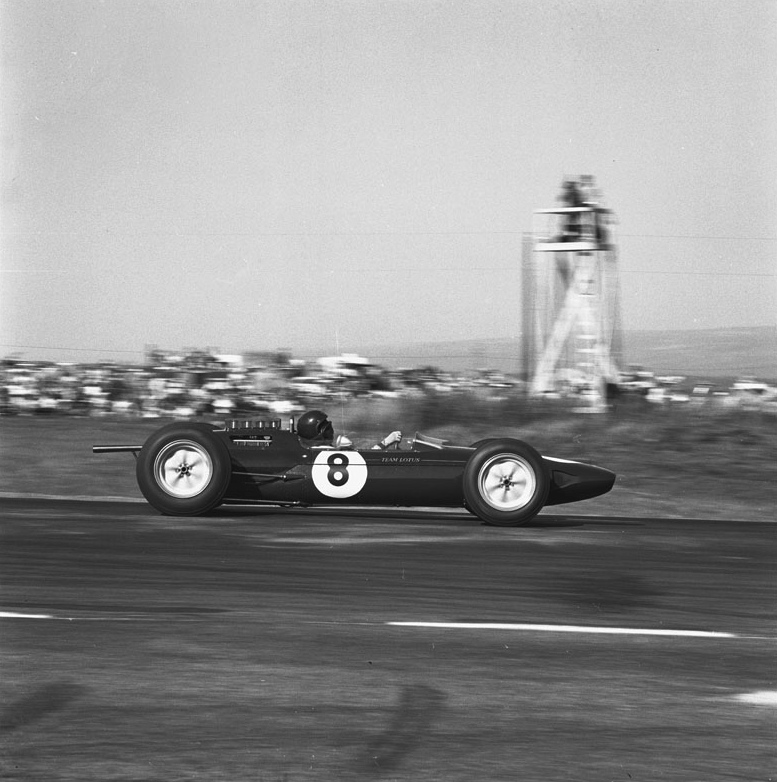
Captions, from top: Jim drifts the Lotus 25-Climax up through the Watkins Glen esses on his way to a fighting third place; less than a year after the loss of his brother, Ricardo, Pedro Rodriguez made his F1 debut at the Glen in a third works Lotus 25-Climax; classic pose: Jim displays the 25’s reclined driving position as he accelerates past an ABC TV tower Images: LAT Photographic 

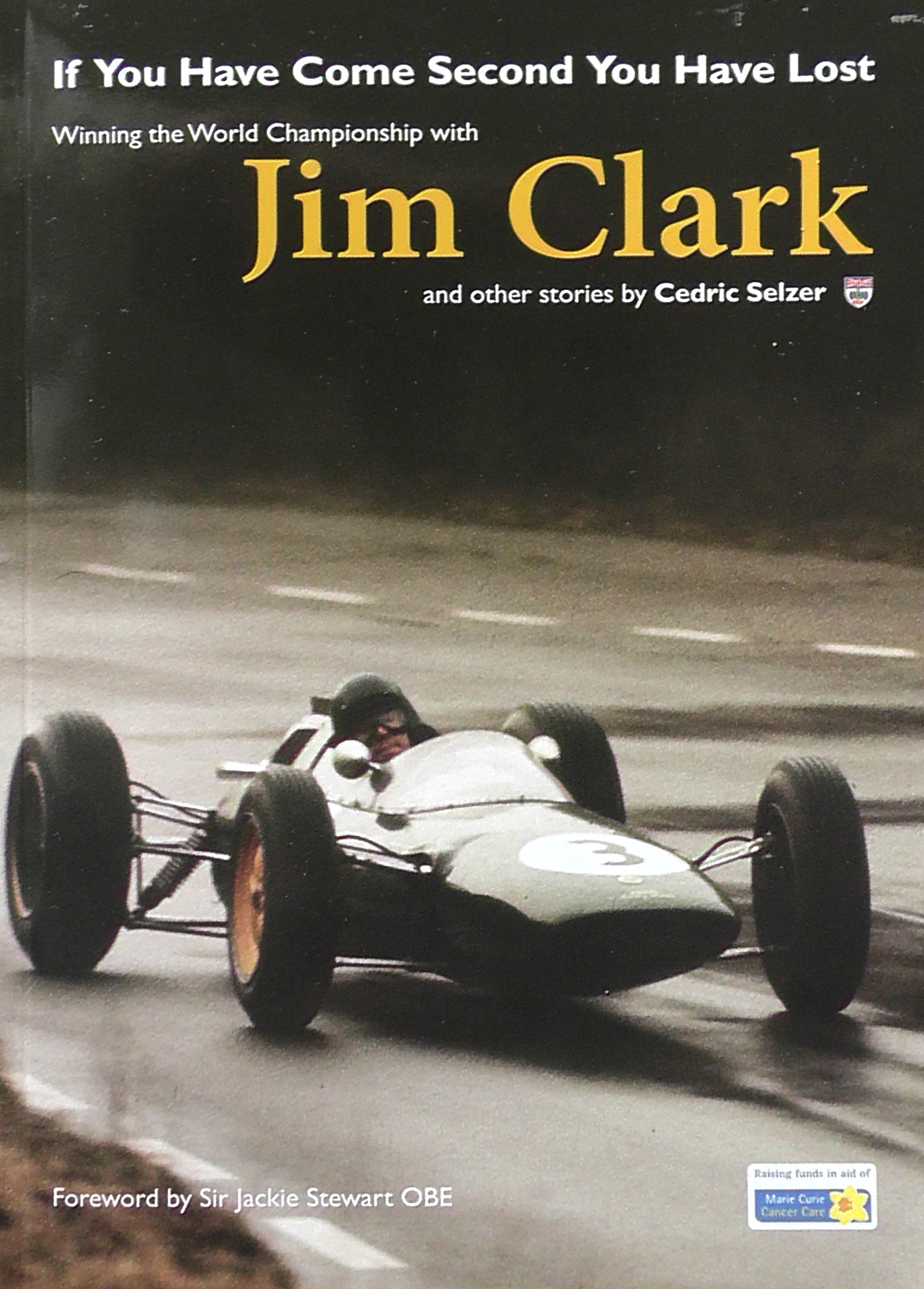
Buy Cedric Selzer’s wonderful new autobiography, published in aid of Marie Curie Cancer CareS2740001
Our lifeblood

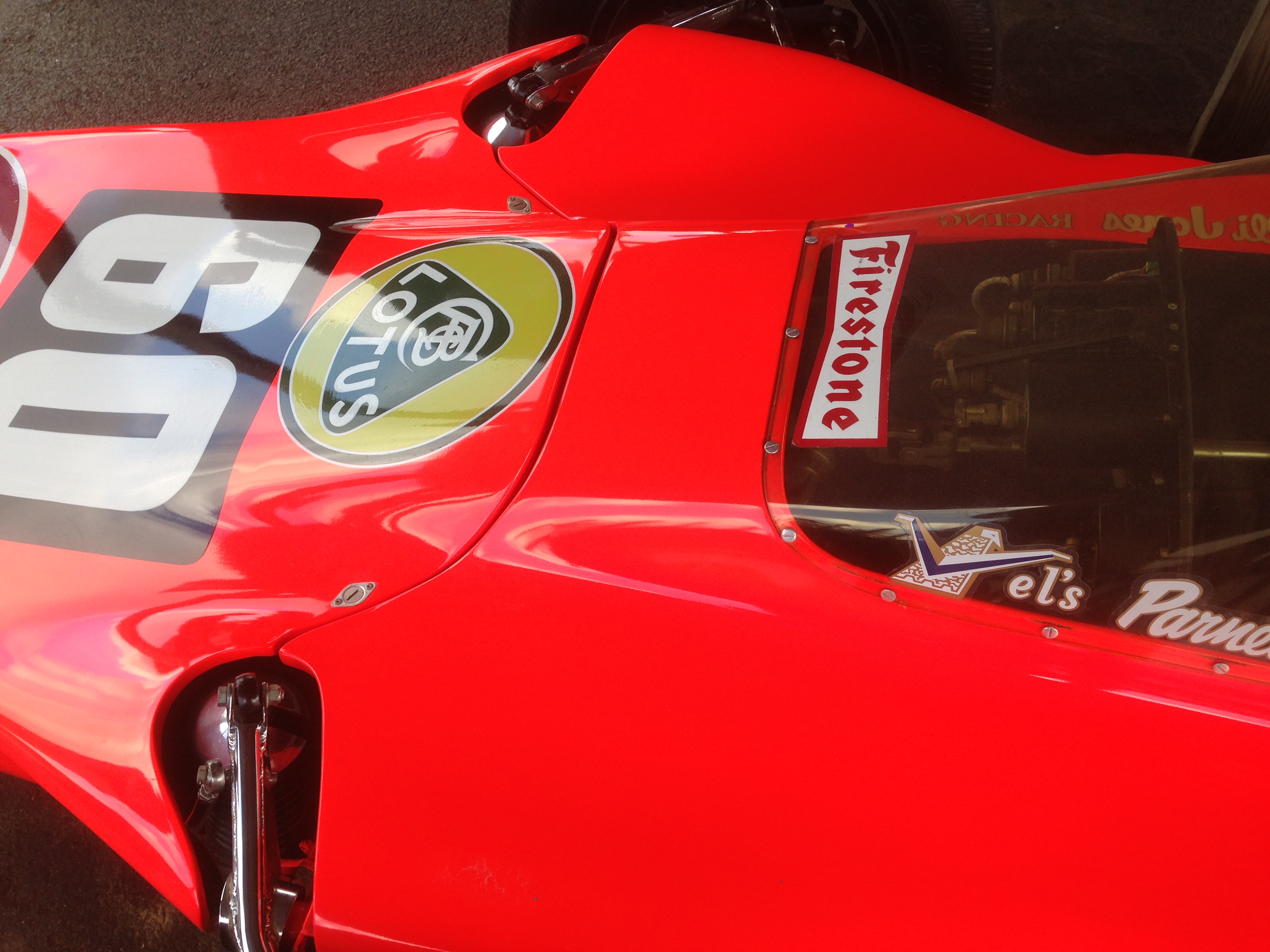
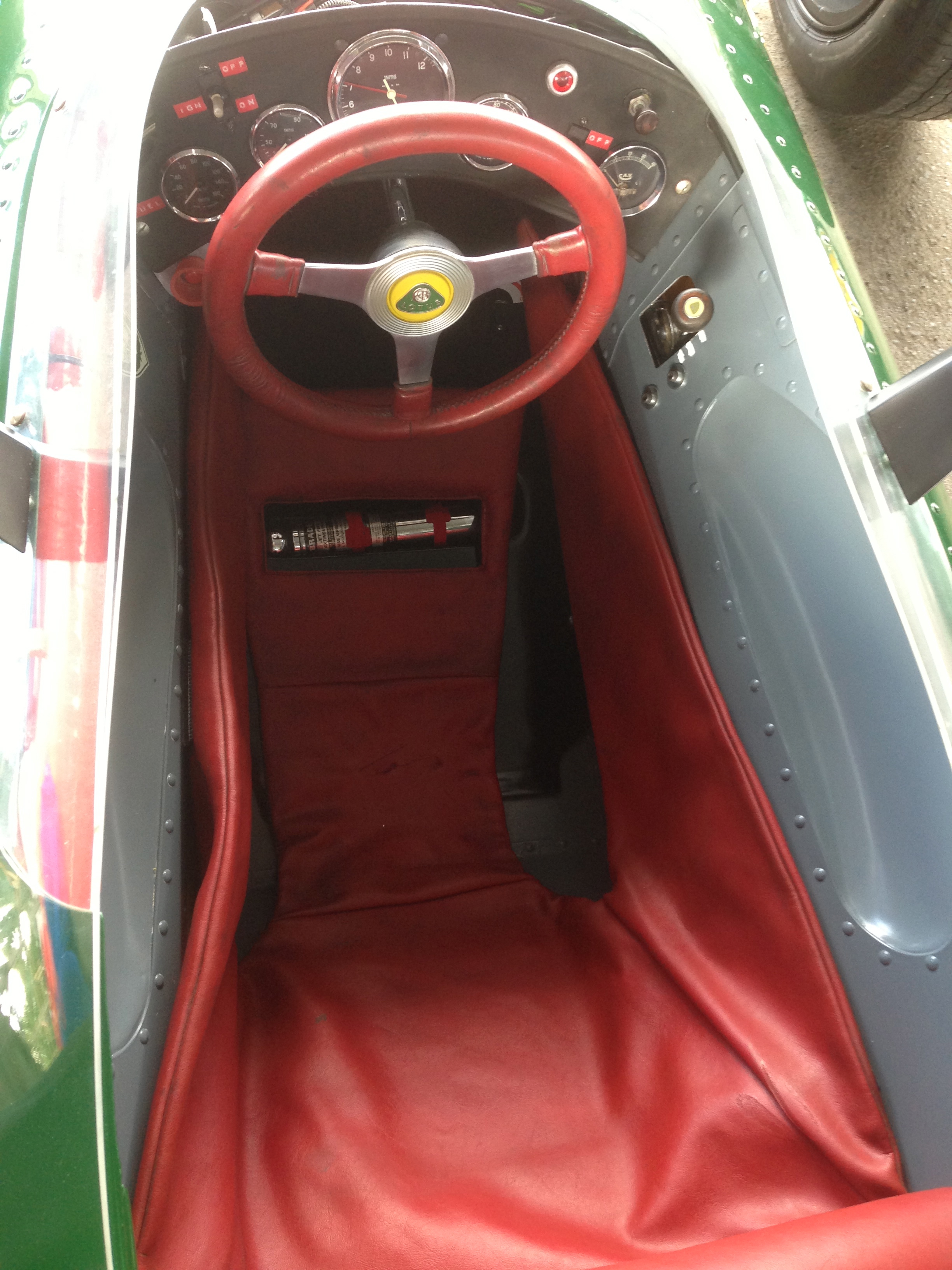
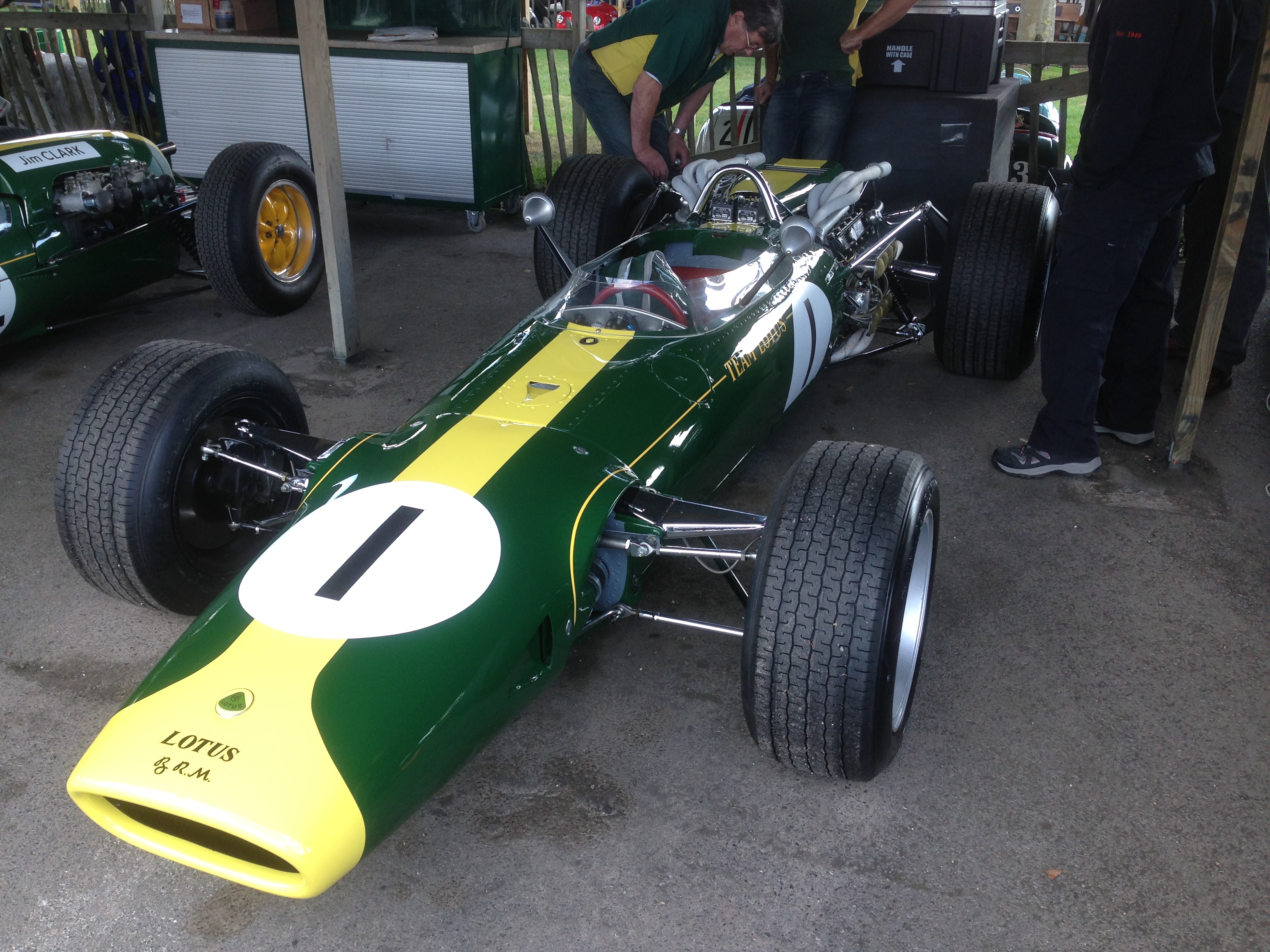
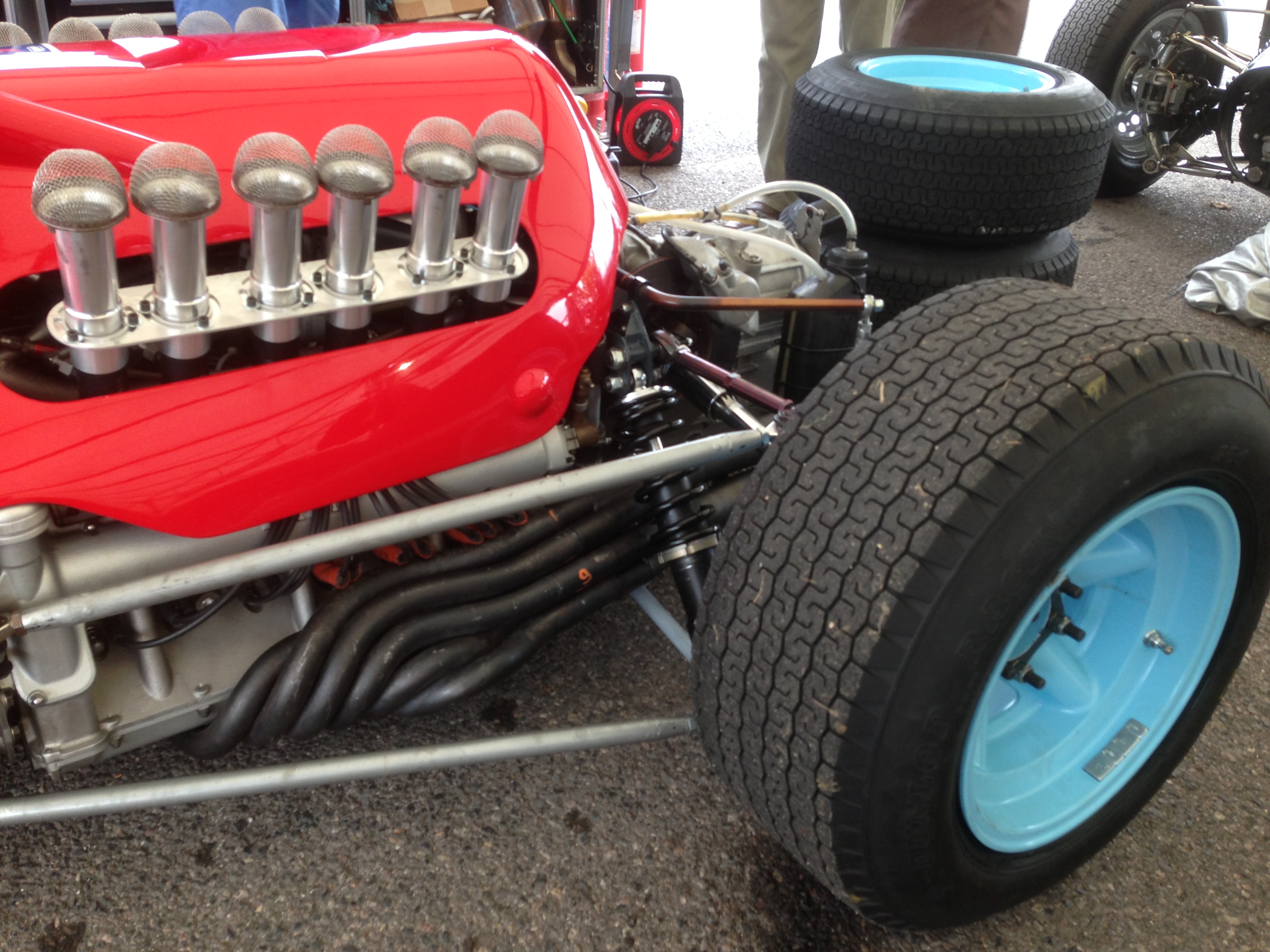
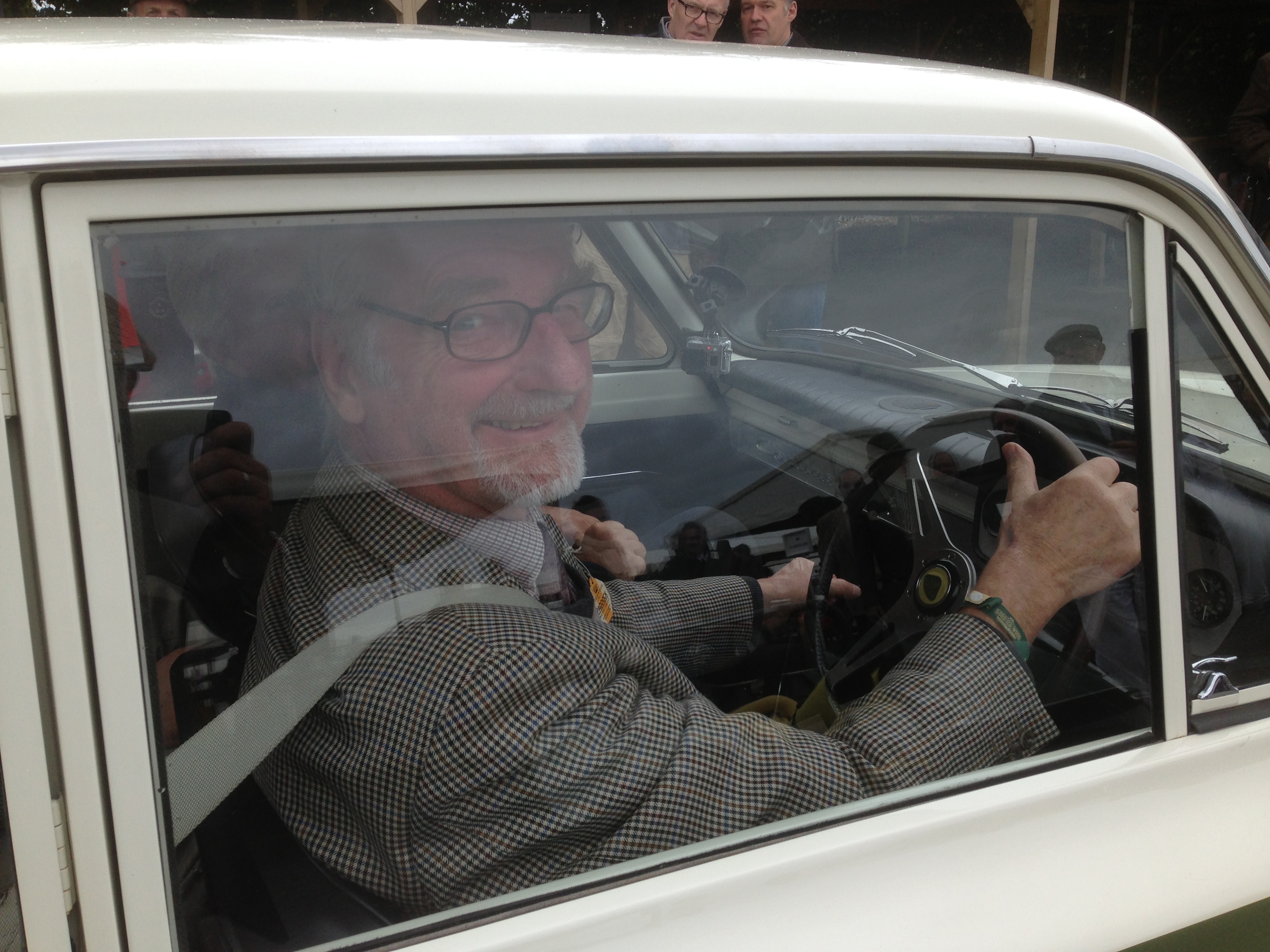
With all the travelling at present it’s taken a while to put together some of my memories from Goodwood, 2013.  In short, it was a magnificent event.  I don’t think we’re ever going to see as many Jim Clark cars  together again in one place.  To me, none of this represents “the past”.  Instead, it is our lifeblood;  it is what motor racing was, and still is, all aboutIMG_0666IMG_0808IMG_0671IMG_0675IMG_0673IMG_0734IMG_0751IMG_0763IMG_0788IMG_0748IMG_0856

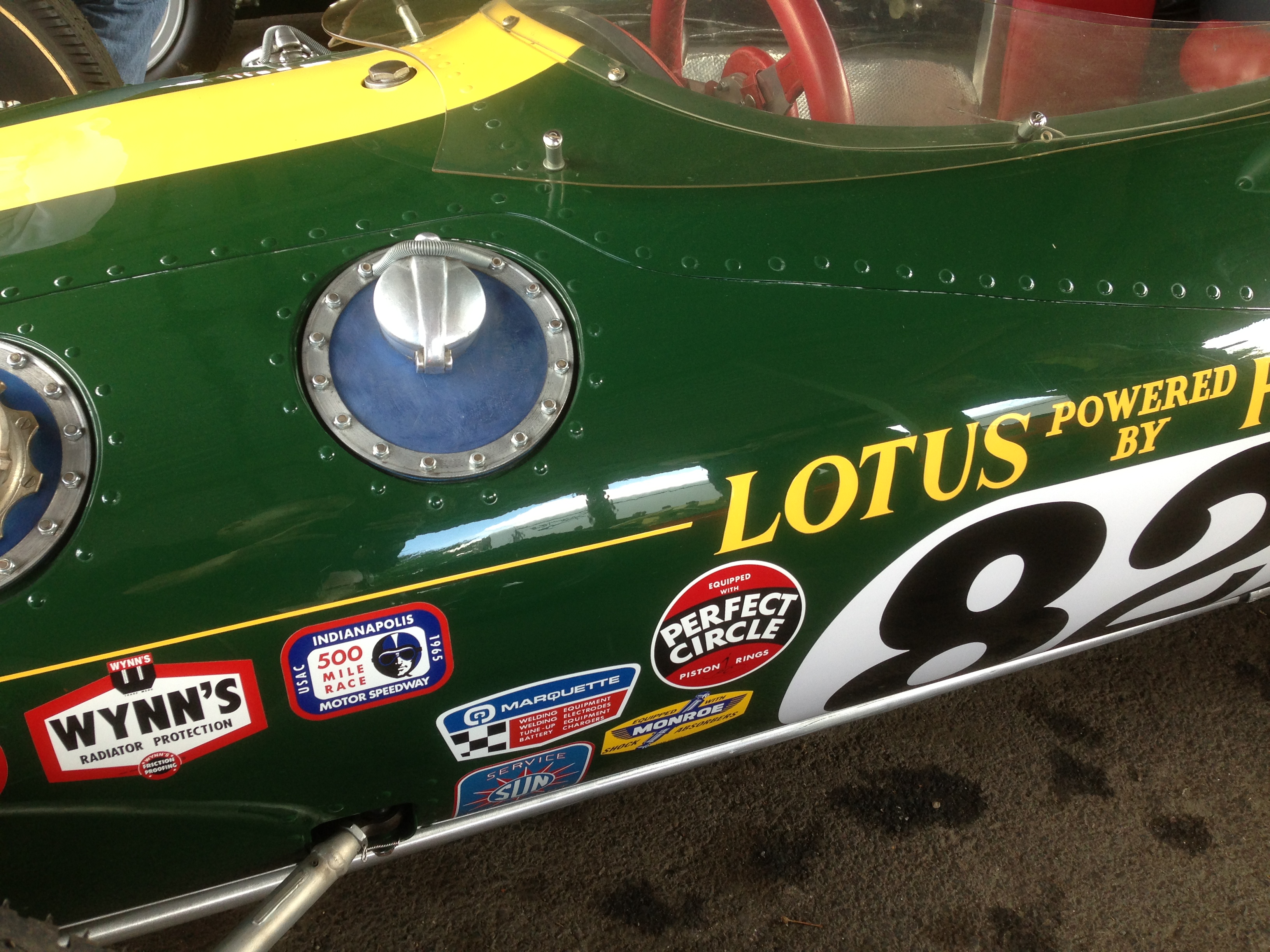
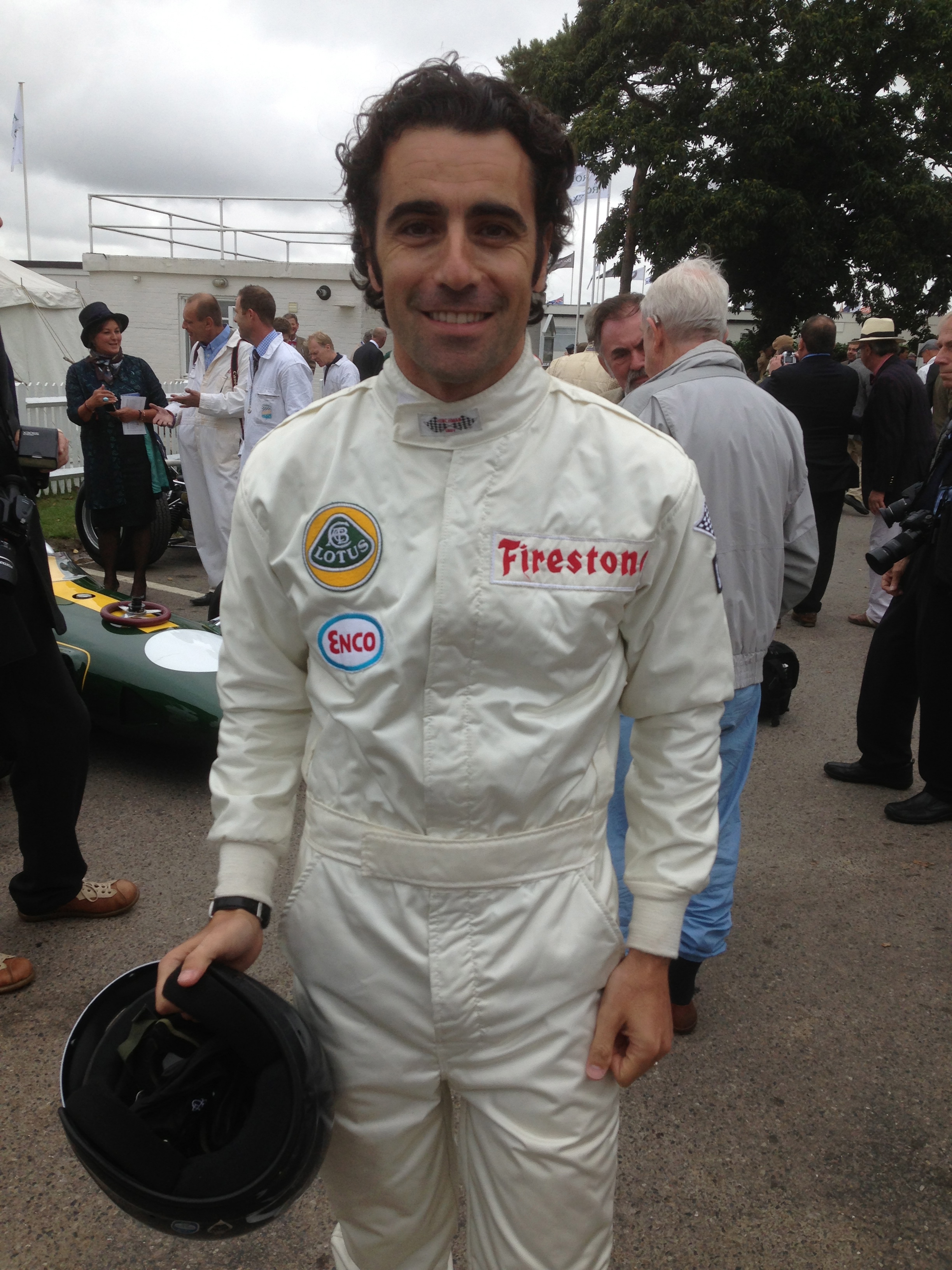
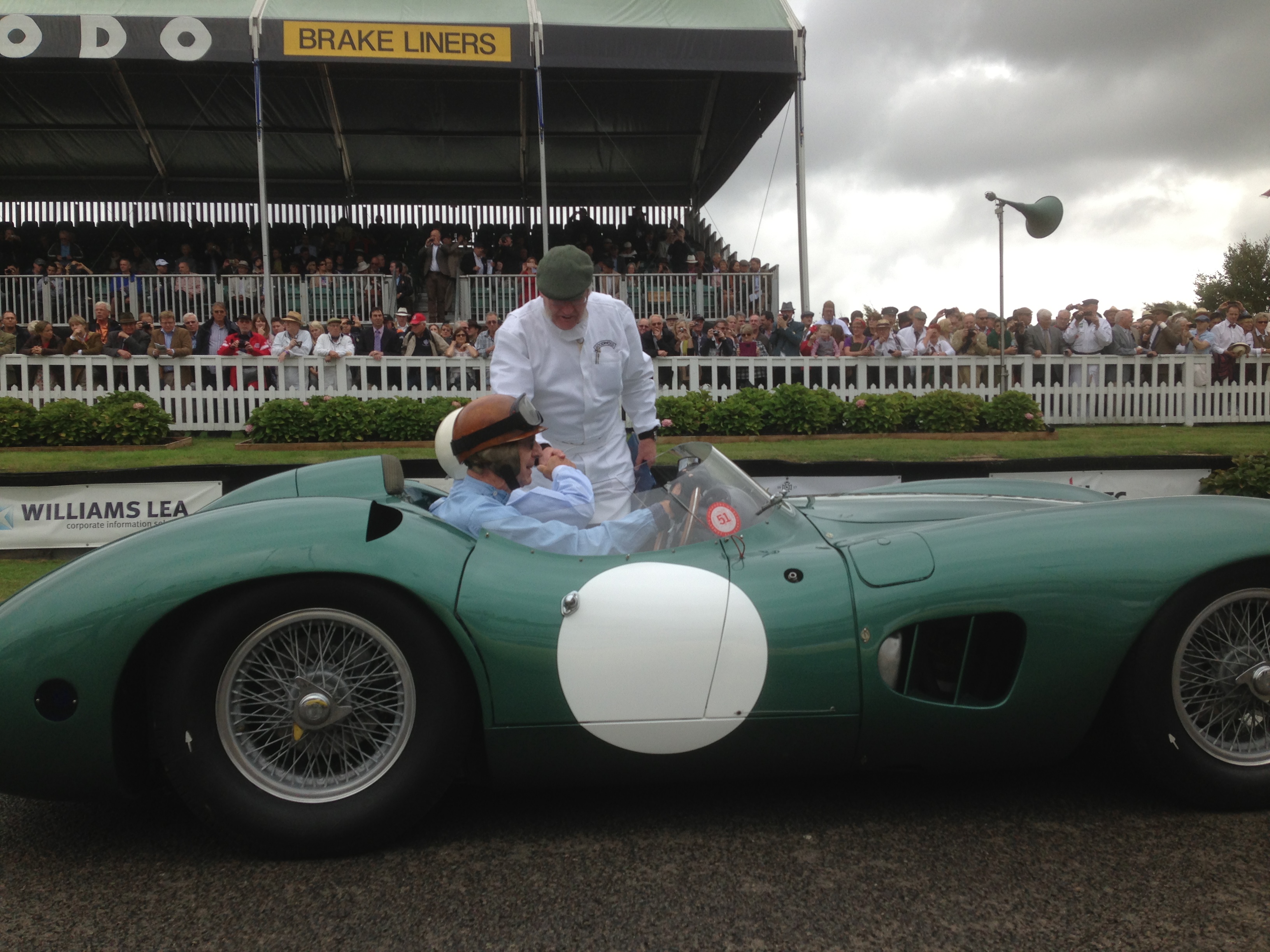
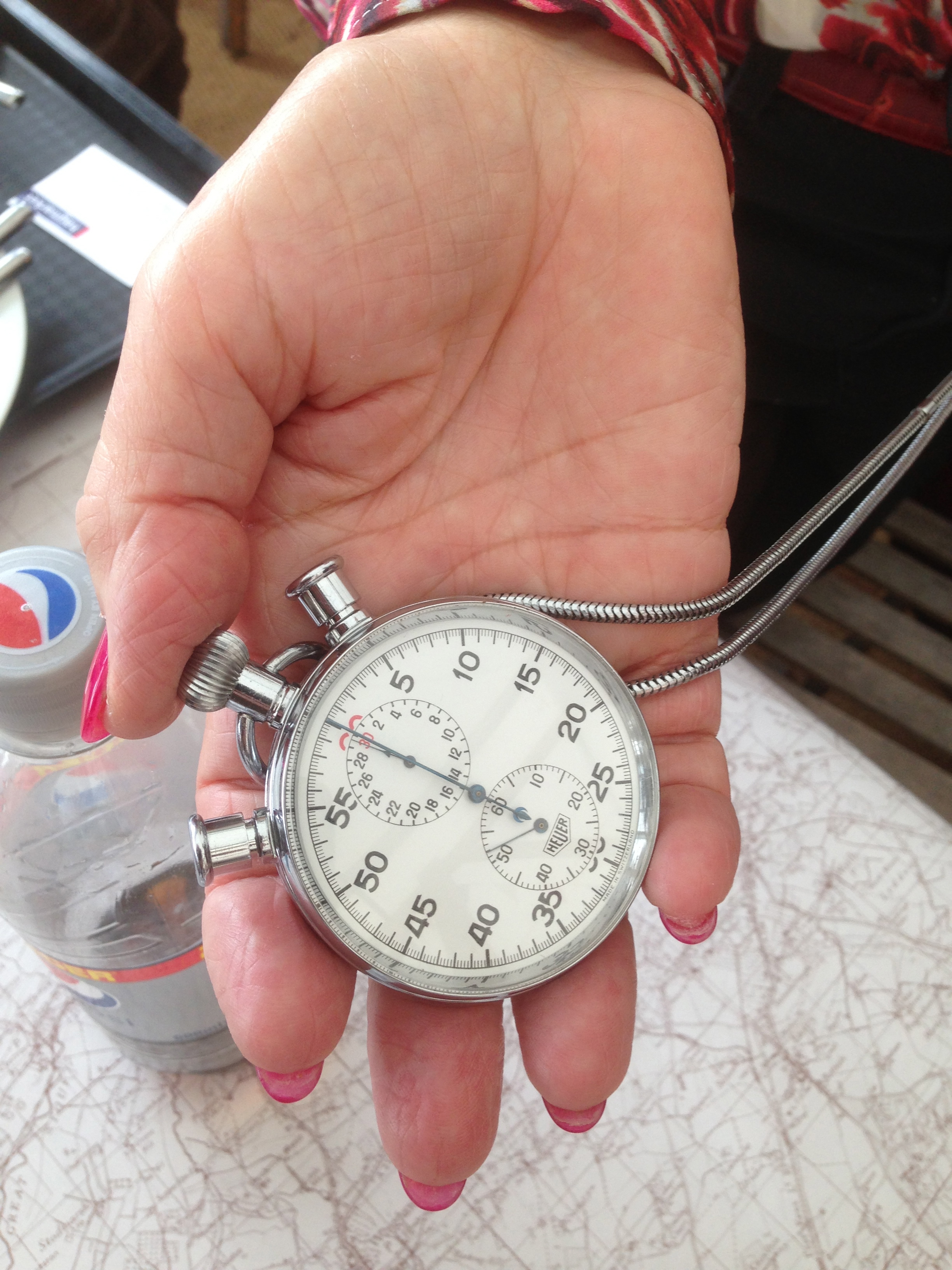
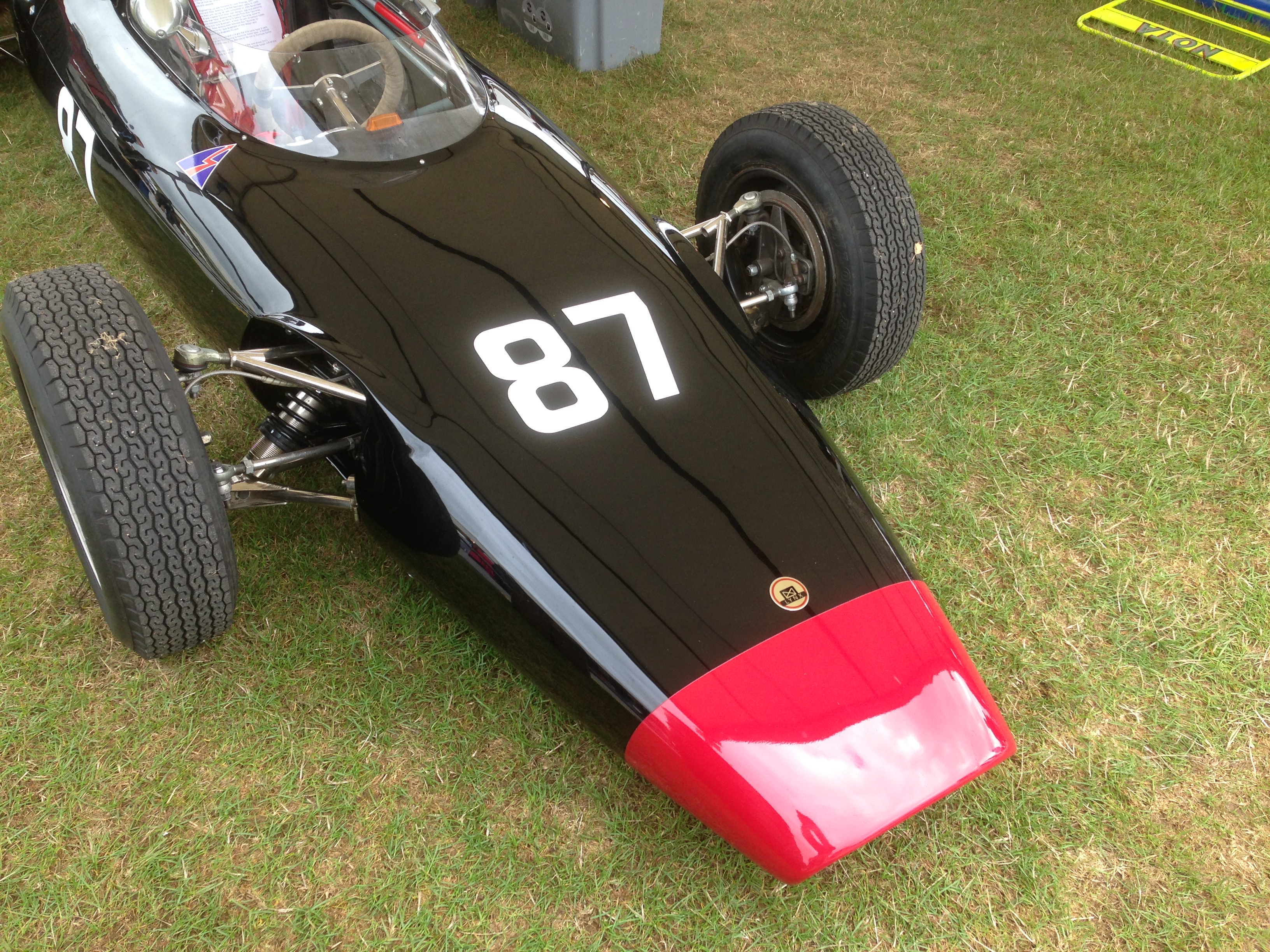
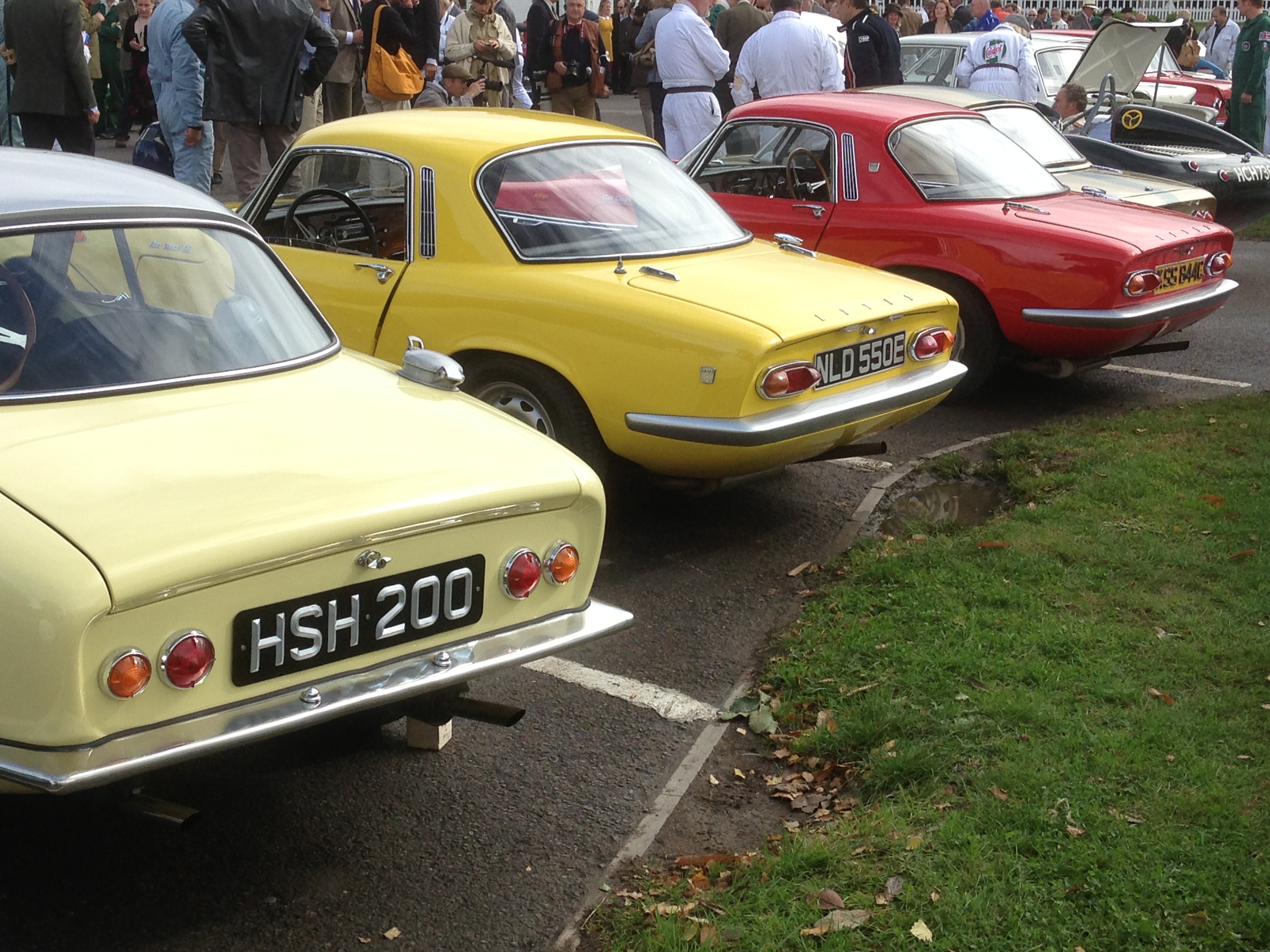
Captions, from top: One of the most significant racing cars of all time: Jim Clark’s 1965 Indy-winning Lotus 38-Ford.  Trucked over to the Ford Museum straight after the race, it has only recently been again fired-up and restored; wearing a new set of Hinchman overalls (complete with Enco badge), and of course Jim Clark driving gloves, Dario Franchitti took the 38 for a few laps of Goodwood; the Lotus 56 Turbine Indy car of 1968 – futuristic then, as now.  Jim tested the 56 after the Tasman Series and was looking forward to racing it in May; cockpit of Jim Clark’s 1966 US GP-winning Lotus 43-BRM. The car’s new owner, Andy Middlehurst, was aware that Jock Russell (who bought the car from Team Lotus in 1967) quickly discarded the original, red, upholstery and replaced it with a tartan job (!) but was delighted to find that the  the seat and interior that Jim had used at the Glen in ’66 were still in perfect condition in Jock’s barn.  They are in the car now;  the Lotus 43-BRM in its glory.  The amazingly complex 3-litre H16 engine started virtually first turn and ran perfectly at Goodwood;  a beautiful restoration job, too, on a 1.5 litre flat-12, 1965 Ferrari.  It would have been great to have seen this car in blue-and-white NART colours but someone at Ferrari (Maranello) demanded that it be painted red before heritage papers could be issued. Shame; grid-side view of Tony Brooks and Stirling Moss in the Border Reivers Aston DBR31/300 with which Jim Clark and Roy Salvadori finished third at Le Mans in 1960;  Jim’s girl-friend at the time, Sally Stokes (now Swart), holds the Heuer stopwatch that Jim gave her in early 1964.  Jim had been presented with this watch at the 1964 Geneva Motor Show and Sally used it on the Team Lotus pit stand throughout ’64-’65.  It still works perfectly; three road cars much-used by Jim Clark:  the 1961-’62 Hobbs-automatic-transmission Lotus Elite; his 1967 left-hand-drive Lotus Elan S3; and Ian Scott-Watson’s 1965 Elan S3, build by Jock McBain’s boys and used by Jim up in Scotland throughout that summer of ’65; it was brilliant to see again a 1963 Australian-made Lynx Formula Junior (left). To my eye, this is still one of the most beautiful little racing cars ever built; and it’s always a special treat to see real drivers in real cars.  Here’s Sir John Whitmore in a factory Lotus Cortina. Images: Peter Windsor Collection



On taxi rides and slow chicanes

In this week’s post-Singapore episode of The Racer’s Edge, we talk to Derek Warwick about those reprimands; to GP2 winner and Mercedes F1 Third Driver, Sam Bird, about his success this year and the styles of Nico and Lewis; and Rob Wilson, our favourite driver coach, analyses Sebastian Vettel’s approach to those most boring of corners – the slow chicanes.  Hope you like it.

Victory at Monza

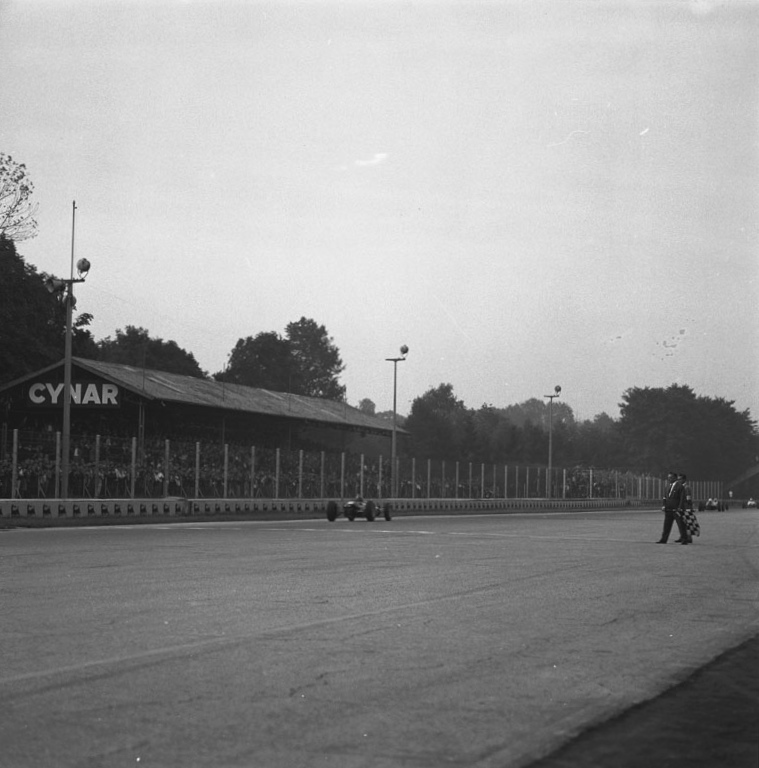
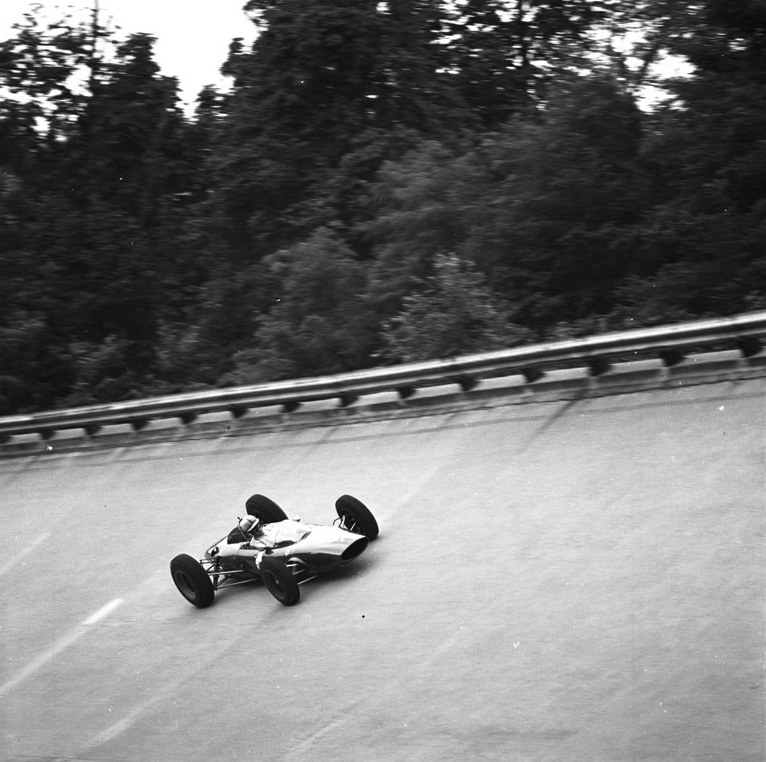
21343.tifThey drove, despite their misgivings, on the Friday. The steep Monza banking had long since established itself as the fastest race track in the world – some 30 mph faster even than Indianapolis. The British teams, wary of the damage caused by the bumps, had boycotted the Italian GP in 1960.  Phil Hill had that day won for Ferrari, thus becoming the last driver ever to secure a World Championship victory in a front-engined Grand Prix car.  Seat belts had appeared for the first time in Europe at the Races of Two Worlds in 1957-58 but not for the usual reasons – not because the drivers believed in not being thrown from their cars in the case of accident.  They were worn just to keep the drivers in the cars while they were running…  (That combined Indy-F1 race, incidentally, was run in heat form for the simple reason that the teams needed time to rebuild their cars after each segment.  Had the race been run non-stop it is unlikely there would have been any finishers.)  Ferrari’s Luigi Musso took the pole for the 1958 race at an average speed of nearly 170mph (281kph).1963 Italy .tif

No surprise, then, that Jack Brabham led the tentative, pre-Italian GP boycott in 1963.  The banking had not been used in 1962, so why revert to it now?  When push came to shove, however, Black Jack and Dan were out there on Friday morning, nosing around.

Jim Clark and Colin Chapman, already wary of Italian politics (following the Von Trips accident of 1961) stayed relatively neutral.  Jim had a World Championship to clinch.  Ferrari had new cars and engines to beat.  They settled into the Hotel de la Ville, opposite Monza’s Villa Real, with some trepidation.  Monza – Italy – is never easy.S2700006

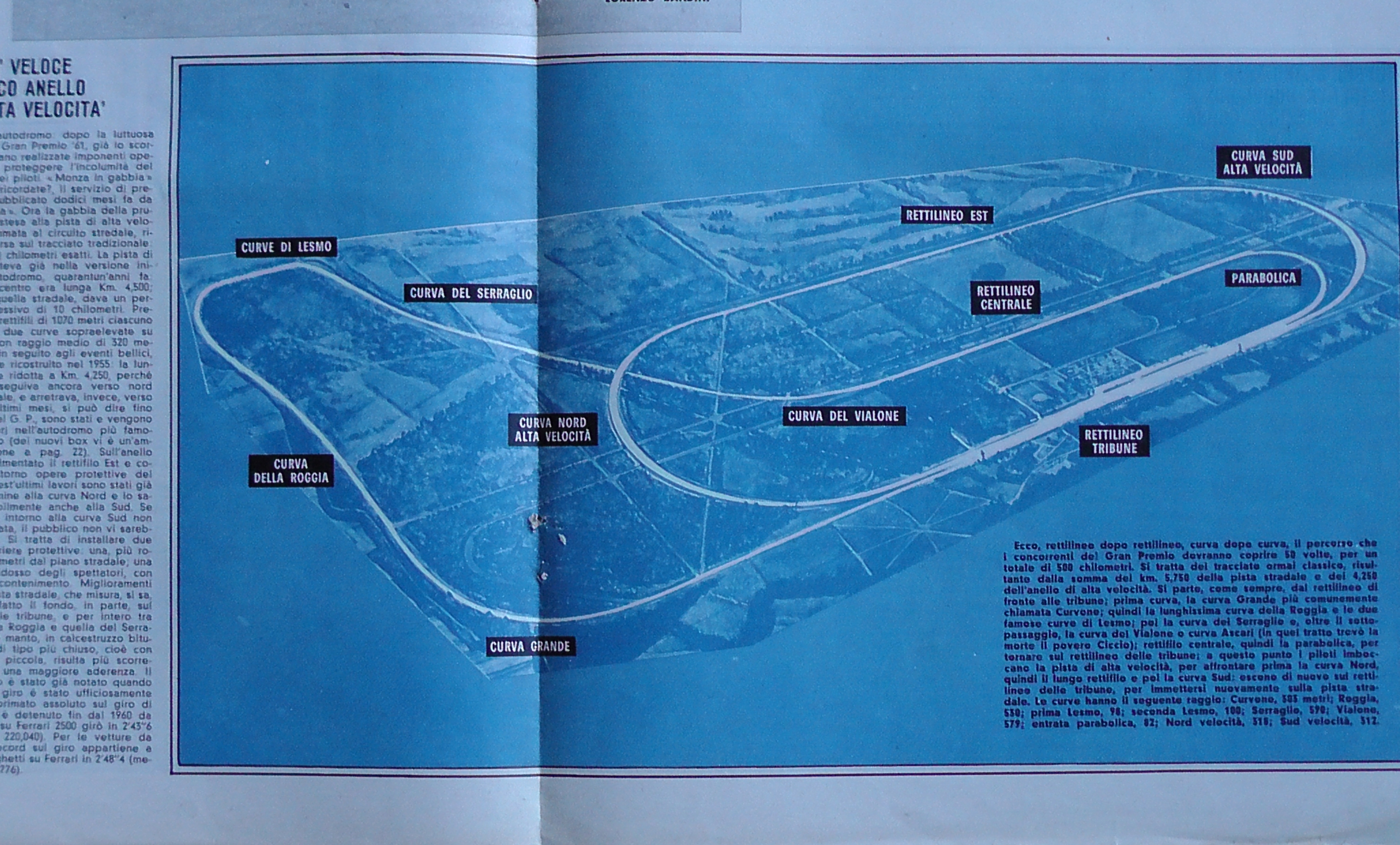
And so onto the banking they ventured that Friday morning, ride heights raised, suspension stiffened…pick-up points stressed.  The combined road-course/oval shared the same pit straight, divided only by cones (the oval’s straight nearest the pits).  The oval was flat-out in top gear;  the road course was pretty much as we know it today, minus the first, second and Ascari chicanes.   Team Lotus initially sent out Mike Spence (in the carburettored car, standing-in for the injured Trevor Taylor).  His 2min 48.1 was beaten only by the BRMs of Richie Ginther and Graham Hill and Masten Gregory in his Parnell Lotus 24-BRM.  Brave stuff.

Then Bob Anderson crashed when his privately-entered Lola-Climax lost a wheel on the banking;  luckily he was uninjured.  The teams suddenly became adamant:  unless they raced only on the road course there would be no Italian Grand Prix.  The Automobile Club of Milan acquiesced only moments before the GPDA handed in its petition. The banking was shut off.  Although it would be used by sports cars through to 1969 (slowed by entrance chicanes from 1966 onwards), the Monza banking never again played host to F1.S2700007

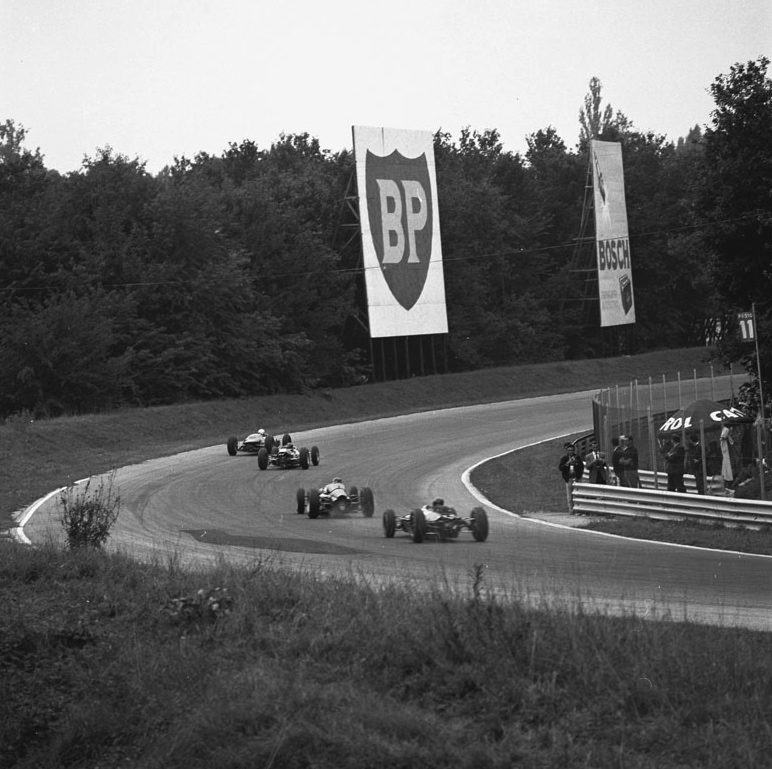
Somewhat disrupted, therefore, but much happier, the teams set about their new challenge – an Italian GP on the familiar, 1962, layout.  For Jim, problems quickly arose.  He was hoping to race the new Hewland gearbox tried in Austria but quickly it failed.  Reverting to his regular ZF gearbox, Jim qualified only third, 1.7 sec slower than John Surtees in the new monocoque Ferrari V6.  Lorenzo Bandini, making his debut with the older, space-frame Ferrari, was behind Jim and alongside Dan Gurney on the third row.  With the monocoque BRM also performing well in the hands of Graham Hill, who qualified second,  Monza was looking as though it was going to be very different from the season’s previous high-speed race, at Reims.21383.tif

In the end, it was the usual, nail-biting slipstreamer. The lead changed no fewer than 25 times before it was finally settled in favour of Jim Clark. For Jim, though, his forehead protected by white masking tape, the better to stop his Bell Magnum from creeping up in the slipstream, the day was bittersweet, as he recounted in Jim Clark at the Wheel:  “Being so much slower than John in practice really sapped my confidence, and I felt dismal on Friday and Saturday.  It got so bad that, before the race started, I had fitted a new engine, gearbox, gear ratios, reverted to the standard windscreen and changed the tyre sizes.  This meant starting the race not fully knowing what the car would be like when it arrived at the first corner.  From the start, though, the car was better.  In Surtees’ tow I could gain an extra 500rpm and by the third lap I could relax a little and still maintain my position behind him while, behind me, Graham and Dan were having their own private battle.  On about the 17th lap I noticed a puff of smoke from the tailpipes of John’s Ferrari.  It was no surprise when he dived into the pits the following lap.21255.tif

“This left me in the lead but with a problem on my hands.  It was not worthwhile stretching myself or the car so long as Graham and Dan were behind me, towing one another around.   I was basically a sitting duck and when they passed me I remember they whisked by so quickly that they almost caught me on the hop.  I then managed to get into their slipstream.  The three of us had a grand race of it before Graham retired. Dan and I then had a great set-to, for our cars were fairly equal in performance.  I remember at one stage coming up to lap Innes Ireland in the BRP-BRM.  He was much quicker than both Dan or I down the straights but we had him on the corners.  I first tried on one bend to get past on the inside but Innes blocked me off.  Then I tried again and the same thing happened.21417.tif

“The next time around I thought I would play it crafty, so I waited until Dan had come up close behind me and I made a pass at Innes. I eased off slightly and let Dan go through. Innes thought that Dan was me and moved over again – but no-one does this sort of thing to Dan. In the ensuing battle of wits Dan eased Innes out, and while he was doing that I passed both of them.” (Ireland, whose relationship with Jim had been strained ever since he had been dropped from Team Lotus at the end of 1961, would have finished third at Monza but for an engine failure on the last lap;  as it was he came home P4). “Dan had to retire shortly afterwards with fuel starvation and I was able to settle down at last to win the Italian Grand Prix and assure myself of the World Championship.21261.tif

“I couldn’t believe it when I arrived at the pits after my slowing-down lap. The place was crowded with photographers and Colin had a bit of a fight getting through to me. However, he managed it and he climbed on the back of the Lotus with the silver trophy and we covered a lap of honour, picking up Mike Spence, who had broken down on the back of the circuit while heading for sixth place.

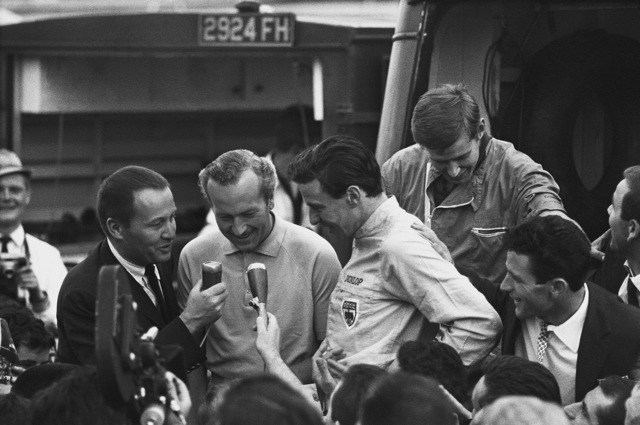
“Colin and our wonderful team of mechanics were ecstatic.  It gave me great pleasure to share this victory with them.   To escape the mob afterwards we dived into the Dunlop enclosure, where someone came up and informed me that the Italian police wanted to see me immediately in race control. When I got there, I discovered they wanted me to sign a document written in Italian relating to the Von Trips accident of 1961. I naturally refused to sign it. Coming as it did on what should have been a night of celebration, this affair depressed me so much that all I wanted to do was get out of Italy. I didn’t care if I never returned to the place. Consequently, it was a very subdued victory party at the de la Ville, enlivened only by a bun fight between the Lotus and Cooper teams.”S2700004

Jim flew home early on Monday with Jack Brabham in the latter’s Cessna 180.  He headed straight for Balfour Place – and then to a press conference in Fleet Street, home of the British daily press.  Most of the questions, sadly, related to 1961, not 1963.

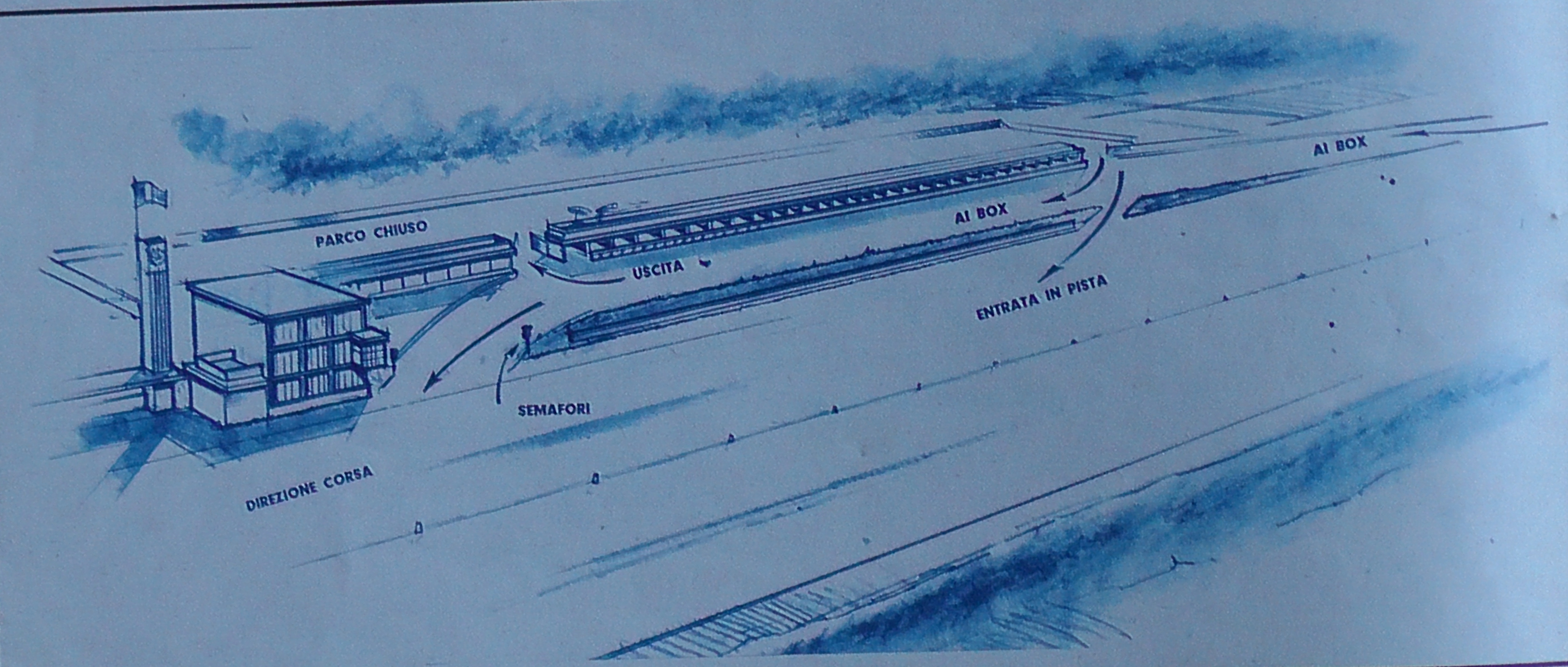
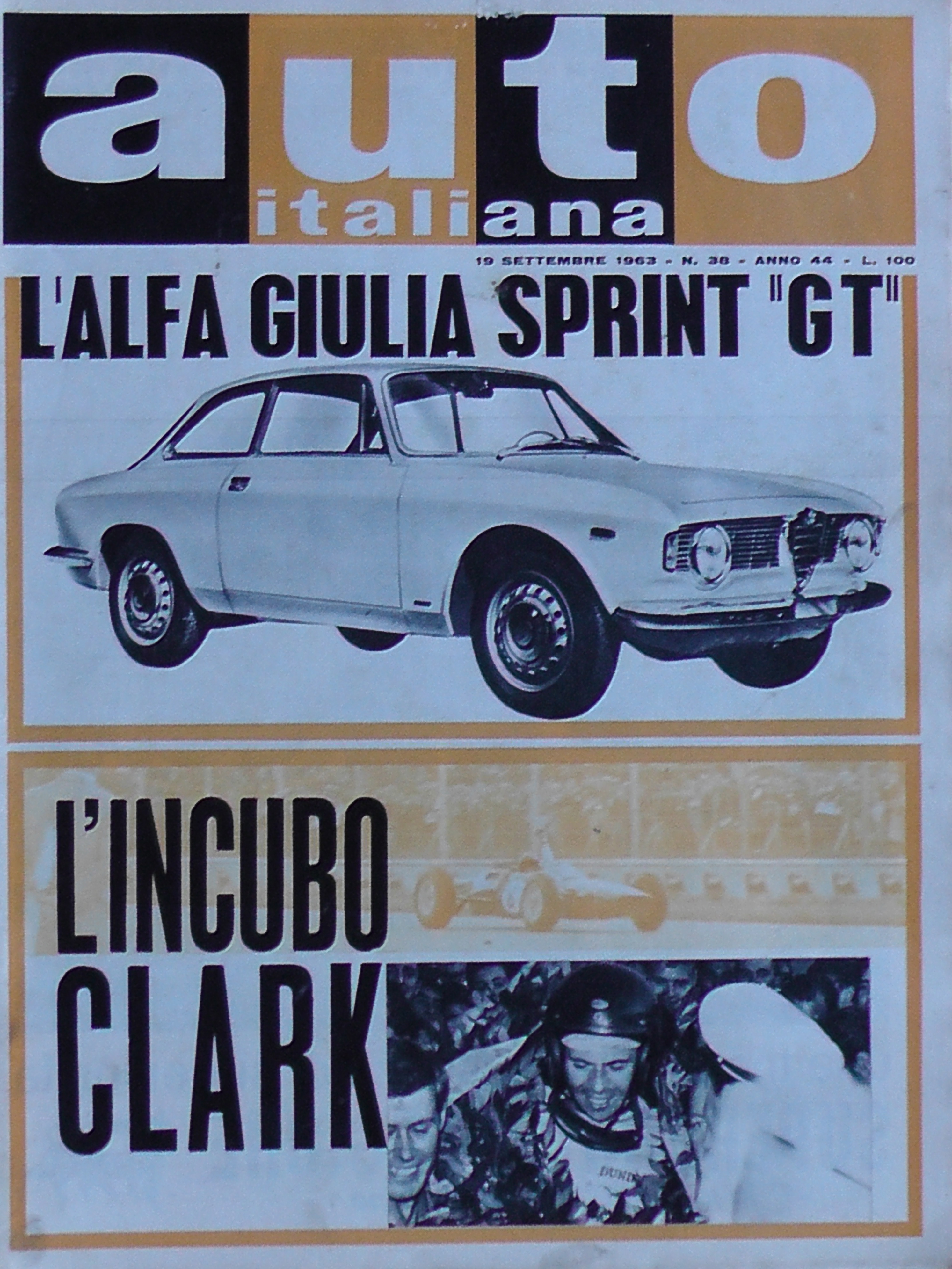
Captions (from top): although he feared the worst, Jim eventually won convincingly.  With five wins and a second place to his credit from seven starts, he clinches the 1963 World Championship; early on Friday morning, John Surtees tries both the Monza banking and the new Ferrari V6.  He was easily quickest in qualifying but retired with engine failure (broken tappet). Team Lotus, then, won the race of reliability!; the combined road course/banking layout as drawn by the excellent (but sadly now defunt) Italian weekly, Auto Italiana, in its preview to the 1963 Italian GP; Auto Italiana‘s explanation of how the complex Monza pit straight/pit lane system was going to work (with banking in use) for 1963, a new, higher pit wall was built; Jim’s 25 was extensively re-fitted and revised before the race;  Surtees leads Jim and then Graham Hill and Dan Gurney into the Parabolica in the early laps; Chris Amon (pictured here talking early on Friday to Eoin Young  (probably about the new Bruce McLaren Cooper team that would contest the 1964 Tasman Series!) was lucky to escape a big practice accident at the Lesmos with broken ribs; rearward view of the aforementioned lead group;  front cover of Auto Italiana in the week after the race. Two artists here – Jim Clark and Giovanni Bertone; below – to the backdrop of the Lotus truck, and before the drama with the Italian authorities, Jim McKay interviews Colin and Jim for ABC’s Wide World of Sports.   Images: LAT Photographic, Peter Windsor CollectionL63_282_36  

Post Navigation