peterwindsor.com

…chance doesn't exist; there's always a cause and a reason for everything – Elahi

Archive for the category “Circuits”

Notes from the Sepang paddock

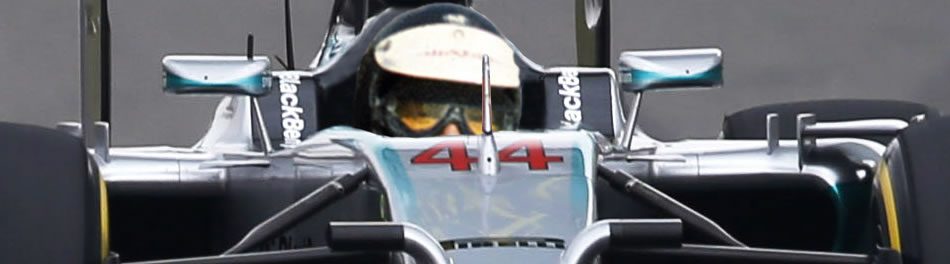
  • After the beauty of the AGP 60th anniversary celebrations at Albert Park, it’s a shame that not more is being made of this being Sepang’s 15th F1 birthday. I know it’s not a major milestone but, so far as modern supercircuits go, Sepang has done well to get this far. It has none of the carnival atmosphere of Melbourne; it’s hot and debilitating; but it does boast some incredible corners and it does have the Malaysian government full-square behind it, despite relatively small crowds. Personally, I love Sepang. I just wish the weekend as a whole had a bit more AGP-style gift-wrapping.
  • Speaking of great corners, I spent Friday watching our aces through the very quick left- and right-handers they call Turns Five and Six. I’m particularly fond of this section because there are about three different solutions to the problems posed by high-speed changes of direction. You can really lean on the right rear as you go in, then ask a lot of the car as you pivot it back to the left rear for the dive into the right-hander (as Mark Webber, Romain Grosjean, Paul di Resta and Sergio Perez were doing); you can compromise the left-hander a little and move the car way over to the left for the right-hander that follows (as Nico Rosberg and Jenson Button were neatly doing); or you can ride a very narrow line of perfection by finding the tiniest of “neutral” zones for the change of direction between the two corners (as Kimi Raikkonen, Sebastian Vettel, Fernando Alonso and Adrian Sutil were doing).  The last group also tucked in a little earlier to the apex of the right-hander (Turn Six), thus shortening the corner.  All this in a flash of a second – but easy to see from the elevated vantage points both on the inside and outside of the corners.  Best through this section? Kimi, by a car’s width or two, although Lewis never really looked as though he was on the absolute limit.
  • Then it rained.  For the second race in a row, plaudits must go to Sauber’s new signing, Esteban Gutierrez, who looked very relaxed and supple in the semi-wet. There was about a five minute period of reasonable consistency, weather-wise, in FP2, and Gutierrez for this little cameo was right up there with Romain Grosjean, Nico Rosberg, Mark Webber and Fernando Alonso.   He was fastest, indeed, on my stopwatch. Romain had a big moment at the aforementioned high-speed esses but – unlike Melbourne – Esteban kept it all nicely on the island.  Sauber didn’t have the greatest of days in the dry (fire extinguisher and cracked exhaust issues) so this should have cheered them at least for ten minutes or so.  Also impressive in the wet (as in Melbourne) was STR’s Jean-Eric Vergne.  Unlike Kimi (who should know better) JEV also kept his car nicely to the right-hand side of the finishing straight all day whilst accelerating through the gears.  Kimi, for some strange reason, was running diagonally across the straight over to his braking point for Turn One.
  • It was good to see Daniel Riccardo juggling a trio of tennis balls as he walked to his garage this morning.  I’m sure most F1 drivers are able to juggle if they put their minds to it, but it’s not often you actually see the skill in motion in the F1 paddock.  Ross Cheever, the mega-quick American, was also a serious juggler and we know that both Lewis and Nico are mono-cyclists of some repute.  Then there’s Kimi.  I’ve seen him balancing a motionless mountain bike for well over a couple of minutes.  Again, I’m sure he’s not alone.  Why don’t we organize some sort of “circus” day for the F1 stars?  It’s one thing to see them plying their skills at 280kph.  It would be quite another to seem them displaying their co-ordination, balance, timing and eyesight in ways that we can all understand.
  • I may be wrong, but I suspect – I say I suspect – that still nothing has formerly been done about the pre-race national anthems.  Certainly it looked to be the usual shambles in Melbourne.  The AGP Corporation, like all organizing bodies, went to great lengths to execute the anthem with a local singing star and with suitable respect for their country – “Please be upstanding for the National Anthem of Australia”, said the circuit PA – but the F1 world, from what I could see, just went on about its business on the starting grid, sucking drink bottles, looking at watches (sorry, “timepieces”), checking tyre warmers, downloading data and generally milling around.  There was no observance whatsoever, in other words, of the local national anthem.  Can it be that hard for the F1 industry to set itself a new standard of behaviour?  We can’t expect the drivers to stand to attention – or even sit to attention if they’re already in their car – but why isn’t it de rigour for each team to nominate a representative to stand to attention at the front of the grid whilst the anthem is played?  Is the opening anthem any less important than the post-race podium anthems?  Pre-race, the TV cameras could pan along the row of uniforms, rugby-style, and commentators could stay quiet for a minute whilst the anthem is respected.  It would be a poignant, respectful moment.  A moment that at present we don’t have.  And that, I think, is wrong.

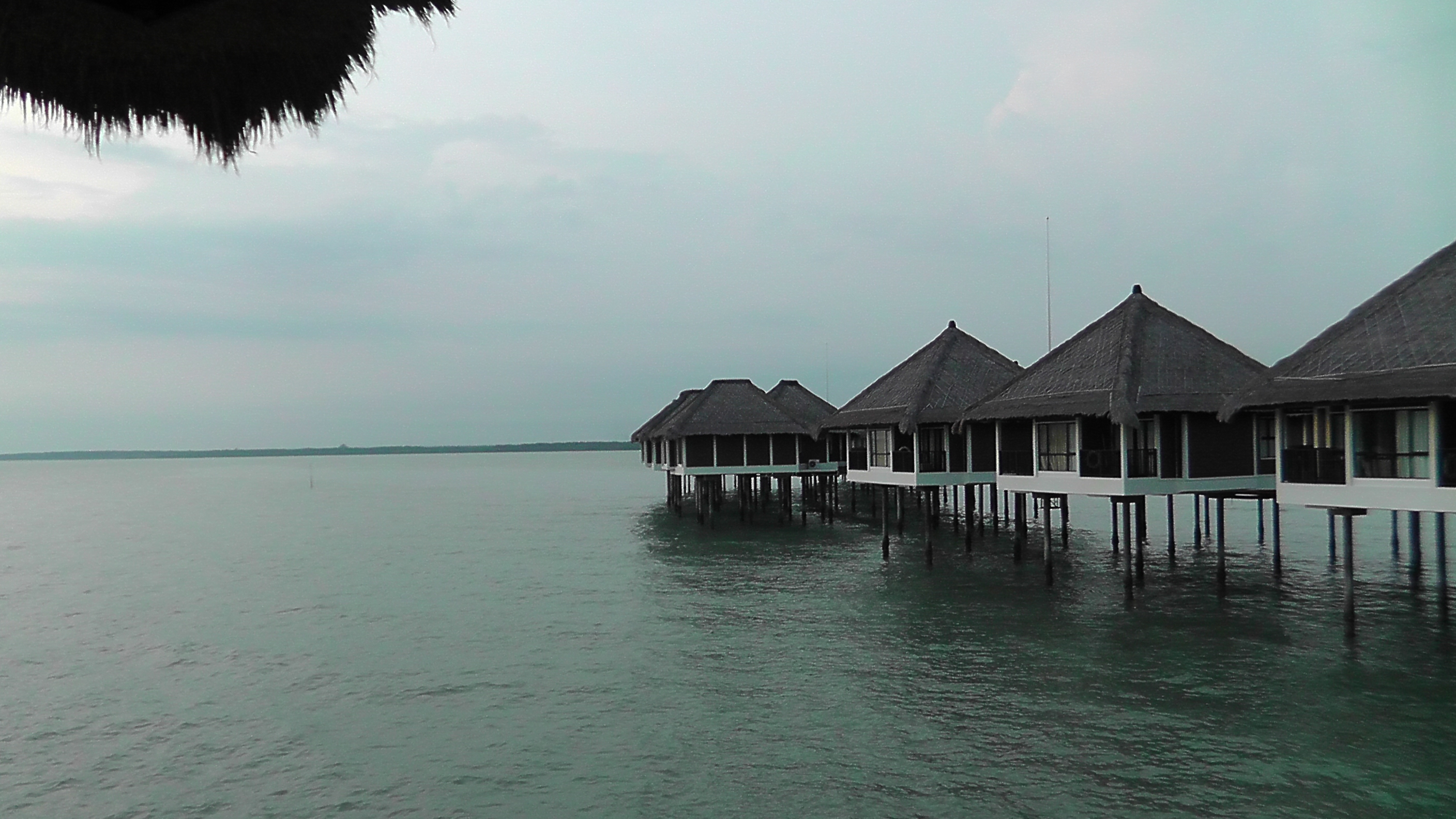
Anyway, time for dinner.  I’m staying at an amazing hotel called the Golden Palm Tree.  Our cottage is on stilts;  the water shimmers beneath us; and the circuit is but a 40-min adventurous ride away in a battle-scarred Proton. This weekend the locals are due to set fire to elaborate paper decorations they’ve been keeping specially for the occasion.  Should add nicely to the general heat and haze.    As I say, I love Sepang.S2360003

Geoff Sykes – Australia’s “Mr Motor Racing”

File0012Warwick Farm, the Tasman Series…and the cream of the world’s F1 drivers. It all came together in a golden age of Australian motor racing. Too quickly, though, it was over. The Farm was for the most part replaced by a housing estate; the Tasman became a championship too far. Geoff Sykes – dapper, under-stated, respected by all – rode into a motor-cycle- and aviation-oriented retirement.IMG_0002
Recently I was asked by the Australian Dictionary of Biography to write a brief profile of Geoff Sykes.  This was my attempt to do him justice:

Geoffrey Percy Frederick Sykes was born on September 6, 1908, at Beresford Manor Cottage, Plumpton, Sussex, England.  Percy Robert Sykes, Geoff’s father, was both a gifted wood-worker and the first Headmaster of the Chailey Heritage school for the disabled in Sussex, assisting disadvantaged children to forge their place in society.  The eldest of three children (his sister, Marjorie, was born in 1910, his brother, Reginald, in 1913), Sykes was educated at Brighton, Hove and Sussex Grammar School, to which he travelled each day by moped and then by train, thus ensuring that he was licensed to ride a moped from the age of 12.  Upon leaving school, he was apprenticed to British Thomas-Houston in Mill Road, Rugby – an electrical engineering industry leader. Certified as an electrical engineer in August, 1929, he then joined the Department of Works, where he was seconded to a number of public buildings, including Buckingham Palace.

Sykes married Margaret Rose White (a friend of his sister’s) on September 1, 1939.  They had three children – Robert (born April 28, 1943), who worked for the British Council abroad and is now retired;  Richard (born May 25 1945), who would study engineering and work for Ricardo, Tickford (where he was involved in the engine design of the Ford XR6) and TWR before joining Cosworth and subsequently Mahle Powertrain; and Julia (born August 15, 1948), who attended the Arts Educational School in London and taught dance for much of her career.  She was subsequently appointed Secretary of two branches of the Imperial Society for the Teachers of Dancing.

Motor racing very quickly became a passion for Sykes.  He regularly attended pre-war race meetings at Brooklands; he loved riding motor-cycles; and he competed in hill-climbs and trials with his open-topped Wolseley Hornet two-seater.  Sykes was an active member of his local motoring club, the Brighton and Hove Motor Club (BHMC), and during this period also met John Morgan, who was then Secretary of the Junior Car Club.

At the outbreak of war, Sykes applied for a transfer first to the Air Force and then to the Army (which he would have joined at the rank of Major) but The Air Ministry instead commissioned Sykes to top-secret electrical engineering work, concentrating on the guiding of damaged aeroplanes to bases throughout England using the Drem lighting system.  On one occasion, in the early dawn after the Luftwaffe’s bombing of Coventry, the aeroplane in which Sykes was flying was mistaken for the enemy.  Despite considerable shelling, Sykes and crew survived unharmed.

Sykes worked in various management positions in the immediate post-war period before joining the Electrical Drawing Office at the Ministry of Works. Simultaneously he fostered his love of cars and motor-cycles with the Junior Car Club. The JCC amalgamated with the Brooklands Automobile Racing Club in 1949 (under a new name – the British Automobile Racing Club, or BARC), thus enabling Sykes, who by now had been elected Chairman of the BHMC, to work for the man who would become his mentor – John Morgan.  A brilliant organizer and promoter, Morgan quickly established his reputation in British motor racing circles – and from 1954 did so with Sykes by his side.  As the club’s Assistant General Secretary, Sykes, charming and mild-mannered, was an obvious counterpoint to the no-nonsense Morgan, the club’s General Secretary;  and, as motor racing burgeoned in the 1950s, it did so in concert with the BARC’s growing stature.  (It should also be noted that Sykes’ second wife, Meris Chilcott Rudder, also worked for the BARC at this time, married to the aviator, Jim Broadbent.)

His life changed dramatically when Mrs Mirabel Topham, owner of the Aintree horse-racing circuit in Liverpool, contacted the BARC in 1953 to discuss the design and construction of a motor racing circuit.   After a number of meetings to discuss the project, she wrote to Morgan to say that she wished to go ahead but insisted that Geoff be the one she dealt with on a day-to-day basis.  Under Sykes’ direction, the Aintree circuit was completed in 1954 and would go on successfully to stage the British Grand Prix on five occasions – 1955, 1957, 1959, 1961 and 1962.  At many of these meetings – and at the early Grands Prix – Sykes officiated as Clerk of the Course.

In 1959 Sykes received a lawyer’s invitation to attend a meeting with the Australian Jockey Club (AJC) to discuss the design of an Australian version of Aintree.  Unbeknown to Sykes, Sam Horden of the AJC had mentioned his motor racing circuit concept to the pre-eminent British Formula One private entrant, Rob Walker; and Walker, impressed by the organization at Aintree, had had no hesitation in recommending Sykes.

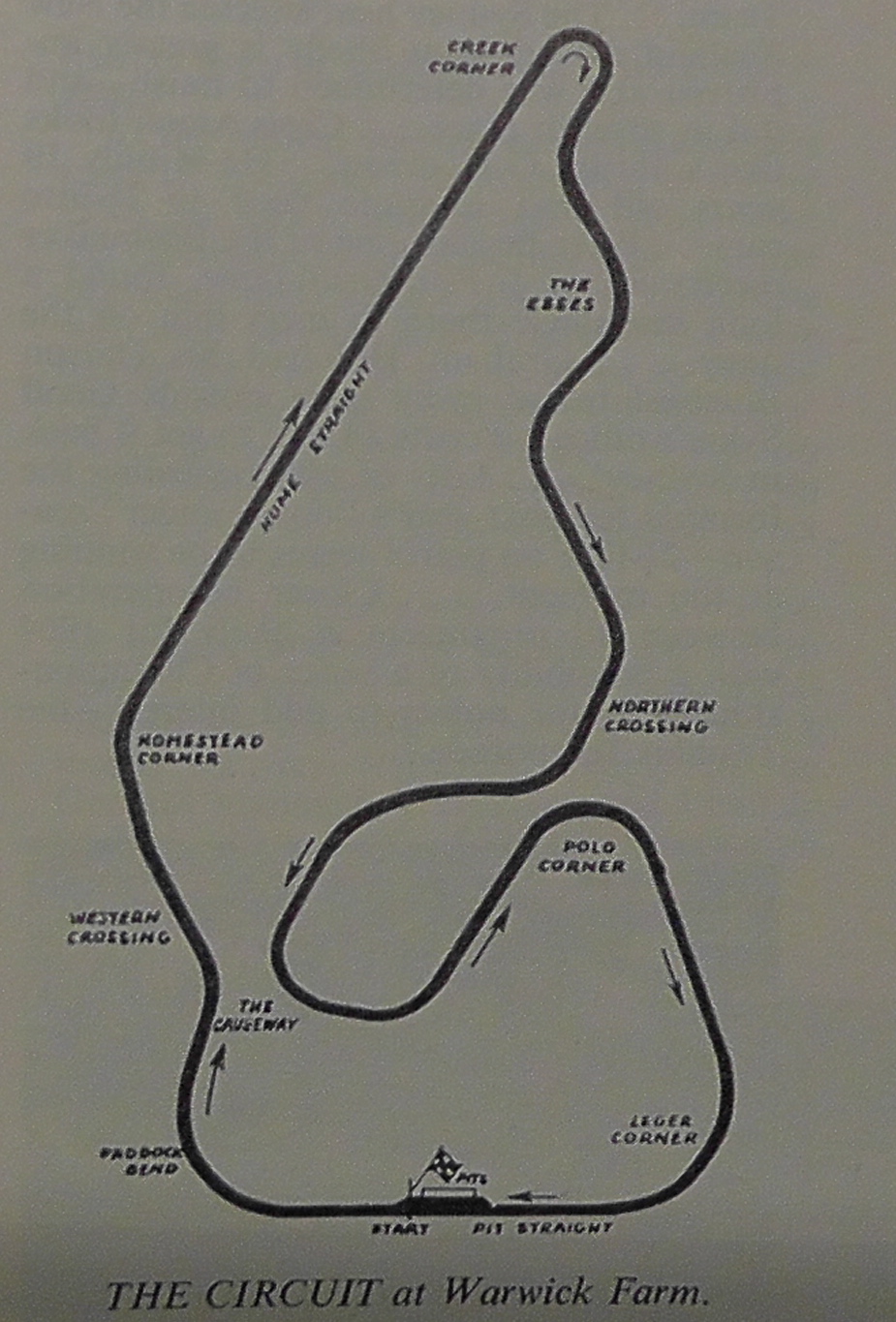
Sykes travelled by BOAC Comet to Australia for a three-week fact-finding tour, beginning in December, 1959.  Staying at Tattersall’s Club in Elizabeth St, he rang Meris Rudder, who had moved to Australia following the death of her husband and had bought a small flat in Kirribilli below the north-east pylon of the Harbour Bridge. In a matter of three hours, using Meris’s living room table as a flat surface, Sykes drew what was later to become the Warwick Farm motor racing circuit.  Few changes were made to the original design (which included two Aintree-inspired crossings of the horse-racing circuit).S2290005
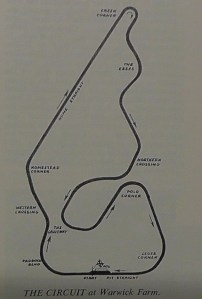
That first draft – described by Meris at the time as looking more like a Picasso than a motor racing circuit – is today the property of Richard Sykes.

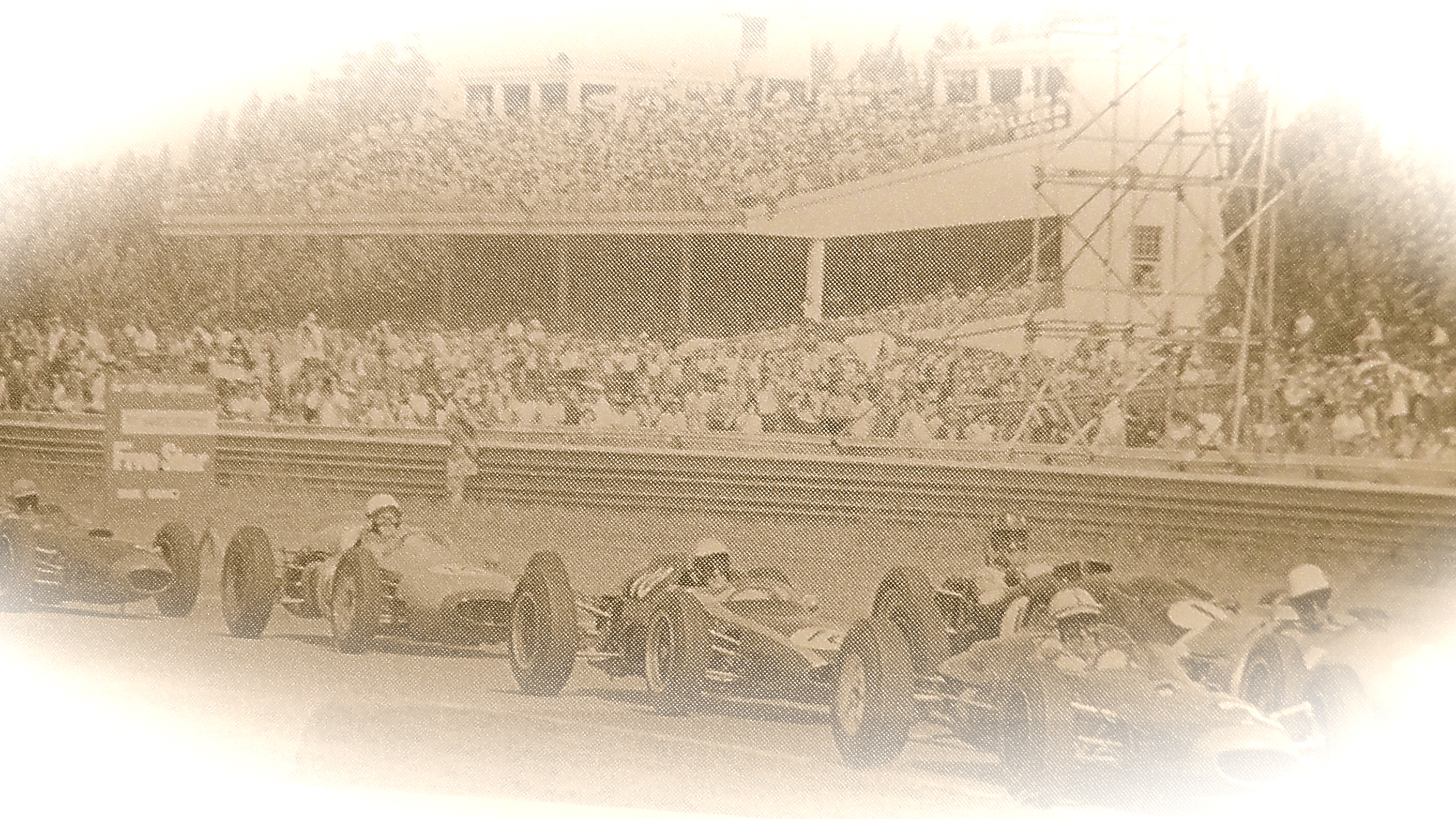
Sykes returned to Australia permanently in June, 1960, when work promptly began on the new circuit.  Thanks mainly to Sykes’ planning and organizational expertise, the new facility was finished in an astonishing six months.  The removable Tarmac sections for the two temporary crossings were designed and built by de Havilland (Australia) Ltd;  and the design overall of the 2.25-mile circuit combined fast corners with a series of ess-bends, a double-apex, negative-camber left-hander over the lake and two tight corners – Creek Corner hairpin at the end of Hume Straight (which was parallel to the Hume Highway) and a right right-hander by the AJC Polo field.  The three grandstands on the pit straight were as used for the horse-racing (as at Aintree).   The circuit was noteworthy at the time for its large expanses of grass and for its white railing (from the horse-racing track).   It was thus so far ahead of its time in terms of safety that Sykes felt obliged to try a “no-spinning” rule in 1964, arguing that this would be the equivalent of the trackside hazards that characterized other circuits throughout the world.  Given the dangers of motor racing in the 1960s, it is remarkable that not a single driver or spectator was killed at a Warwick Farm race meeting.  (One driver lost his life in a testing accident.)

The first Warwick Farm race meeting was held on December 18, 1960, and was followed soon afterwards, on January 29, 1961, by a major international race meeting that featured a 100-mile event for F1 drivers and top locals.  In 110 deg F (41 deg C) heat, 65,000 spectators watched Dan Gurney, Graham Hill, Innes Ireland, Jack Brabham and the eventual winner, Stirling Moss, give the new circuit, and its organization, a massive vote of approval. Moss declared the circuit’s layout and organization to be the equal of any venue in the world.  Warwick Farm was an instant success.

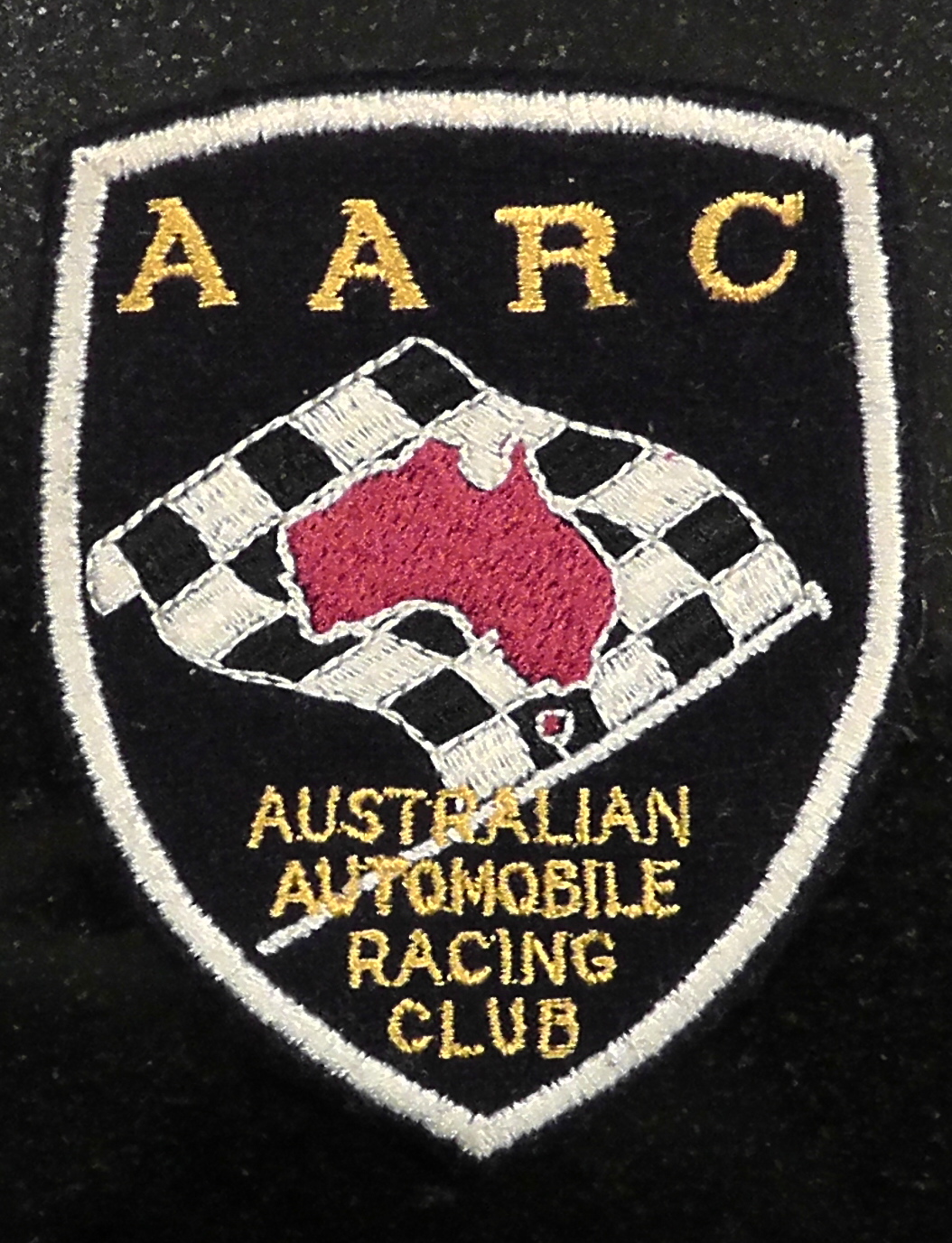
Sykes, who habitually wore light chino trousers, suede shoes, white shirt, club tie or cravatte, sports jacket and cloth cap, was also a man of great artistic talent and attention to detail.  He personally designed the badge of the circuit’s new club, the Australian Automobile Racing Club (the AARC, instigated in July, 1961), together with the circuit’s support merchandise, including the programme covers, posters and car stickers, nominating a local artist, Peter Toohey, for much of the artwork.  The AARC was from the start a small but extremely efficient operation, featuring Sykes as the General Secretary; John Stranger, formerly of the North Shore Sporting Car Club, as Accountant and Secretary of the Meetings; and Mary Packard as general administrator.  They were later joined by a young school-leaver, Peter Windsor (Press Officer).  The AARC was originally based at 184 Sussex Street, Sydney, but moved to the site of a former Bank of NSW, on the corner of Sussex and King streets, on June 24, 1967.

As one of the few locations in Australia where you could “talk motor racing” and read the latest publications from the UK (Motoring News and Autosport), the AARC offices quickly became a Mecca for both famous racing names and rank-and-file club members.  The AARC staged four to five major race meetings at Warwick Farm per year, including the February international, three or four club meetings (on a shorter circuit that looped back to the Causeway after the first corner) and numerous members’ film nights – these providing the only opportunity for motor racing enthusiasts in Australia to see the latest images from overseas.

On February 10, 1963, Warwick Farm hosted the Australian Grand Prix for the first time.  Again run in extremely hot conditions, it was reported in Autosport by Sykes himself, who wrote, “Race week was a busy one from a social angle, and there was for the first time in Sydney an atmosphere of Grand Prix fever… On Thursday the AARC put on their second annual cocktail party with an attendance of 550, and regrettably had to turn down almost 200 would-be attenders….both Stirling Moss and Graham Hill gave brilliant dissertations rather than speeches…Graham Hill also had his Datsun Bluebird towed away from outside Geoff Sykes’ office – it costs £4 10s to get it back in Sydney!…The meeting was voted the best so far at Warwick Farm, and all the officials did a magnificent job to keep everything going like clockwork under such trying conditions – full marks to all those with the thankless jobs.”

Sykes and his New Zealand counterpart, Ron Frost, initiated a new Tasman Cup in 1964, taking the Antipodean summer international series to even greater heights.File0047  As the promoter who had the unique respect of the major F1 teams and drivers, Sykes travelled to Europe each year to negotiate their appearances (a trip usually timed to allow Sykes to indulge his love of aircraft at the mid-July Farnborough Air Show).  Sykes and Jim Hazleton helped the great Scots driver, Jim Clark, learn to fly at Bankstown airport in 1965;  and the AARC would go on to own several light aircraft for the use of its members – a Cherokee 140 (registration VH-ARC), a Cessna 172 (VH-ARA), a Cherokee 180D (VH-ARD) and latterly a Beechcraft Sundowner (VH-ARF).  Sykes also flew his own low-wing Thorp T111 Skyscooter out of Bankstown, registration VH-DES.
Due to the long time they had spent apart on different sides of the world, Geoff and Margaret divorced in September, 1966.  Four weeks later Geoff married Meris Rudder.
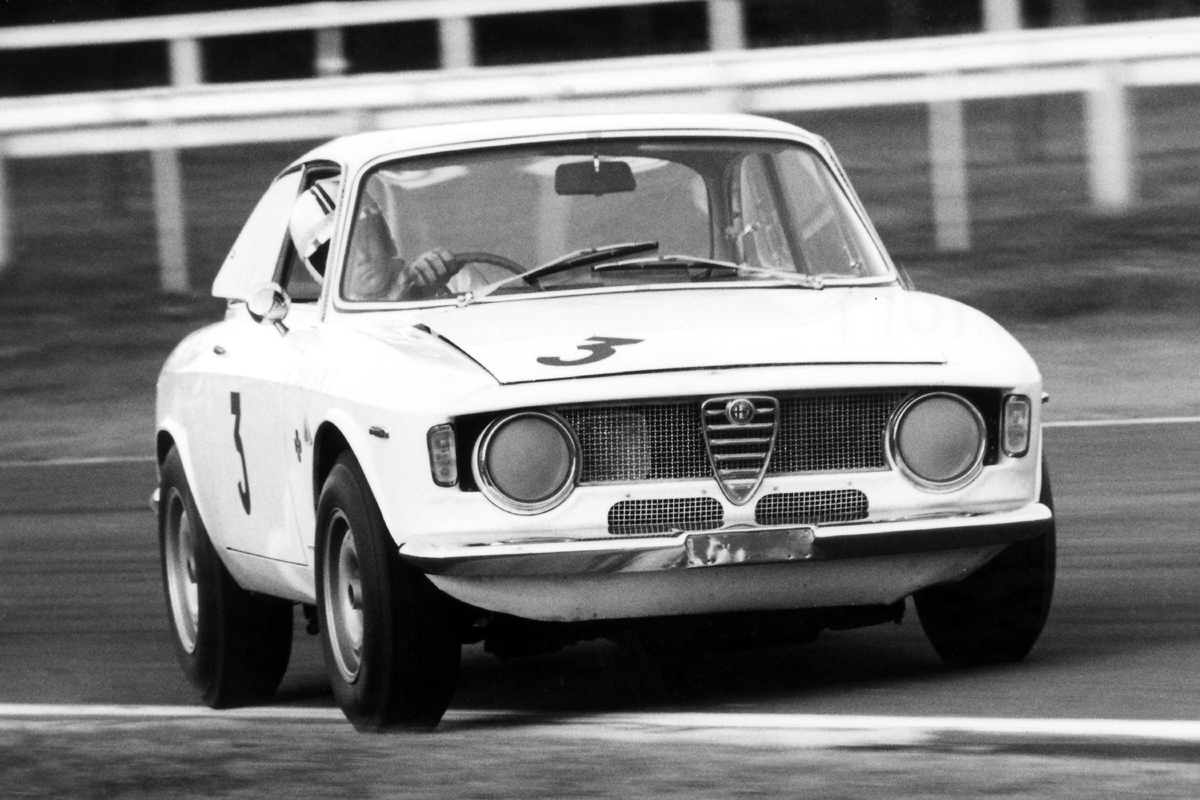
kb-alfa.jpgWarwick Farm staged the Australian Grand Prix on four occasions –  1963 (won by Jack Brabham); 1967 (Jackie Stewart); and 1970 and 1971 (Frank Matich).  Sykes introduced the extremely popular, and affordable, Formula Vee cars to Australian motor racing (two Vees and a Formula Ford were owned by the AARC for the use of club members); pioneered the concept of the club race meetings and practice days; and, in the 1970s, was also one of the key figures behind the choice of production-block Formula 5000 cars for Australia’s premier single-seater category. The AARC continued to promote successful and well-attended national race meetings through to July, 1973, when the AJC decided that the land used for most of the motor racing circuit should be sold for property development.   Sykes and the AARC (primarily through the work of Mary Packard) then assisted with the promotion of club race meetings on the smaller Warwick Farm circuit (through to October 28, 1973) and then at Amaroo Park (through to November 30, 1986).  Living with Meris in the original Kirribilli flat, Geoff in his retirement spent much of his time with bikes and cars:  he enjoyed restoring historic motor-cycles and riding his vintage Velocette; and, following a succession of white, automatic Triumph 2000s, drove a yellow Alfa Romeo GTV.

After several years of battling a heart condition, Geoff died on April 12, 1992, at Royal North Shore Hospital, North Sydney.S2290004
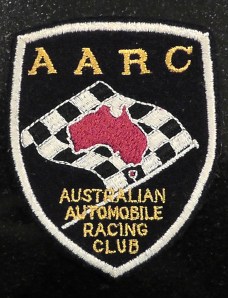
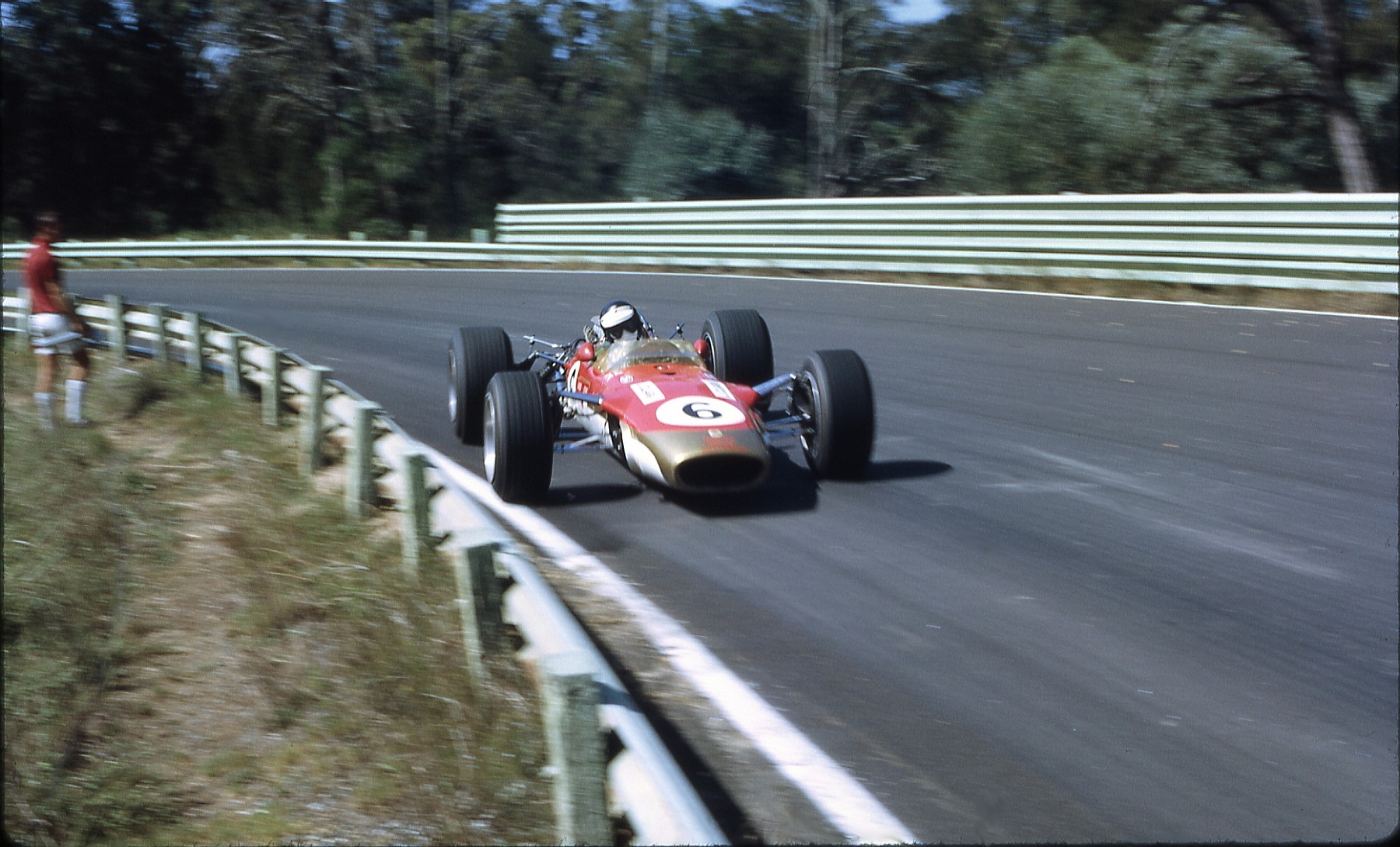
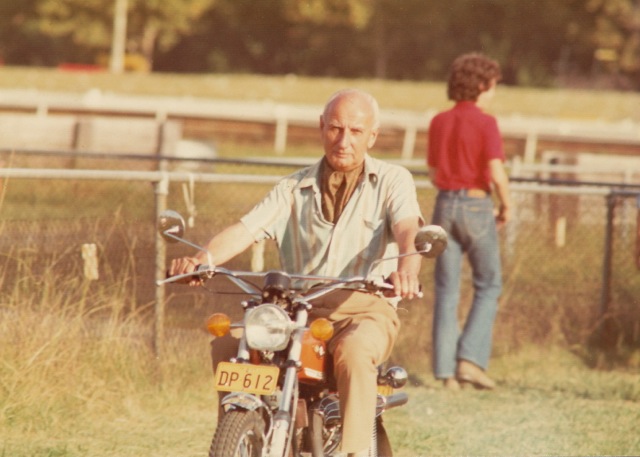
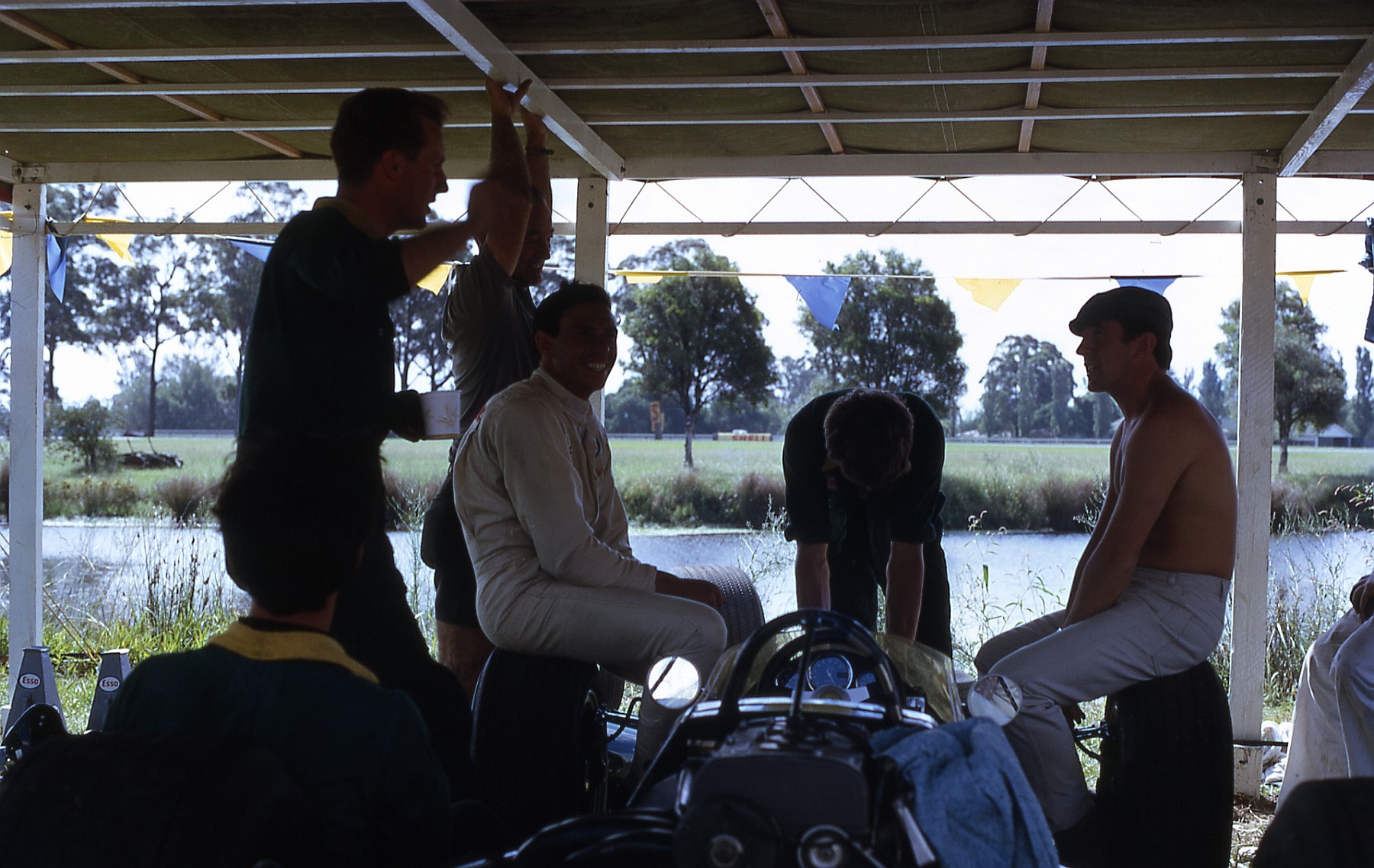
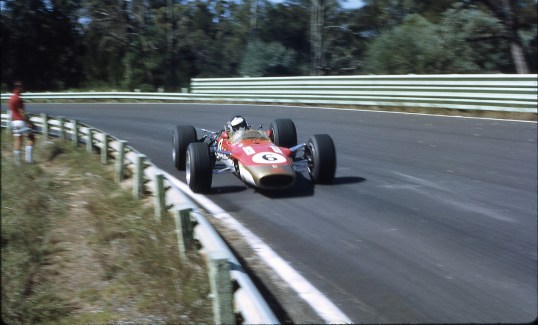
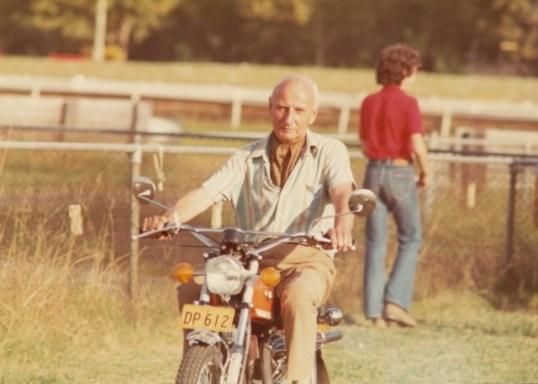
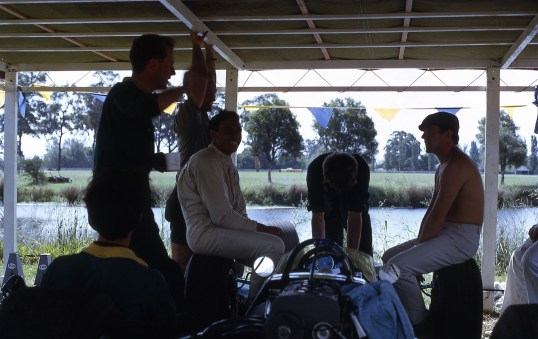
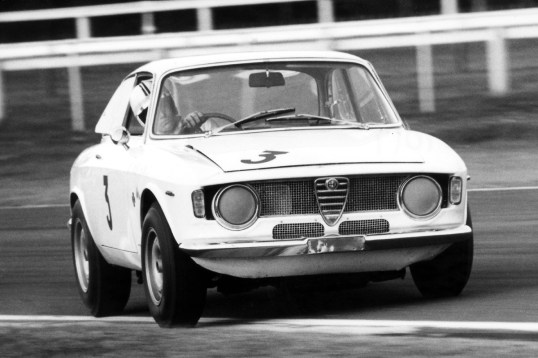
Captions from top: Jim Clark drifts the Gold Leaf Lotus 49 through the Warwick Farm Esses during practice for the 1968 International 100; Geoff takes Colin Piper’s new Suzuki for a quick spin around the Warwick Farm paddock; the Farm circuit changed not at all from Geoff’s original sketch; Jim Clark (left) and Jackie Stewart share a laugh.  The “chair” is Graham Hill’s new F2 Lotus 48, the background is the Causeway lake; Kevin Bartlett dances through Leger Corner in the Mildren Alfa; and (above), the AARC cloth badge

Photos: Paul Hobson, Colin Piper

Sunday, February 10, 1963

The Australian Grand Prix at Warwick Farm, nr Sydney, Australia…

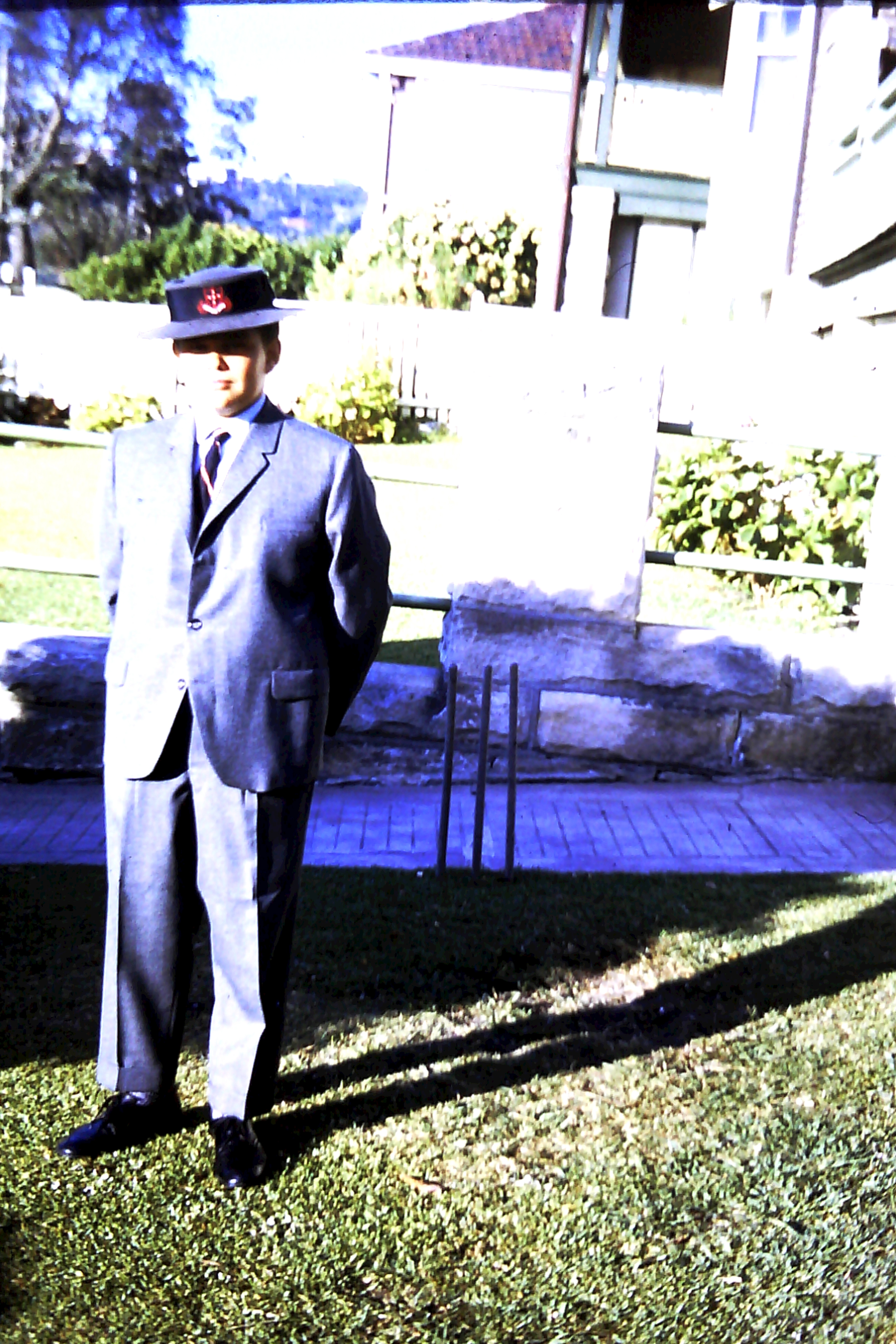
We drove to The Farm in our Morris Cowley, me in shorts, long socks and short-sleeved shirt, my Dad in his point-to-point attire, complete with cloth cap and shooting stick.  White-coated marshals directed us to our car park, nodding approvingly at our “Reserved” label and at the little cardboard grandstand tickets that hung from strings tied through our buttonholes.

I jumped from the car, taking in the smell of crushed grass, barbeque and beer.  I sprinted over to a programme seller.

“One please.  How much?”

“Two and six.”

“Dad?  Do you have two and six?”

The programme was printed on glossy, white paper.  I was there.  It was happening.  It was the Australian Grand Prix.  Warwick Farm.  Sunday, February 10, 1963.

I scanned the entries:

Car No 1: RRC Walker Racing (Dvr Graham Hill) – Ferguson

Car No 2: Bowmaker Racing Team (Dvr John Surtees) – Lola

Car No 3: Bowmaker Racing Team (Dvr Tony Maggs) – Lola

Car No 4: Ecurie Vitesse (Dvr Jack Brabham) – Brabham

Car No 5: Scuderia Veloce (Dvr David McKay) – Brabham

Car No 6: BS Stillwell (Dvr Bib Stillwell) – Brabham

Car No 8: Ecurie Australie (Dvr Lex Davison) – Cooper

Car No 10: Bruce McLaren (Dvr Bruce McLaren) – Cooper

Car No 11: Alec Mildren Pty Ltd (Dvr Frank Gardner) – Cooper

Car No 12: Bowmaker Racing Team (Dvr Jim Palmer) – Cooper

Car No 14: Scuderia Veloce (Dvr Chris Amon) – Cooper

Car No 15: J Youl (Dvr John Youl) – Cooper

Car No 16: Independent Motors (Dvr Tony Shelly) – Lotus

Car No 17: Total Racing Team (Frank Matich) – Elfin

…and so on.  I knew nothing about practice days back then, nothing about how the grid had been defined.  From our seats, though, high up in the grandstands, a good 500 yards from the circuit, Dad’s old binoculars (actually my grandfather’s and therefore the pair that had seen service in Burma) allowed me to watch the new World Champion, Graham Hill, climb from his dark blue Ferguson even as the starting grid began to take shape.  I was shocked by the dark patch of sweat that ran from top to bottom of his light-blue one-piece overalls.  I was in the shade, munching my Mum’s sandwiches, dipping into our Esky for a quick gulp of iced water;  the drivers were out there, under a torrid Sydney Sun, sweating and drinking water even as they sheltered beneath Les Leston umbrellas.

And there – on the left! – there is John Surtees, the driver on pole position.  He seems to be putting ice or something inside his helmet.  And next to him is Bruce McLaren!  They appear to be laughing about something.  They’re chatting and joking and pointing to something down at the other end of the grid.   In car number 5, David McKay, our local hero, sits quietly in his Brabham.  Amazingly, he is starting third, alongside Surtees and McLaren.  And what’s that little red car – number 17?  Ah yes.  That’s another local.  Frank Matich.

“It says here in the paper,” interjects my Dad, “that Matich was fast enough in practice to start fourth but will be moved further down the grid because he’s only driving a 1.5 litre car.   Sounds as though he did a jolly good job.”

F. Matich.  Total Team.  I would remember the names.

It was a long race – 100 miles of non-stop heat, noise and action.  The “something at the back of the grid” turned out to be Jack Brabham, starting his new turquoise-coloured car in amongst the also-rans after numerous problems in practice.  It was Jack, though, who drove emphatically through the field, winning the AGP for the Dowidat Spanner Trophy.  Surtees finished second after a late-race spin, ahead of Bruce, the excellent David McKay, the polished Bib Stillwell and the press-on Graham Hill in the Ferguson.  I couldn’t undertstand, back then, why Graham’s car looked so different from the low-line Lolas, Coopers and Brabhams.  I didn’t appreciate four-wheel-drive back then, even if front-engined cars seemed to fill most of the motor racing books I’d been lucky enough to read.

Afterwards, when the packed race-day schedule was over and the shadows were longer, we walked across the track to the paddock area.  My exhilaration left me breathless.  “There’s David McKay!”  “And look Dad!  Over there!  There’s Bruce McLaren!”

“Be quick now, Pete.  We must get home.  Mum’ll be waiting for us.”

“Can’t I get an autograph?  Do you think they’ll mind?”

“Of course, but remember to be polite.  Don’t interrupt and remember to call him ‘Mr McLaren’.”S2270028

I was but a nine-year-old.  The Beatles had yet to enter my field of perception, as had Jim Clark.  I knew nothing of the F1 World Championship that would follow this short series of Australasian races;  I read only the monthly Australian motoring magazines, for at Swains or at Angus and Robertson’s there was little else to study.

I had discovered, though, a world that stretched my imagination to new heights, to new limits.  That world seemed untouchable – but somehow I had to follow it.  From Sunday, February 10, 1963 onwards, school-bound though I was, I could think of little else.09-13-2010_22

S2270032

See you there!

I’m delighted to be associated again this year with Grand Prix Tours, the California-based motor racing travel company that not only smooths your  logistics to race events around the world but also adds a certain passion for the sport we love.  Click the widget to the right and you will see at a glance the special packages they’ve created for this year’s menu.  I’m looking forward very much to hosting the extended trips around the British and Italian Grands Prix as well as special talks and interviews at the Spanish and Canadian Grands Prix.  If you know Barry Simpson, Cherry Cooper and Tessa Bollmann and the team behind these all-inclusive trips you know that you’ll be touching the heart and soul of Formula One from the minute you board your plane, regardless of your country of origin.   I hope to see you there.

Albi ’67: just another F2 race…

Thanks to the excellent Richard Wiseman, I was recently able to sit back, relax and enjoy the 1967 Albi F2 race in its entirety.  And I mean entirety.  The French TV coverage begins with Jim Clark and Jochen Rindt chatting pre-race, takes in the complete drivers’ briefing (translated in situ by Jabby Crombac, the co-promoter) and then takes us through every lap of the race.  I’ve always been interested in the Albi event for the simple reason that it took place only two weeks after the Italian GP that year – and that Jim Clark’s drive at Monza unquestionably rates as one of his greatest.   If you want a modern parallel, it would be Sebastian Vettel racing an FIA F2 car at, say, Paul Ricard ten days after his drive up to third place in the this year’s Abu Dhabi Grand Prix.  I always wondered whether the whole thing would have been anti-climactic for Jim or whether Monza would have been quickly confined to history when Albi loomed fresh and clear.

As it happens, Jim appears to be usual, brilliant self throughout the race coverage. He jokes in the pre-race assembly area with Jack Brabham:  “C’mon Jack, we’re not at Monza now”;  and he wanders down to chat to Piers Courage and Jean-Pierre Beltoise.  Again he’s all smiles.  And then he drives beautifully, of course. Quickest in practice on Friday but unable to improve his time on Saturday, he starts second in his Team Lotus 48.  His biggest handicap, obviously, are his Firestones: Jackie Stewart, in Ken Tyrrell’s Dunlop R7-shod Matra is in a class of his own and wins easily from the pole. On the grid, Stewart is the only driver I could see who needed to strapped into his cockpit (just shoulder and lap belts;  no crutch strap). All the others just slid into their bolides and went racing.  No belts.

Jim never gives up. He is lying third behind Jochen Rindt’s Winkelmann Brabham BT23C when he loses the twitchy, green-and-yellow 48 early in the race and narrowly misses a concrete wall; he then tigers through the field to regain third place at the finish. After races and weekends like this, no wonder that Hockenheim, 1968, would for Jim be just another F2 race…

We see the start procedure of the legendary “Toto” Roche in all its slapstick. He warns the drivers beforehand that he will drop the flag any time after the five-second board – and this he does, with semi-chaotic results. I think it’s Graham Hill, in the other works Lotus 48, who almost gives Toto an aerial view of the proceedings.

Impressive is the early-lap pace of the English privateer, Robin Widdows;  and glorious is the pass that takes Jackie Stewart into the lead from Jochen Rindt. Stewart, Rindt, Clark and Brabham:  the large French crowd, luxuriating in late-summer sunshine, saw race driving at its highest level.  Were any of those Names afraid or ashamed of being beaten by lesser names in a relatively minor F2 race?  Not at all.  They just wanted to go motor racing.  It was what they did.

I mentioned all this to Brian Redman the other day.  Brian finished a typically-classy sixth at Albi (behind Stewart, Rindt, Clark, Jacky Ickx in the second Tyrrell Matra, and Chris Irwin in John Surtees’ Lola) and thus underlined all the promise that would land him an F1 drive for 1968. Brian actually had to qualify his maroon David Bridges Lola for Albi – and did so comfortably, of course, lapping only a shade slower than Ickx and matching Piers in the John Coombs McLaren M4A.

This was Brian’s reply:

Hello Peter, 
 
Plans went wrong at the beginning of ’67, when told father I was going racing, he wished me luck – and said: if it doesn’t work out, sorry, but you can’t come back! One week later, David Bridges rang and said: “sorry Spud, but we can’t get that new Brabham, or them Cosworth FVAs” ! So we started with an old Brabham and a bored and stroked Cosworth SCA that David had lying around. Surtees came to us later and offered to sell a new Lola T100 – with two FVAs ……things went somewhat better after that! Best race was Crystal Palace F2, 1968, just before Cooper accident. Pole position and 2nd to Rindt in race.
 
Talking of Albi F2 in 1967, Chris Irwin asked if I’d like to fly back with him to the UK. Beautiful flight across La Belle France. Now, over the English Channel, low cloud, couldn’t see your hand in front of your face.

Feeling nervous, asked Chris if he was trained for instrument navigation: “err, actually, no….but I know how it works”. Even more nervous.The ‘plane is moving around quite a bit, just as Chris finished talking – the engine stopped! Never before or since, have I felt my heart give such a mighty leap! Frantic examination of the instruments, showed it had run out of fuel! Even more frantic twisting and pulling of things, the wing-tip tanks are turned on – and the engine starts again!
 
Phew!
 
Brian.
I see that another couple of DVDs have just arrived in the post –  Monaco, 1963 and the Le Mans F2 race, 1966.
‘Scuse me, while I disappear…


When F1 first came to Texas…


…it took over the entire city of Dallas.  It was a street race.  It was hot – very hot.  And the city said “F1” wherever you went.

It was different this year in Austin.  The circuit is out of town.  You sat in a coffee shop near the University of Texas and the world of F1 was about as far away as rainy day in Woking.

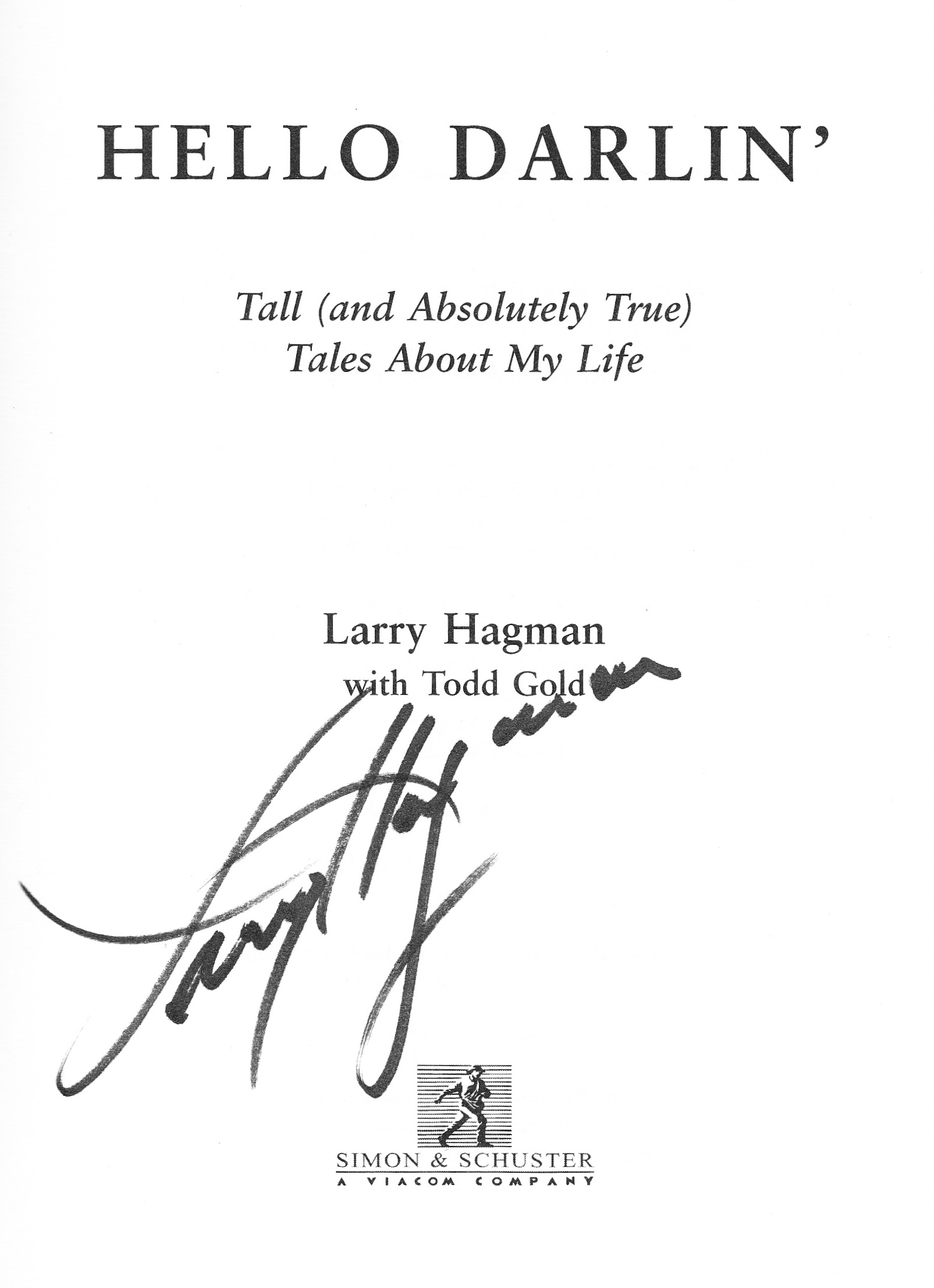
That’s not how it was in Dallas ’84.  Maybe it was because Lorimar’s Dallas had never been more omnipresent.  The whole world talked about it – not as a “soap”, as it is glibly described today, but as a skillfully-enacted drama that was about as close to reality as anyone had ever dared to step.  That’s how F1 people felt about it, anyway.  And the people of Dallas embraced their amazing new F1 race, for it was everything that their show was too:  it was about money, power, ego, politics, sex… and it was played out in a world within a world.   The poignancy of Larry Hagman’s recent passing should not have been lost on anyone who was at Texas F1 (Season Two) a few weeks ago. Austin didn’t feature much in the Dallas storylines, but the spirit of ’84 was there if you looked for it at the Circuit of the Americas.

Here are a few snapshots, then, of the days when Dallas met Formula One. Fun days. Amazing days.

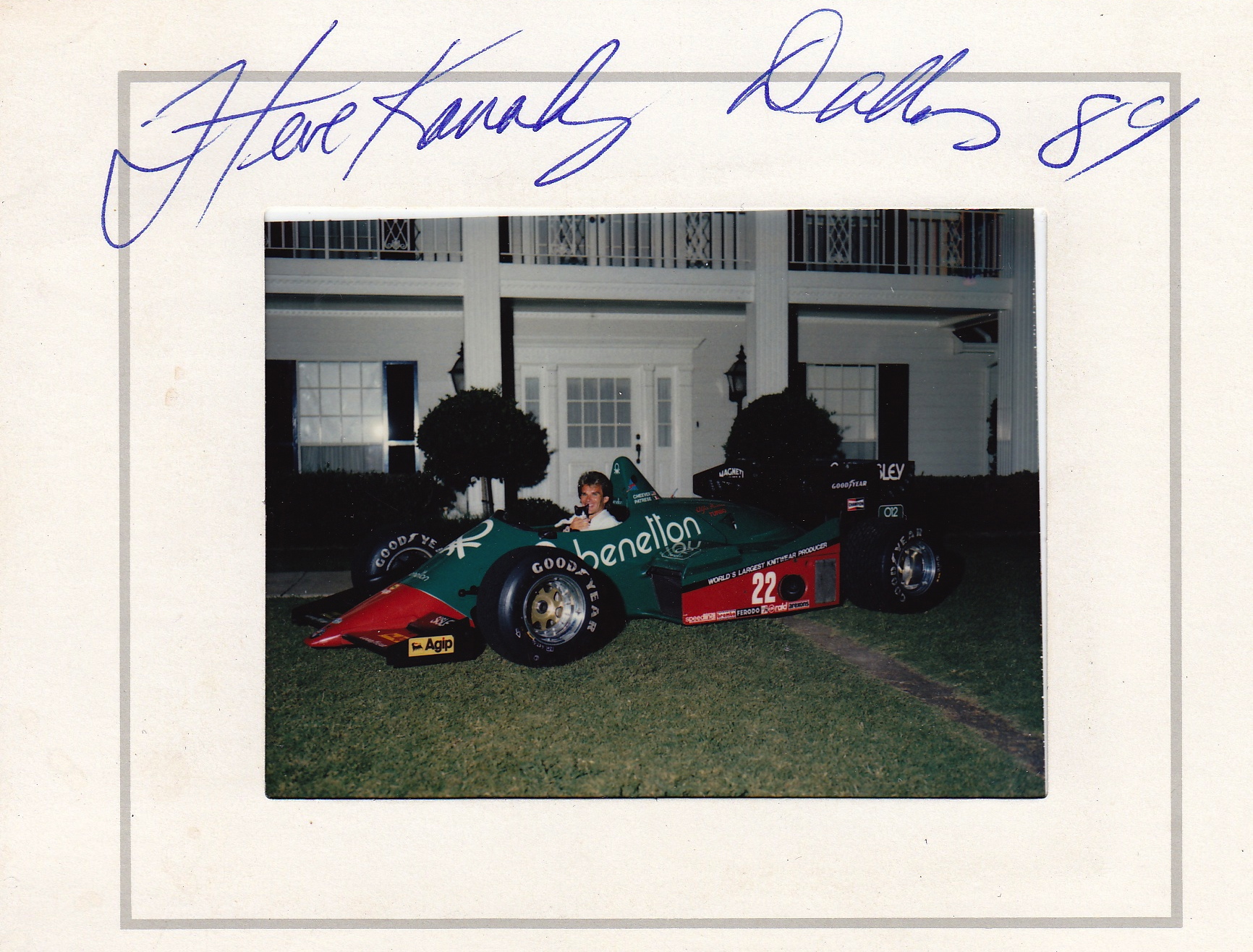
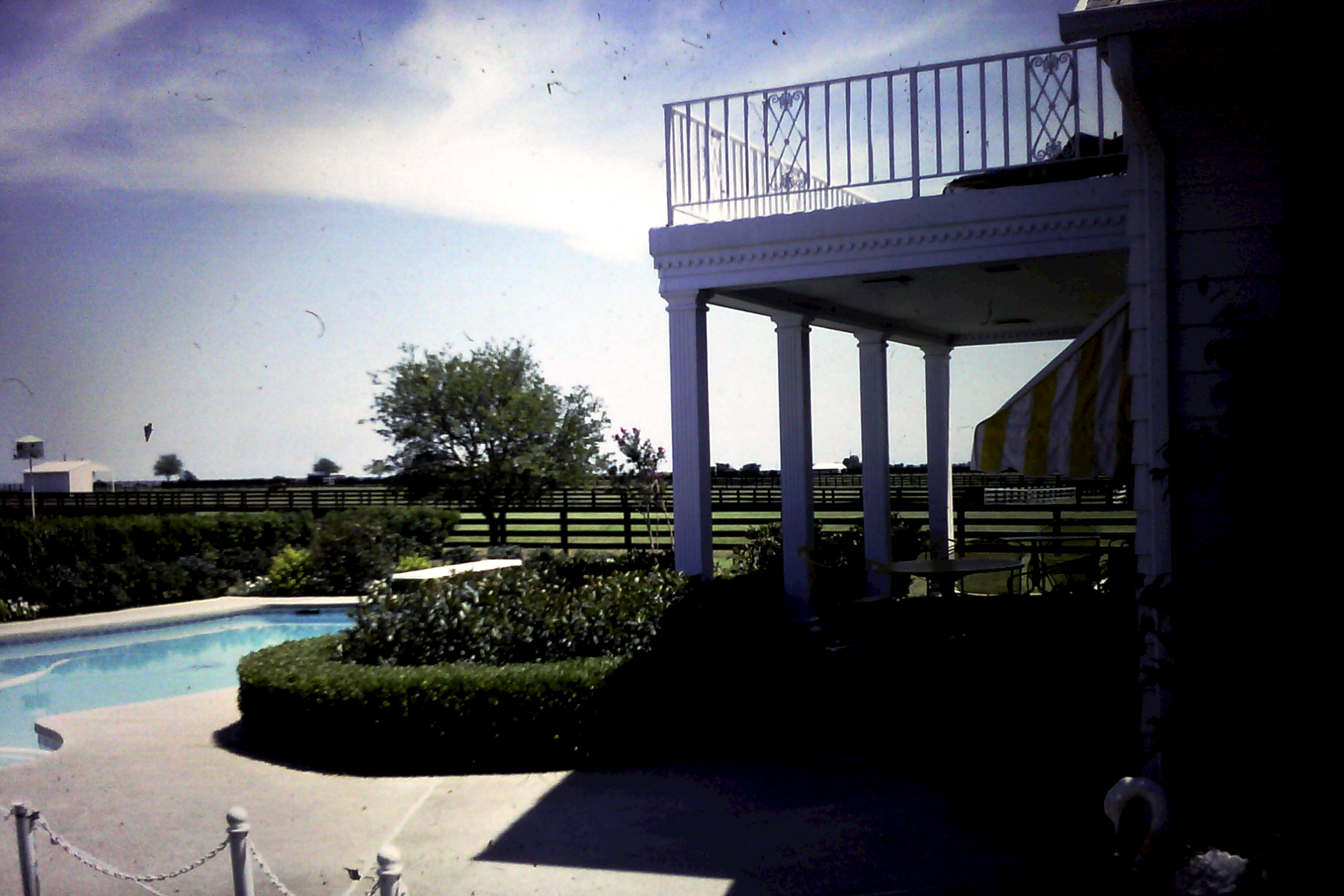
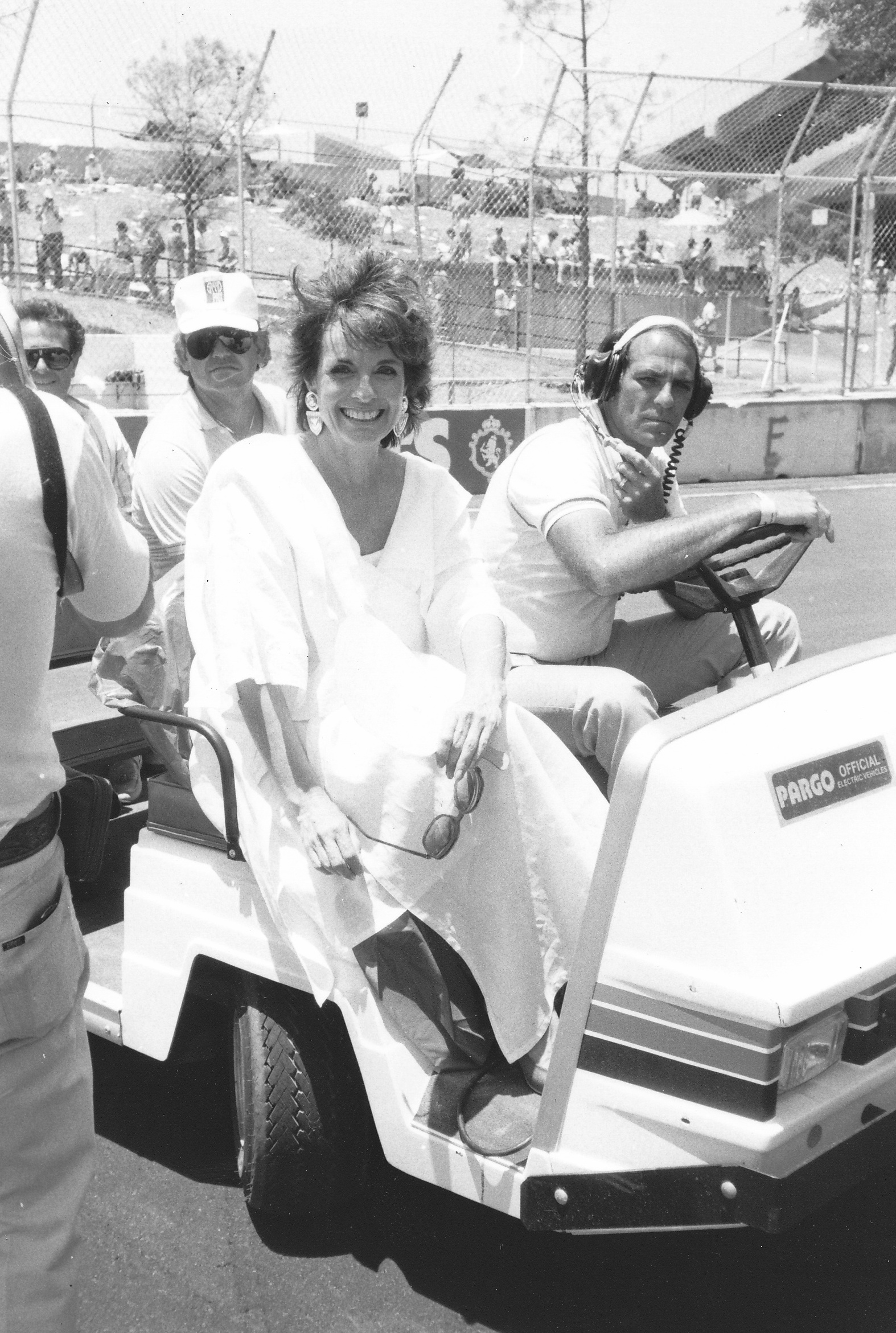
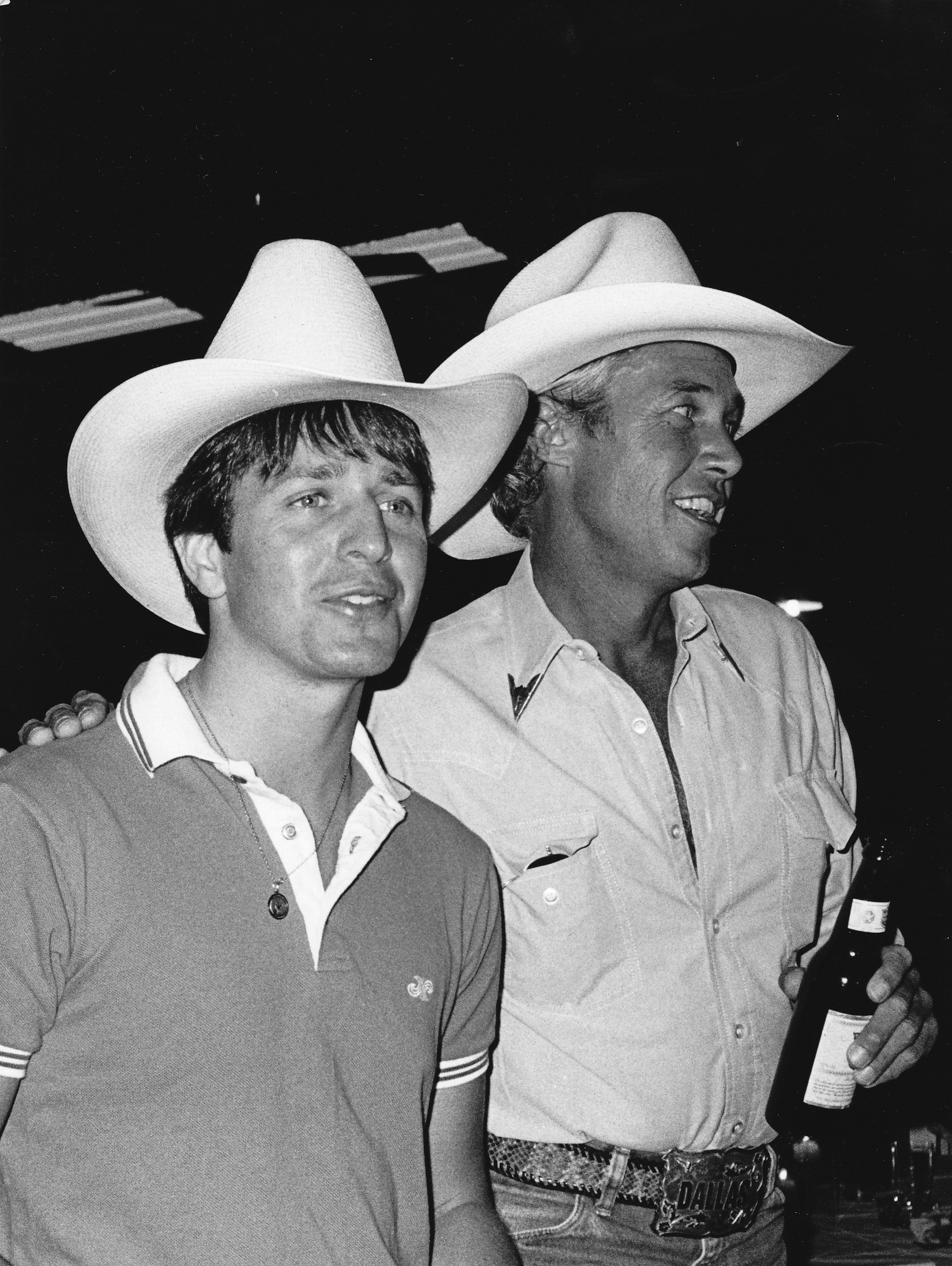
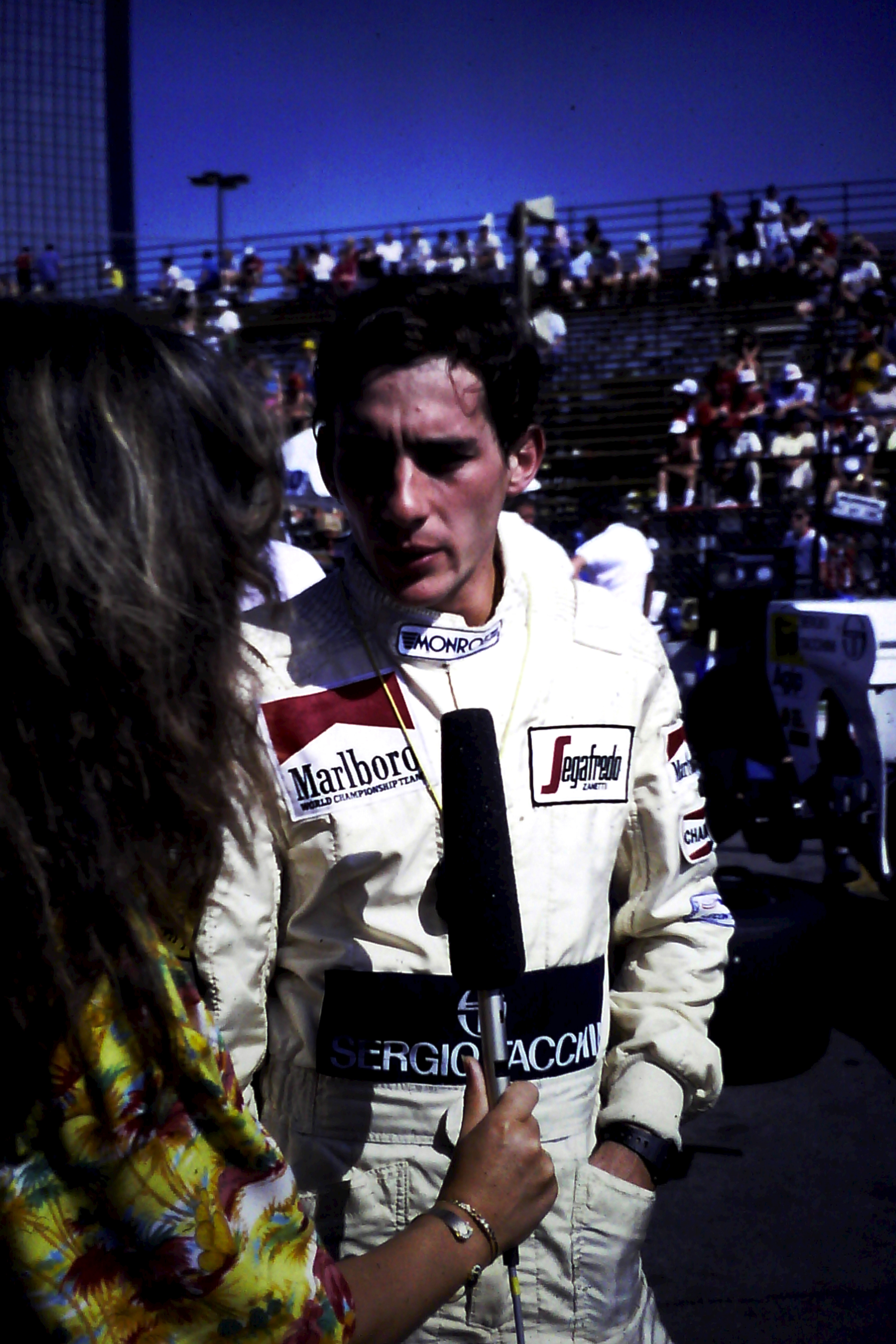
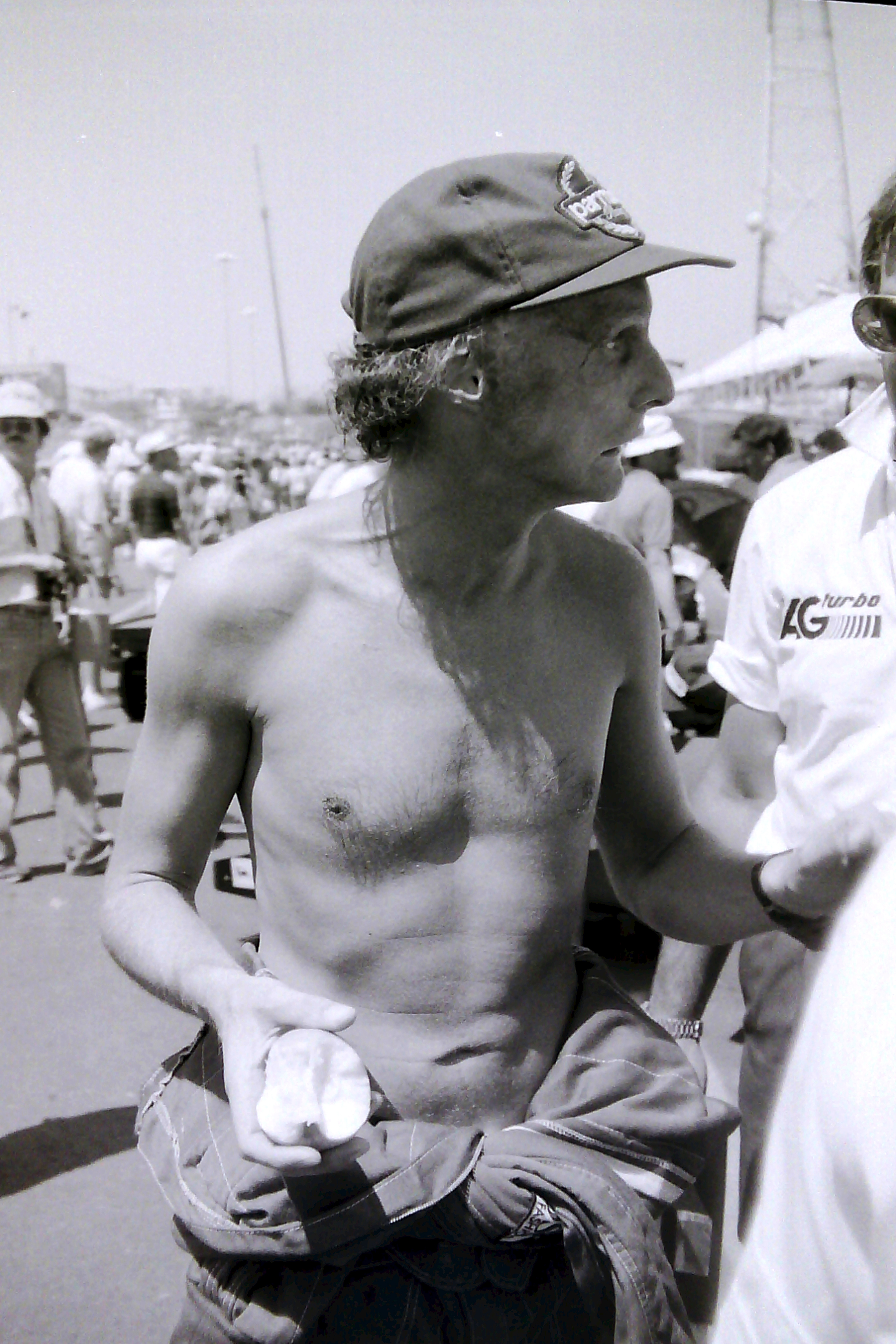
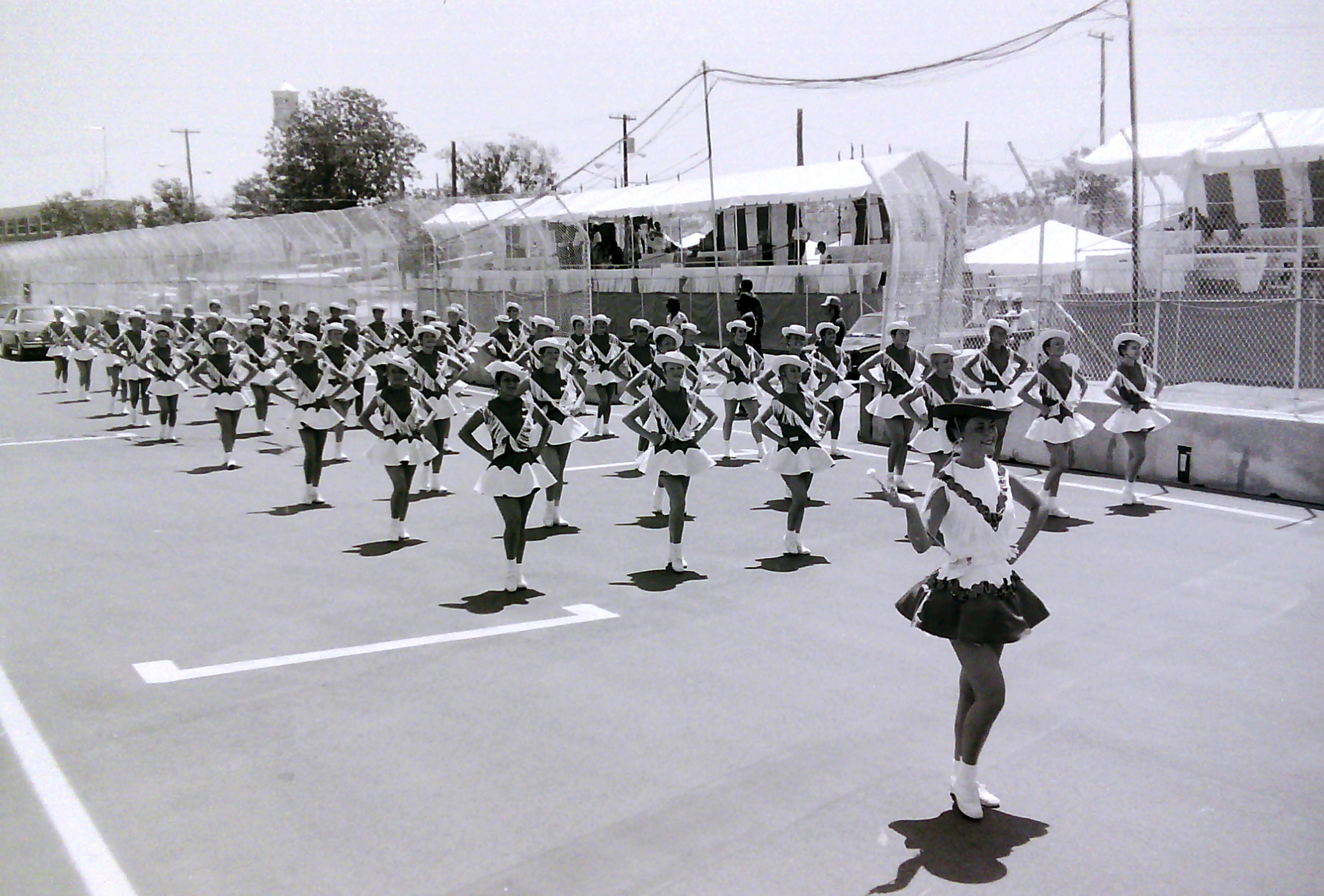
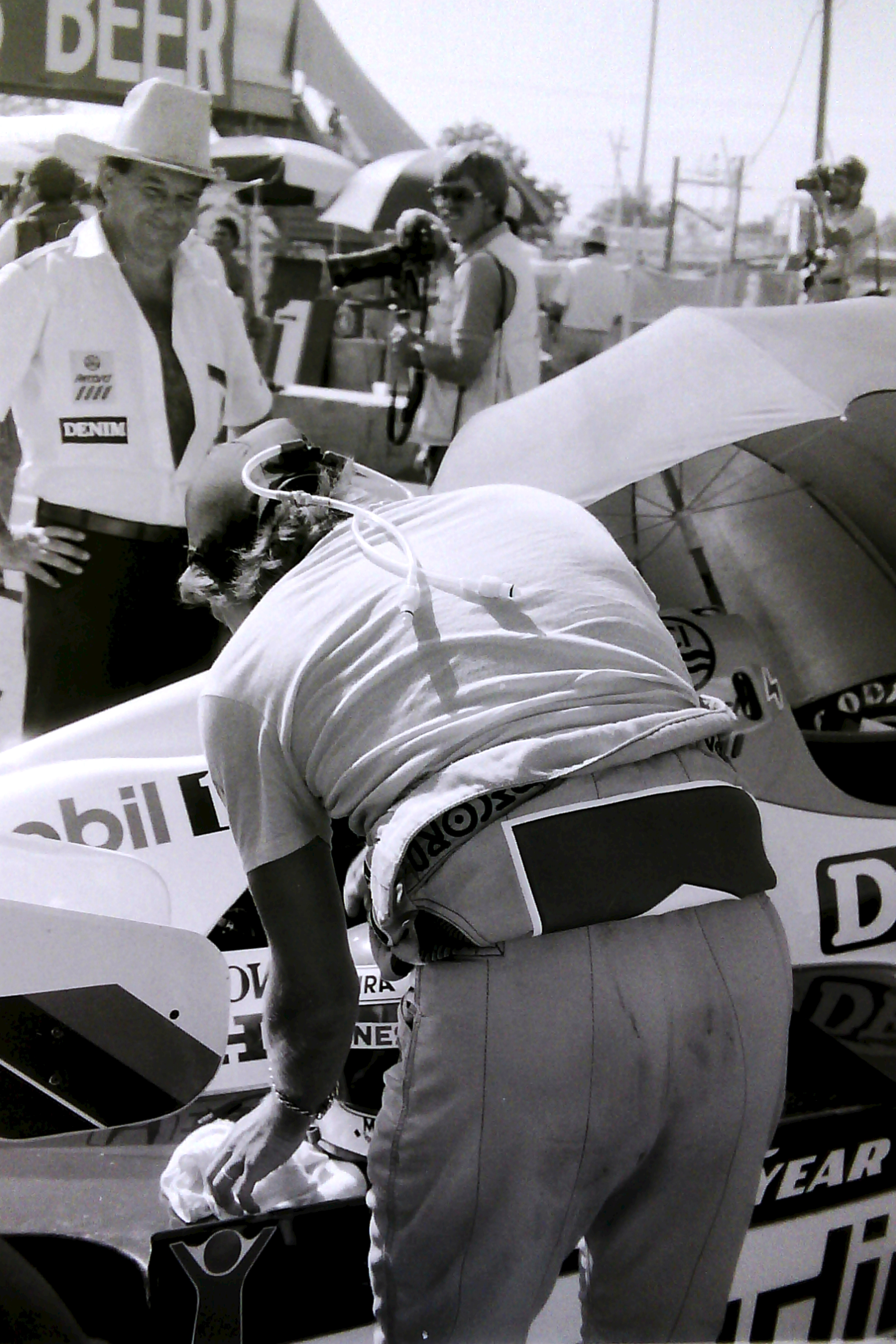
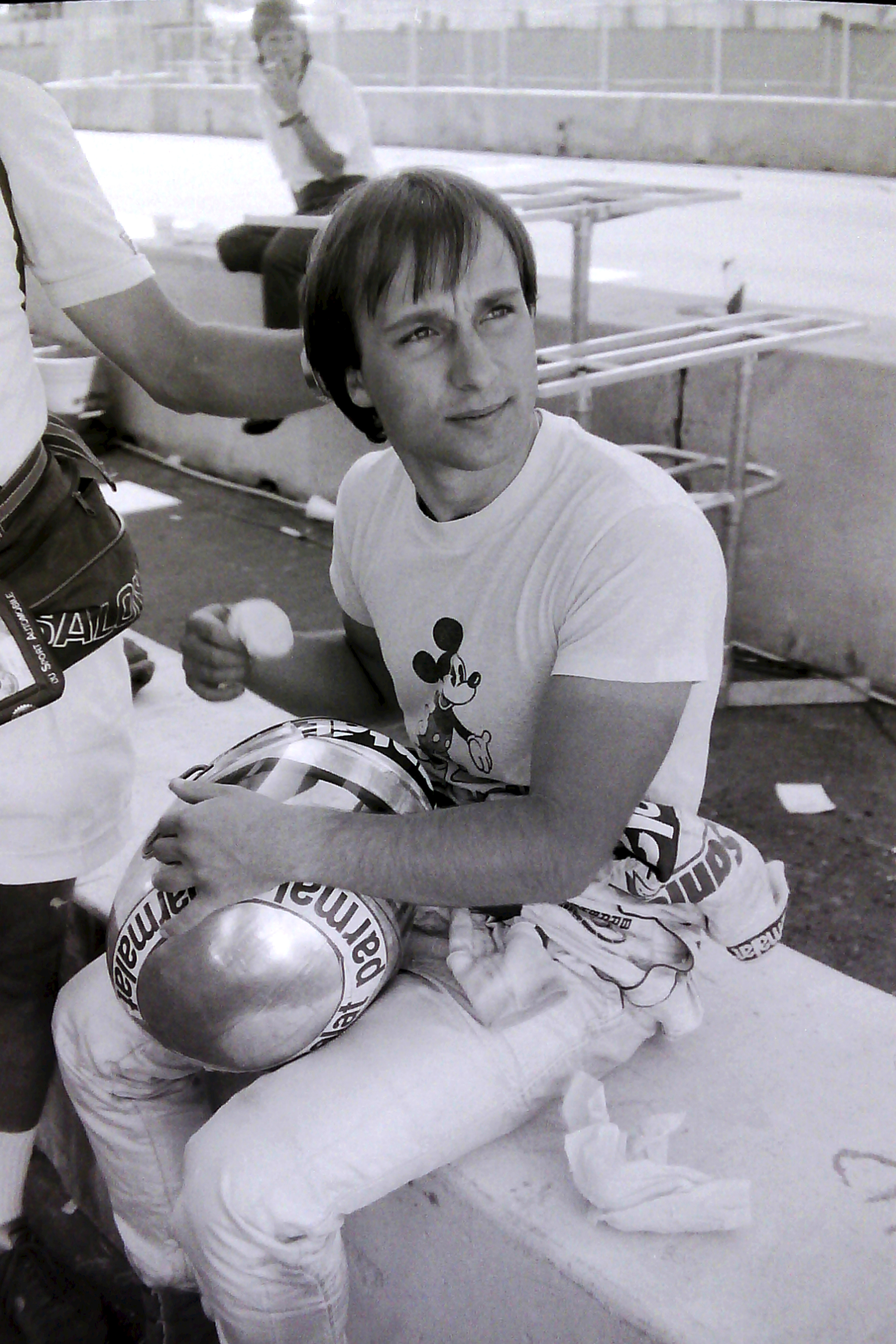
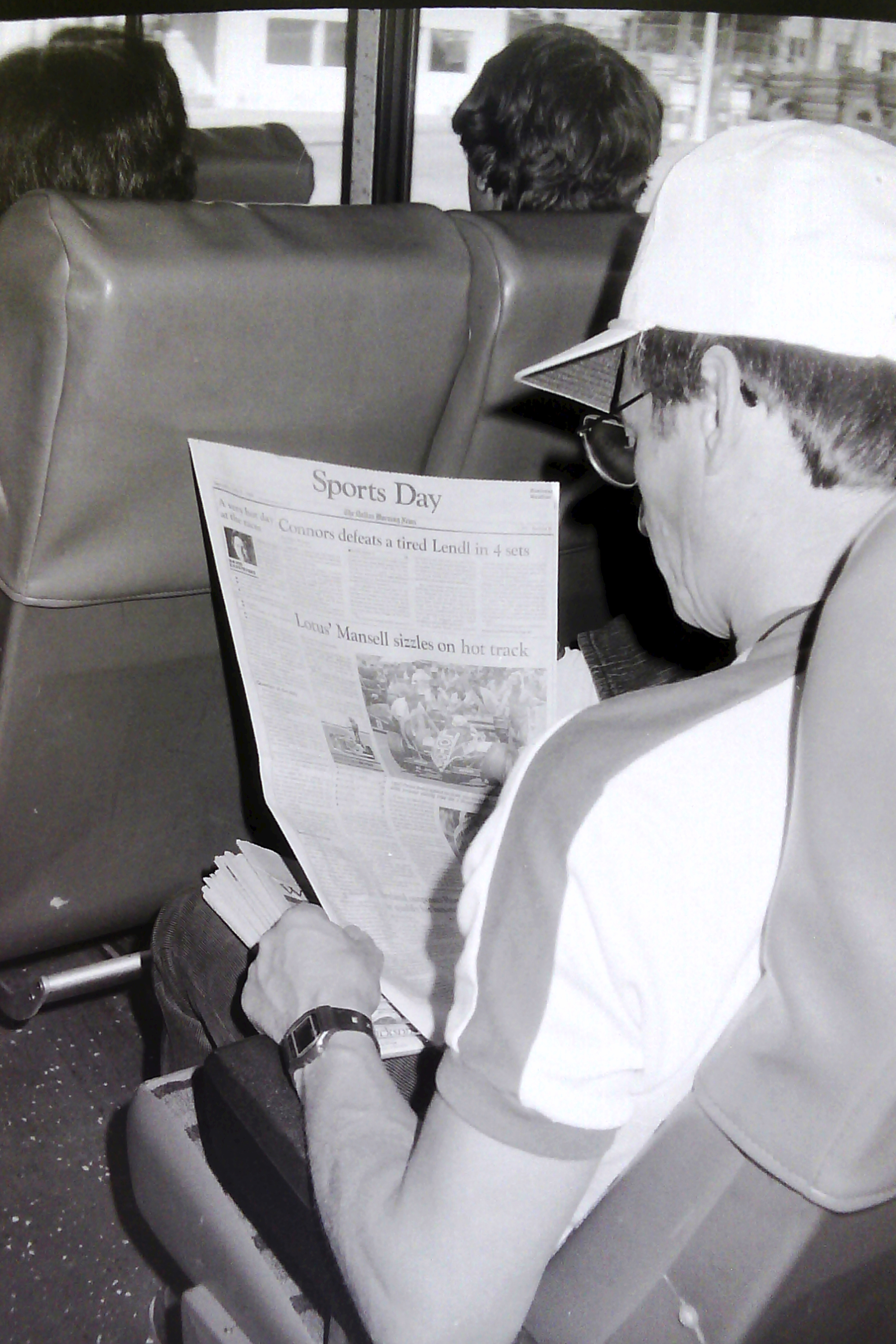
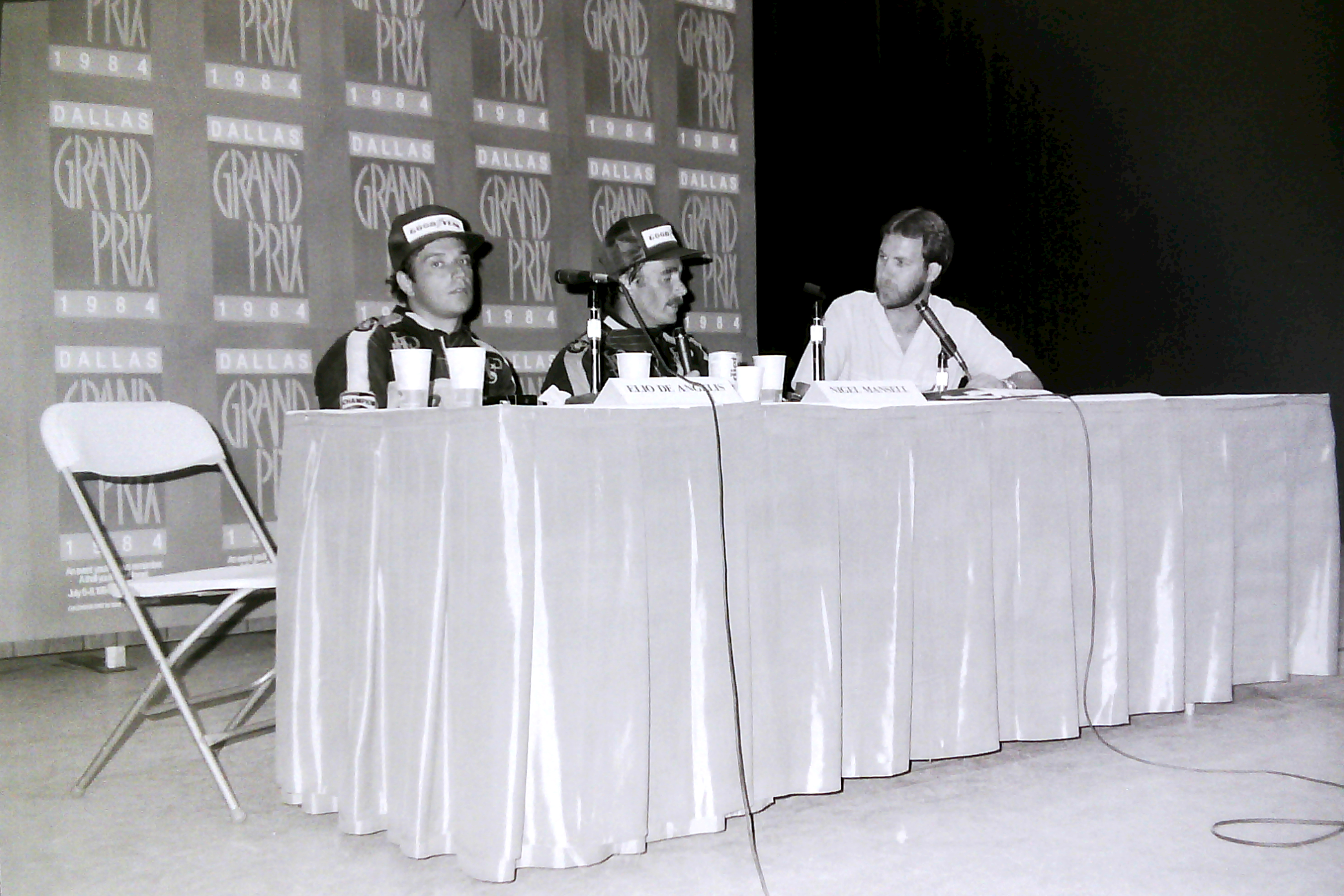
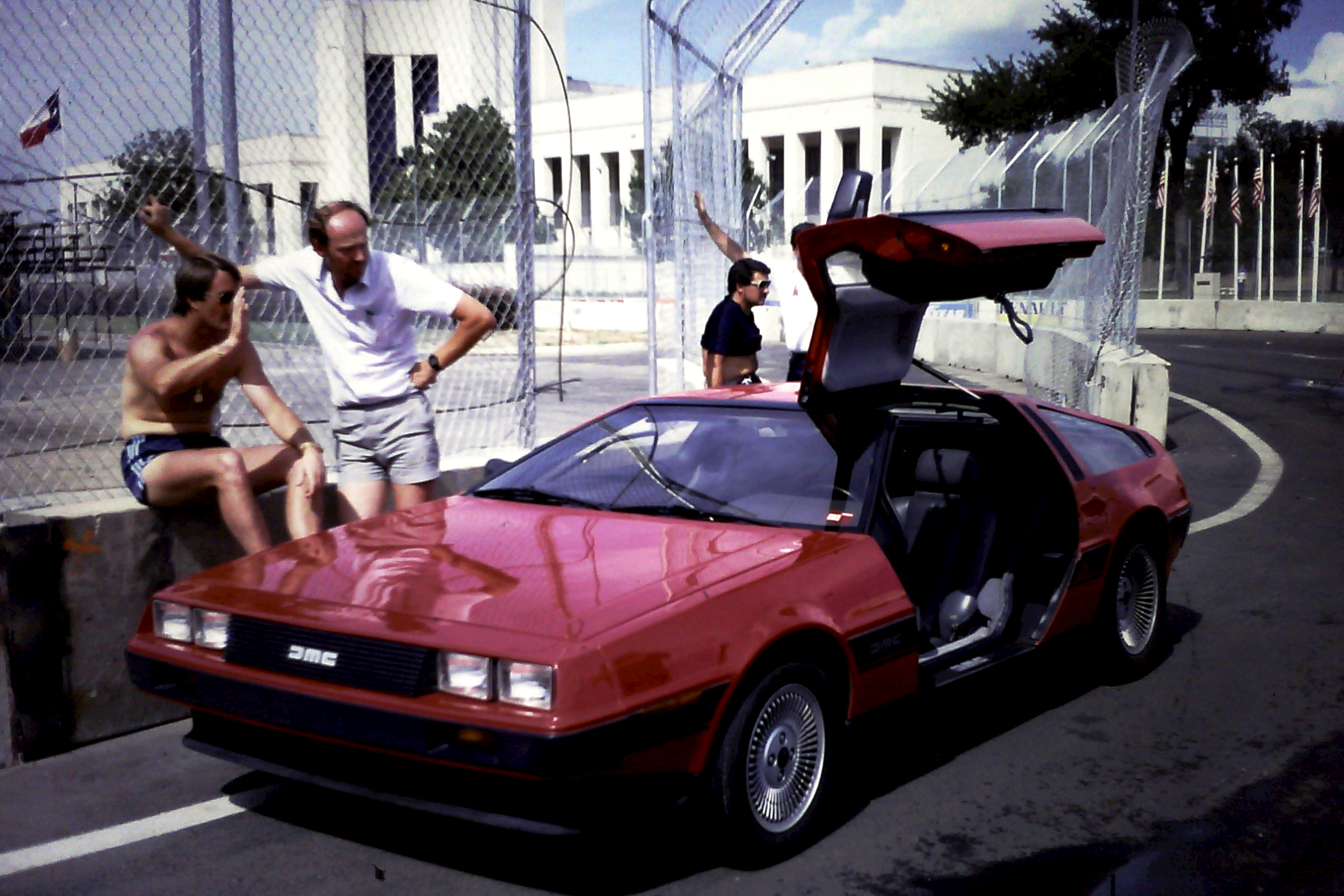
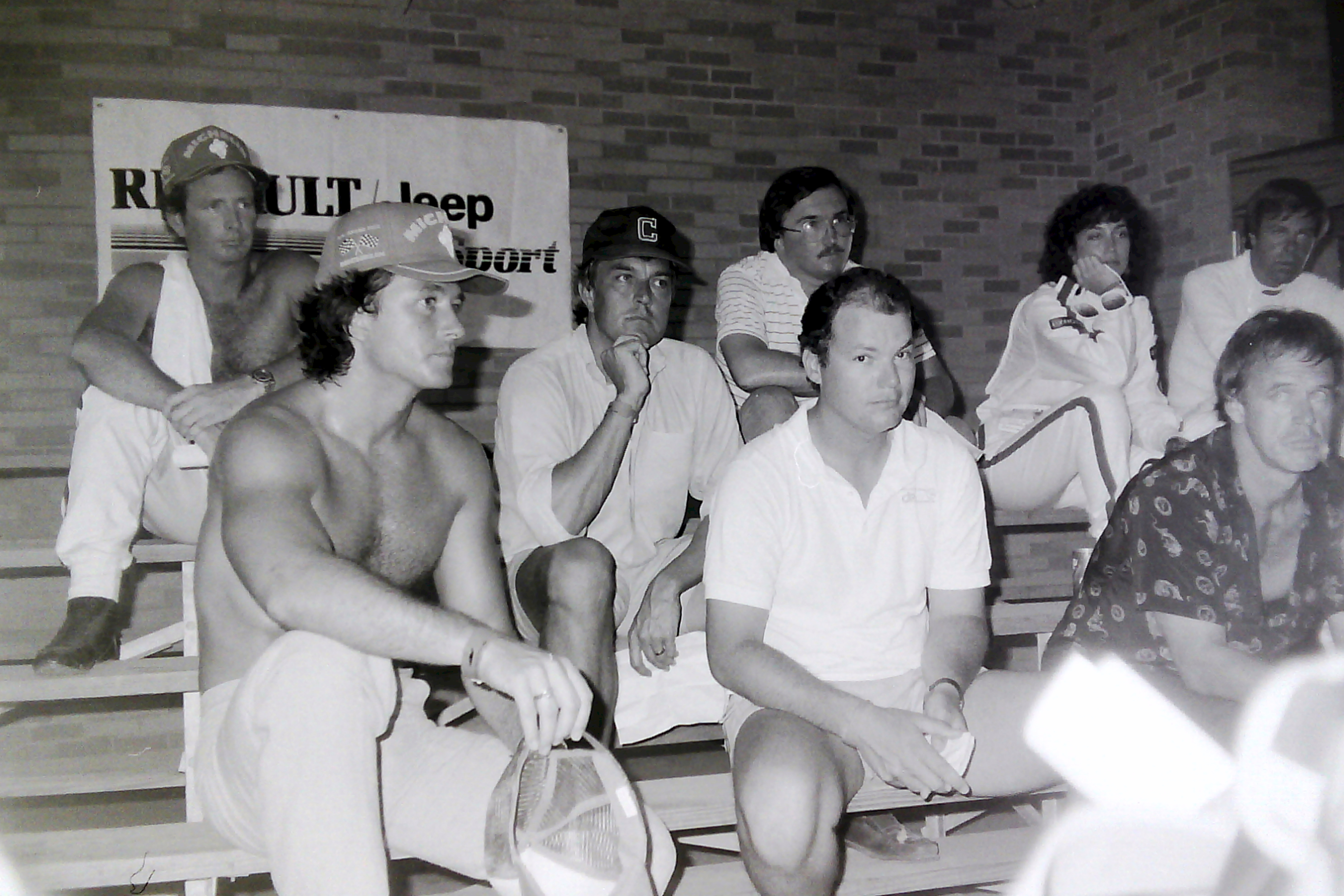
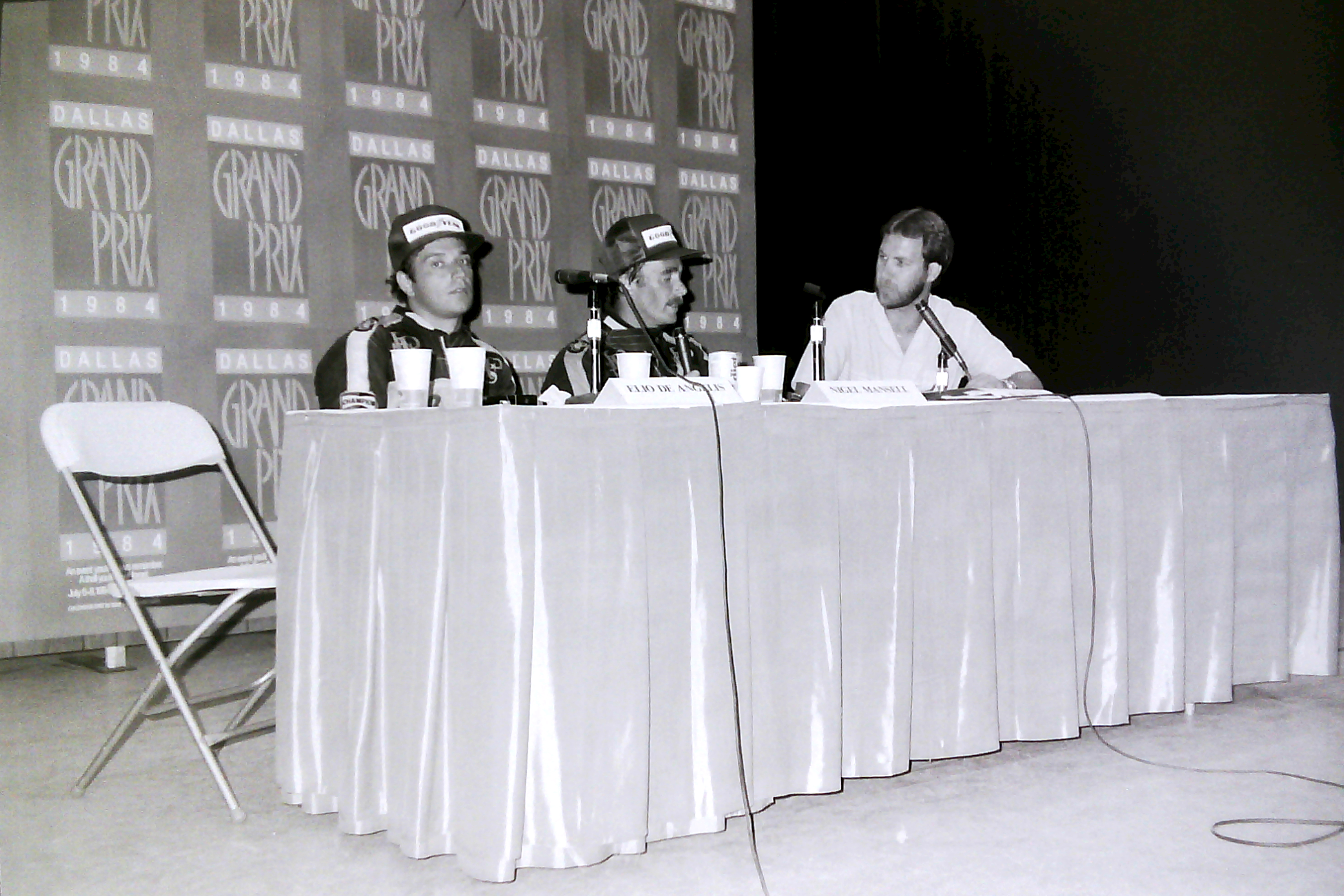
Captions, from top left: Larry Hagman – he’ll be sadly missed.  His autobiography, published recently, is a must-read; I don’t know what I enjoyed most – the Benetton party at Southfork Ranch or posing in the factory Alfa with a sweet, Texan pussycat; F1 people headed quickly for Southfork Ranch – and found that it was just as it seemed to be in the show!; the delightful Linda “Sue-Ellen Ewing” Gray was golf-buggied to the starting grid;  Tyrrell’s Martin Brundle and Steve “Ray Krebbs” Kanaly shared some laughs; Ayrton stayed characteristically cool; Niki Lauda, who would win the Championship that year (by half a point:  you think 2012 was close!), with trademark fruit (who needs a drink bottle?!); this we’d never seen before: marching girls! On an F1 grid!; Keijo Rosberg won the race for Williams-Honda, helped in large measure by the cool suit created for him by Williams Team Manager, Peter Collins. We all approved of the headgear worn by the Willy boys, as modelled in the background by Chief Mechanic, Alan Challis; Brabham’s Corrado Fabi prepares for work.  Mickey Mouse t-shirts (won under the race suit, Rene Arnoux-style) were all the rage back then; Nigel Mansell catches up with the sports news on the bus into the paddock on Saturday morning: “Lotus’ Mansell sizzles on hot track…!“; Elio De Angelis and Nigel tell the US media all about it.  Honed by the Glen, Long Beach and Detroit and to some extent Vegas, the American press fully-embraced F1 in Dallas; Below: Nigel and his JPTL  race engineer, Steve Hallam, pause for a breather by a (rare) Colin Chapman-inspired DeLorean during their pre-practice track walk; Bottom: Patrick Duffy, and (in white polo, staring at the lens) the brilliant singer/songwriter Christopher Cross  feign interest during a briefing for the celebrity race.  “If you get caught between the moon and New York City….” just about summed it all up


Patrick Duffy and the boys feign interest during the celebrity race briefing. Why no celebrity race in Austin, come to think of it?

Post Navigation