peterwindsor.com

…chance doesn't exist; there's always a cause and a reason for everything – Elahi

Archive for the tag “Formula One”

Watching from La Rascasse (Part 2)

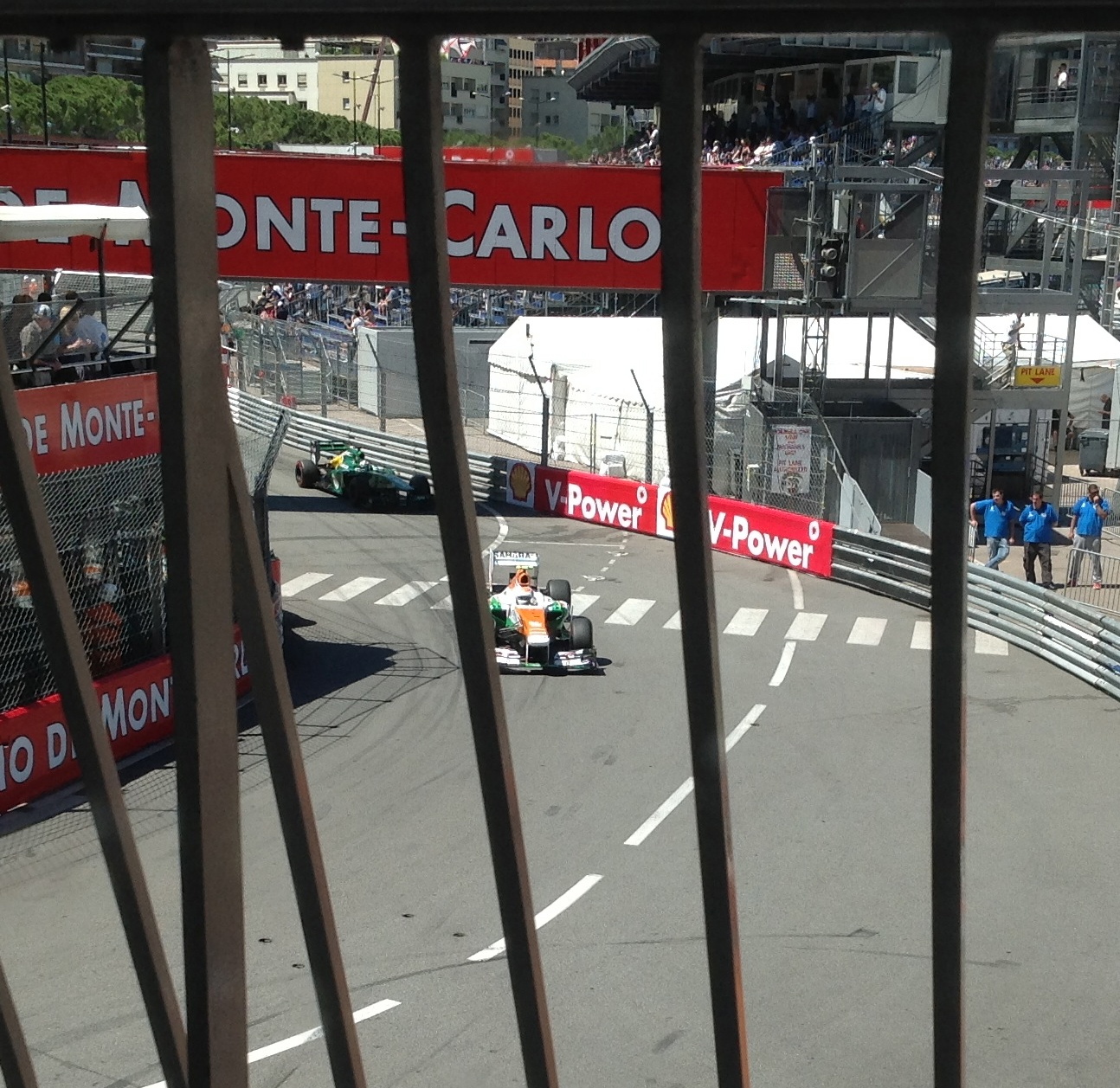
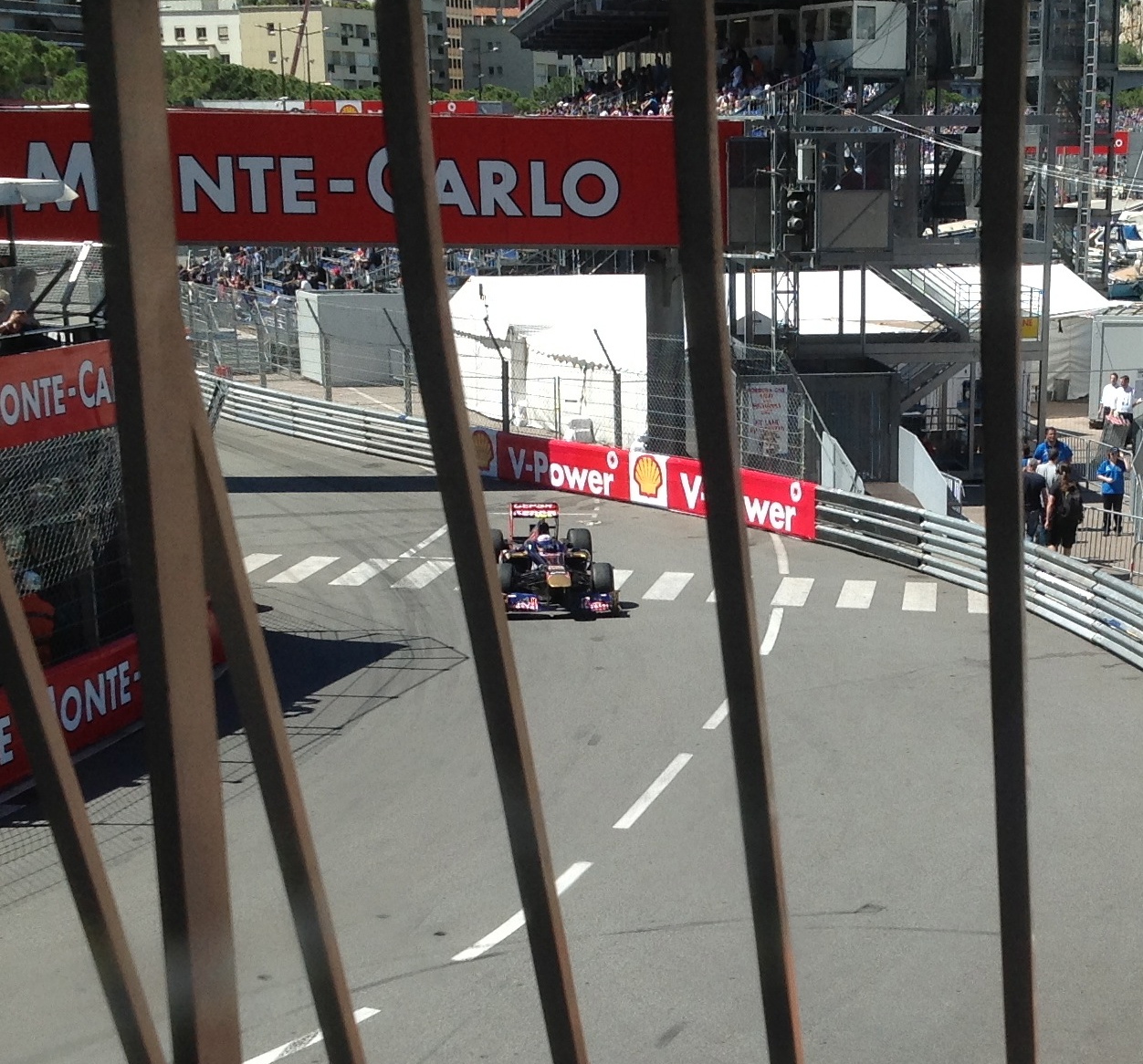
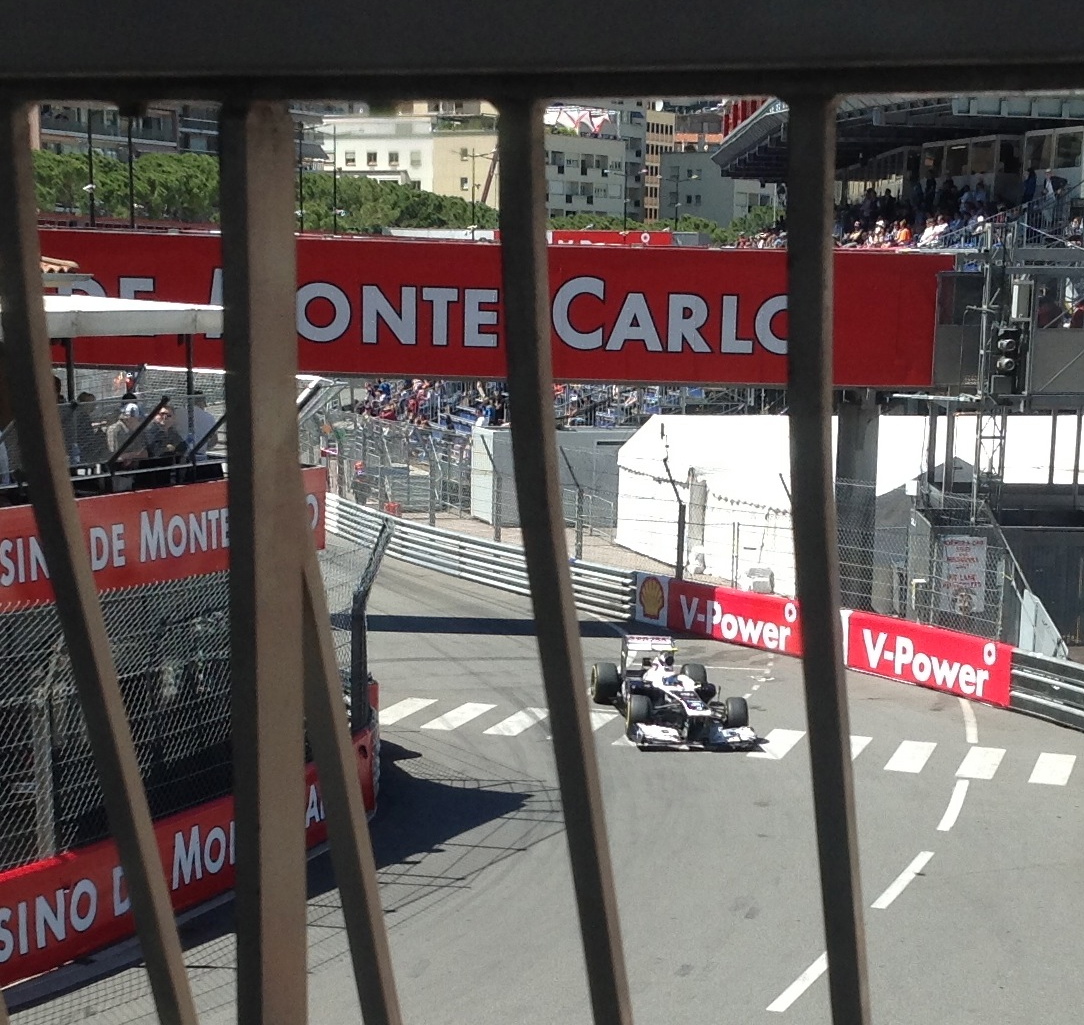
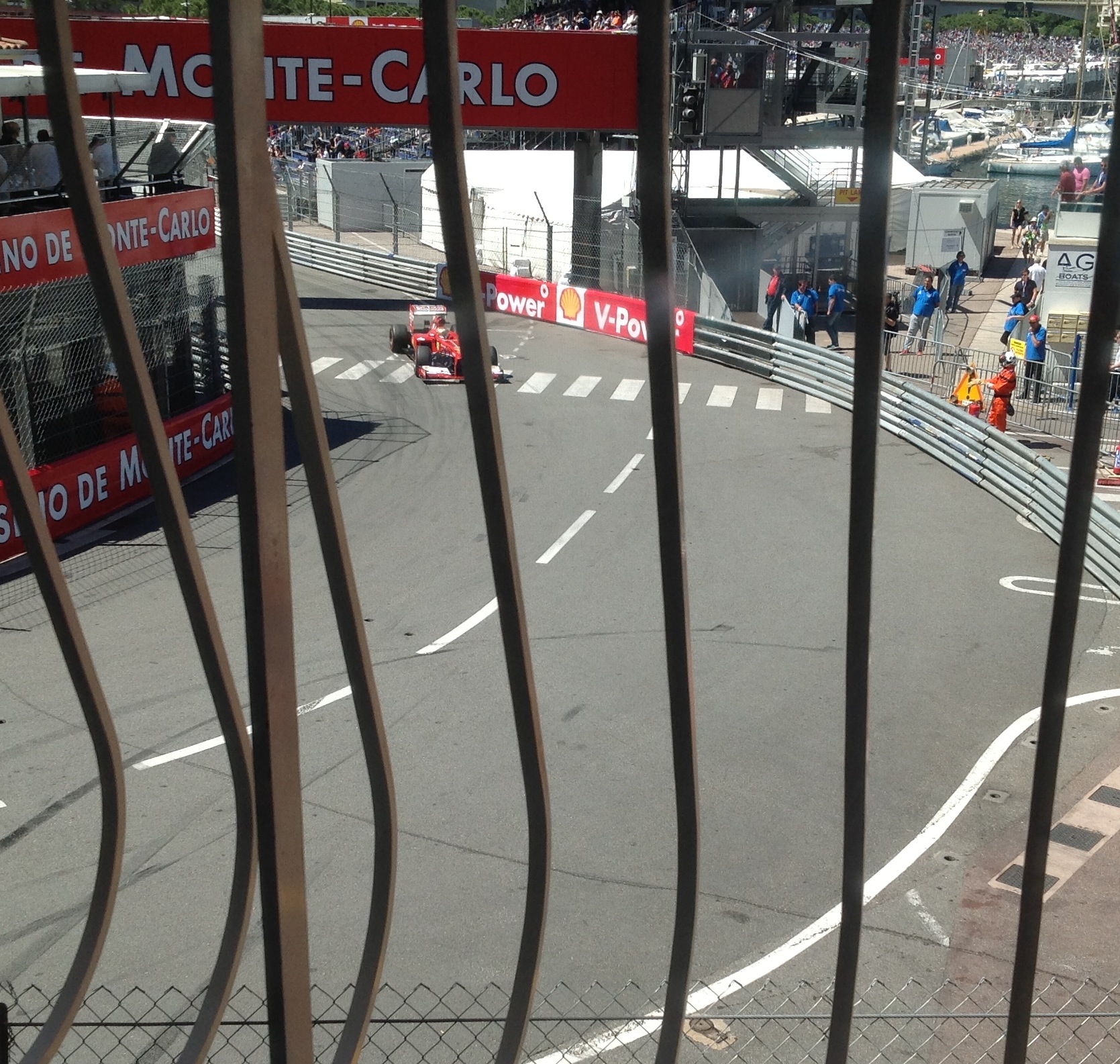
In Part 2 of Watching from La Rascasse, we look at some of the other drivers who were out on Thursday afternoon at Monaco.  Sadly there was no Romain Grosjean when we were camera-ready:  by then, he had hit the Ste Devote guard-rail.

Paul Di Resta (below, top) looked extremely good here, with a decisively-early approach, a clean rotation from a stable mid-corner and an effectively clean exit.  Adrian Sutil (below, bottom) was all of that but a shade wider, and thus a shade more conservative, on his approach. Both drivers looked excellent; the difference between them was smaller than the difference between the Mercedes boys.Dir

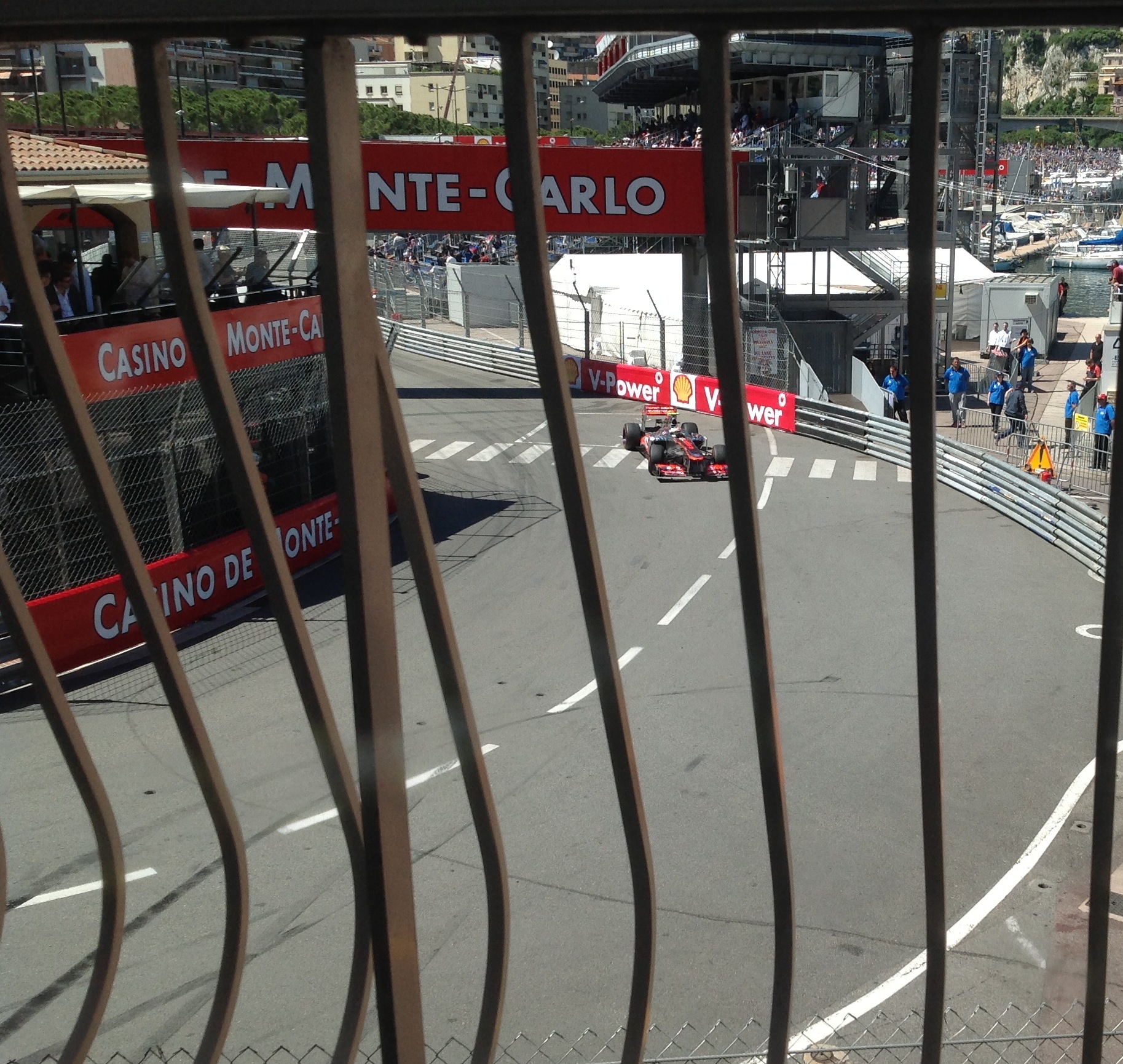
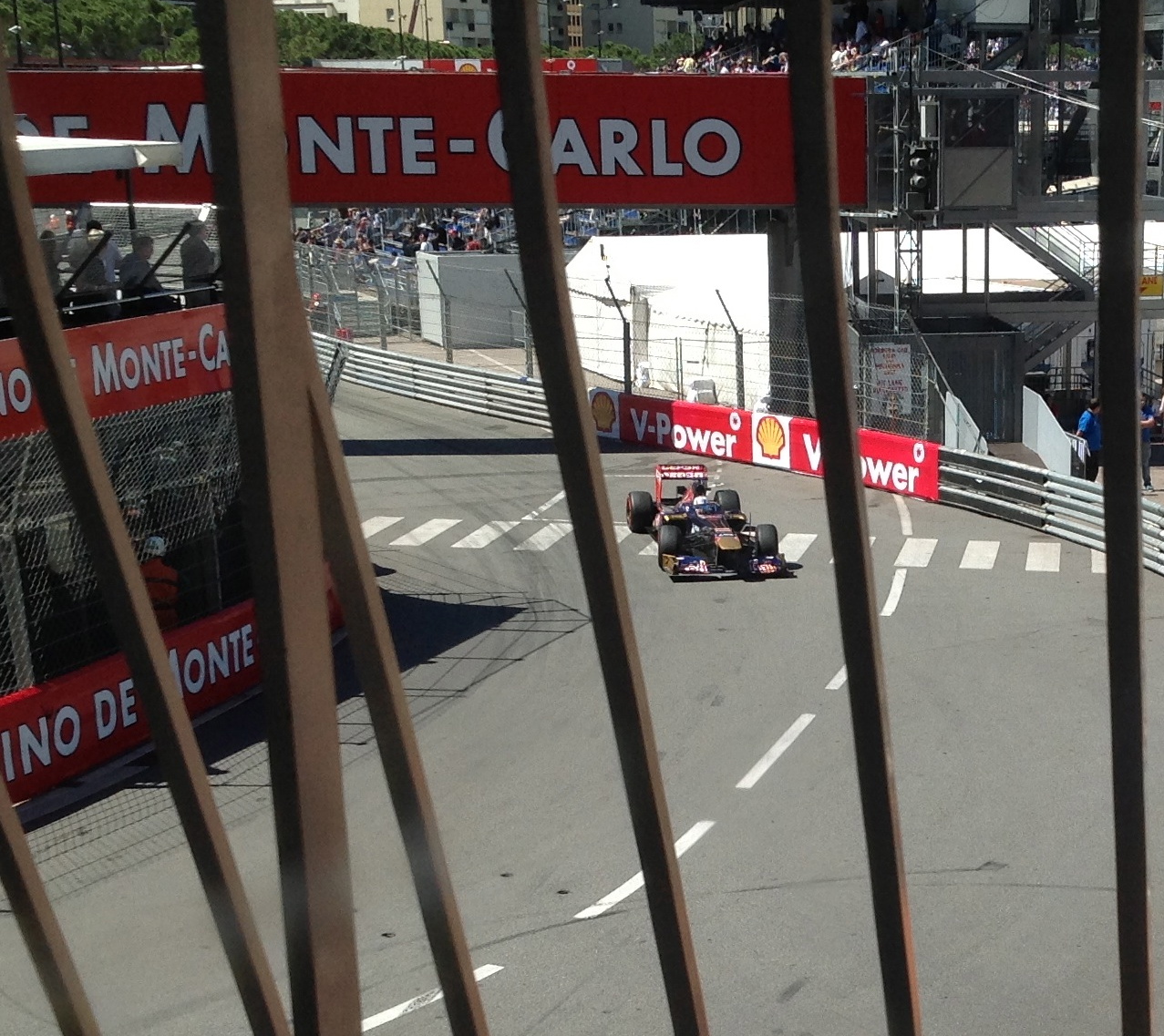
SutilFor all his cool headgear, Jean-Eric Vergne (below,top) is much more Jean-Pierre Jarier than he is Francois Cevert.  A wide, soft approach. Lots of aggression with the brakes, the steering and the release of same.  Lots of car-control, of course, but none of the straight lines that typified Francois, particularly in 1973.  Daniel Ricciardo (below,bottom) exhibited a slightly shorter corner and more seamless transitions.  Like McLaren, Toro Rosso have two “long corner” (but very skilful, very spectacular) drivers.JEV2
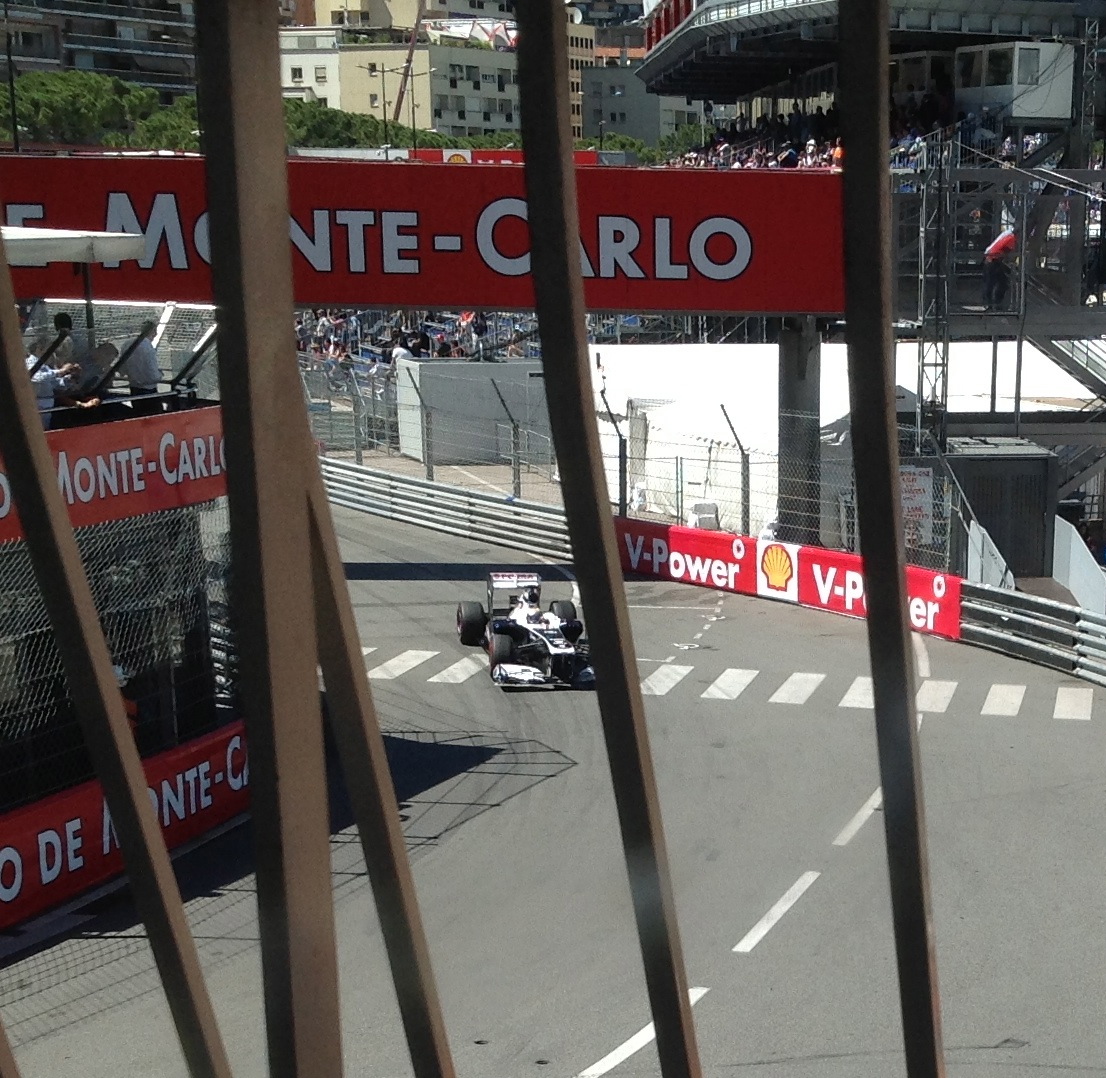
RicPastor Maldonado, as stated earlier, was almost scary to watch at Rascasse, if only because his Alesi-like turn-in (and feel) leaves him absolutely no margin at all in terms of the inside rear and the apex. With Grosjean, you’re always thinking “exit oversteer”;  with Pastor (below, top) it’s “early commitment”.  He looked knife-sharp from where I sat – and up at Casino Square, where he was blindingly late on the brakes, he was jaw-droppingly fearless – the more so because the Williams is still a difficult car.  This was the best Pastor has looked so far this year.  Valtteri (below, bottom), by contrast, was for me a bit disappointing – if only because one’s expectations are always so high with this guy. A relatively wide and frequently brake-locked approach was compromised by minimum speeds too high by far:  the back end would judder out, Walter would have to lift, opposite lock would be applied…and finally he was out of there. It was uncomfortable to watch and probably not much fun to execute.  I’m sure it’ll be better by Sunday…MAL
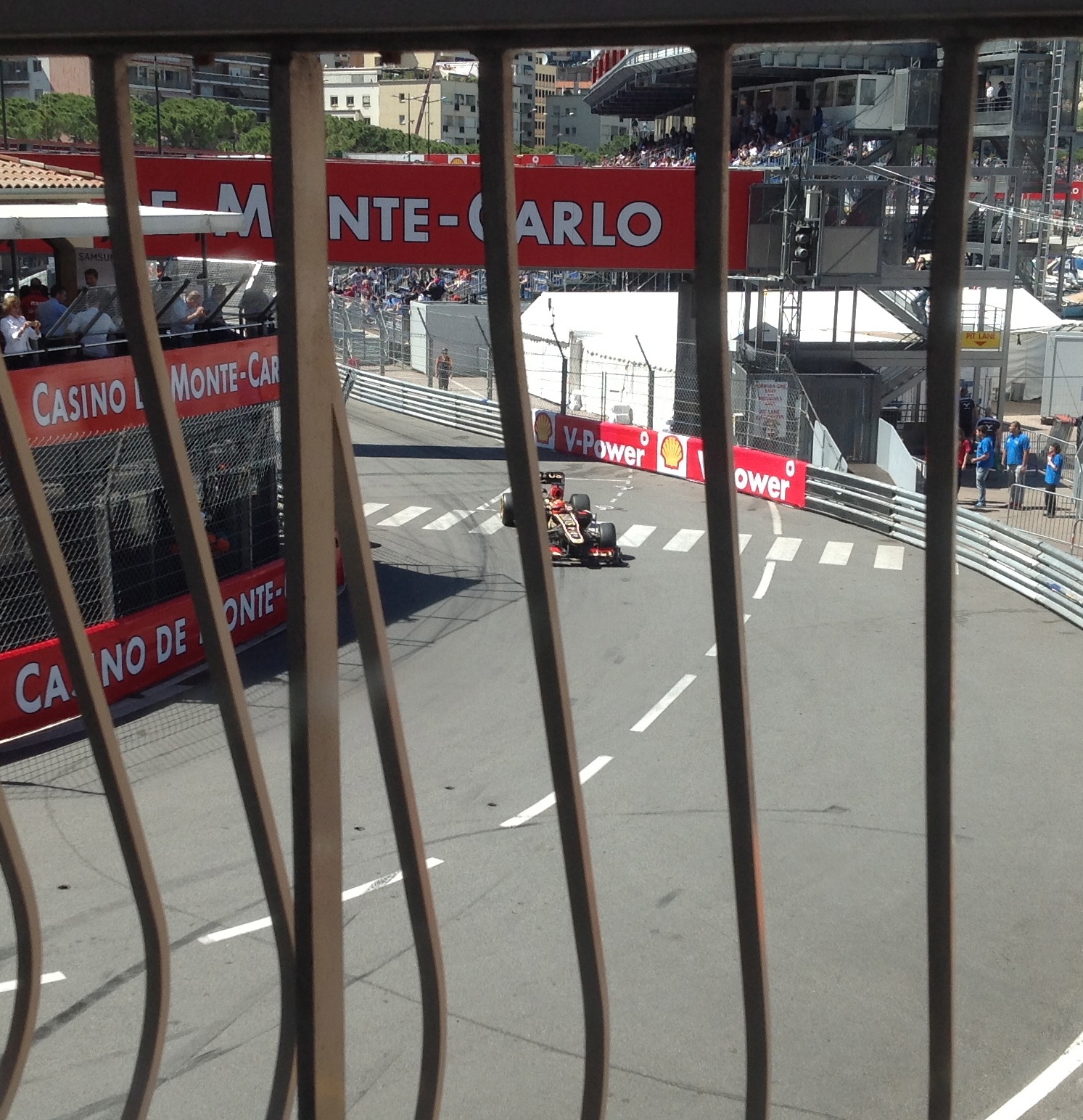
BOTSauber’s pair, by contrast, were surprisingly different from one another.  Nico Hulkenberg (below, top) had more initial steering input than, say, Romain Grosjean, and a longer corner than Daniel Ricciardo.  He played with the throttle early and, like Alonso, always gave himself a touch of oversteer before  main rotation just beyond this photograph.  He gives the impression, in other words, of asking quite a lot from the tyres and, of course, from the car.  Esteban Gutierrez (below, bottom) was for me probably the most surprising driver of  the session.  He was neat, composed, early into the corner, and displayed lots of good handwork and mid-corner patience.  He wasn’t the quickest guy out there, of course, but this was a good way to start a Monaco weekend.  From here he has a useful platform from which to build.HUL
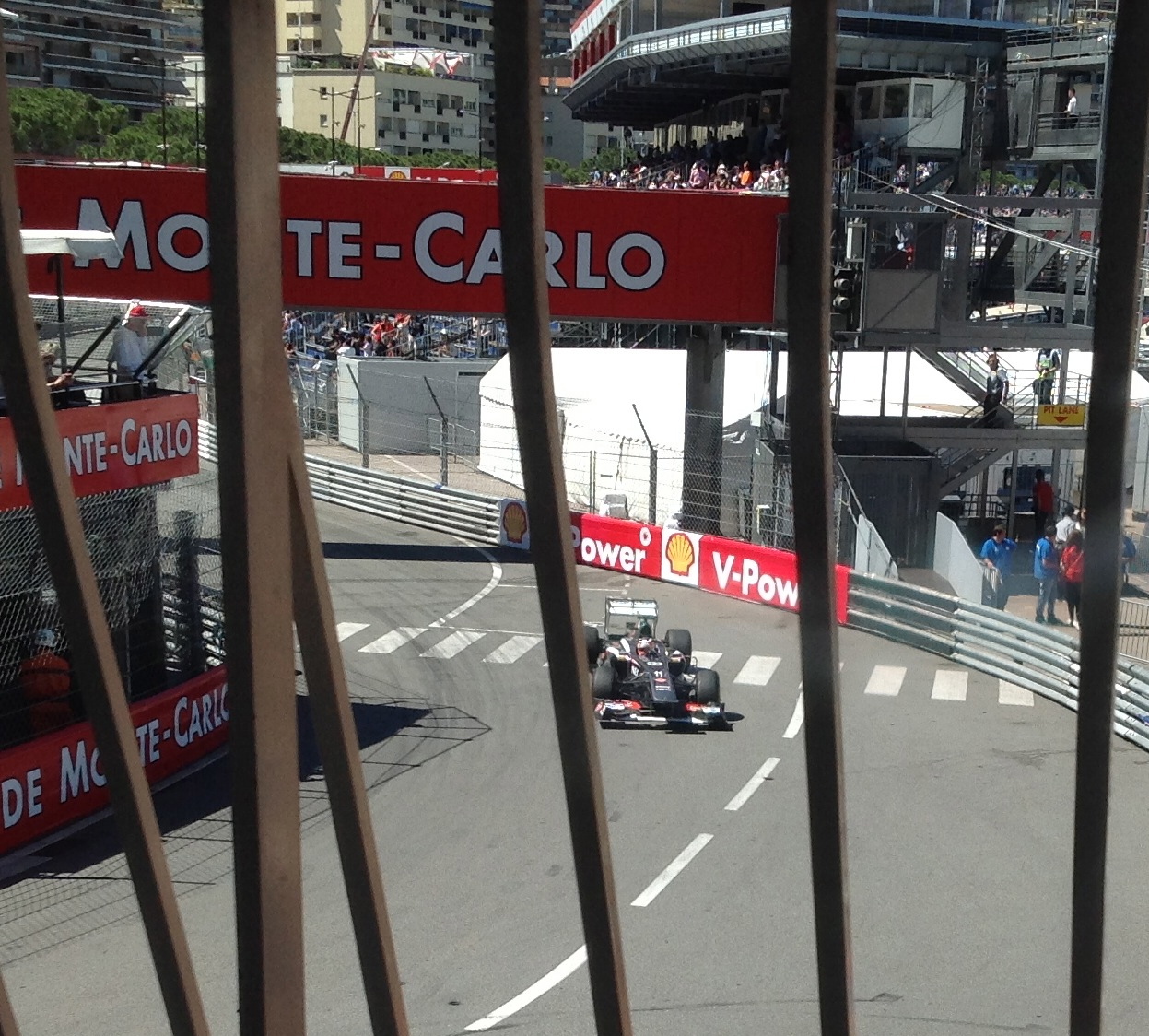
GUTJules Bianchi (below, top) was much tighter on approach than Max Chilton (below, bottom); indeed, Jules was as early, and as rhythmic with his hand- and footwork, as Paul Di Resta.  Despite that sort of talent alongside him, Max Chilton has nonethless chosen to go the long-corner way. Yes, it leaves him more margin for error, particularly on a circuit like Monaco;  no, it isn’t as efficient.BIA

CHII couldn’t see much difference between the two Caterham drivers, Charles Pic (below, top) and Guido van der Garde (below, bottom).  Charles was pretty neat and tidy through the fourth-gear esses in Malaysia but here he was definitely giving himself a nice, soft corner entry with plenty of initial steering input.  Likewise Guido, which must be a bit frustrating for the engineers.PicJEV

Watching from La Rascasse (Part 1)

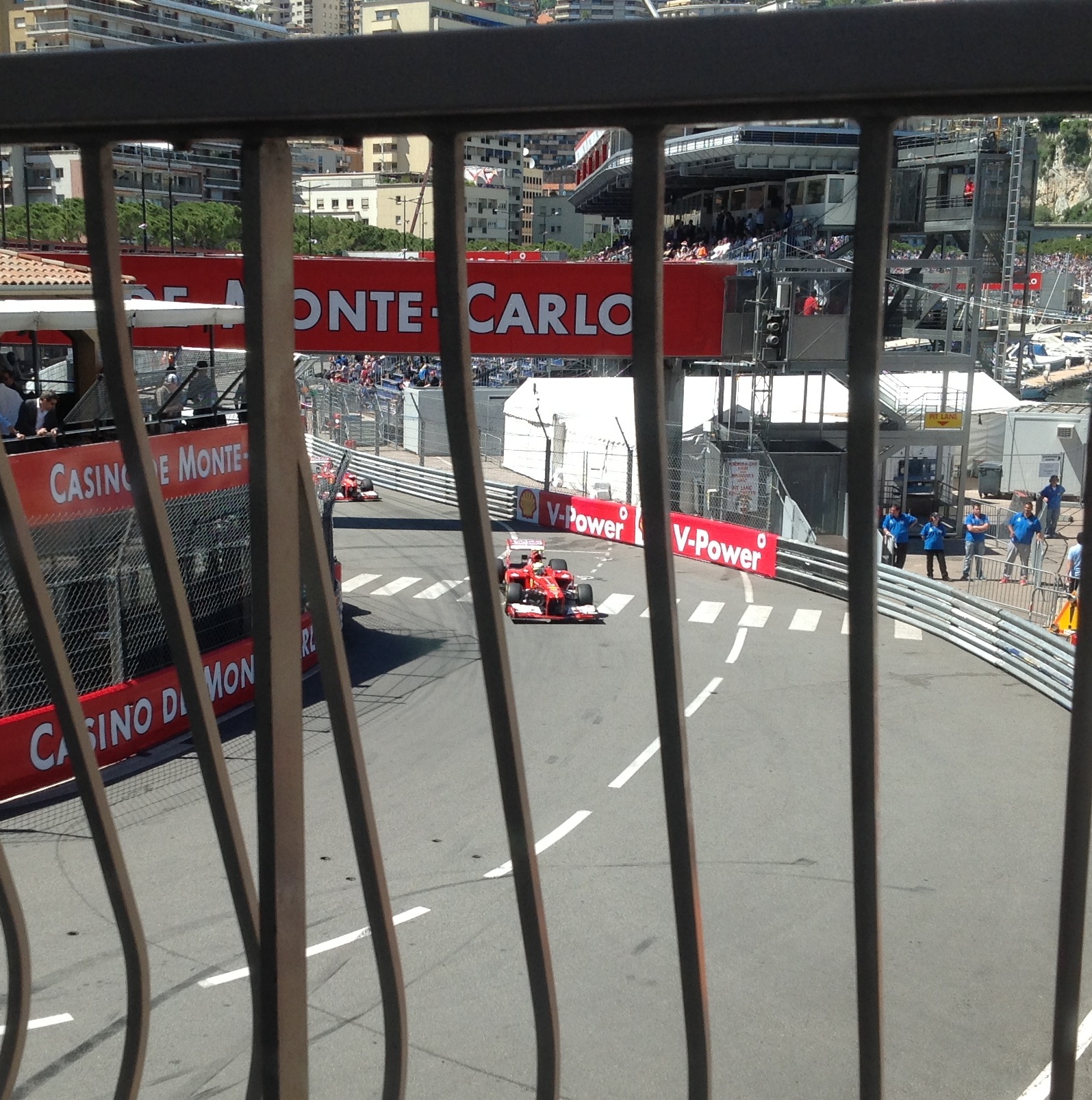
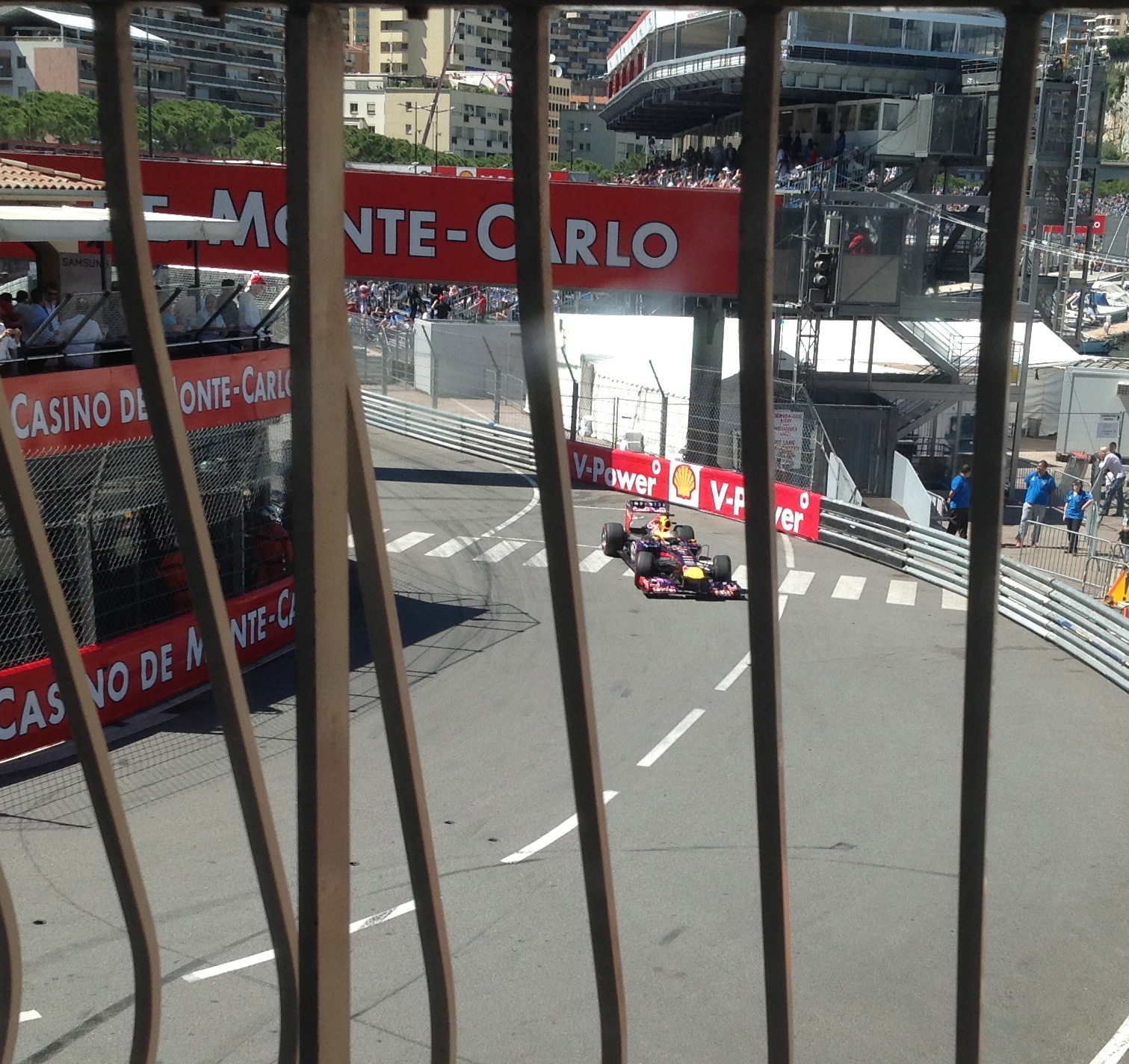
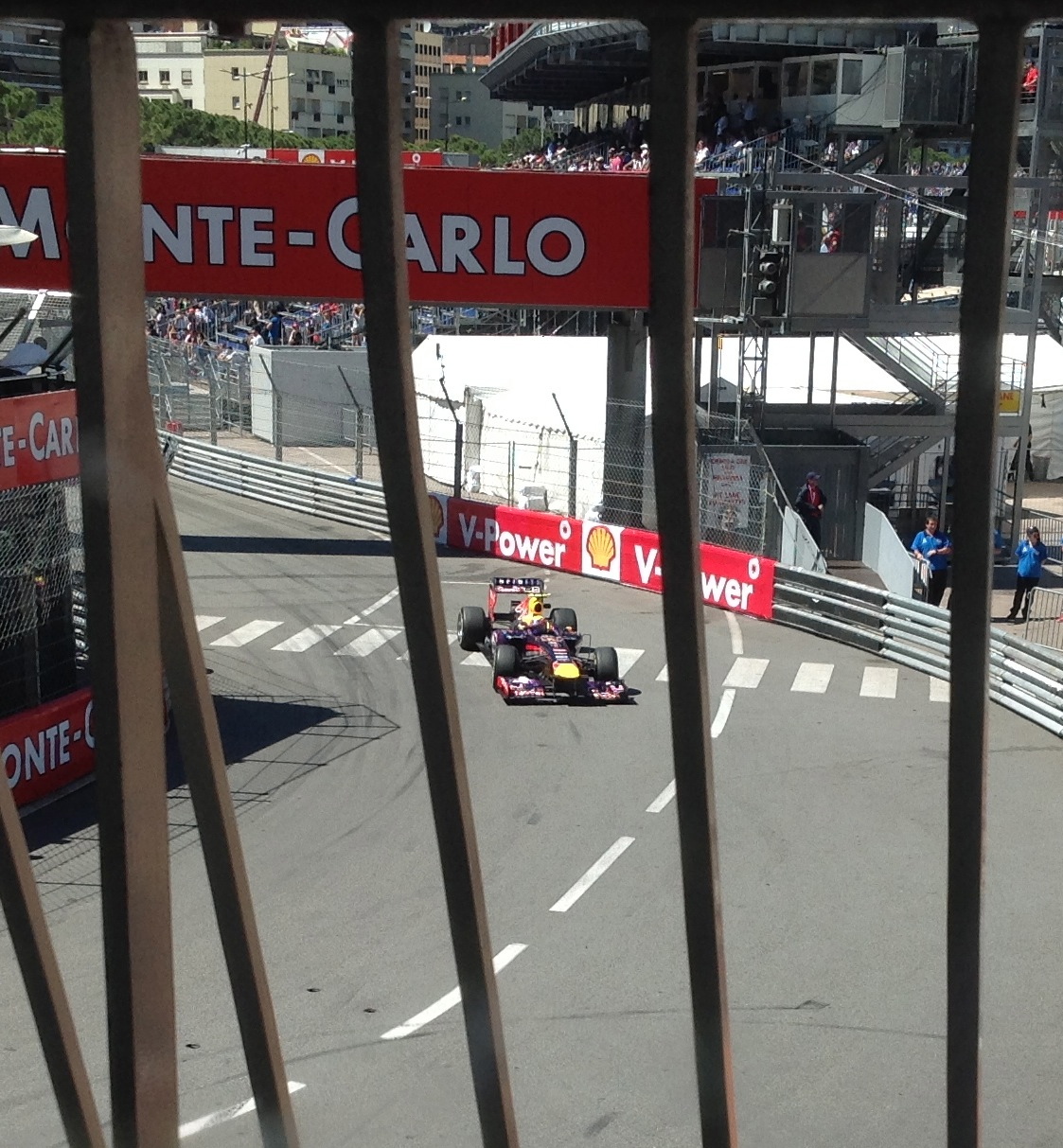
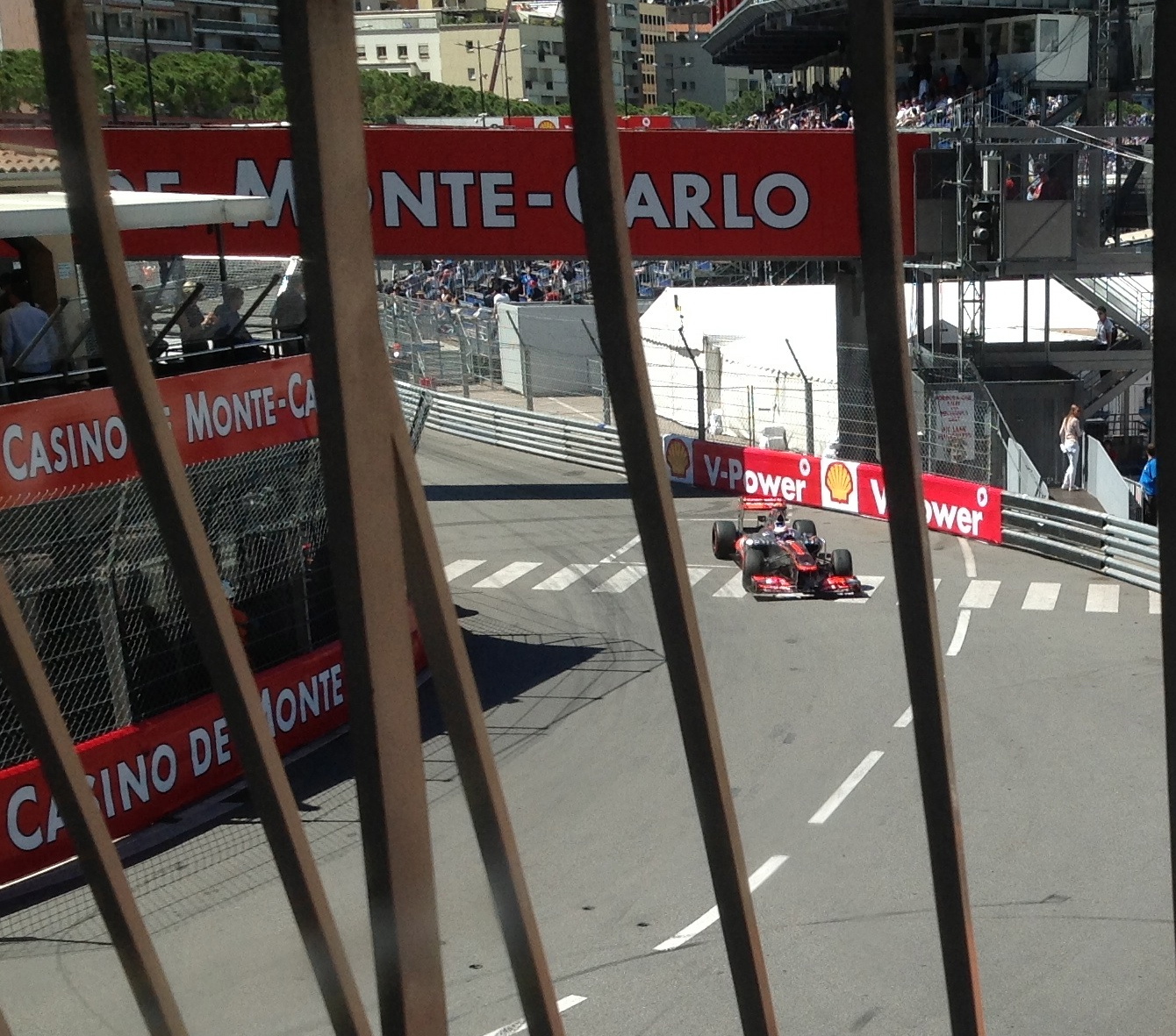
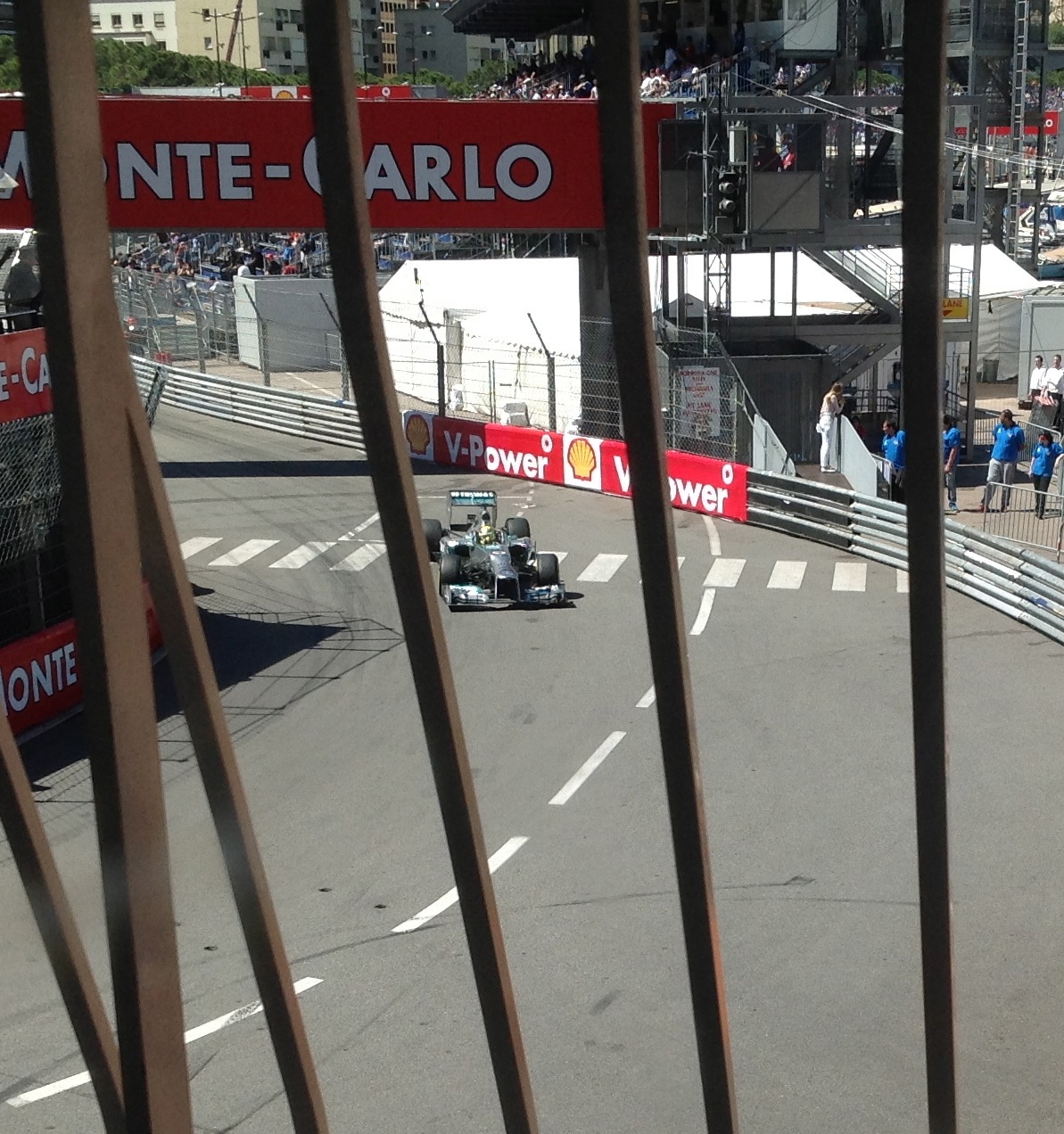
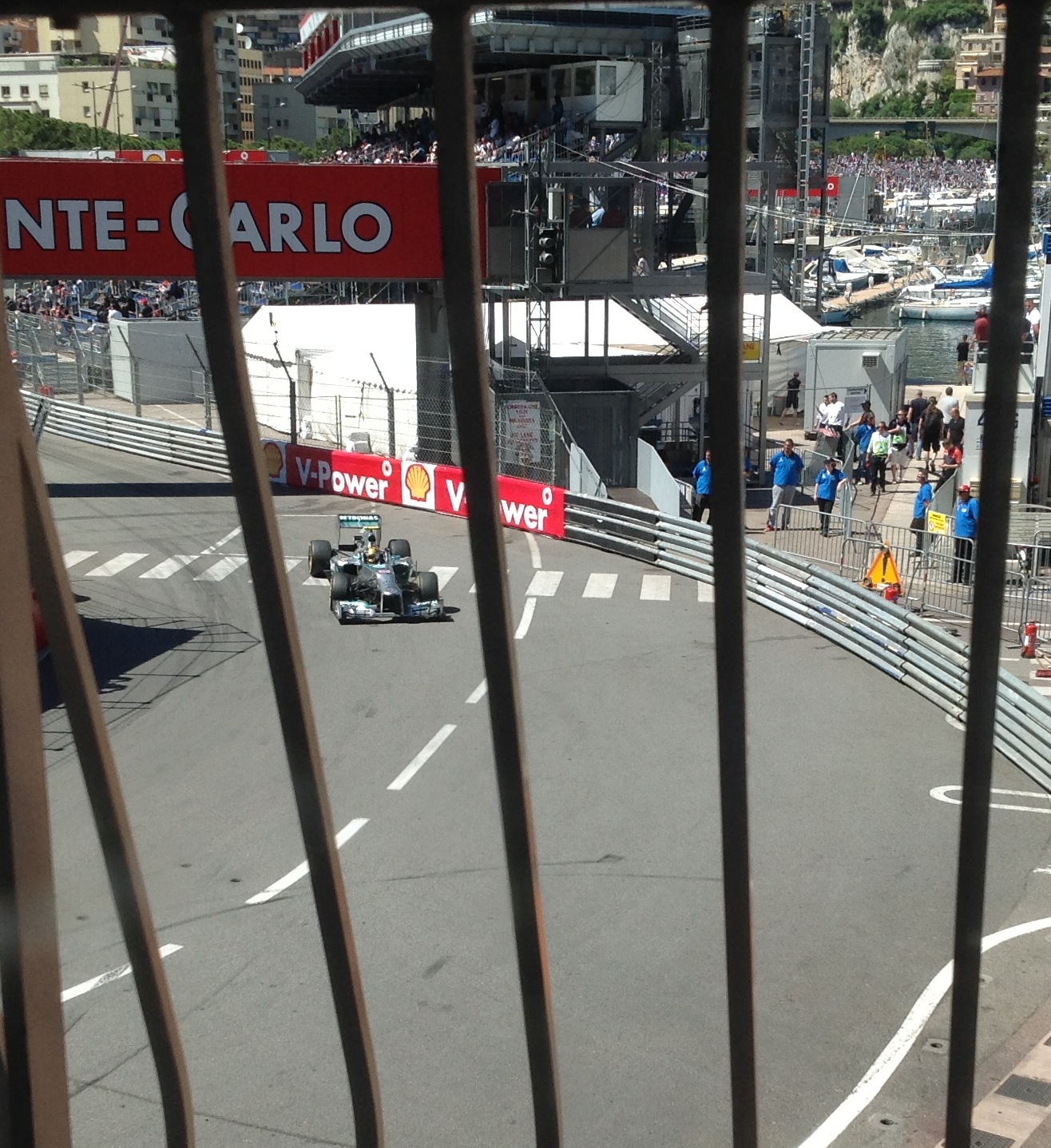
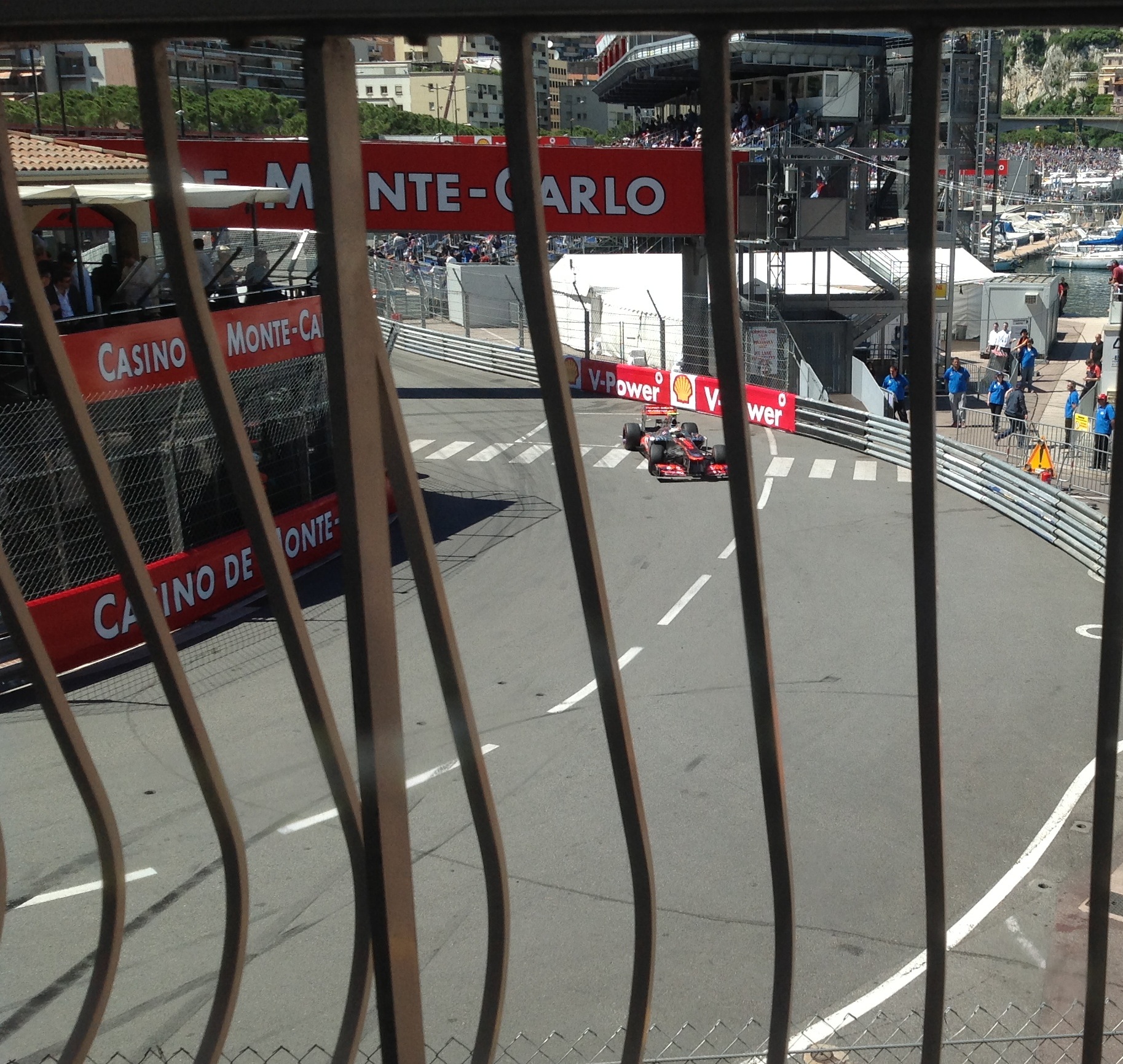
What you see here does not come under the heading of “good photography”.  It is, though, my attempt to try to illustrate some of the principles about which we talk on The Racer’s Edge and occasionally on these pages.  All the pictures were taken at La Rascasse on Thursday afternoon at Monaco (after Romain Grosjean had hit the barrier at Ste Devote!).  I wanted to try to keep the frame of the shot as near-identical as I could for every car so that we could identify some of the differences between the drivers.  I also ensured that each driver was on a quick lap or was not backing-off prior to peeling into the pit lane.  The pose they strike as they reach the pedestrian crossing stripes is pretty much their signature – and those stripes on the road of course provide some sort of useful visual reference. Some drivers, you will see, are already asking quite a lot from the car – as can be seen by the steering angles as they reach the road stripes.  Others are asking less.  Some are “softening” the entry by curving into the apex from about the middle fo the road;  others are well to the right of centre and are “extending the straight” into a relatively low minimum speed rotation-point.  I should stress that La Rascasse is far from being the most important corner on the circuit:  it is followed by a very short, sharp blast before braking into a negative-camber right-hander.  It is, though, what it is – and I can confirm that I have never seen a great Monaco driver (Stewart, Reutemann, Prost, Mansell, Senna, Raikkonen) who was not clean, methodical and super-quick into La Rascasse.   Despite the implications of these quiet, motionless images, each snapshot-in-time is in reality a compendium of the initial brake pedal pressure that was applied about a second or so before (when the cars were in fifth gear on the curving straight between the swimming pool and Rascasse), the rate of release of the brake pedal pressure (taking place as these pictures were captured), the initial steering movements (also taking place) and, yes, the positioning of the car.  In each case, in summary, the “static” cars shown here are actually a mass of dynamic forces being harnessed by the drivers.  All are different;  some are better than others. 

Fernando Alonso (left) photowas (with Pastor Maldonado) the driver who turned-in earliest to Rascasse.  He refrained from applying any soft of substantial steering lock until he was right at the apex (out of the photograph to the bottom left), and this he did with increasing power.  He looked superb, I thought.  The back of the Ferrari would always skip slightly as he rotated the car, which probably meant that his minimum speed was relatively low – but there is no doubt that from the pedestrian crossing to that minimum speed point he was quicker than anyone on the circuit.

Felipe MassaMassa (right) wasn’t a lot different from Fernando… but was different nonetheless.  He braked more to the centre of the road and thus approached the corner with a slightly “softer” line.  This gave him a slightly “longer” corner – ie, he had to cover more road and, thus, he put more initial lateral energy through the tyres for longer.  Felipe was very finessey with his steering inputs and, like Fernando, always honed-in to a lowish minimum speed, the better to rotate the car.

I was surprised by the massive differences between the Red Bull drivers, Sebastian Vettel and Mark Webber.  Although the positioning of the two cars looks fairly similar in these two pictures, look closely at the amount of steering lock SebSeb has applied (relative to Mark).  This was absolutely typical of what we saw all afternoon.  Seb (right) would approach from a relatively wide angle and crank on a massive amount of lock as he was releasing the brakes.  The result was understeer – driver-induced (very graphic) understeer.  Could it be that Seb was working on protecting the rears?  Perhaps.  Mark, Markby contrast, was Alonso-like with the steering applications, even if he was leaving himself a slightly more open approach. I’d say Mark’s Rascasse (right) leaves him slightly more margin for error (or for the unexpected) than does Fernando’s but that their inputs were about equal.  Again, brilliant to watch.

Both McLaren drivers created very “long” corners from wide entries.  Jenson’s inputs (below)Jenson were more svelte that Sergio’s but Sergio began the corner with slightly less initial steering input, in turn enabling him to ask slightly less from the front tyres.  Equally, Sergio (below right)Perez
had a more substantial final rotation.  When you see these two drivers alongside one another like this, you wonder how good it is for a team to be running drivers of such similar style.  It would be interesting, for example, to see how the MP4-28 would perform at the other end of the spectrum – the Alonso/Webber/Raikkonen end – or perhaps at the Vettel/understeer end.

I didn’t get to see Romain, as I say, but I can tell you (from Thursday morning) that he was about half-a-car’s length to the left of Kimi as he crossed the painted lines and was using about a Webber-dose of steering at that point.  Unlike Mark, who would deliberately await the moment of final rotation before accelerating flat and clean, Romain teased the throttle a little, like Alonso and thus ran right out there on the ragged edge, leaving no room for error.  The Ste Devote shunt, I think, was no surprise.  Kimi was of course just beautiful to watch, even if he was locking up the front brakes more than we usually see.  He wasn’t quite as far to the right as Alonso and Maldonado (or Di Resta, as it happens) but his initial steering movements were very slight and very small – a mile away from Vettel’s.  Then, in one clean movement, Kimihe would tuck in the front for the major rotation and accelerate without fuss towards the exit of the corner.  Totally repeatable and extremely efficient (left).

The differences between Nico Rosberg and Lewis Hamilton were small but significant.  Both drivers turned-in early, like Kimi and Fernando, with delicately-small initial steering inputs, but NicoNico (below) did so from about half a metre further to the right, giving him a slightly shorter corner.  This he managed in Prost-like fashion, never looking unruffled or out of synch. Lewis (below) Lewiswas thus a tad less impressive than Nico through this section of road – which, for me, was a surprise, I have to admit.

Part 2 of our views from Rascasse, featuring the remaining cars on the grid, will follow shortly.

Weekend of a Champion: F1 in the raw

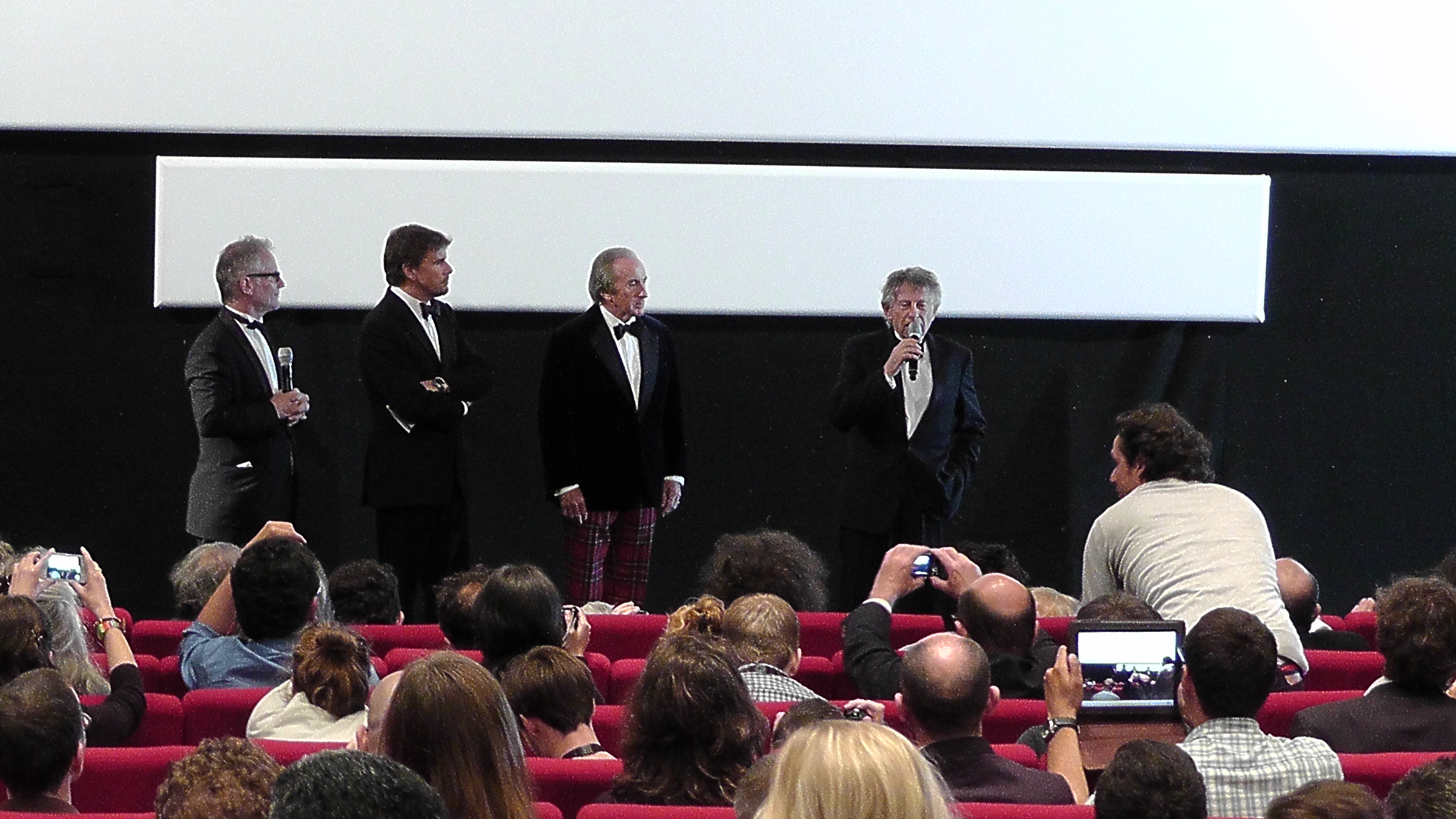
S2550025There have been very few F1 films like Weekend of a Champion – films in which one of the world’s best directors has been invited inside our sport to do with it what he wills.  Roman Polanski played the role of that director at Monaco, 1971.  He met Jackie Stewart socially, he became captivated by the man’s aura…and so he made a film about him.  At Monaco.  Over a race weekend.

The result, in my view, was brilliant.  We see Jackie and Helen Stewart in their hotel suite, chatting about Jackie’s shaving or his lack of appetite.  We see the always-cool Editor of l’Equipe, Edouard Seidler, walking down the famous Monaco hill with Jackie and Helen, pulling at his ever-present Gitanes.  We see Francois Cevert, wide-eyed and barritone, asking Jackie about gear-change points and ratios.  We see Yardley BRM stickers on the toolboxes of the Tyrrell mechanics.  We see Jackie talking about that famous gear lever knob with the ever-dour Roger Hill.  We see all the details that the TV feeds then – as now – never show(ed).

Weekend of a Champion was this week re-screened at Cannes (where it won an award in 1972) because it has been re-mastered and added-to.  We reach what we think is the end…but instead we see Jackie (now Sir Jackie) and Roman, in the same Hotel de Paris suite, 42 years on.  They talk about Jackie’s sideburns in the film, and about Jackie’s fear, that day back in 1971, that race day would be wet.  “The Goodyears were just so much slower than the Firestones in the wet around there,” says Sir Jackie, reminding you that not once in the original film does he speak badly of Goodyear, despite the frustrations.  They talk about the terrible death-rates of the time and Roman, quite rightly, highlights the “success” of Stewart’s campaign for safety.

Mostly, though, they have a laugh.  And this is what is so memorable about Weekend of a Champion.  Stewart, in what he now looks back as a “very trendy” time, comes over in situ as the lithe, nimble, athlete-superstar that he was.  “That is why I made that film,” Polanski told me last night.  “I made it because Jackie was this amazing driver who was also so articulate, so lucid.  He is the film.”

And so you watched the reactions of some of the guests.  I sat behind Damon Hill, who was seeing the extensive footage of his father for the first time.   “It was a bit scary seeing my Dad in that form but I loved the film.  Just loved it,” he said afterwards.  Alain Prost, too, was captivated.  “Just amazing.  It reminded me of my early days in F1, when things were also changing so quickly.”  Allan McNish, too:  “You can see why Jackie is who he is.  Even then, he was so much more than just a racing driver…”

I cornered Jackie afterwards and pursued some details:

“Nice to see that NAZA race suit again.  And the lovely Westover shoes…”

“Och no.  They weren’t Westovers.  Everyone thought they were.  You know what they were?  Hush Puppies.  I needed a bit of extra sole support because I always walked on my toes and I was beginning to have problems.  Everyone at the time said you had to have very thin-soled shoes for maximum feel but it was like the gloves:  I started to wear gauntlet gloves with much thicker palms with flame resistance.  Didn’t change my feel at all….”

“Why were you so on edge that weekend?” asked McNish at the star-bedecked post-film party.

“I didn’t know it at the time, but I had a blood imbalance that would become a duodenal ulcer in 1972.  I wasn’t sleeping well.  I was tetchy.  You can see it when I get annoyed with that photographer before the start.  That shouldn’t have happened. It was a sign that things weren’t right.”

We had a laugh about the famous scene in which Jackie and Roman, on the inside of the entry to Casino Square, watch F3 practice.  “Now he’s got it all wrong,” says Jackie, pointing to John Bisignano (who sportingly would say a few years later, “that was the end of my racing career!”).  “But he’s ok.  And so is heHe knows doing…”

“Do you remember who that was?” I asked.

“No.  Who?”

“ Looked like James Hunt.”

This is the film’s most prominent feature – its exposure of the warts as well as the laughs.  It is a reminder that F1 was, and is, a never-ending movie, a 24-hour, 365-day TV show in which all the players must, and should, co-operate.  Certainly this was Stewart’s philosophy of the time.  I loved, too, the post-race Gala.  Jackie and Helen are there with Princess Grace (looking much more like Grace Kelly than the podium photos ever allowed), with the Prince, with Ringo Starr and others – but so, too, are many of the other drivers of the day – the guys who hadn’t won in the afternoon.  Pedro Rodriguez.  Jo Siffert.  Graham Hill.  Jacky Ickx.  Ronnie Peterson.

“When I see that film, I just think of the romance of it all,” said Allan McNish, walking back in a late-night drizzle to fetch his car.  “They were all at the post-race party.  That was lovely to see.”

Weekend of a Champion will be re-released soon in France by Pathe and in other regions thereafter.  This latest version was Co-Produced by Mark Stewart Productions. 

Pirelli react to the BCN pit-stop plague

Modified the Pirelli hard tyre may have been in Barcelona; still, though, F1’s monopoly tyre supplier is planning further changes from the Canadian GP onwards. How Monaco will work out in the interim, with the soft and super-soft in use, remains an unanswered question.  This was the statement issued today by Pirelli.  Note that the thrust of the piece reflects Fernando Alonso’s four-stop strategy.  LotusF1, and Kimi Raikkonen, who managed to split the Ferraris with a nice three-stop run, do not get a mention…

Milan, May 14, 2013 – This year’s Pirelli P Zero Formula One tyre range will change from the Canadian Grand Prix onwards, using a revised construction. 

The move follows the Spanish Grand Prix, which had four pit stops per driver. The new range will combine elements from the 2012 and 2013 tyres to have both durability and performance. 

Pirelli’s motorsport director Paul Hembery said: “Our aim is to provide the teams with a new range which mixes the stability of the 2012 tyres and the performance of the current ones. As a company, we have always moved quickly to make improvements where we see them to be necessary. After evaluating data from the first few races this year, we’ve decided to introduce a further evolution as it became clear at the Spanish Grand Prix that the number of pit stops was too high. The Spanish Grand Prix was won with four pit stops, which has only happened once before in our history. These changes will also mean that the tyres are not worked quite as hard, reducing the number of pit stops.”

With limited testing time, it’s clear now that our original 2013 tyre range was probably too performance-orientated for the current regulations. However, having identified this issue, we’re determined to rapidly resolve it. It’s worth underlining that the current regulations for winter tests limit the opportunity to test the tyres under the same conditions as the race season because of the lower temperature and restricted time. The Teams are of the same opinion as we are in wanting longer testing times and different locations for the next tests. We developed the 2013 tyres on the basis of careful simulations that were, however, not sufficient, taking into account the improved speed of cars (up to 3 seconds per lap). 

We’ve also taken this step to avoid the delaminations that were caused by track debris. It’s important to point out that these delaminations, which occur when the tread comes off, do not compromise the safety of the tyres as the core structure of the tyre is not affected in any way, helping drivers to complete the lap and to change the damaged tyres safely. These delaminations were due to damage from debris that overheated the tread.   We’d like to thank all the teams for their continued and extremely valued support as we worked with them to identify the correct compromise between the pure speed that makes us the world leader in the Ultra High Performance sector and a global spectacle that is easy for Formula One fans to follow.” 


The win that Clark tried to share

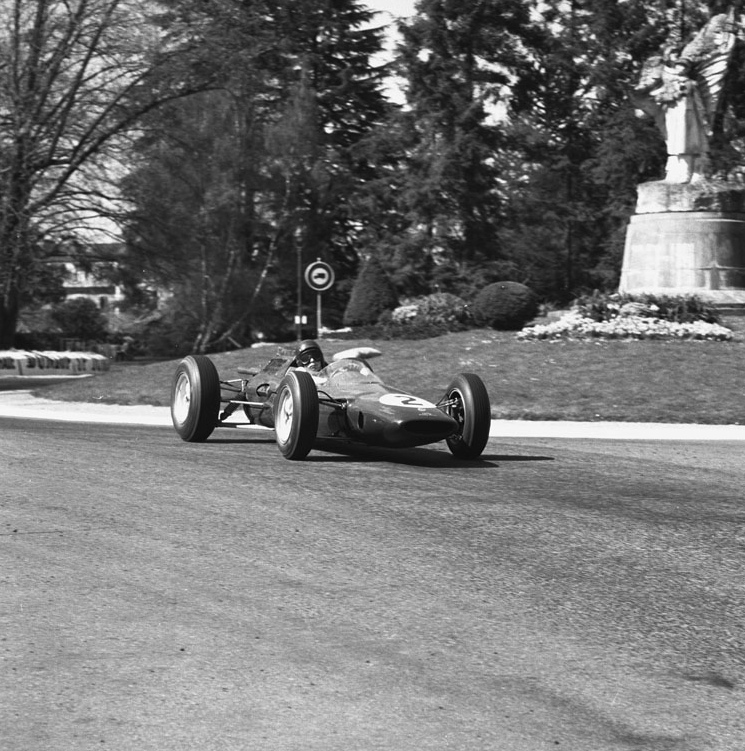
18275.tifAnd so Jim Clark’s 1963 season begins to gather pace:  after a further few days at Edington Mains, Jim set off for his two-week trip to Southern France and then Italy.  Ian Scott-Watson drove him in the factory prototype Lotus-Cortina to Edinburgh airport, where Jim flew first to London – in a turbo-prop BEA Vickers Vanguard – and then on to Pau.

The warmer Mediterranean weather was a pleasant change from the rigours of the British winter.  There was a carnival atmosphere about the town this second week of April – partly because Pau was hosting an F1 race in its own right, with its own heritage and character;  partly because the race would be run on a public holiday – Easter Monday (April 15); and partly because, from the standpoint of Team Lotus, this weekend was effectively a demonstration run.  The opposition was negligible, for all the major works teams (bar Ferrari, who were busy on their Michael May-inspired fuel-injected semi-monocoque cars for John Surtees and Willy Mairesse) were racing at Goodwood in the Glover Trophy.  Once down near the Pyrenees, though, reality set in:  opposition or not, the works Lotus 25s were facing a 100-mile race in demanding track conditions.  Even as practice began on Saturday, the public roads began to melt and then to crumble.  The weather stayed warm; the crowds expected a speed-fest.  As it happened, the track grew slower and slower and increasingly treacherous…

Jim (in the Lotus 25 he had last raced in South Africa, at the end of 1962) nonetheless took an easy pole after two days of practice. Such was the potential danger of the stones, though, that he fixed masking tape over his nose and upper lip for the race.  He again wore his trusty Everoak;  his Panorama goggles were fitted with dark lenses for his exploits in the golden spring sunshine.

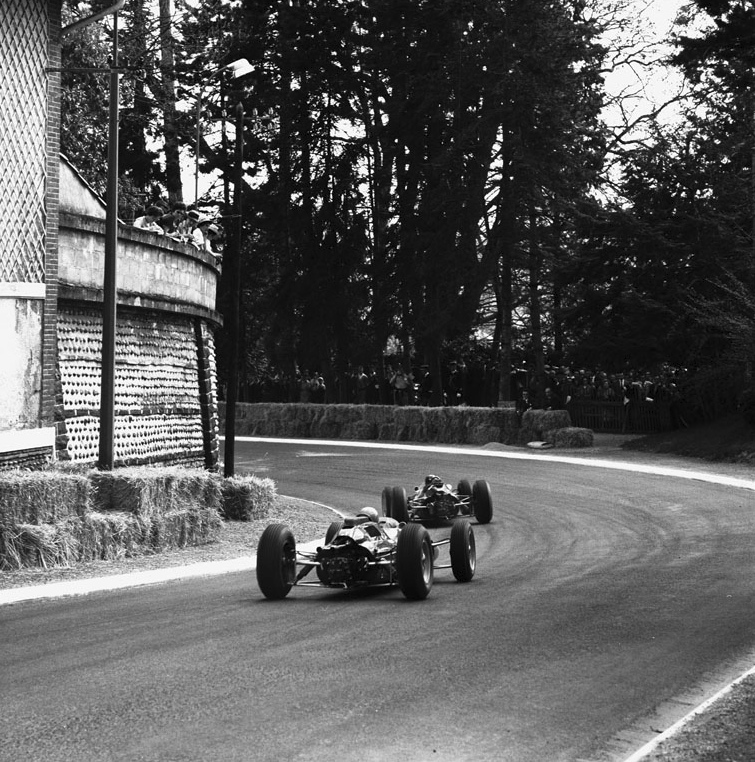
Trevor Taylor, Jim’s team-mate (in the 25 Jim had raced at Snetterton) actually led away from the line but – as great team-mates do – he backed-off before the first, fast right-hander to give the lead to Jim.  1963 Pau Grand Prix.Jim responded – then slowed down a little for Trevor.  And so it went on.  The crowd drank their wine, ate their baguettes, took their naps – but always, when they raised their heads to watch the leaders, there were Jim and Trevor, having fun, swapping places and demonstrating their skill amidst the rubble and the marbles and the frequently-waved yellow flags.

Who would win?  Trevor (right) was happy to cross the line right behind his team-mate.  Colin Chapman would be impressed – and Trevor was keen to consolidate his position as a perfect complement to Clark’s genius.  They’d raced this way in the Springbok series of 1961 – and Trevor had already scored a strong second place for Team Lotus in the Lotus 24 (1962 Dutch GP).  Now, with the 25s heading for more wins in 1963, Trevor wanted solidly to be a part of that.  For his part, Jim thought it much fairer to cross the line in a dead-heat finish.  Showpiece endings like this weren’t that difficult to organize in the 1960s (timing was down only to a tenth of a second), and even four years later (at Syracuse, in 1967, when the timing was a little more sophisticated) the feat would be pulled off by Ferrari.18228.tif

On this occasion, though, Trevor dabbed the brakes just before the line, foiling Jim in a neat reversal of what would see years later at Imola, 1982, and Malaysia, 2013:  Trevor wanted the win to go to Clark, despite Jim’s best efforts to share it.

As light as the opposition had been, Jim and Trevor were nonetheless exhausted after their torrid day’s work.  Over dinner, as plans were made for the drive down to Italy for the following Sunday’s Grand Prix of Imola, a radio crackled out some of the latest hits from England and America – “Big Girls don’t Cry” and the Beatles’ new single, “Please Please Me”.  Then, after phone calls back home, they discussed the news of the day: Innes Ireland had won at Goodwood in front  of 50,000 spectators in the BRP, from Bruce McLaren in the works Cooper and Tony Maggs’ Parnell Lotus 24 – but not before Graham Hill (’62 BRM) and Jack Brabham (’62 Brabham) had both run into mechanical dramas (fuel and ignition respectively).  The Formula Junior race went to Frank Gardner and Denny Hulme (Brabhams), from Richard Attwood’s MRP Lola; Graham Hill made up for his BRM disappointment by winning the Jag 3.8 battle for the St Mary’s Trophy from Roy Salvadori and Mike Salmon; Jack Sears had been quick in the new Ford Cortina GT; Sir John Whitmore and Christabel Carlisle led the Mini division; Graham Hill also won the Sussex Trophy GT race with John Coombs Jag E-Type; and Roy Salvadori won the sports car race – the Lavant Cup – with his Cooper Monaco. Normand Racing had been right up there in the wet, with Tony Hegbourne driving Jim’s Oulton Lotus 23B alongside Mike Beckwith.  The pair had eventually finished second and fourth (despite spins!).20328098

Images: LAT Photographic

Willem Toet at the RAeS – an F1 aerodynamicist’s journey

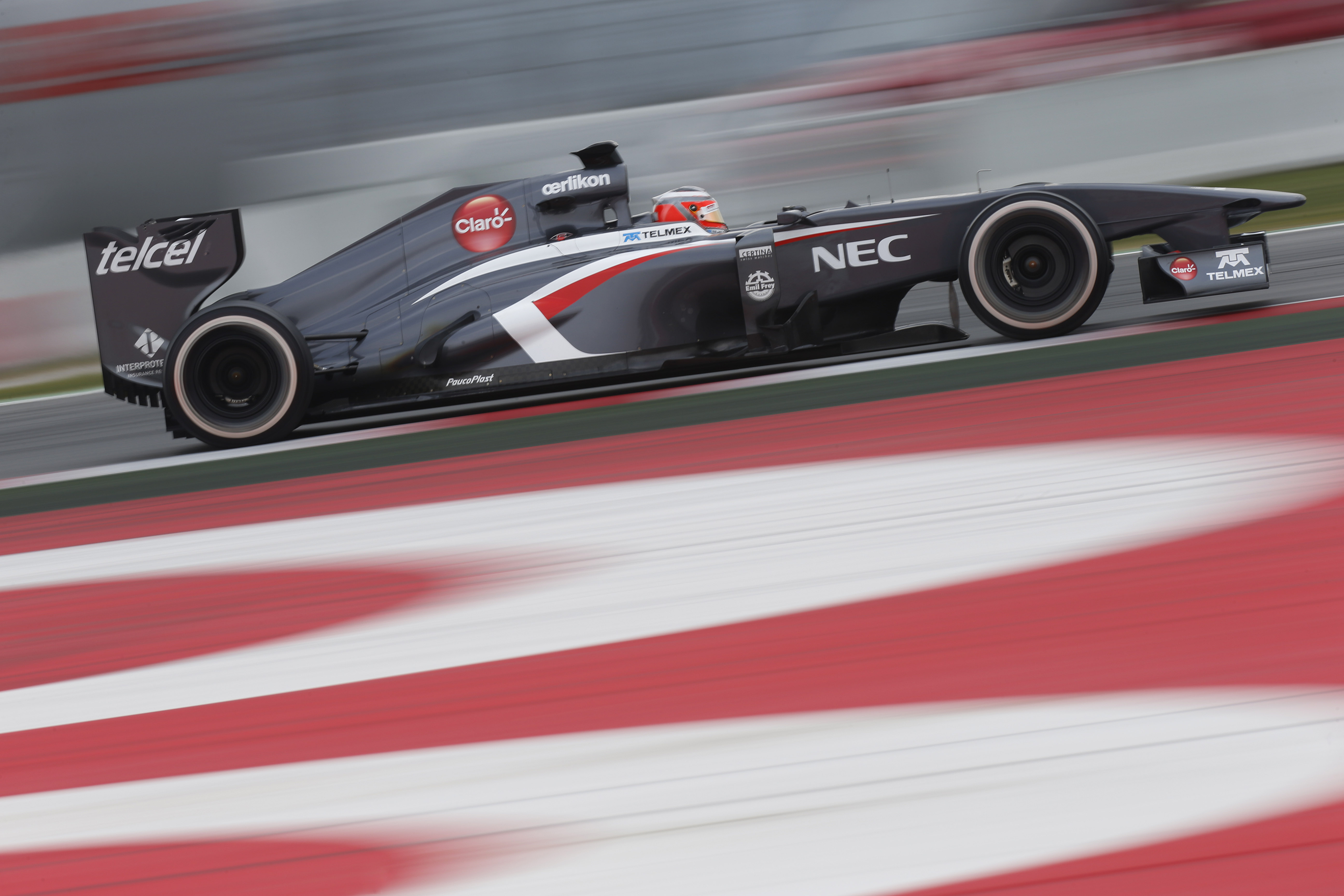
F1 Testing Barcelona 1 - Day 3Willem Toet, Sauber’s Head of Aerodynamics, has worked wonders with the sidepods of the new C32-Ferrari – which in some ways is no surprise: at Hinwil, Switzerland, he has created one of the best wind tunnels in F1.  A regular guest on my weekly show, Willem has never been shy about his chosen profession – or about his love for his chosen profession.  When Willem was therefore approached last year by the Royal Aeronautical Society about giving their prestigious Lanchester lecture  (named after Frederick Lanchester, arguably Britain’s first great aerodynamicist), he readily agreed.  It’s not often that we have the opportunity to hear pre-eminent F1 engineers talking freely about their work, so here, with the kind approval of the RAeS, is a link to the downloadable podcast of Willem’s lecture:

http://media.aerosociety.com/channel/2012/12/06/aerodynamics-and-aerodynamic-research-in-formula-1/5441/

Post Navigation