peterwindsor.com

…chance doesn't exist; there's always a cause and a reason for everything – Elahi

Archive for the tag “F1”

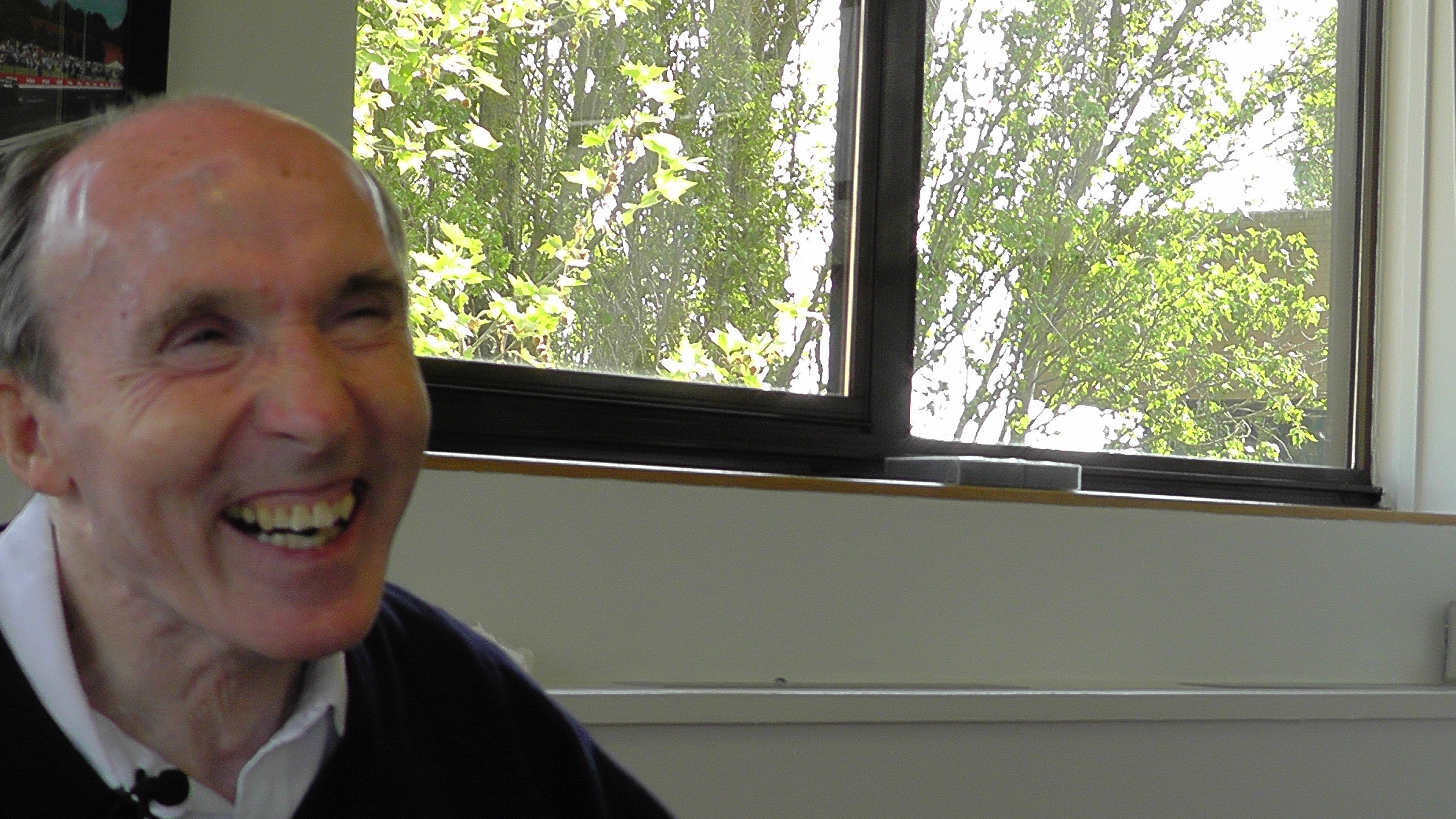
Why Sir Frank is Sir Frank…

At the House of Lords reception for Sir Frank Williams on November 28 plenty of people paid fitting tribute the great man.  He is “passionate” about his chosen profession.  He is “a true ambassador” of British motor sport.  “His dedication knows no bounds”.

All true.  Very true.

What do those words really mean, however?  What is their context?  What lies behind them?

I thought the following extract from a February, 1971, edition of Autosport might add a little texture to today’s image of Sir Frank Williams.  It is the Formula 2 Temporada series in South America (Bogota, Colombia, to be precise).  F1 drivers like Graham Hill, Henri Pescarolo and Jo Siffert are competing.  And everyone, as ever, is right on the limit….

“For some, the four clear days between races provided time to relax,” wrote Paul Watson.  “but for others there had been little time for enjoyment.  Immediately following the first Colombian GP, Frank Williams had hot-footed it back to England, carrying with him the two March chassis as hand baggage (!) and with an order list from other drivers as long as your arm.

“Williams, who has a reputation for getting things done smartly, was on March’s doorstep by Tuesday morning and back on a plane for Bogota by Wednesday so that he arrived back in Colombia by Thursday night, much to Derek Bell’s astonishment!  The two March chassis had been repaired and strengthened where they were broken, this being where the front of the monocoque joins the bulkhead.  As the Bogota series was very much a  development programme for Williams, he had fitted aluminium braces to the top and bottom of Pescarolo’s bulkhead while Bell’s had been left without, to find out whether any permanent additional strength will be needed for future races.

“Williams took with him orders for a great many other spares and these were supposed to be sent in time for practice on Feb 12.  However, as is often the case when freight has to change planes, it got lost, so that all the spares Natalie Goodwin had been waiting for to repair Cyd Williams’ car never arrived.  Neither did Jurg Dubler’s gearbox parts, the Eifelland tyres and a number of other items.  However the Kyalami-spec 4000 ft fuel metering units did arrive in Frank Williams’ pocket and these were duly distributed to Stommelen, Hannelore Werner and Brian Cullen, all of whom had suffered fluffy engines in the previous race due to the use of standard, sea-level cams.  It had been hoped to build up some special 8000ft cams at Felday Engineering, but Mac Daghorn just hadn’t had enough time to get this done…”

For the record, Frank’s two March 712Ms qualified third (Stommelen) and ninth (Bell) and finished second and third in the race (in that order).

Just another weekend in the life of the racer that is Sir Frank.

S1720012

Notes from the Circuit of the Americas

General overview: Full marks to Ferrari for exploiting the five-place grid penalty for a “gearbox change” on Felipe Massa’s car. Felipe has been widely criticized all year for the lack of “support pace” he has displayed in the second Ferrari but in my view he is, and always has been, the perfect counterpoint to Fernando.  He’s fast enough to be helpful but compliant enough, and low-key enough, not to be any sort of threat to Fernando – or even an “annoyance”.   Jenson Button has not been that at McLaren (an “annoyance” factor, that is) but there’s no doubt that he has “taken” points from Lewis this year – and vice versa.  Ditto the situation at Red Bull – Seb Vettel and Mark Webber.  At no race has Massa ever compromised Alonso’s ability to reap the maximum available points of the day.  You could argue, of course, that part of playing a team role is to take points from the opposition – and that is true.  When you have a driver like Alonso, however – or Lewis Hamilton – you always have to assume that they will be your main championship contenders.  To “take points” from the opposition in the case of Massa or Hamilton in reality means beating the Red Bulls.  And that is a task best left to the Number Ones.

Never, though, have we seen a team move its number two driver back five places in order to maximize the chances of its number one.  Of course, it should be remembered that this was only the second time in 2012 that Massa has actually out-qualified Alonso (and on this occasion Felipe’s pace was thanks mainly to the disappointing updates on Fernando’s car) – and that Ferrari are the only top team to operate a genuine “Number One-Number Two” driver pairing.

Nonetheless, Felipe played the perfect team game in Austin – and totally justified his position as Fernando’s wing man.  By contrast, one can only imagine the dramas if Ferrari had been running, say, Sergio Perez, Paul di Resta or Nico Hulkenberg in the other car (drivers that the media in general have been touting all year as suitable Massa replacements).  Their palpable irritation would have been leaked to their national media, even as they displayed a brave face in Austin.  And so the distractions would have begun…

Ferrari received plenty of post-race criticism from the international press, all of which was based on the argument that racing should be “fair and equal”; that teams should respect “the spirit of the regulations”; and that no driver’s chances should be compromised by team orders.  As I see it, there is no difference between Felipe slowing in the closing laps in order to give track position to Fernando – a difficult thing to orchestrate pre-race, because you never know where the opposition is going to be lying – or ceding five positions on the grid. Actually, the latter decision was definitely the right call for the simple reason that Fernando’s new grid position (a) moved him further from the potential mid-field first-corner skirmish and (b) swapped him to the clean side and to the outside.  I joked with Fernando after qualifying that he was again going to have to execute one of his demon round-the-outside maneuvers at the first corner – he laughed back in agreement – and so it proved.  He out-accelerated Nico Hulkenberg and Kimi Raikkonen via the intermediate gears and used the outside line to pass none other than Michael Schumacher on the exit of Turn One.

Fernando loves using the outside of the first corner in any race on which he doesn’t happen to be on the front row – but such a move can be dangerous, of course.  Had Ferrari not exercised their “gearbox option” with Massa, Fernando would have had a difficult time moving from the inside file, for the wide entry to Turn One in Austin invited three-abreast – and in some cases four-abreast – approaches.  And there was a skirmish:  Kimi Raikkonen was tapped by Nico Hulkenberg’s Force India in Turn Two and Pastor Maldonado ran to the outside run-off area in avoidance.  Fernando, from P8, could have been in the middle of all that.

One question of intrigue, I think, will be whether we see more grid-shuffling of the type we saw in Austin.  If Mark Webber qualifies on the pole in Brazil, for example, and Vettel is, say, fourth, would Red Bull take a gearbox five-penalty hit on Webber and move their title contender onto the clean side of the road and a little further to the front?  That’s a difficult one, because Webber is quick enough, of course, to be able to beat Alonso…

Braking for Turn 1: The steep upwards incline of the track at this point enabled the quick guys to brake amazingly late into Turn 1.  In general, I try to stand at the point of the latest braker for corners like this but in qualifying, as the hour progressed, I was obliged to move nearer the apex virtually by the minute (as the track picked up grip and the fast drivers switched to options Pirellis).   By the end, Lewis Hamilton, Romain Grosjean and Pastor Maldonado all seemed to be braking at about 75metres (from seventh gear down to second).   Impressive stuff.

It was also interesting to listen to the downshift sequences of the different drivers.  Grosjean and Bruno Senna, for example, flick down through the gears as quickly as possible – 6,5,4,3,2.  There is barely a pause between each gear selection.  The pause, when it comes, is between the selection of second and the first application of mid-corner power.  Kimi Raikkonen, Lewis Hamilton, Sebastian Vettel, Mark Webber and Fernando Alonso, by comparison, consistently paused after selecting fourth – as in 6,5,4…pause…3,2.   At first I thought I was imagining the difference but the sequences were repeated, lap after lap.   I think this is because the latter group “save” the selection of third and then second for the moment when they are about to impart the first steering load into the car:  the simultaneous downshift gives them more control of the rear when the need it most.  From the outside, the pause also seems to add to the time available – a bit like the pause at the top of a golfer’s backswing gives the impression of there being all the time in the world in which to hit the ball.

So there is still an art in clutchless, paddle-downshifting, even if it doesn’t re-ignite the glorious days of heel-and-toeing!  (I can only imagine the perfection of drivers like Stirling Moss, Jim Clark, Jackie Stewart, Michele Alboreto, Carlos Reutemann and other artists on this section of road:  the shame is that we no longer get to hear the foot-hand co-ordination of drivers like Seb Vettel, Fernando and Lewis.)   It seems strange to me that Jenson Button’s downshift pattern resembles that of Romain Grosjean (albeit slightly less rushed) when Lewis, quite audibly, is doing something very different.  I doubt that telemetry is accurate enough to be able to identify these “pauses” – we’re talking milliseconds here – but I may be wrong.

“Becketts”: Turns Four, Five and Six – all the turns were marked by vertical marker posts  – resemble Becketts at Silverstone.  Most drivers to whom I spoke said Becketts is in reality a tad slower, although the greater run-off area in Austin – the moonscape – gave a different impression from the outside.  Felipe Massa was absolutely brilliant through this section in qualifying, taking the first left-hander, and the next left, flat in seventh and then downshifting to sixth precisely as he clipped the apex kerb there with his left front.  The thought: “Can the Ferrari take the load on the right-front??” flashed through your mind as he flicked the car one way and then the other and then it was down another gear for the tighter right-hander.  Maldonado and Grosjean downshifted twice where Felipe was going from seventh only to sixth – which may explain why Romain was a bit non-plussed when I talked to him about this piece of road after qualifying:  “Yes, it’s quite fun,” he said, but the next section is much more demanding…”  I was a bit confused, at first, because “the next section” on my circuit map was actually a nice piece of undulating road killed by some pretty slow corners.  Sure, the entries are blind, but we’re not talking 185 mph here…  Nonetheless, it was to this that Romain was referring: “It’s really difficult.  Blind entries, difficult approaches.  You have to get it just right…”

Lewis was on a different plane, I think.  When I chatted to him on Saturday afternoon about Turns Four, Five and Six his eyes just lit up and almost did the talking for him:  “What a section of road!  Really quick!  Awesome!”

The Pirelli compounds: In general, it looked as though the drivers who “energize” the tyres fared much better in qualifying than the drivers who “nurse” them.  Jenson is never going to be more than a few degrees out of line, regardless of the circumstances – and nor is Nico Rosberg.  Lewis and Michael, by contrast, thrive on “bending the sidewalls”.  No-one can blame Pirelli for bringing such conservative compounds to a new race – and the proof of their quality came with Lewis Hamilton’s race pace on Sunday.  If ever a car has been sensitive to tyre temperature windows this year it has been the McLaren;  and yet on both the medium and the hard it was a gem of a car – a Red Bull match with greater top speed.  That’s the sort of pace that Lewis has shown at circuits like Singapore and Abu Dhabi and so it was only just that he was finally able to win again.

Overtaking, etc: I was astonished by the number of drivers who predicted on Saturday afternoon that “overtaking” was going to be difficult in the race.    I guess such predictions have become “security blankets” for drivers who fear the worst but you didn’t have to be an F1 mastermind to see that the Circuit of the Americas was going to present no problems at all.  The wider entries to such corners as Turns One and Eleven did exactly what they were designed to do – ie, promote overtaking – even if they did look a bit odd when you walked the track on a Thursday.  Circuit designers used to pride themselves on having exactly the same track width for the entire lap, regardless of the topography:  COTA has changed all that – although I think that the entry to Turn Eleven (the hairpin at the back) is very similar to that at Magny Cours (in reverse).    The shame is that the three-apex corner near the end of the COTA lap had such a slow entry speed.  Such a design works in Turkey because of its entry speed;  in Austin it was more of an accelerative, TV corner than it was a dramatic one.  Having said that, qualifying brought a new slant:  who could hit the DRS switch sooner at this point of the lap?  My post-qualifying poll was not sufficiently all-embracing to be definitive but said Grosjean, and the two RBR drivers, did seem to be flattening the rear wing about mid-corner.   (This sort of bravery will not be possible in 2013, when DRS useage on Fridays and Saturdays will be limited only to the DRS Sunday zone.)

The garages: There was not as much room as normal in the Austin garages – which to some extend is a surprise, given that the detail design and architecture was carried out by Hermann Tilke.  The problem was the available flat land between the last corner and the incline on the straight:  add the US-spec fire evacuation steps not required on the other circuits and you have a problem.  As Hermann tells it, Pirelli were originally not going to be operating from pit lane garages.  When that was changed, each team had to switch from three garages to two-and-a-half.  “In reality,” he said, the garages are about 15cm narrower than normal, given all of that.”  What I didn’t understand was why the garages were not built to a larger depth.  There was plenty of room in front of the garages for a few metres of additional garage space, and a covered walkway at the back of the garages could in reality have been the back wall of the garages, offering two or three metres more space.  (Judging by the number of times we’d see a Jenson or a Felipe sprinting from luxury portaloos, there also seemed to be fewer bathrooms than normal in the new complex.)

The beauty of imperfection: I’m sure some of the F1 establishment will be complaining even as I write but, for me, one of the great things about Austin was its imperfection.  It’s a bit like India in that respect.  Dodgy power supplies and drainage issues are part of the scenery, the atmosphere, in India:  and if you’re going to create a US GP around a brand new facility why not capture some of the charm, say, of Watkins Glen, and have the F1 high-rollers grouping in temporary buildings behind the garage area?  The Austin circuit was built for the bargain-basement price of $300m (compared with the $1.2bn spent on Abu Dhabi) and that meant fewer luxuries and more essentials – an ethos perfectly in tune with these economic times.  And still they didn’t skimp on the real necessities – by which I mean the design of typeface for the building titles; the use of local limestone on some of the paddock structures; decent, free, wifi; and the track itself, of course.


Alan Jones and the Maybach: celebrating Albert Park’s 60th

I was very taken by the events in Melbourne yesterday, when the Australian Grand Prix organizers began the 60th birthday celebrations of the race in Albert Park. On hand – and looking gorgeous in the spring sunshine – were the Maybach and Alan Jones.  Stan Jones, father of Alan, bought the brutishly-powerful Maybach from former Repco engineer/constructor, Charlie Dean, in 1951:  he finished second in the 1952 AGP at Bathurst (where tyre-wear problems robbed him of victory) and he dominated the opposition on home soil at the inaugural Albert Park AGP in 1953, “displaying,” as Wheels magazine put it, “the most fiery exhibition of driving witnessed for a long time.”  A long stop for fuel (during which a copious amount of methanol was spilt over the driver!) and a new water pump drive belt ended his chance of victory but Stan made up for that with a big win in the 1954 New Zealand GP at Ardmore.  It all came to an end at the brand new Southport track near Surfers’ Paradise, Queensland, scene of the AGP in November, 1954.   Stan took an early lead from Lex Davison’s HWM Jaguar and was leading by 40 seconds or so when the Maybach’s chassis virtually split in two:  the car left the road at over 100mph and came to rest on its side amidst trees and scrub.  Stan Jones emerged uninjured (no seat belts; Herbert Johnson helmet!) and, post-race, was even given a ride back to the pits on the back of Davison’s winning HWM, Mansell/Senna-style.

The Maybach, which was originally powered by a 3.8 litre, six-cylinder German Maybach engine taken from a Bussing NAG scout car, was subsequently re-invented around Mercedes W196  F1 bodywork, de Dion rear end and Chevrolet engine.  The brilliant Jones briefly led the 1955 AGP at Port Wakefield with the Maybach, heading none other than Jack Brabham (Cooper Bobtail), but further mechanical gremlins (broken clutch release) intervened.  Jones won a 1959 Australian Gold Star event with the revised car (again at Port Wakefield) and also raced it in the 1960 AGP at Lowood.  Stan’s talent and determination were finally rewarded in 1959, when he won the AGP at the classic Longford road circuit in Tasmania at the wheel of his Maserati 250F.  A 12-year-old Alan Jones was on site to see the victory – and to ignite his burning desire to race at the sports’ highest levels.

The video below was recorded yesterday, at Albert Park, in Melbourne.  Alan, the 1980 F1 World Champion, can be seen in reflective mood as he sits in his father’s Maybach, teeing-up a 2013 AGP that will mark 60 years since that first race in Albert Park.  The 1953 AGP was held on November 21 that year – so, strictly speaking, next March’s AGP will fall nine months short of 60 years – but who’s worrying about that?  It’s a perfect time to remember the exploits of drivers like Stan Jones, Doug Whiteford (the winner of that 1953 race with his Lago Talbot), Reg Hunt , Bib Stillwell and many others.

Chatting with the Champ


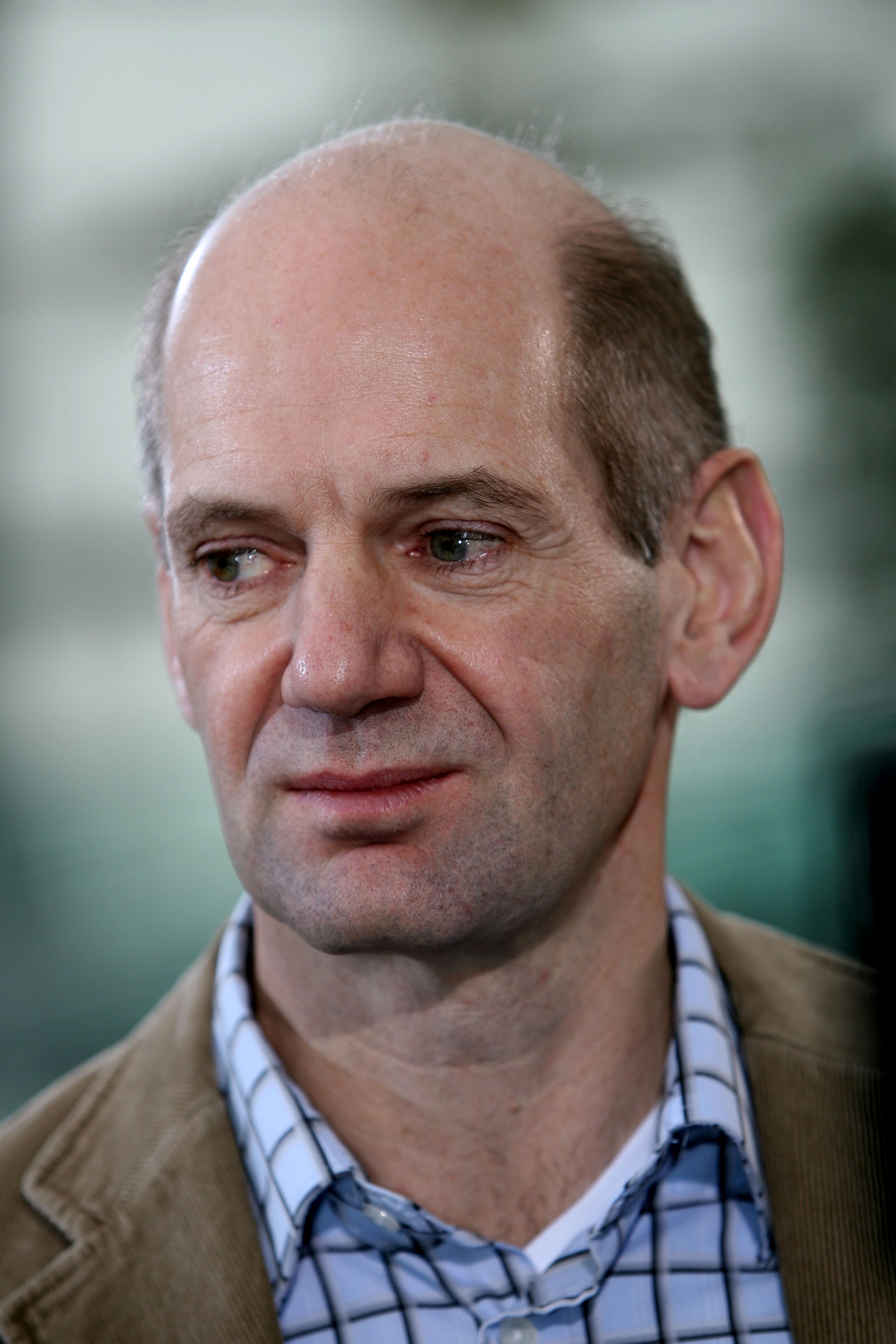
Adrian Newey, OBE,  Director of Engineering at Red Bull Racing, isn’t just the best of his time;  he sits right up there with immortals – with Rudi Uhlenhaut,  John Cooper, Colin Chapman, Patrick Head and perhaps a couple of others I’ll leave to your judgement.  A shy and retiring man who loves driving nice cars as much as he loves drawing them, Adrian was in reflective mood when we chatted on the eve of the recent Italian GP:

So prodigious is the success of Adrian Newey, so synonymous is he with F1 technical excellence – and therefore with prodigious F1 race and Championship wins – that it is a surprise suddenly to be sitting down with him in that zone they call “the Red Bull Energy Centre” and to listen to him talking…as if he is a mere enthusiast:

“Whenever I think of Silverstone,” he says, back to the journalists crowding around Sebastian Vettel – and to a bevy of exotic “Red Bull girls” beyond that group – “my immediate reaction is to remember the first race I attended there.  I went with my parents;  we sat in the grandstand on the outside of Woodcote;  and it was 1973.  I remember Jackie Stewart coming round with a huge lead, followed by the rest of the pack, including a young South African who lost it in a McLaren in a fairly spectacular way.  Amidst all the dust and the rubber I remember thinking, ‘So this is what F1 is like, is it?  Pretty spectacular…’”

Adrian speaks in what Americans would probably describe as a “typically British, under-stated way” but which to you and I is the voice of well-balanced reason.  One only has to chat to Adrian for five minutes to appreciate that he’s about as interested in celebrity, and in accentuating the first-person singular, as he is in market gardening.   Money?  Perhaps – but only if orientated towards an ex-Skip Scott GT40, or some other such delectable.

“I also remember,” he continues, “that in the excitement of watching the accident, I dropped my hamburger.  I think it was the first time my parents had ever bought me a burger – they were pretty health-conscious and liked to keep me off junk food – and so, when the dust had settled after the accident, I ran round the back of the grandstand to look for it on the ground underneath our seats.  Good for antibodies, I’m sure!”

A nice, scientific end to a little cameo that in many ways tells much of the story.  Peerless Adrian would become – an aerodynamicst par excellence in all forms of the sport (from IndyCar, where he won dozens of races with March, to F1 with March, Williams, McLaren and Red Bull) – but at the core remains the genius, the child prodigy, the detailed enthusiast with his eye on the day as a whole rather than on an event in isolation.

Thus Adrian is as much a racer as he is an engineer who sets standards in a competitive world.  He loves to drive, but recognized early that he loved even more the business of designing fast racing cars.  He also loves to engineer on the pit wall.

“My first weekend as a race engineer was also at Silverstone,” he recalls.  In the background, a heavy base is beginning to pound from the Energy Centre’s “social corner”.  Adrian is oblivious.  He is back in a grey day in Northamptonshire.  “It was 1982, and I had just moved to the March F2 team from Fittipaldis.  I’d literally never had a set of headphones on in my life before and they said, ‘Right, here you go.  You’re engineering Christian Danner’.  It was a cold, wet weekend – as miserable as it can be at a British circuit.  To be perfectly honest I really didn’t know what I was doing.  Christian was running second, I think, when the car broke down about one lap from the end, apparently out of fuel.  I was hung, drawn and quartered, and promptly fired on the spot by Christian – but then it turned out that there had actually been a metering unit leak.  Johnny Cecotto was also running in the works March team and he very kindly said that he would take me on instead, with Ralph Bellamy running Christian.  Johnny was a great bloke; we had a really good year together.”

Interesting on a number of levels.  Self-deprecating – “I didn’t know what I was doing” (yeah, right!).   Sensitive:  “Christian fired me on the spot”;  and appreciative:  “Johnny kindly took me on instead.”  I knew Johnny back then;  he was/is a great guy – a decent human being who had/has time for everyone.  Not what you would call a “Red Bull”-type of guy – but then who is?  The beat in the background throbs on, blasting out its message: “we are cool;  we are cool”.  Next to me sits Adrian.  Conservative.  Quiet.  Sensitive.   And also very “Red Bull”.   Such is the spread of his influence.

I ask Adrian if he has been following the excellent progress of Johnny’s son, Johnny Jnr, in GP2.

“Yes, of course.  It was nice to meet him after he won at Monaco this year.  There seems to be a family resemblance – and it’s good see another father and son going through.”

Cecottos Jnr and Snr: Adrian has fond memories of his F2 year with Snr and this year watched Jnr win GP2 at Monaco

Adrian’s talent as a driver is under-rated, I think.  Rob Wilson trains him and reckons he’s definitely up there with serious players who have won their class at Le Mans or Daytona.  So how does Adrian perceive his own talent?  What does the engineer think of the driver?

“I guess I was a frustrated young racing driver,” he admits.  “When I was around 14 or so I desperately wanted to go karting.  My father took me along to the local track – Shenington, near Banbury – and, to be fair to him, he made the very accurate observation that, so far as he could see, a lot of the kids were there karting not because they really wanted to be there but because their Dads wanted them to race.  So he said to me, ‘I’ll do you a deal.  You can race if you want to but you’re going to have to show your determination.  For every pound you earn, I’ll double your money…’

“Of course, doing the newspaper round, washing cars and mowing the lawn didn’t produce a lot of income, even if it was doubled, so I bought a very tired old 210 Barlotti-Villiers.   I’m not exactly sure why I went for a gearbox kart instead of a 100, but nonetheless I turned up at Shenington and the combination of me and it was hopelessly uncompetitive.  I qualified on the back row and finished pretty close to the back.

“My interest then focused on taking this tired old kart and making it go quicker.  And so I rebuilt the engine, fitted an electronic ignition, learnt to weld and made a new frame for it and so on.  I’m not sure I made it go any quicker but it did give me an extra flavour for the engineering side of things.”

We talk about cars – about racing automobiles that Adrian specifically likes:  “In terms of all-time favourite classic cars I would have to divide it into categories of both sports racing car and formula cars,” he says in that precise way of his.  “My all-time favourite sports racing cars are the Ford GT40 and the Ferrari 330 P4 – two of the prettiest cars ever built and from an era of motor racing which coincided with my childhood interest in raring cars.  From Formula 1, my favourites would probably be the Lotus 49 and 72 for similar reasons.”

“How quick am I?,” he asks rhetorically, staring into the middle distance that is the RBR race truck(s).  “I think in the historics, when I’ve driven alongside drivers like Bobby Rahal and Martin Brundle at Goodwood, I’ve generally been about a second off them, or just under a second.  Then, when I’ve got to places like Le Mans and competed against the pro drivers there, and at circuits like Misano or Vallelunga, I’m probably about 1.5 seconds off.  I’m sure it depends on the car.  If I was to jump into a single-seater it would be much more.”

Which, to my mind, puts Adrian up there with Colin Chapman in the scale of designers-who-also-know-how-to-drive.  The combined talents have to be an advantage.  Have to be.  And the comparative success of Chapman and Newey is of course no coincidence: it is predictable that both of them were/are prepared to push design tolerance to the absolute limit because they knew/know that a tenth of a second is everything, and that every racing driver worth his salt will take it on a plate, thankyou very much.  Jim Clark may have been nervous about Chapman’s margins for error – but he still took every ounce of speed that Chapman would give him.

It’s one thing to be a brilliant aerodynamicist and Technical Director;  it’s another to be a practical leader of men with the common sense of the truest of racers.  Adrian has yet to start his own team from scratch, and to rise to the centre of the podium as a Team Principal, but he could do so if he so tried;  of that I have no doubt. Like Chapman, Newey also has that burning desire to get things done.

In the meantime, his rapid rise is proof of the devastating talent:  a fast March for the fragile Leyton House-sponsored team.  A move to the more financially-secure Williams Grand Prix Engineering.  With Patrick Head and Paddy Lowe, brilliant success with the Renault-powered FW14 and its derivatives.  In 1996, a switch to McLaren.  More wins.  An even more corporate structure.  A departure, then, for Red Bull – for a team that had yet to win and still lacked an infrastucture.  That was the challenge.

“Motivation is an important part of delivering,” says Adrian, “and the hunger has to be there.  Certainly when I joined Red Bull one of my prime motivators was the unfinished business from the Leyton House days, inasmuch that I’d been at Leyton House more or less from the start.  I thought we were developing quite well as a very small team going forwards – two steps forwards and one backwards from time to time! – but if we had continued to have had decent funding then maybe as a team we could have gone on to win races.  But the funding was pulled and it was time to get out.

“So I kind of always regarded it as unfinished business.  Williams and McLaren were very established teams that had won races and championships long before my arrival.  Perhaps in both cases they had lost a bit of direction in terms of design and specifically aerodynamics but as an infrastructure they had proved they could win championships.  So my job on arrival at both of those teams was very much a design-based job.  In joining Red Bull it was different, because it was also developing the infrastructure in all senses of the word – with Christian (Horner) on the race team and then, specifically within the engineering group, things like building up our tools, getting the guys to work together, establishing the flow between departments and so on.  Indeed, in hindsight I think one of the mistakes I made in my first two months there was to treat it too much as a design-based job and not to spend enough time developing the rest of it.  If I had concentrated more on the infrastructure and the strategies, if you like, we’d have made better progress.”  Adrian is as motivated today as he was back in the 1980s: “ F1 remains a fascinating business in which to work – in my particular case for its many facets of design and innovation, both personally at the drawing board and also working with my fellow engineers at Red Bull around the factory.  Then, of course, it’s very enjoyable to be able to work with the drivers at the race weekends.”

Adrian’s and Red Bull’s progress was by most standards meteoric, of course.  Such, though, are the expectations of a racer.   None of this “it’ll be a three-year programme” stuff from Mr Adrian Newey, OBE.

We finish with some talk about the BRDC.  Adrian loves it:  “I think the BRDC is very important to British motor sport in as much as it gives a solidification to all the members;  I think all the members feel proud to be a part of the club, as demonstrated by the way that drivers like Stirling Moss, Jim Clark and Jackie Stewart always used to wear the BRDC badge on their overalls.  Obviously it’s hugely bigger today than it was then but, when you visit it, there are always people there that you know.  There’s camaraderie about it.  I think the only thing that’s a little bit of a shame,” he says, rising to leave, “is that the end-of-year function is now a lunch rather than a gala dinner.”

No more bun-fights, in other words; no more Chapman-like hijinks.

A racer, as I say, to the core.

This article was originally published in the Autumn, 2012 edition of the BRDC Bulletin

Photographs: SuttonImages


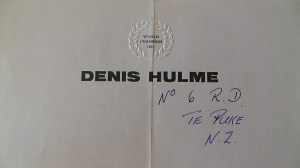
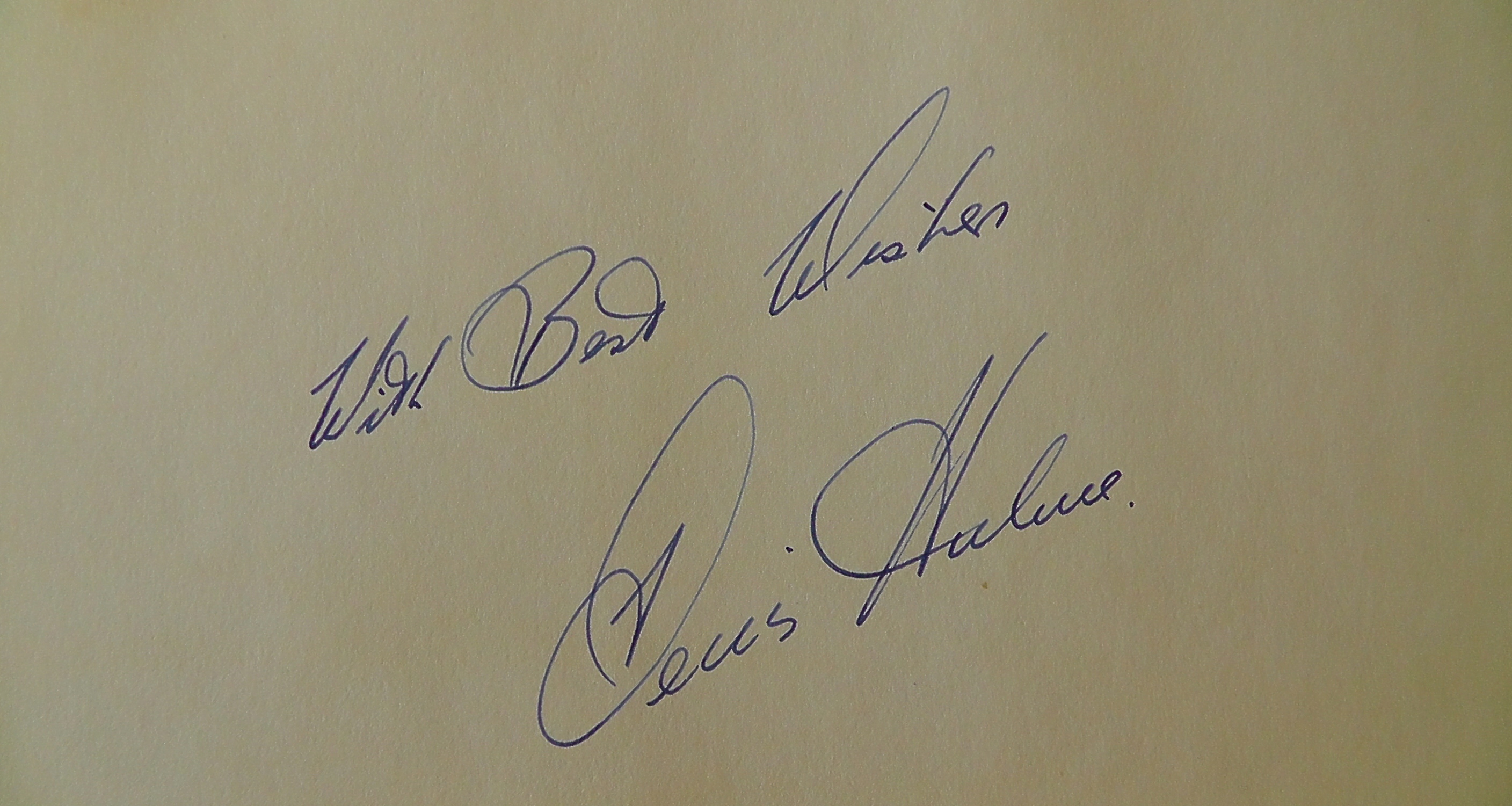
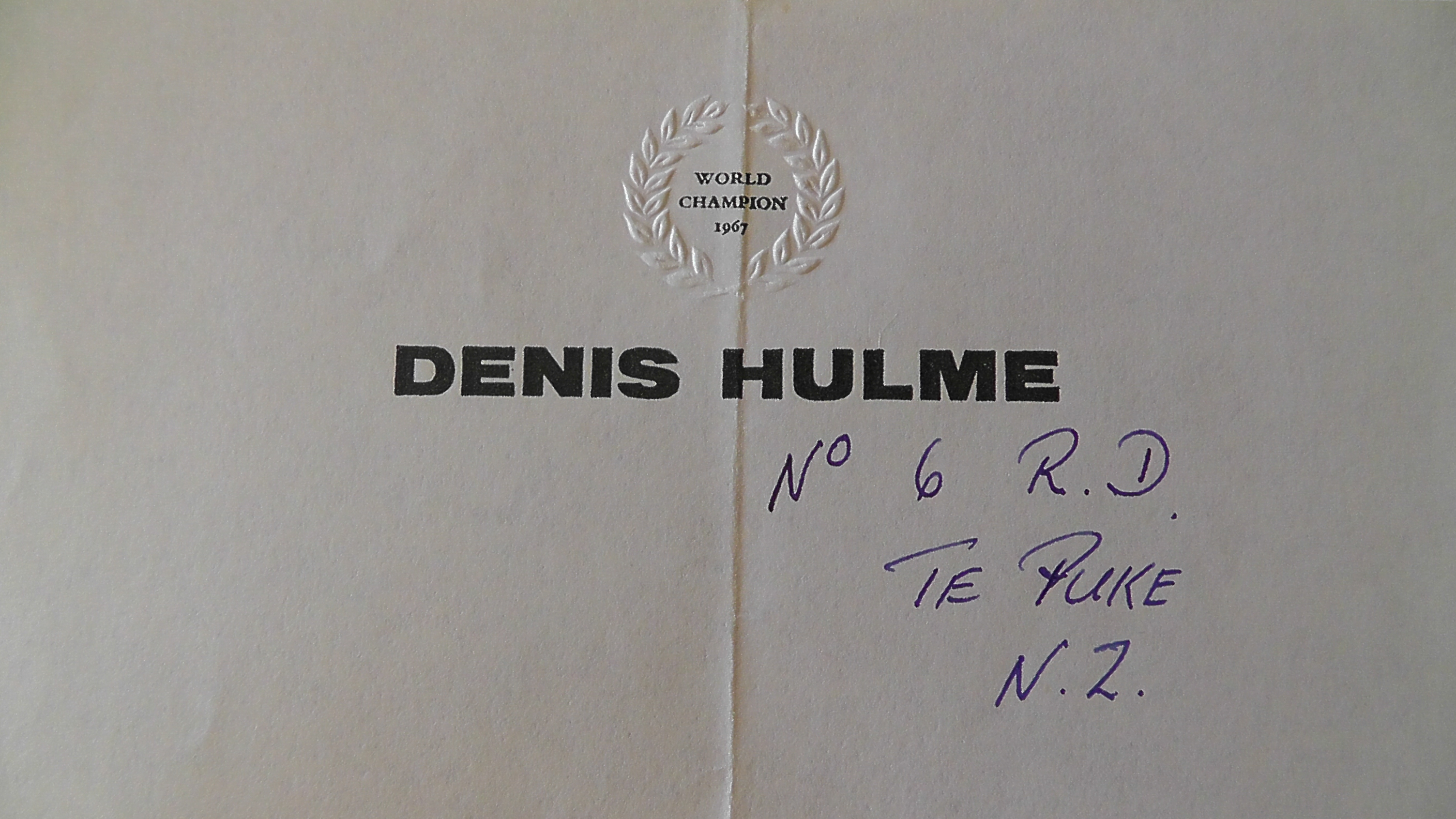
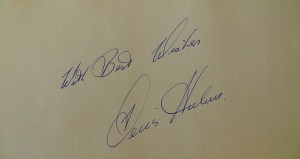
Denis Hulme – 20 years on but never forgotten

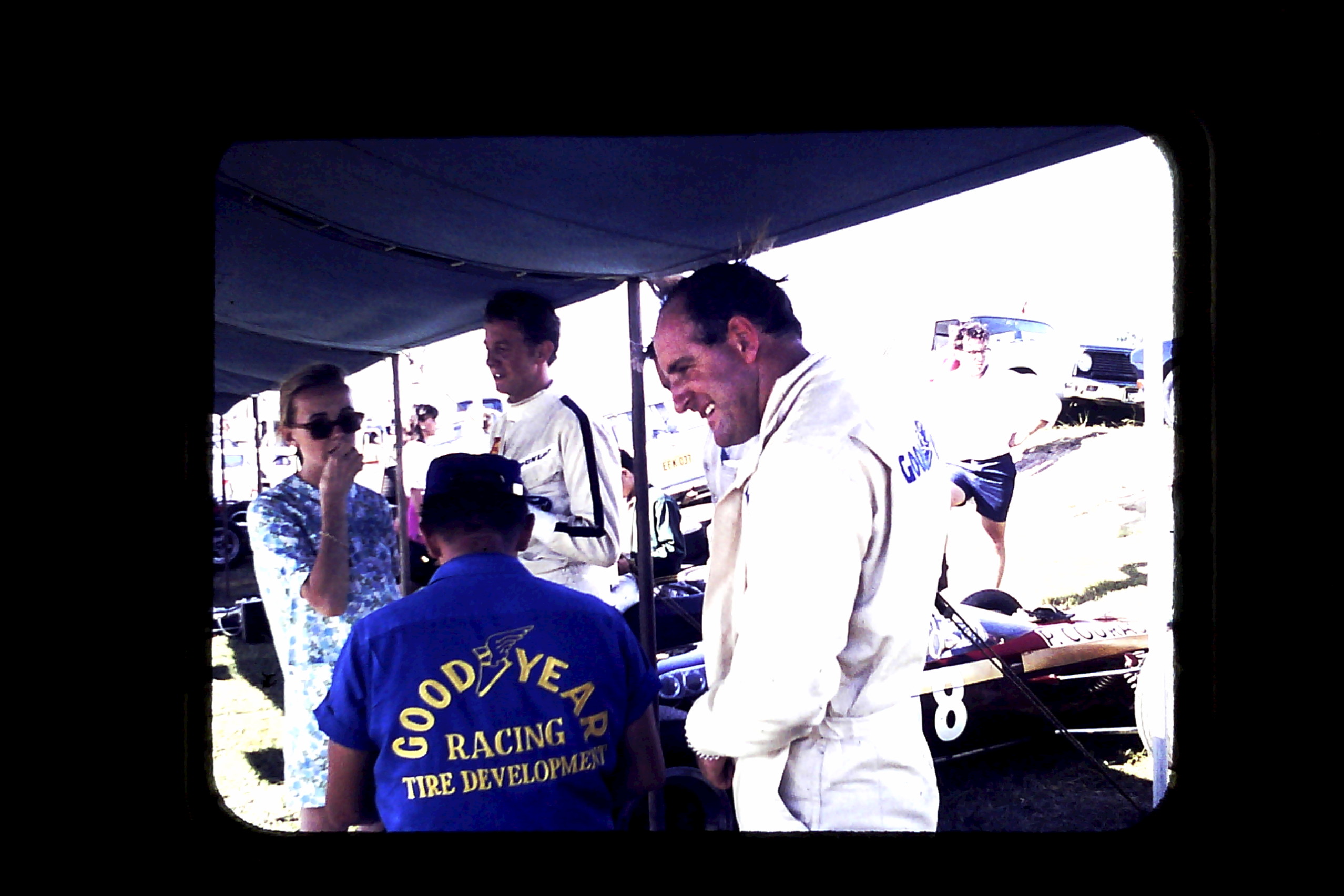
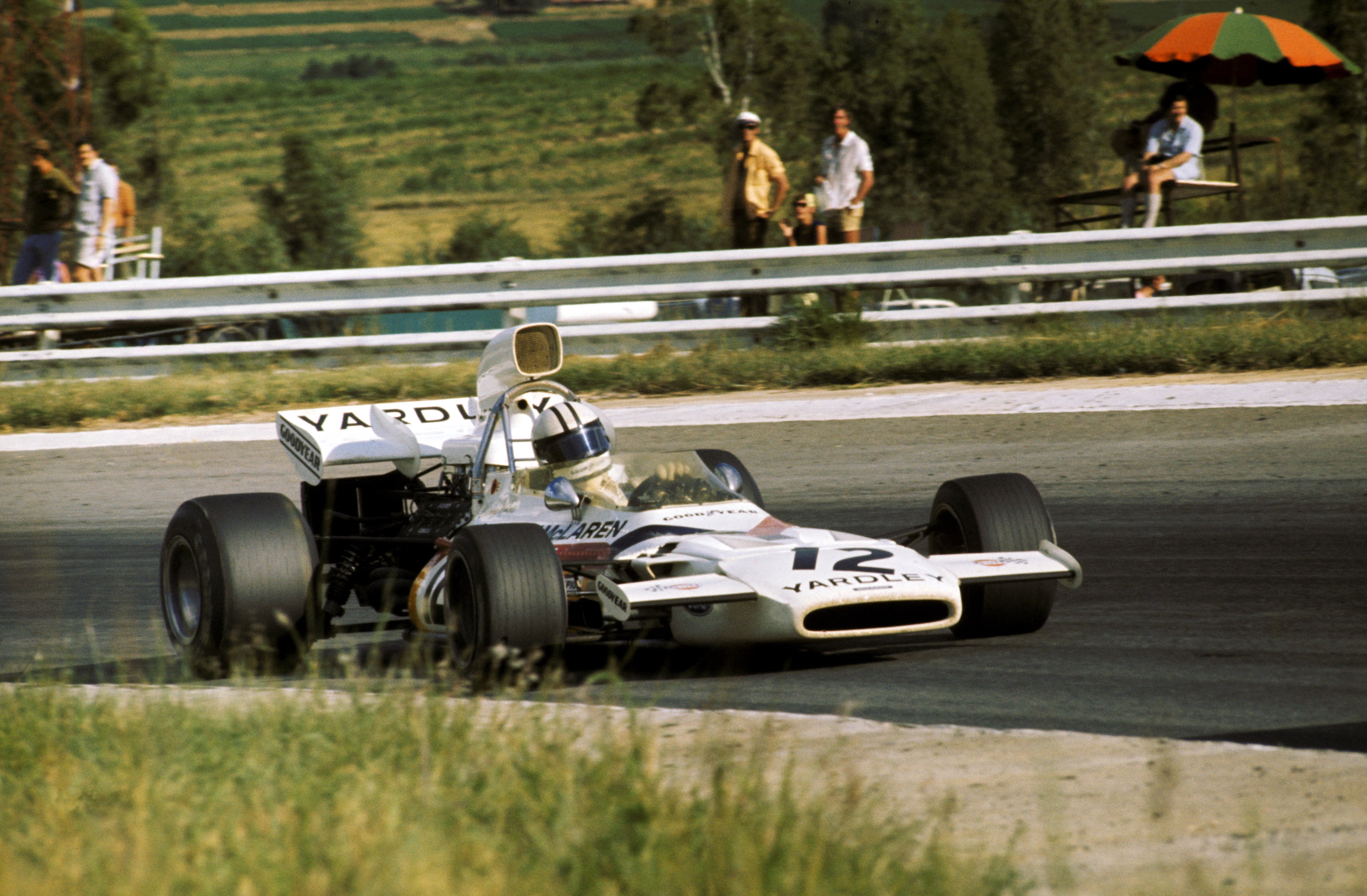
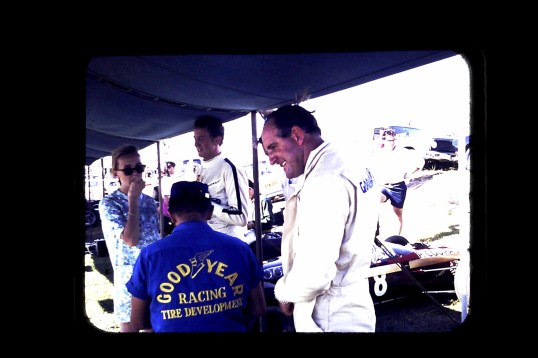
World Champion in 1967, Denny Hulme (pronounced Hull-m) was an engineer-driver in the mould of Sir Jack Brabham.  He was fast; and  he was blessed with extraordinary car control.  Denny was also very sharp.  In the days when you were allowed to do it, Denny would often start a race with a different tyre compound on each corner of the car.  Two-thirds of the way through the distance, there would be Denny, reeling-in the leaders…  He got his hands dirty, too:  he was one of the boys. I was a huge Denny fan when, as a kid, I saw him race in Australia.  Through the Warwick Farm esses he’d slide the Brabham from lock to lock, Bell Star, facemask, goggles and Goodyear race suit resplendent in the summer sun.  And then you’d run back to the pits to see Denny in de-brief mode, coiled around an awning, talking about spring rates or roll-bars. When I took the plunge to try my luck as a motor racing journalist, my first assignment was to cover the 1972 South African Grand Prix for Autosport.  I flew across to Johannesburg from Sydney.  I was disoriented and intimidated.  And then I saw Denny.  Suddenly, everything felt right with the world.  I asked him about the McLaren M19, which was racing that weekend for the first time in Yardley colours.  I asked him about the other cars, too.  Although he was by then a World Champion of enormous stature, Denny was straightforward and welcoming.  And, on the Sunday, he won the South African Grand Prix, heading a one-three finish for the Colnbrook team. Here are my notes from that race (first published in McLaren’s official F1 website):
Jan Smuts airport felt very like Sydney’s Kingsford Smith in early March, 1972:  officials wore shorts, long socks and khaki shirts with epaulettes.  A bright sun shone through the glassy structure.  Outside, as I queued for a taxi, there was a smell of eucalyptus in the air.   And so I relaxed.  It would be all right.  I could to this.  It was just like home.  I gathered my baggage – one suitcase into which I had crammed my life – plus the Olympia portable typewriter I had bought a few days before, after the last Tasman race, from the talented New Zealand journalist, Donn Anderson.  “The Kyalami Ranch hotel,” I said, brimming with anticipation, to the driver of the Ford Falcon taxi. 

And so my F1 life began…  I had met my new boss, the journalist and photographer, David Phipps, two months before, in London.  I had asked him for a job.  He had written to me a few weeks later, suggesting I fly from Sydney to the UK via Kyalami, where I could write about the South African Grand Prix for Autosport.  I sold everything I owned – a Honda trail bike and a Komini (fake Bell) helmet;  I cashed in my savings ($A725); I bought an air ticket with SAA; and I said good-bye to my family, friends and to our basset hound, Conkers.  I had no idea when I would see any of them again.  I was 19 and I was hoping – some day, probably 50 years away – that I would be lucky enough eventually to make it as a professional F1 journalist.  I don’t think I’ve ever been more nervous than when the taxi pulled into the driveway of the Kyalami Ranch.  I paid the driver.  I unloaded my bag.  I walked towards to the hotel’s check-in building, perspiring in the heat – and there, to my right, I saw them:  on the grass by the pool, in swim-suits, sat Mario Andretti, Clay Regazzoni and Jacky Ickx.  And there – over there! – was Graham Hill.  And wasn’t that Francois Cevert, in blue swimming trunks, walking towards the pool? Room 164 was on the far side of the compound.  Sweating freely now, and drained from the long trans-continental flight in the 707, I timidly walked away from the crowd, out towards the trees by the back fence.  Along the way, on my left, tapping furiously at his typewriter, I recognized the great Heinz Pruller, close friend of the late Jochen Rindt and world-famous writer.  Was that how I was going to have to type?  What was he writing anyway, this early in the week?  What did he know that I didn’t?  Doubts clouded my mind;  I felt like turning around and going home.

Then, drowning the tapping, I heard the faint sound of an F1 engine.  It was the bark of a tickover at first; then there was the up and down shrill of a Cosworth DFV at play.  I stopped and looked over to the hill in the distance, straining my eyes in the glare.  Yes! I could see the outline of the circuit in the veldt.  The main grandstand was a silhouette against the African sky.  I rushed to my room, inhaling the smell of air conditioning, humidity and hot foliage that in years to come would become so familiar in summer-race climates.  I quickly showered and changed into shorts and shirt.  And then I walked back again towards the pool. David Phipps – tall, schoolmaster-like, strode towards me. “Welcome to South Africa.  Good flight?  Come over here and I’ll introduce you.” “Colin?  This is my new assistant, Peter Windsor.  He’s going to be helping me with reports this year.  He’s just flown in from Australia.” “How do you do,” said Colin Chapman easily.  “Well.  You’re making a good start.  David Phipps is the best newsman in the business.” “Emerson?  Are you going to be testing later?” asked David.  I looked across at the sunbeds next to Chapman.  Emerson lay there,  browning in the South African sun, black and gold sunglasses offering only tertiary protection.  Peter Warr strolled up, wanting to talk to Colin about Dave Walker.  I pretended not to listen.  Then David Phipps walked me over to the Ferrari group.  “Mario.  This is Peter Windsor.  He’s helping me this year.” I spoke for the first time.  “Very pleased to meet you, Mr Andretti.  And congratulations on your win here last year.  How’s the car going so far?” “Not as well as in 71, I can tell you that,” replied Mario…and I was off.  A conversation had begun. 

Later that afternoon, at about 4 o’clock, David drove up to the circuit. I walked eagerly up to the garages, spying Elf Team Tyrrell on the left.  I looked in to see the legendary Roger Hill changing gear ratios on Cevert’s car.  The familiar smell of brake fluid and WD40 reminded me of F5000 races in Australia.  This was different, though.  These were the royal blue Elf Tyrrells of the World Champions.  This was the top of the mountain.    “Hi,” I said.  “I’m reporting my first race for Autosport.  I was wondering whether you’re going longer or shorter with the ratios…?” “Hello there,” said Roger.  “Come in.  We’re actually going longer.  Jackie usually starts a little taller than Francois and so we’re going in that direction.  I’m a bit busy now but come back a bit later if there’s anything I can help you with…” That night, forgetting sleep, and trying to imagine how DSJ (Denis Jenkinson) of Motor Sport would approach it, I started to write about the “entry” for the South African Grand Prix.  When I look back at it now, I think “boring” probably best sums up my work, so I won’t reproduce too much of it now.  Why was it like that?  I didn’t try anything new – and Mel Nichols, of Haymarket, had yet to introduce me to the free-flowing style of Rolling Stone or Tom Wolfe’s The New Journalism.  Up-and-down was all I knew – and all, I guess, that anyone ever expected. I wrote within the straitjacket that I assumed was de rigeur in F1.   Thus I said things like the following:

Entry

After the Argentine Grand Prix all the cars, with the exception of the Ferraris, were flown directly from Buenos Aires to Johannesburg and it was thus hardly surprising to find that the entry for the sixth South African Grand Prix was substantially unchanged (except for the addition of three local cars). (“The Entry” section of reports in the 1970s was always an important, opening phase:  back then, teams were not obliged to enter every race and were also free to enter one, two, three, four or even five cars if they so wished.) At the extreme left of the long lock-up garages were Elf Team Tyrrell, where the two regular Tyrrell-Fords, Stewart’s 003 and Cevert’s 002, were joining 004, which had been at Kyalami for several weeks for Goodyear tyres tests. Stewart’s best during those tests had been 1min 16.4sec, and this was the mark for which everyone aimed during official practice (as qualifying was known back then). Adjacent to the Tyrrell team were STP-March, with two Ford-engined 721s for Ronnie Peterson and Niki Lauda.  Both cars were fitted with the shovel-type noses first tried by Peterson during practice for the Canadian Grand Prix last year;  effective though they were, they looked as though they had been intended for a different car. The only major change on the Yardley McLaren-Ford M19As was a new type of adjustable mounting for the rear wing.  Both Denny Hulme and Peter Revson had been testing in the week before the race but had been handicapped by wet weather. Etc, etc.

In the day that followed, and into Saturday practice, I spent most of my time with John Surtees and Mike Hailwood, Denny Hulme and Teddy Mayer, of McLaren, Keith Greene at Brabham,  Alan Challis at BRM, Frank Williams and Colin Chapman.  All were very nice to me – mainly, I suspect, because of David Phipps’ reputation in the pit lane.  I also managed to strike up a three-minute conversation with Carlos Reutemann, along the lines of, “why did your tyres go off so much in Argentina?”  Peter Revson, super-cool with a Gulf logo on his Hinchman overalls where Denny wore the Yardley badge, was also an easy guy with whom to talk:   “Great helmet design, Peter.”  “Thanks.  I worked on it for quite a while before we got it right.” How’s the car feel?” “Great.  This is a very good race car.  We need to get the set-up right, and there’s a bit of a cooling problem, but I think we’ll be very quick all year….” There were about ten international journalists at the race and quickly they became friends.  Heinz Pruller.  Dieter Stappert of Powerslide (what a great name for a magazine!).  Helmut Zwickl – another talented Austrian.  Gerard Flocon, of l’Automobile.  Bernard Cahier, of course, with his Goodyear connections. Eoin Young. Barrie Gill.  Johnny Rives of l’Equipe.  Gerard Crombac. Jeff Hutchinson. Michael Bowler. Andrew Marriott. As daunted as I was by their expertise and professionalism, I was able to watch them and to learn. I didn’t dine at the Ranch in the restaurant;  I didn’t dare.  Instead, I wrote my practice report on the Saturday before the race. 

Practice

Practice was officially scheduled for Wednesday, Thursday and Friday afternoons but unofficial testing was allowed each morning and many drivers made good use of it.  This is one of the reasons why Kyalami is so  popular with the teams and why the circuit is given high marks by the GPDA every year. The tyre situation was more confused than ever, for Goodyear had yet another new system of numbering and had a selection of compounds made in both Wolverhampton and Akron.  Firestone, on the other hand, were depending mainly on compound 1123, and didn’t seem to have enough tyres to go round. Within the first 20 min of practice on Wednesday Denny Hulme recorded a 1min 18.4, which remained the best time for quite a long while.  Towards the end of the session, however, Stewart went out on his “best” tyres and recorded a 1min17.0, which left him substantially fastest. Both Ickx and Regazzoni seemed happy with their Ferraris but Andretti found his car rather unpredictable through the corners.  “It’s like a yo-yo out there,” he told me.  

Peterson was in trouble with an overheating engine (the same engine that overheated in Buenos Aires!)  and thus had a new one fitted for Thursday.  Cevert was going well, being third-fastest behind Stewart and Ickx and 0.1sec ahead of Fittipaldi.  Hulme shaved 0.3sec towards the end to finish with 1.18.1 but team-mate Revson was troubled by overheating;  he, too, was given an engine change. Early on Friday morning the Surtees and McLaren teams were out testing.  They were later joined by Stewart, who did a glorious practice start with long, black streaks of rubber on the road – which were then closely examined by Derek Gardner.  Schenken was running a new engine and was down to 1m18.2 but Hailwood did three sensational 1.17.3s in a row, which was encouraging indeed for Team Surtees. As soon as the final official practice began Hailwood went straight out and repeated his effort, finishing with an official 1.17.4.  Hulme, also looking very determined, was soon down to 1.17.4, although a nasty noise from his engine precluded any improvement.  Gethin was throwing his BRM around, and had a graceful spin on the exit from the tight left-hander, Clubhouse. With ten minutes of practice remaining, Stewart put in two beautiful laps at 1,17.4.  On the pit wall, though, Roger Hill showed his man a “17.1 Fitt” sign, inducing the World Champion to shave a further 0.4 sec from his time.  As it turned out, Emerson was credited only with a 1.17.4, so the pole was comfortably Stewart’s.  Clay Regazzoni, now very happy with his Ferrari, beat Fittipaldi by 0.1 sec – and Hailwood and Hulme filled row two;  but for his mechanical problems, Hulme would certainly have been faster.  Revson’s bad luck continued, forhe drove a drive-shaft while practising a start;   that left him on the fifth row with Amon and Beltoise.

I awoke early on race morning, nervous and feeling inescapably as if I was drowning:  the race report had to be finished in neatly-presented typed manuscript within two hours of the chequered flag.  I – or possibly an official from the Telex agency – would then have to re-type it into a Telex machine at the track.  There was only one Telex in the Kyalami press office and plenty of other journalists, I knew, would be vying for its use. 

David, meanwhile, was more concerned with sending the black-and-white images back on the first available flight.  I had to make phone calls to the freight shipping agents and to ensure that at least a couple of rolls of film went back with Colin Chapman – who would have to be met at Heathrow, of course. I did, though, drop by the restaurant before we left for the circuit.  David was easy to identify.   I walked over, between the packed tables, trying not to bump anyone with my Qantas shoulder bag.  It was only when David was clearing a space for me, and pointing to a chair, that I realized he was breakfasting with Denny Hulme, who was wearing a striped blue polo shirt and shorts.  I froze momentarily, then tried to be calm.  Denny just kept on talking:  “….it took forever, but I think we’ve got it about right now.  I’ve got the brake discs flush to the ceiling and the actual light cord passes through the centre of them….”  It was only when I visited Denny in his house in Walton-upon-Thames, Surrey, later that year, and noticed the ventilated McLaren M8D disc brakes forming the light clusters, that I realized what he had been talking about.  Denny had a way of being completely normal and matter-of-fact.  I was able to ask him one or two questions during our breakfast at The Ranch and from that moment onwards I always found him to be courteous, informative and extremely intelligent.  He wanted people like me to understand what he did for a living.  He wasn’t interested in the trimmings that came with his job.  He just loved sorting out a car and then driving it.  And Denny was fast;  have no doubts about that.

David and I left for the circuit about an hour later.  The crowd was huge – 95,000.  We turned off early, by the “Officials” sign and lined up behind the Goodyear boys in their rental car, ready to show our paper passes. Then, from nowhere, came a little piece of heaven.  Two South African girls – gorgeous both – were dressed in Yardley short-sleeved shirts and hotpants.  And what was this they were giving out?  Little bottles of Yardley after-shave! I pleaded for two bottles, perhaps three.  I had never seen this stuff in my life – not in my Australian life.  I removed the little black cap and drunk the aroma.  Spicey, clean and intoxicatingly memorable.  For me, this scent would always be synonymous with Kyalami, McLaren and a hot summer’s day.  Sadly you can’t buy this mixture any more, although I still have the Yardley McLaren stickers the girls also gave us that morning. I felt I had to mention all this in the Autosport report. I should also add that this race was held on Saturday, thereby enhancing the texture and depth of the occasion.  This was South Africa – one of the greatest of all sporting nations – devoting its “day of sport” to Formula One.  None of that “cricket on Saturday, motor racing on Sunday” stuff;  this was a head-on commitment to the South African Grand Prix. To the Suid-Afrikannse Grand Prix.   

Race

Even on Friday night the race crowd poured into Kyalami and by Saturday morning the undulating, well-equipped circuit was a mass of parked cars and people, most of whom had received Yardley after-shave and Lucky Strike posters as they passed through the gates. For those that wanted it, there was another untimed practice from 11:30 to midday, during which Revson’s left-front wheel came off and Hulme’s new engine (retrieved from the airport on Friday night) suffered another damaged rear oil seal.  Alastair Caldwell and the boys set to work with resigned application. As 3:00pm approached the cars were wheeled around to the front of the pit counter, most of them on wet weather tyres to avoid the chance of punctures.  There was just one warm-up lap and then the field lined up on the dummy grid.

They moved forward with 30 seconds to go, led by Stewart.  It was Fittipaldi and Hulme who timed the start perfectly, though, anticipating the flag-drop almost to the millisecond, and, in Denny’s case, perfectly managing double-dip clutch slip against revs.   Further back, a lot of mid-field dodging took place down the long straight as Revson (wary of another drive-shaft problem) was very slow away. There was further drama as they crested the rise just before the Dunlop Bridge. With the screaming pack in sight, two cretins ran across the track from the outside.  They made it safely to the grass verge on the but it was shocking to see – and must have been sickening for those at the front – for Hulme, Stewart and Fittipaldi. Denny seized the inside for Crowthorne, braked ultra-late and decisively snatched the lead.  Stewart filed into second place, followed by Emerson and Mike Hailwood in the Surtees.  I was standing on the bank between the exit of Clubhouse and the acceleration run from Leeukop down the long straight.  The white McLaren led the snake of cars out of Sunset, Denny jinking the steering on exit, Stewart tucked right up behind him.  Then noses dipped under heavy braking for Clubhouse.  Downshifting and crackling exhausts.  Then more opposite lock, as Denny, on full tanks, massaged the oversteer.  No-one crossed arms as much as Denny – but there was a certain grace to his movements, a certain touch.  A certain feeling of “this car is still dead-square to the road, even if it is travelling a little sideways”. The trail of cars disappeared as they plunged into the esses – but then Denny’s McLaren soon re-appeared in the distance on the uphill approach to the Leeukop right-hander.  Nose down, then nose up.  Denny was clear and away, leading the pack through third, fourth and fifth – onto the long finishing straight. As Hulme braked for Crowthorne on lap two, Stewart’s blue Tyrrell dived down the inside and seized the lead.  Jackie was able to eke out a slight advantage, too, while, behind, the racing remained hectic:  the field formed a long train, with positions changing rapidly and cars often side-by-side as well as nose-to-tail.   Through it all came Peter Revson, slicing his way through the field with brilliant precision and judgment.   Could McLaren’s troublesome weekend suddenly be falling into place? Sadly no.  Emerson Fittipaldi displaced Hulme on lap 16, for Denny’s engine was again beginning to overheat.  He backed off the revs – from 10,500 to 10,000 – and watched the Lotus 72 pull away from him, remorselessly into the slipstream of Stewart’s Tyrrell.  Next into the frame came Mike the Bike Hailwood, loving the feel of the Firestone-shod Surtees and looking as neat and as tidy as Stewart at this very best.  Mike, too, passed the ailing McLaren – and closed quickly on Stewart and Fittipaldi.
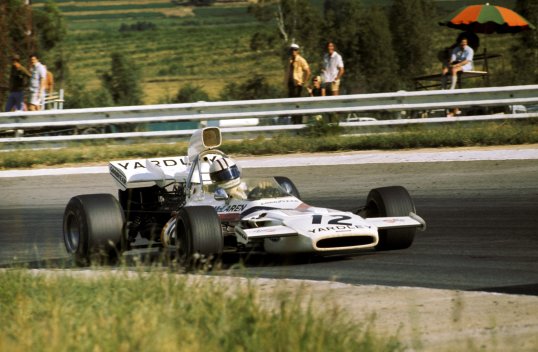
The racing was superb, the standard of driving sublime. Back-markers began to play their part.  Some obeyed flag signals;  others did not.  Mike and Jackie were side-by-side as they flashed past the grandstands on lap 27, although Jackie retained the lead.  Then, on lap 29, Hailwood’s strong challenge was over as quickly as it had begun.  A lower rear wishbone mounting broke as he turned in to the very fast Barbeque Bend.  The moment was almost as nasty for Emerson, who was following closely, as it was for Mike.  Brilliant reflexes saved the day. By lap 30, then, you could have been excused for thinking that the pattern was set.  Stewart led Emerson by 2 seconds, with Denny still third.  Revvie was now up to sixth;  ahead lay the rapid Matra of Chris Amon.  Ferrari, though, were in trouble on this high-altitude circuit:  they were running lean mixtures to try to manage fuel loads but all three engines were now way down on revs as a result. Reliability  had plenty of hands to deal to other teams, too.

On lap 45, to the astonishment of all, Stewart cruised into the pits with no oil in the gearbox:  a drainage bolt had worked loose.  Emerson now led by 4.5sec from Denny, with Ronnie Peterson third, Amon fourth and Revvie fifth.  Then Emerson, too, struck trouble:  his 72 began to oversteer dramatically on all types of corners – and particularly through Sunset, where Emerson’s balance was stunning to watch, lap after tyre-consuming lap.   He kept on fighting, nursing what turned out to be badly worn rear Firestone 1123s, but now Denny could smell blood.  His Goodyears in perfect shape, Denny flicked to the inside on the approach to Crowthorne on lap 56.  He won the corner; and immediately (to his surprise) began to pull away.   For two laps he continued to rev to 10,000.  Then, remembering the last-minute suspension failure that had robbed him of victory at Kyalami the year before, he backed off to 9,500. Amon stopped briefly to complain of a vibration.  A broken rear wing stay on the March obliged Ronnie Peterson to add new meaning to the term “opposite lock”.

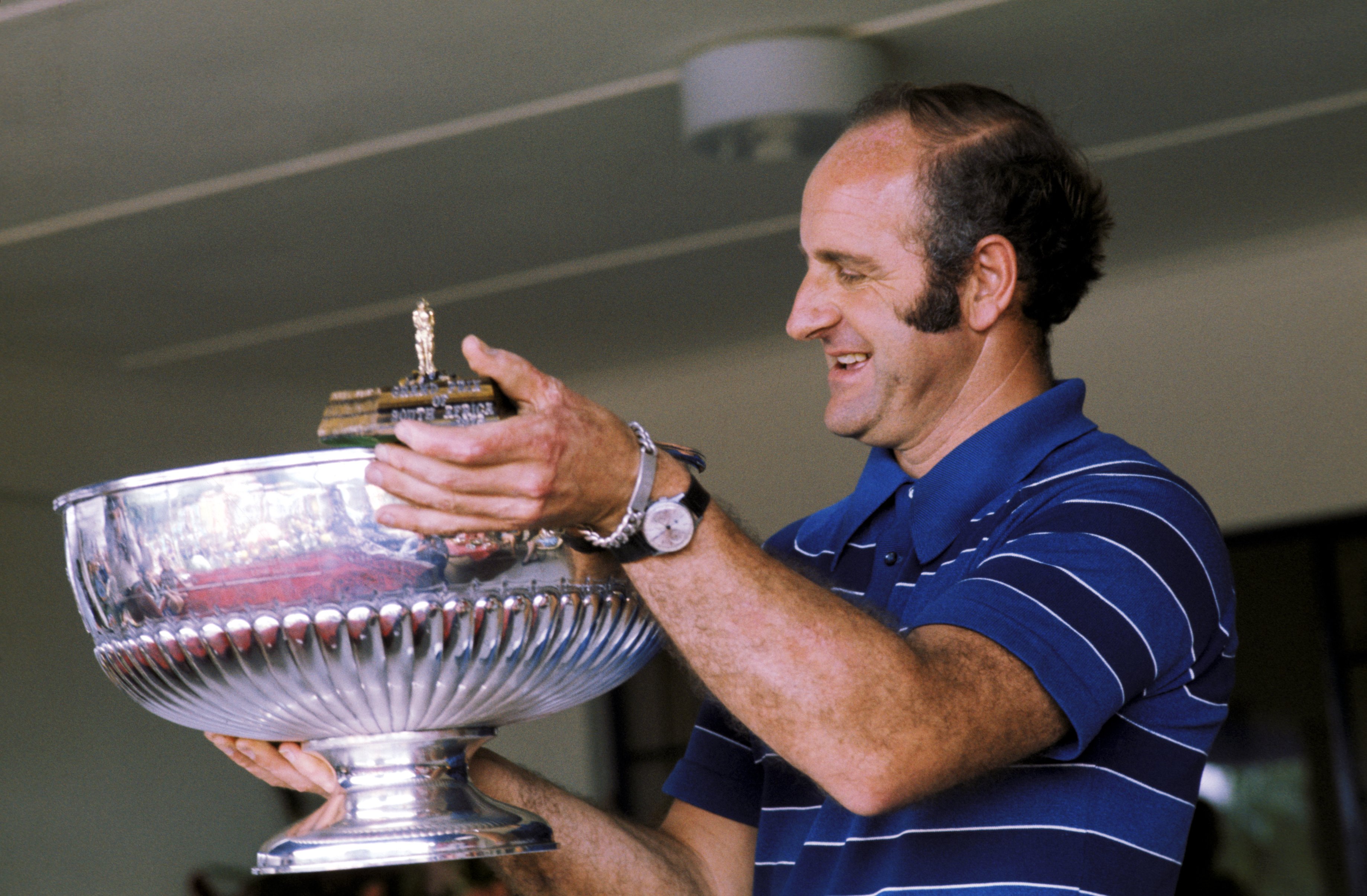
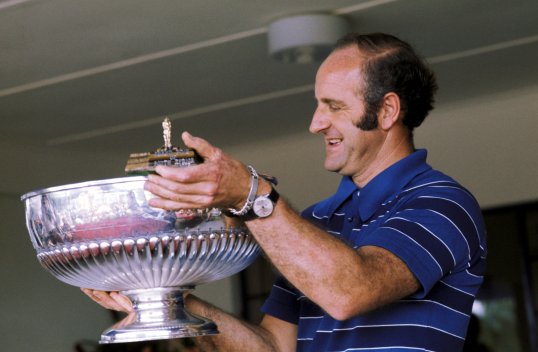
And into third place, therefore, strode Peter Revson.  Had he had a better run in practice – or had he not dropped down to 18th on the opening lap – Revvie might even have been second.  As it was, he registered the first top-three finish of his career. There was no stopping Hulme and the Yardley McLaren in the closing laps.   The 1967 World Champion took the flag 14.1sec clear of Emerson, from Revvie and Andretti, who had driven another good race for Ferrari in difficult circumstances. On the podium, facing the grandstands, Denny held the huge, silver trophy aloft.  They clamoured round about him:  even Barrie Gill was there with microphone and cameraman, eager to grab a soundbite for the TV news.  Of Emerson and Revvie, though, there was no sign, for at Kyalami, as at many other circuits, only the winners receive the plaudits.  

I set about my report.  I found a table in the press room.  I wound the first sheet of white paper into my beloved Olympia.  I fitted ear plugs.  And I asked myself the question: “What would I want to know about this race if I’d heard only the results?  I didn’t have all the answers;  I would never have all the answers.  I could, though, at least make a start.  Denny Hulme, the driver with whom I had had breakfast, had won the South African Grand Prix.  Now it was up to me to me.  I needed to do justice to the day – and to David Phipps, who believed in me.  Quickly.  And without hesitation.   That was what I told myself as I sat there, amongst Pruller and Crombac, Flocon and Zwickl.  That was what I told myself as I watched those masters at work.”

Pictures:  SuttonImages (David Phipps Archive) and The Peter Windsor Collection    
Now THAT was fun!

Not so long ago, I was invited to drive 15 laps of Ricard in a Toyota V10 F1 car. Here’s a brief look at what transpired…

Post Navigation