peterwindsor.com

…chance doesn't exist; there's always a cause and a reason for everything – Elahi

“The new engines are not going to be silent…”


I spoke recently to the FIA’s F1 Race Director, Charlie Whiting.  What does he think about the new engine regs for 2014?  And what, indeed, does he think about the F1 life?

I find Charlie Whiting in his second home – in the office at any given Race Control building in any given F1 track of the world that bears the title, “Race Director”.  We happen, on this occasion, to be in Austin, Texas, where the new Hermann Tilke-finished Circuit of Americas is undergoing its baptism by fire.  And this is about the only time of the weekend when Charlie has a moment or two in which to chat.  It is the lull after qualifying on Saturday.  The F1 cars are in Parc Ferme conditions (under wraps in the team garages).  And, baring the odd technical political or technical crisis or two (or three), Charlie can relax just a little, exhale some air and think about…the racing life.

“You’ve been in motor racing for quite a long time,” I say to the man whose silver hair speaks of 40-or-so years in the business but whose body is still that of the ever-young F1 professional.  He wears a neatly-pressed light blue, short-sleeved FIA shirt against dark blue slacks.  And his room for the week, as ever, is Spartan.  A desk, a table with a couple of chairs.  A laptop (fed by just-for-the-weekend 100-plus mgb speeds).  The inevitable briefcase.   No family snaps in leather frames.  No mascots.

“Yes,” says Charlie. “Since the age of 14, actually.  I’m 60 now, so that’s 46 years.  Long enough!   And everything still seems like yesterday.  I can still recall Lydden Hill rallycrosses in vivid colour.  But then, when you think about it, it was a long time ago.   The thing that brought that home for me recently was that it’s now been 30 years since I was Chief Mechanic to Nelson Piquet at Brabham when we won the World Championship (in 1981 and 83)…”

I wonder, often, when I see ex F1 Brabham team people like Charlie or Mike “Herbie” Blash, or Alan Woollard or Eddie Baker or Nigel de Strayter, all of whom today work either for the FIA or FOM – I often wonder if they do spend any time thinking about the past.  It’s F1 folklore that the only day that matters is tomorrow, that nostalgia is for the weak – and always I imagine that that’s even more the case when you work for the FIA or FOM, where so much of the emphasis is on politics, money, the future, the F1 show. Prod them a little, though, and away they go…

“I joined Brabham at the tail end of the BT45 and the BT46-Alfa, when Niki Lauda and John Watson were driving for us.   They were lovely cars.  Lovely.  When you think how simple they were – they didn’t seem simple at the time – but they are very, very simple cars by today’s comparison.  The complication was in the detail.  On the BT45 you had to take the engine out to change the spark plugs!  As a mechanic, that seemed complicated to me….”

Continuing the theme of finding the racer behind the top-line FIA official, I ask Charlie about his early years.  How did it all start?

“Through my brother, Nick” (who was a successful saloon car racer in the 1970s).  “We did a deal with John Webb at Brands Hatch, who was trying to help Divina Galica into motor racing in 1976. With Shell sponsorship, we – Nick and I – acquired a Surtees TS16. I prepared it and Divina drove it in the Aurora Championship.  We bought a TS19 for the following year, and then Divina took Olympus sponsorship into F1 with Hesketh in 1978.  I went with her, and worked for Hesketh, but things didn’t go particularly well that year unfortunately and it all ended after the Belgian GP.  I then got a job at Brabham through Herbie – on the test team with the BT46-Alfa, which was a lovely car, as I say.  I did one test and then for some reason I was on the race team for the French GP.  I stayed there.  Nelson Piquet came along in 1979 and made the team his own, really.  It was an amazing time.

“And I guess,” I add, remembering the slickness of the Brabham team back then, and the almost surgical precision of its operation, that at that point you would have been thinking, ‘This is a great job.  Brabham Chief Mechanic.  The future’s secure…’  You wouldn’t have been thinking beyond that?”

“Of course not,” agrees Charlie.  “You don’t look that far ahead.  I’ve always had ambitions and when I was working as Nick’s mechanic in the early 1970s, building Escorts, I always wanted to be an F1 mechanic.  My ultimate goal was to be a mechanic to an F1 champion.   That, so far as I was concerned, was the greatest thing I could aspire to.    I did that twice and I was rather pleased with myself about that, I must admit.”

I’ve know quite a few F1 mechanics who speak of a sense of anti-climax when they finally win a championship.  Some don’t even receive a handshake from the driver, let alone a pay rise.  For Charlie it was different:

“I loved every minute of it.  Amazing feeling.  Being in charge of a team when you win a Grand Prix was just a fantastic feeling and I would never tire of that.”

1981 was an interesting year, of course.   Carlos Reutemann lost the Championship by one point but was stripped of a nine-point win (scored in the opening round in South Africa) a couple of months into the year when it was decided (for “political” reasons) to strip the race of its championship status.  Then there was the mysterious, larger rear wing fitted to Nelson Piquet’s Brabham after qualifying at Monaco (but before the weight check!) and the brilliantly-conceived, valve-operated Brabham ride height control system.  In a nutshell, the system was fully legal and enabled Brabham to dominate the early rounds of the season (give or take a wrong tyre choice in Brazil).  For Zolder, though, the FIA legalised a much more basic lever-adjustment system that brought all the other F1 teams back into contention.   One imagines that such about-faces – and creativity – merely added to the graduate education of Charles Whiting.

“Monaco 81?  Qualifying?” asks Charlie with a smile.  “I’m not sure what you mean…  Now the ride height – that was something.  It was a fiendishly clever system that was 100 per cent legal and which no-one could understand.  I remember Gerard Ducarouge” (the Ligier designer) “trying to wriggle his way down the cockpit to find the lever that moved it up and down.   There was nothing there! It was all valve-operated, orifice-controlled.  The problem is that the suspension took a long time to come back up.  It was also a bit complicated, with lots of pipes and things that could have fallen off.

“In the first race in Argentina we were amazingly quick. Hector Rebaque, our second driver, went right round the outside of Alan Jones on that long corner out the back. It was just awesome to watch.  Unfortunately he didn’t finish, though, and retired right by the pits, with the suspension still down.  Everyone clocked that and so obviously with Nelson’s car, which was winning easily, we were on tenterhooks to see if it would come back up again…”

Charlie didn’t elaborate here, but (in a nice counterpoint to what would occur in Singapore 27 years later) legend has it that Nelson had selected the exact rail of Armco barrier against which he was going to crunch the Brabham on its slow-down, victory lap in the event that its suspension was still down.  Thanks to Nelson’s judicious use of kerbs, the ride height was legally up by the time he reached the potential accident zone, although Nelson couldn’t resist winding up the Brabham boys who were watching a hazy black-and-white TV monitor on the pit wall.  Pretending to steer towards the relevant Armco and then veering away at the last second, he gave them all a cheeky wave as he drove on to the podium and thus to scrutineering.   The gesture was lost on everyone else…

“We had an amazing team, the best of its day,” says Charlie wistfully.  “Obviously Colin” (Chapman) “was brilliant in his own way, but Gordon Murray came up with some great ideas and Dave North, too, was a very clever guy and probably still is, as far as I know.”  (David is with LotusF1.)

Which segways us neatly back to 2012.  I ask Charlie about the quality of talent in the F1 pit lane – about whom he most respects.

“There is a mutual respect within the paddock.  I don’t think there’s anyone out there I respect more or less than any of the others.  You have to earn respect, don’t you?  There are some exceedingly clever people out there but I think they know me well enough by now not to try to pull the wool over my eyes.  There’s a certain amount of respect there not to do those sorts of things.  When someone does it it’s so obvious…so they don’t try. It takes a long time to reach that situation.  The thing is, the F1 pit lane is full of brilliant people, of people who think very quickly on their feet.  The standards in F1 are very high.”

What is the most enjoyable part of his weekend?

“I love it all so much that it’s difficult to say but I think the biggest adrenalin rush is the start.  You never tire of that.   You still get nervous and it’s still high-tension.  Lots of things can go wrong but the best thing about my job really is the lack of routine.  Every day is different.  Literally, you never know what might happen. You never know what’s around the corner.  You never tire of that.”

And what about the new F1 technical regulations for 2014?  What does he feel about the new turbo V6 engines (and the talk about how the show will be diminished by the loss of high-revving, normally-aspirated screaming sound.)

“It’s a big challenge,” says Charlie.  “A very big challenge for the engine manufacturers.  I’m looking forward to seeing the engines run – to see how complicated they are and how clever they are.  They’re going to be extremely high-tech power units, that’s for sure.   As for the sound, I think people will get used to it pretty quickly.  Honestly, when I think back to the old BMW four cylinder engine we ran in the Brabham days,  that revved to 11,000rpm and it sounded fine.  The new engines are not going to be silent.  The sound is going to be different but people will get used to it very quickly, I think.”

I also ask Charlie about his thoughts on the new-look Silverstone:

“Living very closely to Brands Hatch when I was growing up, I only went to Silverstone three or four times until I became involved in F1.  Today, they’ve done an enormous amount of very good work at Silverstone.  The track is now one of the nicest we’ve got.  It’s not like a really modern circuit, where we have asphalt run-offs and all the latest gadgets, so it’s still got a good feel about it.  It’s a proper racing circuit.   Obviously they’ve had to make improvements to bring safety up to a required standard but they’ve still got that standard of a real race track, I think.  And there are fewer and fewer of those on the calendar.

There’s another knock on the door.  Charlie is wanted.  I ask, quickly, about his life right now – and about the future (bearing in mind that I believe his contract with the FIA is up for renewal at the end of 2013.)

“I’m looking forward to the time when I do a little less of this and bit more of that,” he muses. “I live at present in a very complicated way.  It’s a very busy year, requiring me to be on the road about 200 days out of 365.  I’ve got a wife and two young children, and of course it’s very hard to be away from them.  We live in Monaco and we spend time in the UK as well and with schools and things like that it’s hard to juggle everything and to be there as much as I can.  Aside from the F1 races 20 times a year, I’ve got lot of circuit inspections to do, the Technical Working Group, the Sporting Working Group, the Circuits Commission, the Research Group, the Safety Commission, the Single-Seater Working Group – all these groups require one meeting after another…”

I wonder, too, at Charlie’s fitness and general energy.

“I barely have time to go the gym.  I walk a lot and I suppose I try to walk as quickly as possible.  That’s my main form of exercise.”

Walks aside, you suspect, it’s that 100 per cent, start-line adrenalin that so successfully has made, and makes, Charlie Whiting the FIA’s F1 Race Director: he’s a Racer out there marshalling the Racers, second-guessing them, applying his years of ups and downs and not a little native cunning to prepare yet again for maybe what they’re going to think of next.
IMG-20121117-00442

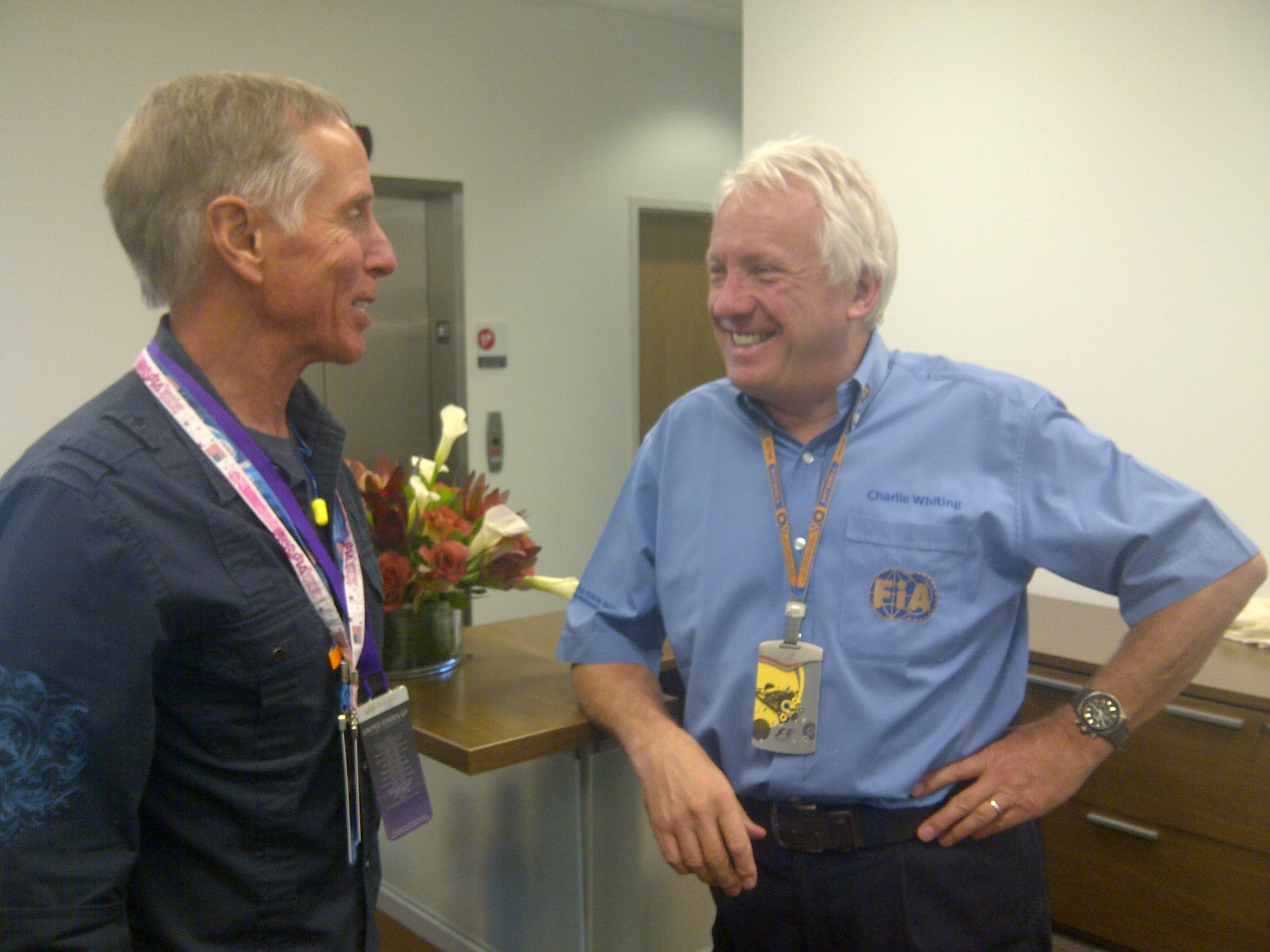
In Austin recently, Charlie (right) shares a joke with former (US) F1 privateer, Brett Lunger
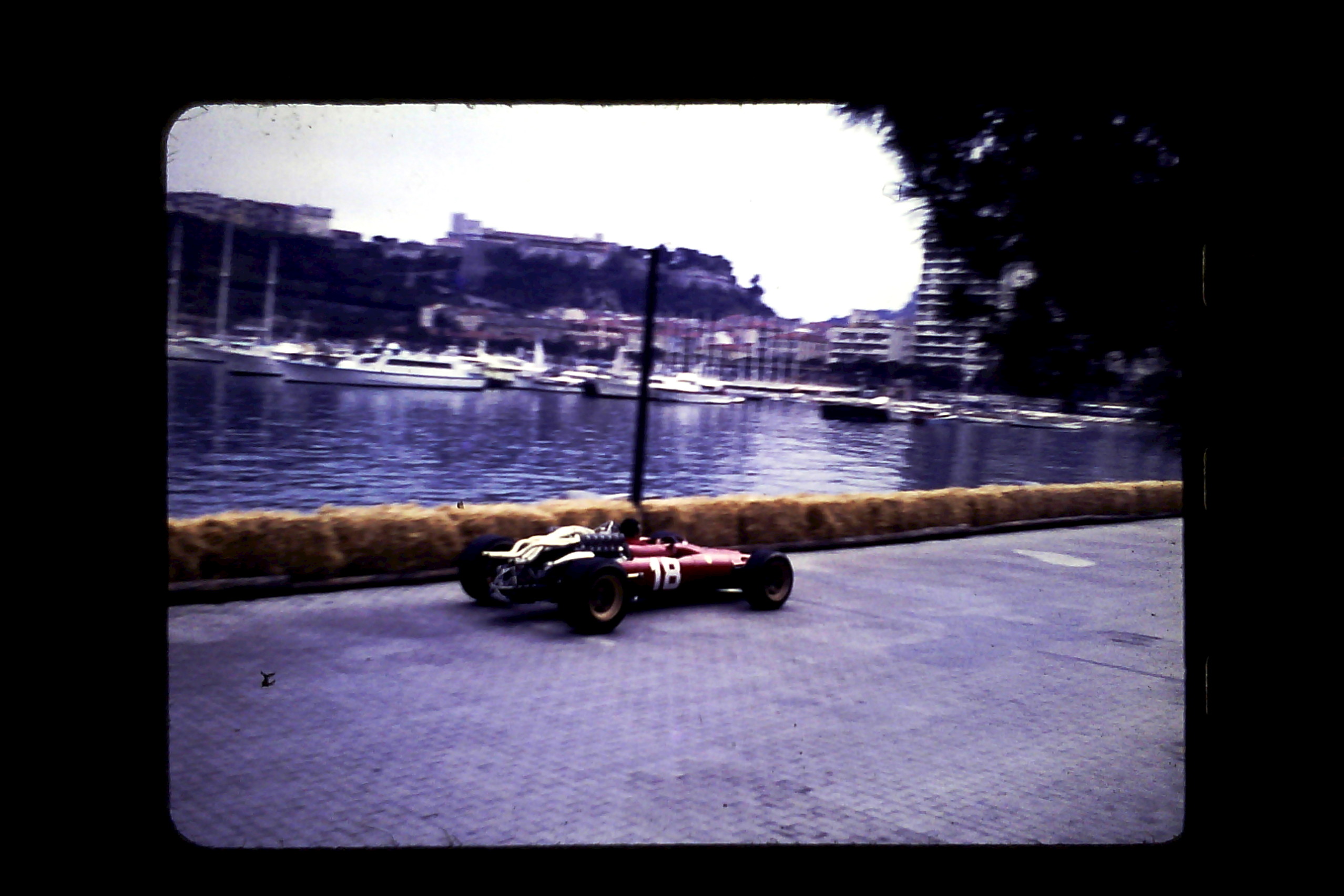


Never forgotten…

I was very touched by this short piece published in Facebook by Margherita Bandini, widow of Lorenzo, on December 21:

Lorenzo

Today, your birthday, you would have been 77 years old and so much time has passed since you left us in that tragic fire in Monte Carlo. I am convinced that there is an afterlife and therefore you’ll see here on our Facebook page many friends and admirers who were not even born when you left us – those who remember you with great affection, admiration and esteem. Many people have written beautiful things about you – for example the person who wrote: “At the time you left I was nine years old;  this was the first great sorrow of my life.”

See the legacy you have left behind? Lorenzo, you told me once that you felt you were born unlucky. Of course you were right, with the benefit of hindsight, but in your 31 years you became a great man with your modesty, your determination and your enthusiasm for a sport you loved more than anything in the world; and you have left for us an indelible memory.

I would not of speak of bad luck, therefore. I’m still here, aged 74. I have known the great loves of two wonderful men – you and our son. I’ve known great pain and great joy, but above all thanks to both of you.

Margherita

08-26-2010_42


Why Sir Frank is Sir Frank…

At the House of Lords reception for Sir Frank Williams on November 28 plenty of people paid fitting tribute the great man.  He is “passionate” about his chosen profession.  He is “a true ambassador” of British motor sport.  “His dedication knows no bounds”.

All true.  Very true.

What do those words really mean, however?  What is their context?  What lies behind them?

I thought the following extract from a February, 1971, edition of Autosport might add a little texture to today’s image of Sir Frank Williams.  It is the Formula 2 Temporada series in South America (Bogota, Colombia, to be precise).  F1 drivers like Graham Hill, Henri Pescarolo and Jo Siffert are competing.  And everyone, as ever, is right on the limit….

“For some, the four clear days between races provided time to relax,” wrote Paul Watson.  “but for others there had been little time for enjoyment.  Immediately following the first Colombian GP, Frank Williams had hot-footed it back to England, carrying with him the two March chassis as hand baggage (!) and with an order list from other drivers as long as your arm.

“Williams, who has a reputation for getting things done smartly, was on March’s doorstep by Tuesday morning and back on a plane for Bogota by Wednesday so that he arrived back in Colombia by Thursday night, much to Derek Bell’s astonishment!  The two March chassis had been repaired and strengthened where they were broken, this being where the front of the monocoque joins the bulkhead.  As the Bogota series was very much a  development programme for Williams, he had fitted aluminium braces to the top and bottom of Pescarolo’s bulkhead while Bell’s had been left without, to find out whether any permanent additional strength will be needed for future races.

“Williams took with him orders for a great many other spares and these were supposed to be sent in time for practice on Feb 12.  However, as is often the case when freight has to change planes, it got lost, so that all the spares Natalie Goodwin had been waiting for to repair Cyd Williams’ car never arrived.  Neither did Jurg Dubler’s gearbox parts, the Eifelland tyres and a number of other items.  However the Kyalami-spec 4000 ft fuel metering units did arrive in Frank Williams’ pocket and these were duly distributed to Stommelen, Hannelore Werner and Brian Cullen, all of whom had suffered fluffy engines in the previous race due to the use of standard, sea-level cams.  It had been hoped to build up some special 8000ft cams at Felday Engineering, but Mac Daghorn just hadn’t had enough time to get this done…”

For the record, Frank’s two March 712Ms qualified third (Stommelen) and ninth (Bell) and finished second and third in the race (in that order).

Just another weekend in the life of the racer that is Sir Frank.

S1720012

When F1 first came to Texas…


…it took over the entire city of Dallas.  It was a street race.  It was hot – very hot.  And the city said “F1” wherever you went.

It was different this year in Austin.  The circuit is out of town.  You sat in a coffee shop near the University of Texas and the world of F1 was about as far away as rainy day in Woking.

That’s not how it was in Dallas ’84.  Maybe it was because Lorimar’s Dallas had never been more omnipresent.  The whole world talked about it – not as a “soap”, as it is glibly described today, but as a skillfully-enacted drama that was about as close to reality as anyone had ever dared to step.  That’s how F1 people felt about it, anyway.  And the people of Dallas embraced their amazing new F1 race, for it was everything that their show was too:  it was about money, power, ego, politics, sex… and it was played out in a world within a world.   The poignancy of Larry Hagman’s recent passing should not have been lost on anyone who was at Texas F1 (Season Two) a few weeks ago. Austin didn’t feature much in the Dallas storylines, but the spirit of ’84 was there if you looked for it at the Circuit of the Americas.

Here are a few snapshots, then, of the days when Dallas met Formula One. Fun days. Amazing days.

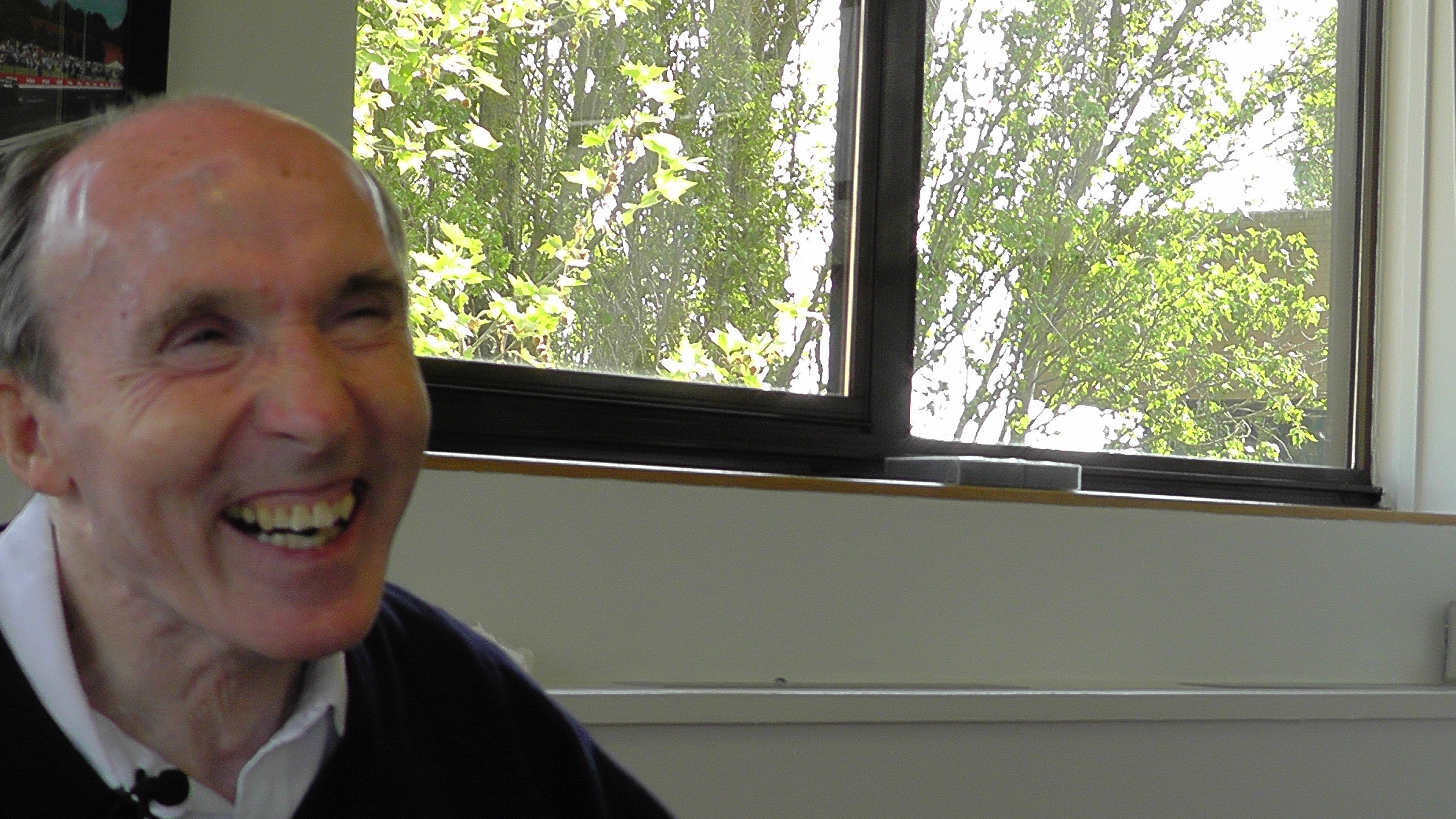
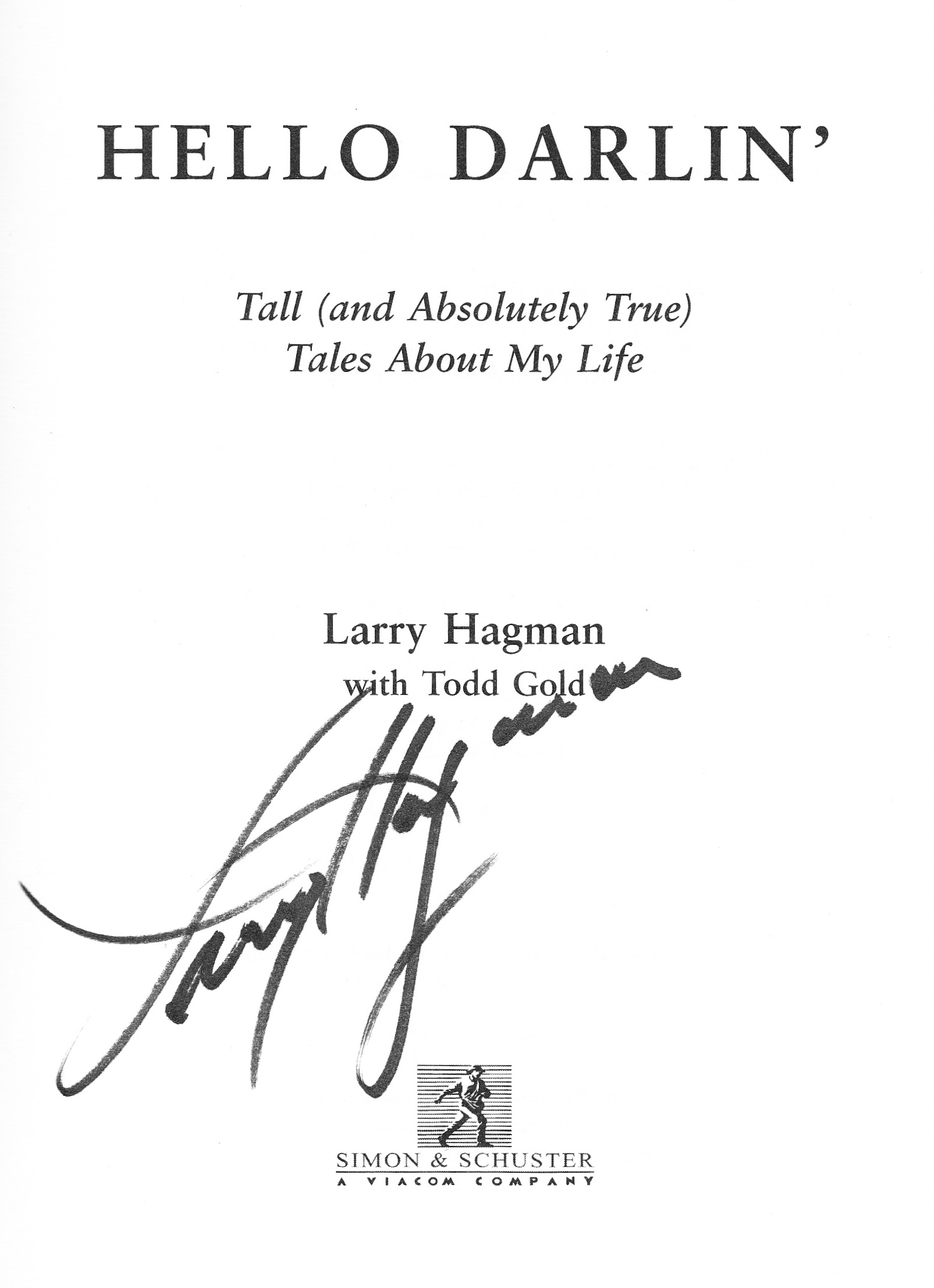
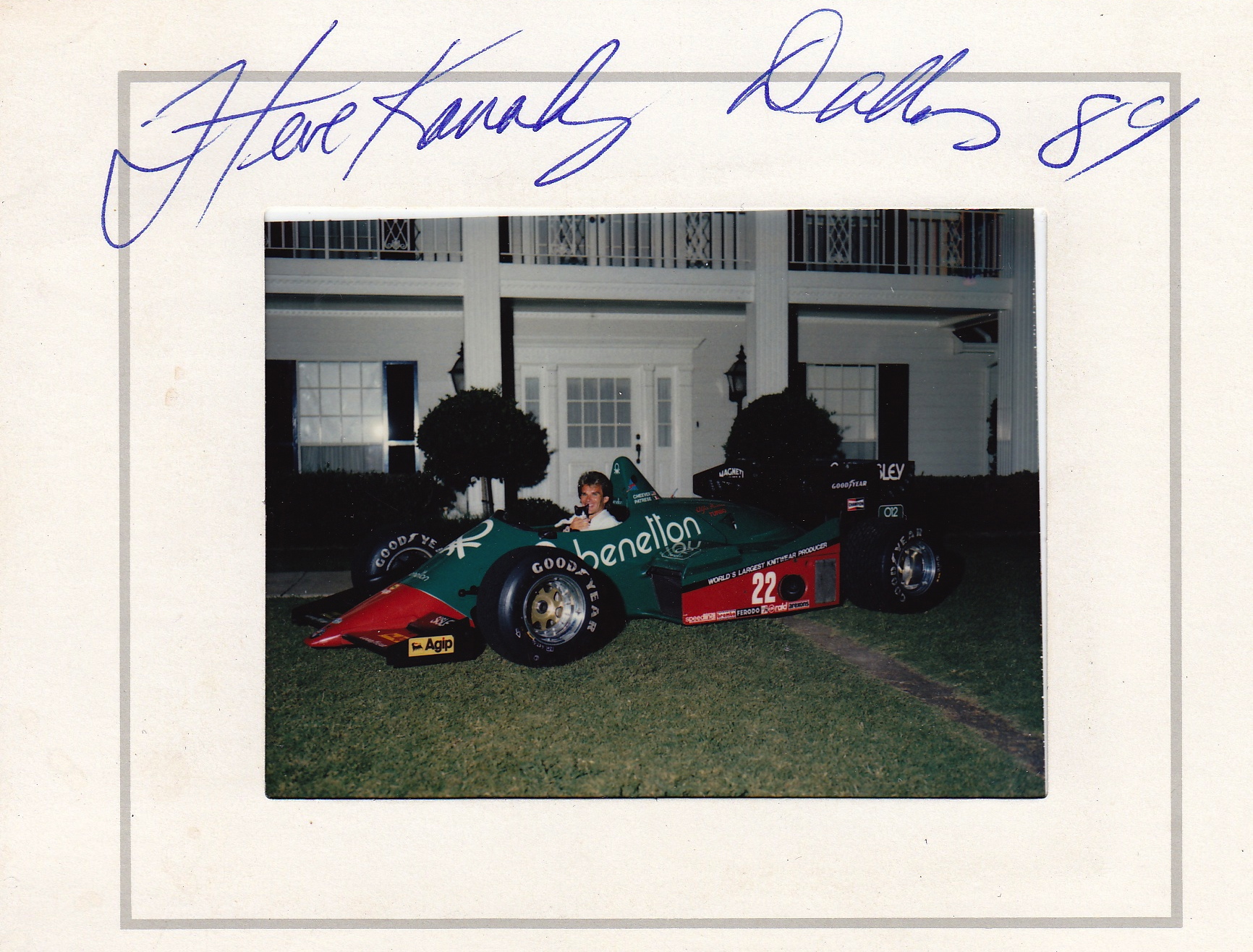
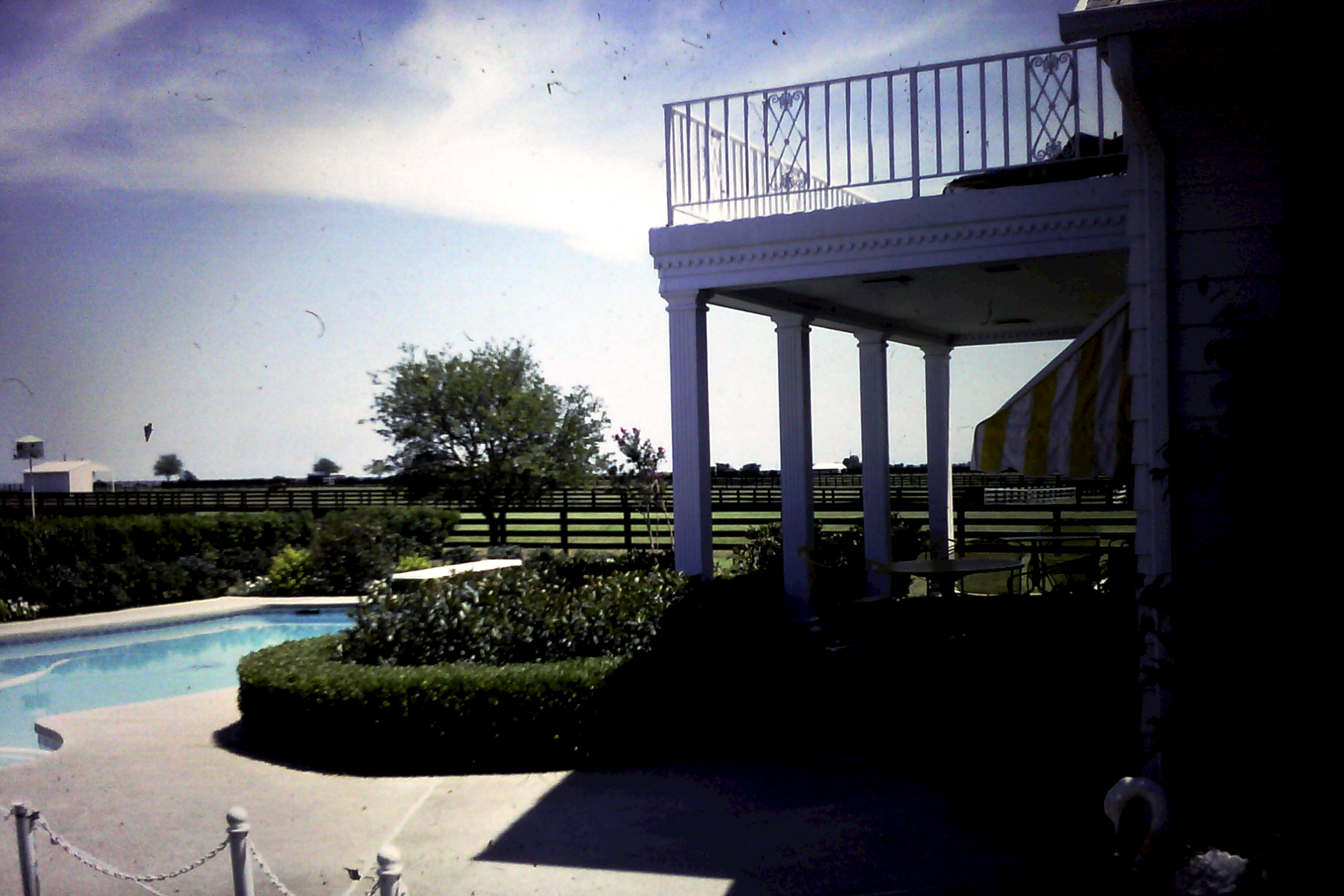
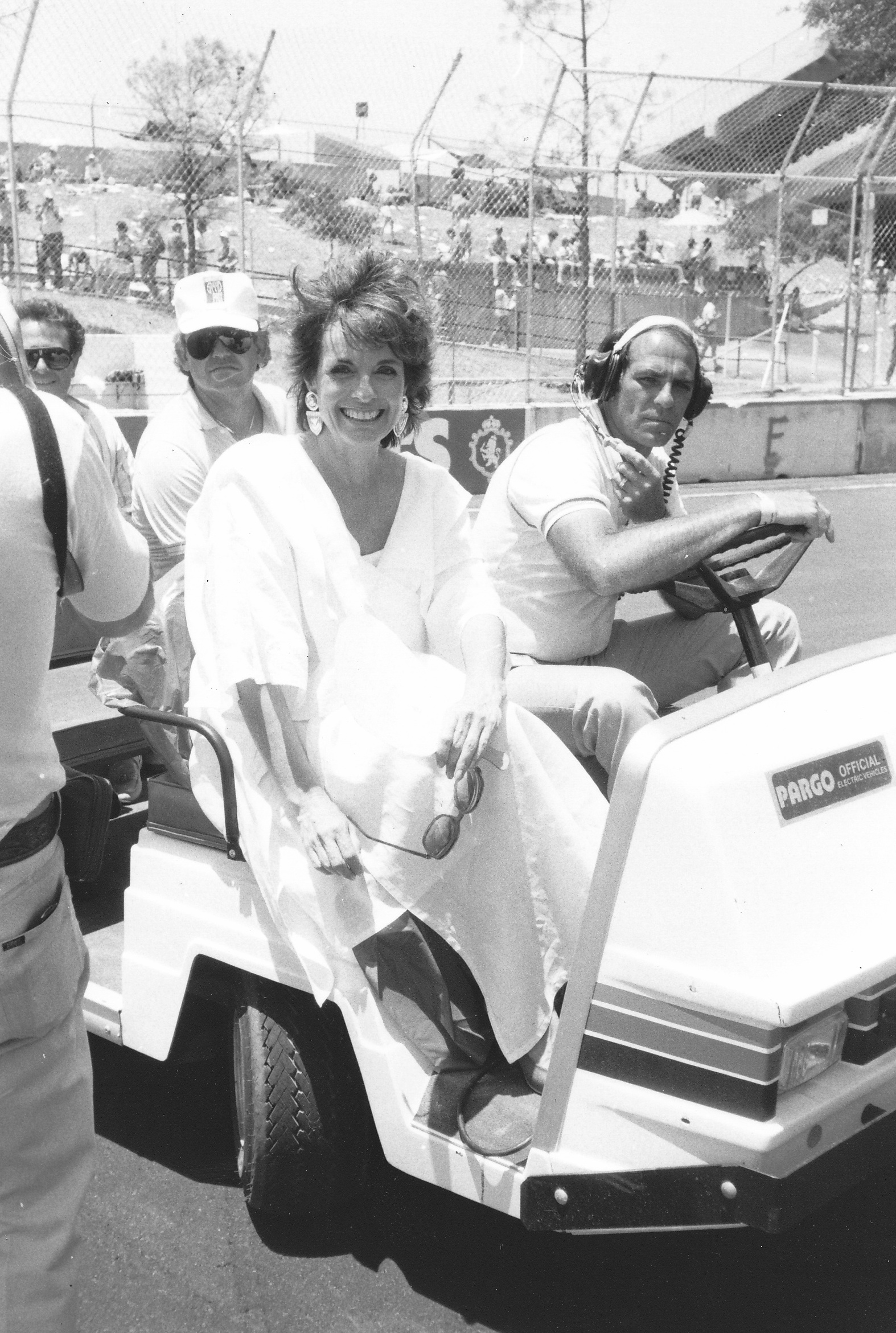
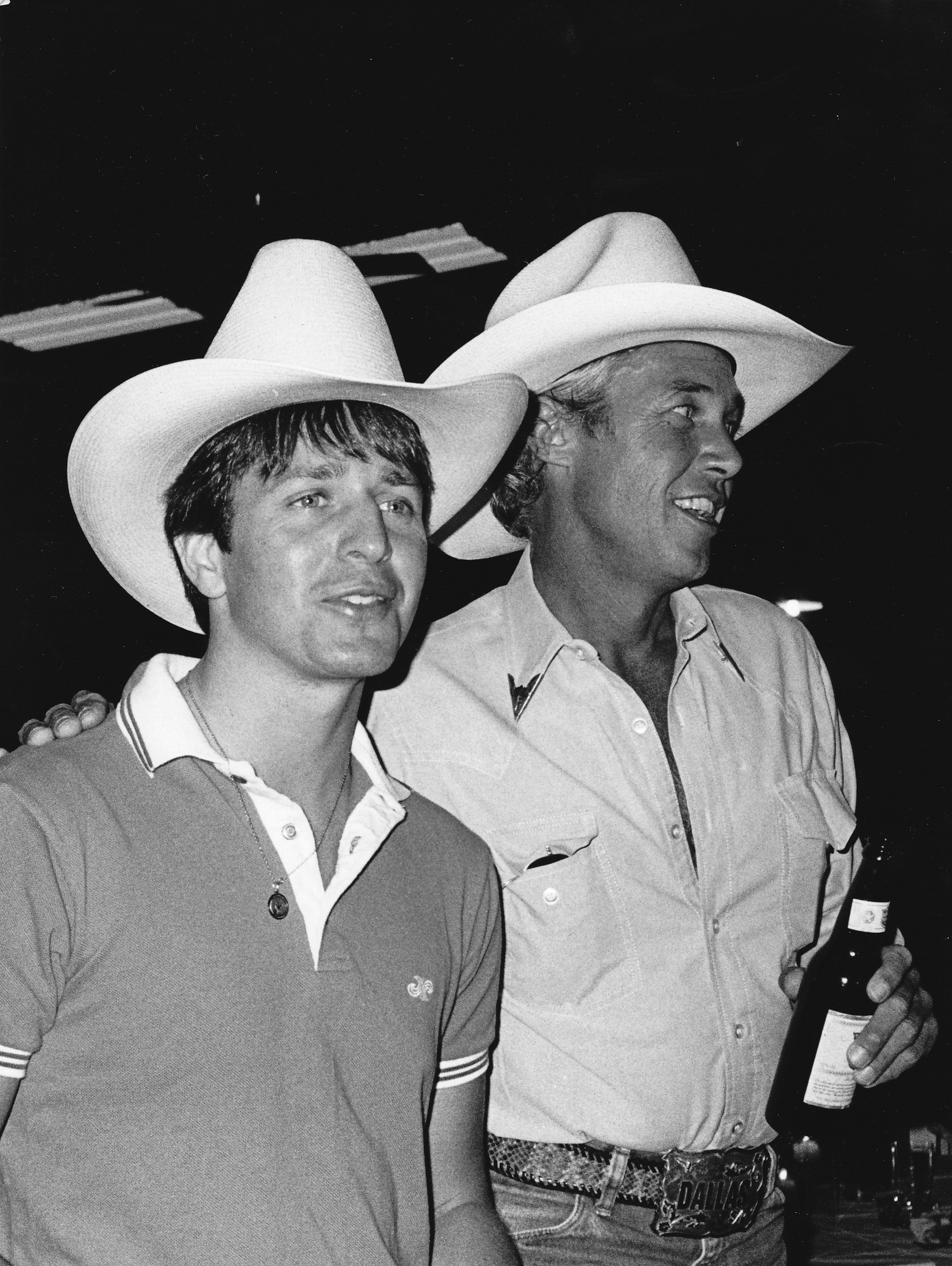
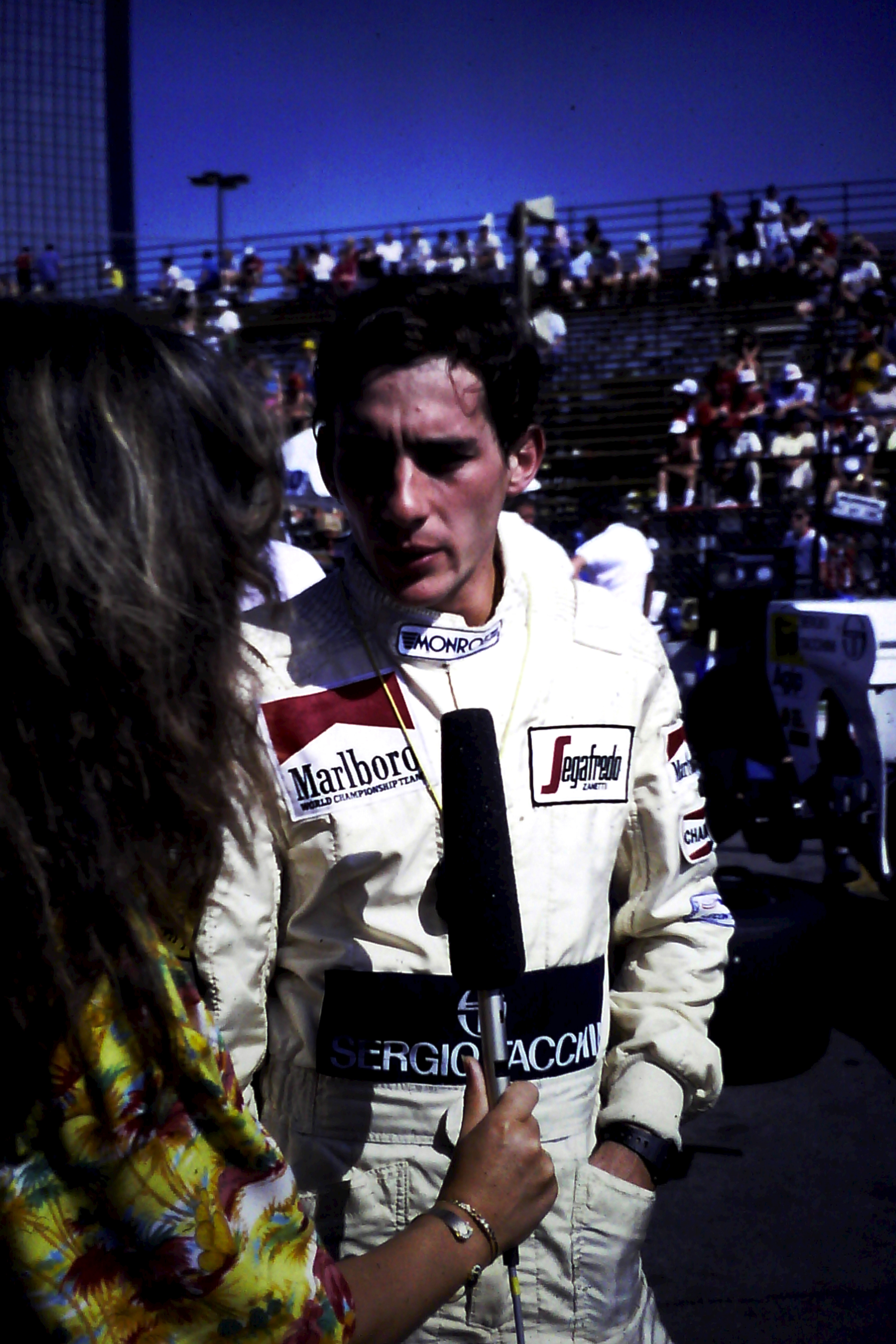
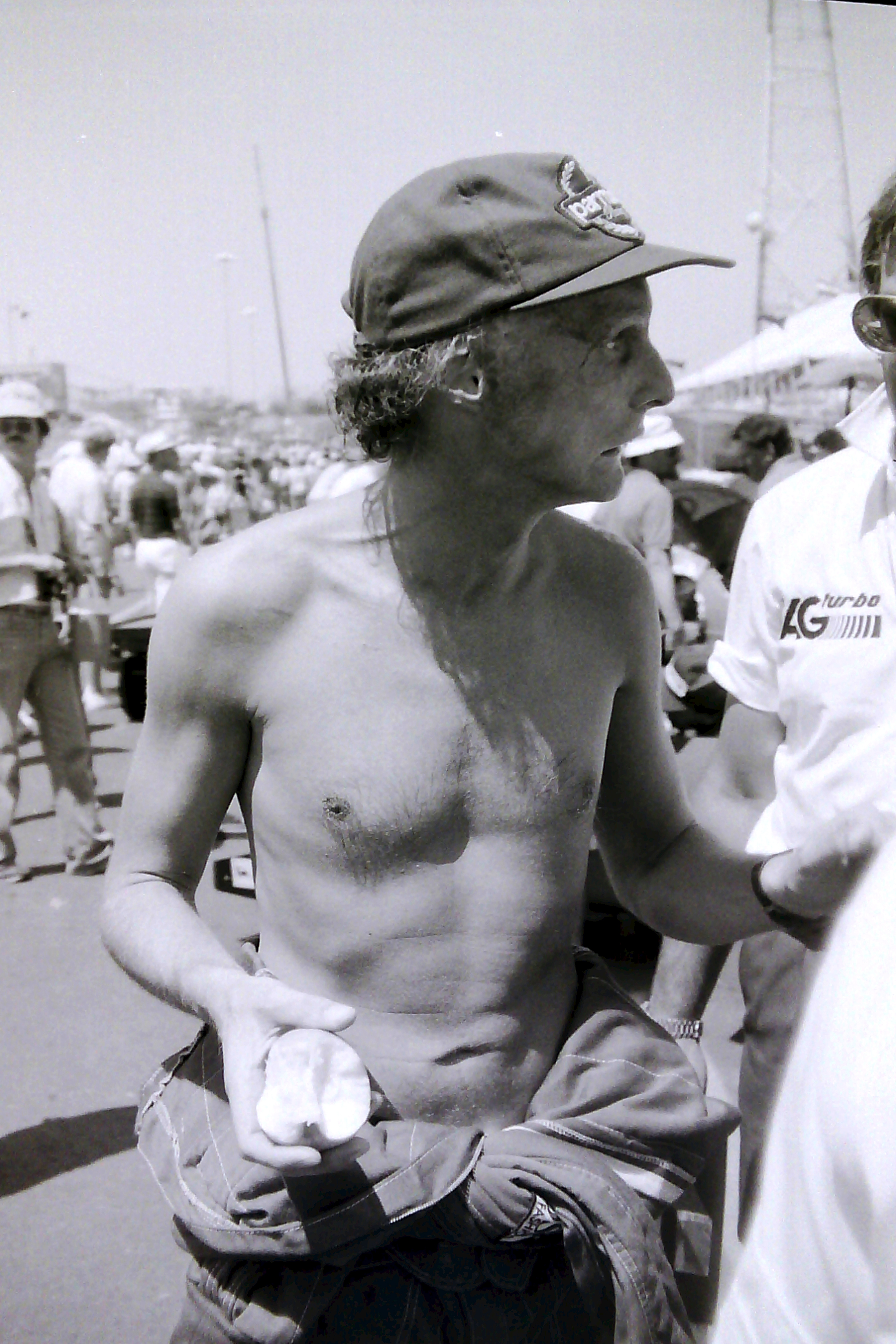
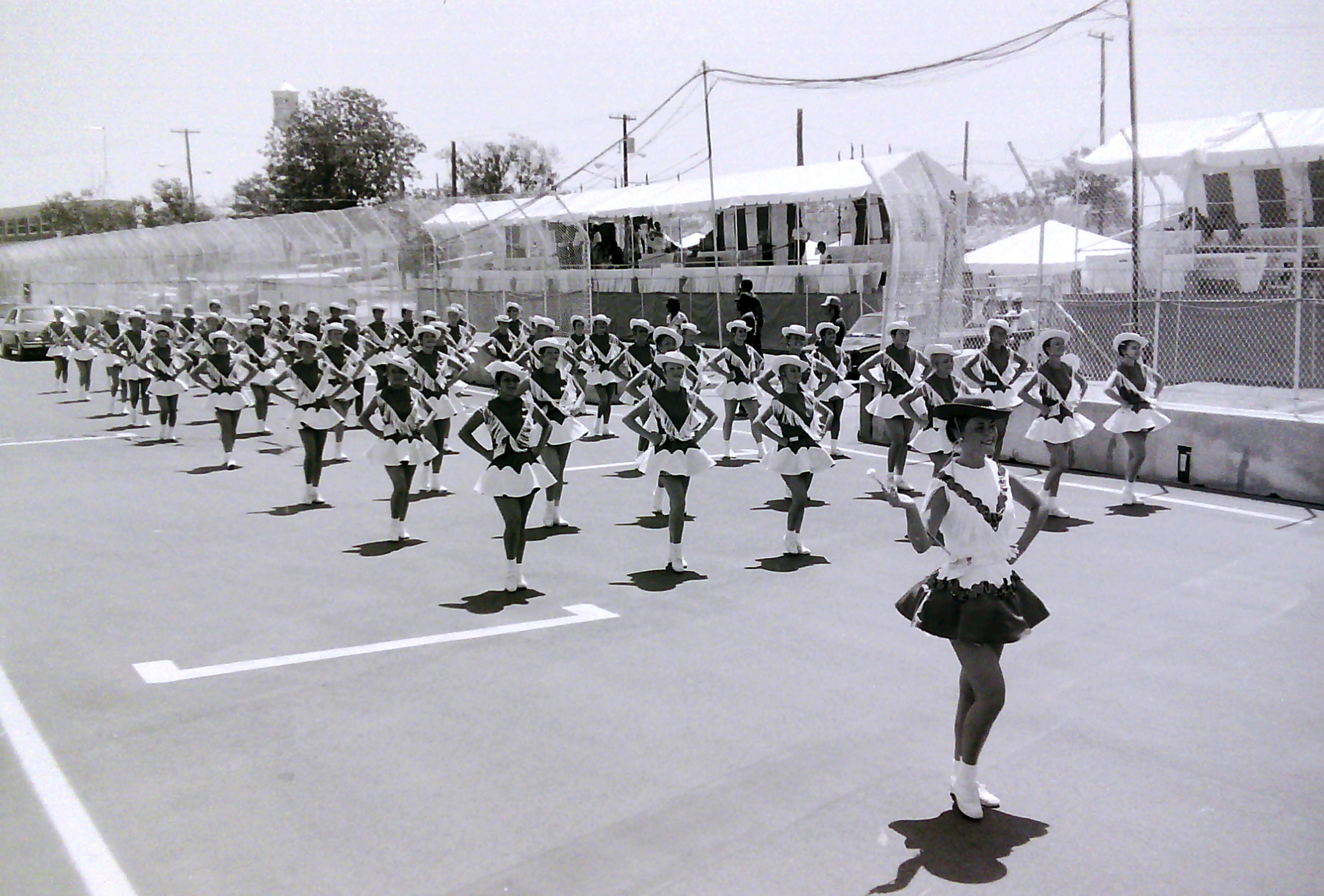
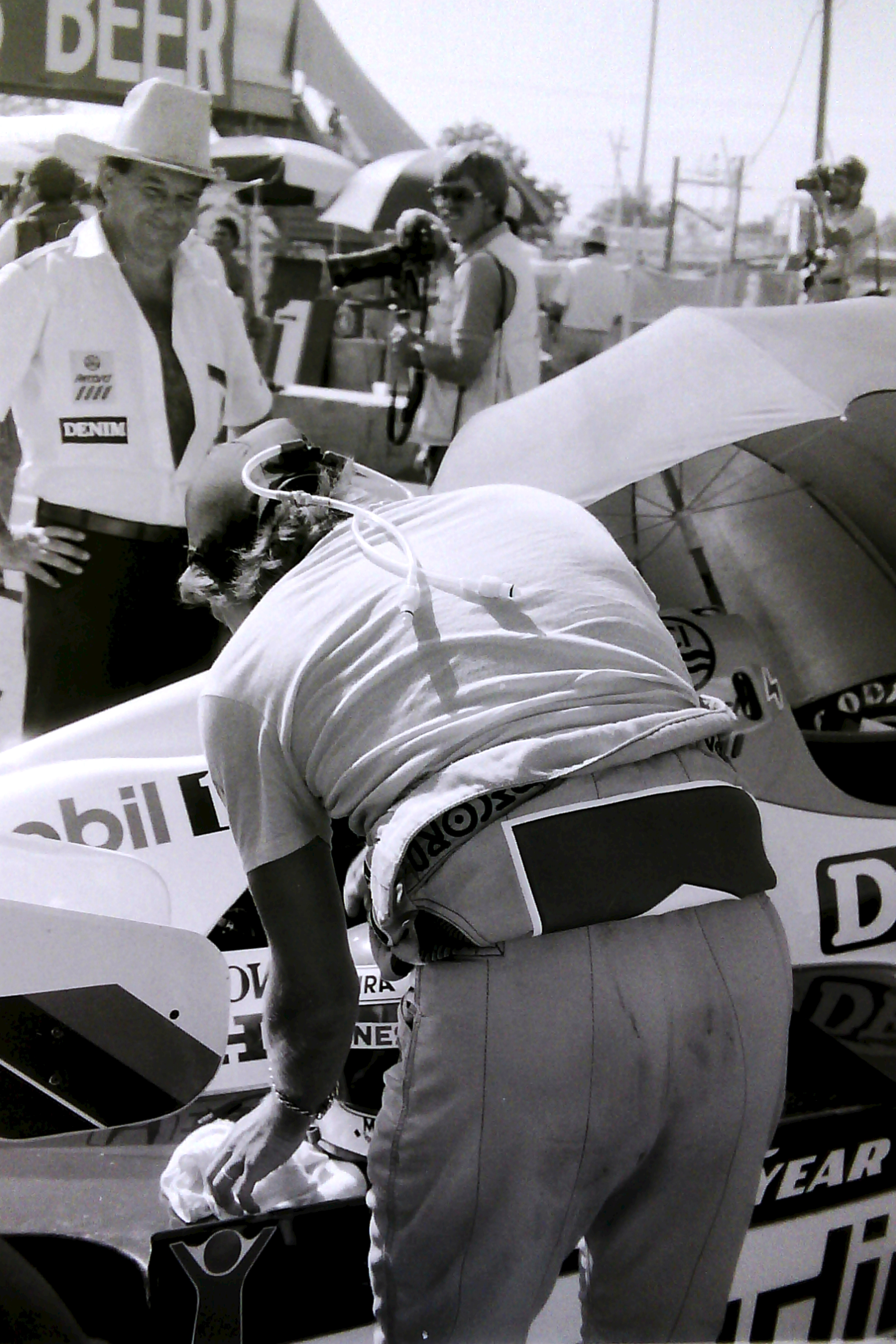
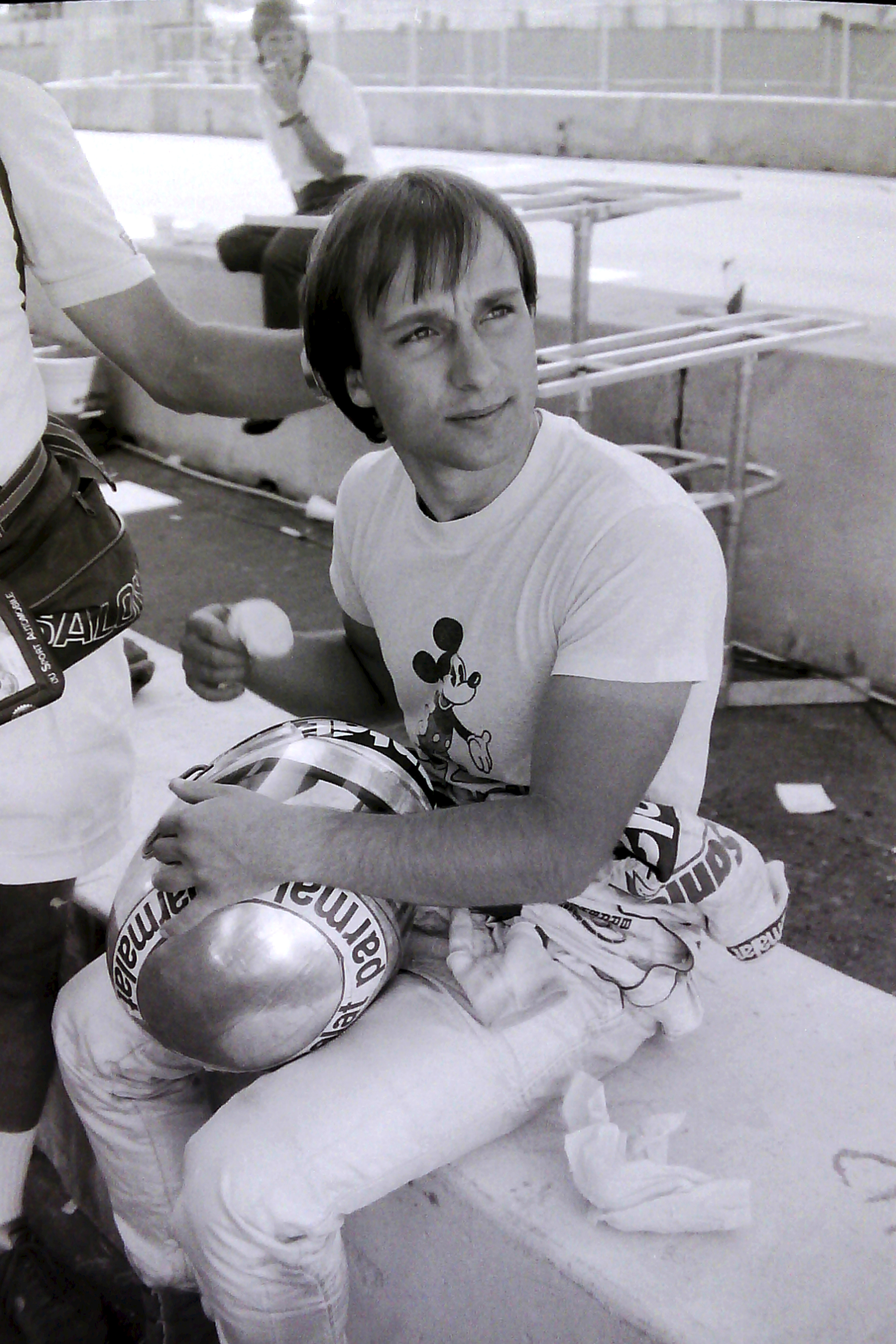
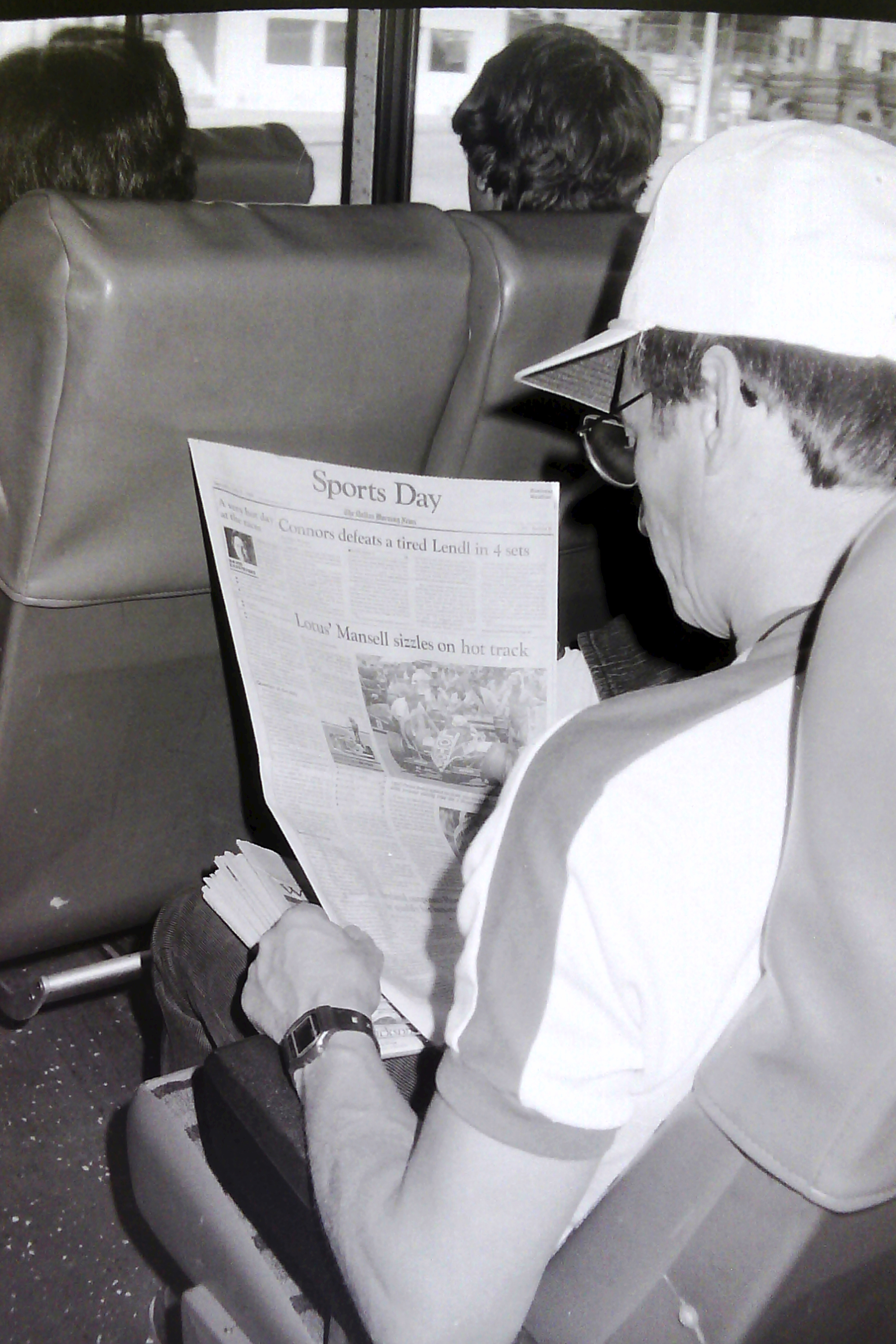
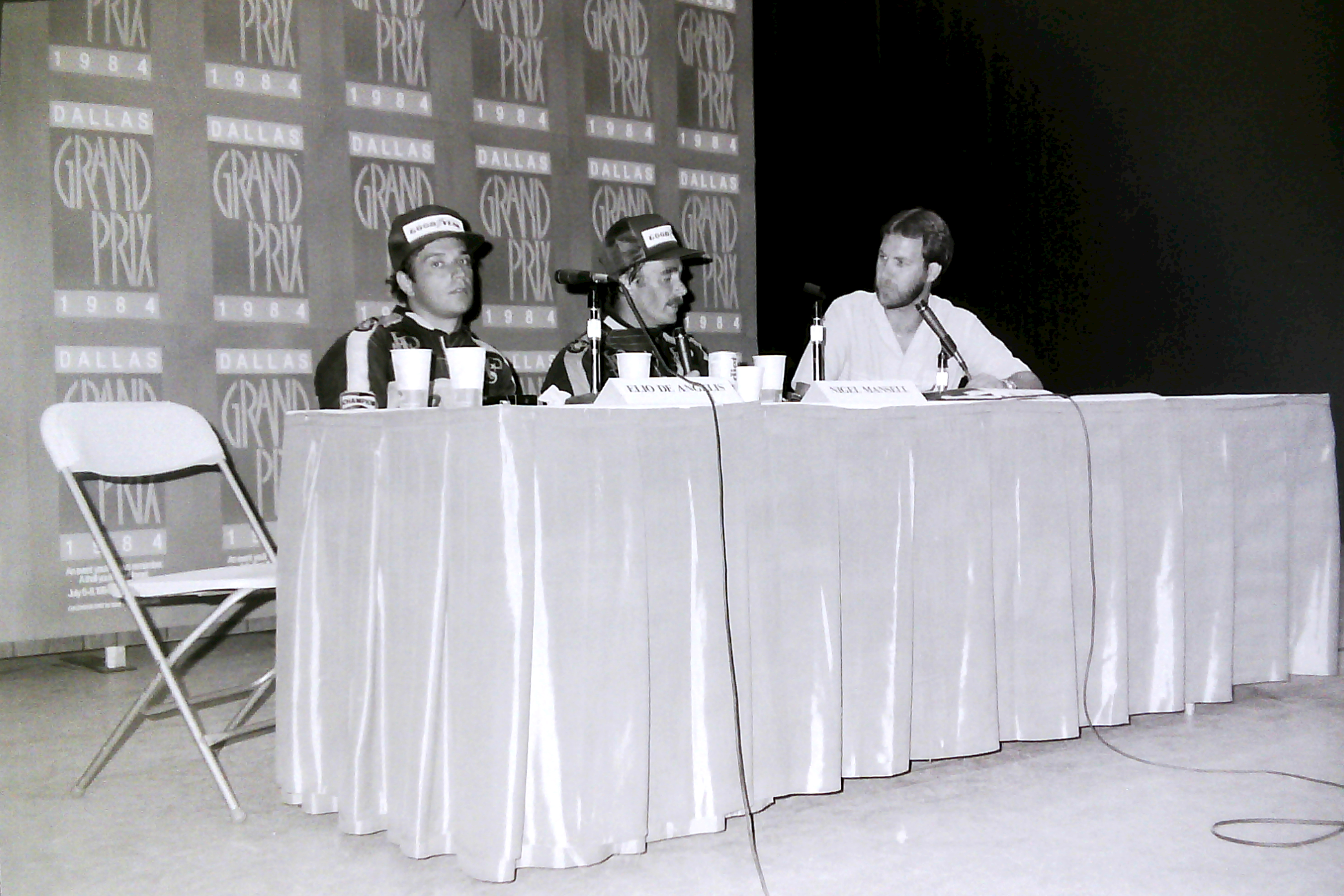
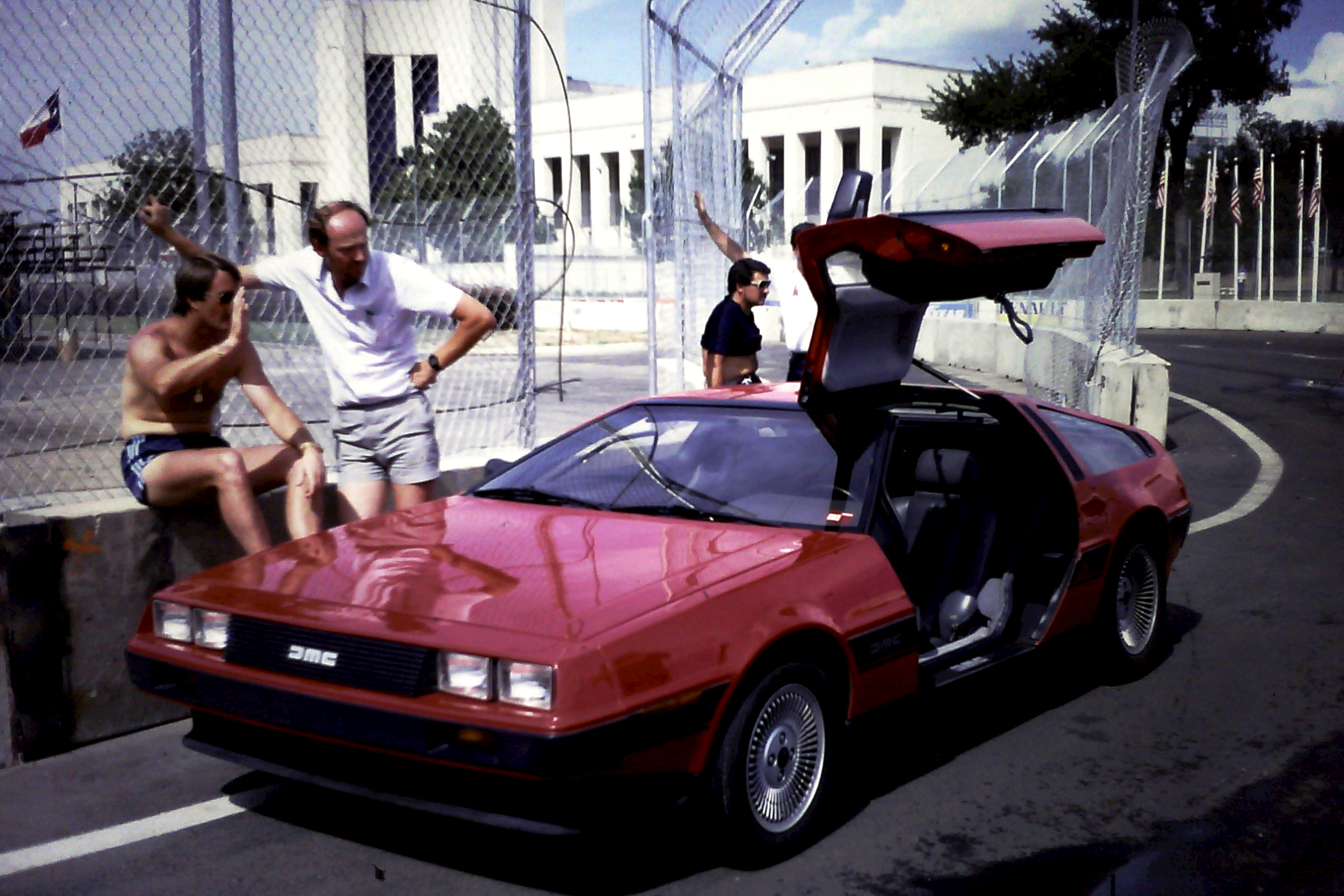
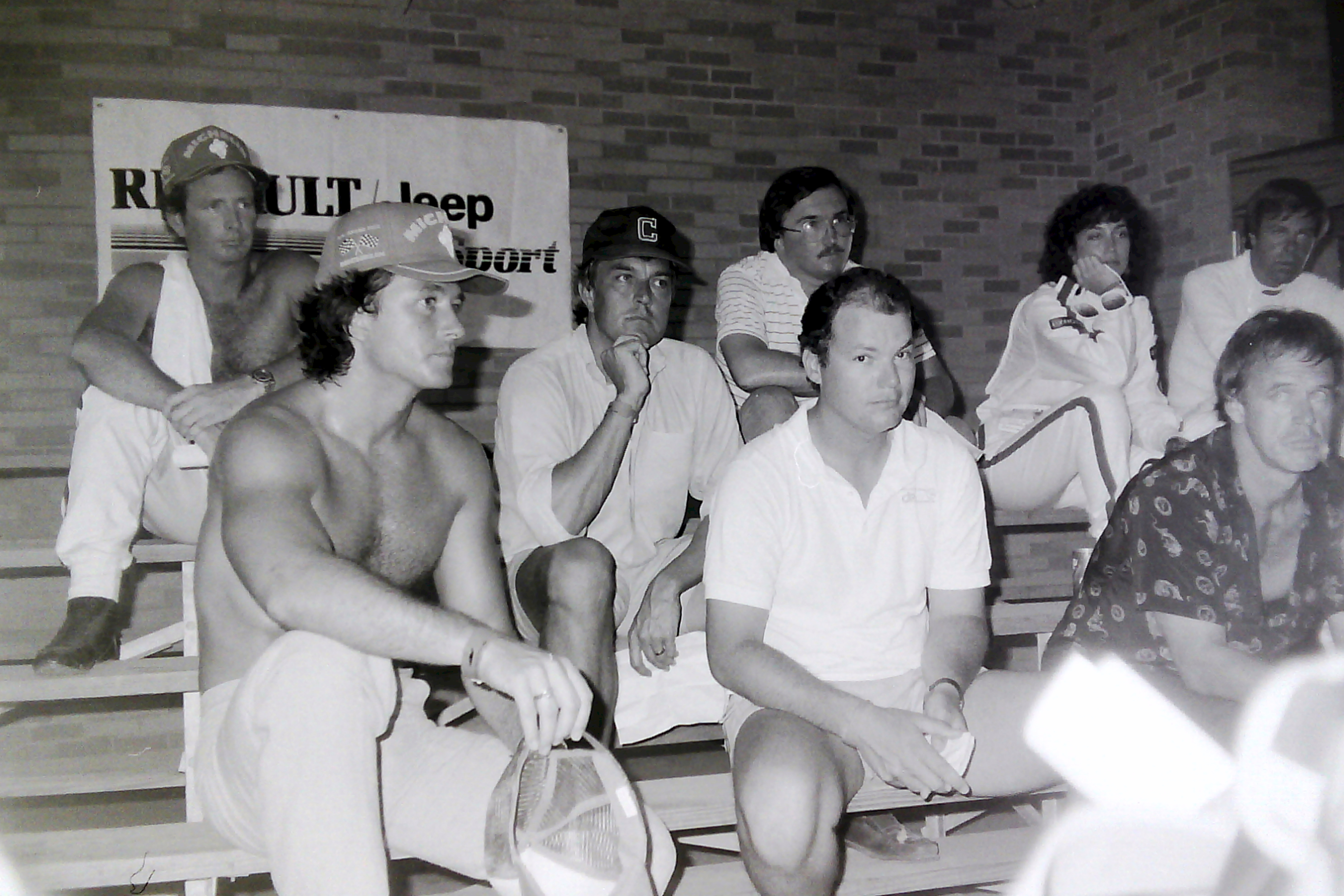
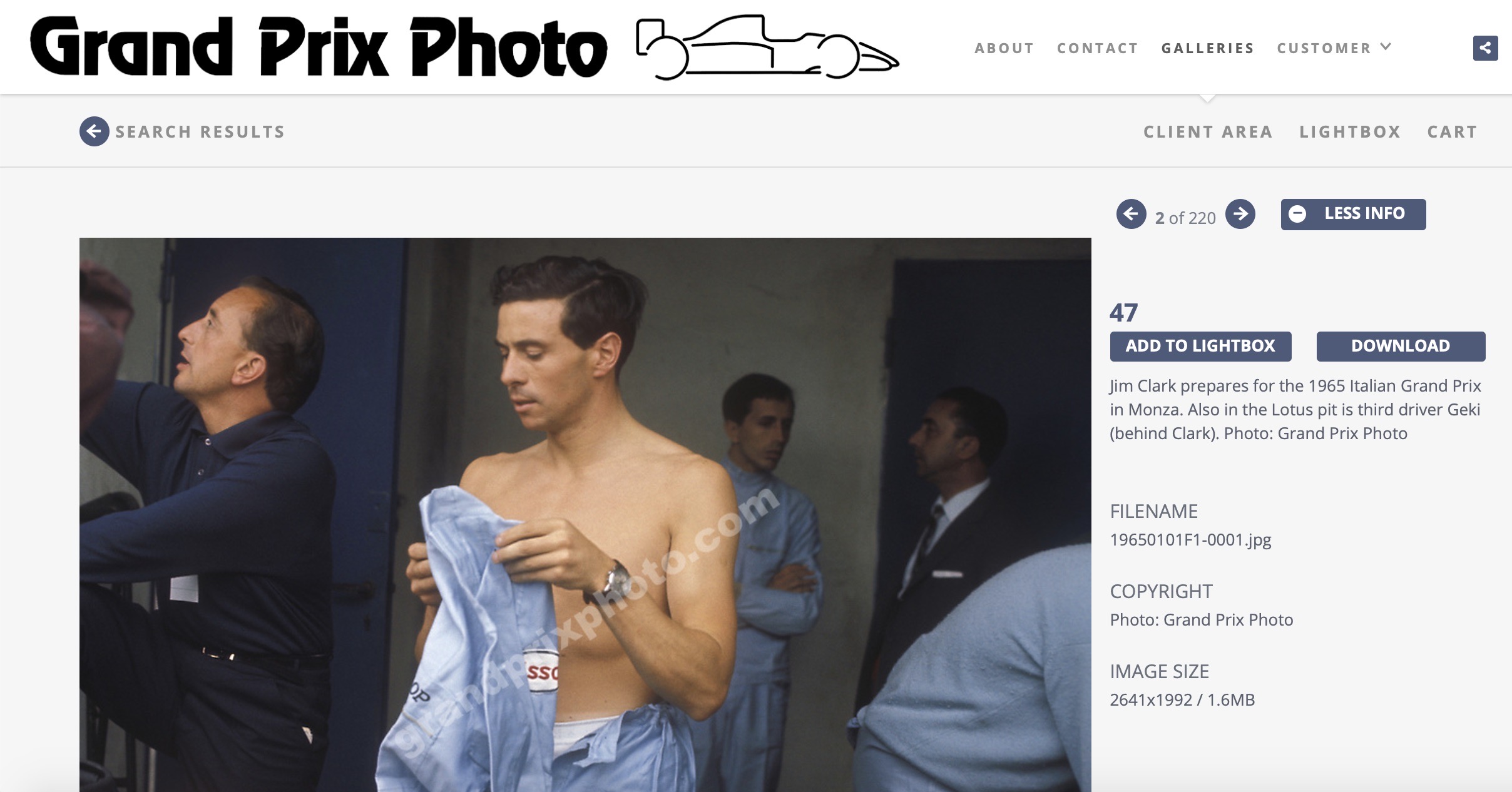
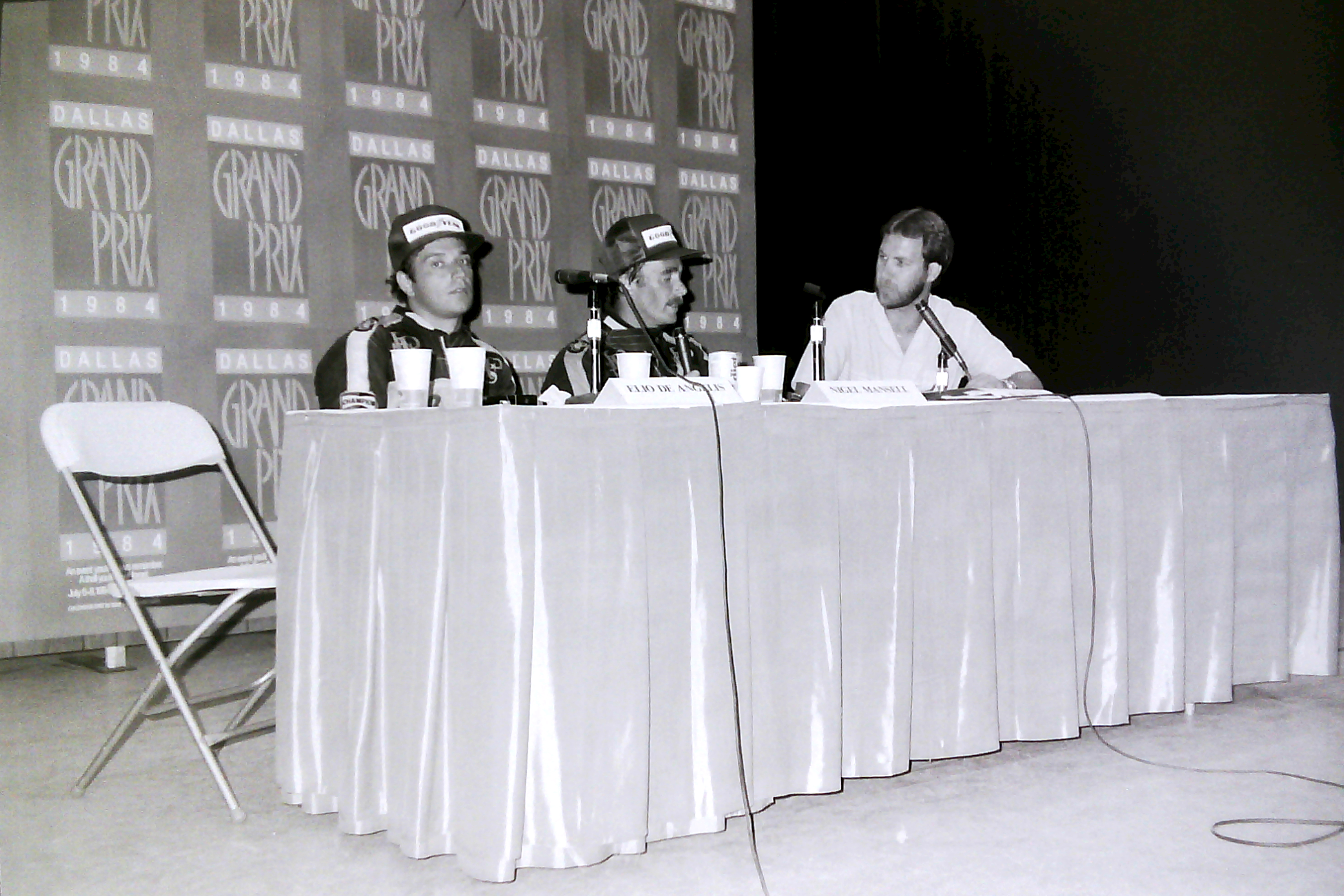
Captions, from top left: Larry Hagman – he’ll be sadly missed.  His autobiography, published recently, is a must-read; I don’t know what I enjoyed most – the Benetton party at Southfork Ranch or posing in the factory Alfa with a sweet, Texan pussycat; F1 people headed quickly for Southfork Ranch – and found that it was just as it seemed to be in the show!; the delightful Linda “Sue-Ellen Ewing” Gray was golf-buggied to the starting grid;  Tyrrell’s Martin Brundle and Steve “Ray Krebbs” Kanaly shared some laughs; Ayrton stayed characteristically cool; Niki Lauda, who would win the Championship that year (by half a point:  you think 2012 was close!), with trademark fruit (who needs a drink bottle?!); this we’d never seen before: marching girls! On an F1 grid!; Keijo Rosberg won the race for Williams-Honda, helped in large measure by the cool suit created for him by Williams Team Manager, Peter Collins. We all approved of the headgear worn by the Willy boys, as modelled in the background by Chief Mechanic, Alan Challis; Brabham’s Corrado Fabi prepares for work.  Mickey Mouse t-shirts (won under the race suit, Rene Arnoux-style) were all the rage back then; Nigel Mansell catches up with the sports news on the bus into the paddock on Saturday morning: “Lotus’ Mansell sizzles on hot track…!“; Elio De Angelis and Nigel tell the US media all about it.  Honed by the Glen, Long Beach and Detroit and to some extent Vegas, the American press fully-embraced F1 in Dallas; Below: Nigel and his JPTL  race engineer, Steve Hallam, pause for a breather by a (rare) Colin Chapman-inspired DeLorean during their pre-practice track walk; Bottom: Patrick Duffy, and (in white polo, staring at the lens) the brilliant singer/songwriter Christopher Cross  feign interest during a briefing for the celebrity race.  “If you get caught between the moon and New York City….” just about summed it all up


Patrick Duffy and the boys feign interest during the celebrity race briefing. Why no celebrity race in Austin, come to think of it?

Notes from the Circuit of the Americas

General overview: Full marks to Ferrari for exploiting the five-place grid penalty for a “gearbox change” on Felipe Massa’s car. Felipe has been widely criticized all year for the lack of “support pace” he has displayed in the second Ferrari but in my view he is, and always has been, the perfect counterpoint to Fernando.  He’s fast enough to be helpful but compliant enough, and low-key enough, not to be any sort of threat to Fernando – or even an “annoyance”.   Jenson Button has not been that at McLaren (an “annoyance” factor, that is) but there’s no doubt that he has “taken” points from Lewis this year – and vice versa.  Ditto the situation at Red Bull – Seb Vettel and Mark Webber.  At no race has Massa ever compromised Alonso’s ability to reap the maximum available points of the day.  You could argue, of course, that part of playing a team role is to take points from the opposition – and that is true.  When you have a driver like Alonso, however – or Lewis Hamilton – you always have to assume that they will be your main championship contenders.  To “take points” from the opposition in the case of Massa or Hamilton in reality means beating the Red Bulls.  And that is a task best left to the Number Ones.

Never, though, have we seen a team move its number two driver back five places in order to maximize the chances of its number one.  Of course, it should be remembered that this was only the second time in 2012 that Massa has actually out-qualified Alonso (and on this occasion Felipe’s pace was thanks mainly to the disappointing updates on Fernando’s car) – and that Ferrari are the only top team to operate a genuine “Number One-Number Two” driver pairing.

Nonetheless, Felipe played the perfect team game in Austin – and totally justified his position as Fernando’s wing man.  By contrast, one can only imagine the dramas if Ferrari had been running, say, Sergio Perez, Paul di Resta or Nico Hulkenberg in the other car (drivers that the media in general have been touting all year as suitable Massa replacements).  Their palpable irritation would have been leaked to their national media, even as they displayed a brave face in Austin.  And so the distractions would have begun…

Ferrari received plenty of post-race criticism from the international press, all of which was based on the argument that racing should be “fair and equal”; that teams should respect “the spirit of the regulations”; and that no driver’s chances should be compromised by team orders.  As I see it, there is no difference between Felipe slowing in the closing laps in order to give track position to Fernando – a difficult thing to orchestrate pre-race, because you never know where the opposition is going to be lying – or ceding five positions on the grid. Actually, the latter decision was definitely the right call for the simple reason that Fernando’s new grid position (a) moved him further from the potential mid-field first-corner skirmish and (b) swapped him to the clean side and to the outside.  I joked with Fernando after qualifying that he was again going to have to execute one of his demon round-the-outside maneuvers at the first corner – he laughed back in agreement – and so it proved.  He out-accelerated Nico Hulkenberg and Kimi Raikkonen via the intermediate gears and used the outside line to pass none other than Michael Schumacher on the exit of Turn One.

Fernando loves using the outside of the first corner in any race on which he doesn’t happen to be on the front row – but such a move can be dangerous, of course.  Had Ferrari not exercised their “gearbox option” with Massa, Fernando would have had a difficult time moving from the inside file, for the wide entry to Turn One in Austin invited three-abreast – and in some cases four-abreast – approaches.  And there was a skirmish:  Kimi Raikkonen was tapped by Nico Hulkenberg’s Force India in Turn Two and Pastor Maldonado ran to the outside run-off area in avoidance.  Fernando, from P8, could have been in the middle of all that.

One question of intrigue, I think, will be whether we see more grid-shuffling of the type we saw in Austin.  If Mark Webber qualifies on the pole in Brazil, for example, and Vettel is, say, fourth, would Red Bull take a gearbox five-penalty hit on Webber and move their title contender onto the clean side of the road and a little further to the front?  That’s a difficult one, because Webber is quick enough, of course, to be able to beat Alonso…

Braking for Turn 1: The steep upwards incline of the track at this point enabled the quick guys to brake amazingly late into Turn 1.  In general, I try to stand at the point of the latest braker for corners like this but in qualifying, as the hour progressed, I was obliged to move nearer the apex virtually by the minute (as the track picked up grip and the fast drivers switched to options Pirellis).   By the end, Lewis Hamilton, Romain Grosjean and Pastor Maldonado all seemed to be braking at about 75metres (from seventh gear down to second).   Impressive stuff.

It was also interesting to listen to the downshift sequences of the different drivers.  Grosjean and Bruno Senna, for example, flick down through the gears as quickly as possible – 6,5,4,3,2.  There is barely a pause between each gear selection.  The pause, when it comes, is between the selection of second and the first application of mid-corner power.  Kimi Raikkonen, Lewis Hamilton, Sebastian Vettel, Mark Webber and Fernando Alonso, by comparison, consistently paused after selecting fourth – as in 6,5,4…pause…3,2.   At first I thought I was imagining the difference but the sequences were repeated, lap after lap.   I think this is because the latter group “save” the selection of third and then second for the moment when they are about to impart the first steering load into the car:  the simultaneous downshift gives them more control of the rear when the need it most.  From the outside, the pause also seems to add to the time available – a bit like the pause at the top of a golfer’s backswing gives the impression of there being all the time in the world in which to hit the ball.

So there is still an art in clutchless, paddle-downshifting, even if it doesn’t re-ignite the glorious days of heel-and-toeing!  (I can only imagine the perfection of drivers like Stirling Moss, Jim Clark, Jackie Stewart, Michele Alboreto, Carlos Reutemann and other artists on this section of road:  the shame is that we no longer get to hear the foot-hand co-ordination of drivers like Seb Vettel, Fernando and Lewis.)   It seems strange to me that Jenson Button’s downshift pattern resembles that of Romain Grosjean (albeit slightly less rushed) when Lewis, quite audibly, is doing something very different.  I doubt that telemetry is accurate enough to be able to identify these “pauses” – we’re talking milliseconds here – but I may be wrong.

“Becketts”: Turns Four, Five and Six – all the turns were marked by vertical marker posts  – resemble Becketts at Silverstone.  Most drivers to whom I spoke said Becketts is in reality a tad slower, although the greater run-off area in Austin – the moonscape – gave a different impression from the outside.  Felipe Massa was absolutely brilliant through this section in qualifying, taking the first left-hander, and the next left, flat in seventh and then downshifting to sixth precisely as he clipped the apex kerb there with his left front.  The thought: “Can the Ferrari take the load on the right-front??” flashed through your mind as he flicked the car one way and then the other and then it was down another gear for the tighter right-hander.  Maldonado and Grosjean downshifted twice where Felipe was going from seventh only to sixth – which may explain why Romain was a bit non-plussed when I talked to him about this piece of road after qualifying:  “Yes, it’s quite fun,” he said, but the next section is much more demanding…”  I was a bit confused, at first, because “the next section” on my circuit map was actually a nice piece of undulating road killed by some pretty slow corners.  Sure, the entries are blind, but we’re not talking 185 mph here…  Nonetheless, it was to this that Romain was referring: “It’s really difficult.  Blind entries, difficult approaches.  You have to get it just right…”

Lewis was on a different plane, I think.  When I chatted to him on Saturday afternoon about Turns Four, Five and Six his eyes just lit up and almost did the talking for him:  “What a section of road!  Really quick!  Awesome!”

The Pirelli compounds: In general, it looked as though the drivers who “energize” the tyres fared much better in qualifying than the drivers who “nurse” them.  Jenson is never going to be more than a few degrees out of line, regardless of the circumstances – and nor is Nico Rosberg.  Lewis and Michael, by contrast, thrive on “bending the sidewalls”.  No-one can blame Pirelli for bringing such conservative compounds to a new race – and the proof of their quality came with Lewis Hamilton’s race pace on Sunday.  If ever a car has been sensitive to tyre temperature windows this year it has been the McLaren;  and yet on both the medium and the hard it was a gem of a car – a Red Bull match with greater top speed.  That’s the sort of pace that Lewis has shown at circuits like Singapore and Abu Dhabi and so it was only just that he was finally able to win again.

Overtaking, etc: I was astonished by the number of drivers who predicted on Saturday afternoon that “overtaking” was going to be difficult in the race.    I guess such predictions have become “security blankets” for drivers who fear the worst but you didn’t have to be an F1 mastermind to see that the Circuit of the Americas was going to present no problems at all.  The wider entries to such corners as Turns One and Eleven did exactly what they were designed to do – ie, promote overtaking – even if they did look a bit odd when you walked the track on a Thursday.  Circuit designers used to pride themselves on having exactly the same track width for the entire lap, regardless of the topography:  COTA has changed all that – although I think that the entry to Turn Eleven (the hairpin at the back) is very similar to that at Magny Cours (in reverse).    The shame is that the three-apex corner near the end of the COTA lap had such a slow entry speed.  Such a design works in Turkey because of its entry speed;  in Austin it was more of an accelerative, TV corner than it was a dramatic one.  Having said that, qualifying brought a new slant:  who could hit the DRS switch sooner at this point of the lap?  My post-qualifying poll was not sufficiently all-embracing to be definitive but said Grosjean, and the two RBR drivers, did seem to be flattening the rear wing about mid-corner.   (This sort of bravery will not be possible in 2013, when DRS useage on Fridays and Saturdays will be limited only to the DRS Sunday zone.)

The garages: There was not as much room as normal in the Austin garages – which to some extend is a surprise, given that the detail design and architecture was carried out by Hermann Tilke.  The problem was the available flat land between the last corner and the incline on the straight:  add the US-spec fire evacuation steps not required on the other circuits and you have a problem.  As Hermann tells it, Pirelli were originally not going to be operating from pit lane garages.  When that was changed, each team had to switch from three garages to two-and-a-half.  “In reality,” he said, the garages are about 15cm narrower than normal, given all of that.”  What I didn’t understand was why the garages were not built to a larger depth.  There was plenty of room in front of the garages for a few metres of additional garage space, and a covered walkway at the back of the garages could in reality have been the back wall of the garages, offering two or three metres more space.  (Judging by the number of times we’d see a Jenson or a Felipe sprinting from luxury portaloos, there also seemed to be fewer bathrooms than normal in the new complex.)

The beauty of imperfection: I’m sure some of the F1 establishment will be complaining even as I write but, for me, one of the great things about Austin was its imperfection.  It’s a bit like India in that respect.  Dodgy power supplies and drainage issues are part of the scenery, the atmosphere, in India:  and if you’re going to create a US GP around a brand new facility why not capture some of the charm, say, of Watkins Glen, and have the F1 high-rollers grouping in temporary buildings behind the garage area?  The Austin circuit was built for the bargain-basement price of $300m (compared with the $1.2bn spent on Abu Dhabi) and that meant fewer luxuries and more essentials – an ethos perfectly in tune with these economic times.  And still they didn’t skimp on the real necessities – by which I mean the design of typeface for the building titles; the use of local limestone on some of the paddock structures; decent, free, wifi; and the track itself, of course.


Alan Jones and the Maybach: celebrating Albert Park’s 60th

I was very taken by the events in Melbourne yesterday, when the Australian Grand Prix organizers began the 60th birthday celebrations of the race in Albert Park. On hand – and looking gorgeous in the spring sunshine – were the Maybach and Alan Jones.  Stan Jones, father of Alan, bought the brutishly-powerful Maybach from former Repco engineer/constructor, Charlie Dean, in 1951:  he finished second in the 1952 AGP at Bathurst (where tyre-wear problems robbed him of victory) and he dominated the opposition on home soil at the inaugural Albert Park AGP in 1953, “displaying,” as Wheels magazine put it, “the most fiery exhibition of driving witnessed for a long time.”  A long stop for fuel (during which a copious amount of methanol was spilt over the driver!) and a new water pump drive belt ended his chance of victory but Stan made up for that with a big win in the 1954 New Zealand GP at Ardmore.  It all came to an end at the brand new Southport track near Surfers’ Paradise, Queensland, scene of the AGP in November, 1954.   Stan took an early lead from Lex Davison’s HWM Jaguar and was leading by 40 seconds or so when the Maybach’s chassis virtually split in two:  the car left the road at over 100mph and came to rest on its side amidst trees and scrub.  Stan Jones emerged uninjured (no seat belts; Herbert Johnson helmet!) and, post-race, was even given a ride back to the pits on the back of Davison’s winning HWM, Mansell/Senna-style.

The Maybach, which was originally powered by a 3.8 litre, six-cylinder German Maybach engine taken from a Bussing NAG scout car, was subsequently re-invented around Mercedes W196  F1 bodywork, de Dion rear end and Chevrolet engine.  The brilliant Jones briefly led the 1955 AGP at Port Wakefield with the Maybach, heading none other than Jack Brabham (Cooper Bobtail), but further mechanical gremlins (broken clutch release) intervened.  Jones won a 1959 Australian Gold Star event with the revised car (again at Port Wakefield) and also raced it in the 1960 AGP at Lowood.  Stan’s talent and determination were finally rewarded in 1959, when he won the AGP at the classic Longford road circuit in Tasmania at the wheel of his Maserati 250F.  A 12-year-old Alan Jones was on site to see the victory – and to ignite his burning desire to race at the sports’ highest levels.

The video below was recorded yesterday, at Albert Park, in Melbourne.  Alan, the 1980 F1 World Champion, can be seen in reflective mood as he sits in his father’s Maybach, teeing-up a 2013 AGP that will mark 60 years since that first race in Albert Park.  The 1953 AGP was held on November 21 that year – so, strictly speaking, next March’s AGP will fall nine months short of 60 years – but who’s worrying about that?  It’s a perfect time to remember the exploits of drivers like Stan Jones, Doug Whiteford (the winner of that 1953 race with his Lago Talbot), Reg Hunt , Bib Stillwell and many others.

Post Navigation