peterwindsor.com

…chance doesn't exist; there's always a cause and a reason for everything – Elahi

From the gloss of Indy to the switchbacks of Mosport

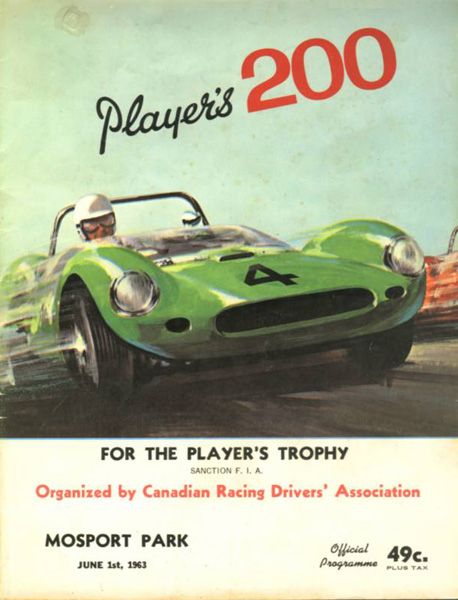
Indianapolis was barely over when Jim Clark left for Mosport – for the next race on his crammed 1963 calendar2_in_Chrono_Order
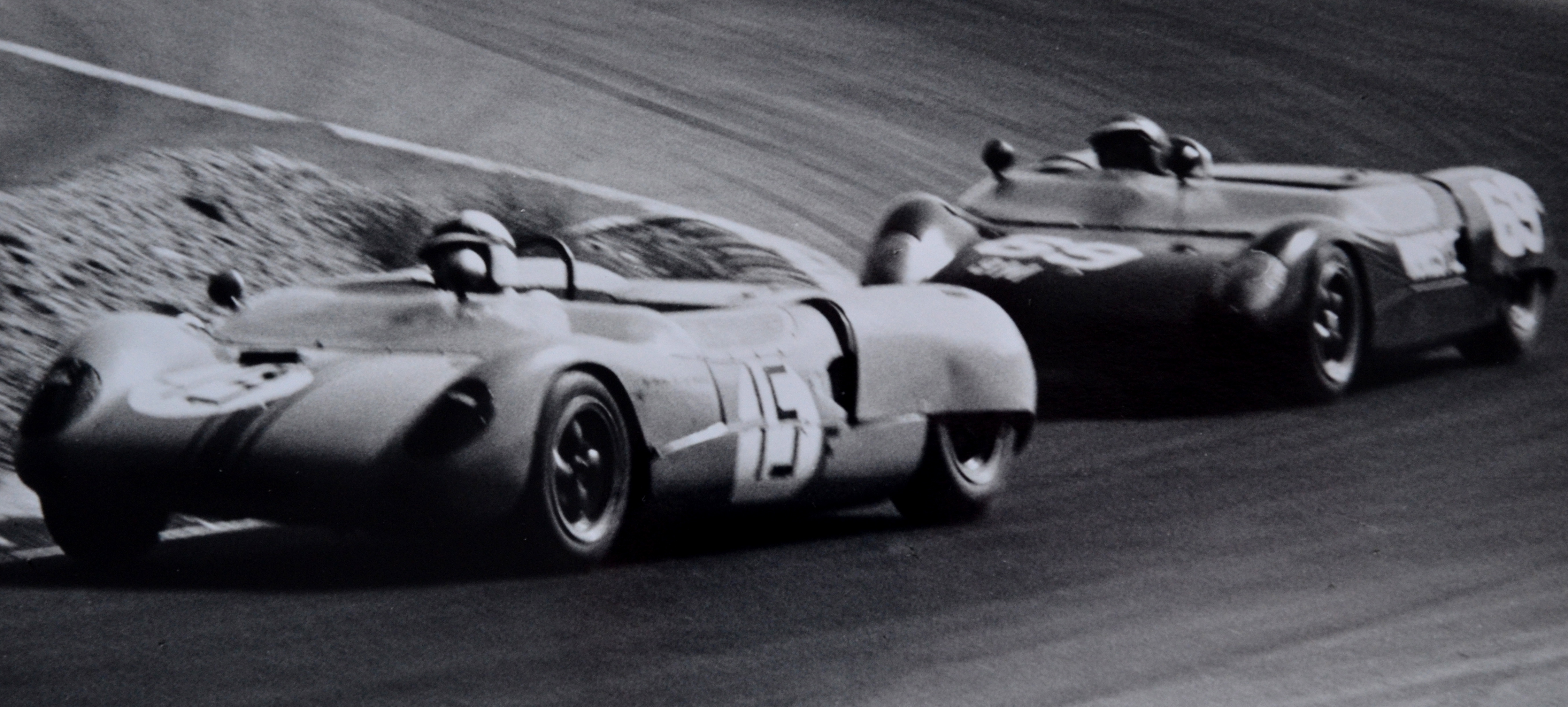
The young rookie, Skip Barber, in his ex-Ian Walker Lotus 23, leads Jim Clark’s similar, Al Pease-owned, Lotus 23 around Mosport Park

There were times when going to Mosport so soon after Indy did not seem like such a good idea.  It was a rush from beginning to end – but then Jim Clark was used to rushing.  It was what he did in order to earn his profession as a racing driver.  Starting money, particularly in North America, was beginning to look very appealing – and Jim had always been open to the idea of driving different cars in different locations.  In March, 1962 – long before Dan Gurney initiated the Indy plans –  Jim had been delighted when Colin Chapman had asked him to race a Lotus Elite at Daytona; whilst there, he had had no hesitation in accepting an invitation from “Fireball” Roberts to try a stock car on the banked tri-oval.   By 1963, with Indy elevating him to a new level of consciousness in the American racing psyche, Jim was open to all sorts of offers.  The Player’s 200 was one such.  The promoters would pay him decent starting money – and he could squeeze the race in between Indy and Crystal Palace back in England on Whitmonday. It also looked as though Team Lotus would be able to run the Milwaukee and Trenton USAC races later in the year.  Then there were the big-money sports car races at Riverside and Laguna Seca at the end of the season.  It all added up to an interesting, diverse and very busy year.  Jet lag, of course, had yet to be invented!

In the meantime, there was no time either to savour his second place at Indy – or to be frustrated about it; and that was probably a good thing.  He needed to be on that plane to Toronto.  Parnelli Jones, by contrast, cancelled his upcoming appearance in the Player’s 200 with Frank Harrison’s Lotus 23B and flew instead to New York:  he would be a guest on Johnny Carson’s Tonight show.

Jim had Dan Gurney for company on the flight to Canada but the trip felt less solid than usual.  Jim was plunging into the unknown with a Comstock Lotus 23 – a deal put together via Lotus North America –  and Dan with Timmy Mayer’s Cooper Monaco;  his regular, and super-quick, Arciero Lotus 19 would instead by driven by Chuck Daigh.   Both arrived tired and drained in Bowmanville, Ontario.  There was just time for a couple of exploratory practice laps before the two-part race on Saturday.  Dan was instantly fast – good enough to be fourth – but Jim was dismayed.  The car wouldn’t run.  He couldn’t even put a lap together.

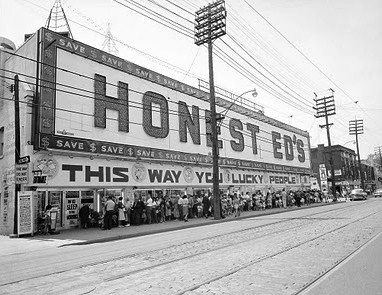
With Comstock’s support, Al Pease, an excellent “preparer” of cars who was originally going to race his own Lotus 23, quickly stepped in to offer Jim his seat.  Jim looked the car over – he knew 23s pretty well by then – and accepted straight away. He put in a lap that would enable him at least to qualify.  It would, I think, also be the first time that Jim drove a car sponsored by a company from outside the motor racing sphere:  Al had arranged backing from “Honest” Ed Mirvish, a Toronto-based discount store owner.  Jim was amused by the concept;  if he had time, he agreed that he would visit the shop before returning to the UK.f1257_s1057_it0465
This was a big event by Canadian – even North American – racing standards.  The driver line-up included Dan, of course, plus Jim Hall in the front-engined Chaparral, Lloyd Ruby, Daigh, a racer-mechanic who lived in Long Beach, Ca, Graham Hill (who had withdrawn from Indy and had flown to Canada from Monaco) in the rapid BRP Lotus 19, Jim’s friend, Sir John Whitmore, in the Frank Costin-re-bodied SMART (Stirling Moss Automobile Racing Team) Lotus Elan, and Roger Penske in Mecom’s Zerex Special (a car that Bruce McLaren would later use to kick-start his own team).  Even so, the media at the time made very little of Jim Clark’s appearance.  All the local talk was of drivers like Ruby, Gurney, Hall, Penske, Jerry Grant and Daigh – and of the reigning World Champion, Graham Hill.  Jim, “only” second at Indy two days before, and in a much less competitive 1.5 litre Lotus 23, earned but a footnote in the local newspapers.  After all the glitz and attention of Indy, Jim liked it that way.  The weather was gorgeous in Canada; he worked for two days at Mosport with his little team in the little-car section of the paddock.

I think this also highlights another side of Clark’s professionalism: Jim wasn’t concerned with always racing cars that made him look good in the public eye; he wasn’t afraid to finish second – or lower than second – if that’s the way things went:  his priority was always to give 100 per cent – and that meant driving with a team he could trust and in a car he liked.  Lotus never built the strongest cars in the world – but that was another subject.  Driving for Lotus – driving any Lotus – was about loyalty to Colin Chapman and about choosing a balance.  What Lotus gave away in reliability they usually made up for with speed.  Jim was prepared to accept that balance up to a certain level; and in Canada, in Al Pease’s Lotus 23, he found a level that at least represented par.  When Jim was out there, driving the unfamiliar black car in this relatively minor race (by F1 World Championship standards), he was nonetheless driving absolutely on the limit.  That was his code.TN_Mosport-1963-06-01-069

As it happened, Jim had a lot of fun in Canada.  He quickly began to race in company with a young American who had made his way with an Austin Healey Sprite and then a Turner, and was now having his first race outside the USA in a yellow, ex-Ian Walker, Lotus 23.  Skip Barber would go on to establish the biggest, and most successful, racing school in North America but on this Saturday, in late May, 1963, he was definitely a kid on a mission. “Mosport was a wonderful circuit,” he would say later.  “Blind brows, changes of camber and barriers close to the circuit – where there were barriers.   I trailored the 23 up from Connecticut, where I was based.  I was so new to it that I didn’t even realize that they used imperial gallons in Canada.  “I had bought one of the two Ian Walker 23s that raced in North American in 1962.  It was used-up but successful – yellow with a green stripe down the middle. The Player’s 200 was a big event in North America – and in Canada, particularly, where they had major races in the spring and then in the fall.  This eventually led to the Can-Am, of course.  There was good prize money and starting money.   And there was a big crowd at Mosport. The atmosphere was electric.

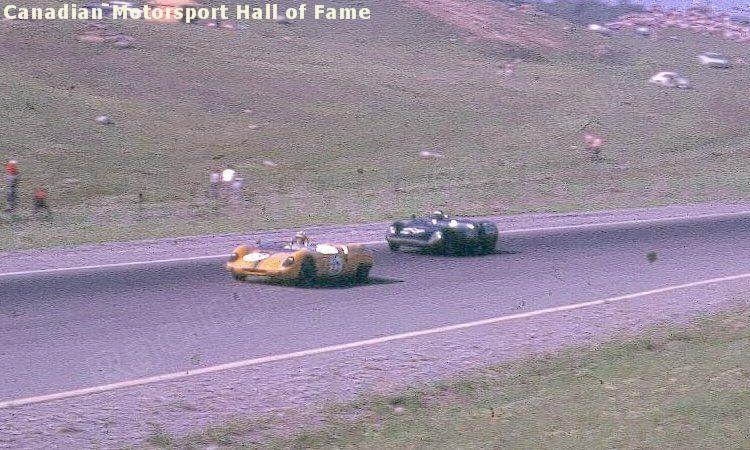
“Jim’s spec was identical to mine – a 23 powered by a 1500 Ford pushrod.  We had no chance against the twin-cams, let alone the big-bangers.  I’d only done two short races with the car before Mosport so this was definitely a step into the unknown.  I don’t remember meeting Jim during practice or before the first heat, but between races I asked Al if he could lend me, or sell to me, a new set of brake pads.  He replied that he would have to ask the driver (who happened to be standing right next to him!). Jim was extraordinarily gracious: he pretended to think about it for a second or two but clearly he was never going to say no. “This probably sounds a bit pretentious, but we had just had a tremendous, 100-mile race in which we had been separated by maybe three yards the whole time, with me in front.  WM_Mosport-1963-06-01-015He was very complimentary and very nice.  I remember him saying ‘I’ll see you in Europe’…but of course I didn’t even know where ‘Europe’ was.  Jim told a friend of mine later that he had thought about tapping me a few times during the race but my response was that he would have needed to have been a bit closer to have pulled that off.  In the second heat he passed me but then I re-passed him on the same lap.  We ran the same way almost until the end, when one of the RS61 Porsches blew up in front of me.  I went so far off the race track that I couldn’t find my way back.  I’m not kidding.  I was in the tunnel exit of the infield, buried in heavy grass.  After that, we just packed up and went home.  And Jim flew back to Europe.  It was as quick as that.  I never even thought about asking Jim to help me meet people, or even to introduce me to people in the paddock.  I never even considered it.”
Jim’s race was similar in essence to one he would enjoy a couple of years later at Lakeside, in February, 1965.  Like Barber, Australia’s Frank Matich would race that day wheel-to-wheel with Jim Clark – Jim in the works Lotus 32B-Climax, Frank in the powder blue Team Total Brabham-Climax.  Like Barber, Frank would forsake an international career for a racing life at home.  Both drivers earned Jim’s respect.

The 1963 Player’s 200 was won by Chuck Daigh;  Graham Hill retired with a blown engine.  Jim Hall was second, Dan third, Penske fourth.  Jim eventually finished eighth overall (and third in class). John Whitmore amazed the crowd (and Barber, who had never seen an inside wheel so far from the ground) before the differential seized on the SMART Elan.  John then drove with Jim back to Toronto and flew with him to London and thus on to the Mayfair flat.  The two of them were scheduled to race at Crystal Palace on Whitmonday, 24 hours later.

Captions, from top: Skip Barber in his ex-Ian Walker Lotus 23 leads Jim Clark in the Al Pease “Honest Ed’s” Lotus 23.  Jim is wearing his new Bell magnum, complete with white peak; Honest Ed’s discount store in Toronto (as it was in 1963);  the sponsor’s signwriting was relatively large by ’63 standards; Skip and Jim as they spent much of the Player’s 200 Photographs: Skip Barber Collection; Peter Windsor Collection_Mosport-1963-06-01
Jim Clark – Rookie of the Year

As we continue Jim Clark’s 1963 season as it happened, race by race, we find Jim back at Indy – this time for the 500 proper.  Monaco, on May 26, already seems an age away…S2580001

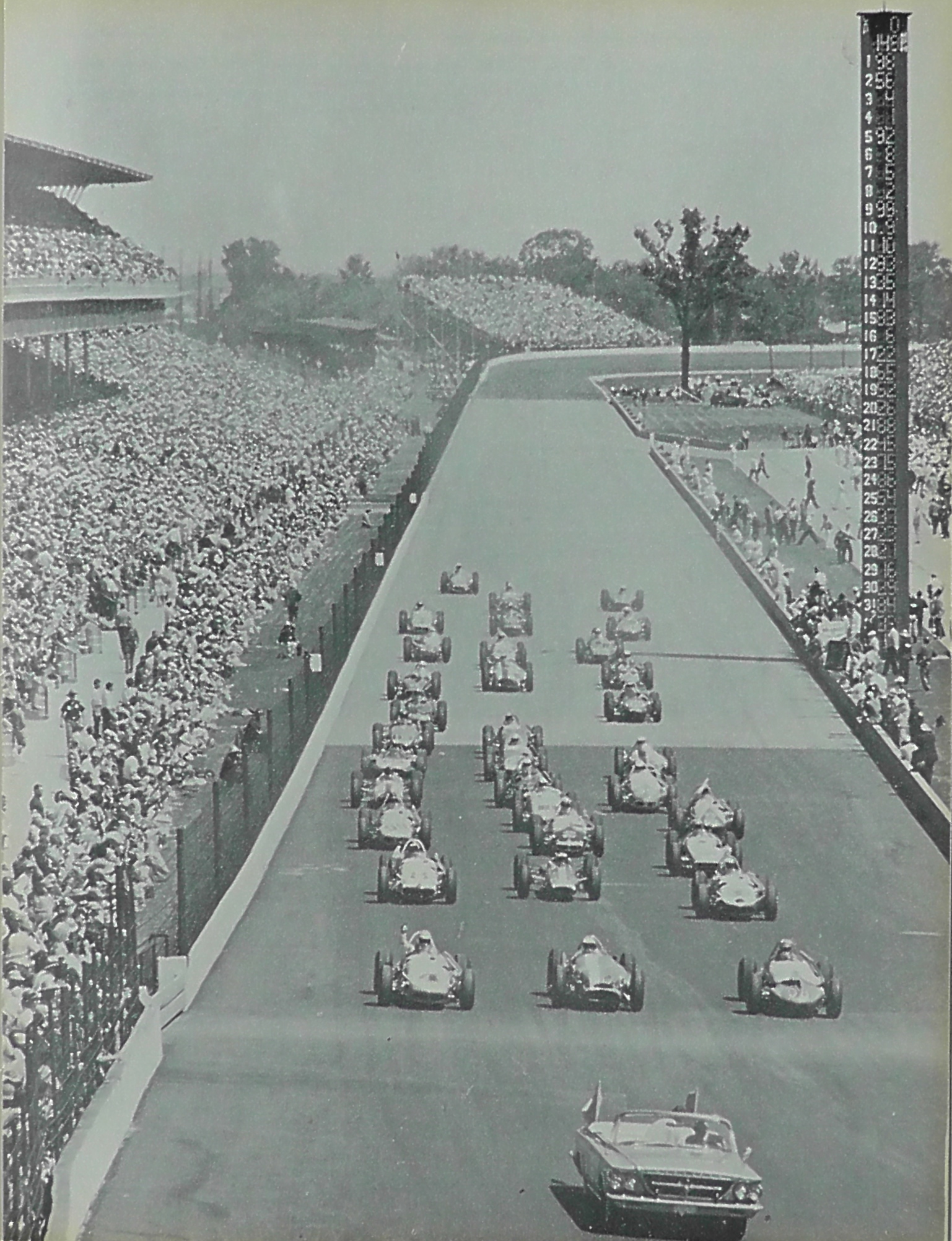
They made it back to Heathrow, Jim Clark, Dan Gurney and Colin Chapman – and then onwards to New York, Chicago and Indianapolis.  The frustrations of Monaco, by the time they checked-in to the Speedway Motel, already seemed an age away.  Now Jim was in another world – a world he wasn’t sure was him but which he saw as part of his professional life.  Interview after interview, autograph after autograph.  At the Team Lotus garage in Gasoline Alley the talk, as the race approached, was of pit stops, tyre wear and fuel consumption.  Lotus were set on a one-stop race.  The quick Offys, they knew, would probably have to stop three times.

In practice, Jim Endruweit and the boys had been changing three tyres (not the inside-front) and adding 40 gallons of fuel in about 20 seconds; now the Ford Motor Company decided to provide two additional wheel-changing “experts” for race day.  This unsettled the boys.  Mistakes began to creep in.

At this point I can do no better than to hand over to Jim himself and the lucid interview he gave to Alan Brinton shortly after the race:

“The race came upon me rather as a surprise.  All of a sudden we were there with the thousands of spectators in the grandstands and all the promotion that goes on to make up this amazing event.  We all paraded round for one lap behind the Pace Car, which was driven at a very slow speed.  I couldn’t get the Lotus to run properly in bottom gear, so if we had used only third and fourth, like the regulars, we could have well been in real trouble right at the start.

“Jim Hurtubise, whose Novi was ahead of me on the front row, got stuck in gear as we crossed the start line, and I suddenly found myself right up his exhaust.  I backed off and slammed on the brakes.  There was a mad rush all around me.  Hurtubise got his gear sorted, disappeared into the distance, and I found myself right in the thick of the pack.

“Our cars are a lot lower than the Offys, and this meant that it was extremely difficult to see what was really going on.  There was also a great deal of smoke and dust (as well as a heck of a lot of noise!) and all this made for confusion.

“Anyway, all hell was let loose at the start, with 33 cars rushing round in a tight bunch.  After a couple of laps trying to keep out of everyone’s way I found myself sitting right behind Dan Gurney, who had made a good start in our other car.  This was something of a help, because, since his car was as low as mine, I could at least see what was going on ahead, and could keep an eye on the leaders.

“At this stage there were about a dozen of us going round together in the leading group.  This was a good position to be in, because we reckoned on picking up some useful time in the pit stops.  I found that I could run with the Offys on the straights and, being so much smaller and lower, I was getting a great tow.  Getting through the corners was an entirely different matter:  the Offys have one groove for the turns and there is no chance of beating them during the actual corner, even though our cars could have gone quicker through the turns.  So the general programme was to rushing up the straights and then go relatively quietly – for us, that is – through the corners.S2580003

“Throughout the race I was given signals about Parnelli Jones and his Watson-Offy because there is no doubt that he is far quicker than any other driver in these big Indy specials.  At one point it was obvious that he was getting away from me, so I pressed on for a bit to make up time.  I got past Dan after about 100 miles, and when Parnelli made his first stop after 62 laps we moved into first and second places.

“Parnelli’s stop was very quick and so he began to catch us again.  I held the lead until I came in after 95 laps to change three wheels and take on fuel.  We found we still had eight gallons left, so we could have started with less, as it turned out.  My stop took 33 seconds, however – and it felt even longer.  By the time I was back I had dropped to third.

“One of the extra chaps brought in by Ford was a huge, burly fellow with a long background with the Offys.  This chap forgot that I had a four-speed gearbox and tried to push me away from the pits as if I was in second.  As I shot forwards I could see him rolling over in my mirrors – he had gone flat on his face when I let in the clutch.  For a moment I thought I’d run over him!

“Parnelli extended his lead to about 40 seconds as he began to run on lighter tanks again and I worked my way back to second.  Unfortunately, the yellow light came on just as Parnelli was due in and he made his second pit stop without losing the lead.  We worked out later that he had gained something like 20 seconds on the road during that yellow light period!

“For his third and final stop Parnelli did the same thing – came in during a yellow period, when the rules say that no car must alter its position.  Now I realized that we had really gained nothing from our one-stop strategy.  It was plain that I was going to have to try to race Parnelli for victory.  The car was running beautifully and I got right up to him, catching him at about a second a lap.

“Then I noticed that his car was smoking.  My immediate thought was that he wasn’t going to last….but he just kept going, throwing out oil and smoke and leaving a trail around the track that made things incredibly slippery.  I had a big sideways moment and only just managed to collect the car.  On the next lap, Eddie Sachs spun right in front of me, also on the oil.  I managed to avoid him but it was close.

“I decided it would be more prudent to settle for second place.  From what I could work out, Parnelli’s car threw out a lot of oil for a short period and then pretty well stopped once the oil level had reached a certain point.

“Anyway, it was a disappointing finish to the race.  We might also have done better if we’d had a bit more local knowledge.  For example, when I was leading during a yellow light period, I had to put in nearly a whole lap before I got the green – even though the rule is that the leader should get the green first.  There’s also a question of whether you can improve your position under yellows in relation to the car in front of you or the car which is actually one ahead of you in the race as a whole.  “We didn’t protest – and I’m glad we didn’t.  I would have liked to have won but I wouldn’t have felt happy to have done so by getting Parnelli black-flagged.  Having said that, I don’t think Parnelli would even have been on the same lap as me at the end if there hadn’t been any yellows.   There were a lot of rows after the race.  Eddie Sachs came to blows with Parnelli but Colin and I were satisfied that we had at least shown that the Offys can be beaten by a European design.  As for Parnelli – and remembering that he, too, had to drive on his own oil – I think he did a damn fine job.”S2580002

I would add that Jim’s performance must also be seen in the context of the power differentials.  His modified Ford Fairlane engine developed about 350bhp.  The Offys and Novis produced about 400bhp – as seen by their one-lap pace in qualifying.  The post-race fisticuffs to which Jim refers actually occurred on the following morning, when Eddie “The Clown Prince” Sachs accused Parnelli of causing his spin.  Rufus Parnelli responded by whacking Sachs in the mouth.  In protest, neither Sachs nor Roger McCluskey attended the prizegiving.

David Phipps, who worked closely with Team Lotus at Indy in 1963, calculated later that the yellows were on for a total of about 50 minutes in the race and that in one yellow-light period Jones gained 27 seconds on Jimmy (not 20 sec).  Colin Chapman additionally reckoned that Jim lost about a minute in all the yellow light periods combined.   That’s unheard-of by today’s standards;  back then, though, with Team Lotus pioneering a new era, Jim and Colin were very wary of expecting too much too soon – politically speaking, at any rate.

Jim’s second-place prize money amounted to $56,238.00, or just over £20,000 at 1963’s rate of exchange.

Flying straight to Toronto, Jim left Indy immediately after that prize-giving, for he was scheduled – amazingly – to drive a poorly-prepared Lotus 23 at Mosport on Saturday, June 1.  From a Lotus 29-Ford to a Lotus 23 in two, hectic days.  Such was now the life of the sheep farmer from Duns, Scotland. In his Leston track bag, in company with his new Bell Magnum, smeared with oil, lay his Pure jacket and his Dunlop blues, neatly ironed and ready to go.

Captions, from top: Jim, in the middle of the second row, with his engine coughing a little, is concerned by the slow speed of the Studebaker Pace Car.  A few minutes later he would be boxed-in behind Jim Hurtubise’s slow-starting “Hotel Tropicana Special”;  flashback to late 1962, when it all began:  Jim peels his Indy Rookie stripes from the F1 Lotus 25-Climax; a traditional Scots welcome for Indy’s runner-up Photographs: Indianapolis Motor Speedway, Peter Windsor CollectionUSA-Canada 2006 149

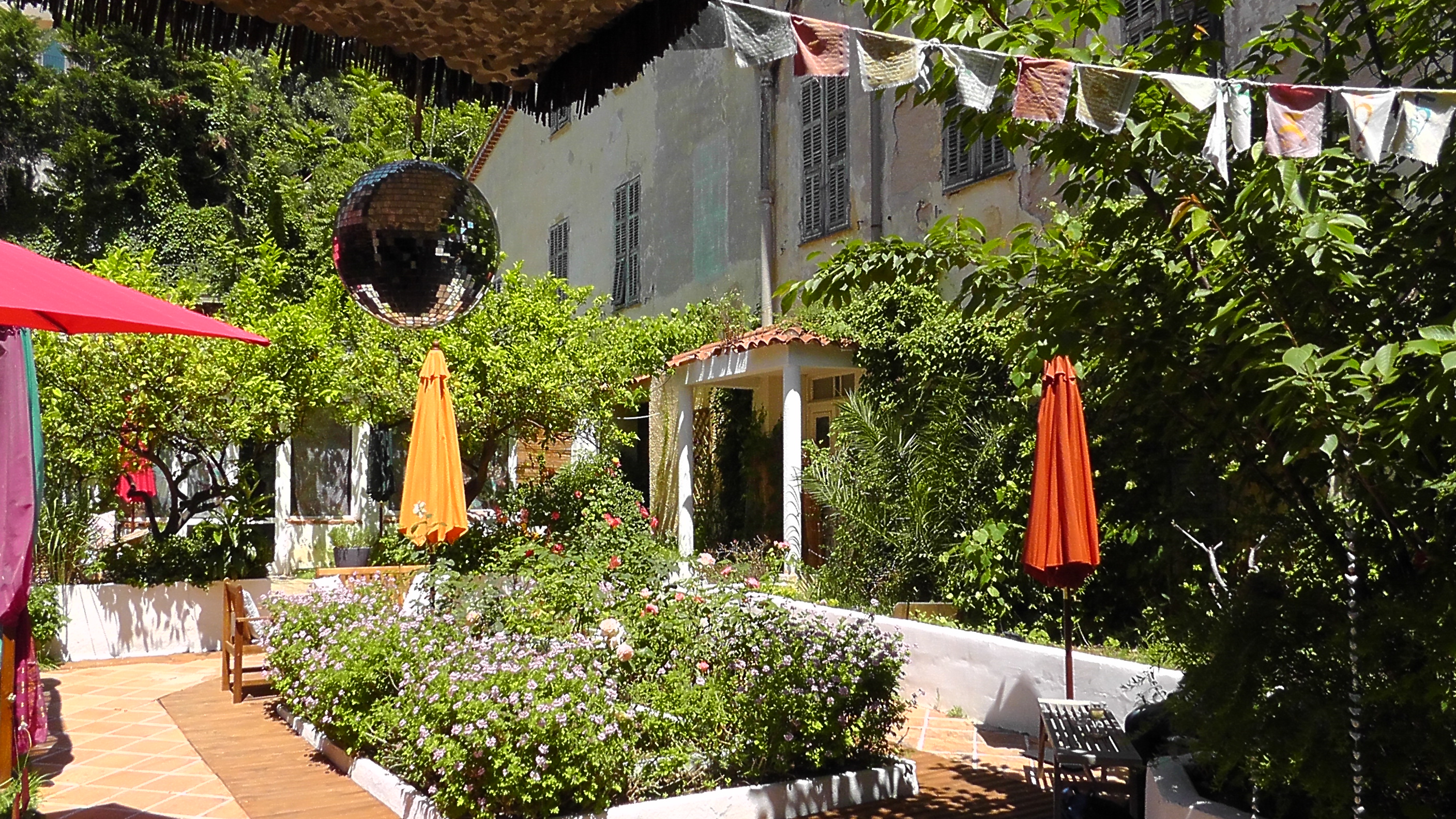
La Bananeraie

1963 Monaco Grand PrixJim Clark’s 1963 season (continued)

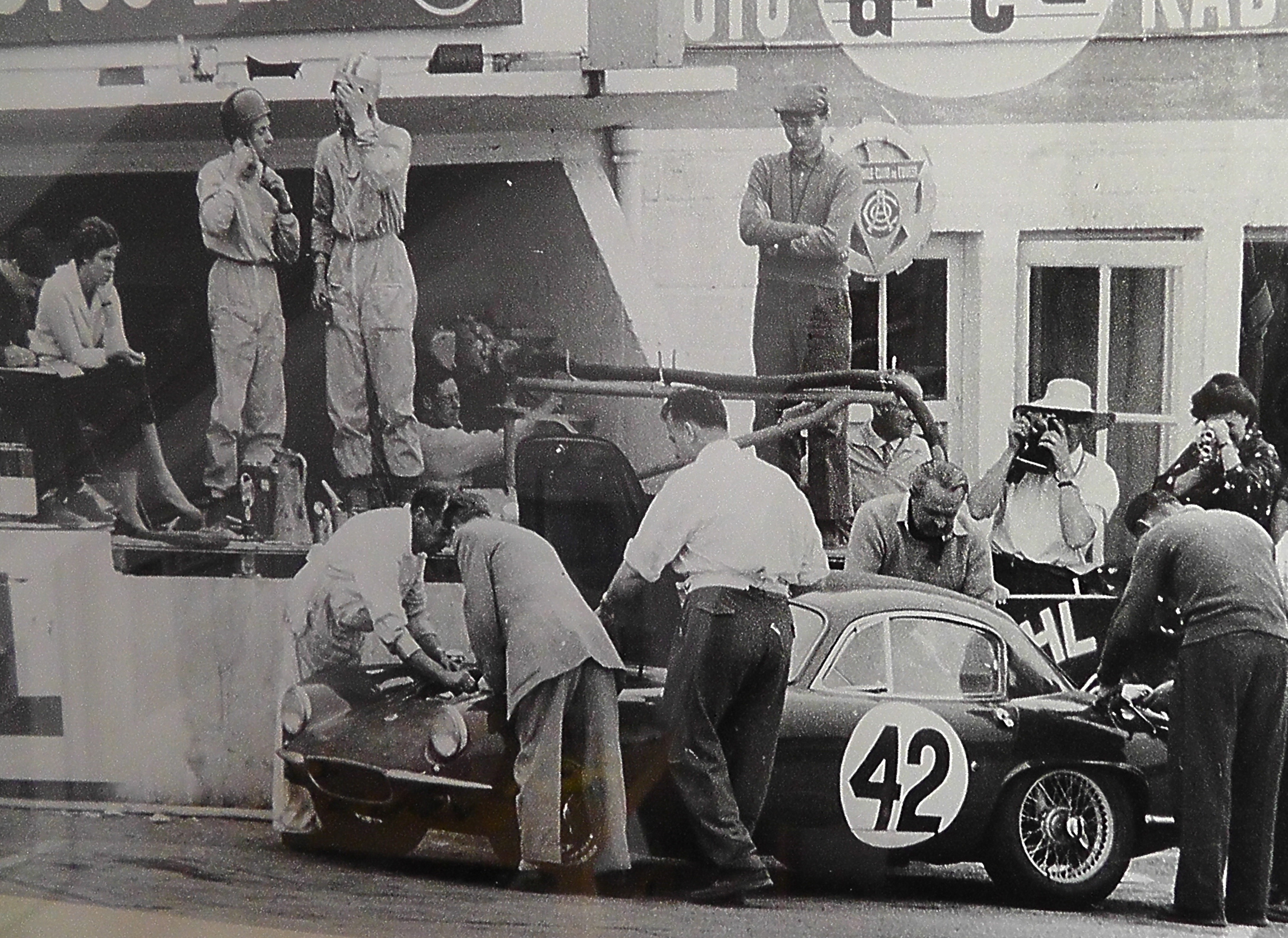
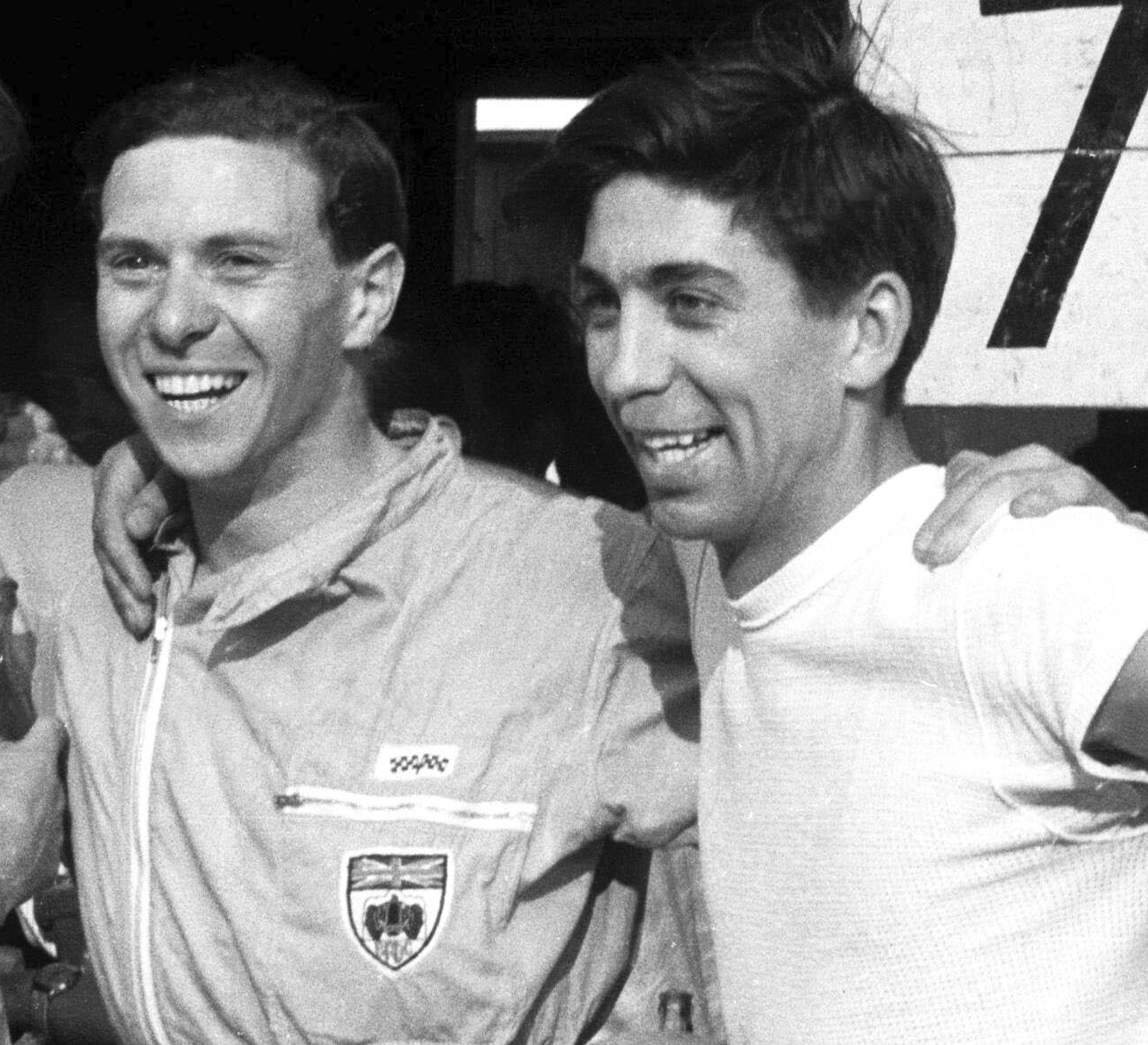
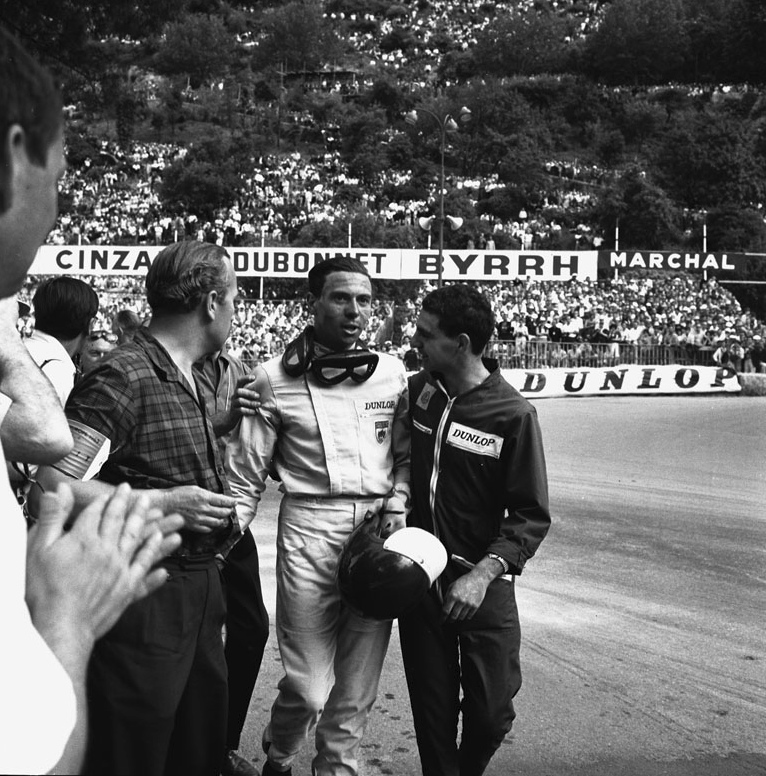
From Indy Qualifying, Jim flew to Nice from London, where he had been staying on Monday and Tuesday in the apartment of his friend, Sir John Whitmore.  They had first met in 1959, when they had shared Ian Scott-Watson’s Lotus Elite at Le Mans, and they had stayed in touch ever since.S2520004  Their bond, ironically, had been their shared despair after Alan Stacey’s death.  A farmer like John and Jim, Alan had been hugely helpful to Whitmore in the early years.  At Le Mans in ‘59, with Alan now on the verge of a full F1 career and driving at Le Mans a factory Lotus 17 with Keith Greene, the three of them had had a ball, with Alan very much playing the role of the mentor. Early in that Le Mans week, over dinner at the Team Lotus hotel in a little village away from the main town, John had read aloud a report in L’Equipe about one of the drivers having an artificial leg.  Jim, still very new to motor racing, was both appalled and disbelieving.  “Disgusting,” he said, making it unclear whether he was talking about the lies in the article or the concept itself.

Jim was up bright and early the following morning, in his usual way, and knocked on the door of the room being shared by John and Alan.

“Come on.  Wake up.  Rise and shine.  Time to get going.”  Then silence.  Jim had seen Alan’s prosthetic leg lying on the floor by the bed.  The next sound was of Jim’s feet, running as far away as possible.

A few days later, John and Alan were still laughing at Jim’s embarrassment…

Alan was killed at Spa the following year in a Team Lotus 18 – in the second Grand Prix of Jim’s career – when, it is said, he hit a bird at high speed.  (Some people close to Team Lotus are convinced that the steering column broke on Alan’s car and that the “bird” story was merely a cover.)  Jim was of course devastated – but thought instantly of John, who had been even closer to Alan.  Thus the mateship.600112_22

John’s small two-bedroom, two-bathroom flat was in Balfour Place, Mayfair – an ideal location for racing drivers on the move.  The Lotus factory at Cheshunt was half an hour away.  And London was great for Heathrow and Gatwick airports, Crystal Palace, Brands Hatch and of course the A1 – the road to Scotland.  After days – weeks – of non-stop travel, these two days in Mayfair for Jim offered a welcome break.  John’s wife, Ghinsella, caught up with Jim’s washing – including his blue Dunlop overalls – and Jim finalized the detail arrangements of his travel over the next few weeks.  He would return immediately to Indianapolis after Sunday’s Monaco Grand Prix;  then he would race at Mosport; then, two days later, he would race at Crystal Palace.  He’d return to Balfour Place at that point before leaving for Spa, for the Belgian GP.

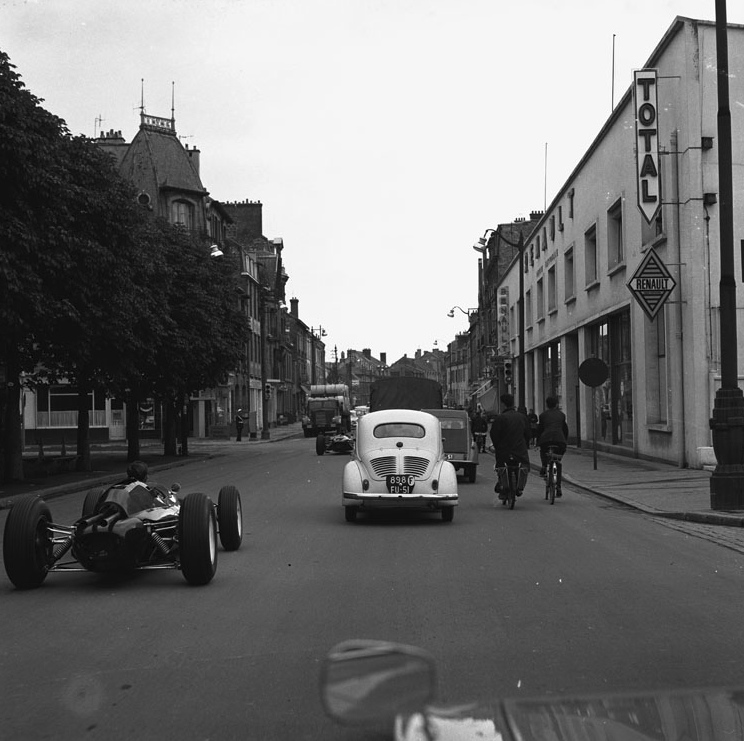
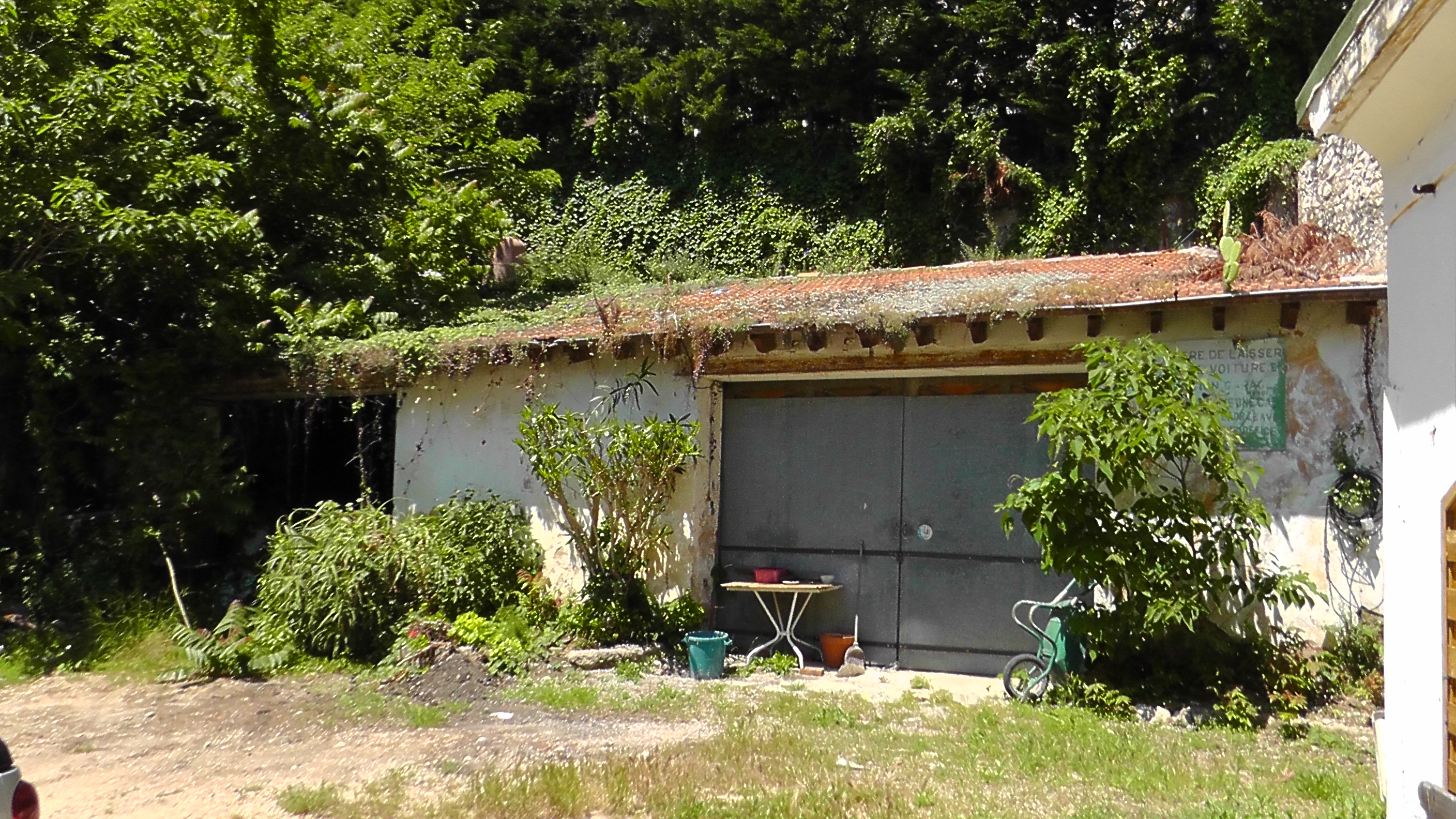
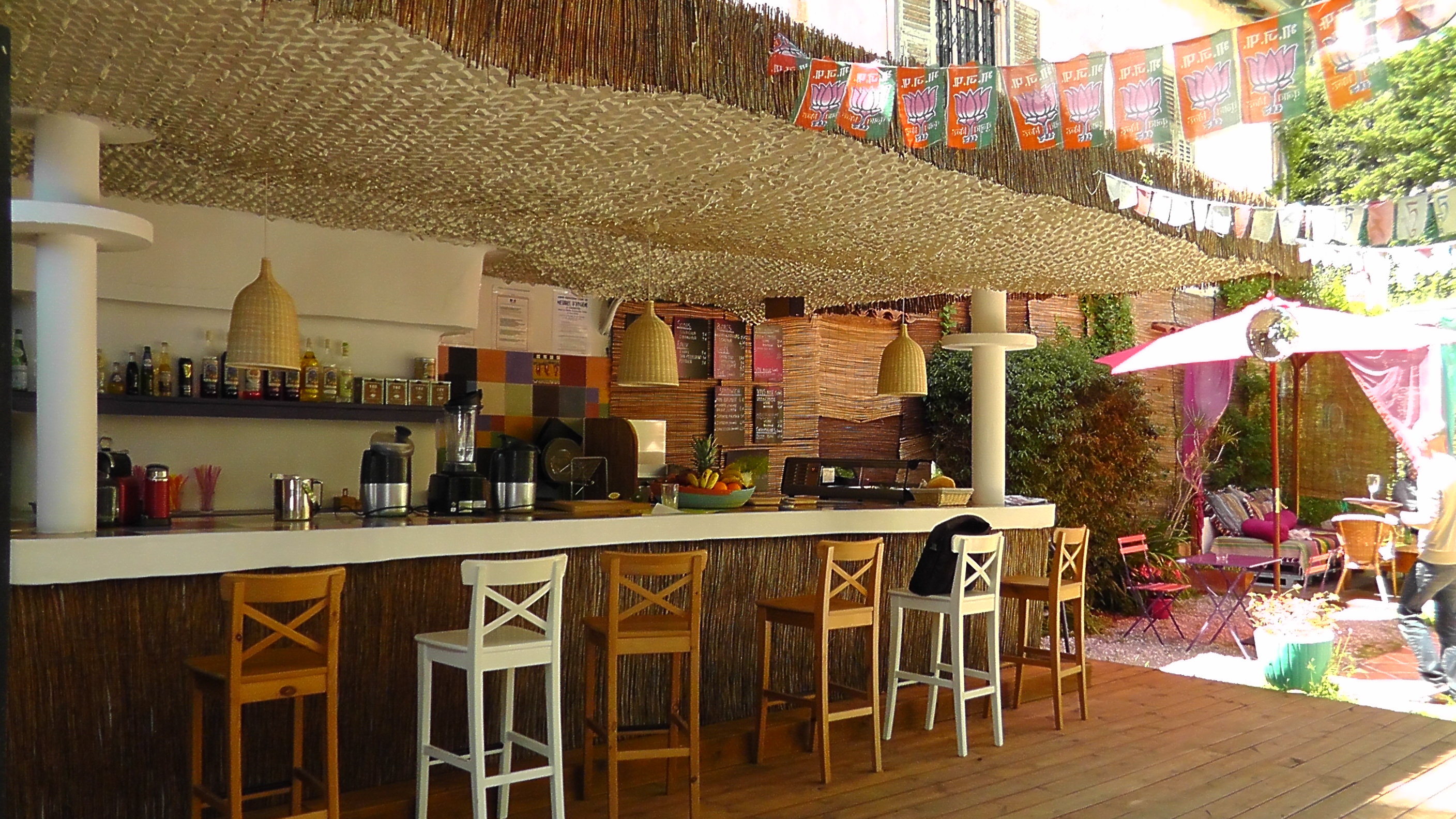
Nice was bright and sunny when Jim and Colin arrived on Wednesday, May 22.  They drove out to Monaco by the coast road, stopping on the way to check in to their regular hotel in Eze sur Mere.  S2550010Little more than a railway station and a small café today, Eze in 1963 was somewhat more prosperous, boasting a couple of good restaurants, a garage and a small market.  The Team Lotus hotel, La Bananeraie, was perfect for the group’s needs, boasting a spacious, secure, three-car garage out the back in which the Lotus 25s could be housed.  Towing race cars to circuits on public roads was not only normal back then;  it was a part of the show.  Spectators would line the streets, awaiting their favourites – and sometimes, if the travel distances was short, the cars would be driven under their own power.  Nothing clears a crowd faster than a quick blast of Ferrari V12…20179.tif

Jim had brought with him to Europe his newly-painted Bell Magnum helmet and wore it for the first time at Monaco on Thursday, when he was fastest.  The overall look was completely different:  it was as if the slightly thicker Bell had been specifically designed for the gorgeous, slow-slung lines of the Lotus 25.  And Jim again wore a white peak!  It was as if the ’63 season was entering a new phase, and the Jim Clark era was now upon us.

Jim was unnerved for a second or two on Thursday when he spied a black cat running across the track by the pits.  He wasn’t about to label himself “superstitious” but, in that world, back then, he wasn’t going to go out of his way to walk under ladders or spill salt on the table.  He was delighted, then, to see the car suddenly freeze and scamper back the way it had came.  Nor was he reluctant to tell a few of his friends about it, either!

Practice over – and the temporary pole secured – Jim then joined his fellow drivers in a GPDA meeting at the Hotel Metropole.  These gatherings had been a regular fixtures at F1 races ever since the drivers had first got together in a formal way at Monaco, in 1960.  As a group, they were now respected by the team owners and by the circuit organizers – something that couldn’t be said about the drivers’ group of the 1950s, the UPPI (Union of Professional Pilotes International).  Jo Bonner presided over the GPDA meetings;  Autocar’s Sports Editor, Peter Garnier, recorded the minutes for posterity.  As well as discussing important safety and organizational issues, the drivers also took time to talk to one another.  In Jim’s case, he was keen to learn about Dan Gurney’s first drive in the new Brabham (Dan had been eighth quickest on a troublesome day) and to discuss the growing shortage of Coventry Climax Mk 111 engines.  Just as Dan had been obliged to miss Silverstone, now Jack Brabham himself was flying straight back to England to pick up a replacement for the engine that had failed that morning.  There was also general chit-chat about the new, sticker Dunlop R6s, now re-designed around the 1962-spec 28 deg cord angle.  In theory, this greatly improved the tyre’s breakaway without detracting from its better adhesion.  A bit like Pirelli reverting to Kevlar casing in 2013!

Problem was, the new Dunlops were also in short supply.  The bulk of them would only reach Monaco, by truck, late on Thursday night.

Matters of Moment in that GPDA meeting:  the prize for the best-run Grand Prix would go to Zandvoort.  The Taffy von Trips trophy for the best private entrant would go to Count Carel de Beaufort; and Graham Hill would receive a Roy Nockolds painting for winning the 1962 World Championship.

F1 practice was also held on Friday back then – but at the absurdly early hour of 7:30am, by which time two Formula Junior sessions had also been staged.  The idea was to have everything over by 9:00am, thus allowing the town to go about its usual business.  The track was cold but Jim was faster still.  Then, with the day still ahead, it was all over.  Jim  joined other drivers on Carribee, the yacht hired by Ken Gregory (Stirling Moss’s manager) and the former driver, Mike McKee.  S2560001After a few hours in the sun, enjoying life with his mates Bruce McLaren, Dan Gurney and Lorenzo Bandini,  it was back to Eze for a look at the cars and an early dinner at La Bananeraie.S2550013  It turned out that Cedric Selzer and the boys had had a relatively easy day with the 25s – particularly as a nice blonde seemed to have joined the team as wheel-polisher and go-fer.  Jack Brabham, meanwhile, had flown his own single-engined Cessna 180 back to England to pick up a replacement Climax engine.  He planned to be back in Monaco by late afternoon but was held up by bad weather in France.  He didn’t make it until about 5:00pm on Saturday – by which time the Climax in Dan’s car had also burned a piston.

Jim was again quick on Saturday afternoon, when the session was run from 2:00pm – 3:15pm.  Perenniel gearbox worries aside, the 25 was running perfectly – so much so that Jim was happy to run full tanks for most of the afternoon while he pushed the R6s to the limit.  (With more grip on line, he was only a second slower than his Thursday, empty-tank, pole time.)  Jim also completed a few laps in the spare car (fitted with the old carburettored Climax engine), lapping as quickly as the Ferraris and fourth-fastest overall.  The Brabham engine issues remined dire but everyone was deeply moved when Jack stood aside to let Dan have the only spare Climax for the race on Sunday.  Drawn to Jack because of his decision to run a Lotus 24 for the first half of the previous season (while he was working on his own car) – and also because of the Indy ties with Dan – Colin Chapman then offered the spare Team Lotus 25 for Jack to race on Sunday.  The 1959-60 World Champion readily agreed, even though he would be unable to put in a single lap with it before the flag dropped.

Serious work over for the day  – Jim was on the pole from Graham Hill, John Surtees, Innes Ireland and Dan Gurney – everyone settled back to watch the Formula Junior race. An electrical problem had ruined his day when he was leading the FJ race by a mile in 1960, so he was not really surprised when Peter Arundell, who had won his heat in the Team Lotus 27, retired from the final early with a blown engine.  Richard Attwood went on to win in the MRP Lola from an excellent Frank Gardner (Brabham).S2550014

Sunday, May 26, 1963 was a gorgeous day – much like May 26, 2013.   There were no support races;  instead, great F1 drivers from the past were paraded in open sports cars.  Prince Rainier drove a few laps of the circuit in his Porsche Super 90.  The drivers, staring at 100 laps of Monaco, gathered in the pits beneath the trees.

Louis Chiron, Clerk of the Course, presided over a shambolic drivers’ briefing on the grid.  Photographers pushed and shoved;  some drivers listened, others joked with friends.  “Remember it is a sport,” said Chiron.  “Good racing, good driving, good amusement and God bless you.”  As Bruce McLaren later, “We knew how hot it was going to be and we knew that it wasn’t exactly going to be very amusing…”

Jim was instantly in trouble.  In total contrast to his full-tanks run on Saturday, his engine coughed badly under acceleration.  He couldn’t believe it.  Perhaps it was a plug or something.  Perhaps it would clear itself over the opening lap.

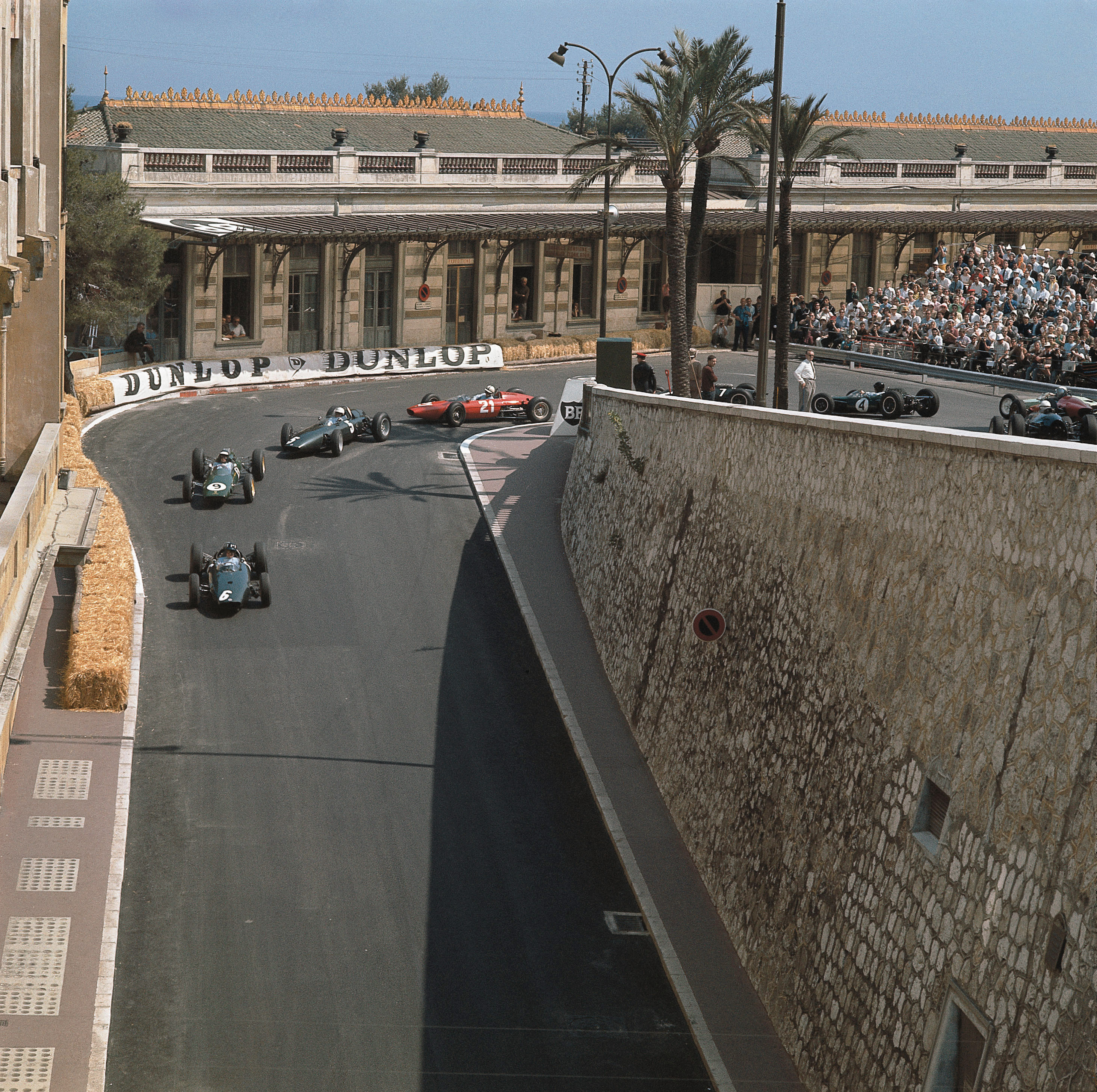
It did not.  The mis-fire persisted.  Graham had unsurprisingly out-dragged him into Ste Devote and down out of Casino Square, and into Mirabeau and the Station Hairpin, he was all over the BRM.  Out on the seafront, however, and on the fast run through Tabac and towards the Gasworks Hairpin, the BRM pulled away as it was a 2-litre car.

Jim couldn’t understand what was happening.  And so he just drove with the problem, trying to apply the power in different throttle loads – and trying, of course, to find ways of braking so late that he could sustain an attack.

It’s interesting to note, I think, that very, very few reports of the day mention Clark’s problems in this early phase of the race.  Observers and spectators were enthralled, instead, by Jim’s attempts to outbrake Graham and his BRM team-mate, Ritchie Ginther, into the Gasworks Hairpin – and by the BRM drivers always regaining the initiative under acceleration.  It never occurred to reporters that Clark was adjusting his driving in order to compensate for a problem.  They saw Jim hit the cement dust bags protecting a fire hydrant with the left rear wheel on about lap 15 and they put it down to “Clark under pressure”.   They saw Jim throwing the 25 around with armfulls of opposite lock and they just assumed he was having fun…

It was when the engine problem began to go away that Jim worked out for himself what had been happening:  “The trouble stemmed from the two little pipes which stuck up behind my head and above the engine.  These were fuel tank breathers and at the start, with full tanks, they tended to blow excess fuel out of the top whenever I accelerated hard.  This would blow fuel straight back down the injector pipes and thus richen the mixture.  The engine would bang and splutter.  It was murder.  Whenever I was out on my own with no-one around I could scramble through the corners and have the car running properly before anyone noticed but when, in the early phase of the race, I was fighting both Graham and Ritchie, I kept losing places.  I’d pass Ritchie into a corner and then there would be this bubble, bubble, snort, bang and while I was trying to clear the system Richie would pass me again.  Eventually, though, I managed to get with it, pass Ritchie and pull away.  Of course, as the race progressed, less and less fuel came up the breathers and the trouble gradually disappeared.”

Jim was leading easily – just as he had led the FJ race in 1960 and then again the Grand Prix in 1962 – when it all went suddenly, finally, wrong.  Wary of the gear selection trouble that had coloured the early-season races, he was now changing gear nice and precisely, easing the lever into the next slot without any strain.  Suddenly, into Tabac, changing from fourth to third, the gearbox jammed.  He still had drive – in fourth gear – but the gear lever was in “neutral”.  He tried the lever again – and suddenly the car was in second, spinning itself to a standstill in the middle of the Gasworks Hairpin. Declutching did nothing.  The car was locked in second.  Jim’s first reaction was to jump from the 25 and thus to warn a fast-approaching Graham Hill, who at that point was ten seconds behind.  Then, drained, he walked quickly back to the pits.

19069.tif

Thus ended Jim’s first Championship Grand Prix of 1963.  The gearbox problems would continue (both Trevor Taylor and Jack had transmission problems in the race) but Cedric Selzer was not slow in coming up with solution to the fuel mixture issue:  he fitted a motorcycle tap to the cockpit for Spa and gave Jim an instruction he would never forget:  “It’s like a factory.  It opens up and it closes down!”

They had an early night at La Bananeraie:  on Monday, May 27, Colin, Jim and Dan flew from Nice to London on the 6:00am BOAC Comet. From there, via New York and Chicago, they would fly again to Indianapolis.  The 500 would take place on Thursday, May 30.

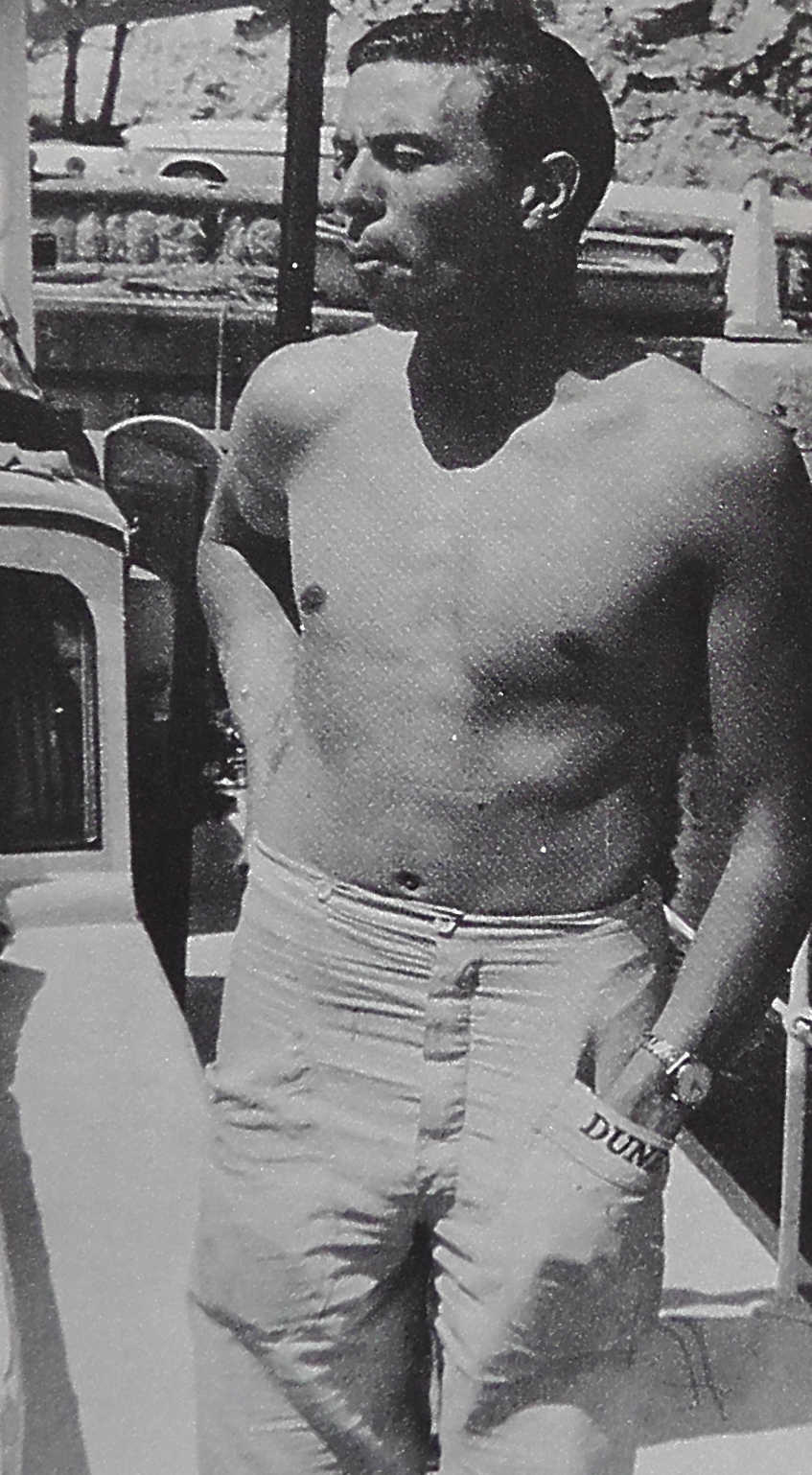
Captions, from top:  Lap one, Monaco, 1963.  Graham Hill leads for BRM, with Jim lying second in the mis-firing Lotus 25-Climax.  Then come Ritchie Ginther (BRM) and John Surtees (Ferrari);  Jim Clark and Sir John Whitmore compare notes at Le Mans in 1959 while Ian Scott-Watson’s Lotus Elite is given unscheduled attention.  Ian can be seen to the right of Sir John’s legs – and that’s Jabby Crombac with arms folded; Jim shares a laugh with the very excellent Alan Stacey;  La Bananeraie as it is today, now run by the grandson of the of the original owners.  It’s overgrown but Bohemian:  the bulk of the hotel is now an artist’s studio but the bar is still pretty much as it was; F1 cars often split the everyday traffic en route to the track.  This is (I think) Bernard Collomb’s Lotus 24; Louis T Stanley’s shot of Jim aboard the good ship Carribbee after early practice on Friday.  Note the Dunlop race trousers!; the garages around the back of La Bananarie; the bar/restaurant where Team Lotus refreshed in May, 1963; Cedric Selzer (right) and Colin Chapman (checked shirt) shepherd Jim back to the Lotus pit after his retirement. Photos: Sir John Whitmore, Louis T Stanley, LAT Photographic, Peter Windsor Collection
Watching from La Rascasse (Part 2)

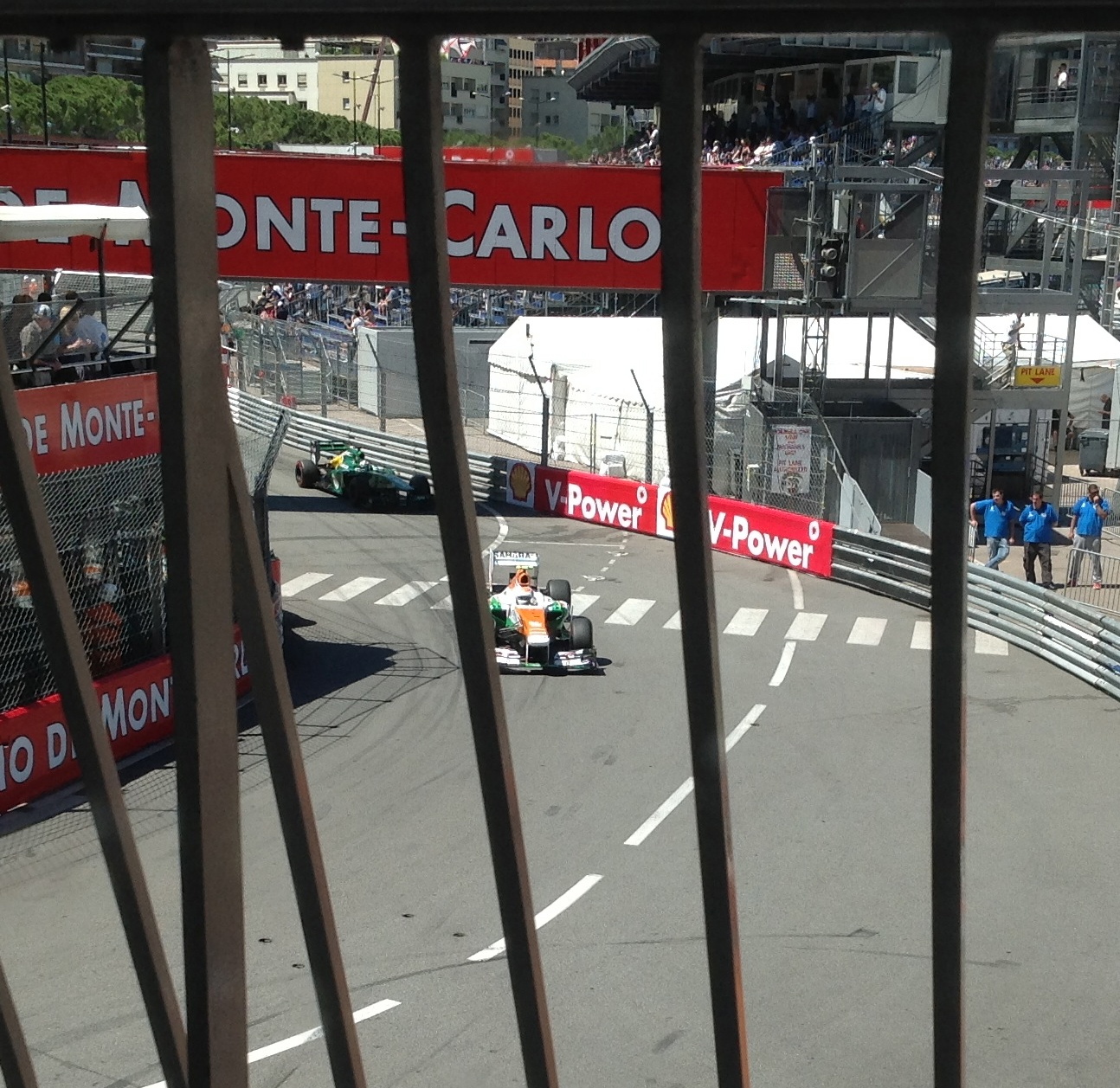
In Part 2 of Watching from La Rascasse, we look at some of the other drivers who were out on Thursday afternoon at Monaco.  Sadly there was no Romain Grosjean when we were camera-ready:  by then, he had hit the Ste Devote guard-rail.

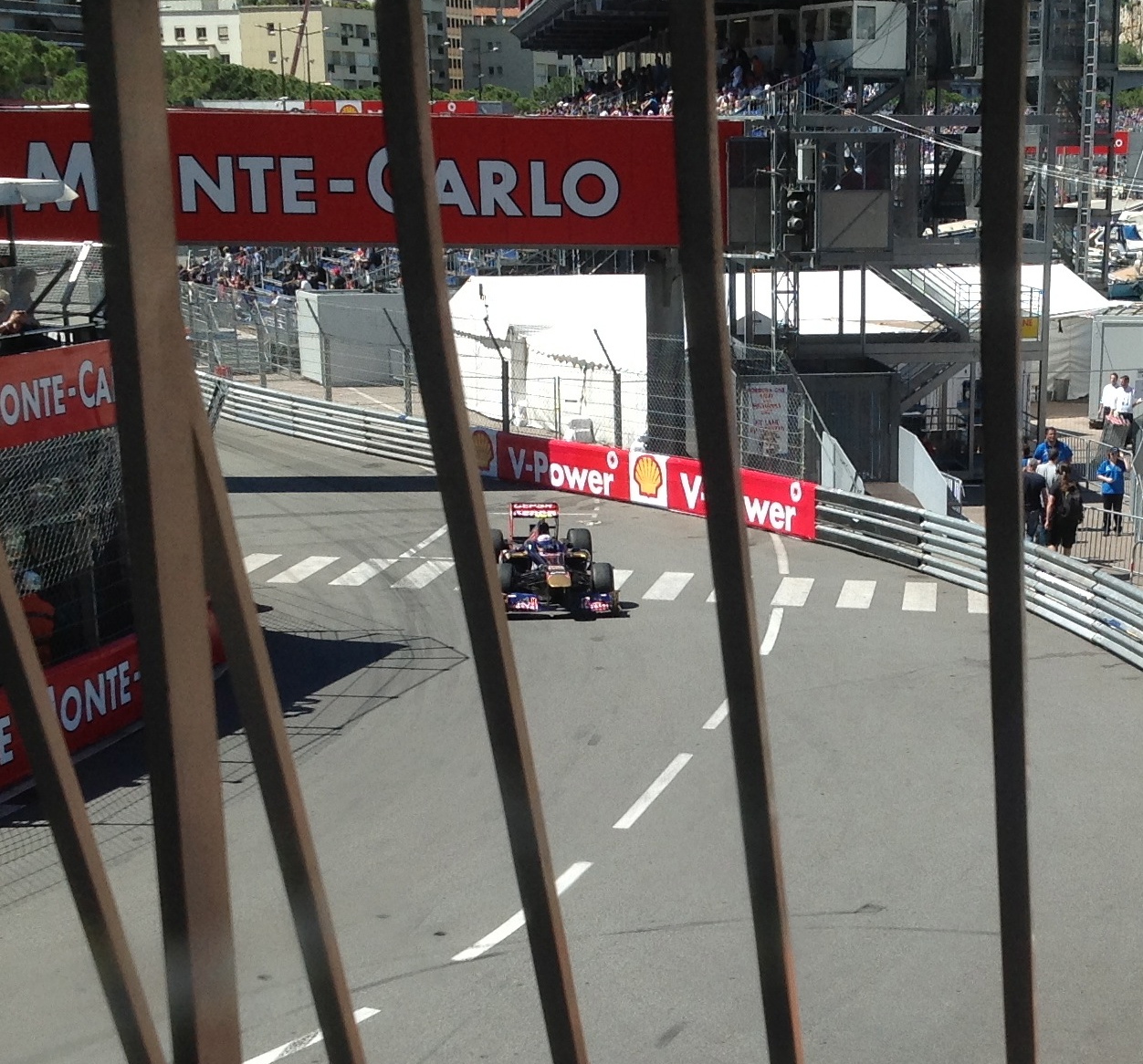
Paul Di Resta (below, top) looked extremely good here, with a decisively-early approach, a clean rotation from a stable mid-corner and an effectively clean exit.  Adrian Sutil (below, bottom) was all of that but a shade wider, and thus a shade more conservative, on his approach. Both drivers looked excellent; the difference between them was smaller than the difference between the Mercedes boys.Dir

SutilFor all his cool headgear, Jean-Eric Vergne (below,top) is much more Jean-Pierre Jarier than he is Francois Cevert.  A wide, soft approach. Lots of aggression with the brakes, the steering and the release of same.  Lots of car-control, of course, but none of the straight lines that typified Francois, particularly in 1973.  Daniel Ricciardo (below,bottom) exhibited a slightly shorter corner and more seamless transitions.  Like McLaren, Toro Rosso have two “long corner” (but very skilful, very spectacular) drivers.JEV2

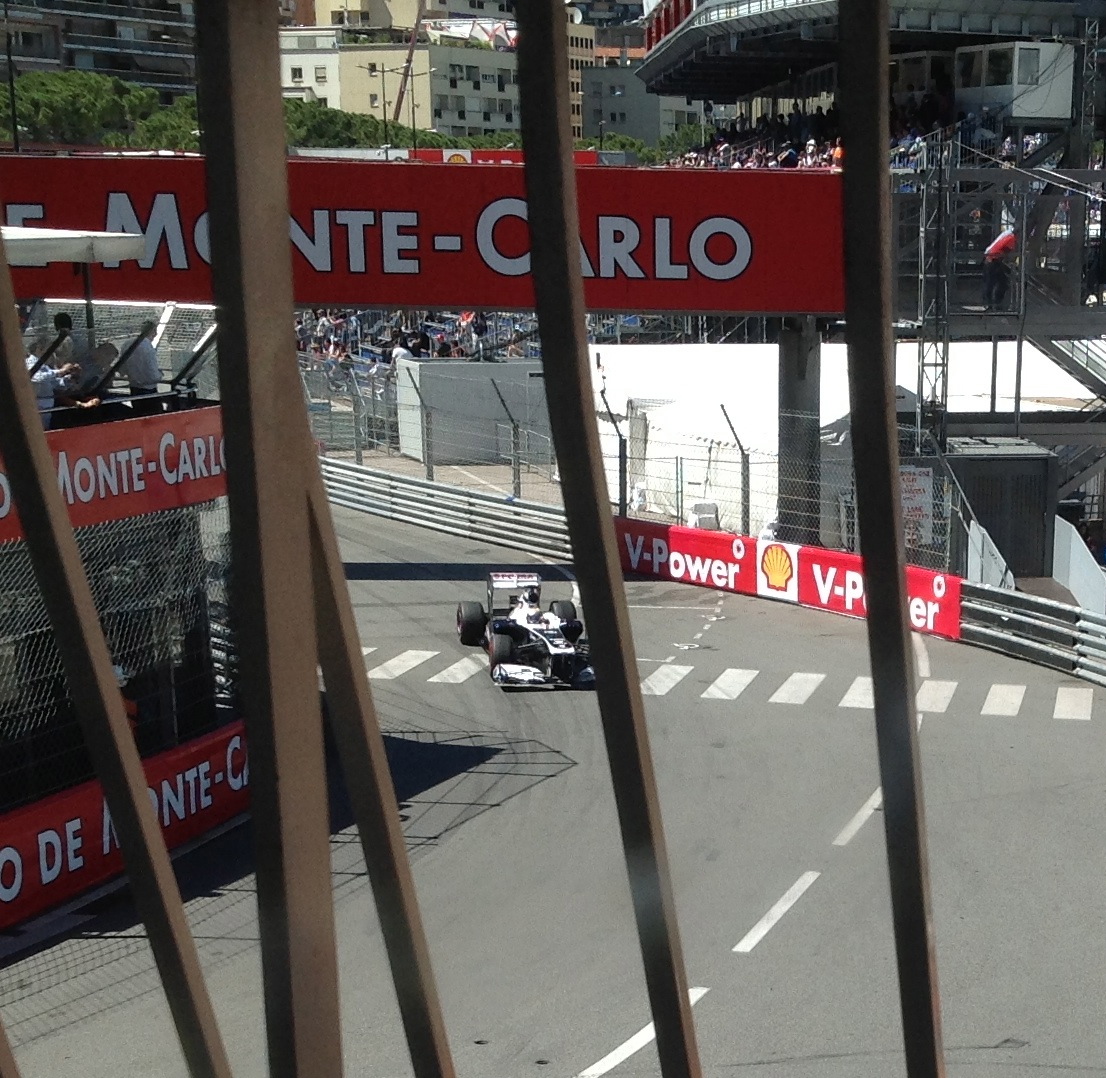
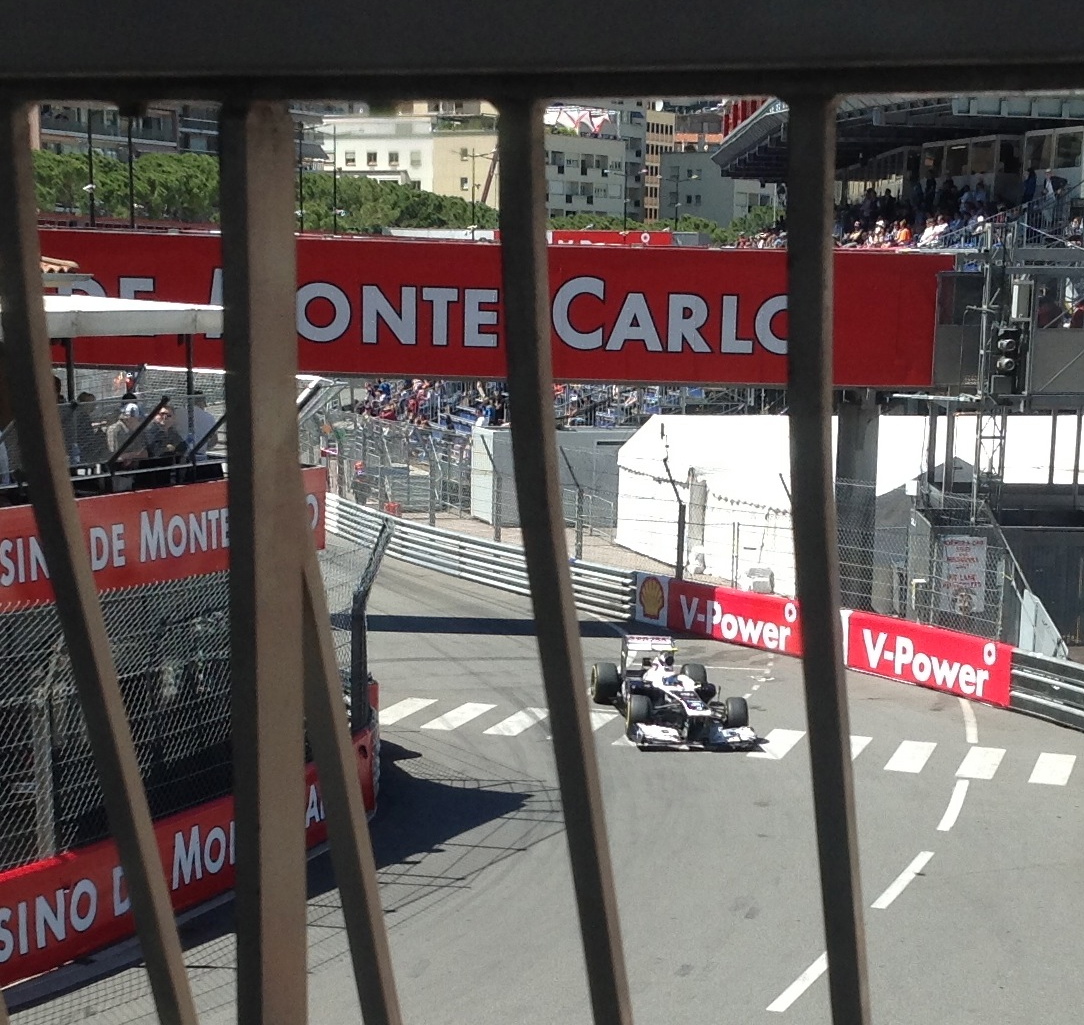
RicPastor Maldonado, as stated earlier, was almost scary to watch at Rascasse, if only because his Alesi-like turn-in (and feel) leaves him absolutely no margin at all in terms of the inside rear and the apex. With Grosjean, you’re always thinking “exit oversteer”;  with Pastor (below, top) it’s “early commitment”.  He looked knife-sharp from where I sat – and up at Casino Square, where he was blindingly late on the brakes, he was jaw-droppingly fearless – the more so because the Williams is still a difficult car.  This was the best Pastor has looked so far this year.  Valtteri (below, bottom), by contrast, was for me a bit disappointing – if only because one’s expectations are always so high with this guy. A relatively wide and frequently brake-locked approach was compromised by minimum speeds too high by far:  the back end would judder out, Walter would have to lift, opposite lock would be applied…and finally he was out of there. It was uncomfortable to watch and probably not much fun to execute.  I’m sure it’ll be better by Sunday…MAL

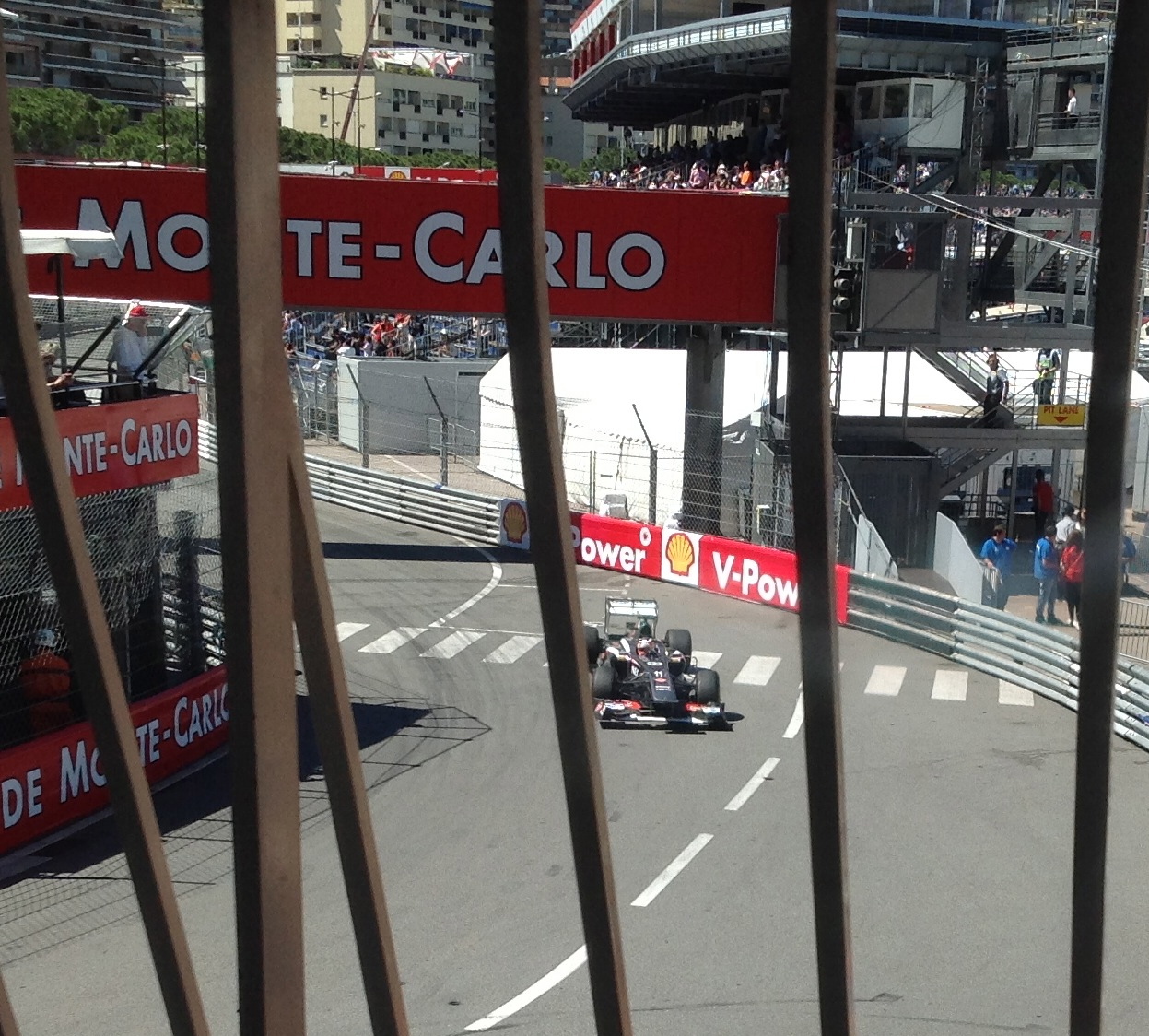
BOTSauber’s pair, by contrast, were surprisingly different from one another.  Nico Hulkenberg (below, top) had more initial steering input than, say, Romain Grosjean, and a longer corner than Daniel Ricciardo.  He played with the throttle early and, like Alonso, always gave himself a touch of oversteer before  main rotation just beyond this photograph.  He gives the impression, in other words, of asking quite a lot from the tyres and, of course, from the car.  Esteban Gutierrez (below, bottom) was for me probably the most surprising driver of  the session.  He was neat, composed, early into the corner, and displayed lots of good handwork and mid-corner patience.  He wasn’t the quickest guy out there, of course, but this was a good way to start a Monaco weekend.  From here he has a useful platform from which to build.HUL

GUTJules Bianchi (below, top) was much tighter on approach than Max Chilton (below, bottom); indeed, Jules was as early, and as rhythmic with his hand- and footwork, as Paul Di Resta.  Despite that sort of talent alongside him, Max Chilton has nonethless chosen to go the long-corner way. Yes, it leaves him more margin for error, particularly on a circuit like Monaco;  no, it isn’t as efficient.BIA

CHII couldn’t see much difference between the two Caterham drivers, Charles Pic (below, top) and Guido van der Garde (below, bottom).  Charles was pretty neat and tidy through the fourth-gear esses in Malaysia but here he was definitely giving himself a nice, soft corner entry with plenty of initial steering input.  Likewise Guido, which must be a bit frustrating for the engineers.PicJEV

Watching from La Rascasse (Part 1)

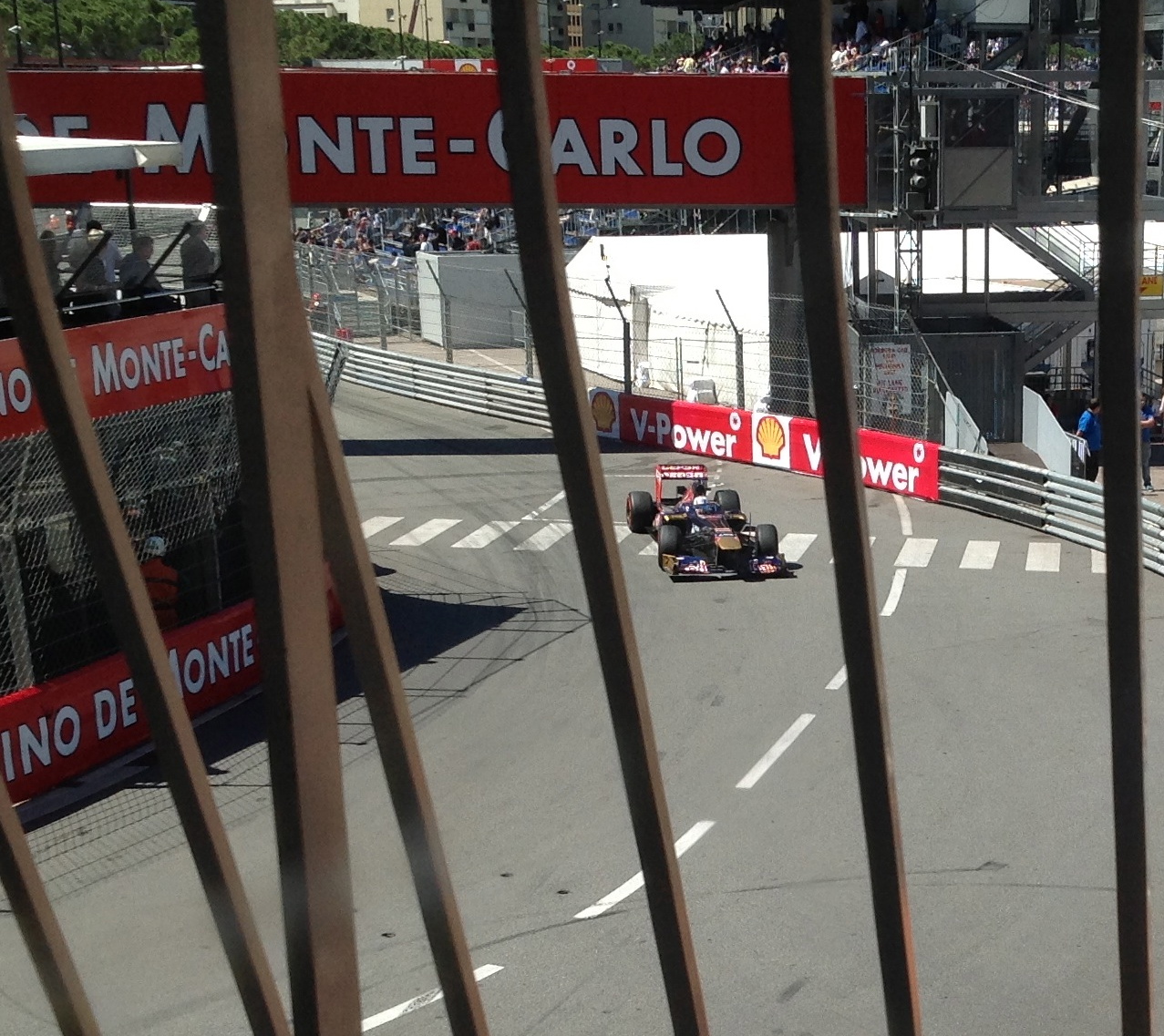
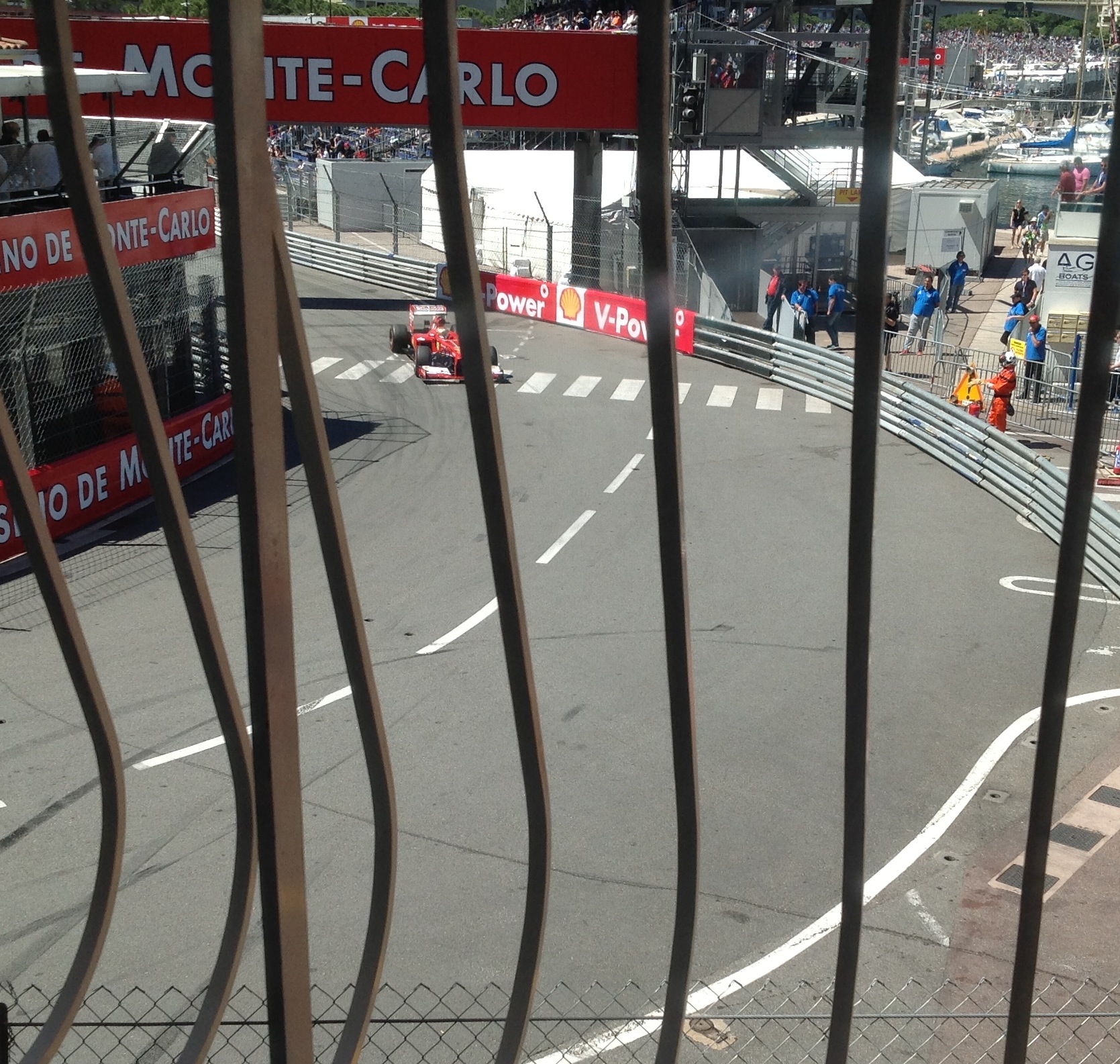
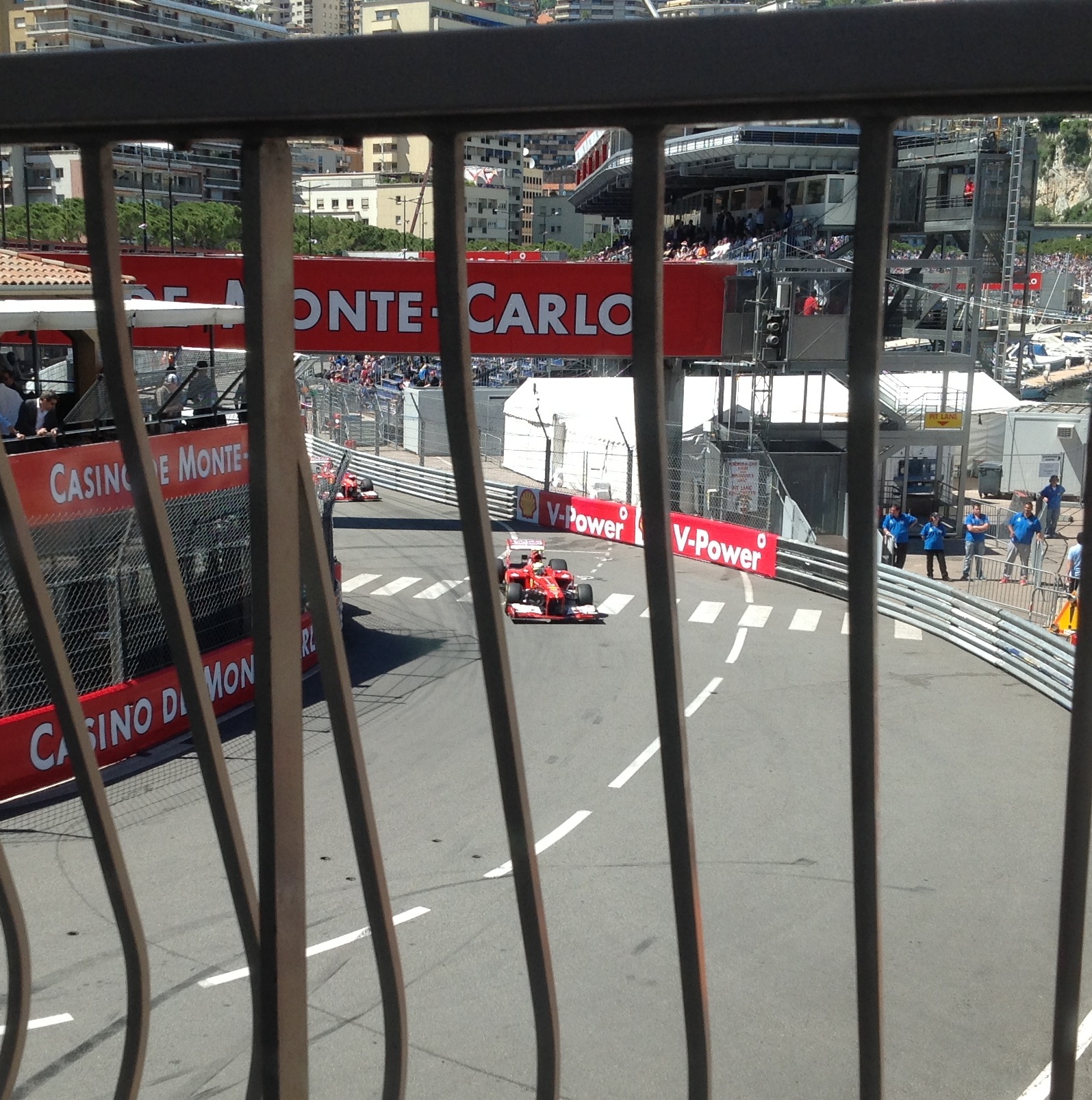
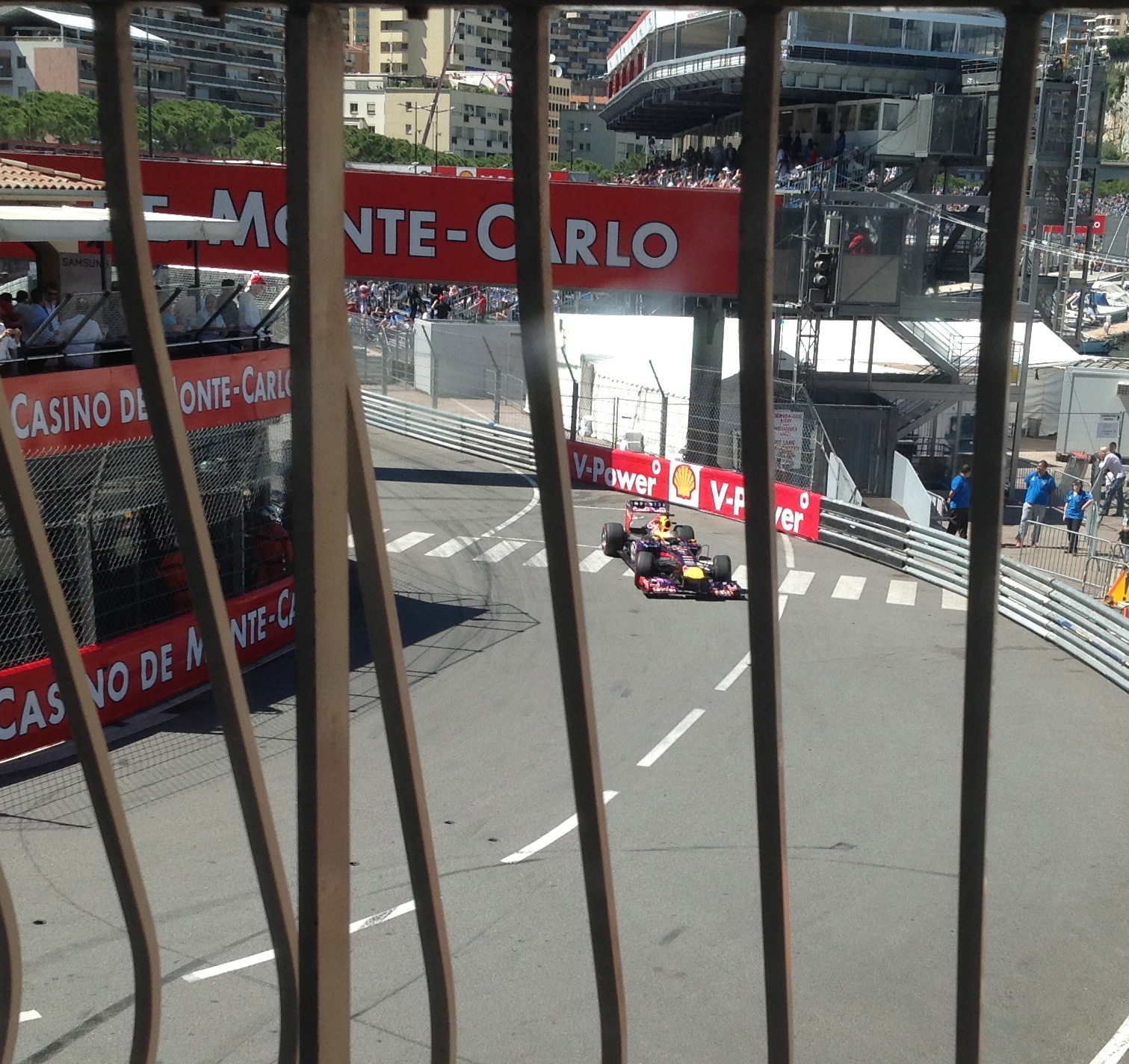
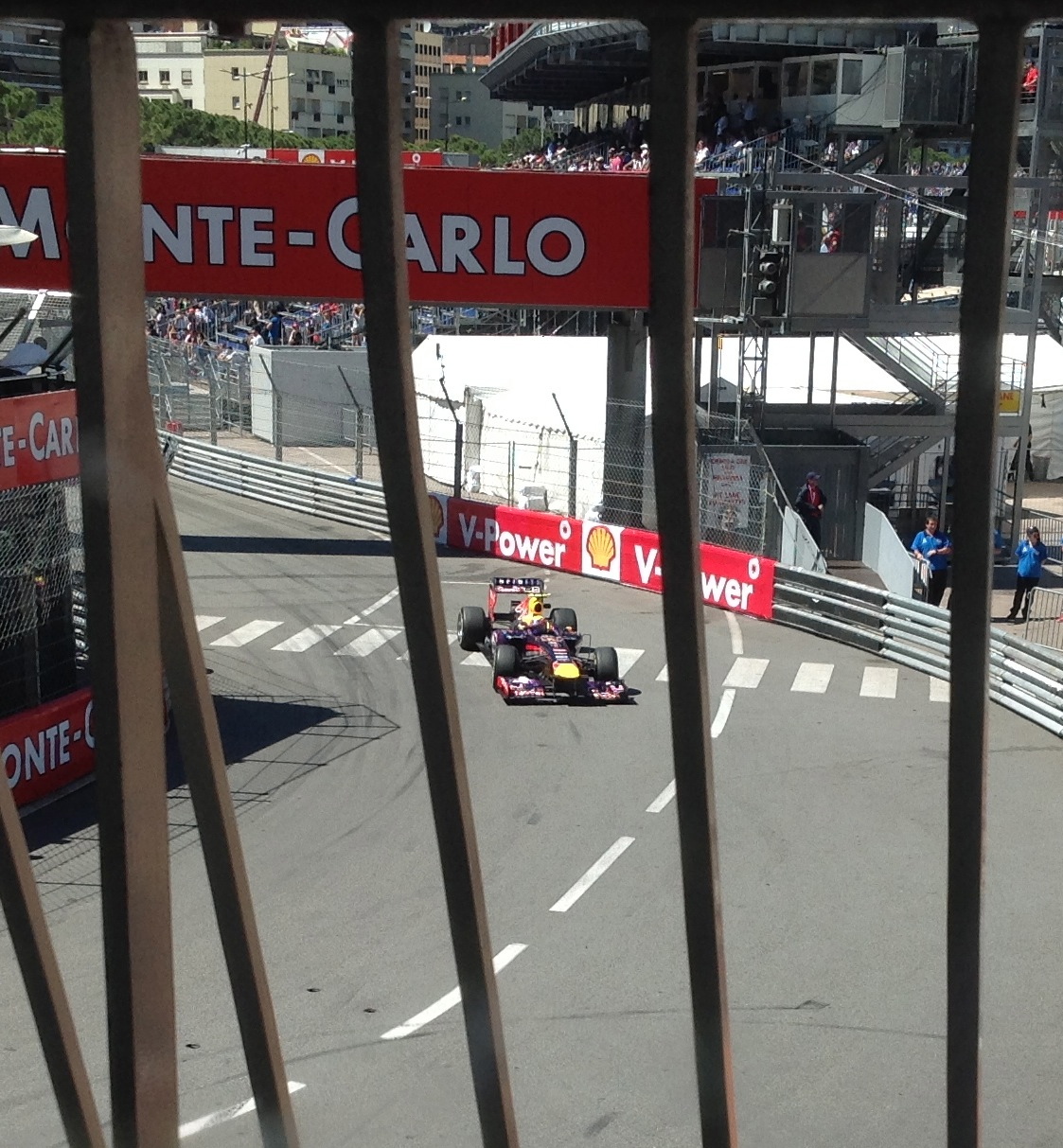
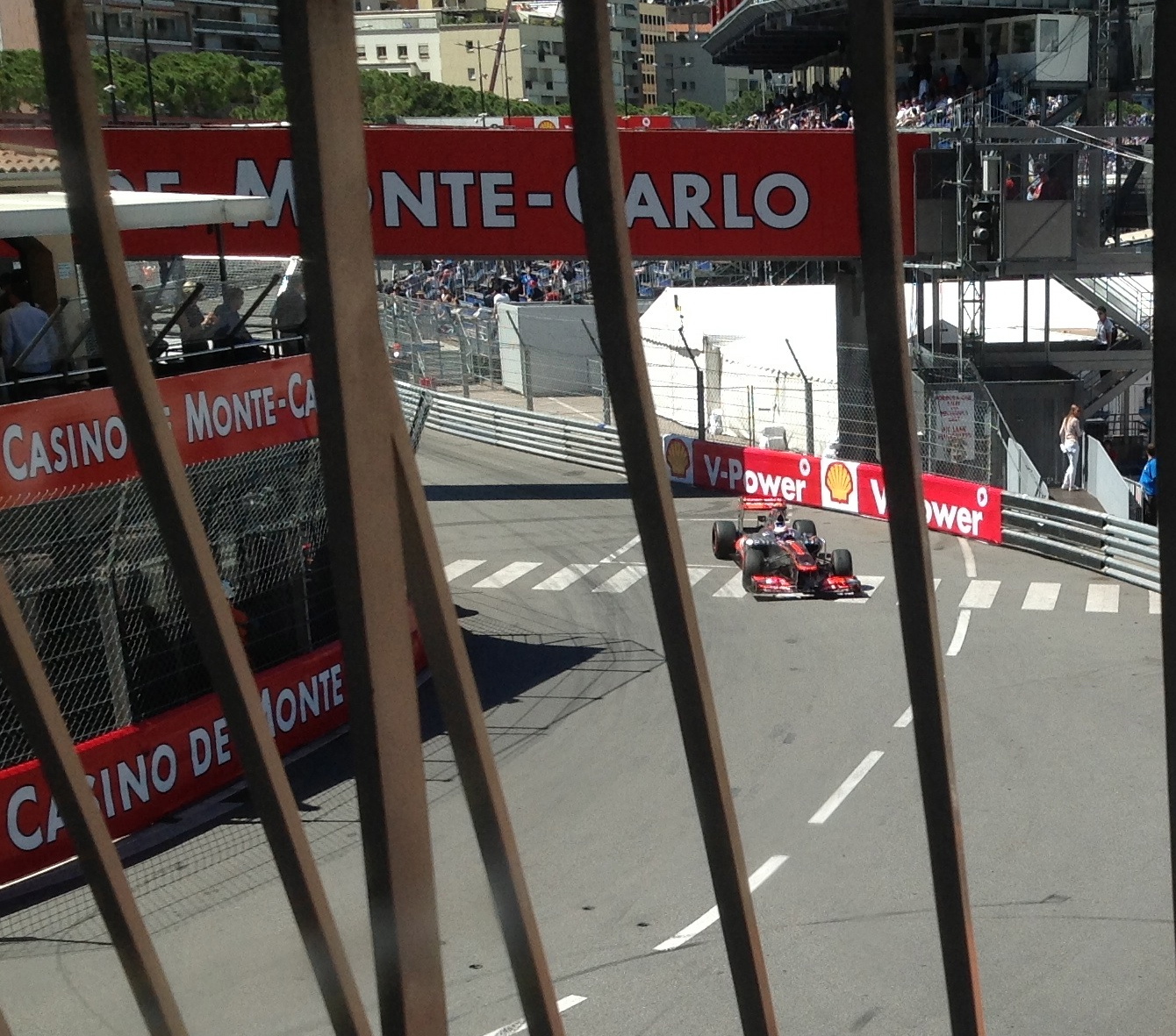
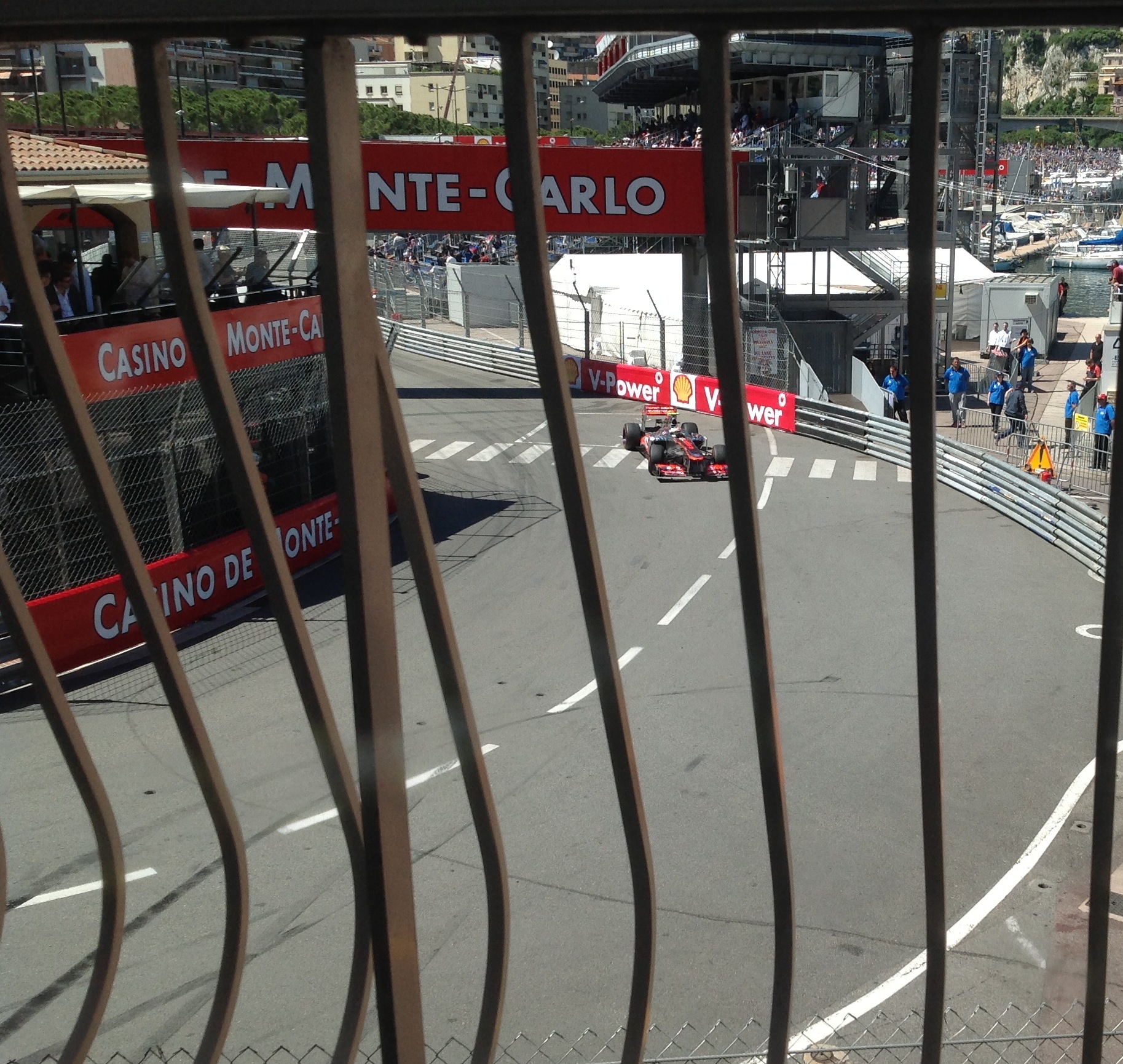
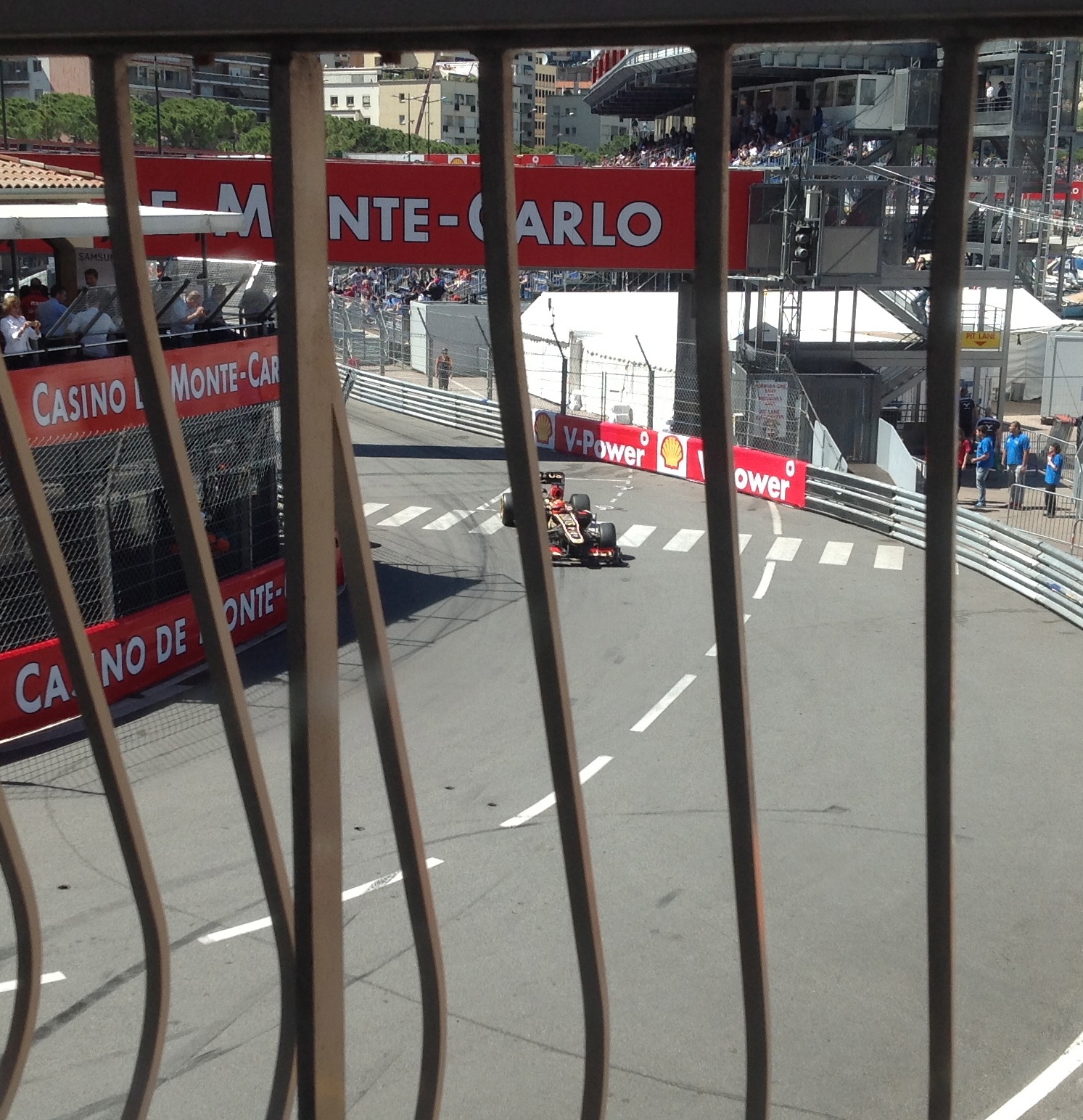
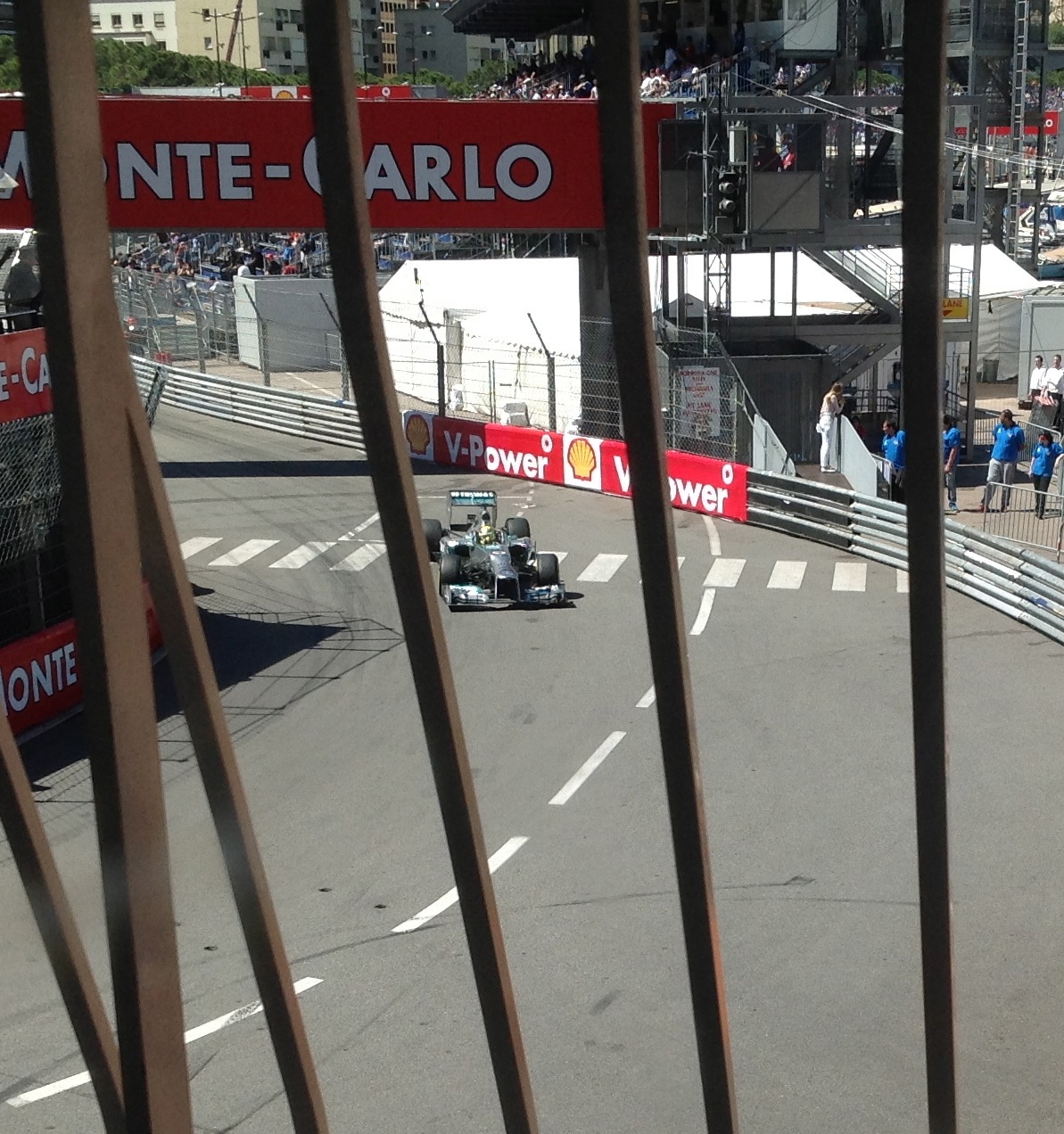
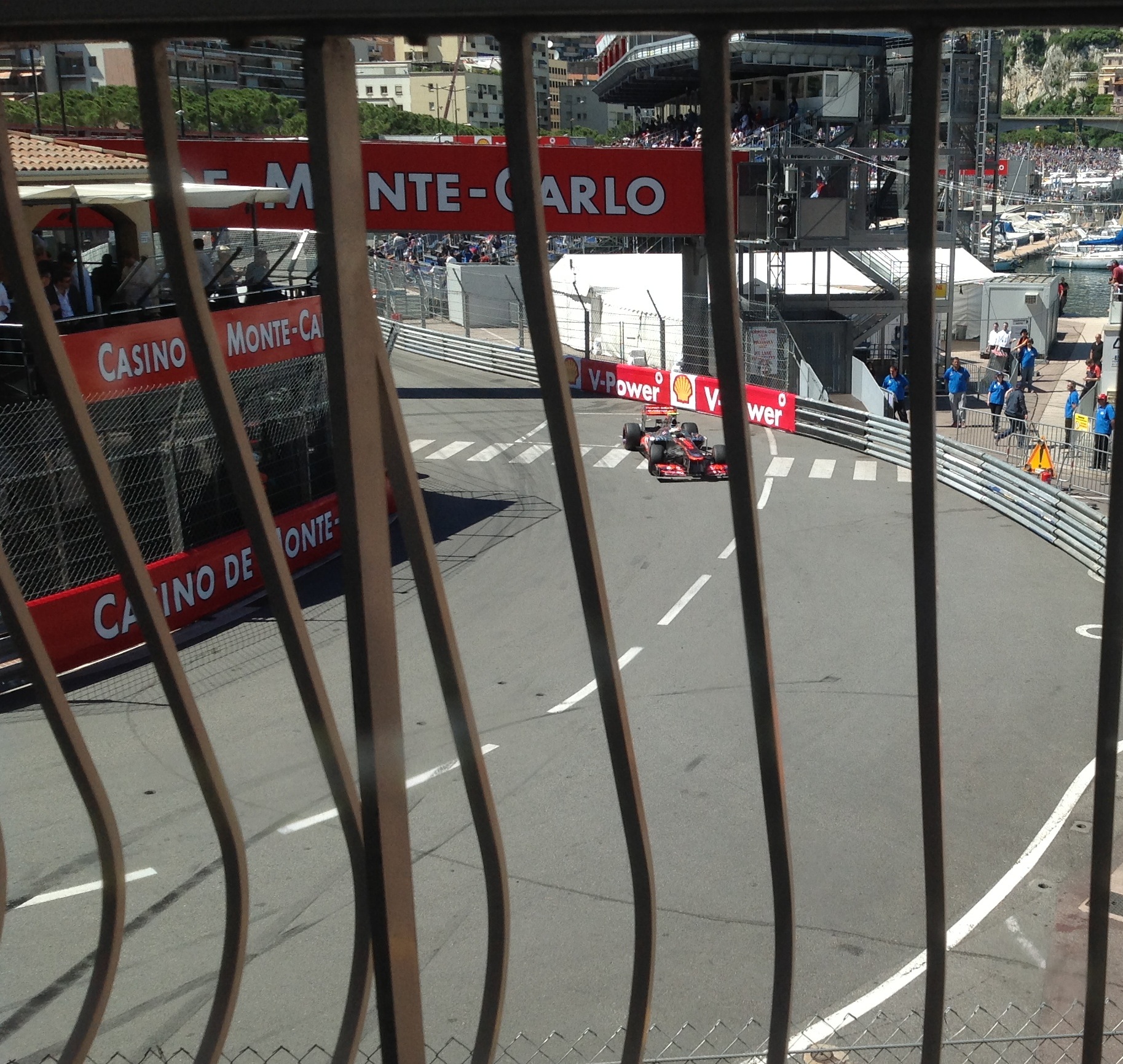
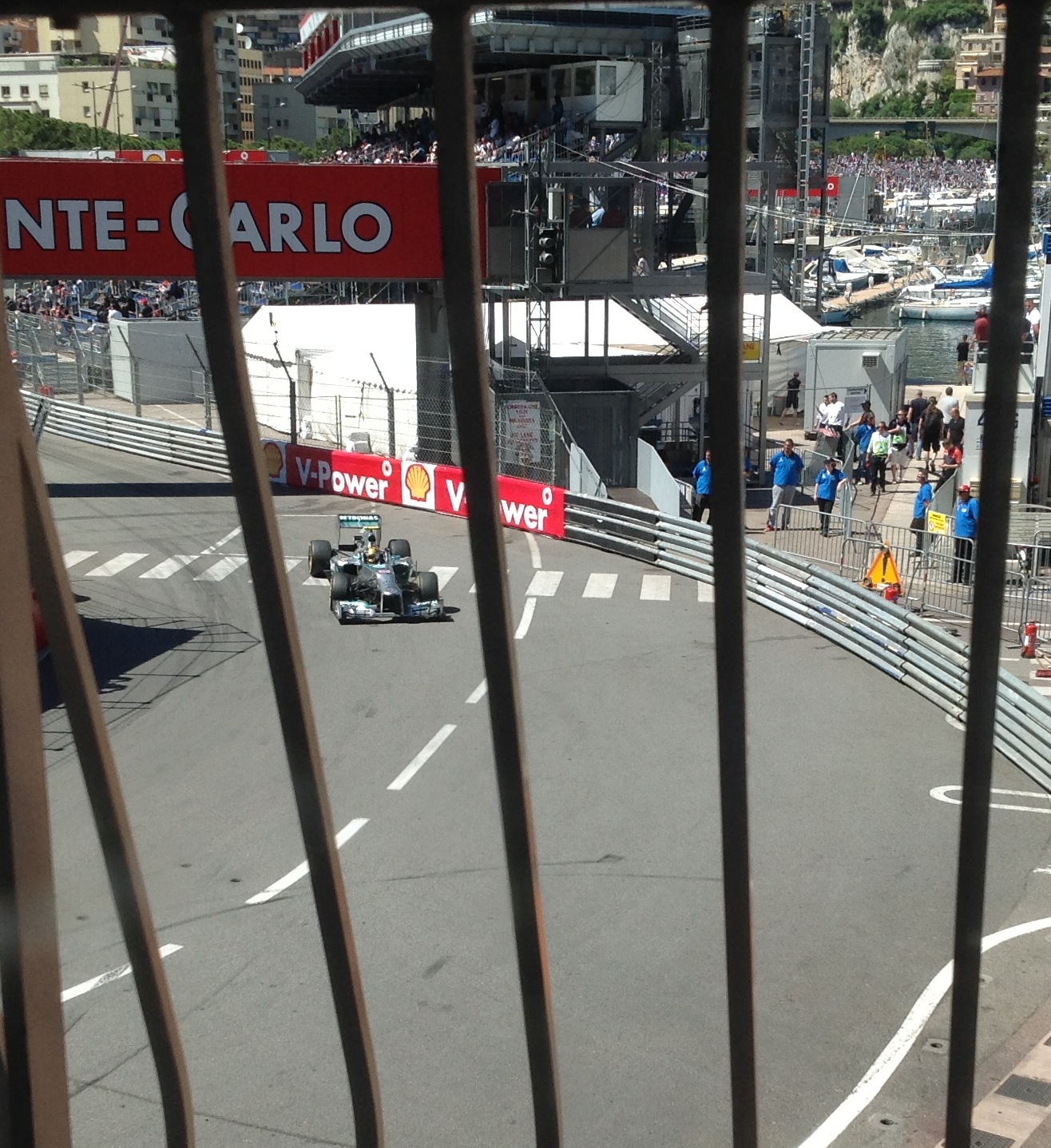
What you see here does not come under the heading of “good photography”.  It is, though, my attempt to try to illustrate some of the principles about which we talk on The Racer’s Edge and occasionally on these pages.  All the pictures were taken at La Rascasse on Thursday afternoon at Monaco (after Romain Grosjean had hit the barrier at Ste Devote!).  I wanted to try to keep the frame of the shot as near-identical as I could for every car so that we could identify some of the differences between the drivers.  I also ensured that each driver was on a quick lap or was not backing-off prior to peeling into the pit lane.  The pose they strike as they reach the pedestrian crossing stripes is pretty much their signature – and those stripes on the road of course provide some sort of useful visual reference. Some drivers, you will see, are already asking quite a lot from the car – as can be seen by the steering angles as they reach the road stripes.  Others are asking less.  Some are “softening” the entry by curving into the apex from about the middle fo the road;  others are well to the right of centre and are “extending the straight” into a relatively low minimum speed rotation-point.  I should stress that La Rascasse is far from being the most important corner on the circuit:  it is followed by a very short, sharp blast before braking into a negative-camber right-hander.  It is, though, what it is – and I can confirm that I have never seen a great Monaco driver (Stewart, Reutemann, Prost, Mansell, Senna, Raikkonen) who was not clean, methodical and super-quick into La Rascasse.   Despite the implications of these quiet, motionless images, each snapshot-in-time is in reality a compendium of the initial brake pedal pressure that was applied about a second or so before (when the cars were in fifth gear on the curving straight between the swimming pool and Rascasse), the rate of release of the brake pedal pressure (taking place as these pictures were captured), the initial steering movements (also taking place) and, yes, the positioning of the car.  In each case, in summary, the “static” cars shown here are actually a mass of dynamic forces being harnessed by the drivers.  All are different;  some are better than others. 

Fernando Alonso (left) photowas (with Pastor Maldonado) the driver who turned-in earliest to Rascasse.  He refrained from applying any soft of substantial steering lock until he was right at the apex (out of the photograph to the bottom left), and this he did with increasing power.  He looked superb, I thought.  The back of the Ferrari would always skip slightly as he rotated the car, which probably meant that his minimum speed was relatively low – but there is no doubt that from the pedestrian crossing to that minimum speed point he was quicker than anyone on the circuit.

Felipe MassaMassa (right) wasn’t a lot different from Fernando… but was different nonetheless.  He braked more to the centre of the road and thus approached the corner with a slightly “softer” line.  This gave him a slightly “longer” corner – ie, he had to cover more road and, thus, he put more initial lateral energy through the tyres for longer.  Felipe was very finessey with his steering inputs and, like Fernando, always honed-in to a lowish minimum speed, the better to rotate the car.

I was surprised by the massive differences between the Red Bull drivers, Sebastian Vettel and Mark Webber.  Although the positioning of the two cars looks fairly similar in these two pictures, look closely at the amount of steering lock SebSeb has applied (relative to Mark).  This was absolutely typical of what we saw all afternoon.  Seb (right) would approach from a relatively wide angle and crank on a massive amount of lock as he was releasing the brakes.  The result was understeer – driver-induced (very graphic) understeer.  Could it be that Seb was working on protecting the rears?  Perhaps.  Mark, Markby contrast, was Alonso-like with the steering applications, even if he was leaving himself a slightly more open approach. I’d say Mark’s Rascasse (right) leaves him slightly more margin for error (or for the unexpected) than does Fernando’s but that their inputs were about equal.  Again, brilliant to watch.

Both McLaren drivers created very “long” corners from wide entries.  Jenson’s inputs (below)Jenson were more svelte that Sergio’s but Sergio began the corner with slightly less initial steering input, in turn enabling him to ask slightly less from the front tyres.  Equally, Sergio (below right)Perez
had a more substantial final rotation.  When you see these two drivers alongside one another like this, you wonder how good it is for a team to be running drivers of such similar style.  It would be interesting, for example, to see how the MP4-28 would perform at the other end of the spectrum – the Alonso/Webber/Raikkonen end – or perhaps at the Vettel/understeer end.

I didn’t get to see Romain, as I say, but I can tell you (from Thursday morning) that he was about half-a-car’s length to the left of Kimi as he crossed the painted lines and was using about a Webber-dose of steering at that point.  Unlike Mark, who would deliberately await the moment of final rotation before accelerating flat and clean, Romain teased the throttle a little, like Alonso and thus ran right out there on the ragged edge, leaving no room for error.  The Ste Devote shunt, I think, was no surprise.  Kimi was of course just beautiful to watch, even if he was locking up the front brakes more than we usually see.  He wasn’t quite as far to the right as Alonso and Maldonado (or Di Resta, as it happens) but his initial steering movements were very slight and very small – a mile away from Vettel’s.  Then, in one clean movement, Kimihe would tuck in the front for the major rotation and accelerate without fuss towards the exit of the corner.  Totally repeatable and extremely efficient (left).

The differences between Nico Rosberg and Lewis Hamilton were small but significant.  Both drivers turned-in early, like Kimi and Fernando, with delicately-small initial steering inputs, but NicoNico (below) did so from about half a metre further to the right, giving him a slightly shorter corner.  This he managed in Prost-like fashion, never looking unruffled or out of synch. Lewis (below) Lewiswas thus a tad less impressive than Nico through this section of road – which, for me, was a surprise, I have to admit.
Part 2 of our views from Rascasse, featuring the remaining cars on the grid, will follow shortly.

Weekend of a Champion: F1 in the raw

S2550025There have been very few F1 films like Weekend of a Champion – films in which one of the world’s best directors has been invited inside our sport to do with it what he wills.  Roman Polanski played the role of that director at Monaco, 1971.  He met Jackie Stewart socially, he became captivated by the man’s aura…and so he made a film about him.  At Monaco.  Over a race weekend.

The result, in my view, was brilliant.  We see Jackie and Helen Stewart in their hotel suite, chatting about Jackie’s shaving or his lack of appetite.  We see the always-cool Editor of l’Equipe, Edouard Seidler, walking down the famous Monaco hill with Jackie and Helen, pulling at his ever-present Gitanes.  We see Francois Cevert, wide-eyed and barritone, asking Jackie about gear-change points and ratios.  We see Yardley BRM stickers on the toolboxes of the Tyrrell mechanics.  We see Jackie talking about that famous gear lever knob with the ever-dour Roger Hill.  We see all the details that the TV feeds then – as now – never show(ed).
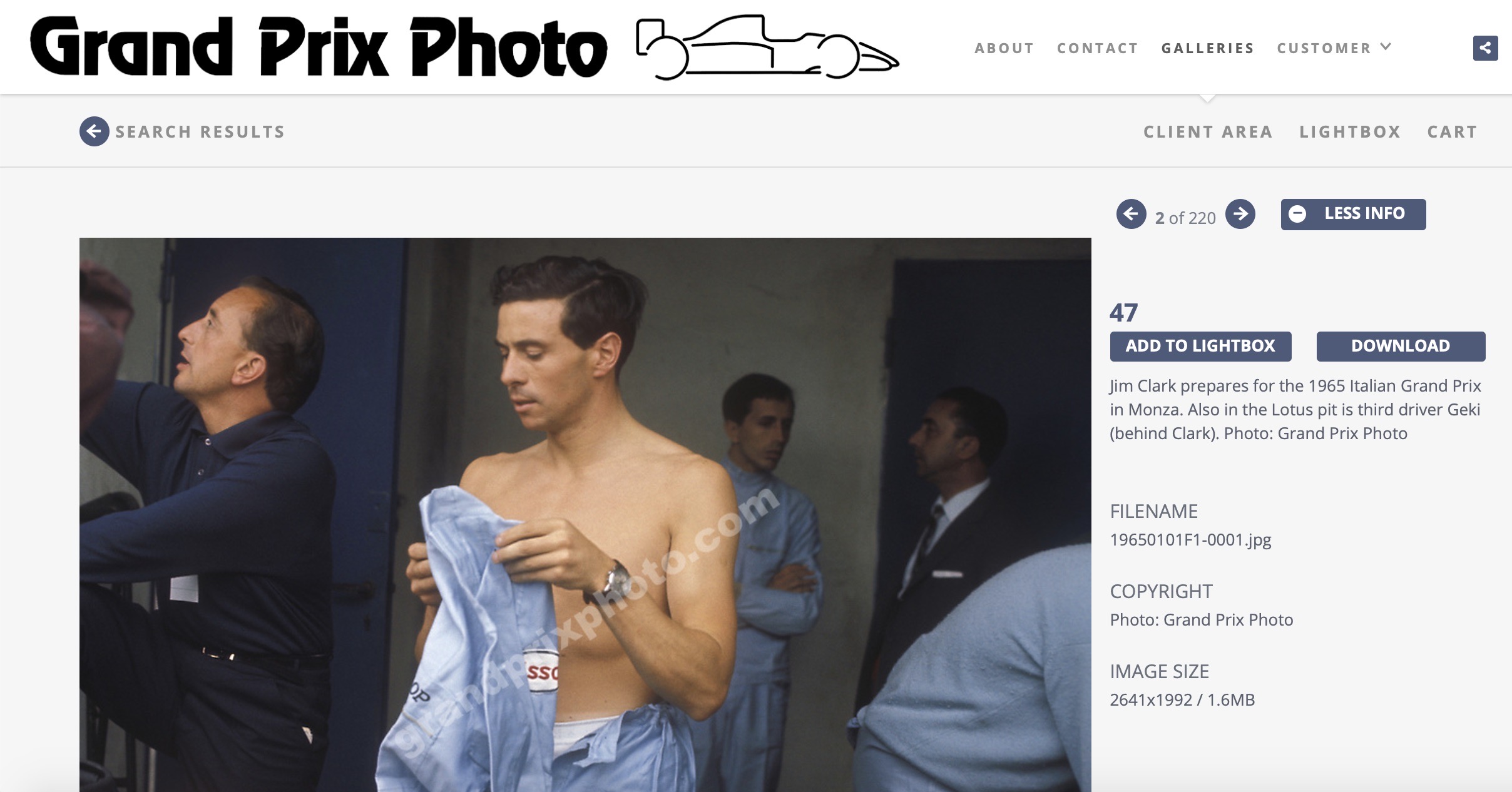
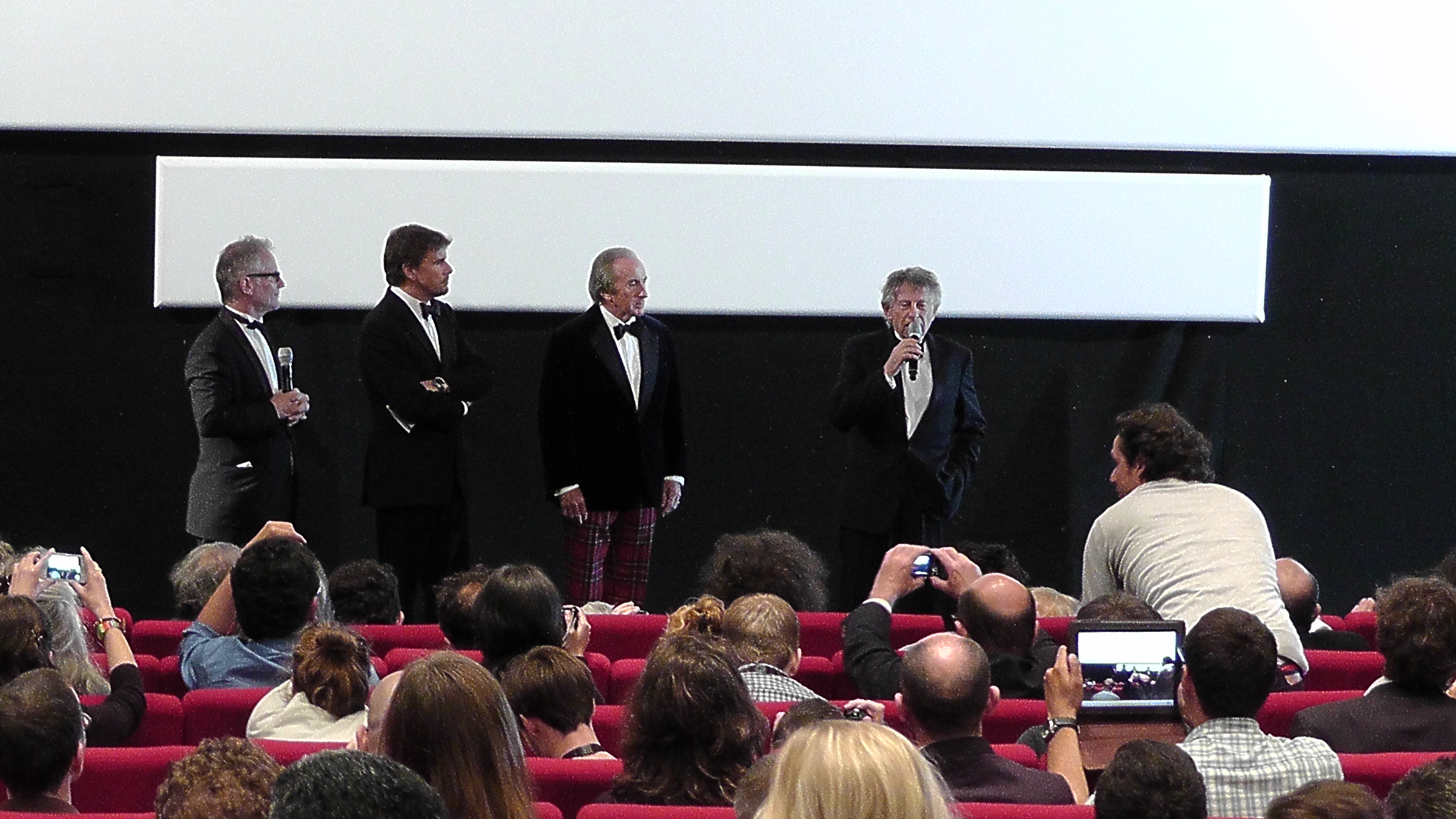
Weekend of a Champion was this week re-screened at Cannes (where it won an award in 1972) because it has been re-mastered and added-to.  We reach what we think is the end…but instead we see Jackie (now Sir Jackie) and Roman, in the same Hotel de Paris suite, 42 years on.  They talk about Jackie’s sideburns in the film, and about Jackie’s fear, that day back in 1971, that race day would be wet.  “The Goodyears were just so much slower than the Firestones in the wet around there,” says Sir Jackie, reminding you that not once in the original film does he speak badly of Goodyear, despite the frustrations.  They talk about the terrible death-rates of the time and Roman, quite rightly, highlights the “success” of Stewart’s campaign for safety.

Mostly, though, they have a laugh.  And this is what is so memorable about Weekend of a Champion.  Stewart, in what he now looks back as a “very trendy” time, comes over in situ as the lithe, nimble, athlete-superstar that he was.  “That is why I made that film,” Polanski told me last night.  “I made it because Jackie was this amazing driver who was also so articulate, so lucid.  He is the film.”

And so you watched the reactions of some of the guests.  I sat behind Damon Hill, who was seeing the extensive footage of his father for the first time.   “It was a bit scary seeing my Dad in that form but I loved the film.  Just loved it,” he said afterwards.  Alain Prost, too, was captivated.  “Just amazing.  It reminded me of my early days in F1, when things were also changing so quickly.”  Allan McNish, too:  “You can see why Jackie is who he is.  Even then, he was so much more than just a racing driver…”

I cornered Jackie afterwards and pursued some details:

“Nice to see that NAZA race suit again.  And the lovely Westover shoes…”

“Och no.  They weren’t Westovers.  Everyone thought they were.  You know what they were?  Hush Puppies.  I needed a bit of extra sole support because I always walked on my toes and I was beginning to have problems.  Everyone at the time said you had to have very thin-soled shoes for maximum feel but it was like the gloves:  I started to wear gauntlet gloves with much thicker palms with flame resistance.  Didn’t change my feel at all….”

“Why were you so on edge that weekend?” asked McNish at the star-bedecked post-film party.

“I didn’t know it at the time, but I had a blood imbalance that would become a duodenal ulcer in 1972.  I wasn’t sleeping well.  I was tetchy.  You can see it when I get annoyed with that photographer before the start.  That shouldn’t have happened. It was a sign that things weren’t right.”

We had a laugh about the famous scene in which Jackie and Roman, on the inside of the entry to Casino Square, watch F3 practice.  “Now he’s got it all wrong,” says Jackie, pointing to John Bisignano (who sportingly would say a few years later, “that was the end of my racing career!”).  “But he’s ok.  And so is heHe knows doing…”

“Do you remember who that was?” I asked.

“No.  Who?”

“ Looked like James Hunt.”

This is the film’s most prominent feature – its exposure of the warts as well as the laughs.  It is a reminder that F1 was, and is, a never-ending movie, a 24-hour, 365-day TV show in which all the players must, and should, co-operate.  Certainly this was Stewart’s philosophy of the time.  I loved, too, the post-race Gala.  Jackie and Helen are there with Princess Grace (looking much more like Grace Kelly than the podium photos ever allowed), with the Prince, with Ringo Starr and others – but so, too, are many of the other drivers of the day – the guys who hadn’t won in the afternoon.  Pedro Rodriguez.  Jo Siffert.  Graham Hill.  Jacky Ickx.  Ronnie Peterson.

“When I see that film, I just think of the romance of it all,” said Allan McNish, walking back in a late-night drizzle to fetch his car.  “They were all at the post-race party.  That was lovely to see.”

Weekend of a Champion will be re-released soon in France by Pathe and in other regions thereafter.  This latest version was Co-Produced by Mark Stewart Productions. 

Post Navigation