peterwindsor.com

…chance doesn't exist; there's always a cause and a reason for everything – Elahi

Archive for the category “F1”

Gilles – in the mould of Nuvolari

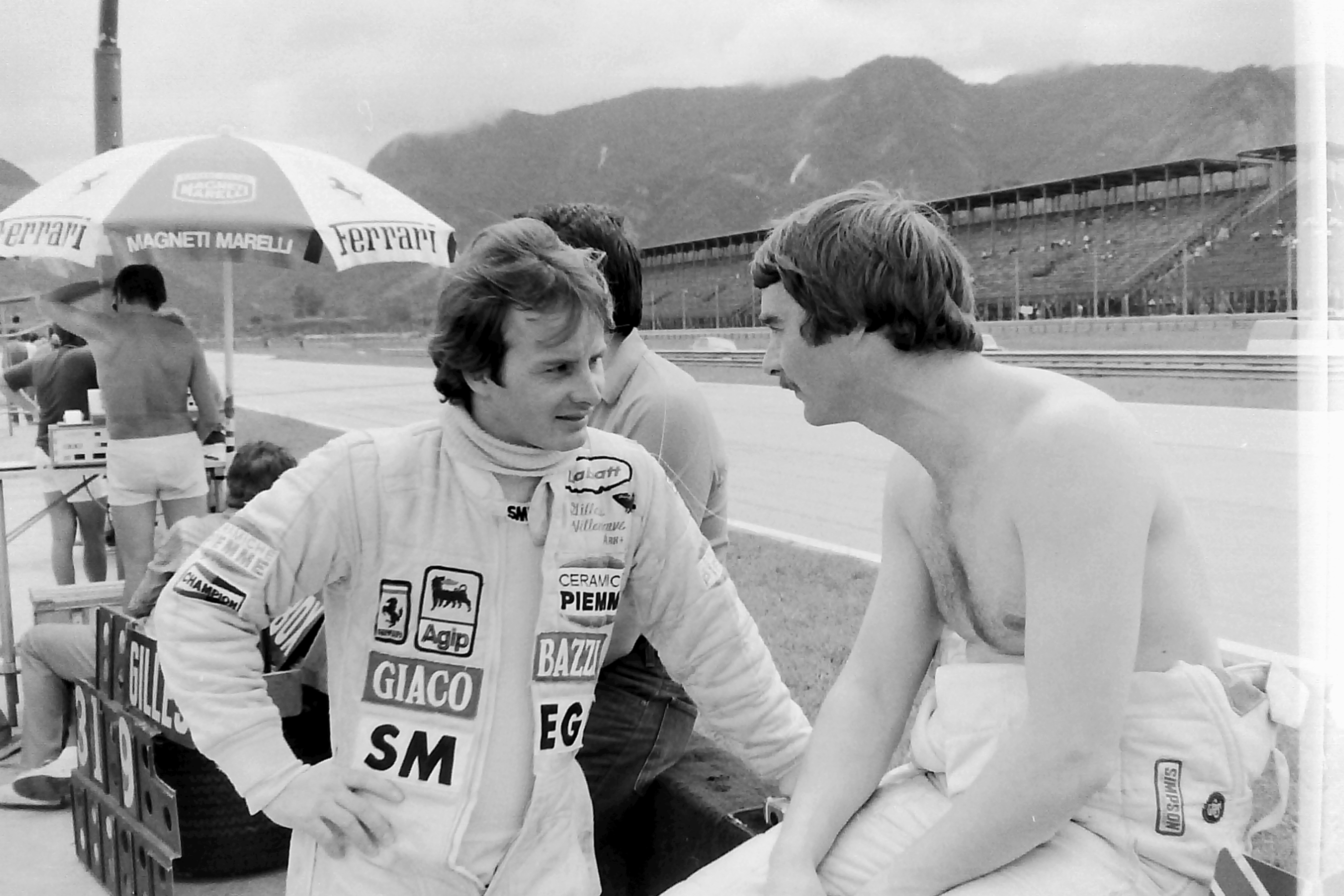
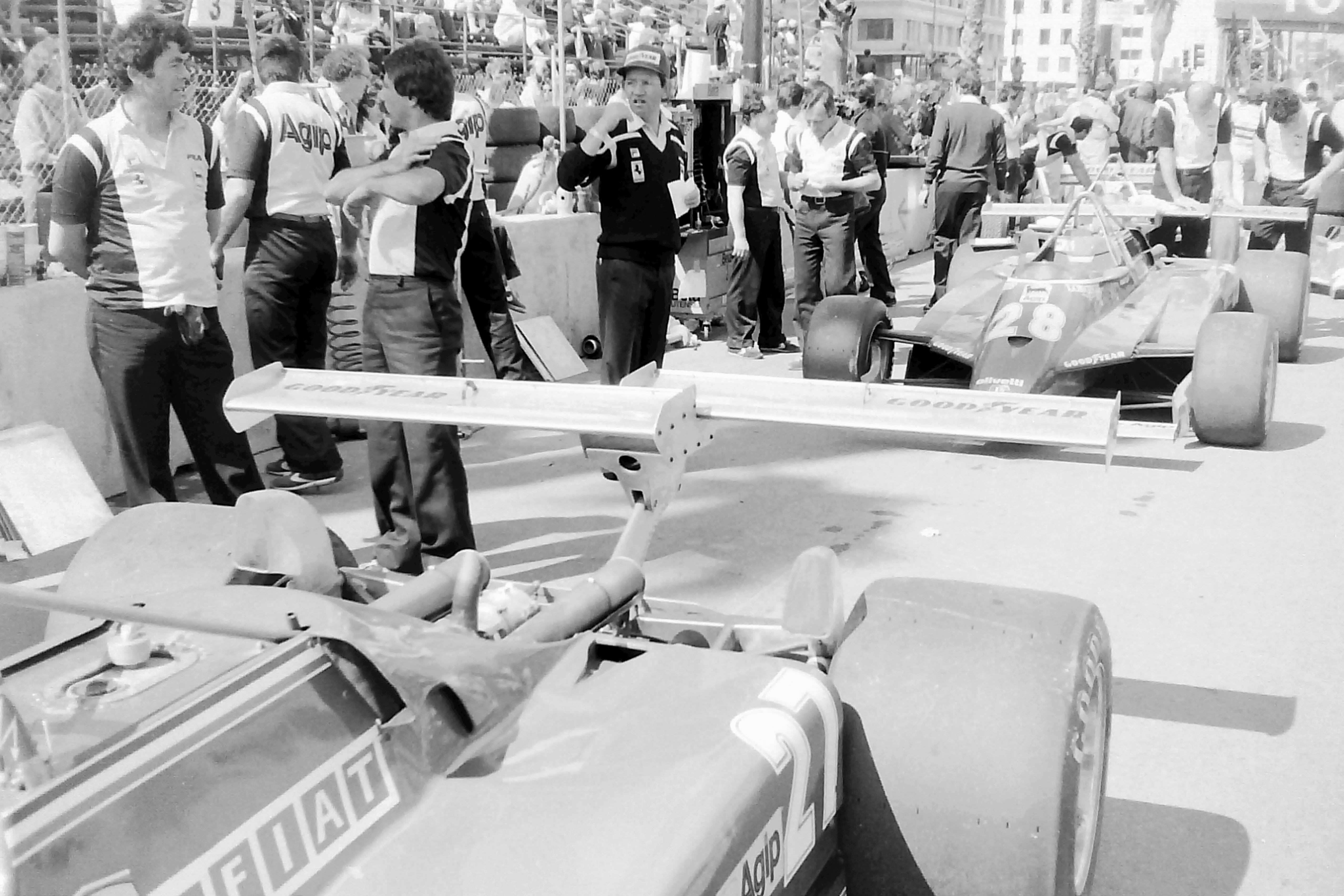
We enjoyed his supreme, audacious talent for only a few, dazzling years.  And then the shining light was gone, extinguished by a stupid rule that obliged drivers like Gilles to take additional risks…as if there weren’t enough already.  Thirty years on, here are a few of the photos I took of my friend – and some notes I made in May, 1982.  
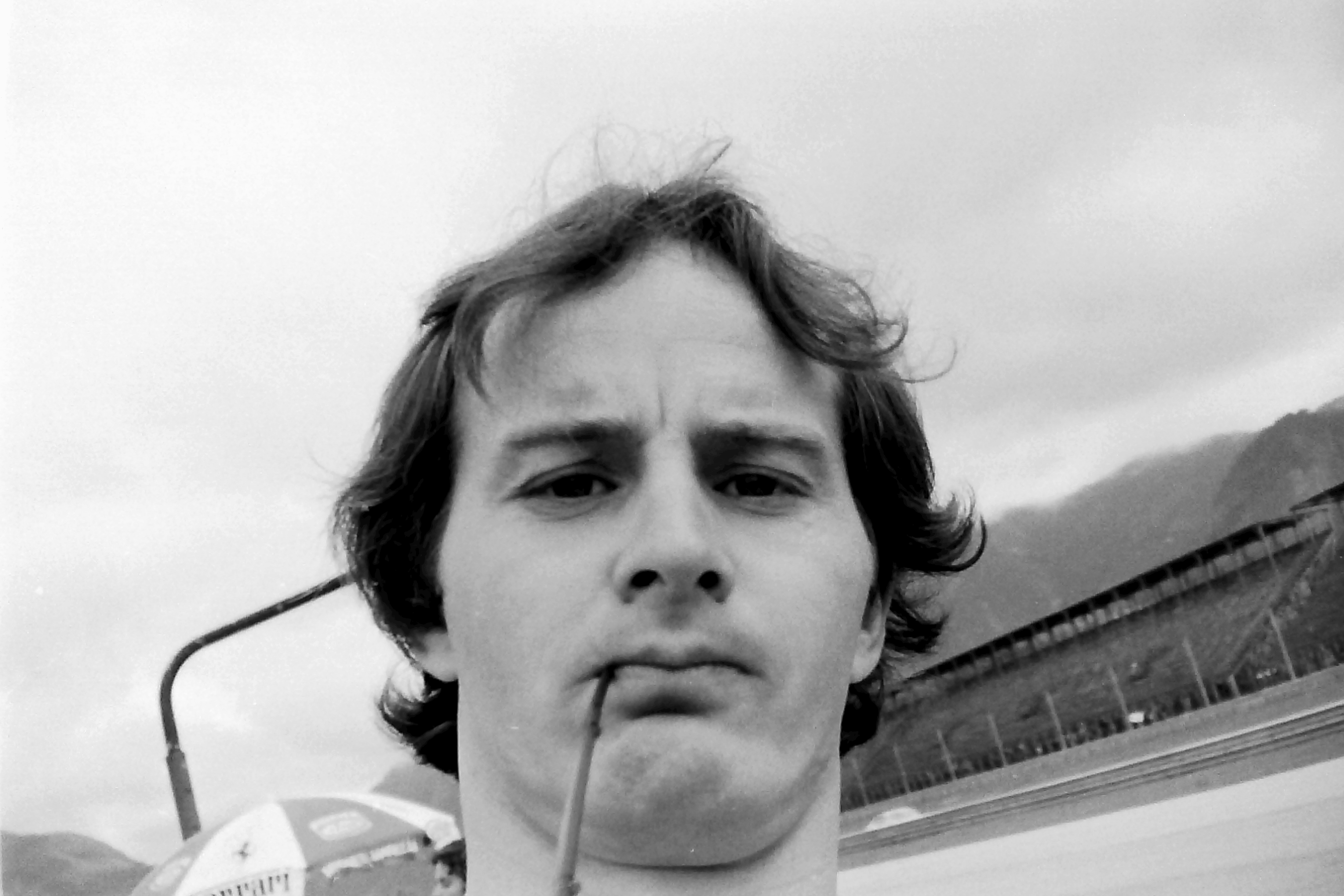
Brazil, 1982:  spying a camera around my neck, Gilles grabbed it and snapped this self-portrait


I was standing by the phone booth in the Zolder paddock on Friday afternoon when I saw Gilles, lost in a big, yellow Ferrari transport van, sitting up there in the passenger’s seat.  I waved.  He beckoned the driver to stop and wound down the window.

“Which hotel are you in?”, he asked.

“The Mardaga,” I replied.  “Quite close to the track.”

“Ok.  Don’t worry.  I thought you might like a lift to the Post House.  I’ve got the new Augusta here.  You haven’t had a ride in it yet, have you?”

I hadn’t, although my next project was certainly to fly to a race with Gilles.  It was his idea.  He wanted everyone to enjoy his new baby.

With that, Gilles drove away.  I never spoke to him again.  The next day, he fell victim of exactly the sort of racing accident he had been forecasting.  He was on a flying lap;  there were ten minutes of qualifying remaining;  and he was on his third (“mixed”), last,  set of qualifying tyres.  Didier Pironi, his “team-mate”, had annoyingly just bettered Gilles’ time by 0.1sec.  In total, 30 cars were running.  What with the qualifying tyre situation, and the lightweight Cosworth cars, there were more guys out there, cruising the lap, than there were cars going quickly.  The day before, Gilles had been irritated yet again by the traffic problem.  “It’s no worse that usual, I guess – which means it’s very bad.  Every time I was on a quick lap I came across someone going slowly.  Like I’ve said a million times before, it’s crazy being allowed only two sets of tyres.  You’re forced to take ridiculous risks.”

In one such incident that Friday, Villeneuve had to brake hard to avoid running into the back of Jochen Mass’s March.  Indeed, the Ferrari incident report from that day, in a tragically prophetic statement, said: “The French Canadian expressed himself absolutely amazed at the ‘early braking’ habits of some of the slower drivers, and confessed to having a couple of nasty moments when he nearly collected a Renault and a March…”

So it was the following afternoon.  Villeneuve, on the limit and heading for a quick time, crested the rise after the first chicane to find Jochen Mass’s March ahead of him.  Jochen says he was going slowly – in fifth gear, but certainly not flat through the left-hand kink and the short straight that follows it.  “I saw Gilles in my mirrors,” he said later, “and expected him to pass on the left.  I moved right and couldn’t believe it when I saw him virtually on top of me.  He clipped my right rear tyre, bounced off the front and was launched into the air…”

Mass went on to say that he could imagine how Gilles had reacted.  He was on the limit, there was a slow car ahead of him, he didn’t want to back off and he had to make an instant decision – left or right?  “I have been in a similar situation at that place before,” said Mass.  “It’s difficult, because although it’s a left-hand kink it’s possible to get by on the outside.  He obviously chose to go on the outside and there wasn’t room.”

From Gilles point of view, of course, it would have been much less decisive.  He would have seen Mass in the middle of the road – would probably have thought about Friday for a millisecond – and then he would have had to have made an instant call about which side Mass was going to move.  With a left-hand kink approaching, he obviously thought Mass was going to move over to the inside.  Thus Gilles went to the right.  Thus the impact.

Travelling as slowly as he was – particularly in the closing minutes of qualifying – Mass in my view should have been either on one edge of the road or the other and making it very clear on which side he wanted to be passed.  Critics of Villeneuve say that he had the option to back off if he was unsure;  as Gilles said so many times, however, the pressure of running only two sets of qualifiers behoved the drivers to take risks and to gamble.  And on Gilles the pressure was even greater:  he was virtually a lone crusader against the danger of running only two sets of qualifiers.  All the other drivers, wary of stirring the waters, remained more or less quiet.

The impact, when the 126C hit the ground, was catastrophic.  The seat belts pulled out of the rear bulkhead of Harvey Postlethwaite’s carbon-aluminium chassis and Gilles, still in his seat and holding the steering wheel,  was thrown onto the side of the track through two layers of catch fencing.  Gilles’ GPA helmet – fastened around its based by a “hinge” system – came off and rolled to a halt a few feet away.   From the point of impact with Mass’s March, the Ferrari had flown and crashed through a debris field about 150m long.

Mass stopped.  So did Didier Pironi.  Mass led Pironi away.  And then, ten minutes later, Gilles was flown by helicopter – not his own – to a nearby hospital.  He was gravely injured, unconscious but showing vital signs.

He had no chance, though.  He passed away shortly after 9 o’clock that night.

So it was over.  Just like that.  A stupid accident caused by hitting a slower car – although the real cause, as Mass pointed out, was the lunacy of having to use only two new sets of qualifiers.   Eddie Cheever would talk endlessly about how close Gilles came to hitting him at Rio.  And, in South Africa, during the drivers’ strike, increasing the number of qualifying tyres was Gilles’ Number One topic of conversation.  The other drivers soon tired of it all.

Just as we had to await Niki Lauda’s accident to see how right he was about the Nurburgring, so it was left to Gilles, in the saddest of ways, to demonstrate the point about qualifiers.   Too late, the future would have much to say about the tyre rules.   Racing, meanwhile, lost its heart and its soul.

There was no question that Gilles was on edge during practice at Zolder.  The comments he made about Pironi after Imola showed no signs of mellowing.  He was incensed even more by the people who had since declared Imola “a great race”!  “That wasn’t racing,” he said with disgust on Friday at Zolder.  “Every time I backed off Pironi passed me.  Then I had to fight back to take the lead.  I don’t call that a race…”

Gilles walked around the Zolder paddock quickly, pointedly.  The days of laid-back Gilles were over.  From everything he did, from jumping from the back of the new pits complex to the roof of the Ferrari transporter, or sitting impassively in his 126C, arms folded, while mechanics prepared the car for his final, flat-out run, you got the impression that Gilles was saying, “Right.  The playing is over.  From now on I take no prisoners.”

And so Gilles, in those last few days of his life, engendered the one thing he had always lacked – ruthlessness.  Before Imola he was full of praise for his “team-mate”.  He even came to Pironi’s defence when Joanne pointed out that it was quite rude of Pironi not to have invited Gilles to his wedding.  “He probably just forgot,” said Gilles, ever the noble soul.  In 1978 Gilles had been humble enough to say that he was “delighted” to be Number Two to Carlos Reutemann at Ferrari.  Ditto in 1979, when he agreed before the Italian GP to let Jody Scheckter win the Championship, even though he, Gilles, was still right in the title race with a serious chance.  “Don’t worry, Jody.  You can help me win it next year,” he said.  The next year, though – 1980 – the Ferrari turned out to be a dog.   A lazy dog.    Of course Gilles believed that he was quicker than Pironi but never, prior to Imola, would he concede that Pironi was any sort of threat – political or otherwise.

After Imola, that changed.  Tougher than ever, Gilles was in the process of consolidating his position as the world’s Number One driver.

Gilles was a very special racing force.  He was a brilliantly-gifted, abnormally determined, racing driver – a Nuvolari of his times –  but he was also straightforward and uncomplicated, driven only by the desire to wield a good racing car better than the next man.  He always used to say, in those impromptu coffee-shop dinners we used to have, when he would eat pasta alla panna, followed by vanilla ice-cream with hot chocolate sauce, that he would dream of the perfect race:  “I win the pole, drop to last after getting a puncture on the fifth lap and then pass every car to win with half a minute to spare…”  When someone pointed out that Alain Prost nearly did that in South Africa in 1982, Gilles replied, “Yes, but that doesn’t count.  He did it in a superior car.  My car would have to have less power than all the others…!”

At Long Beach, 1982, talking in the garage area about how bad this generation of F1 cars is to drive – even for a talent like Gilles – he said that he would dearly love to do a Formula Atlantic race again.  “You know, get a good car, do some testing and then go and blow everyone away at Trois Rivieres or somewhere.  And then after that I’d do a Can-Am race.  Can-Am cars are fantastic.  They look great, they have lots of power and they even have suspension.  I tell you, the crowd would love it.  So would I…”

I’ll miss the rides to the circuit with Gilles.  In Brazil every year he would offer me a seat in his hire car (usually something as innocuous as a Fiat 127) and every year I would vow never to accept again.  Two-lane roads became three-lane highways.  Footpaths became run-off areas, cross-roads chicanes.

I shall miss, too, the man who was good enough – or respected enough – not to be afraid of conducting a standing, public argument with Bernard Ecclestone.  There are plenty of people in racing prepared to talk about Ecclestone behind his back;  Gilles was one of the few who would actually tell Ecclestone what he thought.  Ecclestone did not leave South Africa, 1982, I believe, with a high regard for Villeneuve’s opinions but he did leave with a respect for a man who would say what he believed.  In the same way, Gilles was proud of the way that he was not sponsored in his later years by the ubiquitous Marlboro brand.    “Why should I be a member of the so-called ‘Marlboro World Championship Team?’” he said.  “Half the grid are in it – so that’s a recent for being different.  Besides, they wouldn’t be able to afford me…”

Gilles did things as he wanted to do them, never mind the establishment.  He lived, during the European races, out of a motorhome, or camper, as he called it.  That way he could avoid the hassle of hotels, could sleep-in before practice and could have a quiet retreat during the day.  He didn’t have the camper at Zolder because, for once, his wife, Joanne, and his two children, Jacques and Melanie, were not at the race.  It was to have been Melanie’s First Communion on race day and Joanne wanted to be there with her.

In recent weeks, Gilles had not been happy with his Formula One racing.  He talked about leaving Ferrari at the end of the year – and, if Ferrari didn’t give him a release, of signing for another team and simply not driving for a year.  He said he could do with the rest and would come back, fresh and eager.  When he won South Africa in 1979 he drove to the hotel with a list of Grand Prix stats alongside him.  “Let’s see,” he said.  “Jackie Stewart has won 27 races.  That means I’ve got 26 to go to break his record…”  Right up until Zolder, Gilles believed he had the time – and of course the ability – to achieve that goal.  Few disagreed with him.

Most of all, though, I shall miss seeing Gilles drive.  So long as Gilles was practising, or was still in the race, there was always someone to watch, someone to laud.  Sure, he was over the top sometimes.  For every mistake, though, he would drive the next few laps sublimely.

In South Africa in 1982 we sat by the swimming pool of the Kyalami Ranch.  It was a cool, clear night and the subject turned to his early days, to the old Skoda he used to drive and to his first races in Formula Ford.  He told me something then that he told me to keep to myself – but that was only because he thought people would take it out of context, or think him big-headed.  I repeat it now because Gillles never boasted, never put himself first. Instead, Gilles was probably the most sincere person I have ever met.

This is what he said, in confidence:

“You know, the first time I drove a single-seat car – the Formula Ford – I thought to myself, ‘Boy.  If I never make it beyond Canada the world will miss seeing a very great driver.  I know it.  Just know it.’”

He was right.  Drivers like James Hunt, Chris Amon and Patrick Tambay saw Gilles in Formula Atlantic or CanAm and came back to Europe speaking of a new Canadian star the like of which had been rarely seen.  Gilles went on to win six Grands Prix, and the Race of Champions at Brands Hatch, and to establish himself as the fastest, and the most adored, driver of his era.  “He was the best guy in racing,” said Niki Lauda “- and he was unquestionably the quickest.”

When news of the accident reached the Zolder pits I ran over to the scene with my friend, Nigel Roebuck.  Together, we shared our grief.  I flew then to Berthierville, Quebec, for Gilles’ funeral.  I had to change planes at JFK, missed my connection and spent a sad, lonely night in a sordid Holiday Inn.  This was the F1 life at its lowest.

Soon after the accident, though, life at Zolder had quickly re-started.  There were calls for qualifying to resume as soon as possible.  There was a saloon car race to be run…

A driver wandered up to us, asking who we thought Ferrari would hire in place of Gilles.  Nigel and I stared blankly back.

“I should think Ferrari’ll have a job coming up with a replacement,” he continued inanely.

“Yes,” said someone else.  “And so will Formula One.”
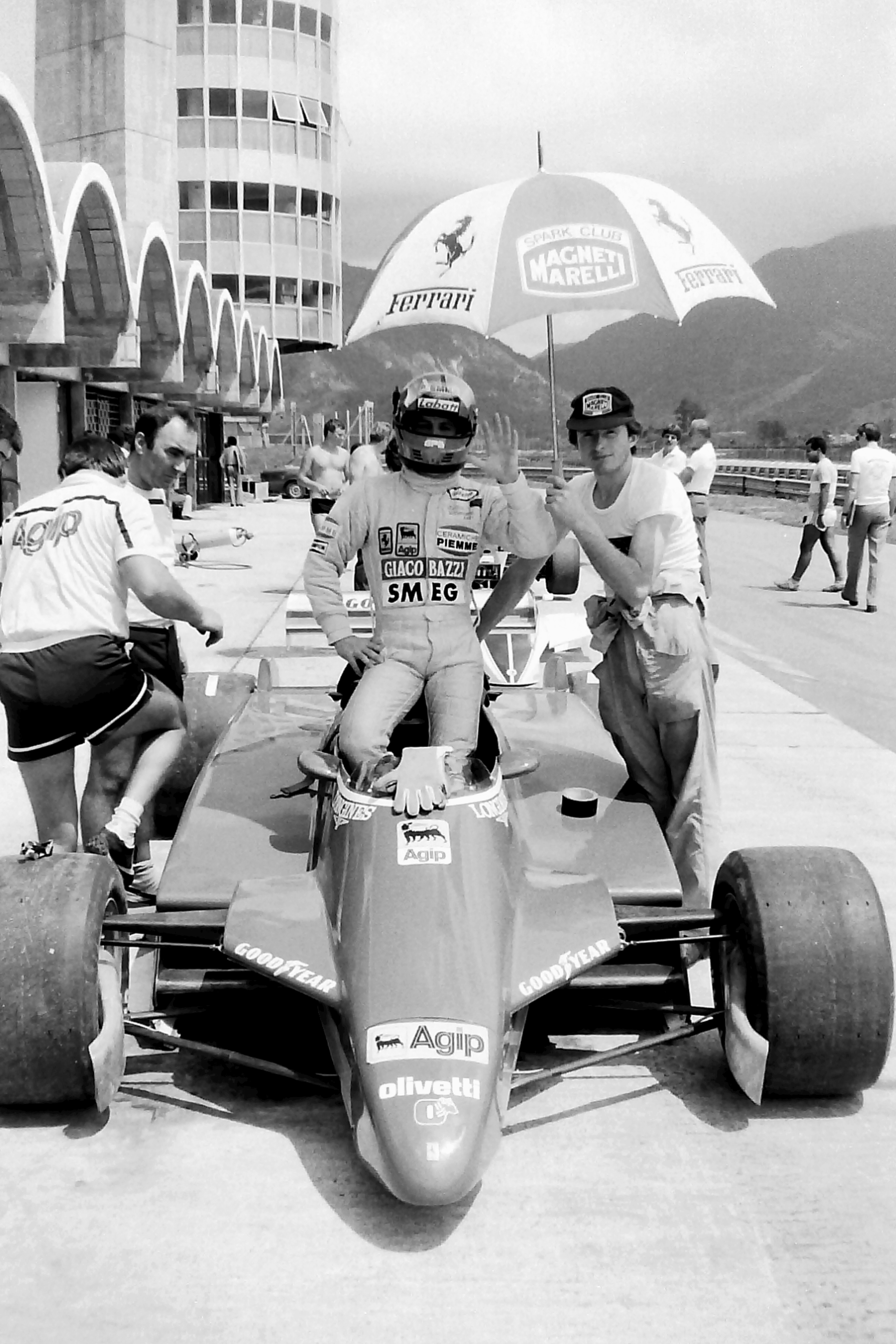
The next photo on that strip of film is this shot I took of Gilles about to climb into Ferrari 126/CK2/057  for another test run.  (The following week he would lead the race for 29 laps).  I returned the wave!
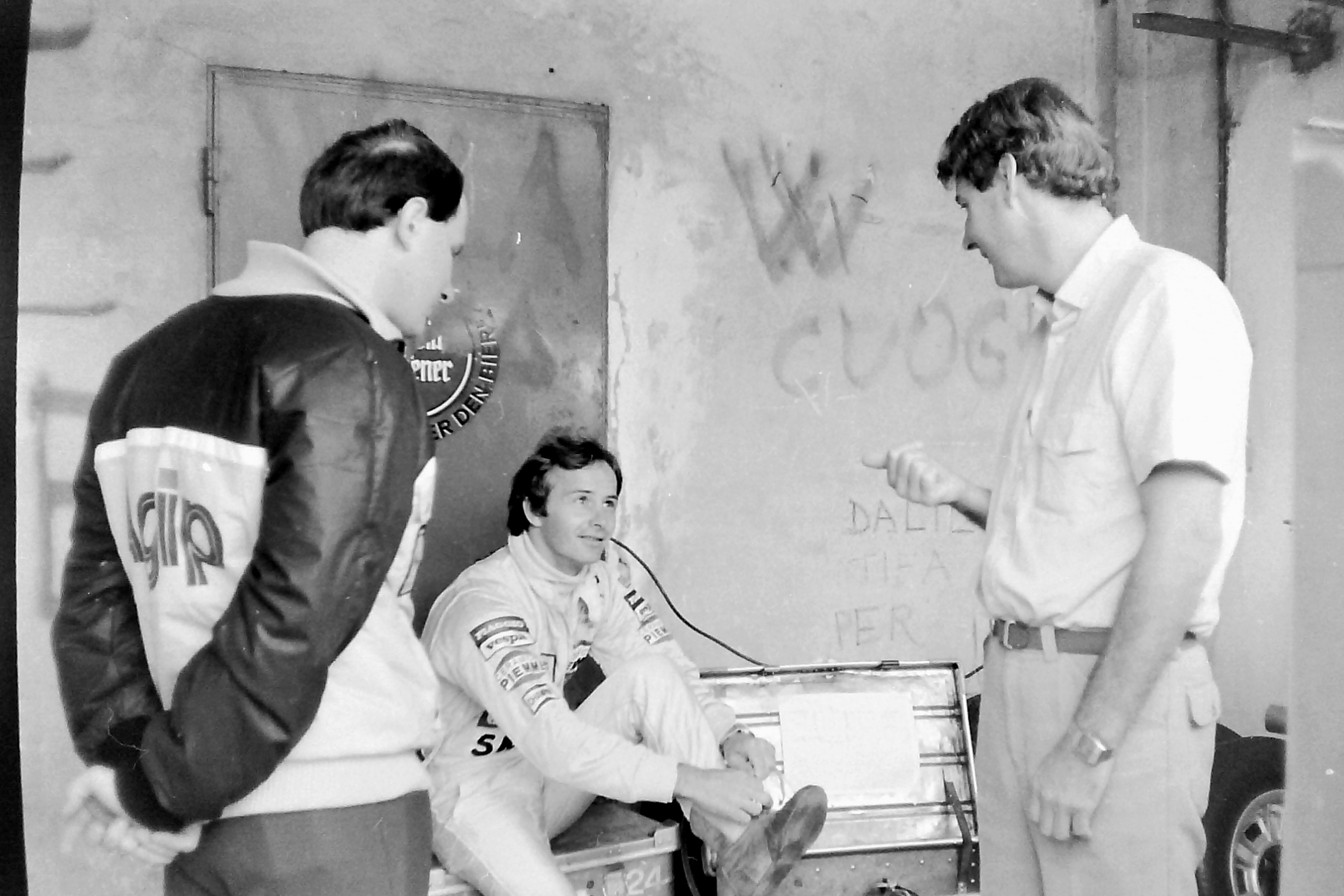


Below: Monza, 1981: Gilles with Ferrari’s Team Manager, Marco Piccinini (left) and  126CK designer, Harvey Postlethwaite. Note the “Viva Cuoghi” graffiti on the wall: Ermanno Cuoghi was a classic Ferrari mechanic before Niki Lauda lured him to Alfa!
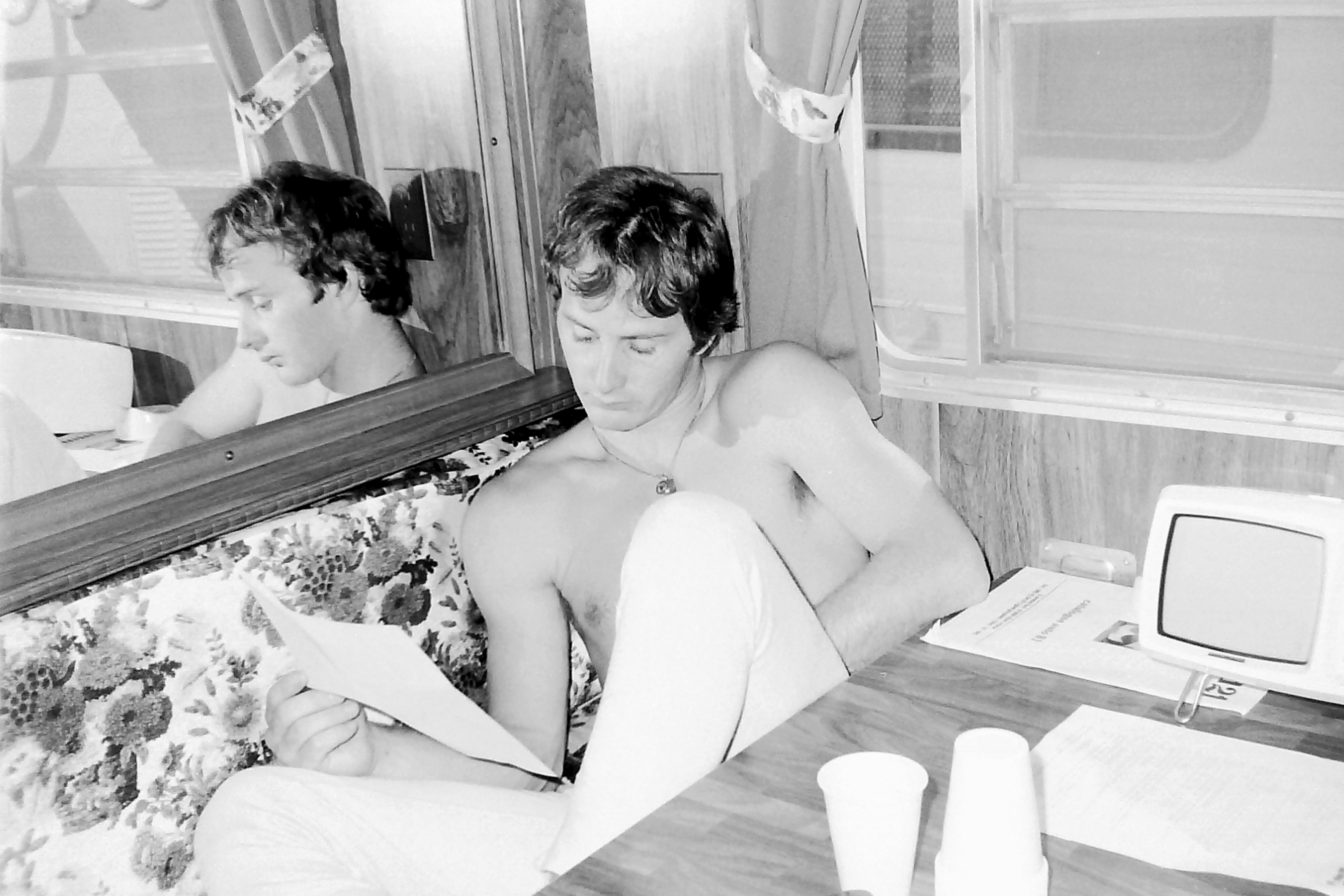


A disgruntled Gilles studies the qualifying times at Zandvoort, 1981, where the Ferrari was woefully uncompetitive.  I took this shot in his “camper”, which he parked right next to the Ferrari trucks behind the pits, intensely annoying the power-brokers.  Driven all over Europe by a lovely Canadian couple named Louise and Norman, the huge, articulate home-away-from home was always immaculate. Gilles didn’t have to ask us to remove our shoes as we stepped in;  it was a natural reflex 
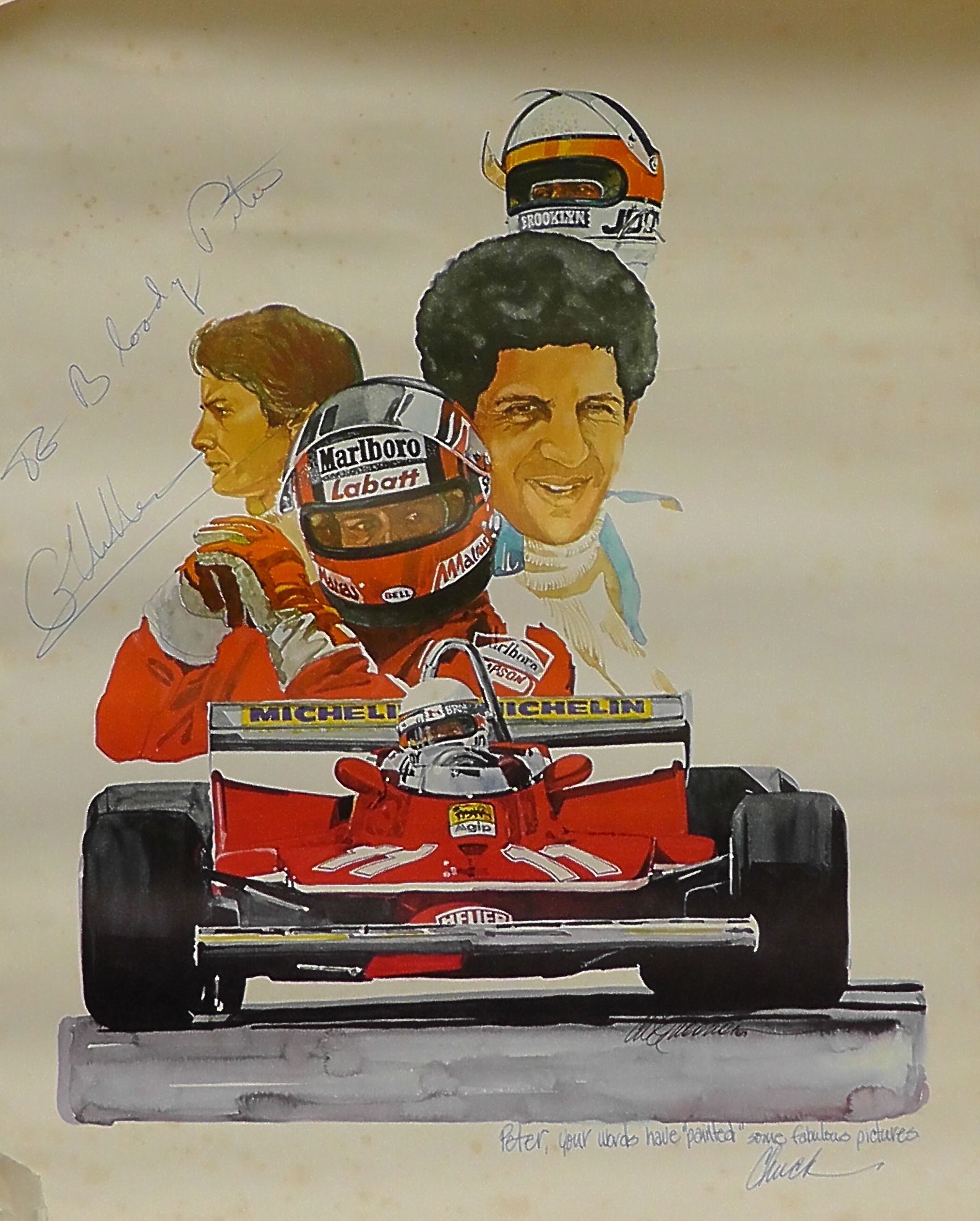
I don’t think Gilles knew too much about Carlos Reutemann prior to joining the Ferrari team in late 1977.  As time passed, though, and as Carlos showed his class, Gilles began to respect him more and more.  I had a long chat with Gilles in South Africa, 1978, the gist of which was, “Wow! I didn’t realize Carlos was that quick.  I’m learning a lot from him.  A lot…”  I was also pretty close to Carlos at that point, so Gilles and I used to have a lot of laughs about Carlos’s idiosycrasies (of which there were many!).  When Carlos won at Watkins Glen that year (and Gilles retired with a blown piston) he started a new thing, as in “Bloody Peter – for sure you and Carlos screwed my engine…”  He didn’t always call me “Bloody Peter” after that – but he liked to joke about it when the mood was upon him.  When I asked him to sign an excellent Chuck Queener print at The Glen in 1979 he therefore lost no time in reminding me about the events of a year before!  That day in ’79, of course, Gilles was supreme in the drizzle, reminding everyone of how he could so easily have won the Championship that year instead of Jody.  Indeed, Carlos spoke to Gilles before the 1979 Italian GP clincher and said, basically, “Don’t fool around with the Championship, Gilles.  Don’t give it away.  If you have a chance, take it.  Championships are very hard to win.  You may not get another chance.”  Gilles replied, “Nah.  I’ve promised Jody I’ll let him win.  He’s going to help me win it in 1980…”


Gilles and Rene – Dijon, 1979

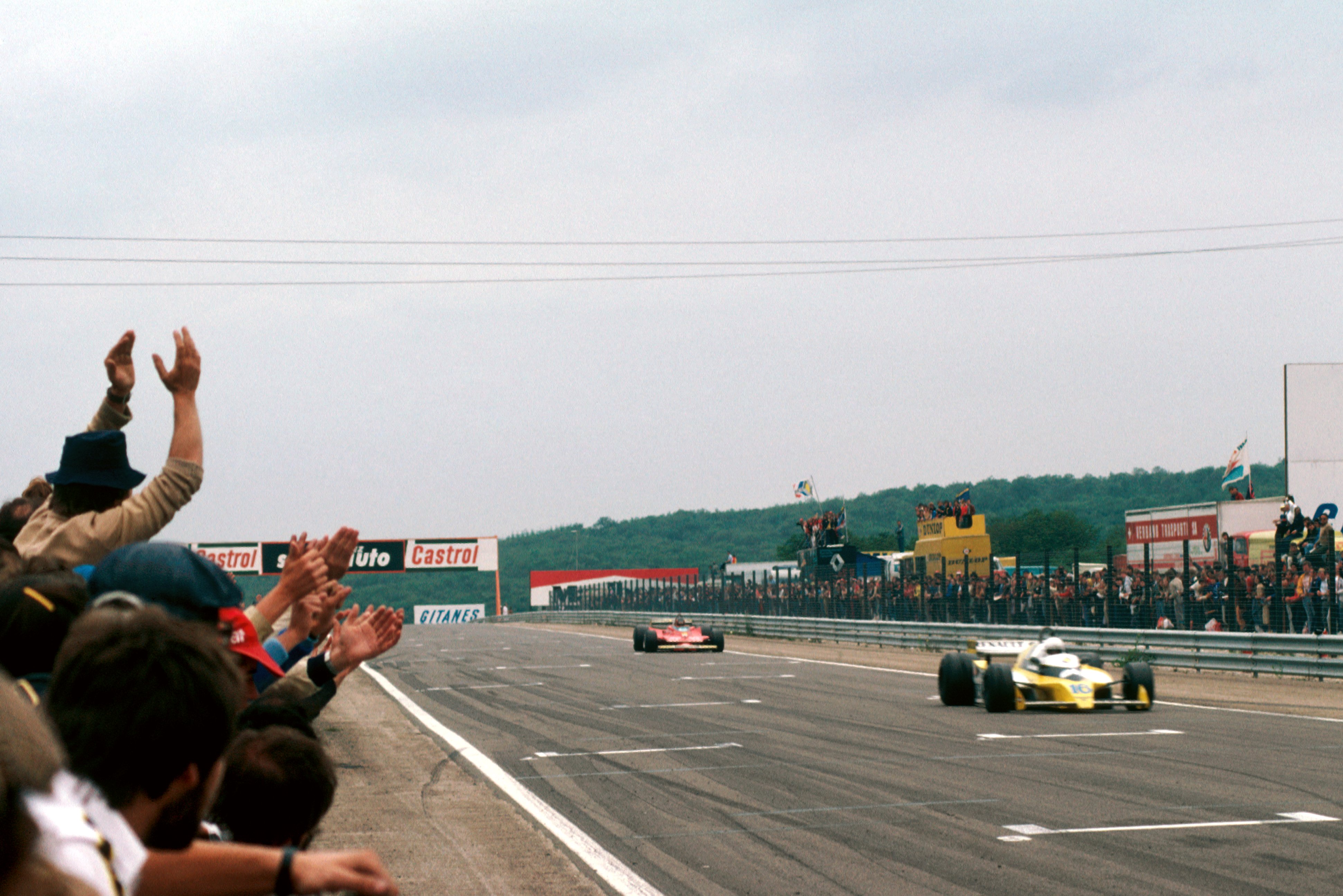
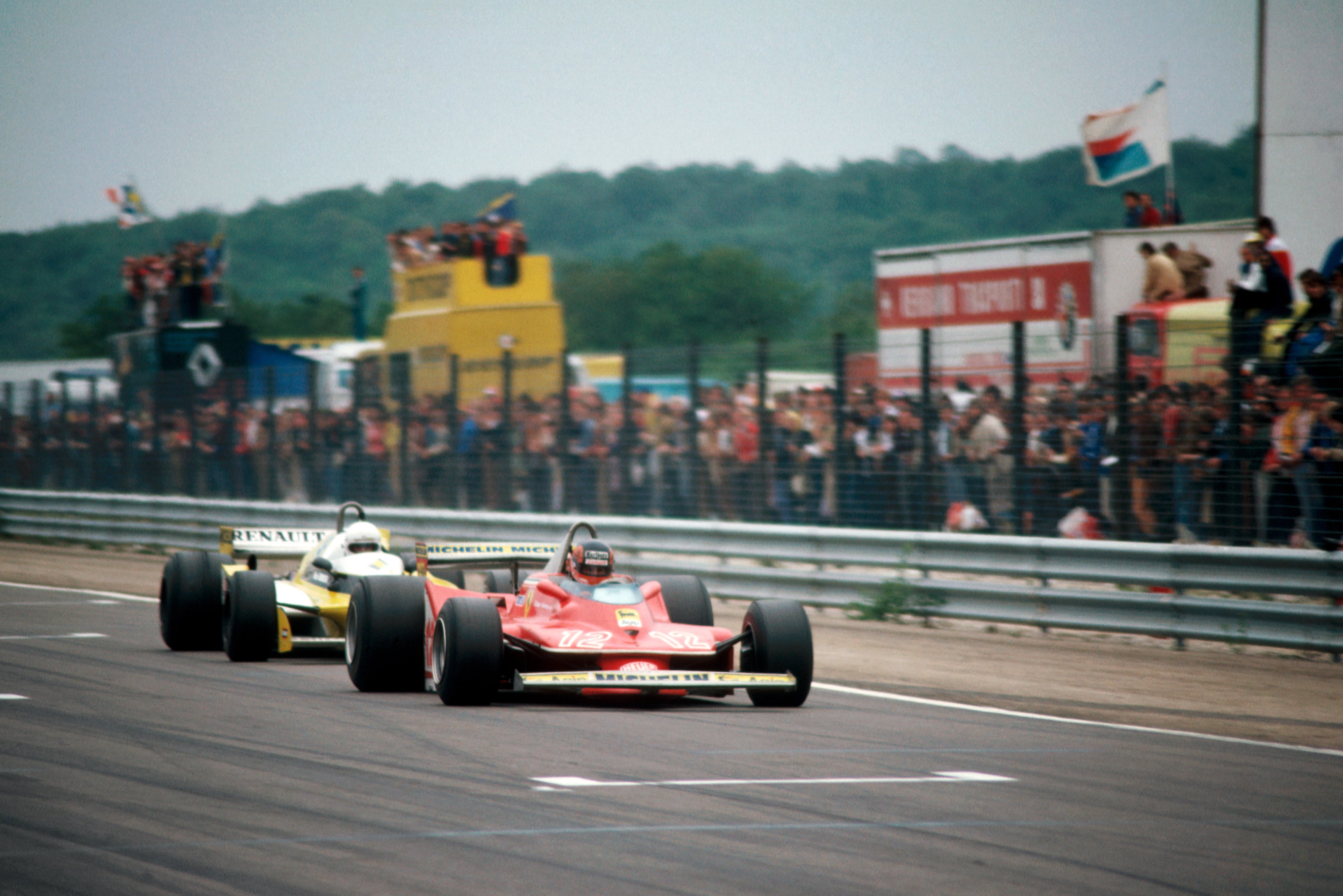
The 1979 French Grand Prix is remembered as one of Gilles Villeneuve’s greatest races.  Wheel-to-clashing-wheel with Rene Arnoux in the closing laps, Gilles defied a lack of grip to seize second place on the final lap.  Afterwards, though, Gilles could think only of the race he should have won – would have won but for a chronic lack of grip.  And what of Rene Arnoux, who from this day onwards became a close friend of Gilles?  Let’s join the Renault team in their post-race celebration – in the days before mega-TV coverage, instant replays and YouTube….

Emotional moment for all of France as Jean-Pierre Jabouille prepares to spray the Moet.  Gilles, subdued, is thinking only of how he could have won but for his Ferrari’s excessive Michelin tyre wear

It was six o’clock and Renault had won.  Won the French Grand Prix form the front row of the grid and set fastest lap.  An all-French victory of a kind far purer than the traditional all-English one, for the tyres had actually been paid for, designed and built in France and the engine had been financed by an all-French firm.  No Cosworths or Goodyears.  If you looked for foreign parts on the winning Renault you looked at the British Hewland gearbox casing or the Italian Magneti Marelli ignition or the German KKK turbochargers.  Otherwise, the Jean-Pierre Jabouille Reanult Turbo was all-French.  And it had won the French Grand Prix.

Renault Sport Director, Gerard Larrousse, excused himself because he said he wanted to watch the film.  The film?

“Oui.  The film.  Of the last two laps.”

He slipped past the phalanx of media crowding the motorhome and grabbed the arm of Rene Arnoux.  “Rene.  Come with me.  I have a surprise.”

The two of them went to the Marlboro Hospitality unit and took a front seat by a huge TV screen.  Arnoux, still in Stand 21 race suit, sat on the edge of his chair.  Larrousse, in black and yellow Renault jacket, winked at the crowd gathering around.

And so they ran the film – of Gilles Villeneuve, the Michelins on his Ferrari virtually gone – diving inside the Renault with two laps to go.  Smoke shrouds the Ferrari as it peels into the apex, but Gilles is there and Rene dropes back to third place.  “Encroyable!” says the commentator in French.  “Encroyable.  Villeneuve encore deuxieme!”

Rene opens his eyes wide, a young kid awaiting the next bit of action.  Larrousse sits impassively, the master in charge.  Next lap – and this is the last lap – it is Arnoux inside Villeneuve.  He has the line at the end of the stragith but the Ferrari follows him right round the outside, and the two clash wheels as they vie to become the first to apply the power.

Regardez!  Regardez!” yells the commentary.  “Arnoux le depassait a l’interieur!”  Arnoux looks sideways and gives Larrousse a grin.  Larrousse pats him on the shoulder.

Then comes the real action.  Arnoux has the line for an instant.  Then it is Villeneuve, sweeping to the other side fo the downhill plunge and looking perfectly set-up for the apex.  He is so – and Arnoux runs wide – in fourth gear – over the kerb, into the dirt and off the throttle.  Villeneuve is in front as the Renault rejoins – but only just.  Again, the two cars touch wheels, and the Ferrari slides sideways into what seems like the beginning of a very big spin.

It doesn’t spin, however.  Gilles, with astonishing car control, catches the moment and now the two are side-by-side, going into the slow, downhill left.  They touch wheels a third time, they both give a squiggle as they run off-line, and it is Arnoux who gets it together first, booting it towards the hairpin with second place seemingly in the bag.

Then he makes a mistake.  Arnoux chooses a wide, conventional entry for the right-hand hairpin and, in a flash, Villeneuve is inside him and on the power, smiling at the ease of the manoeuvre.  Then the Renault has no chance and it is Gilles Villeneuve who crosses the line in second place.

Arnoux slaps his palm against his forehead and asks everyone and no-one how he could have been so stupid.   After all that.  After all the wheel-banging, how could he have left the door wide open?  He turns to Larrousse in horror, ashen-faced at the sudden memory of his mistake.

There are no reprimands, no words.  Instead, Larrousse rises to his feet and begins the applause.  Rene, red-eyed, is clapped all the way to the door.

Joy on the pit wall in the closing laps as Rene Arnoux heads Gilles…..

…turns to dismay as Gilles leads Arnoux across the line…. 

Pictures: Sutton Images (the David Phipps Archive)

The legend begins….

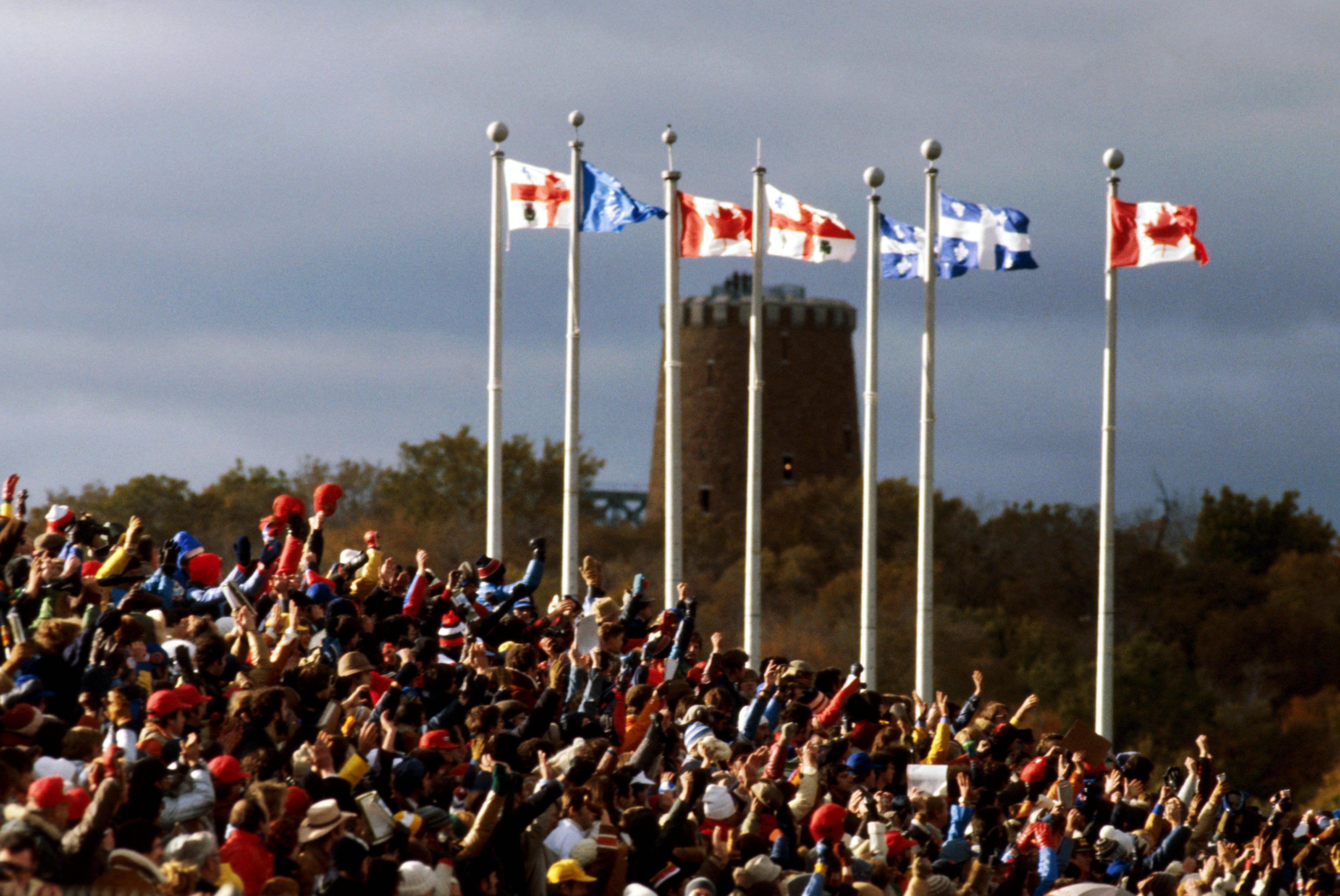
In October, 1978, in the cold of the Canadian fall, Montreal staged its first Grand Prix.  The race also enabled a young driver from nearby Berthierville to win his first Grand Prix.  And so the legend of Gilles Villeneuve was born.  We join that momentous week in the newly-completed Hyatt hotel, headquarters of the Labbat’s Grand Prix of Canada


Wednesday, October 4

The Hotel Hyatt Regency is a $50m tower in the south of downtown Montreal.  It is one year old;  it is in keeping with the newness of this part of the city.  It is also serving as “Grand Prix Headquarters”, which means that you collect your credential from the basement of the Hyatt, that the pre-race festivities, like the Gilles Villeneuve Ball, are held at the Hyatt, and that most of the Grand Prix teams, including mechanics, stay at the Hyatt.  Some remain aloof – Walter Wolf’s team for one, Michelin for another – but, otherwise, this is already a Grand Prix with a difference: the paddock area is effectively marble-floored and graced with Muzak.

This morning, with most of the teams together again after two or three days in New York, or brief trips to the Goodyear factory in Akron, Ohio, is to be much like any other.  Emerson Fittipaldi is clad in a red-and-white track suit as he sits down to breakfast, and Jody Scheckter is wearing his white outfit from TV’s “Superstars”.  Emerson will later train at the nearby, indoor athletic track;  Jody will hit a tennis ball or two.  Everything is within easy reach, within calling.  Clay Regazzoni, with “Klippan seat belts” emblazoned on his track suit, has booked a court for two hours.  Patrick Tambay will play with John Watson, Jacques Laffite and Riccardo Patrese.  Lauda and Hunt?  They are to stay at the hotel today, recovering from what must best be described as a quick trip to New York.  The weather was better down there – but that would appear to be all.  Here, in Montreal, only two miles from the circuit, there are facilities to make out-of-town Grands Prix look positively ancient.  The shopping malls are so large you need a golf cart to cover them.

This, then, is a glimpse of the future:  the more the Grand Prix business expands, the more inclined will be the business to stage its races near or in major cities.  Who wants to camp at Mosport when you can be in the Hyatt ten minutes after practice?  At Montreal, you do your next Goodyear deal in the air-conditioned bar, 30 minutes before dinner (and not in sokme steamed-up, hired motorhome).  Is there a downside to it all?  Will the Montreal “street” circuit justify the Hyatt?  We shall see on Friday, when practice begins.

There is an end-of-year feeling in the Hyatt this winter’s morning. The Championship has been won;  for drivers like Niki Lauda the race is of only academic interest, even if this is his – and also Carlos Reutemann’s 100th GP start – even if second place in the title chase is still wide open.  For drivers like Jean-Pierre Jarier, Keijo Rosberg and Rene Arnoux, by contrast, there is everything – including a good drive for 1979 – for which to fight.  And for teams like Ligier this is the time to say goodbye to the Matra engine.  Indeed, this is the over-riding, pre-practice mood:  such has been the dominance of the Lotus 79 that a good number of cars will be having their last race at Montreal:  next year they’ll all be going ground-effect.

That’s your first glimpse of this first Canadian GP in Montreal:  it is at once a glimpse of the future and a last look at the past.

Thursday, October 5

You reach the track by turning left out of the Hyatt, driving 500 yards on the freeway and taking the “Ile Note Dame” ramp.  Over a bridge, onto the island – and you are there, at the sight of Expo 67 and the 1976 Water Olympics.

The island is small – artificially built out of earth moved when the city’s underground railway was constructed.  And, necessarily, the circuit seems small.  It stretches the length of the island, with hairpins at either end and six chicanes in between.  It is also brand new: the timber is still light-coloured, the grass verges recently-placed, the paint still tacky.  Everywhere, artificiality prevails.

The cars are garaged in the old rowing sheds, back-to-back and side-by-side, as at Monza.  And the pits are a short walk away at the exit of the hairpin, before a quick chicane.

We are out on the course now, tooling around in a road car, when up comes Hans Stuck Jnr, completely sideways in his Mercury Monarch.  A grin splits his face:  it must be Hans’ sort of circuit.  Then Mario Andretti passes us, his station wagon on opposite lock out of the hairpin, avid journalists round about him.  (And ready to cause him some bother, it turns out:  remarking the circuit seems a little tighter, and a little slower than it might have been, and concluding lightly that the track seems designed for Gilles Villeneuve, he subsequently is quoted out of context by the local press.  Mario is impressed with the organizers and with the circuit build overall, but the locals whack him hard re his Villeneuve comments.  By Sunday morning he is saying to the media: “My criticism was over-emphasised and mis-directed.  I am not critical of the race organizers.  I am more critical of our own FOCA officials who were sent over here to approve the track”.)

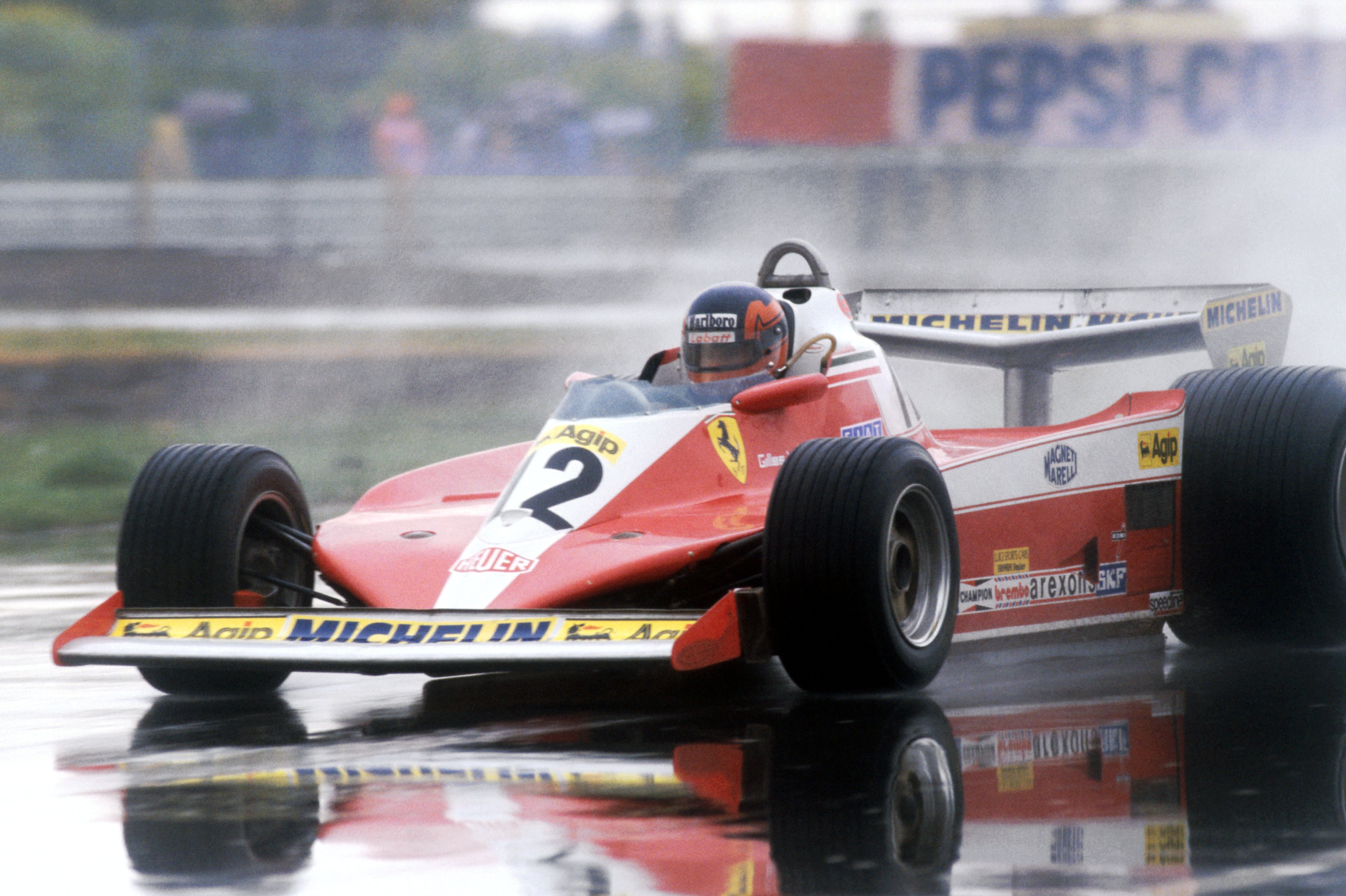
Gilles in the wet on Friday, when his team-mate, Carlos Reutemann, had the advantage

Friday, October 6 Read more…

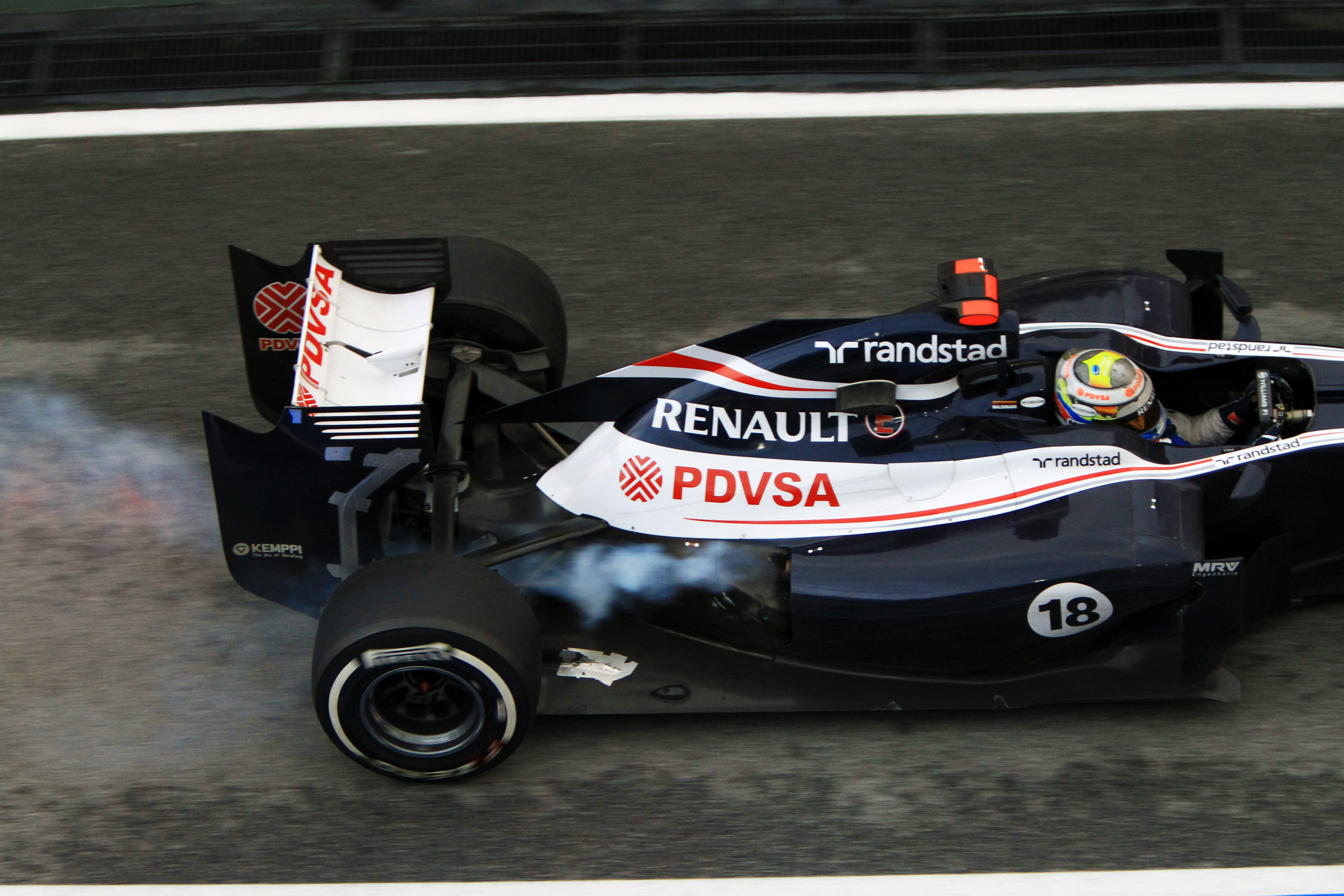
The Renault engine problem in Malaysia

Within the very controlled environment of F1 it is extremely unusual for a manufacturer – particularly an engine manufacturer – to be up-front and public when something goes wrong.  I make no apologies, then, for reproducing the question-and-answer document provided by Renault after Pastor Maldonado’s late-race engine problem in Malaysia.  I think it makes fascinating reading

 What was the cause of the Williams’ engine failure?

Initial inspection at the track showed a piston failure. We shipped the unit back to Viry after the race where it was inspected thoroughly yet again when we stripped it down. We then confirmed that one of the eight pistons had suffered a surface crack that had allowed fluids to leak through, causing a sudden loss of engine pressure. It appears that the crack came from a machined radius on one of the piston legs. This sudden failure was restricted to just one piston – the remaining seven were fine. This was the first time for some while we had experienced this problem and we were particularly surprised considering we had had a trouble free winter in this area, both on the dyno and on track.

Has this happened before?

No. This is the first time we have experienced this problem. We feel this was a one-off failure, but as we still do not fully understand the root of this problem, investigations are still ongoing and we will take some time to introduce complete counter measures. It is fair to say that we were very surprised, particularly as it happened so early in the engine life.

What safeguards have been put in place?

We have specifically built new engines (two per customer) for China which feature a new piston specification we know will address part of the problem. This has been approved by the FIA via a formal request. As we could not find any problems with the actual broken piston (the inspection process and quality control from the piston supplier could not find any further issues), we will also put in place some safer engine settings for China.

Williams had some engine problems before in pre-season testing? Was this linked to the Malaysia problem?

No, it is not at all linked. This was a one-off issue that occurred suddenly. We have obviously run through the way the engine was operated so far this season but we could not find anything out of our usual scope that would explain the failure.

Can this engine be used again?

The actual engine can be used again but not in a race situation for Pastor as it has been taken out of his engine pool. Nevertheless, as only one piston was affected, we will put the engine back together with a brand new piston and re-run it on the dyno to determine if it could have lasted its entire life. This work is in progress and we already have some indications. In the meantime, as we only have seven engines left for Pastor, we have worked out an alternative engine plan for the rest of the season so Pastor will not be penalized beyond the position lost in Sepang.

The Unforgettable Jim Clark

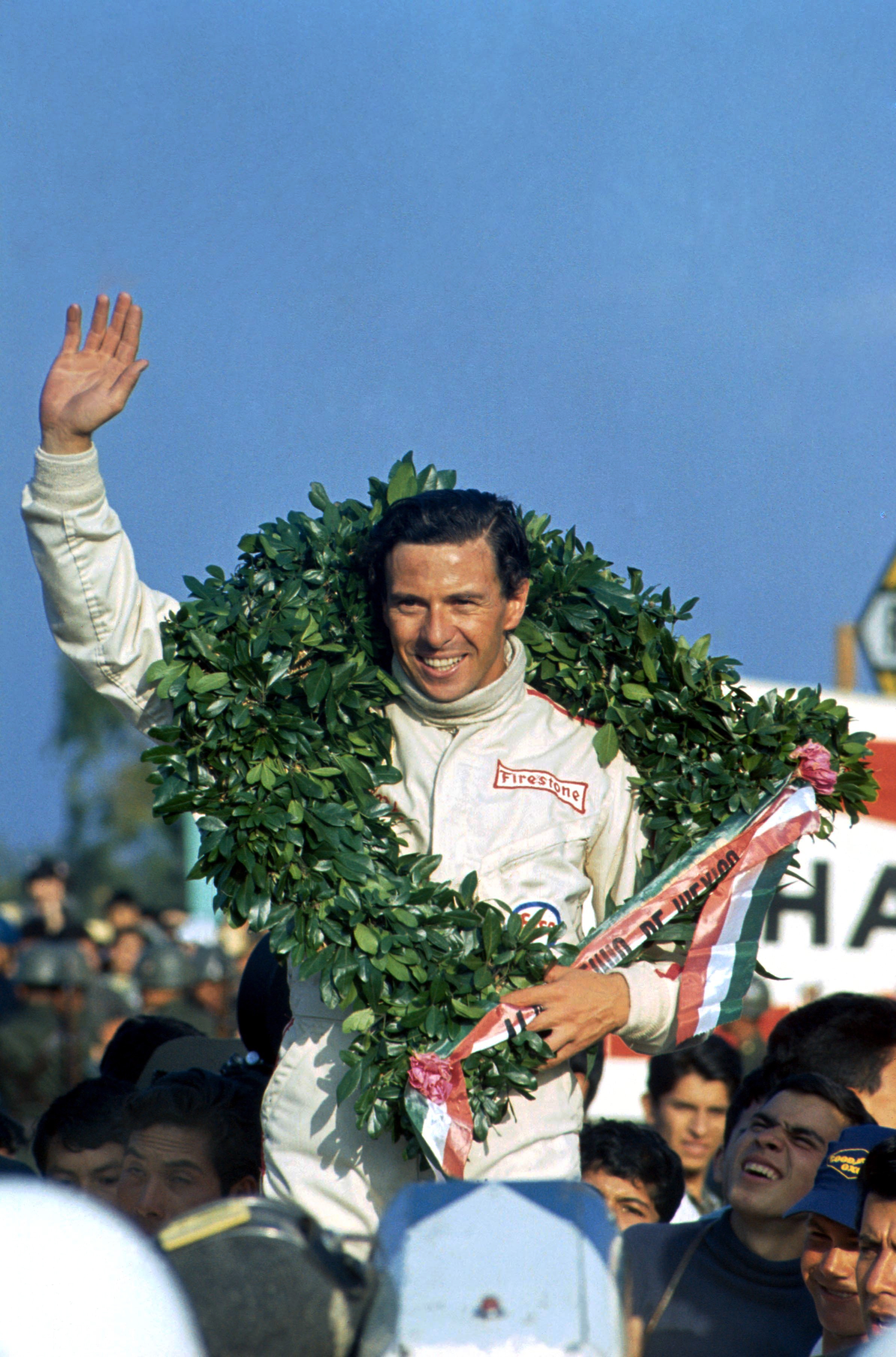
He was nibbling his nails the first time I saw him – just as they said he would be.  Not absently-mindedly but seemingly with aggression, palm turned upwards, free hand inspecting frequently.  He wore black sunglasses, square of frame – Rayban Wayfarers – fawn slacks and no shirt.  His shoulders were as broad as a boxer’s, yet he was short, even by my schoolboy standards.

And he walked with that amazing twinkle-toe lilt, springing upwards, like a Scots sword-dancer, with every step.  Jackie Stewart did likewise, we noticed – although his feet were splayed outwards.  (Was this their secret, we wondered?  Were these gaits the key to all that brilliance?)

Jim was lilting now towards the Lotus camp – to the tent which shaded his Lotus 32B-Climax.  The air was surprisingly still, the tempo unhurried.  There was no Colin Chapman in Australia – just Jim and the boys, led by Ray Parsons, the Team Lotus Cortina/Elan/F3 driver.  Standing there, on the Warwick Farm lawn, it all seemed like Fun in the afternoon Sun, not practice for the International 100.

Yet a Clark performance it was.  First there were the powder-blue Dunlop overalls, clean and freshly-ironed.  Then, for protection against flying stones, Clark tied a checkered handkerchief around his mouth and nose.  Next were the Pioneer goggles, heavily taped from the mid-point upwards.  Finally came the legendary helmet, the dark blue Bell Magnum with the white peak.  Clark stepped sideways into the red seat, pulled on a pair of his own-make red gloves and fitted the goggles over the famous eyes.  Down the side of the car, on flanks of emerald green, ran the neat yellow lettering:  Team Lotus.

That afternoon, in Australia, I watched him qualify on the front row, alongside the Brabhams of Graham Hill and Frank Matich.

And then, on Sunday, I saw him win.  He followed Hill for the first phase of the race – while he adapted to a car without third gear – then passed his friend under braking for Creek Corner.   “Copybook Clark” the headlines said the next day.

A few years later, still in Sydney, I joined a small band of people saying goodbye to him at Kingsford Smith Airport.  The last Tasman race had been run;  Jim was flying to Indianapolis via Chicago to test the new Lotus 56 turbine Indy car.  After drinks in the VIP lounge he disappeared through Customs; the crowd disbanded.  Clark had gone for another year.

Or had he?  His Qantas 707 halted at the threshold, then taxied back.  I was standing with my father in the Arrivals hall when Clark re-appeared, stewardess at this side.

“Plane’s been delayed,” he said.  “Come and have a drink.”

I asked him about why he’d used a dark blue peak (instead of white) in the 1964 Dutch and 1966 Mexican GPs.  (He said he’d broken the white one and that had been all that was available.)  I asked him about the wet race he’d just driven at Longford in the Lotus 49 (“It was crazy.  Only Piers Courage had the right tyres”) and about his chances in the F1 season to come.  I remember him talking wryly about soon having to drive a Ford Taunus down to Monaco for a Ford publicity stunt and, yes, I remember him describing what it had been like to have been hit in the face by a bird at Reims, 1966.  “It felt like a bloody great crow…” I recall him saying.  I told him that I wanted above all to work in motor sport – perhaps as a journalist.  “Just work hard and never give up,” he said.  “That’s the key.”

At the time, though, my appreciation of Clark’s talent, of his standing, was too youthful.  For me, live motor racing began with Clark – and the fact that he was so statistically successful was hardly the point.  I revered his character, his way of speaking, the way he presented himself, his home town of Chirnside, his shyness, his desire to drive anything, anywhere, his honesty, his respect for others.  I revered everything about Jim Clark.

Jim was not only a good person;  he was a genius amongst his peers.   The Standard.  When someone else won a race, they said, “So what happened to Clark?”  When you arrived late for practice, and you wanted to know the lap times, you asked, “So what’s Jim doing?”

I am not alone;  I know that.  Mention Jim Clark to your average racing person and even the most ardent Michael or Ayrton fan will say, “Yes.  Jim Clark.  He was another.”

As we record yet another anniversary of his passing, then, it is tempting to mark April 7 with some solemnity.  Equally, so many people still want to talk about Jim – to learn about him.

Here, then, are some views of people who knew him well – colleagues to whom I have spoken over the years in order to glean just a little more about the man and the driver who just might have been the very best we’re ever going to see. Read more…

Michael Lewis – an American abroad

I was intrigued by the Wind Tunnel interviews conducted by SpeedTV at the end of last year with the young American F3 driver, Michael Lewis.   Asked about his recent test in the Ferrari F60 F1 car in Italy, Michael’s response was that of an enthusiastic Californian kid with no “side”; it was both refreshing and enticing.  And so the questions began buzzing inside my head:  from where did Michael Lewis emerge?  What was his background?  And – anyway –  what was an American college kid doing in Italian F3 (and, in 2012, Euro F3)?

I spoke to him recently to find out.   This will be a pivotal year for Michael Lewis;  no doubt about that: the Euro F3 Championship has yet to begin.  It will be tough and it will be difficult, even if it won’t be full of cars.   I get the feeling, though, that Michael is going to be both a major force – and someone who is going to enjoy every foothold of every step of the Euromountain he has challenged himself to climb.

Inside Michael’s race bag:

“Always in my helmet bag I have a photo of my grandfather (Ben Chavez, who passed away when I was 15). In the picture he is standing next to me at a kart track (Moran Raceway, which is now closed). On the back of the photo is my famous, Michael Lewis, “California Soul” logo, which is always on my racing helmet (developed by KAOS-DESIGN.IT) and the Mac Miller “Thumbs Up Kid”, which is also on all of my helmets (Spa P1 is written there because that was the exact sticker that accompanied me when I won my first F3 race….in spa…in the wet).

“In addition, I have a set of dice, purchased from the Las Vegas Rio Casino, that have the text ‘Ben’s Casino’ (a way of commemorating my grandfather). The dice are significant, as my grandfather showed me the special way they are taped together: any opposite facing side adds up to the value seven.”

(Quantity: 2) Bell Carbon HP3 F1 helmets…provided by Bell, as they are my sponsor

(Quantity: 5) packs of Bell tear-offs

(Quantity: 6) visors, split between the two helmets….2 dark, 2 medium, 2 clear visors….basically I never use the clear visor.  Even when it rains, I use the medium

(Quantity: 2) Sparco custom xlight racing suits…provided by Prema Powerteam

(Quantity: 2) Pairs of Sparco white leather racing boots

(Quantity: 3) sets of Nomex underwear…you can never have too much Nomex

(Quantity: 2) pairs of Sparco white gloves

(Quantity: 1) HANSdevice, white, painted by KAOS-DESIGN.IT

(Quantity: 1) drink bottle, gold, painted by KAOS-DESIGN.IT

(Quantity: 1) lunch box/bag full of vitamins, minerals, snack bars, etc. to keep me hydrated and fit whilst I drive during the day

(Quantity: 1) small portable fan, used when I am on the grid if it’s hot, and to dry out my helmet after races

(Quantity: 1) set of volleyball knee & elbow pads…..used if I ‘kneed’ a bit more than the standard padding applied in the car for comfort/less pain

(Quanitity: 3) sets of tennis racket grip…..putting it on the steering wheel for extra grip, and to make the steering diameter a bit larger for improved leverage to aid in turning

(Quantity: 1) canister of Mud-X helmet cleaner….it’s literally the best cleaner you can get

(Quantity: 1) Rain-x for improved visibility in rain conditions

Post Navigation