Clark in an orbit of his own
Note: with the exception of the Month of May at Indy, all of Jim Clark’s 1965 season – from East London, South Africa through to the Belgian GP at Spa – can be read on one post (entitled “Jim Clark’s epic 1965 season”). The four weeks at Indy have all been posted separately – and we will be doing so for the remainder of this year. All can be found under the category “Jim Clark’s 1965 season”. We take up the story as Jim prepares for the French Grand Prix…
Clermont-Ferrand, June 27, 1965. French GP (Grand Prix de l’ACF) After Spa, Jim was finally able to spend a week in Scotland. The changes were dramatic. On the back of Jim’s Indy win – and of his most recent success in the F1 car – the Border regions seemed to have gone motor sport-centric. And with Roger Clark – no relation! – also winning the Scottish Rally over the same weekend as Spa, the two Clarks were in much demand. Jim allowed TV cameras on the farm; 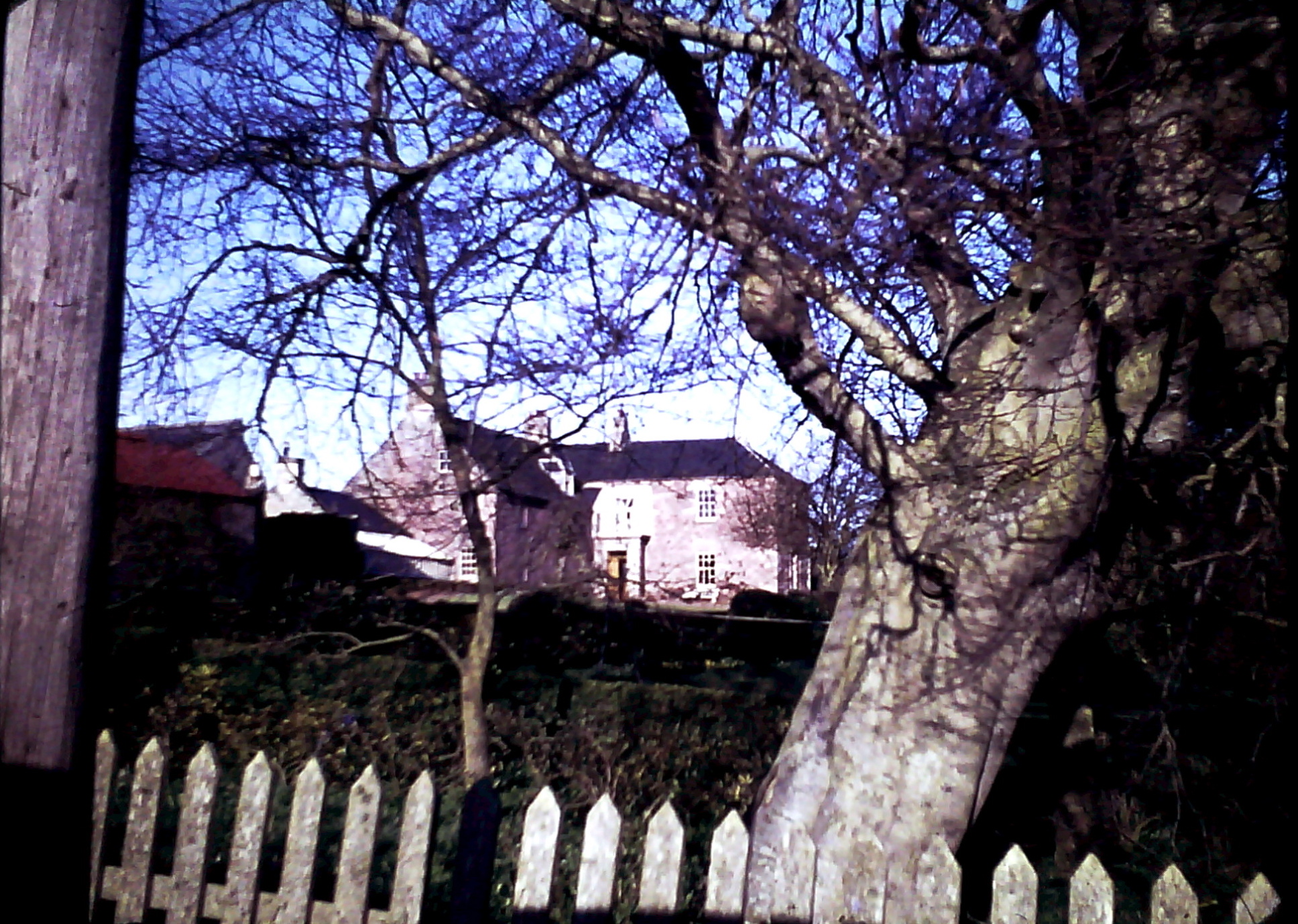 entertained the famous Indy commentator, Tom Carnegie, together with his American film cameras and cameramen; added a postscript with Graham Gauld to Jim Clark at the Wheel; and welcomed Colin up in the Borders, reminding him, as he always did, to look for the “red roofs” on the farm barns when lining up the grass runway near Edington. There was also an approach from Hollywood: with John Frankheimer well advanced with pre-production for MGM’s upcoming movie, Grand Prix, starring James Garner, Jim was approached by Warner Bros and Brookdale Films about lending his name to a rival F1 film starring Steve McQueen. Day of The Champion was to shot primarily at the 1966 German GP and possibly after that at Oulton Park. Jim agreed to the proposal.
Racing-wise, there were other details to finalise. There was talk about running the Indy Lotus at Reims, ostensibly as a demonstration but also in an attempt to break the lap record there; thankfully that fell through due to a lack of starting money. Then came an idea to run the 38 at Silverstone, before the British GP. Jim quite liked this idea but again it came to nought: Ford, the new legal owners of the car, decided it would be of more use at the New York World’s Fair. Eventually Chapman signed a relatively lucrative deal to run a 38 in two Swiss hill-climbs at the end of August. Jim liked the sound of that. He’d last competed up a hill at Rest-and-be-Thankful back in 1958.
Too soon, it was back down the A1 – to London in the Lotus Cortina – first to Cheshunt, to go through the accounts with Andrew (now more complicated than ever due to the Indy win), and then to nearby Panshangar Airport to fly with Colin, Sally and Mike Spence to Clermont Ferrand. The glorious mountain circuit – home of Michelin – had never before staged the French GP. Now it was to play its role in F1 history as the “mini-Nuburgring”.
Upon arrival at the low-key Clermont airport, Jim and Colin were drawn to a crowd outside in the car park. Cameraman and newspaper journalists were in abundance, all focused on one man.
And, for once, it was not Jim Clark.
“That’s Yuri Gagarin!” said Colin, fascinated. “Come on. Let’s go and say hello…”
The Russian cosmonaut, at that stage on a USSR-sponsored world tour in honour of his 1961 orbit of the earth and other exploits, quickly appreciated the stature of Clark and Chapman. He invited them, indeed, to a reception being held that night in Clermont’s civic centre. Colin and Jim looked at one another, worked out that they could easily drive to their hotel in Charade later than night, and agreed to attend.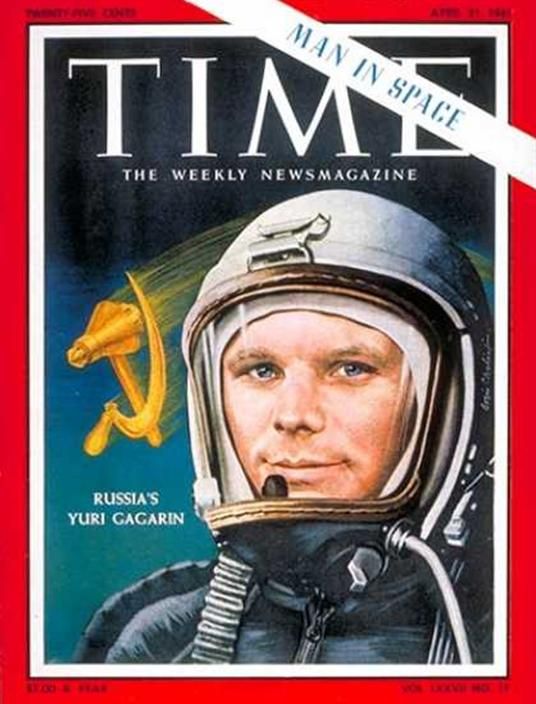
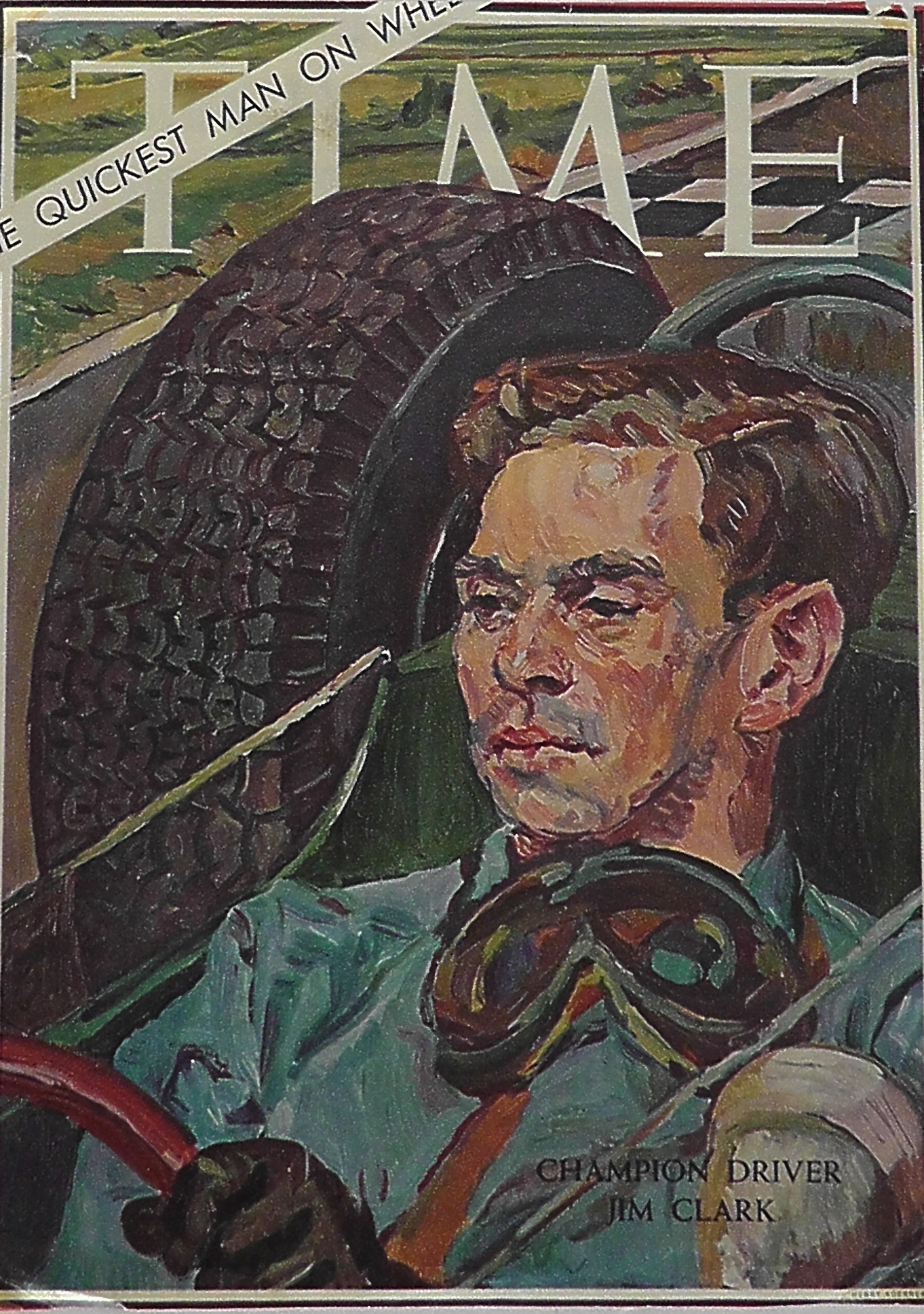
The evening sparkled. Jim and Yuri spoke through interpreters and quickly formed a bond: Jim was as fascinated by the space programme as Yuri was by the Lotus racing cars.
Then, later, the group of four set off in their rented Peugeot for the race hotel. Colin drove, with Sally him and Mike and Jim in the back.
Suddenly, in the middle of a slow, innocuous corner, the Peugeot swerved and lurched down a bank. “Is everyone all right?” gasped Colin as the car came to rest, windscreen shattered. “I think I’ve strained my thumb…”
Jim, uncoiling himself in the middle of the front seat, where he’d landed, replied in the affirmative. As did Mike, who had squashed up against the back of Colin’s seat.
“Sally?”
“I’m ok but I think I’ve cut my head or something,” she said, looking at the blood on her blouse and hands.
Jim looked across and began swaying from side to side. Then he fainted at the sight of the blood.
Eventually the Peugeot was pushed back onto the French road. The hotel was found; Sally was treated by a doctor in the dead of night; and Colin promised the medic a pit pass for the weekend in return for keeping the incident away from the media.
Despite a few light-hearted jibes from Jim about his suit being ruined, Sally recovered well enough to perform regular timing duties in the pits at Clermont. Colin’s thumb, however, remained a race weekend talking-point…
Jim showed no signs of the incident when practice began on Friday. Of far more import was the failure of his 32-valve Climax engine out on the circuit: Jim hitched a ride back to the pits, straddling the engine cover of John Surtees’ V8 Ferrari. As a result, Chapman decided to concentrate on the 1962-built R6 two-valve chassis (still in Lotus 25 form) rather than the 1964-built Lotus 33B R11.
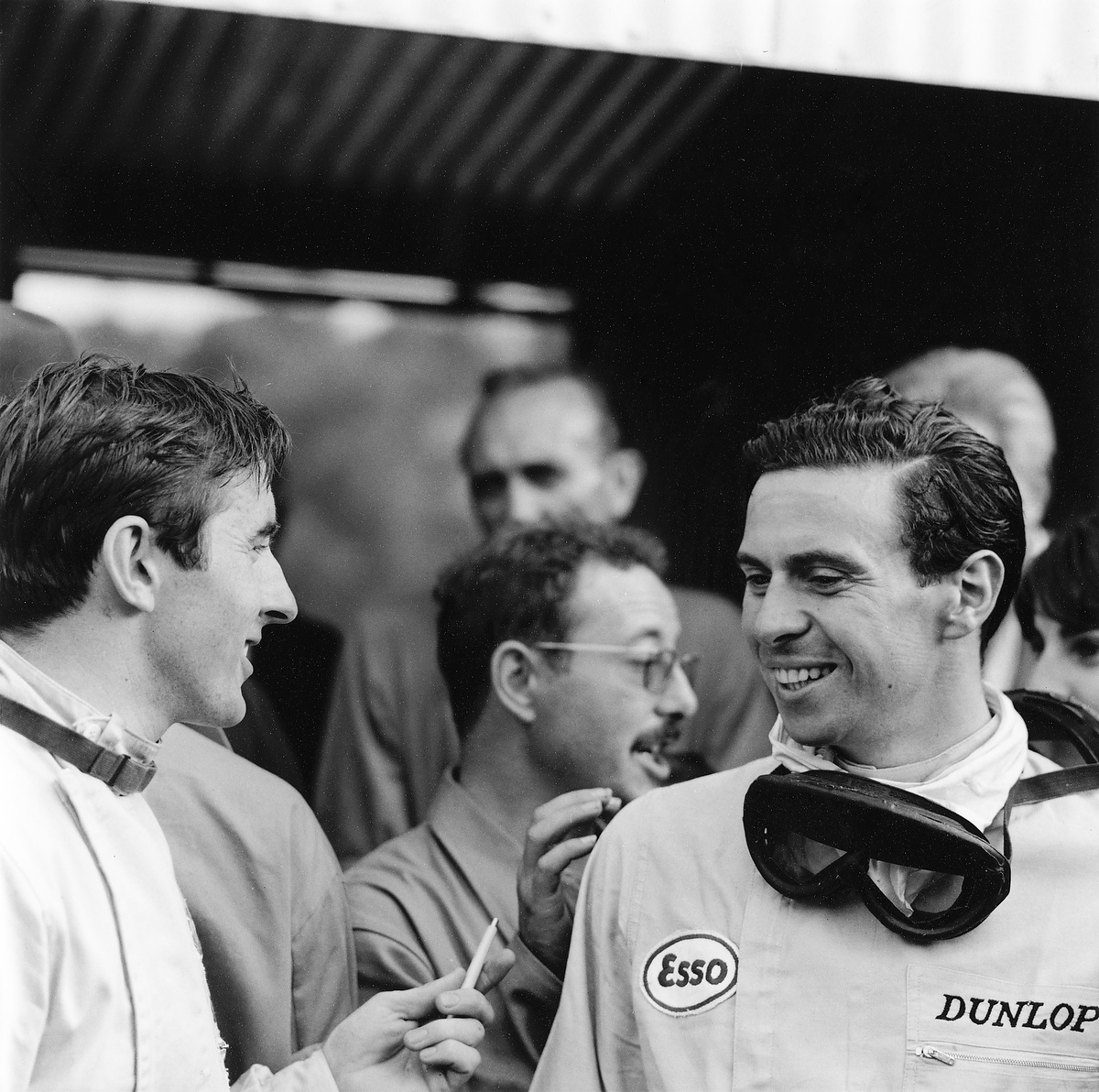 Jim qualified the old car on the pole, his 3min 18.3sec lap shading Jackie Stewart’s best for BRM by a mere half-second. Ferrari qualified three and four, with Lorenzo Bandini again controversially racing the faster flat-12 car and leaving the V8 for Surtees; and Denny Hulme, who had subbed for Dan Gurney in the International Trophy and at Monaco, celebrated his second Championship GP start by qualifying an excellent sixth for Brabham (and quickest on Friday). His compatriot, Chris Amon, would dominate (until a puncture intervened) the 1972 French GP at Clermont with the Matra V12, but gave clear indication seven years earlier of what was to come by qualifying a brilliant eighth in the evergreen Reg Parnell Lotus 25-BRM.
As he had done on several occasions since 1964, Jim wore a white handkerchief over his face for this race: stones and rubble lay trackside. The Dunlops and Goodyears of the time were stiff enough and strong enough not to be hugely puncture-prone but there was a real risk of being injured by the local flint. Best place to be, of course, was out in front….
A brass band and a shower of Michelin balloons lit up the grid as heavy clouds assembled on the horizon. Morning rain gave everyone déjà-vu but then out came the sun over the Auvergne as the 2:00pm start time appraoched. Jim anticipated the Toto Roche twitch but Lorenzo nearly lost the Ferrari as he floored the flat-12 in first. With clear air behind him, Jim Clark thus set off for the first of 40, daunting Clermont laps – a potential race time, in the dry, of some 2hrs 10min.
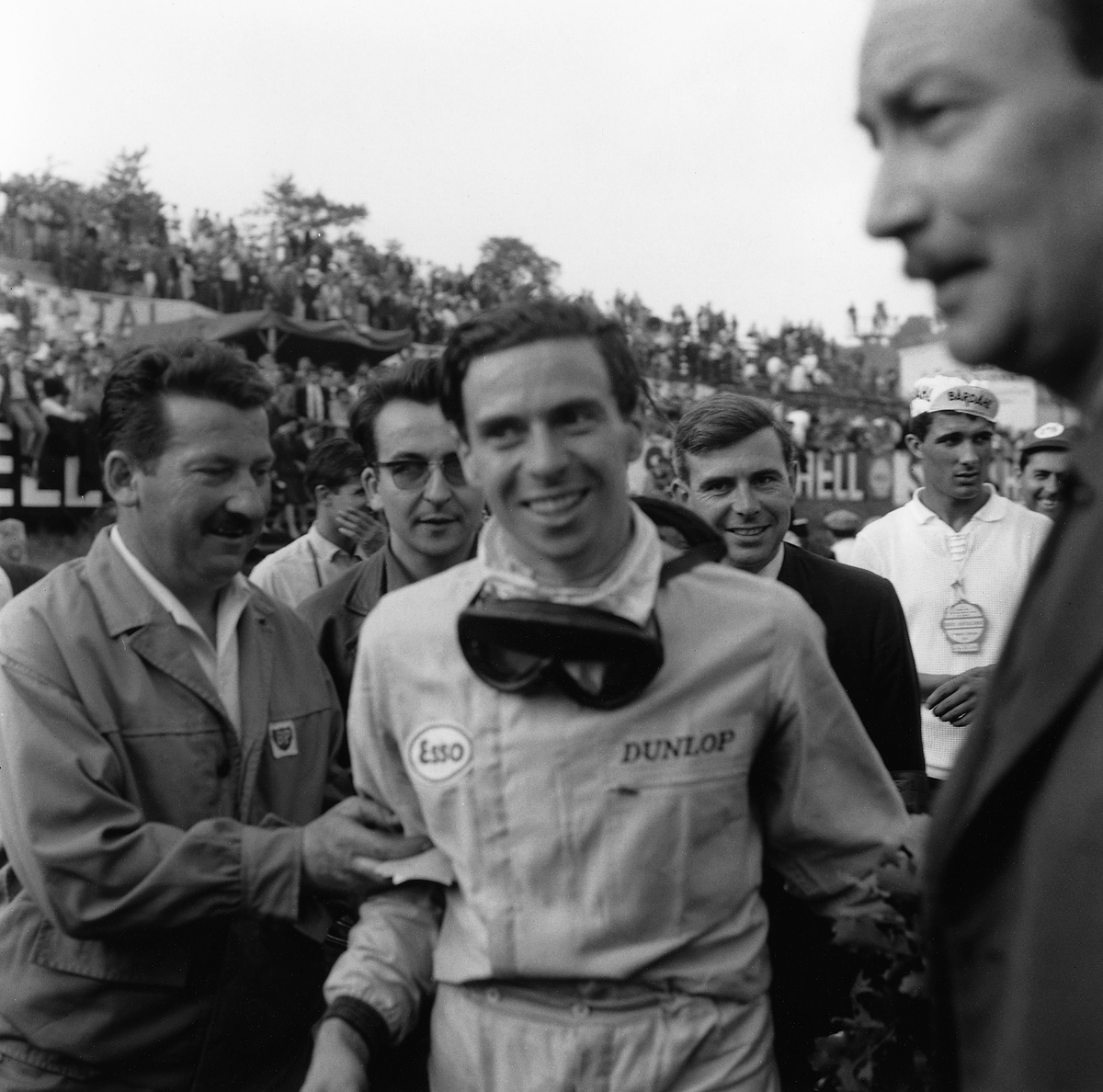
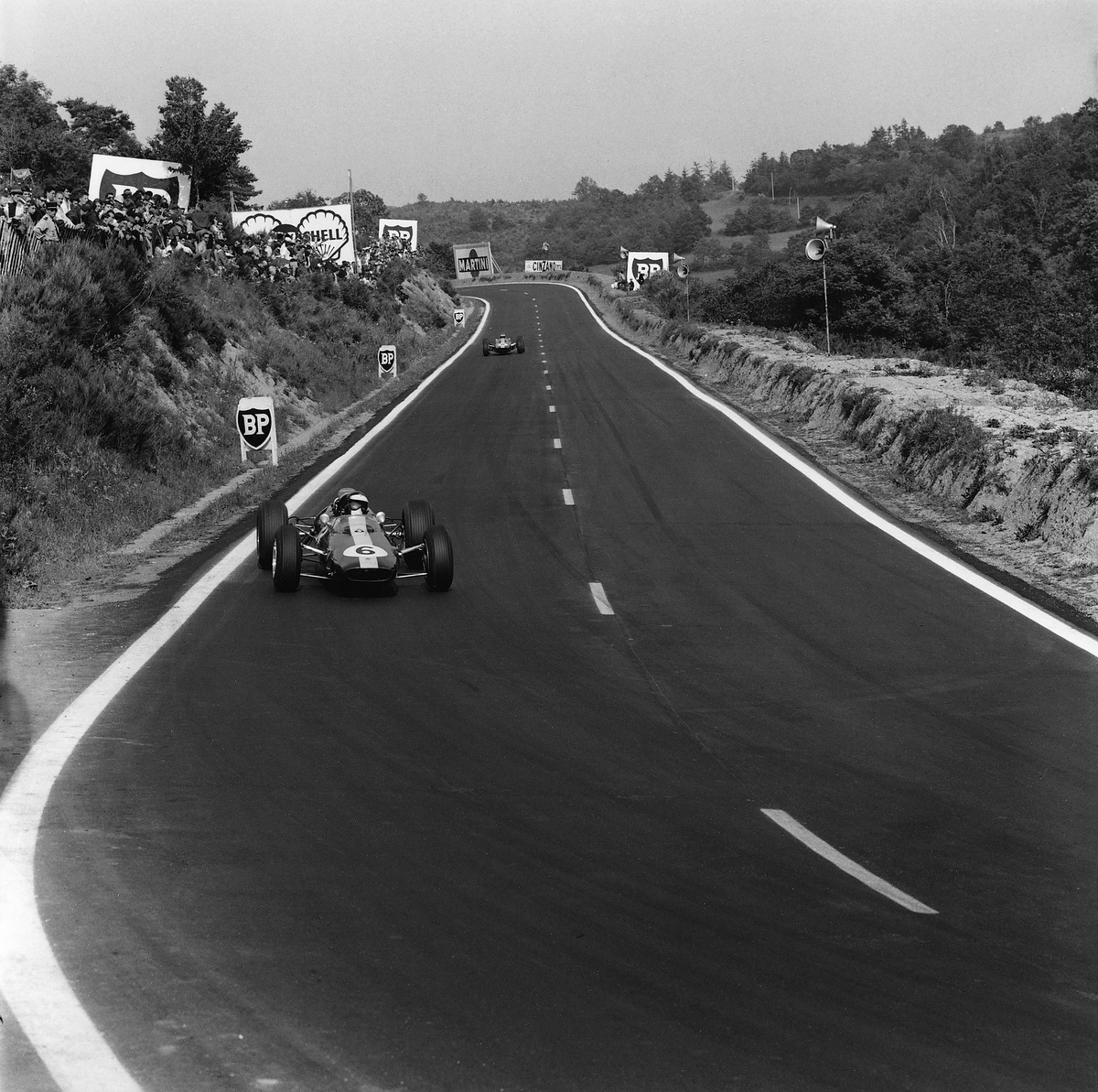 Jim’s lead over Lorenzo at the end of his opening lap was 3.5 sec; by lap two, with Jackie now in second place, he was ahead by six seconds. And so it went on. Perfect poetry in motion. Twin high-level chrome exhausts (rather than the 33B’s low, wide-spaced exhausts) distinguished Jim’s car on this occasion; otherwise, it was 1965 at its Jim Clark best: by half-distance, with Jackie still second, Jim was leading by 14 sec; by the end, heading another one-two for the Scots, Jim’s winning margin was nearly half a minute. John Surtees finished third after a quick pit stop (and after Lorenzo shunted in the closing laps!), and the brilliant Hulme was fourth after dropping as low as 14th on lap one. Overall, though, it was another consummate Clark performance. Pole position. Led from start to finish. Fastest lap.
And with not the hint of a whisper about what had transpired on the Thursday…Win No24; images: LAT Archives
Here are two short videos from the race, courtesy of British Pathe and British Movietone News. Apologies for the way the Pathe video has obviously been speeded-up. That’s also Jochen Rindt shunting the works Cooper-Climax (not Lorenzo in the Ferrari); and you can see Chris Amon briefly in the Parnell Lotus 25 after being lapped by Jackie Stewart’s BRM. The second video, the Movietone News film, has only recently been uploaded to YouTube and contains some excellent footage from the race
























 peterwindsor.com