peterwindsor.com

…chance doesn't exist; there's always a cause and a reason for everything – Elahi

Archive for the tag “Red Bull”

Watching from La Rascasse (Part 1)

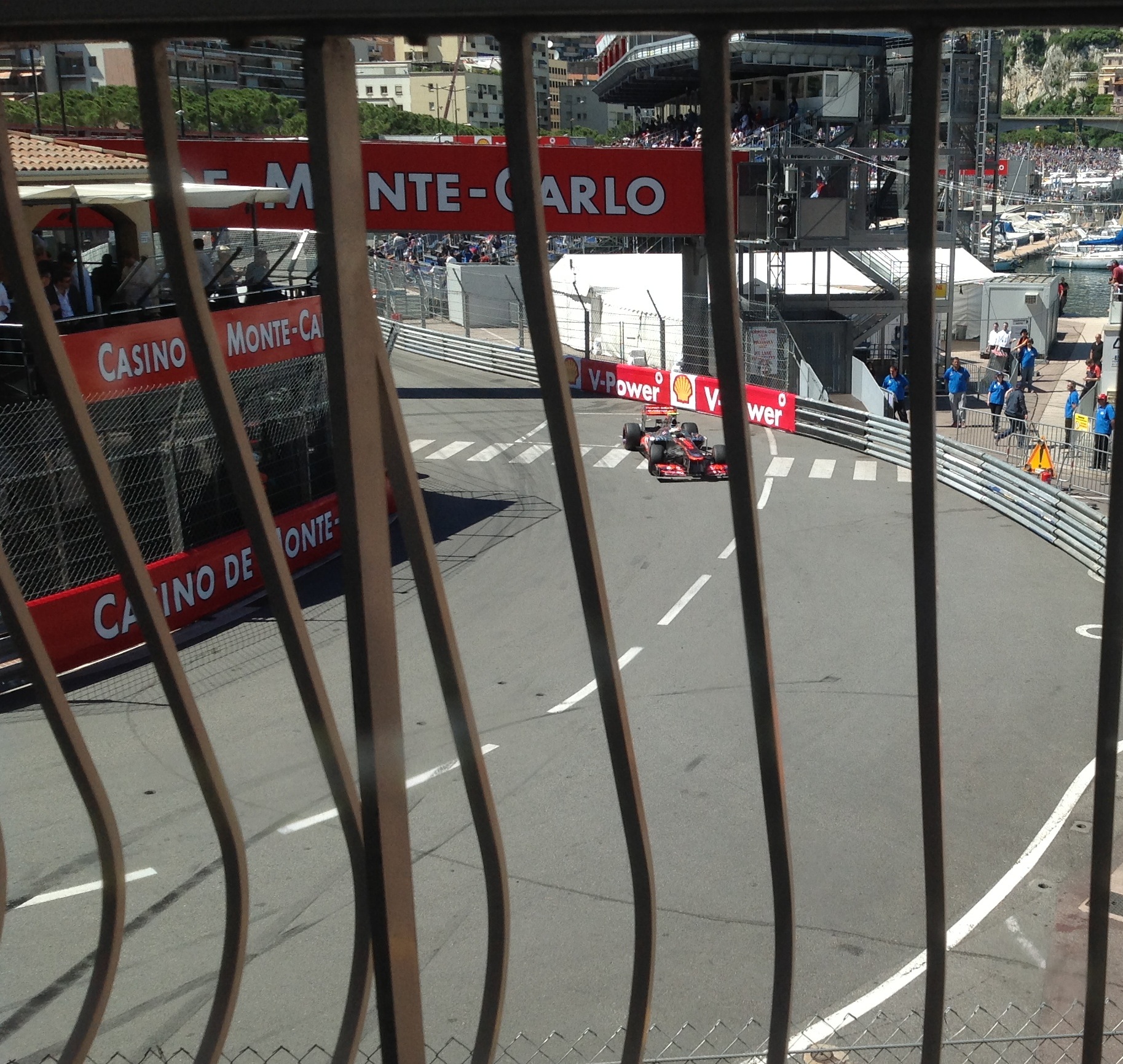
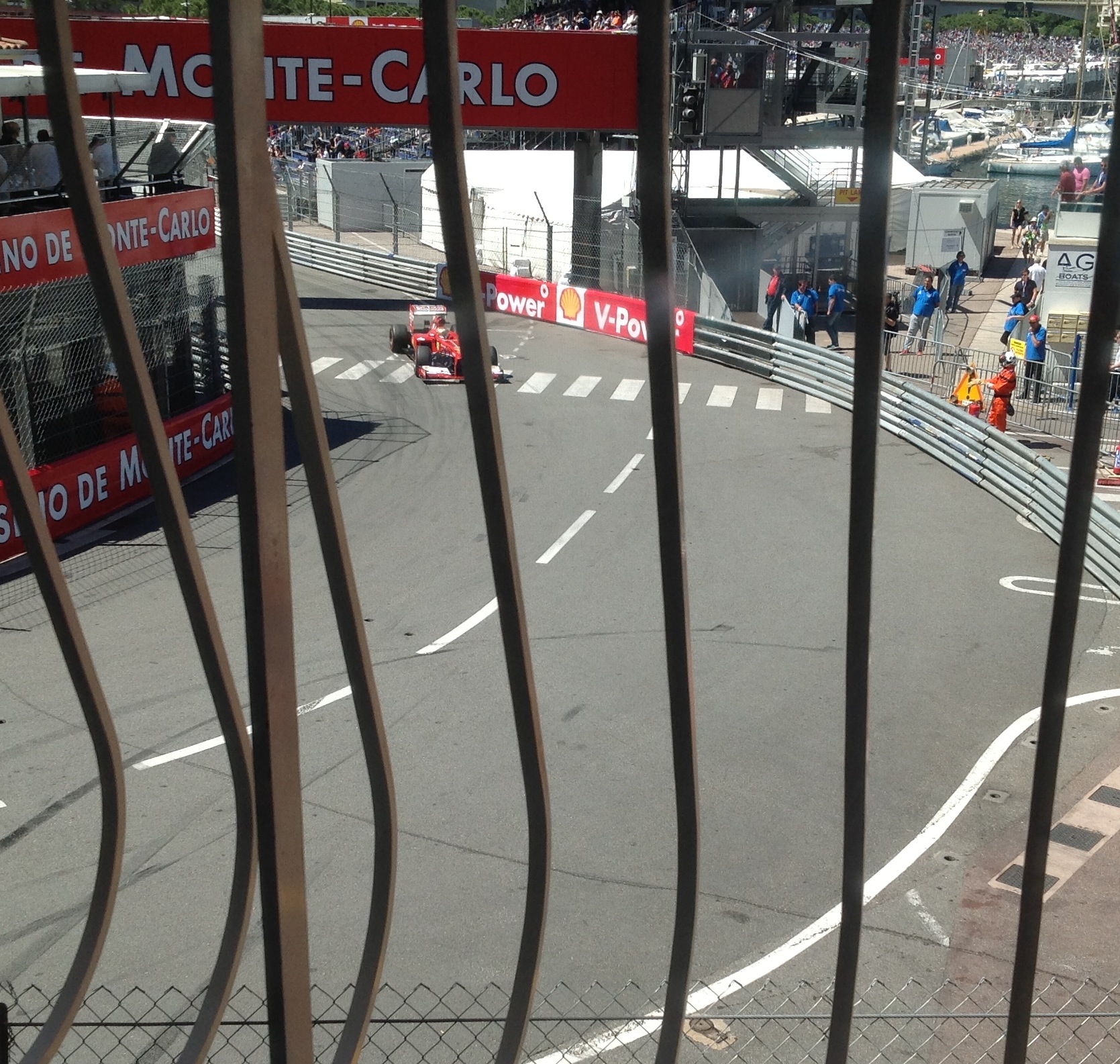
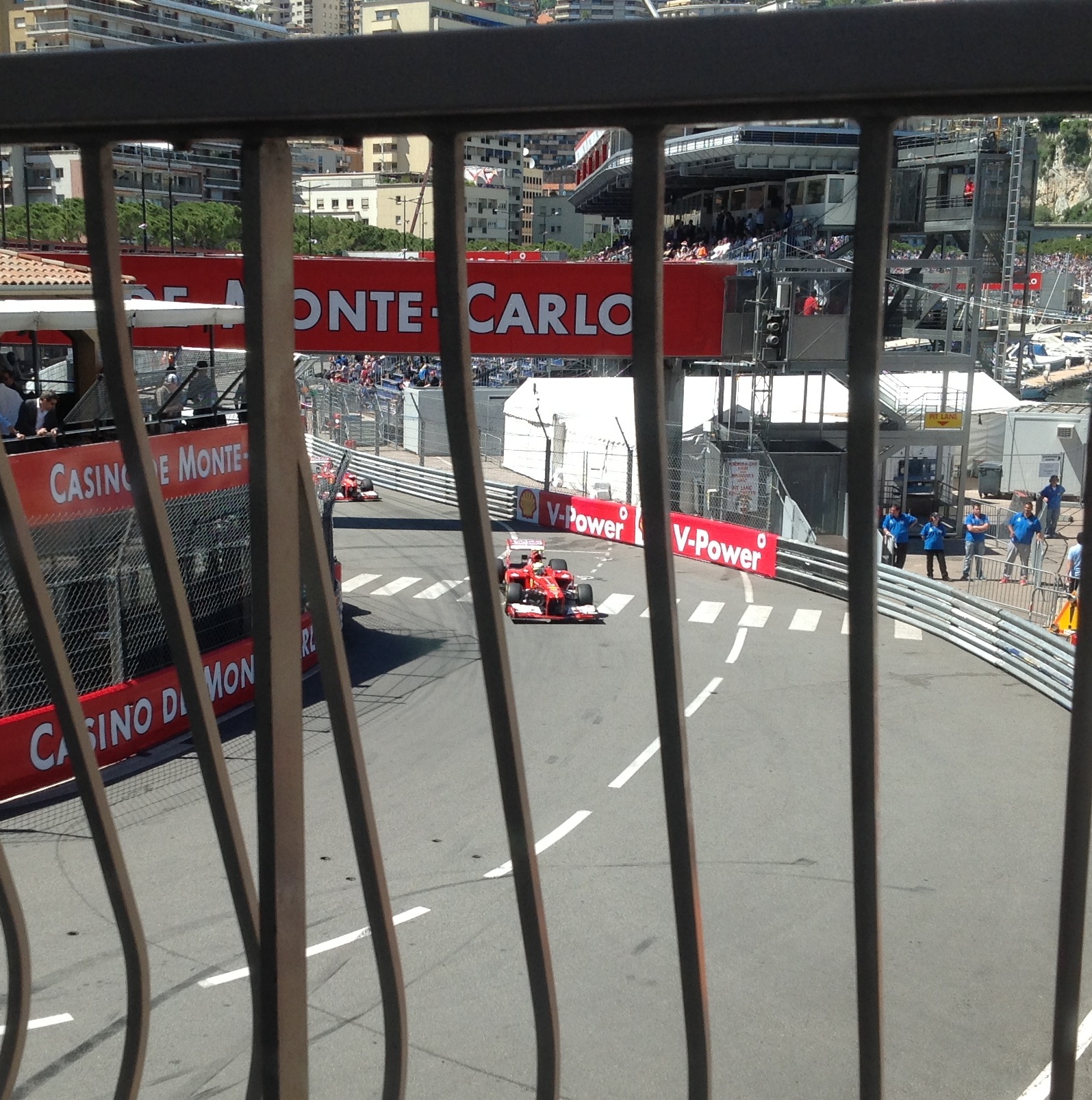
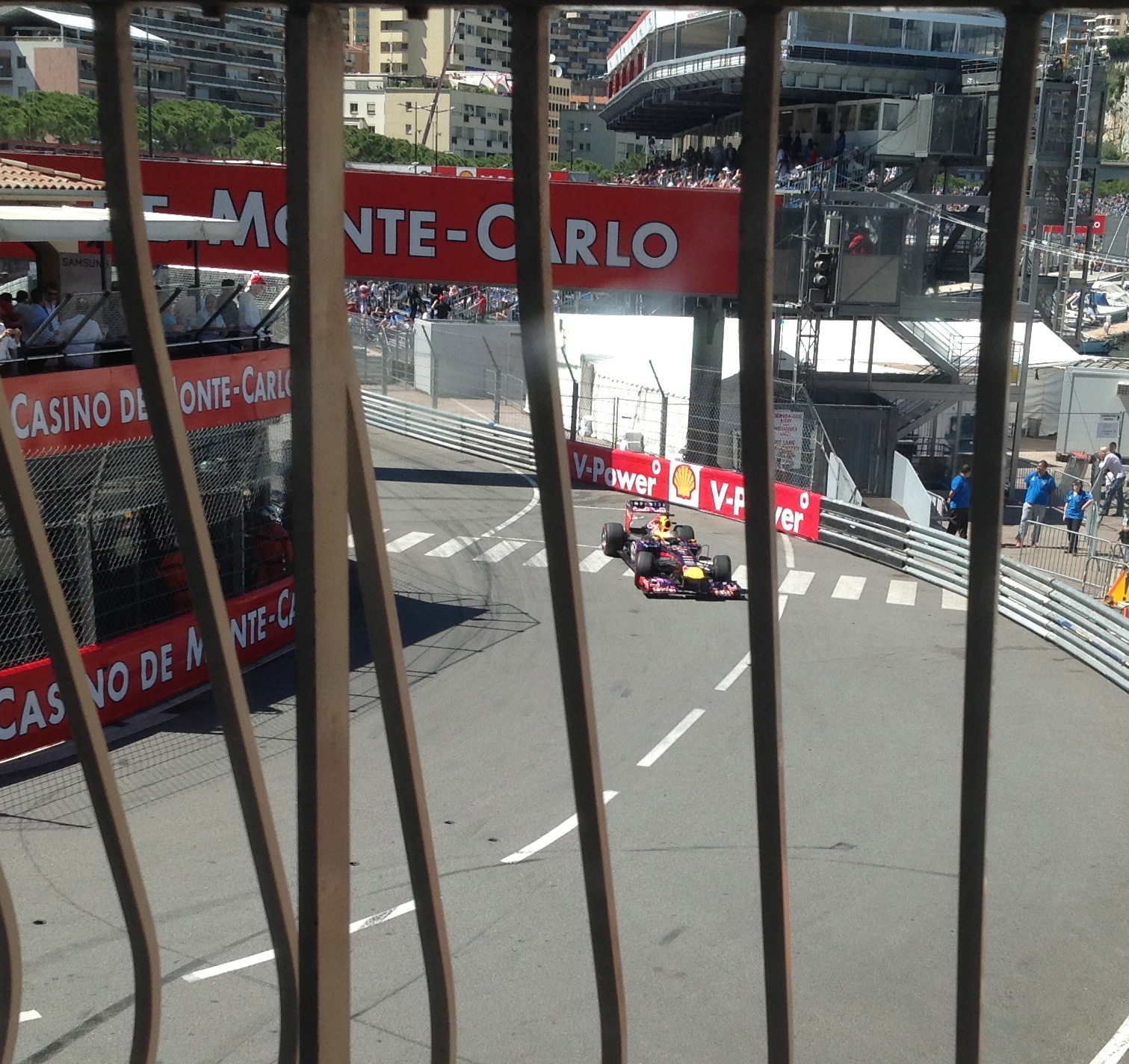
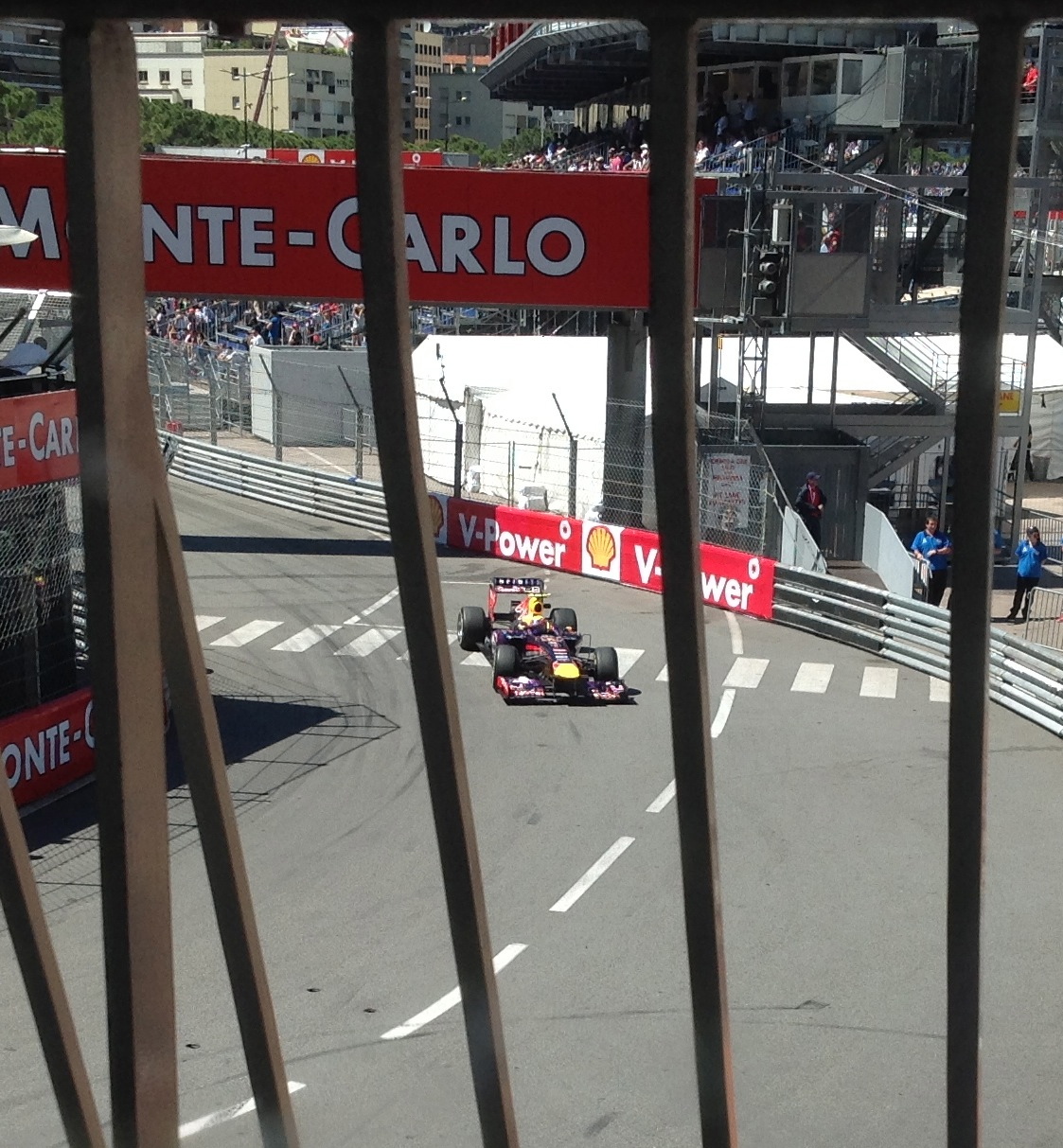
What you see here does not come under the heading of “good photography”.  It is, though, my attempt to try to illustrate some of the principles about which we talk on The Racer’s Edge and occasionally on these pages.  All the pictures were taken at La Rascasse on Thursday afternoon at Monaco (after Romain Grosjean had hit the barrier at Ste Devote!).  I wanted to try to keep the frame of the shot as near-identical as I could for every car so that we could identify some of the differences between the drivers.  I also ensured that each driver was on a quick lap or was not backing-off prior to peeling into the pit lane.  The pose they strike as they reach the pedestrian crossing stripes is pretty much their signature – and those stripes on the road of course provide some sort of useful visual reference. Some drivers, you will see, are already asking quite a lot from the car – as can be seen by the steering angles as they reach the road stripes.  Others are asking less.  Some are “softening” the entry by curving into the apex from about the middle fo the road;  others are well to the right of centre and are “extending the straight” into a relatively low minimum speed rotation-point.  I should stress that La Rascasse is far from being the most important corner on the circuit:  it is followed by a very short, sharp blast before braking into a negative-camber right-hander.  It is, though, what it is – and I can confirm that I have never seen a great Monaco driver (Stewart, Reutemann, Prost, Mansell, Senna, Raikkonen) who was not clean, methodical and super-quick into La Rascasse.   Despite the implications of these quiet, motionless images, each snapshot-in-time is in reality a compendium of the initial brake pedal pressure that was applied about a second or so before (when the cars were in fifth gear on the curving straight between the swimming pool and Rascasse), the rate of release of the brake pedal pressure (taking place as these pictures were captured), the initial steering movements (also taking place) and, yes, the positioning of the car.  In each case, in summary, the “static” cars shown here are actually a mass of dynamic forces being harnessed by the drivers.  All are different;  some are better than others. 

Fernando Alonso (left) photowas (with Pastor Maldonado) the driver who turned-in earliest to Rascasse.  He refrained from applying any soft of substantial steering lock until he was right at the apex (out of the photograph to the bottom left), and this he did with increasing power.  He looked superb, I thought.  The back of the Ferrari would always skip slightly as he rotated the car, which probably meant that his minimum speed was relatively low – but there is no doubt that from the pedestrian crossing to that minimum speed point he was quicker than anyone on the circuit.
Felipe MassaMassa (right) wasn’t a lot different from Fernando… but was different nonetheless.  He braked more to the centre of the road and thus approached the corner with a slightly “softer” line.  This gave him a slightly “longer” corner – ie, he had to cover more road and, thus, he put more initial lateral energy through the tyres for longer.  Felipe was very finessey with his steering inputs and, like Fernando, always honed-in to a lowish minimum speed, the better to rotate the car.
I was surprised by the massive differences between the Red Bull drivers, Sebastian Vettel and Mark Webber.  Although the positioning of the two cars looks fairly similar in these two pictures, look closely at the amount of steering lock SebSeb has applied (relative to Mark).  This was absolutely typical of what we saw all afternoon.  Seb (right) would approach from a relatively wide angle and crank on a massive amount of lock as he was releasing the brakes.  The result was understeer – driver-induced (very graphic) understeer.  Could it be that Seb was working on protecting the rears?  Perhaps.  Mark, Markby contrast, was Alonso-like with the steering applications, even if he was leaving himself a slightly more open approach. I’d say Mark’s Rascasse (right) leaves him slightly more margin for error (or for the unexpected) than does Fernando’s but that their inputs were about equal.  Again, brilliant to watch.
Both McLaren drivers created very “long” corners from wide entries.  Jenson’s inputs (below)Jenson were more svelte that Sergio’s but Sergio began the corner with slightly less initial steering input, in turn enabling him to ask slightly less from the front tyres.  Equally, Sergio (below right)Perez
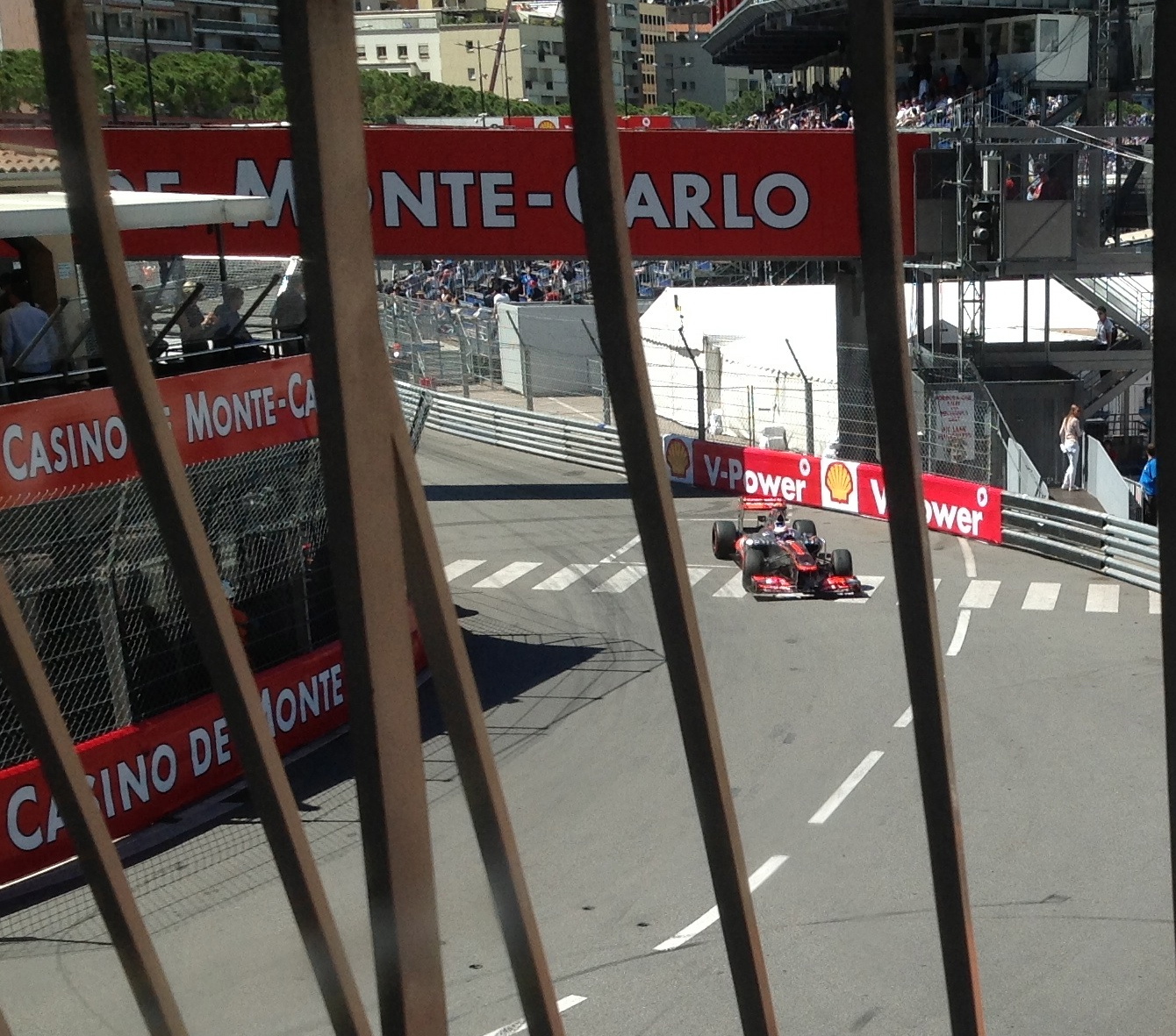
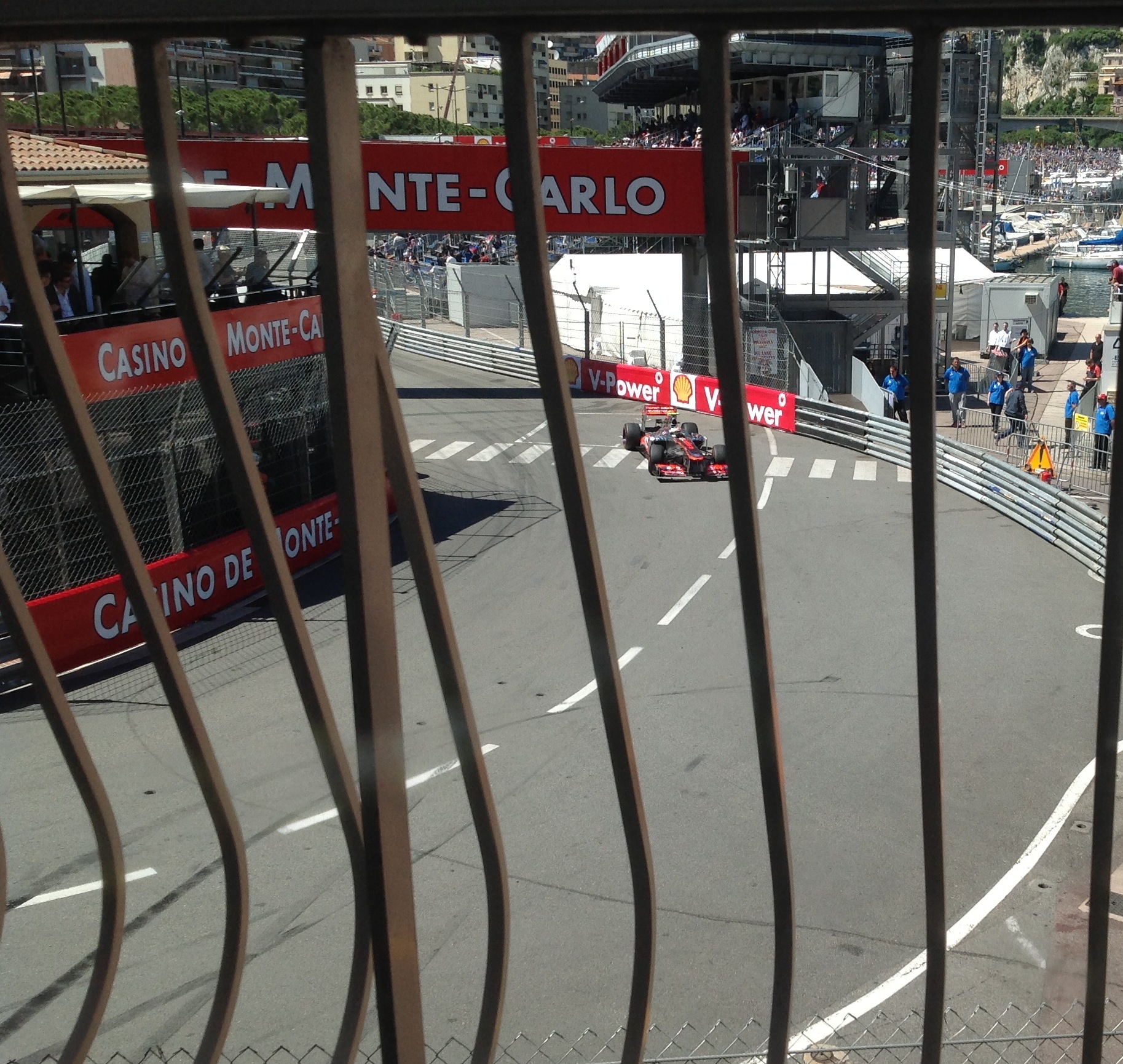
had a more substantial final rotation.  When you see these two drivers alongside one another like this, you wonder how good it is for a team to be running drivers of such similar style.  It would be interesting, for example, to see how the MP4-28 would perform at the other end of the spectrum – the Alonso/Webber/Raikkonen end – or perhaps at the Vettel/understeer end.

I didn’t get to see Romain, as I say, but I can tell you (from Thursday morning) that he was about half-a-car’s length to the left of Kimi as he crossed the painted lines and was using about a Webber-dose of steering at that point.  Unlike Mark, who would deliberately await the moment of final rotation before accelerating flat and clean, Romain teased the throttle a little, like Alonso and thus ran right out there on the ragged edge, leaving no room for error.  The Ste Devote shunt, I think, was no surprise.  Kimi was of course just beautiful to watch, even if he was locking up the front brakes more than we usually see.  He wasn’t quite as far to the right as Alonso and Maldonado (or Di Resta, as it happens) but his initial steering movements were very slight and very small – a mile away from Vettel’s.  Then, in one clean movement, Kimihe would tuck in the front for the major rotation and accelerate without fuss towards the exit of the corner.  Totally repeatable and extremely efficient (left).
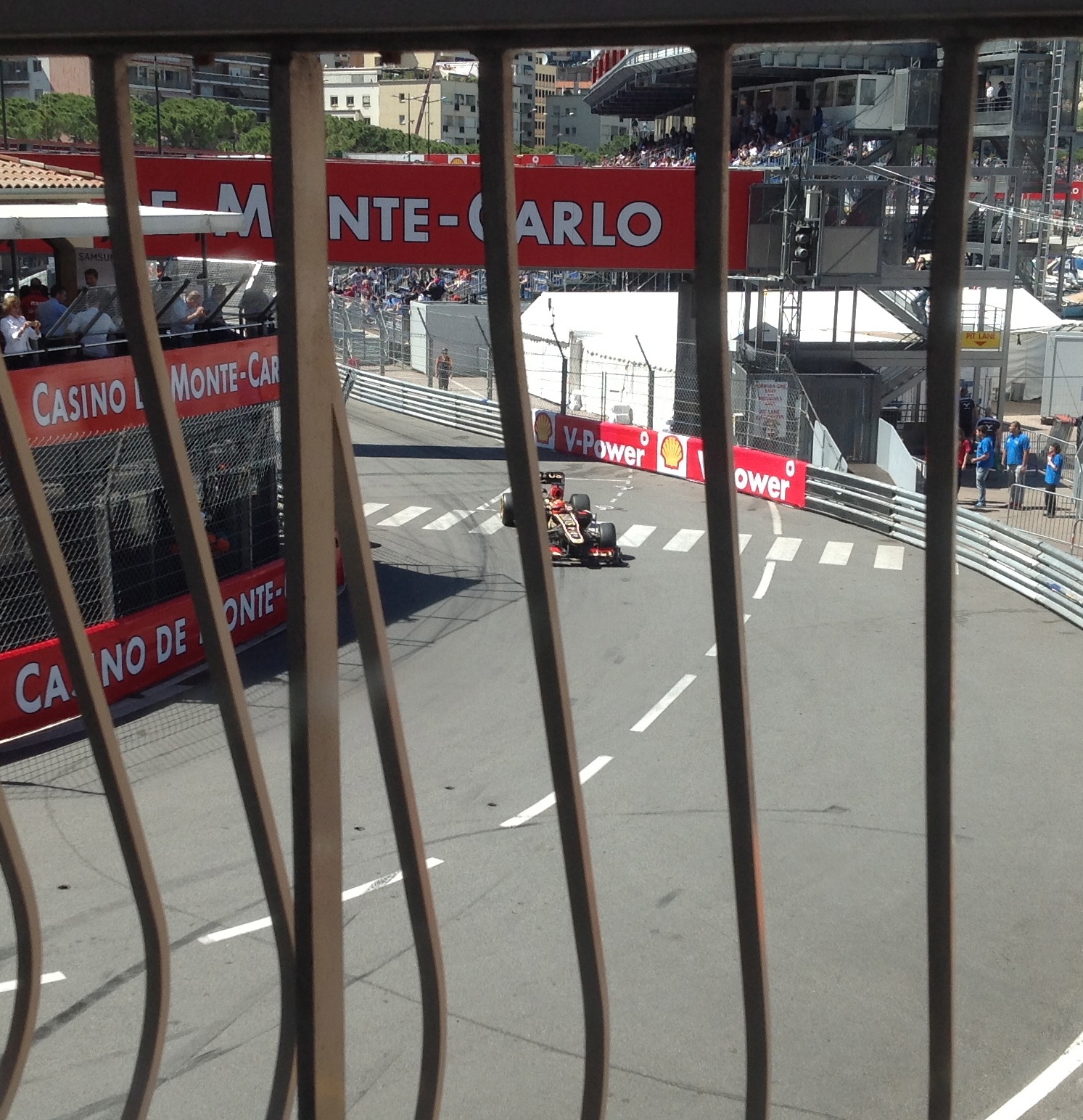
The differences between Nico Rosberg and Lewis Hamilton were small but significant.  Both drivers turned-in early, like Kimi and Fernando, with delicately-small initial steering inputs, but NicoNico (below) did so from about half a metre further to the right, giving him a slightly shorter corner.  This he managed in Prost-like fashion, never looking unruffled or out of synch. Lewis (below) Lewiswas thus a tad less impressive than Nico through this section of road – which, for me, was a surprise, I have to admit.
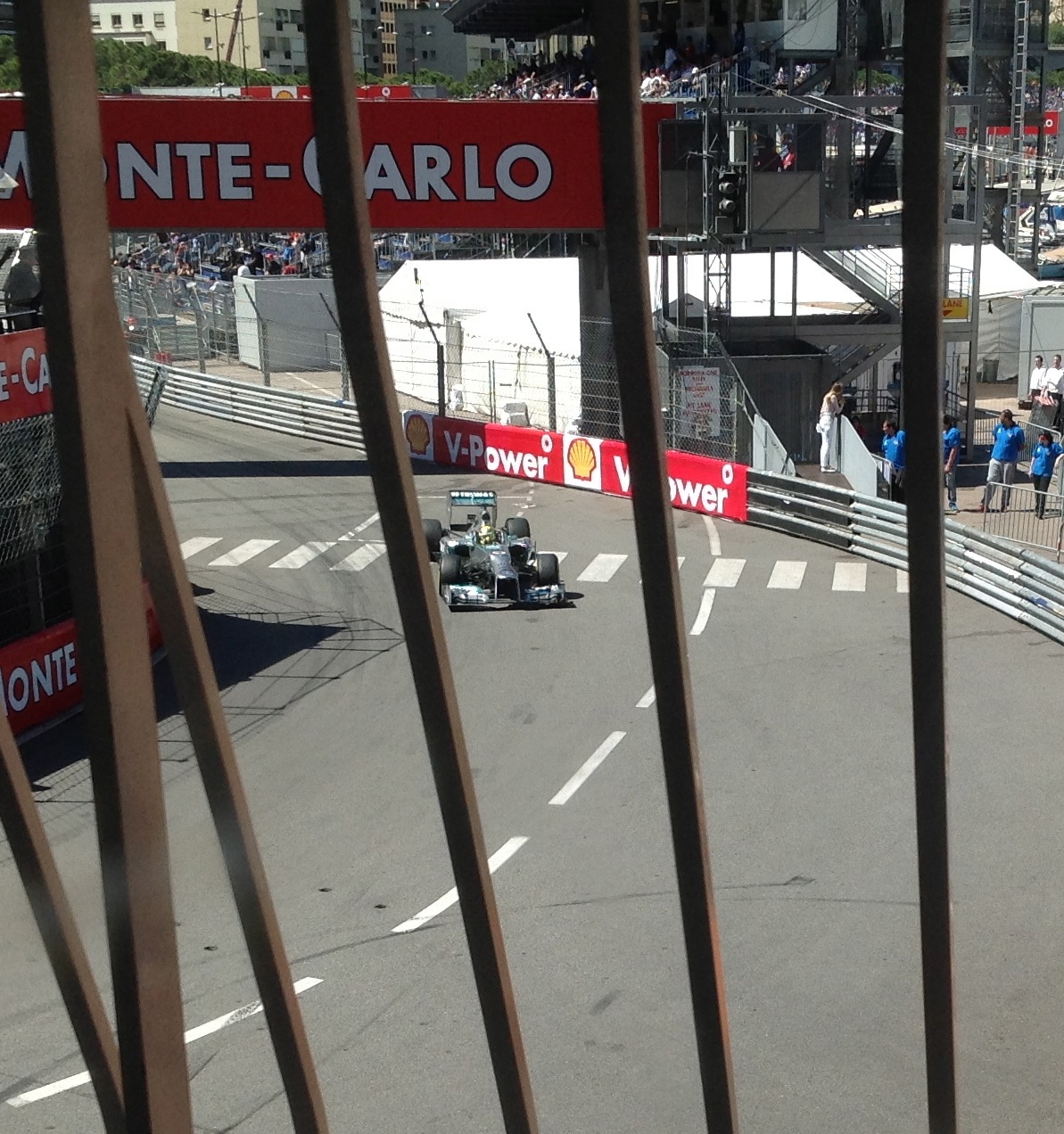
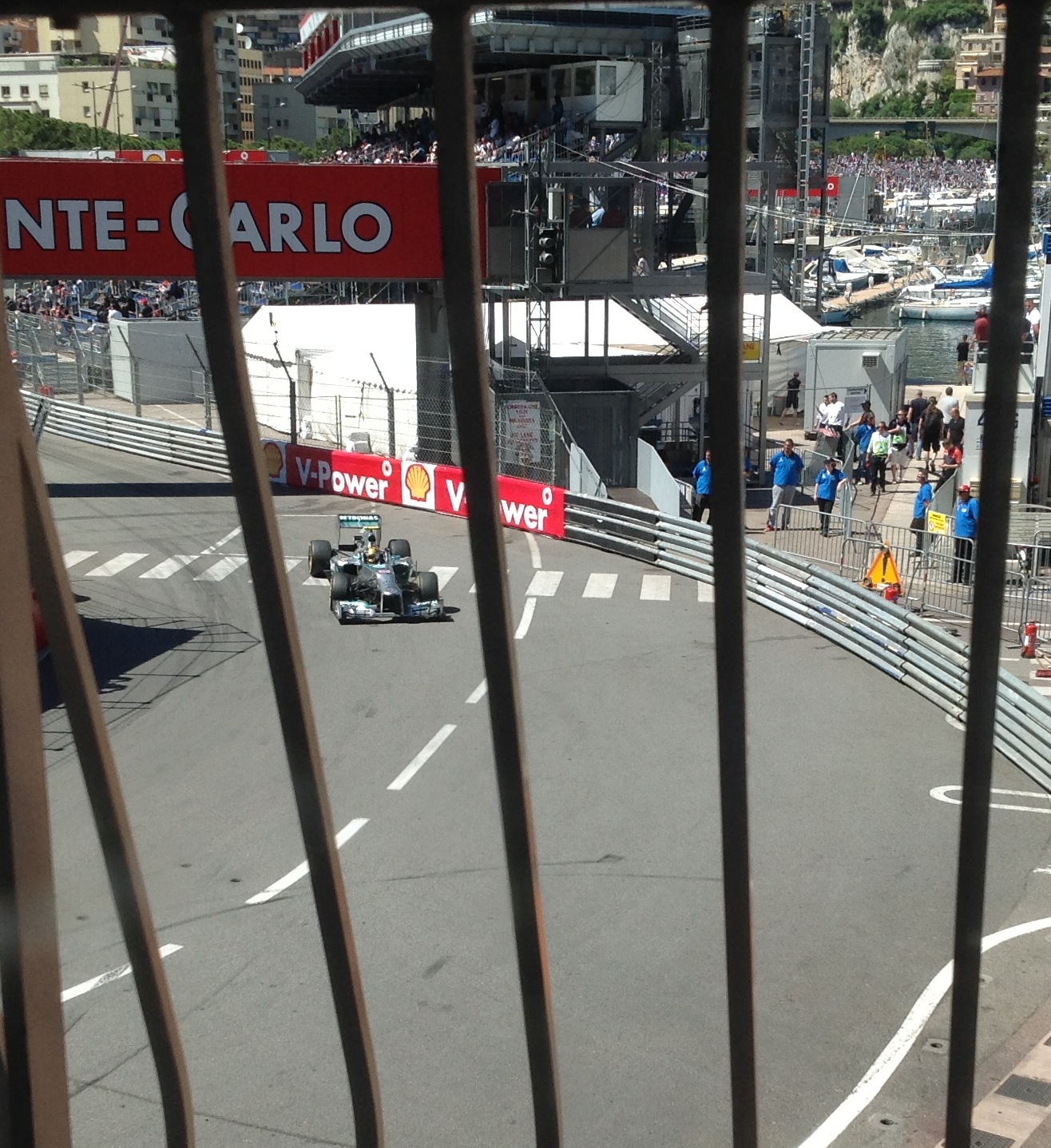
Part 2 of our views from Rascasse, featuring the remaining cars on the grid, will follow shortly.
One new F1 car after another…

All the teams (bar Williams) launched their 2013 F1 cars prior to this week’s first test at Jerez.  Here, courtesy of the ever-concise Craig Scarborough, are some additional, brief thumbnails:


Chatting with the Champ


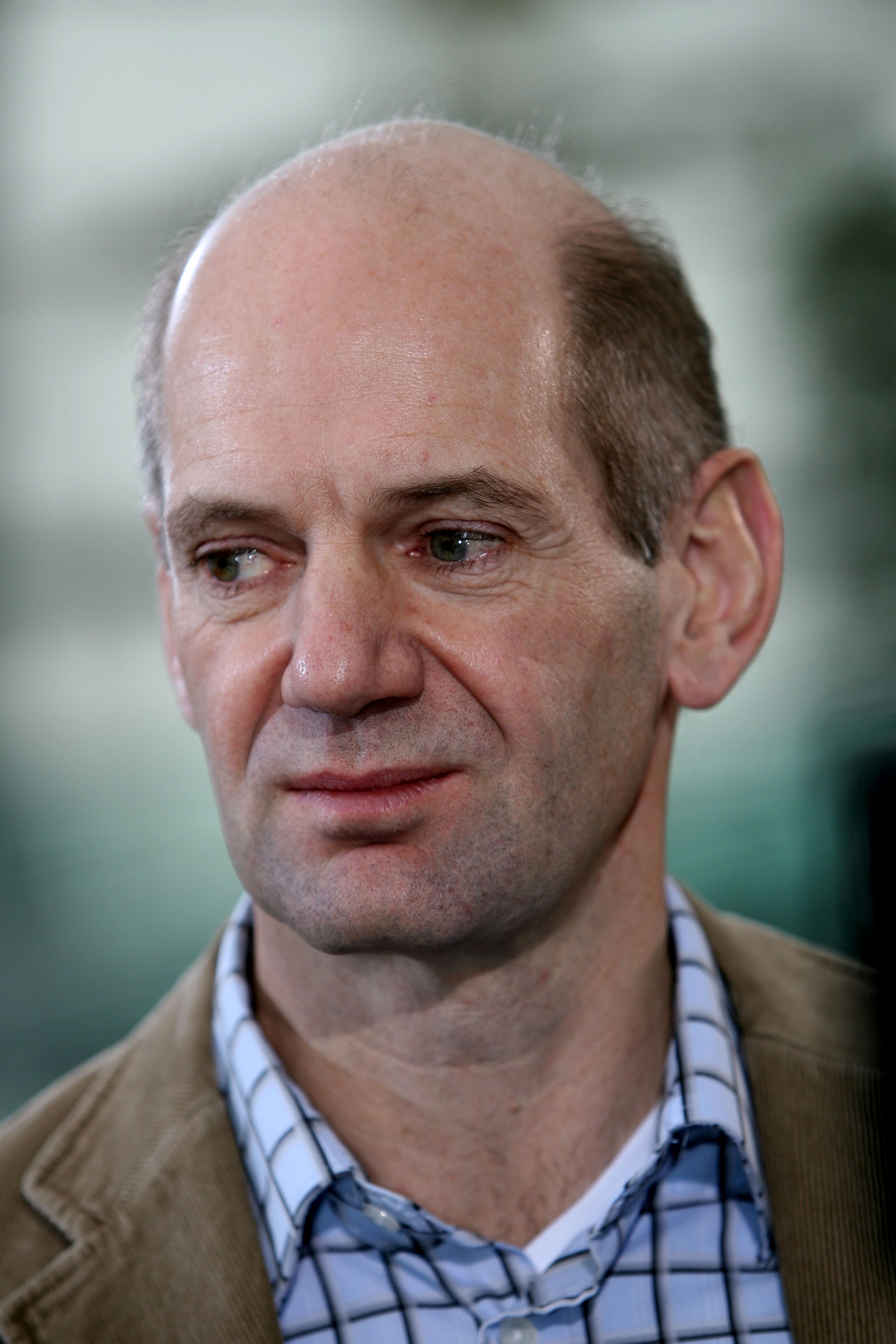
Adrian Newey, OBE,  Director of Engineering at Red Bull Racing, isn’t just the best of his time;  he sits right up there with immortals – with Rudi Uhlenhaut,  John Cooper, Colin Chapman, Patrick Head and perhaps a couple of others I’ll leave to your judgement.  A shy and retiring man who loves driving nice cars as much as he loves drawing them, Adrian was in reflective mood when we chatted on the eve of the recent Italian GP:

So prodigious is the success of Adrian Newey, so synonymous is he with F1 technical excellence – and therefore with prodigious F1 race and Championship wins – that it is a surprise suddenly to be sitting down with him in that zone they call “the Red Bull Energy Centre” and to listen to him talking…as if he is a mere enthusiast:

“Whenever I think of Silverstone,” he says, back to the journalists crowding around Sebastian Vettel – and to a bevy of exotic “Red Bull girls” beyond that group – “my immediate reaction is to remember the first race I attended there.  I went with my parents;  we sat in the grandstand on the outside of Woodcote;  and it was 1973.  I remember Jackie Stewart coming round with a huge lead, followed by the rest of the pack, including a young South African who lost it in a McLaren in a fairly spectacular way.  Amidst all the dust and the rubber I remember thinking, ‘So this is what F1 is like, is it?  Pretty spectacular…’”

Adrian speaks in what Americans would probably describe as a “typically British, under-stated way” but which to you and I is the voice of well-balanced reason.  One only has to chat to Adrian for five minutes to appreciate that he’s about as interested in celebrity, and in accentuating the first-person singular, as he is in market gardening.   Money?  Perhaps – but only if orientated towards an ex-Skip Scott GT40, or some other such delectable.

“I also remember,” he continues, “that in the excitement of watching the accident, I dropped my hamburger.  I think it was the first time my parents had ever bought me a burger – they were pretty health-conscious and liked to keep me off junk food – and so, when the dust had settled after the accident, I ran round the back of the grandstand to look for it on the ground underneath our seats.  Good for antibodies, I’m sure!”

A nice, scientific end to a little cameo that in many ways tells much of the story.  Peerless Adrian would become – an aerodynamicst par excellence in all forms of the sport (from IndyCar, where he won dozens of races with March, to F1 with March, Williams, McLaren and Red Bull) – but at the core remains the genius, the child prodigy, the detailed enthusiast with his eye on the day as a whole rather than on an event in isolation.

Thus Adrian is as much a racer as he is an engineer who sets standards in a competitive world.  He loves to drive, but recognized early that he loved even more the business of designing fast racing cars.  He also loves to engineer on the pit wall.

“My first weekend as a race engineer was also at Silverstone,” he recalls.  In the background, a heavy base is beginning to pound from the Energy Centre’s “social corner”.  Adrian is oblivious.  He is back in a grey day in Northamptonshire.  “It was 1982, and I had just moved to the March F2 team from Fittipaldis.  I’d literally never had a set of headphones on in my life before and they said, ‘Right, here you go.  You’re engineering Christian Danner’.  It was a cold, wet weekend – as miserable as it can be at a British circuit.  To be perfectly honest I really didn’t know what I was doing.  Christian was running second, I think, when the car broke down about one lap from the end, apparently out of fuel.  I was hung, drawn and quartered, and promptly fired on the spot by Christian – but then it turned out that there had actually been a metering unit leak.  Johnny Cecotto was also running in the works March team and he very kindly said that he would take me on instead, with Ralph Bellamy running Christian.  Johnny was a great bloke; we had a really good year together.”

Interesting on a number of levels.  Self-deprecating – “I didn’t know what I was doing” (yeah, right!).   Sensitive:  “Christian fired me on the spot”;  and appreciative:  “Johnny kindly took me on instead.”  I knew Johnny back then;  he was/is a great guy – a decent human being who had/has time for everyone.  Not what you would call a “Red Bull”-type of guy – but then who is?  The beat in the background throbs on, blasting out its message: “we are cool;  we are cool”.  Next to me sits Adrian.  Conservative.  Quiet.  Sensitive.   And also very “Red Bull”.   Such is the spread of his influence.

I ask Adrian if he has been following the excellent progress of Johnny’s son, Johnny Jnr, in GP2.

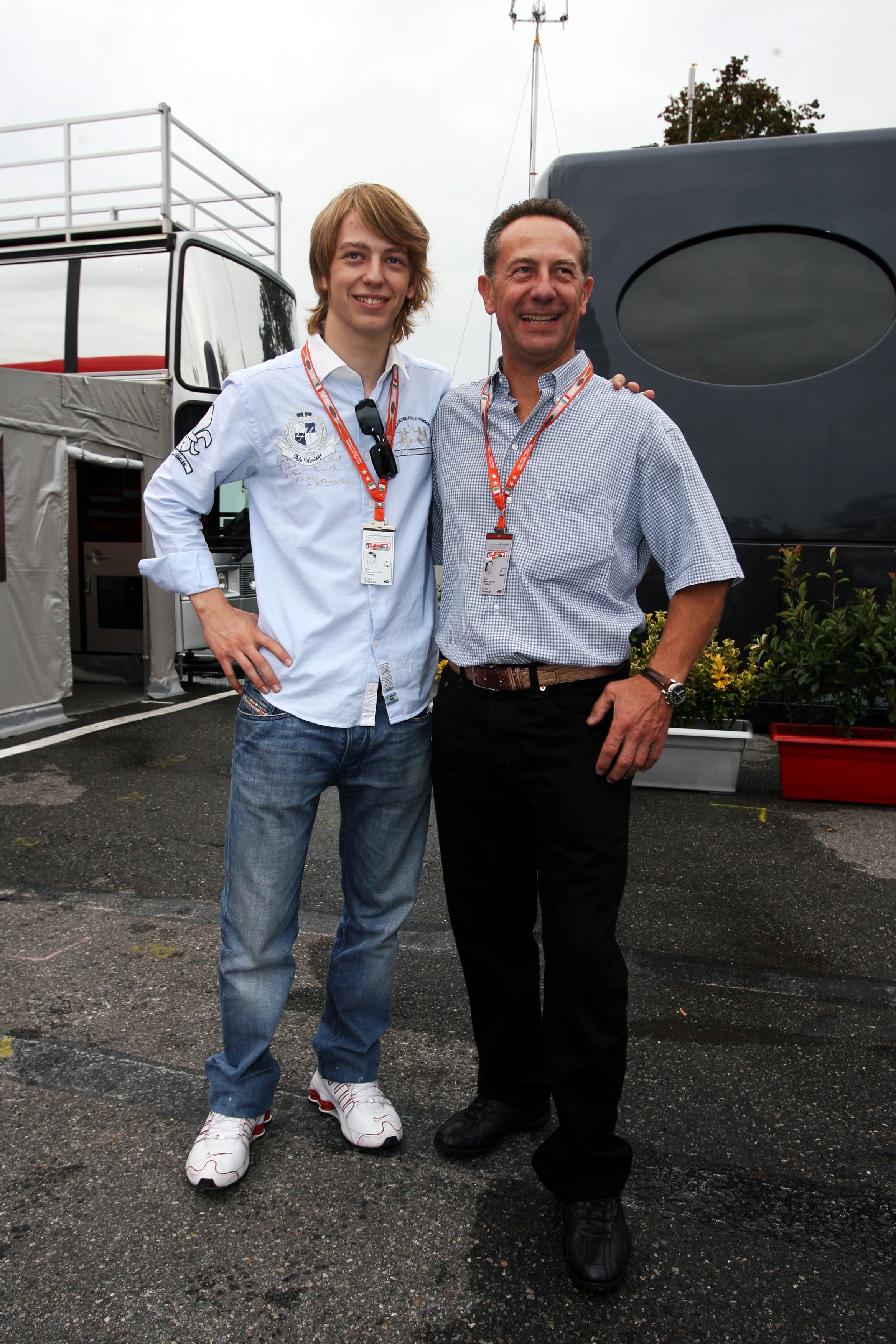
“Yes, of course.  It was nice to meet him after he won at Monaco this year.  There seems to be a family resemblance – and it’s good see another father and son going through.”

Cecottos Jnr and Snr: Adrian has fond memories of his F2 year with Snr and this year watched Jnr win GP2 at Monaco

Adrian’s talent as a driver is under-rated, I think.  Rob Wilson trains him and reckons he’s definitely up there with serious players who have won their class at Le Mans or Daytona.  So how does Adrian perceive his own talent?  What does the engineer think of the driver?

“I guess I was a frustrated young racing driver,” he admits.  “When I was around 14 or so I desperately wanted to go karting.  My father took me along to the local track – Shenington, near Banbury – and, to be fair to him, he made the very accurate observation that, so far as he could see, a lot of the kids were there karting not because they really wanted to be there but because their Dads wanted them to race.  So he said to me, ‘I’ll do you a deal.  You can race if you want to but you’re going to have to show your determination.  For every pound you earn, I’ll double your money…’

“Of course, doing the newspaper round, washing cars and mowing the lawn didn’t produce a lot of income, even if it was doubled, so I bought a very tired old 210 Barlotti-Villiers.   I’m not exactly sure why I went for a gearbox kart instead of a 100, but nonetheless I turned up at Shenington and the combination of me and it was hopelessly uncompetitive.  I qualified on the back row and finished pretty close to the back.

“My interest then focused on taking this tired old kart and making it go quicker.  And so I rebuilt the engine, fitted an electronic ignition, learnt to weld and made a new frame for it and so on.  I’m not sure I made it go any quicker but it did give me an extra flavour for the engineering side of things.”

We talk about cars – about racing automobiles that Adrian specifically likes:  “In terms of all-time favourite classic cars I would have to divide it into categories of both sports racing car and formula cars,” he says in that precise way of his.  “My all-time favourite sports racing cars are the Ford GT40 and the Ferrari 330 P4 – two of the prettiest cars ever built and from an era of motor racing which coincided with my childhood interest in raring cars.  From Formula 1, my favourites would probably be the Lotus 49 and 72 for similar reasons.”

“How quick am I?,” he asks rhetorically, staring into the middle distance that is the RBR race truck(s).  “I think in the historics, when I’ve driven alongside drivers like Bobby Rahal and Martin Brundle at Goodwood, I’ve generally been about a second off them, or just under a second.  Then, when I’ve got to places like Le Mans and competed against the pro drivers there, and at circuits like Misano or Vallelunga, I’m probably about 1.5 seconds off.  I’m sure it depends on the car.  If I was to jump into a single-seater it would be much more.”

Which, to my mind, puts Adrian up there with Colin Chapman in the scale of designers-who-also-know-how-to-drive.  The combined talents have to be an advantage.  Have to be.  And the comparative success of Chapman and Newey is of course no coincidence: it is predictable that both of them were/are prepared to push design tolerance to the absolute limit because they knew/know that a tenth of a second is everything, and that every racing driver worth his salt will take it on a plate, thankyou very much.  Jim Clark may have been nervous about Chapman’s margins for error – but he still took every ounce of speed that Chapman would give him.

It’s one thing to be a brilliant aerodynamicist and Technical Director;  it’s another to be a practical leader of men with the common sense of the truest of racers.  Adrian has yet to start his own team from scratch, and to rise to the centre of the podium as a Team Principal, but he could do so if he so tried;  of that I have no doubt. Like Chapman, Newey also has that burning desire to get things done.

In the meantime, his rapid rise is proof of the devastating talent:  a fast March for the fragile Leyton House-sponsored team.  A move to the more financially-secure Williams Grand Prix Engineering.  With Patrick Head and Paddy Lowe, brilliant success with the Renault-powered FW14 and its derivatives.  In 1996, a switch to McLaren.  More wins.  An even more corporate structure.  A departure, then, for Red Bull – for a team that had yet to win and still lacked an infrastucture.  That was the challenge.

“Motivation is an important part of delivering,” says Adrian, “and the hunger has to be there.  Certainly when I joined Red Bull one of my prime motivators was the unfinished business from the Leyton House days, inasmuch that I’d been at Leyton House more or less from the start.  I thought we were developing quite well as a very small team going forwards – two steps forwards and one backwards from time to time! – but if we had continued to have had decent funding then maybe as a team we could have gone on to win races.  But the funding was pulled and it was time to get out.

“So I kind of always regarded it as unfinished business.  Williams and McLaren were very established teams that had won races and championships long before my arrival.  Perhaps in both cases they had lost a bit of direction in terms of design and specifically aerodynamics but as an infrastructure they had proved they could win championships.  So my job on arrival at both of those teams was very much a design-based job.  In joining Red Bull it was different, because it was also developing the infrastructure in all senses of the word – with Christian (Horner) on the race team and then, specifically within the engineering group, things like building up our tools, getting the guys to work together, establishing the flow between departments and so on.  Indeed, in hindsight I think one of the mistakes I made in my first two months there was to treat it too much as a design-based job and not to spend enough time developing the rest of it.  If I had concentrated more on the infrastructure and the strategies, if you like, we’d have made better progress.”  Adrian is as motivated today as he was back in the 1980s: “ F1 remains a fascinating business in which to work – in my particular case for its many facets of design and innovation, both personally at the drawing board and also working with my fellow engineers at Red Bull around the factory.  Then, of course, it’s very enjoyable to be able to work with the drivers at the race weekends.”

Adrian’s and Red Bull’s progress was by most standards meteoric, of course.  Such, though, are the expectations of a racer.   None of this “it’ll be a three-year programme” stuff from Mr Adrian Newey, OBE.

We finish with some talk about the BRDC.  Adrian loves it:  “I think the BRDC is very important to British motor sport in as much as it gives a solidification to all the members;  I think all the members feel proud to be a part of the club, as demonstrated by the way that drivers like Stirling Moss, Jim Clark and Jackie Stewart always used to wear the BRDC badge on their overalls.  Obviously it’s hugely bigger today than it was then but, when you visit it, there are always people there that you know.  There’s camaraderie about it.  I think the only thing that’s a little bit of a shame,” he says, rising to leave, “is that the end-of-year function is now a lunch rather than a gala dinner.”

No more bun-fights, in other words; no more Chapman-like hijinks.

A racer, as I say, to the core.

This article was originally published in the Autumn, 2012 edition of the BRDC Bulletin

Photographs: SuttonImages


Nick Yelloly on WSR Silverstone

The aggressive young Englishman continues to impress

Robin Frijns – WSR points leader

He won the F BMW European Championship;  he was the 2011 Formula Renault Eurocup 2.0 Champion; and now, in his rookie season, he leads the ultra-competitive WSR 3.5 series.  Fortec’s Robin Frijns is a major part of the vibrant new Dutch challenge towards F1.  I spoke to him earlier this week about his rapid climb and  his recent F1 demo run for Red Bull in Moscow

“I was laughing; I couldn’t stop laughing…”

He began 2012 without a regular drive; then Trevor Carlin offered him a GP3 seat. He quickly showed his talent and speed – and was rewarded in May with a Red Bull Junior Team contract. Instantly competitive in the much bigger and faster World Series by Renault cars, Portugal’s Antonio Felix da Costa nonethless continues to race GP3 with Carlin. In Hungary, on July 28/29, he made history by winning GP3 on both Saturday and Sunday. I spoke to Antonio prior to the Silverstone WSR race on August 25/26.


Post Navigation