peterwindsor.com

…chance doesn't exist; there's always a cause and a reason for everything – Elahi

Indy: Second Row for rookie Jim Clark
moremsportshistorySilverstone and that dramatic escape behind him, Jim Clark returned to the cauldron they call Indianapolis, this time residing at the Speedway Motel.  He and Dan Gurney were ready to roll on Monday morning – and to apply, therefore, the finishing touches to their all-important qualifying attempts.  If they didn’t make it on this first weekend there would be no Monaco Grand Prix.  It was as simple as that.  And if there was no Monaco Grand Prix, Jim Clark’s 1963 F1 season was going to become unnecessarily tough.  After losing the title in 1962 by a single point, and now having won Pau, Imola and Silverstone in quick succession, he was keen to keep the momentum going.

Jim was delighted to find that Hinchman and Bell were true to their word.  His brand new overalls were, he thought, a little on the gaudy side – but this was Indy; and the race suit, critically, met all the USAC regulations for flame resistance.  Hinchman didn’t seem to be in the business of two-piece suits (of the Dunlop type to which Jim was now accustomed), so this one-piece overall featured a neat little belt with a silver clip-buckle.  Once he’d decided that regular shirts and pullovers were a little too casual, Jim had never worn anything but blue Dunlop overalls – first in one-piece form and, since 1962, with a separate topped tucked into the leggings.  Now, as he tried on the Hinchmans for the first time, he saw in the mirror a completely different person.  The shiny overalls were a base primrose-yellow with mid-blue stripes down the arms, pin-striped in red.  There seemed to be no logic to the colours but he liked them all the same.  His name was embroidered at an angle below the left chest zip pocked and on the right side was a Pure logo.  Jim shrugged and packed the suit into his Leston bag.  He’d wear it in the car but, between runs, he would change quickly back into his sea-island cotton polo and slacks or perhaps his shirt and tie.  He also found a new Pure jacket waiting for him in his hotel room.  He liked it.  It was dark blue – his colour – with blue and white cuffs and collar.   Very Border Reivers.  And the Pure badge was neat and tidy.  Without even thinking about the implications for Esso, he decided then that this jacket would not only be useful at Indy but also in Europe.images
The new Bell Magnum felt only slightly heavier than his Everoak but was considerably thicker all over.  A neat white peak was clipped into place by four big studs – a significant improvement over the strap/stud arrangement that had caused so much trouble at Spa the year before, when the peak on his Everoak had been blown loose by the rush of air at high speed.  Problem was, the Bell was finished in plain silver.  Jim wanted to wear it right away, enabling him to get used to it in the build-up to qualifying.  In the meantime he would see if Bell could prepare another Magnum in dark blue.  It wouldn’t be ready for qualifying but he’d be able to take it back with him to Europe to use at Monaco.

Jim was amazed by the size of the crowd at the Speedway that Monday – and in the days that followed.  More and more, he seemed to be in demand.  Whenever he was in a public area they jumped on him for autographs and in Gasoline Alley the media were all over him.  For the perspective of a fan at the time (albeit 1966), read Don Fitzpatrick’s comment associated with our 1963 Silverstone International Trophy report.

There was a shortage of Halibrand wheels at Indy – itself a function of the trend-setting 15in Firestones being run on the Lotus 29s;  Dan, not completely comfortable with his set-up, spun his blue-and-white car into the wall; and the wind gusted up as Jim’s qualifying run approached:  it was tense and it was time to go to work.

Jim described his qualifying run thus:

“On the day of qualifying there was a fair-sized wind blowing at Indianapolis.  I knew I wouldn’t get another opportunity, and, though quite a number of cars had been out and had failed to qualify because of the conditions, I had to make a real effort.

“It was a tense time, with the wind blowing in 35mph gusts and the car was very twitchy indeed.  Three hours previously I had been going around pretty steadily at about 151.5 mph, and Colin timed one lap at 153 mph;  but these speeds were not possible when I went out for the official trials.

“Dan’s practice crash had caused some embarrassment, because he wrote-off two of the wide-rimmed wheels I was due to use on my car for qualifying.  So I did my qualifying with none of the rims matching – two wide ones on the outside wheels and narrow ones on the inside.

“Anyway, after a few minutes of gritting my teeth and fighting the wind gusts, I eventually managed to qualify at 149.750 mph, which put me in the middle of the second row.tumblr_m1lr6nfOXQ1r53nlzo1_500  You know, it’s amazing what a difference the track temperature and air temperature make to lap speeds at Indianapolis.  I went out one day and couldn’t do anything better than 148 mph.  Colin was trying to sort out the reason, and though he did everything he knew, the car just couldn’t be got round any quicker.  We realized later that the speed was being cut by the heat, and we also realized that at that time all the other drivers had parked their cars away and weren’t troubling to go out.  Local knowledge does help!
“The technique for the lap was relatively straightforward:  I dabbed the brakes going into each turn and had to smack them pretty hard when I had a full load of fuel aboard.  The difficulties about Indianapolis are the lack of distinguishing features around the circuit and the fact that there is no apex on the four turns.”

Jim had made it – and so, in the spare Lotus 29, painted in Jim’s green and yellow colours, had Dan.  They could relax.  And they could begin the rushed trip, with Colin, back to Europe.  Practice for the Monaco Grand Prix would begin on Thursday, May 23.S2530001
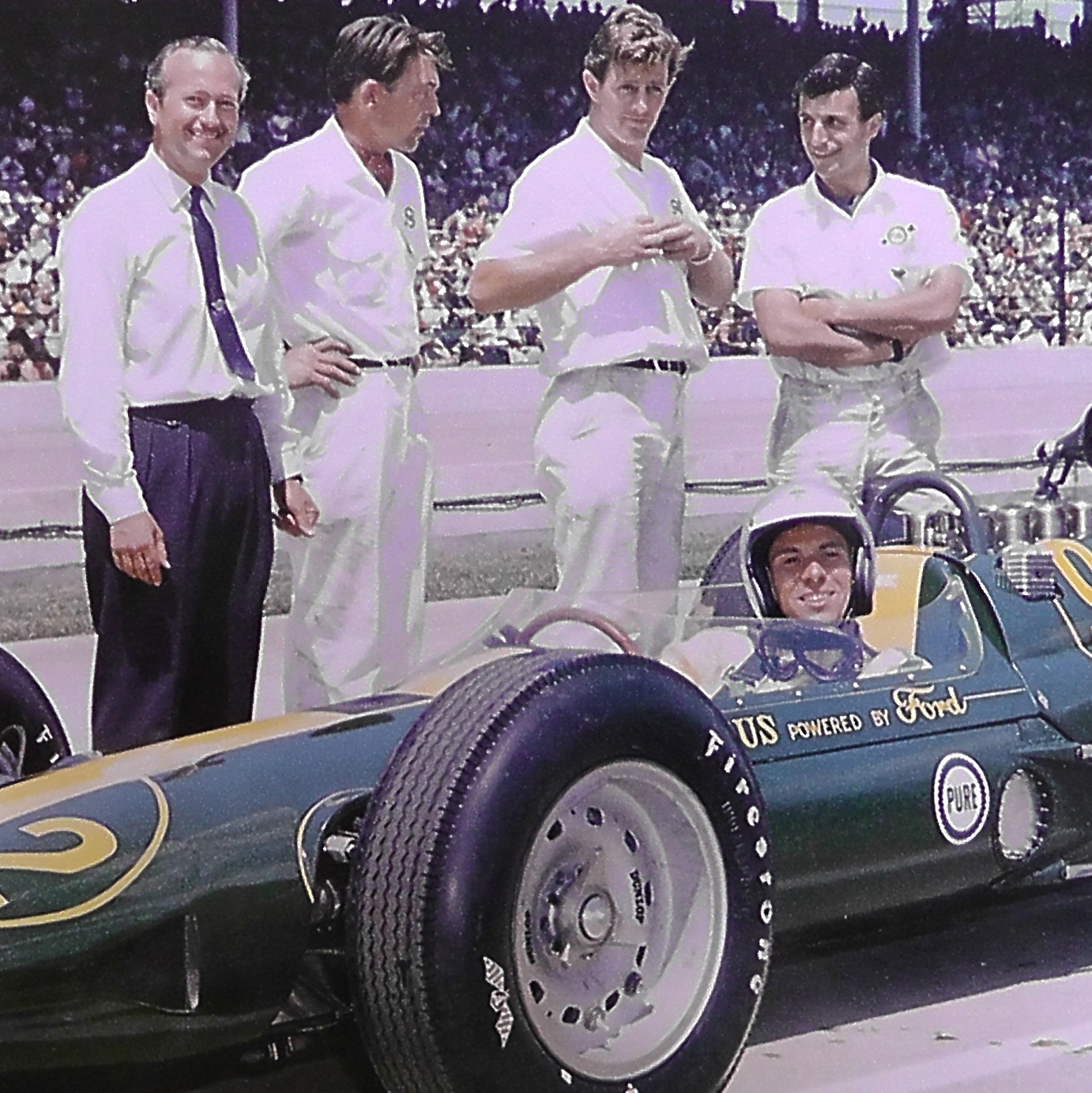
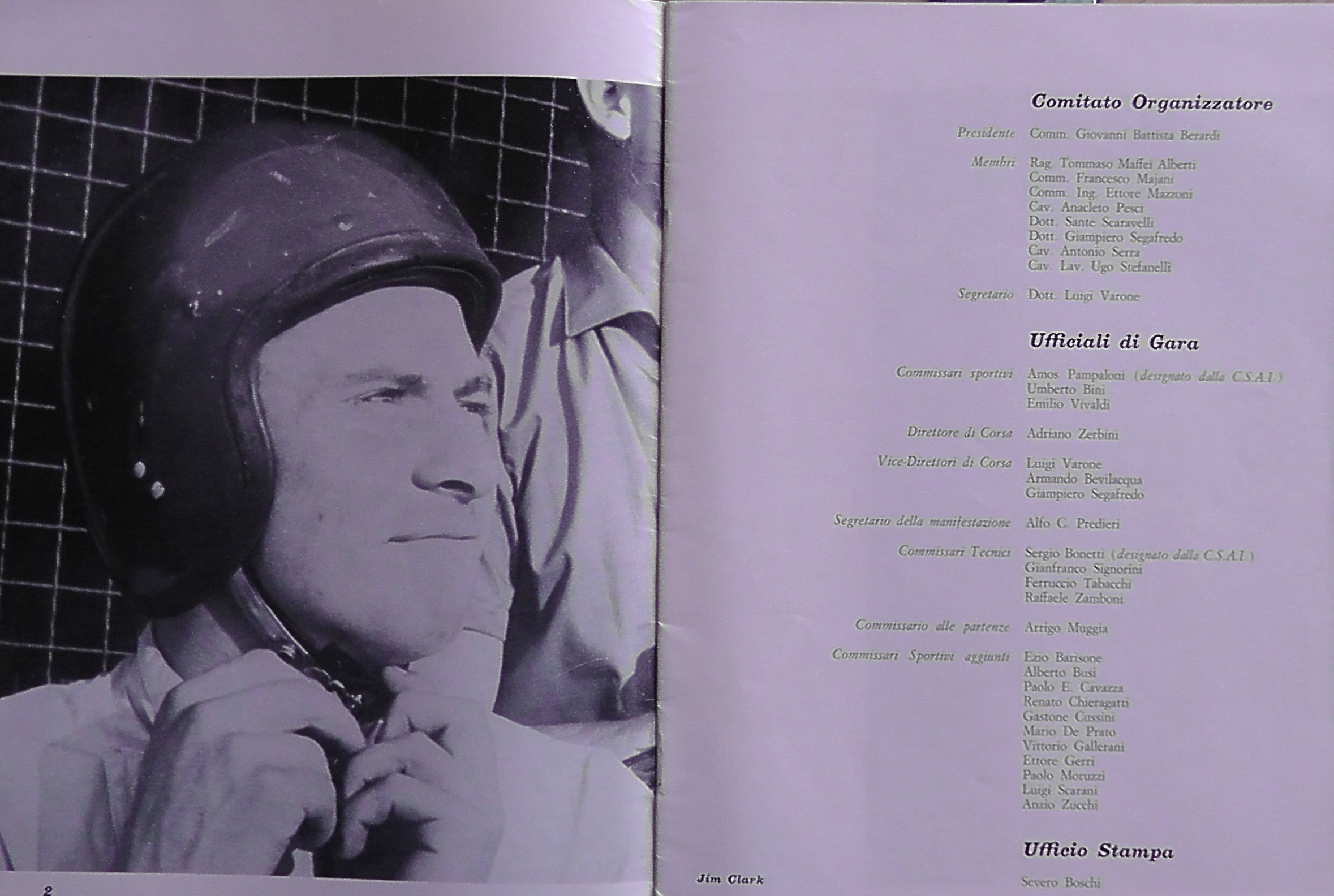
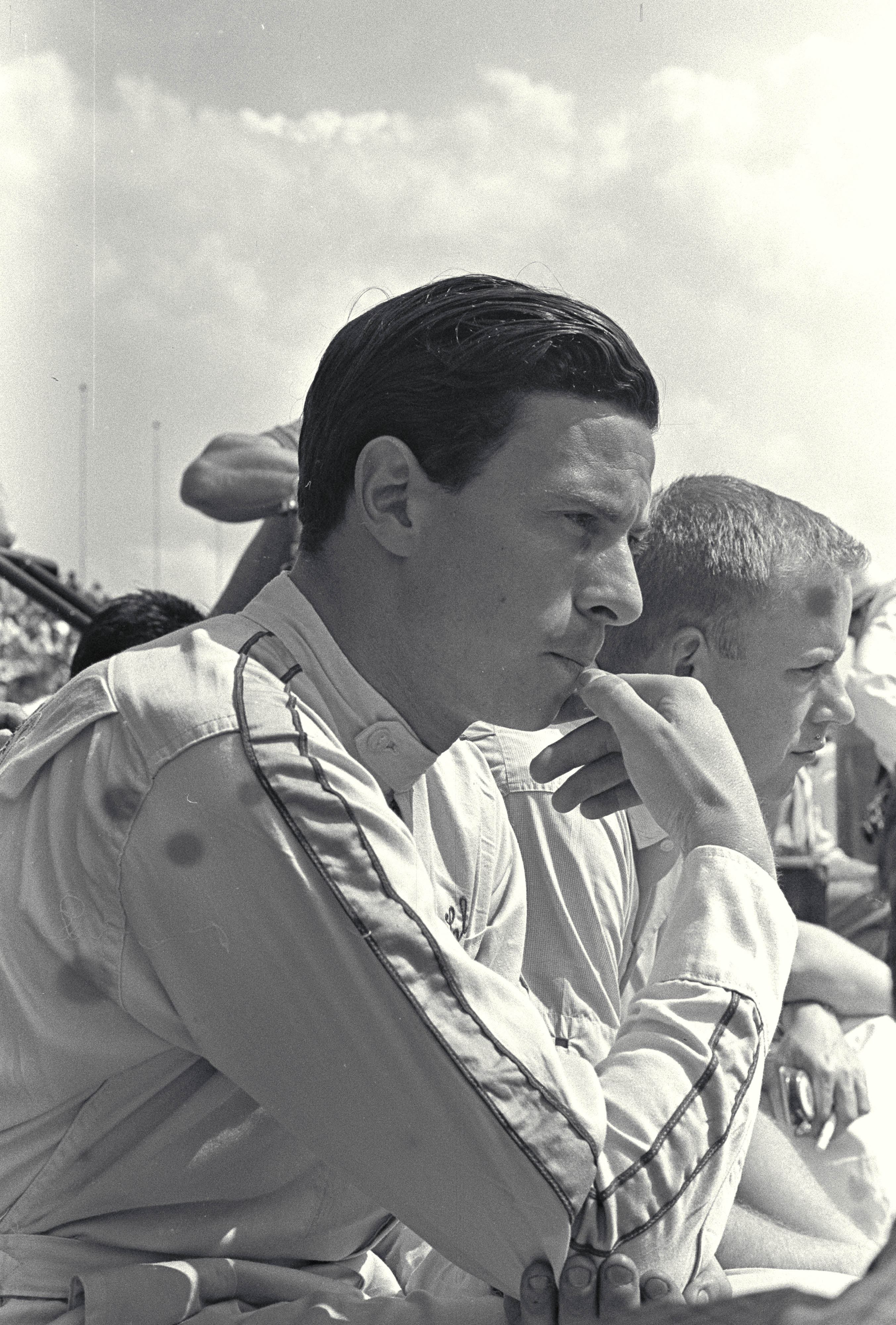
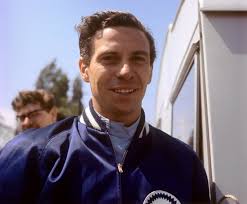
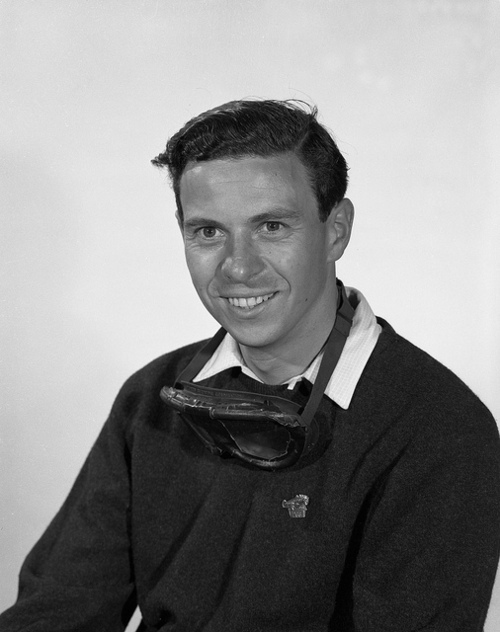
Captions from top: Jim, wearing new Hinchmans, in nail-biting mood as he listens to the pre-qualifying drivers’ briefing and draw; Middle: Jim loved the blue-and-white Pure jackets that came with the American oil company’s Indy sponsorship (via its Ford connections).  He wears it here over his Esso-badged blue Dunlops!; Above right: the official Indianapolis portrait of Jim Clark; Above: Jim, in the new silver Bell Magnum, after qualifying the Lotus 29 on the second row.  Around him, from left to right, are Colin Chapman, Jim Endruweit, David Lazenby and Colin Riley 

Pictures: Indianapolis Motor Speedway; Peter Windsor Collection; LAT Photographic
Pirelli react to the BCN pit-stop plague

Modified the Pirelli hard tyre may have been in Barcelona; still, though, F1’s monopoly tyre supplier is planning further changes from the Canadian GP onwards. How Monaco will work out in the interim, with the soft and super-soft in use, remains an unanswered question.  This was the statement issued today by Pirelli.  Note that the thrust of the piece reflects Fernando Alonso’s four-stop strategy.  LotusF1, and Kimi Raikkonen, who managed to split the Ferraris with a nice three-stop run, do not get a mention…

Milan, May 14, 2013 – This year’s Pirelli P Zero Formula One tyre range will change from the Canadian Grand Prix onwards, using a revised construction. 

The move follows the Spanish Grand Prix, which had four pit stops per driver. The new range will combine elements from the 2012 and 2013 tyres to have both durability and performance. 

Pirelli’s motorsport director Paul Hembery said: “Our aim is to provide the teams with a new range which mixes the stability of the 2012 tyres and the performance of the current ones. As a company, we have always moved quickly to make improvements where we see them to be necessary. After evaluating data from the first few races this year, we’ve decided to introduce a further evolution as it became clear at the Spanish Grand Prix that the number of pit stops was too high. The Spanish Grand Prix was won with four pit stops, which has only happened once before in our history. These changes will also mean that the tyres are not worked quite as hard, reducing the number of pit stops.”

With limited testing time, it’s clear now that our original 2013 tyre range was probably too performance-orientated for the current regulations. However, having identified this issue, we’re determined to rapidly resolve it. It’s worth underlining that the current regulations for winter tests limit the opportunity to test the tyres under the same conditions as the race season because of the lower temperature and restricted time. The Teams are of the same opinion as we are in wanting longer testing times and different locations for the next tests. We developed the 2013 tyres on the basis of careful simulations that were, however, not sufficient, taking into account the improved speed of cars (up to 3 seconds per lap). 

We’ve also taken this step to avoid the delaminations that were caused by track debris. It’s important to point out that these delaminations, which occur when the tread comes off, do not compromise the safety of the tyres as the core structure of the tyre is not affected in any way, helping drivers to complete the lap and to change the damaged tyres safely. These delaminations were due to damage from debris that overheated the tread.   We’d like to thank all the teams for their continued and extremely valued support as we worked with them to identify the correct compromise between the pure speed that makes us the world leader in the Ultra High Performance sector and a global spectacle that is easy for Formula One fans to follow.” 


High Fives for Clark at Silverstone

moremsportshistoryFirst, though, the build-up to that May 11, 1963, 15th International Trophy Race:

Indianapolis became a steep learning-curve as the month of May gathered pace.  As well as embracing the ways of the idiosyncratic Speedway, and all that comes with it, Team Lotus faced the additional problems of being newcomers amongst the old guard, of initiating the winds of profound technical change and of trying many all-new components thus related.  Like big, aluminium, 4.2 litre Ford Fairlane V8 engines.  And Firestone tyres.  And Halibrand wheels.  And asymmetric suspension.  And seat belts.  And, yes, Bell Magnum helmets.

For most of the month of May, Jim, Colin Chapman and David Phipps, the talented photo-journalist, stayed in the house of Rodger Ward, the 1959 and 1962 Indy winner.   The days were relaxed by European racing standards, beginning with early morning tests, lunch work, more afternoon laps and then late-ish nights with the mechanics after early evening meals.   The issues were many:  the Dunlop D12s were quicker (Dan Gurney had lapped his Lotus 29 at 150mph while Jim was racing in Europe) but the Firestones were more durable.  With one pit stop to the roadsters’ two or three, Lotus could enjoy a big advantage even before the race was underway.  To achieve that, however, they needed to run the less grippy Firestones.

This, in turn, caused a furore.  Firestone built special tyres for Lotus around 15in wheels but then quickly found themselves under pressure from the Americans, who also expected the same, larger, footprint tyres for their roadsters (which normally ran 18in wheels).  AJ Foyt in particular took umbrage.  Expecting Firestone to be swamped, he approached Goodyear about using their stock car (NASCAR) tyres.  They agreed.  And, with that, the great Akron company began its single-seater racing history.

The switch to Firestones had additional implications for Jim.  Until now, he had worn at Indy his regular, light blue, two-piece Dunlop overalls, complete with Esso and BRDC badges.  With Ford’s engine supply now requiring the Lotus 29s to use Pure fuel and lubricants, those overalls were obviously redundant.  What to do?  Dan introduced Jim to Lew Hinchman, the local owner of a large garment and uniform factory.  Lew, whose father, JB,  built fire-retardant overalls for many of the American drivers, was in the process of making a dark blue, Ford-logo’d one-piece suit for Dan.  Why not make one for Jim, too?  Jim was measured up in the sweaty Team Lotus garage one lunch break (air-conditioning units were forbidden by the Speedway Safety Police due to the WWII-spec wiring in the garages!) and Jim was told that the overalls would be ready for the first week of qualifying.  Dan also pointed Jim in the direction of the Bell Helmets race rep.  Dan had been using a leather-edged McHal for a couple of years, and loved it.  Even so, he was impressed with the new Magnum. And so here was a chance for Jim to put his trusty Everoak out to pasture.  Jim examined the new silver helmet and decided to try it in the build-up to qualifying.  For Silverstone, next weekend, he would nonetheless race with the Everoak – for the last time, as it turned out.

Between runs in this leisurely week at Indy, Jim also had time to shape-up his travel schedule for the following weeks.  It would go something like this:

Tue, May 7: return to England (via Chicago). Pick up Lotus-Cortina at Heathrow. Drive to Silverstone. Check in to Green Man hotel. Thur-Fri-Sat: International Trophy F1 race, Silverstone. Sat, May 11: immediately after the race, fly with Colin and Dan Gurney to Heathrow in Colin’s Miles Messenger. Take flight to Chicago via New York. Change at Chicago for Indy. Check in to Speedway Motel. Begin testing Monday morning. Sat, May 18: Indy qualifying.  Leave Sunday, May 19, for London. Stay with Sir John Whitmore in Belgravia. Two days at the factory at Cheshunt. Wed, May 22 : fly to Nice from Heathrow. Check in to La Bananerie at Eze sur Mer. Thur, May 23-Sun May 26:  Monaco GP. Mon, May 27:  leave at 4:00am for London. Take flight to Chicago and then on to Indy. Thur, May 30: Indy 500. Fri, May 31: fly to Toronto and then drive on to Mosport. Sat, June 1: Players’ 200 sports car race (with Al Pease’s Lotus 23). Drive afterwards to Toronto. Take evening flight to London. Mon, June 3: Whitmonday Crystal Palace sports car race (Normand Lotus 23B). Wed, June 5: Leave London with Colin for Spa (Belgian GP).

In other words:  phew!  There was of course no internet back then; transatlantic phone calls were both a novelty and expensive.  Communications with the UK were via telexes and telegrams. Flight bookings were handled by Andrew Ferguson’s office in Cheshunt but re-arranged in the US by David Phipps.  And the tickets, of course, were big, carbon-copied wads of coupons. Jim’s black leather briefcase was literally jammed to the hilt.

There was little time, though, as one Indy issue followed another, to wonder if it would all be feasible.  If Jim didn’t qualify on the first weekend, for example – what would happen?  Would he miss Monaco or would he foresake Indy?  Given the powers behind the Indy effort – Ford, Firestone, etc – probably it would be Monaco.  For now, though, it was heads-down:  there was not a moment to spare – or even to think about the bigger problem.

In the midst of all this, Silverstone turned out to be a golden Saturday to be forever savoured. Thursday and Friday, by contrast, were best forgotten.  Dunlop were pushing R6 development to new frontiers;  Jim, as at Snetterton, found the Lotus 25 to be all over the place on the new tyres.  On a cold and windy Thursday, jet lag or no, he couldn’t find anything approaching a sweet spot with the car – and this was with exactly the chassis (R5) in which he’d been so quick at Aintree (on R5s).  He was only fifth that Thursday, focusing as he was on trying to make the car work just through Stowe and Club.   If he could find a balance there, he reasoned, then he could probably make up for deficiencies over the rest of the lap.

The mechanics – Jim Endruweit, Cedric Selzer Dick Scammell, Derek Wilde and the boys – worked through to six o’clock on Friday morning, rebuilding Jim’s car with yet another set-up change.   Perhaps, in addition, the rebuild might uncover a more fundamental chassis fault…

To no avail.  Saturday was cold and wet;  as all-weather as the new Dunlops undoubtedly were, little could be learned about a dry-weather balance.  The grid therefore being defined by Thursday’s times, Jim tried team-mate Trevor Taylor’s car for a few laps.  A spin at Copse capped an unremarkable day.  Innes Ireland, what’s more, would start from the pole in the BRP Lotus 24-BRM – a chassis that Jim had always liked.  Graham Hill was second in his trusty 1961/62 BRM, Bruce McLaren third in the new works Cooper and Jack Brabham fourth in his BT3, his engine down on power after a rushed rebuild.  Poor Dan Gurney had flown over with Jim from Indy but for him there would be no F1 debut with Brabham:  there was a dire shortage of Climax engines in this build up to the season proper, highlighted by Jack’s frequent runs up and down to Coventry.  Jack was more than ready to let Dan race the one and only BT3 at Silverstone but a short test at Goodwood confirmed that Dan was much too tall for Jack’s cockpit.  He would have to wait until Monaco to drive his tailor-made car.

This race was also notable for the appearance of the new 1963 Ferraris driven by John Surtees and Willy Mairesse.  Powered by regular V6 engines (with V8s rumoured to be on the way), the new cars showed glimpses of promise amidst predictable teething troubles.  This would be Surtees’ first F1 race for the Scuderia (and his first F1 race of the season;  the beautiful Lola GT, a forerunner of the 1964 Ford GT and a car with which Surtees had been closely involved form the outset, also had its maiden appearance this Silverstone weekend.  In a portent of the drama that was to explode three years later, Big John practiced the Lola on Thursday but was then forbidden by Ferrari from racing it on Saturday, even though the Sports Car Race was the last event of the day.  John appointed Tony Maggs in his place;  the South African started from the back of the grid and finished an excellent ninth.)

After Thursday’s all-nighter, and given the slight repairs that needed to be made to Trevor’s car after Jim’s spin, Colin decreed late on Friday afternoon that the boys should not overdo it.  “Just put everything back to standard on both cars.  Try to finish by nine. Get an early night.”

This they attempted.  After packing the 25s back into the transporter and driving it to their regular garage on the outskirts of Towcester, they race-prepared the cars to standard spec before repairing to their hotel, the Brave Old Oak, in time for a half-past-nine drink at the bar.   A “quick drink” then evolved into an all-nighter of a different kind – the liquid kind.  Come Saturday morning, as the bleary-eyed Team Lotus crew hustled their transporter through the early-race traffic, all the talk was of the blonde girl who worked behind the bar…Princess Margaret and Lord Snowden attended the 1963 International Trophy;  and the weather doffed its cap. A warm spring sun quickly replaced early cloud.  One hundred thousand spectators poured through Silverstone’s gates, filling the grandstands and the grass banks right around the circuit.  The British Grand Prix may have been but a couple of months in the future – here, at Silverstone – but the fans could not get enough.  A clear example of how less is definitely not more – providing the product is right. In the Team Lotus transporter, between laughs, Jim Clark reflected on the good news:  today they would forget the R6s.  They’d race R5s.  Dunlop wouldn’t like it but there you go.  A race is a race.A masterpiece of a race.  Jim started on the second row but was quickly up to second place, trailing his friend Bruce McLaren for a couple of laps before slicing past and pulling away.   Suddenly he had a Lotus 25 around him.  Suddenly he had balance and feel when on Thursday he been obliged to drive mainly on reflex, dumbing the understeer with induced flick oversteer.  Now he was four-wheel-drifting the 25 through Copse, Becketts, Stowe and Club.  Now he was using every inch of road through Woodcote and again past the pits, making the art of ten-tenths driving look sublimely simple.

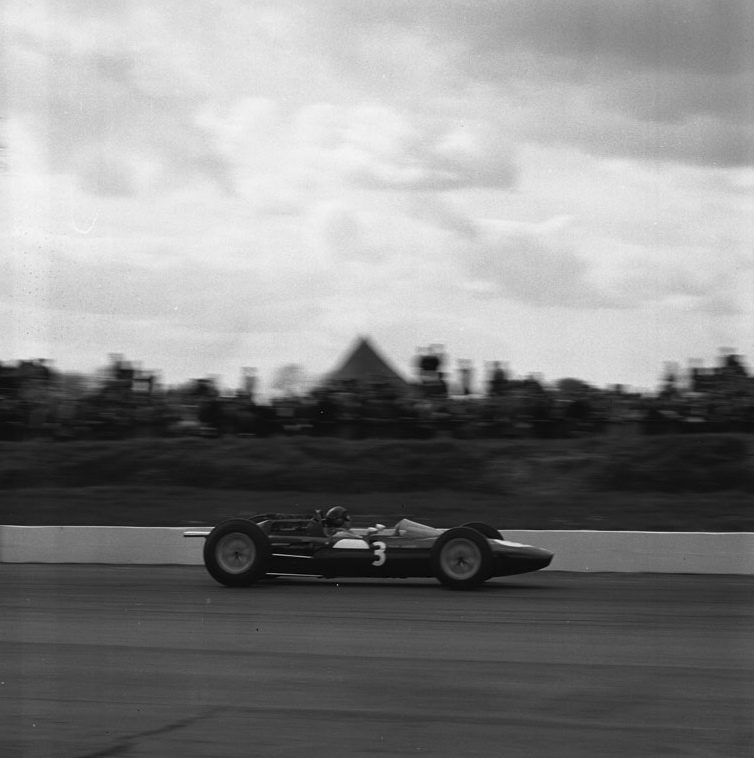
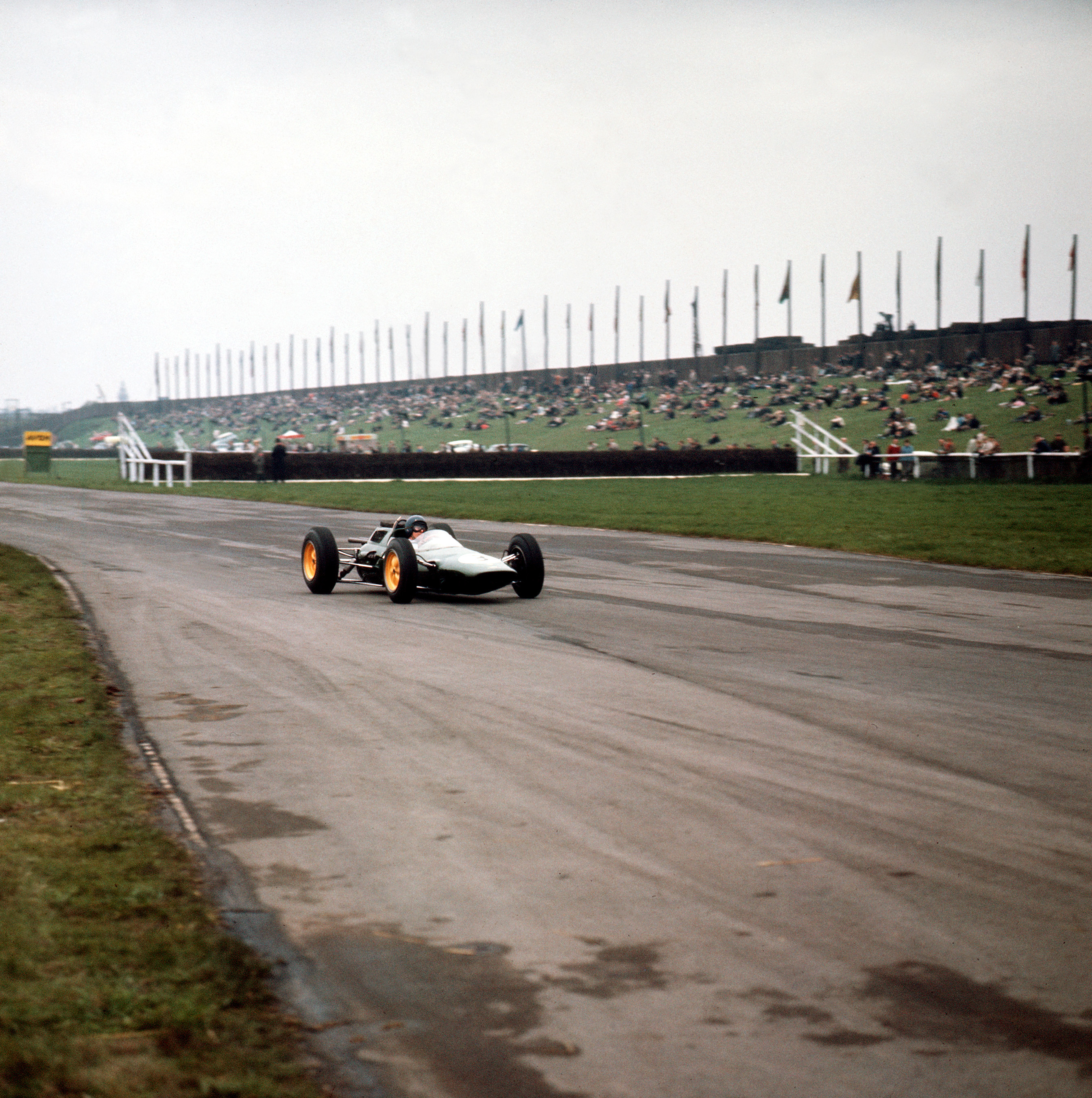
18609.tifHe won it – and he won it with ease.  It was a Clark Classic on the old R5s in Lotus 25/R5.  Bruce finished second and Trevor drove well to make it a Team Lotus one-three.  Innes, quick all weekend, finished fourth – but not before recovering from a big spin at Woodcote, the thick tyre smoke of which effectively ushered-in a new era – the era of the soft-compound Dunlop R6.  Never before had rubber been so burnable – or so sticky.   Innes revolved the 24 at high speed – probably on oil dropped by the Surtees Ferrari, which eventually retired – but kept the car on the Ireland.  A few years before, the odds of that happening would have been too small even to contemplate.   Now, if we can combine those new grip levels with more compliant sidewalls, thought Jim and Colin, then we’ll definitely have a race tyre

It was a fun day, too.  Sir John Whitmore was again magnificent in the Cooper S;  Mike Beckwith won his class with the Normand Lotus 23B;  Jack Sears scored the first of his many wins with the big Ford Galaxie – a car that Jim had driven over at Indy, when he was filling in some time one quiet day at the Speedway; Jim in Galaxy '62Graham Hill won the GT race in John Coombs’ lightweight E-Type; and Denny Hulme again won the Formula Junior race in the factory Brabham, just beating David Hobbs and Paul Hawkins.  Earlier that week, Jack himself had driven the FJ car, helping Denny with set-up and with a few circuit pointers.  Then there was the business with the Miles Messenger.  Racing over, Jim and Dan piled into the cramped four-seat cockpit; bags were stuffed into the small luggage compartment (no room for the trophy!); Colin fired up the DeHaviland Gipsy engine, opened the throttle…and nothing happened.  The old four-seater remained bogged in the Stowe mud, its wheels intransigent.   Out jumped an amused Silverstone winner and his buddy, Dan  – and off, in a lighter Miles, set Colin.  Even as the little aeroplane was gathering speed, Jim and Dan were scambling aboard.

Four connections and 4,000 miles later, the two Team Lotus friends were at Indy, ready to test on a warm Monday morning.

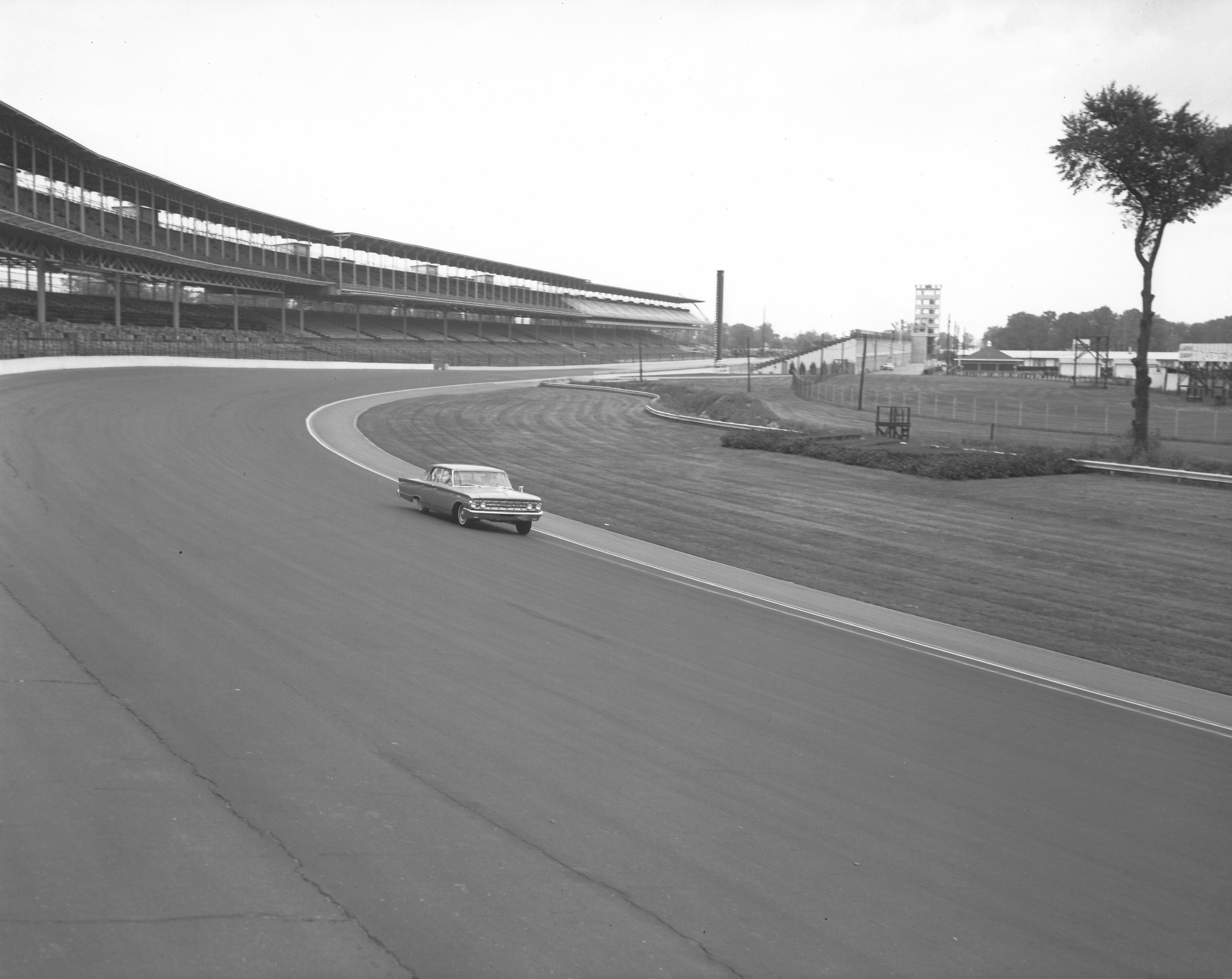
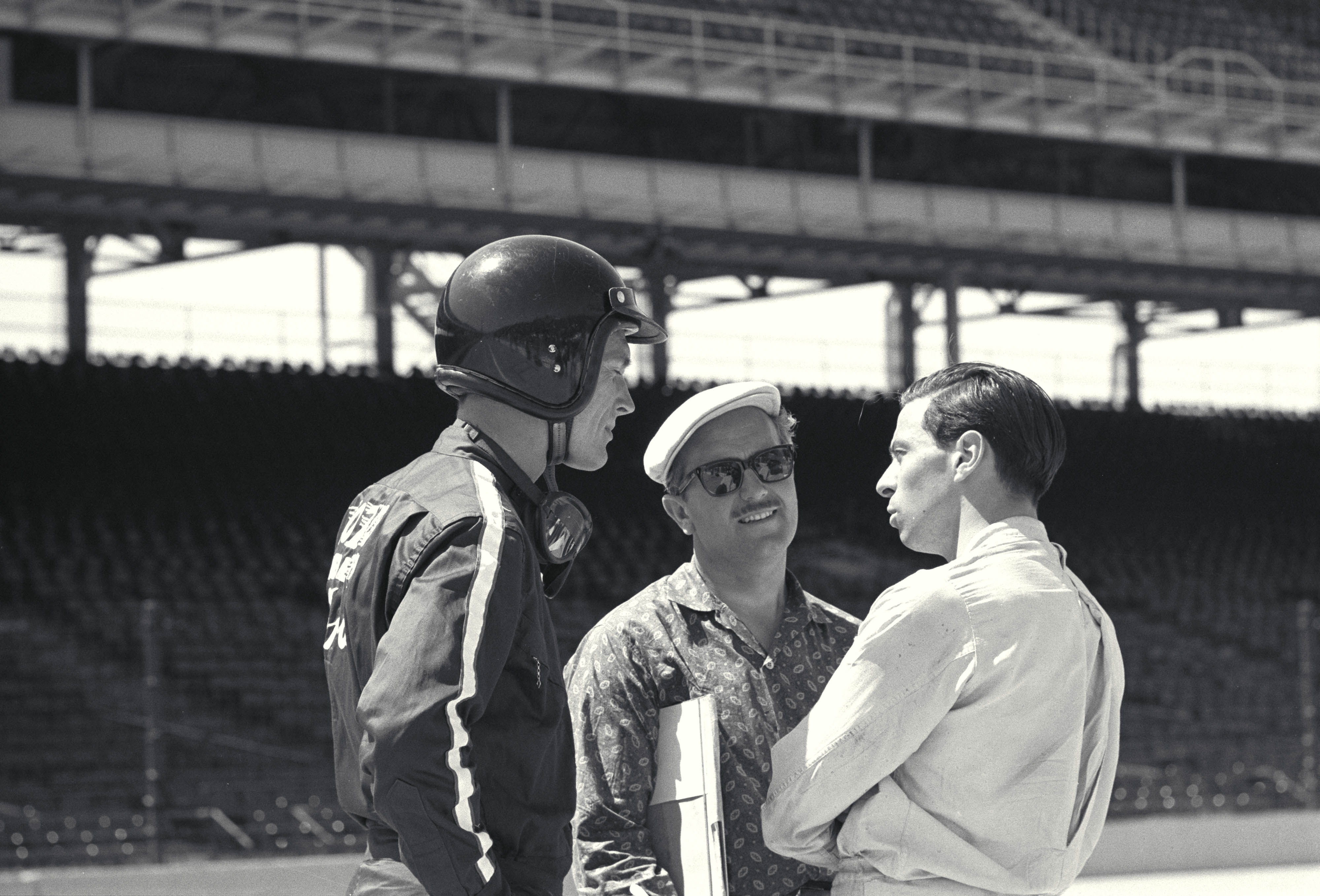
Captions from top:  Dan Gurney, in new Hinchmans, Colin Chapman and Jim Clark, still in Dunlop blues, talk wheels and tyres early in the Indy month of May;  Jim fingertips 25/R5 out of Becketts en route to victory; late in ’62 Jim had fun at the Speedway with a road-going Mercury Monterey.  Images: LAT Photographic, Indianapolis Motor Speedway. For more on Hinchman overalls: http://hinchmanracewear.com

Clark brilliant at Aintree

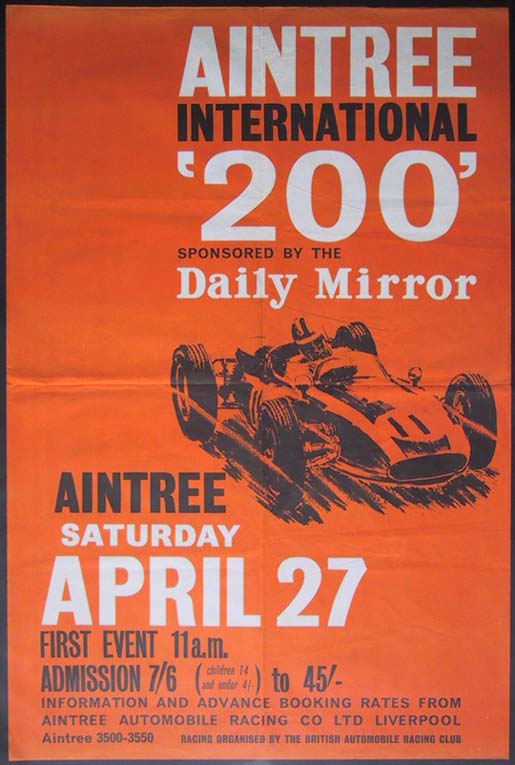
18303.tifJim Clark’s 1963 racing schedule now begins to gather real pace.  The back-to-back early-season European non-championship F1 races behind him, Jim returns to the farm for a couple of days before driving the 225 miles down to Liverpool for his third non-title F1 race of the season, the Aintree 200. (Jim will drive approximately 40,000 road miles in 1963.)  At Edington Mains there is always farm work with which to keep abreast but in addition there is plenty of racing-related admin, the relevant papers of which he files in his red leather desk folder.  A good example of Jim’s meticulous attention to detail can be seen in his correspondence with the Indianapolis Motor Speedway. Although the Team Lotus entries and surrounding paperwork are handled by Andrew Ferguson and – for Indy, 1963, also by David Phipps, the tall photo-journalist who had become a close friend of Colin Chapman – Jim receives a personal letter from the Speedway’s Henry Banks, inviting him to take part in an upcoming race at Indianapolis Raceway Park. Bearing in mind that the FIA inter-change between drivers licenced to different sanctioning bodies was a brand new thing in America, Henry’s letter to Jim, detailing an “all-comers’” race on April 28, in retrospect seems logical.  The exact description of the event – “a 300-mile race for American-manufactured cars in the improved touring category (or what would later be known as NASCAR’s Yankee 300!)” – obviously catches Jim’s attention because his written reply is as follows: “Unfortunately, like Dan Gurney and Jack Brabham, I am flying back and forth between Europe and America at the moment and on that particular date we are scheduled to race at Aintree here in Britain…”

As he sits at his desk, Jim also takes stock of his upcoming schedule.  Hectic travel is of course not new to him:  early in 1961 he competed in three New Zealand internationals before embarking on his European season – and he had finished that year, and begun 1962, with four South African races, an outing at Daytona in a Lotus Elite and then a one-off race in a Lotus 21 in Sandown Park, Australia.  What now lay ahead, however, takes him into new territory.  Following Saturday’s Aintree 200, Jim and Colin will fly immediately back to Indy via Chicago (Jim’s third trip to the States since January).  There they will continue to run the Lotus 29s at the Speedway before returning on May 7, with Dan Gurney now joining the group, to race at Silverstone in the Daily Express Trophy meeting.   Then it will be back to Indy again, this time for qualifying, before flying back for the Monaco and European GP on May 26.  (Assuming Jim qualifies on the first weekend, that is:  if rain intervenes, or they run into problems, Jim would then have to miss Monaco in order to qualify at Indy on the second weekend.)  Following Monaco, he, Dan and Colin will then fly back to Indy for the race the following Thursday (Memorial Day).  Jim will then drive to Mosport to race in the Players 200 two days later, catch a Toronto flight to London that night and race at Crystal Palace, in the Normand Lotus 23B, on June 3 (Whitmonday).  Nor will there be a break after that, for the Belgian GP at Spa is scheduled for the weekend of June 7-8-9.

Jim takes all of this merely as part of his job.  Comets and Boeing 707s make flying more fun than it had been in the turbo-prop days – and economy seats are relatively wide and relatively long.  You can actually sleep on a trans-Atlantic flight – and the immediate necessity to have to drive a racing car does away with jet lag.  Beyond that, Jim’s parents had never wanted him to race.  Now, with this sort of schedule, and with reasonable chances ahead of him for some good results, he can at least justify racing as a profession from which he can earn a living.

Aintree is bathed in sunshine on Friday, April 26 – and Jim, running the Lucas fuel-injected Lotus 25, feels as good in the car as he had at Pau and Imola.  Compared with the carburettored 25 of 1962, the fuel-injected 25 provides a more useable power band, particularly at low revs. The new short-stroke Climax engine can also be revved higher, additionally enhancing torque and power. The biggest talking-point in the Team Lotus truck is actually of the ZF gearbox and the ongoing problem of the thing jumping out of gear (a subject Colin Chapman prefers his drivers not to mention to the press!).  The root cause of the issue is that the ZF was basically a four-speed gearbox adapted to take an extra cog. The welds, reduced to a minimum, habitually came away from the spline.Trevor Taylor’s car occasionally runs a strong, heavier Colotti five-speed gearbox but Chapman does not want to compromise weight on the number one Clark car. He continues to work away with pencil drawings whenever he has a spare moment but an ultimate fix will not achieved until new ZF gearboxes, with the selector mechanism on the side of the gearbox, are fitted for 1964.  For now, Jim spends so much time wondering if the 25 is going to jump out of top that he begins to develop a one-handed driving style, steering with the left hand and holding the car in gear with his right. Jim also has reservations about the new Dunlop R6s. He hadn’t liked them at Snetterton, where the 25 had felt more skittish than at any time in its life – and he had used last year’s R5s (based on the older D9 and D12 tyres) at Pau and Imola.  He would do so again at Aintree but Dunlop are keen to try a new version of the R6 at Silverstone in two weeks’ time.   (Talking about Snetterton, Jim is a little surprised to see Denis “Jenks” Jenkinson write in the latest edition of Motor Sport that Graham Hill had won in the wet there because “Jim Clark was out of practice, Hill having raced in Australia and New Zealand over the winter.”  So Jim’s endless testing of the Lotus 29 hadn’t counted?

Jim is easily fastest on Aintree Friday, loving the circuit on which he had won the British GP in 1962 – and the 1962 Aintree 200 (in the Lotus 24:  he had also been quick in the wet at Aintree in 1961, before the Lotus 21 blew an oil pipe.). Strangely, though, he looks unfamiliar in the Lotus 25 on Friday, wearing, as he is, the older, 1961-spec, smaller-eyepiece, goggles he’d last worn at Zandvoort in 1962.  For race day, Jim switches to his customary wide-lens Panoramas (with black tape across the top-third of the lens).  Still he wears his trusty, stone-nicked dark blue, peakless Everoak.1963 BARC 200.

Despite the unchanged R5s, Jim’s pole time had been 1.2 sec faster than his fastest practice lap at the British GP the previous July. Jack Brabham is second, 0.8 sec slower in his 1962 BT3, but non-starts when his Climax engine throws a piston late on Friday. (This failure has the knock-on effect of delaying the completion of Dan Gurney’s new Brabham for the Daily Express Trophy, ensuring that Dan will remain a frustrated spectator after the long flight over from Indy. It is probably because of some of these dramas, and because Dan had initiated the Lotus Indy programme in the first place, that Colin Chapman will have no compunction about lending Jack Brabham a Lotus 25 for the Monaco GP a few weeks later.)

Graham Hill, who at Aintree is still in his 1962-spec BRM, is 0.8 sec quicker than he’d been the previous July – but slower than Innes Ireland, who is very fast in the Goodwood-winning BRP Lotus 24-BRM. Ireland qualifies third, Hill fourth and Ritchie Ginther fifth, equaling his team-leader’s time in the second BRM. Trevor, again in gearbox trouble, will start from the inside of the third row in the carburettored Lotus 25.

What should have been a Clark walkover under leaden skies on Saturday turns out to be one of the best races of the 1963 season. The record crowd at the famous Grand National venue can hardly believe it when Jim Clark’s hand goes up at the start and the field swarms around him.  With the 25’s battery completely flat, Jim is totally helpless. Ted Woodley and the boys push the car over to the pits, fit a new battery – and the car starts perfectly.  Jim leaves the pits even as the field is well into its second lap.

Clark drives brilliantly in these early stages but clearly the car still isn’t right.  A fuel-injection-related mis-fire comes and goes.  Trevor, meanwhile, is running fifth and looking good.18316.tif

On lap 16 Colin Chapman thus makes the sort of decision that even the most hardened of Team Principals always dread:  he pulls in both of his drivers and instructs them to swap cars. (I spoke only a couple of days ago to Anita Taylor, Trevor’s sister, about this. “Trevor was only too ready to oblige,” she said. “Of course he wanted to win. He was also a friend of Jimmy’s, a colleague, a huge admirer. If Chapman thought it was best for the team, Trevor went along with it. He was that sort of man.”)

It is a beautifully-orchestrated manoeuvre.  Jim comes in first and is ready, waiting, as Trevor screams to a halt. Out jumps Trevor and quickly Ted Woodley swaps seats. In slides Jim. He has the rear Dunlops alight before Ted is even clear of the car.

So Jim Clark is now in Lotus 25 Number 4 and Trevor in Lotus 25 Number 3. Out in front, Ritchie Ginther gives best to Graham after taking an early lead; Innes is third, followed by Bruce McLaren in the new 1963 Cooper 66-Climax.

Jim Clark then produces a supreme display of class driving, perfectly-balancing the carburettored 25 through Aintree’s medium-speed corners, blipping the throttle on the slow ones to keep the revs in the useable band. He works his way back to an eventual third place.  His lap times are consistent to within tenths; his fastest lap – a staggering 1min 51.8sec – is 0.6 quicker than his pole time and a full 1.8sec quicker than his pole lap at the British GP in ’62.  This in a car with the 1962-spec, 175bhp engine.

Afterwards, Jim says simply this:  “I really enjoyed this race – even though I didn’t win it;  I enjoyed it more than a number of the Grand Prix events I was to drive during the season.”

Graham Hill wins Aintree (from Innes Ireland, Jim/Trevor, Ritchie, Bruce, Chris Amon in the Reg Parnell Lola and Trevor/Jim) – wins his second F1 race since clinching the championship only four months before; and Graham wins the Saloon Car race, too, again heading the Jaguar 3.8 battle featuring Roy Salvadori and Mike Salmon.  Jack Sears wins his class in a Ford Cortina GT;  Sir John Whitmore wins the Mini division;  Roy Salvadori leads home Innes Ireland in the big sports car event (Cooper Monaco, Lotus 19); our friend Mike Beckwith wins his class with the 1600 Normand Lotus 23B;  Pete Arundell and Paul Hawkins head the 1100 Lotus 23 class; and Denny Hulme, a new rising star from New Zealand, brilliantly wins a wet Formula Junior race in the new Brabham (from Frank Gardner, Pete Arundell and Mike Spence).

With no vested interest other than as a guy who loves motor racing, Bruce McLaren has this to say about Denny’s win:  “For a driver who professes not to be particularly good in the wet, I thought fellow-New Zealander, Denny Hulme’s win in the works Brabham FJ was very good.  For a couple of years he ran his own FJ Cooper as a privateer with very little outside assistance, and he did much better than anyone expected.  18297.tifHe is now being trained in the Brabham tradition by building, working on, and developing his own car.  He works in the Brabham racing shop under Jack’s watchful eye and his fine drive in the rain at Aintree was the result – his first really big win for some time, and a most convincing one at that.”   No surprise, really, that Bruce would sign Denny to his McLaren F1 team some five years later.

And, about Jim Clark’s performance at Aintree, Bruce is unequivocal: “It is interesting to note the way that Jim Clark is taking over the Moss role in motor racing.  After practice at Aintree on the Friday, a certain well-known driver said to me, ‘I’m very pleased with my car – very pleased indeed.  I’m only half a second slower than Clark’.  There was a time when the proud phrase ‘only just slower than…’ just had to refer to Stirling Moss.”

Note:  driver-swapping would continue through to 1964, when Jim took over Mike Spence’s Lotus 33 at the US Grand Prix at Watkins Glen.

Images:  LAT Photographic
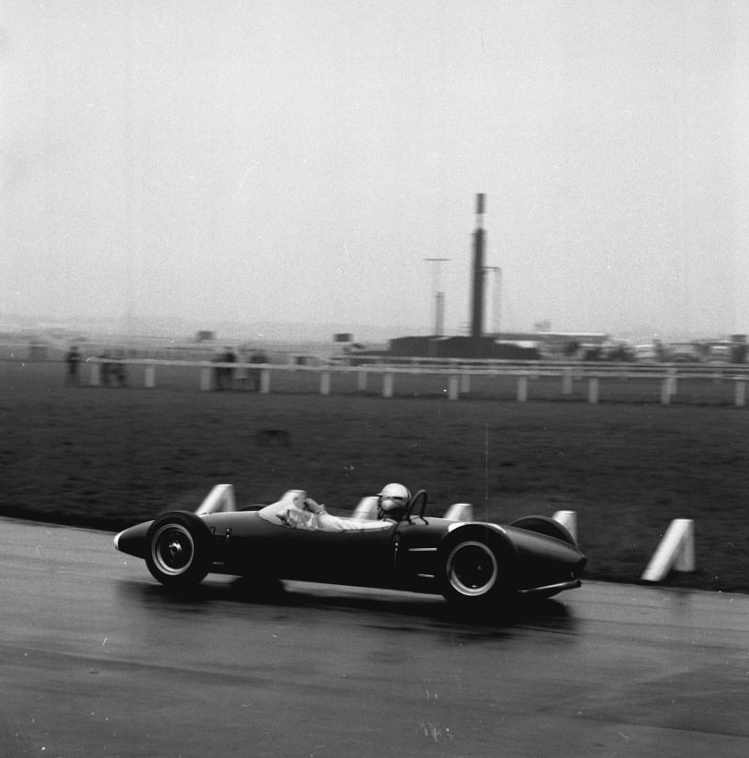
Captions Top: Jim Clark dances with the throttle in Trevor Taylor’s carburettored 25. Middle: Jim in the early phase of the race in his own, fuel-injected 25. Bottom:  Denny Hulme made his name by winning the wet Aintree FJ race 1963aintree200   

Hard changes for Pirelli

I guess, after the flak they have received in recent weeks, that it is no surprise to see Pirelli making a compound change at this point of the season and at this point in the build-up to the Spanish GP.  I’m surprised, though, that the change involved their orange (hard) tyre and not the much-maligned (yellow) (“one-lap”) soft tyre that will next be seen in Monaco.

Pirellis’ official statement says that “this latest version of the hard compound is much closer to the 2012 tyre, with the aim of giving the teams more opportunity to run a wider range of strategies in combination with the other compounds, which remain unchanged”.

As far as I understand it, the main change from 2012-13 was not actually to the stickiness of the hard tyre but to its operational range – ie, the working range was “lower” last year – “lower” as in a lower temperature window of operation.  The 2013 hard tyre, with a “higher” working range, has been more prone to graining and wear “below” the window – and it is this problem that Pirelli are endeavoring to fix.

On the basis of Bahrain, one could conclude that this change isn’t necessarily good for LotusF1 (which found its way nicely into the hard tyre’s high working range without any graining issues) and also for Force India.   For Mercedes and Ferrari, meanwhile, this latest change might be an improvement.  There’s now more chance, in summary, for more teams to find some sort of sweet spot on the hard tyre (which is being used in conjunction with the medium in Spain) than was the case in Bahrain.  (In both races, the compound selection was/is hard-medium).

The soft tyre, meanwhile, remains unchanged – which, as I say, is a surprise.  That tyre will be used at Monaco (in conjunction with the supersoft) so the outcome there is anyone’s guess.   One presumes that the soft around the streets of Monaco will assume the role of at least the medium, if not the hard – and that the supersoft could be the equivalent of the soft in China.  All of which means that there should be plenty of pit stops in the over-crowded Monaco pit lane (if that is what you want) and that qualifying at Monaco – already knife-edgy because of the nature of the circuit and the problems posed by traffic – will have the added element of one-lap tyre perfection.  Don’t be surprised, therefore, to see several drivers using the prime tyre in Q3 at Monaco – as Sebastian Vettel did in 2012.


Flat out at Imola

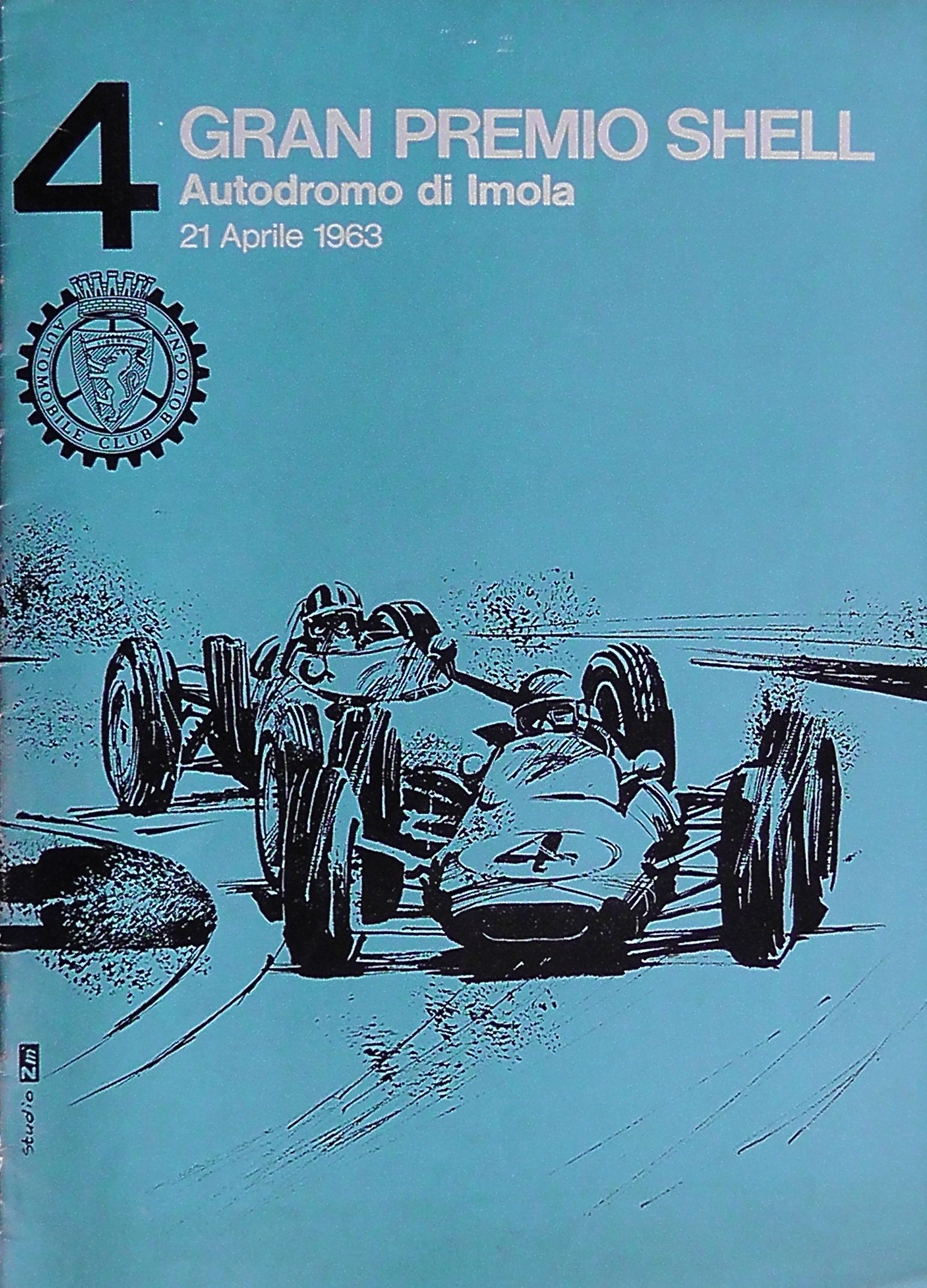
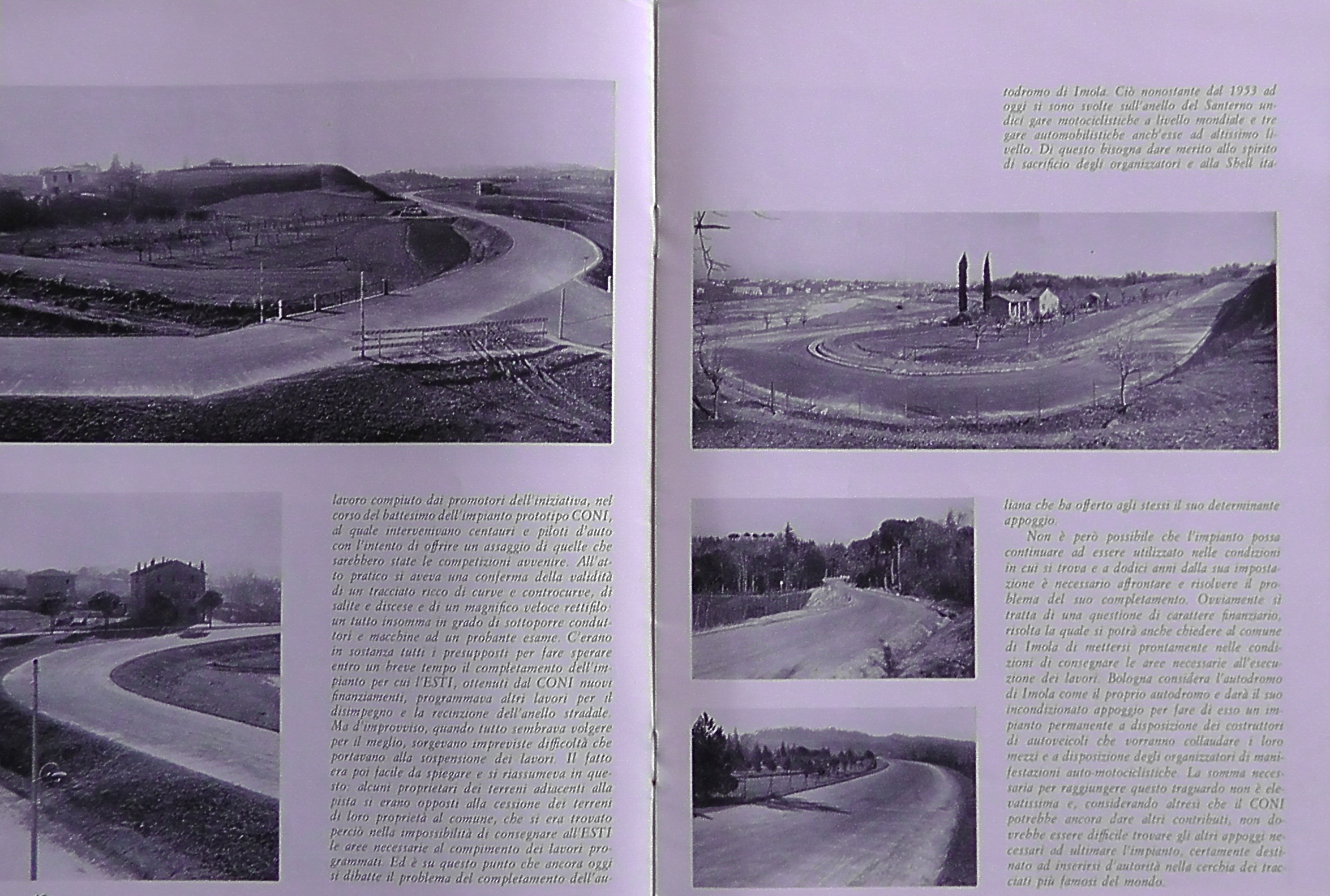
S2280010The beautiful spring weather continued as Jim and Trevor made their way to Imola via Bologna.  For both drivers, this race was a first.  Imola – running through the vineyards and orchards of beautiful, undulating countryside – was in 1963 better-known as a motor-cycle track that had seen some sports car racing in the 1950s.  There was no “Ferrari” element to it back then:  the circuit had actually been developed by the Italian Olympic Committee, based on public roads.

Nor were there any chicanes.  From what we know today as “Ravazza” – the left-hander that takes the circuit back towards the pits – Imola was basically flat-out all the way down to Tosa, the tight left-hander that leads uphill.  The road wasn’t straight, mind:  Tamborello was still a very fast left-hand kink back then and the right-hander that followed it was likewise right-on-the-edge.  There was no “Variante Alta” after Acqua Minerale – but in some ways the track gave back what it gained in fast corners by being incredibly bumpy, particularly on that climb to the top of the hill. I spoke to Brian Redman recently about his win at a pre-chicane Imola in a Gulf Porsche 917:  he reckoned that only Spa was more demanding.S2280014

The sun shone, the air was fresh – and, for Team Lotus, the opposition was again negligible.  Not even Ferrari sent cars to this Shell-sponsored race, which meant that young Italian stars like Lorenzo Bandini had to seek rides in old Centro Sud Cooper- Maseratis.   As at Pau, though, Jim’s dedication to the perfect lap – and then to the perfect race – remained undimmed.  Over two days of practice he focused on taking the kinks flat and the high-speed corners in beautifully-balanced drifts: the result was a lap in 1min 48.3 sec – an easy pole, given that Trevor lost a lot of time with gearbox trouble.

The race started relatively late on Sunday – at 4:00pm, after a Formula Junior race which featured such drivers as “Geki” (who would race for Team Lotus at Monza in 1965 and 1966) and the future Ferrari driver, Andrea de Adamich – which meant that the sun had already lost its sheen and the shadows were growing ever-longer as the tricolore fell.  Jim led from the line and was never headed – but still he found time to “play” for the crowd.  Trevor pulled into the pits at the end of the first lap, explaining again that the car was jumping out of fourth gear, and rejoined some 15 laps in arrears.  (One can understand Trevor’s nervousness about issues like this:  at Spa, the previous year, his Lotus 24 had jumped out of gear at Blanchimont, had spun sideways, and had been t-boned at high speed by Willy Mairesse’s Ferrari.  Both drivers had amazingly escaped uninjured, which I guess to some extent re-enforced the belief in the minds of most of their contemporaries, albeit in the short-term, that it was better not to be strapped into the cockpit by seat belts.  I mention this because, already, Jim had experienced the security of seat belts during Indy testing.  He wore them at Indy, and at other ovals, but never, throughout his career, would he wear belts in any European single-seater races.)

Towards the end of this Imola race, therefore, Jim waited for Trevor and “raced” him through to the flag.  Their pace, given that Jo Siffert was lying a very distant second in the Filipinetti Lotus 24-BRM, was breathtaking to watch.  Jim waved Trevor past – then shadowed him, pushing him as hard as he dared, bearing in mind that Trevor was driving now without fourth gear at all.  Taking this into account, it is amazing, I think, to note that Trevor eventually lapped in 1min 48.3sec – at Jim’s pole time (166.769kph).  So did Jim, of course – but that wasn’t the point.  The race, after all, had been fun.S2280012

Very fortunately, we have on this occasion some colour footage from this event, courtesy of Christopher Tate, the current Managing Director of Donington Park.  Chris’s father was closely associated with the Rob Walker F1 team in the early-to-mid 1960s and thus took a 35mm camera with him to many F1 races.  Christopher notes that “it was at Imola in 1963 that Rob really noticed Seppi Siffert and decided to sign him up for 1964”.  In confirmation, of course, Siffert would go on to win the non-championship F1 race at Syracuse the following Thursday (April  25).  I love the charm of this short video – the relaxed chat between Jim and Jo Bonnier before the start; the obvious enthusiasm of the Italian hosts; the oil-smeared mechanics’ white overalls; JoBo, driving his RRW Cooper in short-sleeved polo; the straw bales, the trackside trees; Trevor waiting patiently, watching the race, while they work on his car; the elegance of the dark green Lotus 25s; and Jim looking a little embarrassed as he stands on the podium, Dunlop overalls wet from sweat.  You catch a glimpse, too, of Bob Anderson beginning to make his name in his dark blue and white 1962 Lola – and of Jo Schlesser’s sky-blue FJ Brabham.  With thanks, then, to “A Gentleman’s Motor Racing Diary”, Copyright World Action Sports Productions, available on Amazon.co.uk/DVD/Motosport.  (See below.)

Thus Team Lotus’ pre-season European interlude comes to an end.  Next race: the Aintree 200.  Again – and good to see, too – it is on a Saturday.  Next Saturday. April 27.

Post Navigation