This being the week of Rosbergmania, especially in Germany, let’s have a look at Nico’s Dad, Keijo “Keke” Rosberg, in full yellow (ICI Fibres) regalia at Hockenheim, 1984. That’s Alan Henry and Nigel Roebuck in the background; both of them, to this day, remain close friends with Keke. Note Keke’s attention to detail: he was always immaculate. When he wasn’t in race kit he was usually seen either in a Hard Rock “Save the Planet” leather bomber jacket (long before the rest of the world discovered them) or with something from Etienne Aigner or MCM. Nor is it difficult to see from where Nico’s yellow colour-coding (helmet, gloves, etc) originates. Continuing the Rosberg theme, how about the shot below for good measure? I took this at the Kyalami Ranch, South Africa, also in 1984. Alain Prost’s reading L’Equipe; Nelson Piquet Jnr’s Mum, Sylvia, is walking out of picture in the red bikini; ace photojournalist, Jeff Hutchinson, is thinking about his next story for Autosport; and Nico’s Mum (also walking) and Dad can be seen to Jeff’s left.
For those of you who haven’t yet watched our free, weekly, in-depth, on-line F1 chat show, remember that you can enjoy The Racer’s Edge every week on YouTube (Thursday, 7:00pm and thereafter on-demand) or you can download it from iTunes, where we have a high-speed facility for both the audio and video files. Just enter “The Racer’s Edge” in the iTunes search engine and you’ll see a list of all the episodes. (Although we also process the show for iTunes on the Thursday of each week we have no precise control of the actual release date. Usually it is within 24 hours of posting.) Please “subscribe” to our YouTube Channel (as per the widget on the right). This costs nothing but it allows you to receive regular email updates of all the new content we’re producing – and there will be more and more as the year develops. Remember, too, that we often produce video not featured on The Racer’s Edge, ranging from interviews with wonderful racing people from the past (for example Mike Beckwith) to young up-and-comers on the way to Formula One (like Stoffel Vandoorne). I also invite you to leave comments on our YouTube page. We will read them, reply to them where appropriate – and your thoughts will also help to guide the way we move forwards.
If you are a regular viewer – thanks for watching. We had just over 121,000 hits in the month of June – and over 80 per cent of you were watching the 60/65min show for 80 per cent of its length or longer. We were also consistently in the top ten urls on iTunes in all aspects – hits, visits and downloads. Interestingly, I think, about 50 per cent of you were watching from the USA, which just goes to show what I’ve always suspected: the American F1 fan is amongst the best-informed in the business!
This week’s show is bursting with interesting people and comment: as well as chatting away with Rob Wilson in the studio, we talk to Daniel Ricciardo, Sam Bird, Derek Daly and Craig Scarborough. A lot of fun, a lot of laughs – and lots of detail about the sport we love.
In the meantime – again, in case you haven’t seen it – have a look at the episode below. We filmed it on the Wednesday before Silverstone at LotusF1’s headquarters in Oxfordshire with the support of Avanade, the IT systems company. This is a good example, I think, of an F1 partner company using digital media to tell a story that you wouldn’t necessarily see or hear on the conventional platforms. I enjoyed, too, the chat with Alan Permayne. Which reminds me: if you haven’t yet joined the F1 Racing magazine Global Fan Community, then you should do so now. GFC members will be given exclusive opportunities to ask questions of our featured guests – and to be in the running for some great prizes. The winner from this interview was Mr Colin Bowett, from the UK. His question to Alan: “Do you think it’s odd that Kimi doesn’t do a track walk on Thursdays?” Some excellent LotusF1 merchandise will now be coming Colin’s way. You can join the GFC by going to the appropriate link published in the latest edition of F1 Racing.
I like Pirelli’s response not only to the FIA statement of yesterday but also to the specific tyre problems we saw at Silverstone.
Milan, July 2, 2013 – After exhaustive analysis of the tyres used at Silverstone, Pirelli has concluded that the causes of the failures were principally down to a combination of the following factors:
1) Rear tyres that were mounted the wrong way round: in other words, the right hand tyre being placed where the left hand one should be and vice versa, on the cars that suffered failures. The tyres supplied this year have an asymmetric structure, which means that they are not designed to be interchangeable. The sidewalls are designed in such a way to deal with specific loads on the internal and external sides of the tyre. So swapping the tyres round has an effect on how they work in certain conditions. In particular, the external part is designed to cope with the very high loads that are generated while cornering at a circuit as demanding as Silverstone, with its rapid left-hand bends and some kerbs that are particularly aggressive.
2) The use of tyre pressures that were excessively low or in any case lower than those indicated by Pirelli. Under-inflating the tyres means that the tyre is subjected to more stressful working conditions.
3) The use of extreme camber angles.
4) Kerbing that was particularly aggressive on fast corners, such as that on turn four at Silverstone, which was the scene of most of the failures. Consequently it was the left-rear tyres that were affected.
The only problems that had come to light before Silverstone were to do with delamination, which was a completely different phenomenon. To stop these delaminations Pirelli found a solution by suggesting that the teams use the tyres that were tried out in Canada from Silverstone onwards. When this proposal was not accepted, Pirelli found another solution through laboratory testing, with a different bonding process to attach the tread to the carcass. So the problem of delamination has nothing at all to do with what was seen in Great Britain.
Following the conclusions of this analysis, Pirelli would like to underline that:
1) Mounting the tyres the wrong way round is a practice that was nonetheless underestimated by everybody: above all Pirelli, which did not forbid this.
2) In the same way, under-inflation of the tyres and extreme camber settings, over which Pirelli has no control, are choices that can be dangerous under certain circumstances. Because of this, Pirelli has asked the FIA for these parameters will be a topic of accurate and future examinations. Pirelli has also asked for compliance with these rules to be checked by a dedicated delegate.
3) Pirelli would also like to underline that the 2013 tyre range does not compromise driver safety in any way if used in the correct manner, and that it meets all the safety standards requested by the FIA.
The logical conclusion is that it is essential for tyres with the performance and technical sophistication of the 2013 range to be regulated and carefully controlled by Pirelli itself. In order to ensure the optimal functioning of the tyres, the Italian firm would need real-time data from the teams regarding fundamental parameters such as pressure, temperature and camber angles. While waiting for new regulations that would permit Pirelli access to this data, vital for the development and management of these state-of-the-art tyres, the following measures are proposed for the forthcoming grands prix, in agreement with the FIA, FOM, the teams and the drivers:
1) The use of the evolution of the current tyre that was tested in Canada (and proved to be completely reliable) for the German Grand Prix this weekend. This represents the best match for the technical characteristics of the Nurburgring circuit. In particular, the rear tyres that will be used at the German Grand Prix, which takes place on July 7, have a Kevlar construction that replaces the current steel structure and the re-introduction of the 2012 belt, to ensure maximum stability and roadholding. Given that these tyres are asymmetric as well, it will be strictly forbidden to swap them round. The front tyres, by contrast, will remain unaltered.
2) From the Hungarian Grand Prix onwards, the introduction of a new range of tyres. The new tyres will have a symmetrical structure, designed to guarantee maximum safety even without access to tyre data – which however is essential for the optimal function of the more sophisticated 2013 tyres. The tyres that will be used for the Hungarian Grand Prix onwards will combine the characteristics of the 2012 tyres with the performance of the 2013 compounds. Essentially, the new tyres will have a structure, construction and belt identical to that of 2012, which ensured maximum performance and safety. The compounds will be the same as those used throughout 2013, which guaranteed faster lap times and a wider working range. This new specification, as agreed with the FIA, will be tested on-track together with the teams and their 2013 cars at Silverstone from 17-19 July in a session with the race drivers during the young driver test. These tests will contribute to the definitive development of the new range of tyres, giving teams the opportunity to carry out the appropriate set-up work on their cars.
Paul Hembery, Pirelli’s motorsport director, said: “What happened at Silverstone was completely unexpected and it was the first time that anything like this has ever occurred in more than a century of Pirelli in motorsport. These incidents, which have upset us greatly, have stressed the urgency of the changes that we already suggested – which will be introduced during for free practice in Germany on Friday. We would like to acknowledge the willingness of the FIA, FOM teams, and drivers to act quickly to find an immediate solution to the problem. In particular, the adoption of winter tests, arranged with the FIA, that are more suitable for tyre development and the possibility of carrying out in-season testing will contribute to the realisation of tyres with increasingly improved standards of safety and performance. I’d like to re-emphasise the fact that the 2013 range of tyres, used in the correct way, is completely safe. What happened at Silverstone though has led us to ask for full access to real time tyre data to ensure the correct usage and development of tyres that have the sophistication we were asked to provide and extremely high performance that has lowered lap times by more than two seconds on average. While we wait for a change in the rules, we will introduce tyres that are easier to manage.”
Low pressures and high camber angles have been standard practice up and down the pit lane – and it’s interesting that Pirelli condoned the swapping of tyres, left to right. The kerbs are the kerbs, though, as the BRDC’s Derek Warwick said recently. The early-race on-boards of Lewis Hamilton, which I have seen, show that he uses only a tiny amount of apex kerb at T4. Fernando Alonso uses more – maybe a foot more – but conversely had no problems. It could be, of course, that the “safe” line at T4 was Fernando’s but it’s also interesting to note that Daniel Ricciardo, for instance, never touched the T4 apex on any of the on-boards I viewed.
The FIA today announced that the Young Drivers’ Test at Silverstone on July 17-19 would be opened up to regular F1 drivers “to allow teams to use drivers they deem fit to carry out tyre development work in a bid to solve the problems we saw at the British GP”. Even more significantly, the FIA says it will seek approval to “change the Technical Regulations to allow modifications to the specification of the tyres during the season without the unanimous agreement of all competing teams”. This, I think, is to be applauded, bearing in mind that Pirelli wanted to revert to Kevlar constructions after the first Bahrain incident and were forbidden for doing so by the teams, who could not come to a unanimous agreement. (Lotus and Ferrari were going well at the time and understandably did not want to see any major construction changes at that point.) It also seems likely that the ridiculous (current) requirement for Pirelli to define its 2014 tyre specification by September 1, 2013, will be re-written. Less comforting is the closing threat in the FIA statement today: “the FIA has asked Pirelli for an assurance that there will be no repetition of the tyre problems at this weekend’s German GP or at subsequent grand prix (sic).” I may be reading too much into it, but that to me sounds like a governing body potentially wanting to discipline a tyre supplier – the only tyre supplier that would step into the void left by Bridgestone – for making future mistakes. What would happen, for example, if Sebastian Vettel in Germany this weekend suffered exactly the same sort of tyre failure that took him out at the first corner at Abu Dhabi in 2011? Does anyone outside Red Bull Racing and Pirelli know exactly what happened on that occasion? Judging by the number of different opinions in the pit lane to this day, I think not. Surely the role of the FIA at this time – when Pirelli have been subjected to massive criticism from all quarters – is to re-assure the F1 tyre supplier that it has the support of the people who matter. Pirelli have made mistakes – and will continue to make mistakes – because that is the nature of the F1 business. Indeed, it is the nature of life. I make mistakes – plenty of them. The F1 teams make mistakes. The drivers make mistakes. And so, come to think of it, does the FIA. I seem to recall some FIA fuel rigs under-performing a few seasons back – and who ratified the regulations that are now being changed mid-season? Of course Pirelli have had a bunch of problems – but then so did Michelin back in 2005, at Indianapolis. I think it’s interesting that a number of F1 people who now dream of a Michelin return were the same people who refused to race at Indianapolis that year (when some sort of race could have been put together to save Michelin’s face in its biggest market) and who in 2006, at Monza, openly accused Michelin of cheating. Pirelli spend several hundred millions of Euros per year supplying tyres for F1; they don’t have to do it – and I’m sure that at present they wish they weren’t doing it. In the absence of Goodyear, Bridgestone and Michelin, though, the alternative three years ago was for the F1 industry to produce its own tyres, with the vague hope of a sponsor branding the sidewalls. Instead, Pirelli stepped up to the plate and everyone breathed a huge sigh of relief. In my view, it now behoves the F1 industry to stand squarely behind Pirelli, to give them the scope they need to do the job and not to threaten them with some sort of discipline if/when something again goes wrong.
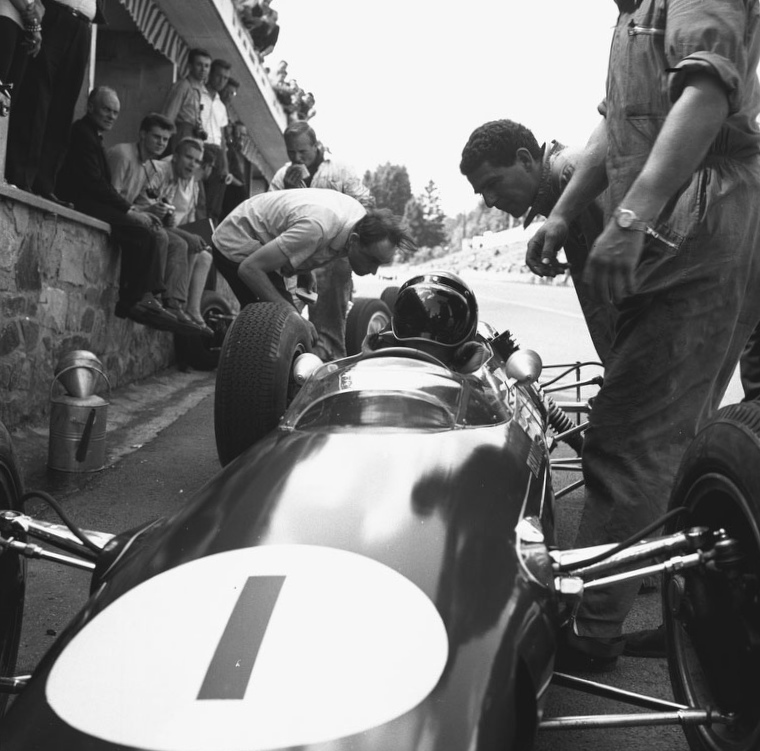
It was Spa – the old Spa. And it was wet. Atrociously wet. Thus Jim Clark scored his first World Championship win of 1963
And so they went to Spa. Jim traditionally stayed at the Val d’Ambleve near Stavelot and did so in 1963: the 25s would be towed to and from the paddock area every day. Jim flew with Colin Chapman and Trevor Taylor on D-Day, June 6. The Ardennes forest had nineteen years before been ablaze with the Battle of the Bulge. Practice at Spa would begin on Friday.
In the Clark track bag: his new, dark blue Bell Magnum helmet and rounded bubble visor Bell had given to him at Indy. All previous visors used by Jim had been attached to his Herbert Johnson or Everoak helmets by a crude strap and a single stud. After last year (1962), when the rush of air down the Masta straight had actually loosened Jim’s regular white helmet peak, obliging him to rip it off one-handed whilst winning the race, Jim was delighted to see that the new Bell visor was fastened by three big pop-on studs. With rain always on the agenda at Spa, this would be the perfect try-out. Left in the bag, therefore, was the white Bell peak he had used at Indy, Mosport and Crystal Palace (ready for Dan Gurney to borrow!). If it was dry, he would just run the helmet without the peak. If it was wet, and providing he liked it in practice, he would try the bubble visor.
Lotus had another airflow development, too: Colin’s latest idea involved a a large opening at the front of the screen and a lip on the cockpit surround. This would channel air up and over the driver, reducing buffeting and allowing the windscreen to be cut lower, thereby improving visibility. Again, the high-speed Spa circuit was the obvious venue on which to try the new device. In the dry, in 1962, Jim had won at an average of 133.98 mph – this on a lap that included a 40mph mid-corner speed at La Source hairpin. With more power from the flat-crank Climax, more grip from the Dunlop R6s and some significant re-surfacing, lap speeds – and top speeds – would be higher still in 1963.
It is hard to imagine today what it was actually like at Spa back then – out there on the old circuit, on a thin ribbon of public road bordered by such routine items as telegraph poles, phone boxes, concrete marker posts, sheer drops, clusters of trees and stone-walled houses. The drivers didn’t wear seat belts; the cars rattled and shook; and Jim, in the monocoque Lotus 25, was lying at about 25 deg to horizontal, his rear-vision mirrors right back near his helmet line so that he had some sort of angle of view. To see clearly in them, however, he had to turn his head consciously from side to side. This was another reason he avoided the helmet peak for Spa.
The right foot was held flat, hard down on the throttle, for minutes on end, even though the road was in reality only straight into and out of La Source, down the hill past the pits and on the sections of road immediately before and after the famous Masta kink (which was also taken flat in fifth – or sixth if you were a Ferrari or Richie Ginther trying BRM’s new six-speeder). The rest of the time, the drivers were threading their F1 cars through the needle, using all the road, accelerator against the stops. The lap length was 8.76 miles and the lap time was just under four minutes – or just over it, if you were Phil Hill in the new, disastrous, ATS, or Tony Settember in the new American F1 entry – the Scirocco-BRM.
After the simplicity of of the 23 at Crystal Palace, the 25 around Spa initially felt appalling. The high-speed oversteer was frightening…and still the dreaded ZF transmission kept jumping out of gear. Mid-corner.
Adding to the feeling of foreboding on the circuit that Jim had hated since his first appearance there, in 1958, when Archie Scott-Brown had lost his life, and then 1960, when both Alan Stacey and Chris Bristow had been killed in Jim’s second F1 race, Trevor Taylor was also in trouble in the second 25. After finally discovering that his car had been running only on two-thirds throttle at Monaco and then in first practice at Spa, Trevor would be dispatched from the pit lane on Saturday with a rear suspension bolt still lose. Unsurprisingly, he crashed heavily when the rear wheel suddenly canted inwards. A stone marshals’ post took the impact; Trevor, amazingly, was able to step free with a badly torn thigh muscle. Hero that he was, Trevor still started the race on Sunday in the spare 25.
Jim’s car felt little better on Saturday. I think this was one of the first examples of Jim not giving 100 per cent until he really needed to do so: Spa was dangerous enough as it was without having to stretch the limit in practice. He would always give his maximum in the race but in practice, until he was comfortable, particularly at Spa, he would leave some margin. As a last resort, as it turned out, Cedric Selzer and the boys fitted to Jim’s car the gearbox from Trevor’s crashed 25.
In between times, Jim tried the new aeroscreen (which he liked) and the bubble visor (which he didn’t); it’s convex shaped distorted his peripheral vision. He would revert, wet or dry, to his regular Panorama goggles and he would try the aeroscreen again at Zandvoort, at the Dutch GP.
Jim qualified only seventh at Spa after those two days of practice. Graham Hill was on the pole for BRM, with Dan Gurney alongside him in his new Brabham. Then, third quickest, came the fiery Belgian, Willy Mairesse, playing the number two role to John Surtees at Ferrari. They formed up on a wet track.
As at Indy, I can do no better now that to hand over to Jim himself, this time as told to Graham Gauld in Jim Clark at the Wheel:
“I was right behind Willy on the grid. This set me thinking that he was inclined to be exuberant, to say the least, and that in his home race he would be rather anxious. I reasoned that a combination of an anxious Willy trying to take a Ferrari off the line in the wet at Spa was going to be exciting and that he might not take too good a job of it. I knew that if I got a good start I would have to take him on the pits side even if it meant going across the yellow baulk line. All this ran through my mind, sitting there, so that by the time the starter had raised his flag I had the Lotus on right lock and the clutch ready to bite. The flickered and came down, I let in the clutch with a bang, scooted forward and to the right of Willy, who, as I thought, was standing still with spray being sent up in the air by his spinning wheels. He just stood there without moving an inch. Mine was a legitimate start, but I didn’t expect, in my enthusiasm, to lead everyone away from the start from the front row but this is exactly what happened. As I went into Eau Rouge I glanced in the mirror and saw Graham Hill grimly on my tail and just pressed on. As I said earlier, it was wet and I enjoy driving in the wet, but, after all, this was Spa, and I kept well within my limits.
“At the end of the opening lap Graham was still on my tail but I didn’t know until later that we had both left everyone else behind and we had a ten-second lead. We stayed this way for quite a while and then I began to get the old gearbox trouble again. It started dropping out of top and on Spa this is not funny. You wind the car up to, say, 9,500rpm on the straight when suddenly all hell is let loose and you make a grab at the lever and pull it back into gear before you put the revs right off the clock. Once this happens you start waiting for it to happen again. By now, the problem was becoming acute. Here I was, with Graham Hill still on my tail, with a gearbox which threatened to do something nasty at any moment. I decided to drop 300rpm through the Masta kink for safety’s sake but I was still doing about 150mph. This meant that, as I approached the kink, I would be holding the gear lever in place with my right hand and moving my left hand down to the bottom of the steering wheel. I did this because the car has a nasty tendency on this kink to move from one side of the road to the other and I often needed correction. By keeping my hand low on the wheel I could twirl the steering wheel round with one hand and hold the slide – but doing this for lap after lap was not funny.”
Jim still retained the lead. Graham Hill faded and then retired. As another precaution, Jim began to take fifth gear corners in fourth, luxuriating in the feel of being to hold the wheel with both hands.
Then, in true John Frankenheimer fashion, the rain grew more intense. Visibility disappeared. Standing water drowned the valley. Jim added a full three minutes to his lap times..but still pulled away.
This is how Bruce McLaren described the downpour in Autosport the following week:
“The rain was bouncing two or three feet off the road. We were crawling around in the spray – and, for once, it was just as bad in the pit area, so the crews could appreciate how bad it was on the rest of the circuit. The mechanics were sheltering under their signal boards but, with two laps to go, I saw mine pointing excitedly down the road in a fashion that said ‘you’re catching someone. Get with it!’
“So I got with it, and, in another half lap, I could make out two huge palls of spray – two racing cars ploughing along in front of me. There was so much spray that it was hard to tell how far they were ahead, but I knew that one would be Jim, who had lapped me earlier, and I guessed that the other would be the second-place man, Dan in the Brabham. As I got passed the first conglomeration of steam and spray I was that indeed it was Dan. I passed Jim further up the hill, just in case that it was him that my pit had been referring to, but by now he had backed off considerably, so I guessed that it wasn’t. By passing Jim I gave myself an extra lap to do and he received the chequered flag behind me as I went on to complete the lap and take second place.” (This result actually put Bruce into the lead of the 1963 Drivers’ Championship and Cooper on top of the Constructors’ table.)
Bruce began that column thus:
“Relaxing on one of those after-race mornings with a cup of coffee on the patio of our hotel at Stavelot” (Jim’s hotel) “with the sun shining brilliantly and the birds feeling like Jim Clark and consequently singing…it was difficult to imagine that the previous afternoon we had driven though the worst thunderstorms I’d ever seen, let alone raced in.”
Jim was relieved to win – relieved to have survived. Both Tony Rudd (BRM) and Chapman (of course) had pleaded with the organizers to stop the race; Rudd had even sprinted across the track in order to speak to the Clerk of the Course face-to-face. Their requests had been denied. Jim stepped from the 25 smeared in oil, his blue Dunlops sodden. He quickly changed into dark chinos, a polo shirt and his Pure jacket (never mind the Esso sponsorship!). On the podium, up above the old pits, by the control tower, his wet hair slicked backwards, he cradled the traditional Spa bouquet. This was the first Grand Prix he had won more than once. A cup of tea – in the Esso caravan, of course! – was very much in order.
Zandvoort, two weeks later, was next on Jim’s agenda. There was at last time to return to London for a couple of days of fun – and then to see what was happening up on the farm.
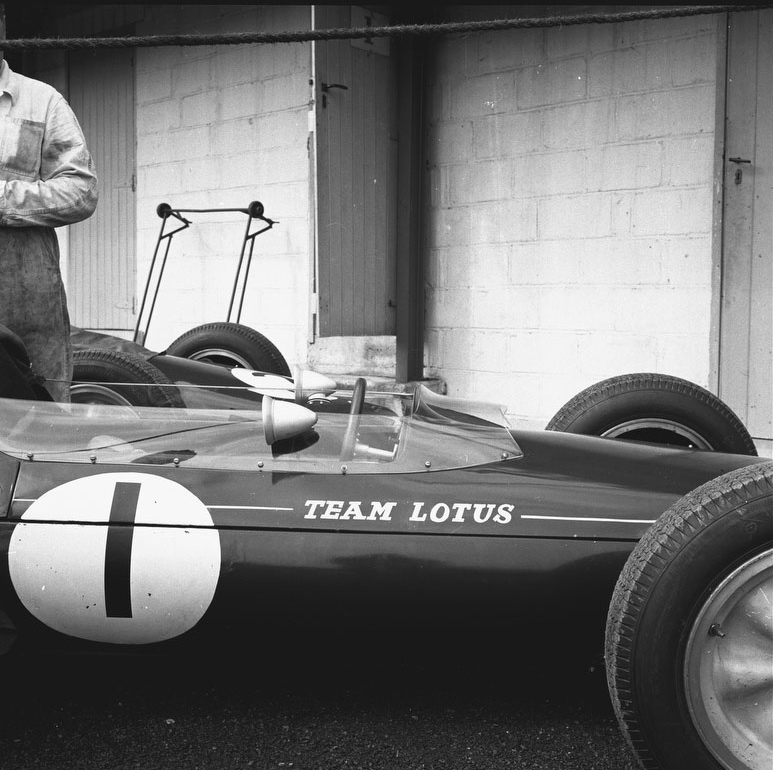
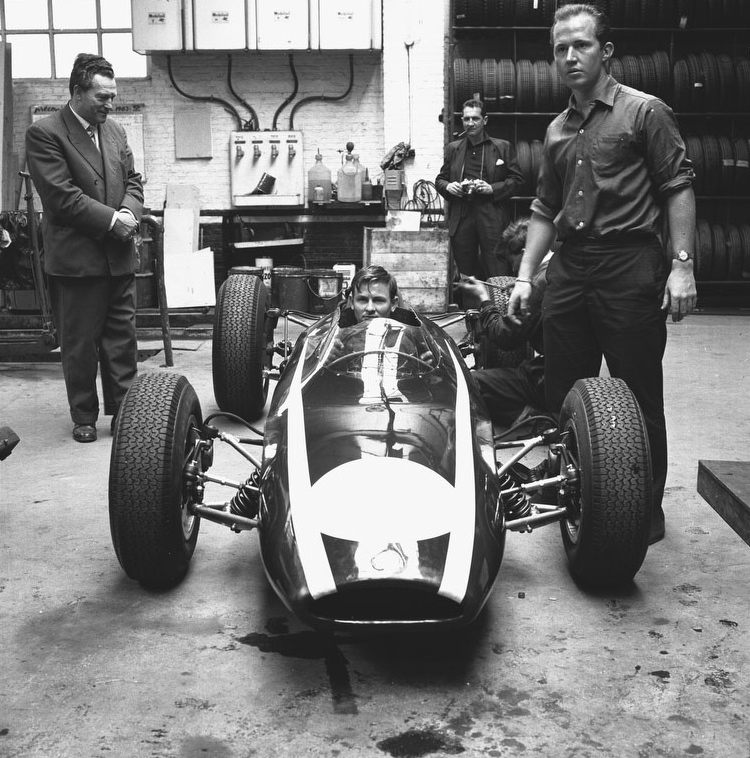
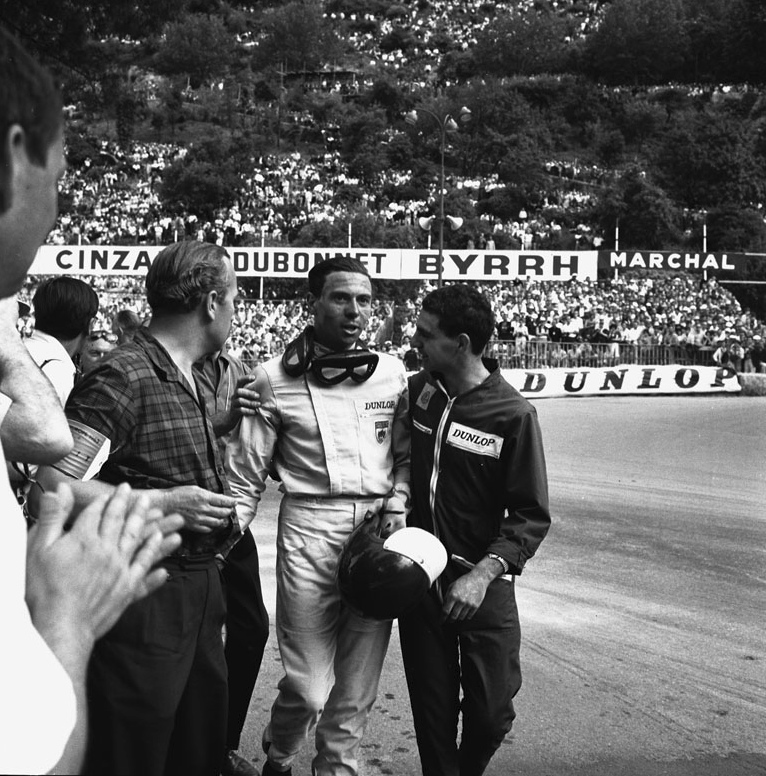
Images: LAT Photographic; Peter Windsor Collection Captions from top: Jim streams past the pits in the late-race deluge; the Val d’Ambleve as it is today – little changed but for a very nice-looking timber extension out the back; Jim tried the Bell Bubble and the new aeroscreen during dry practice; another shot of the new visor/windscreen – note the carburettored spare 25 in the background. Trevor Taylor would race this after his practice shunt; side view of the new aeroscreen – note thicker, rather odd-looking “Team Lotus” signwriting, probably a result of this entire new top section being prepared in a rush at the factory; while Jim Clark began a long streak of peakless races at Spa, Dan Gurney used a standard Bell white peak in this race instead of his regular black; the exit of the Masta kink as it is today; modern F1 drivers, if they do see the old circuit, cannot imagine that this was a part of it all; Bruce McLaren and the Cooper team in their Stavelot garage on a practice night. That’s Eoin Young on the right: Eoin was Bruce’s right-hand-man and Autosport ghost-writer. Now retired in his native New Zealand, he became one of the world’s pre-eminent motoring journalists
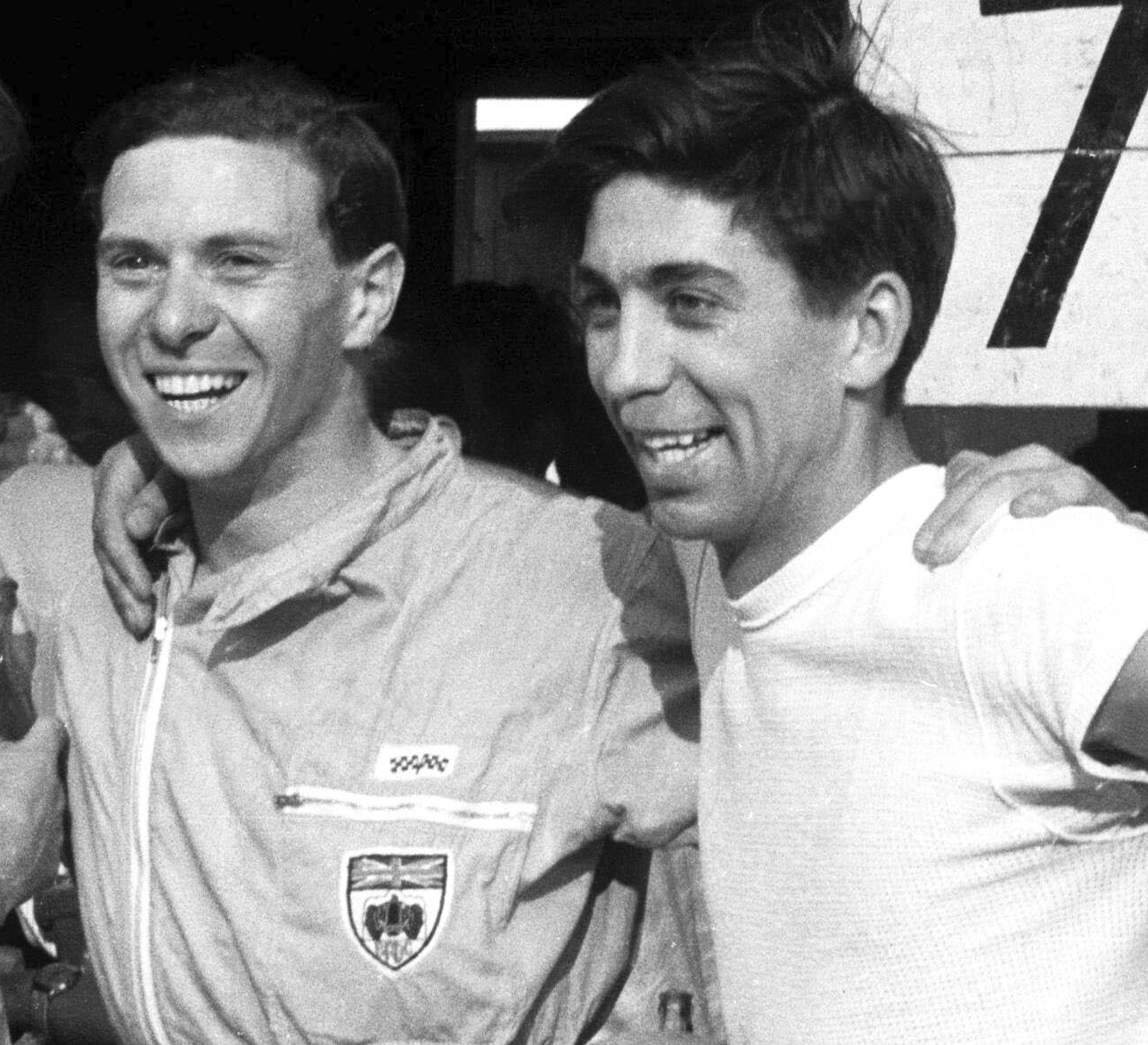
From Indy Qualifying, Jim flew to Nice from London, where he had been staying on Monday and Tuesday in the apartment of his friend, Sir John Whitmore. They had first met in 1959, when they had shared Ian Scott-Watson’s Lotus Elite at Le Mans, and they had stayed in touch ever since. Their bond, ironically, had been their shared despair after Alan Stacey’s death. A farmer like John and Jim, Alan had been hugely helpful to Whitmore in the early years. At Le Mans in ‘59, with Alan now on the verge of a full F1 career and driving at Le Mans a factory Lotus 17 with Keith Greene, the three of them had had a ball, with Alan very much playing the role of the mentor. Early in that Le Mans week, over dinner at the Team Lotus hotel in a little village away from the main town, John had read aloud a report in L’Equipe about one of the drivers having an artificial leg. Jim, still very new to motor racing, was both appalled and disbelieving. “Disgusting,” he said, making it unclear whether he was talking about the lies in the article or the concept itself.
Jim was up bright and early the following morning, in his usual way, and knocked on the door of the room being shared by John and Alan.
“Come on. Wake up. Rise and shine. Time to get going.” Then silence. Jim had seen Alan’s prosthetic leg lying on the floor by the bed. The next sound was of Jim’s feet, running as far away as possible.
A few days later, John and Alan were still laughing at Jim’s embarrassment…
Alan was killed at Spa the following year in a Team Lotus 18 – in the second Grand Prix of Jim’s career – when, it is said, he hit a bird at high speed. (Some people close to Team Lotus are convinced that the steering column broke on Alan’s car and that the “bird” story was merely a cover.) Jim was of course devastated – but thought instantly of John, who had been even closer to Alan. Thus the mateship.
John’s small two-bedroom, two-bathroom flat was in Balfour Place, Mayfair – an ideal location for racing drivers on the move. The Lotus factory at Cheshunt was half an hour away. And London was great for Heathrow and Gatwick airports, Crystal Palace, Brands Hatch and of course the A1 – the road to Scotland. After days – weeks – of non-stop travel, these two days in Mayfair for Jim offered a welcome break. John’s wife, Ghinsella, caught up with Jim’s washing – including his blue Dunlop overalls – and Jim finalized the detail arrangements of his travel over the next few weeks. He would return immediately to Indianapolis after Sunday’s Monaco Grand Prix; then he would race at Mosport; then, two days later, he would race at Crystal Palace. He’d return to Balfour Place at that point before leaving for Spa, for the Belgian GP.
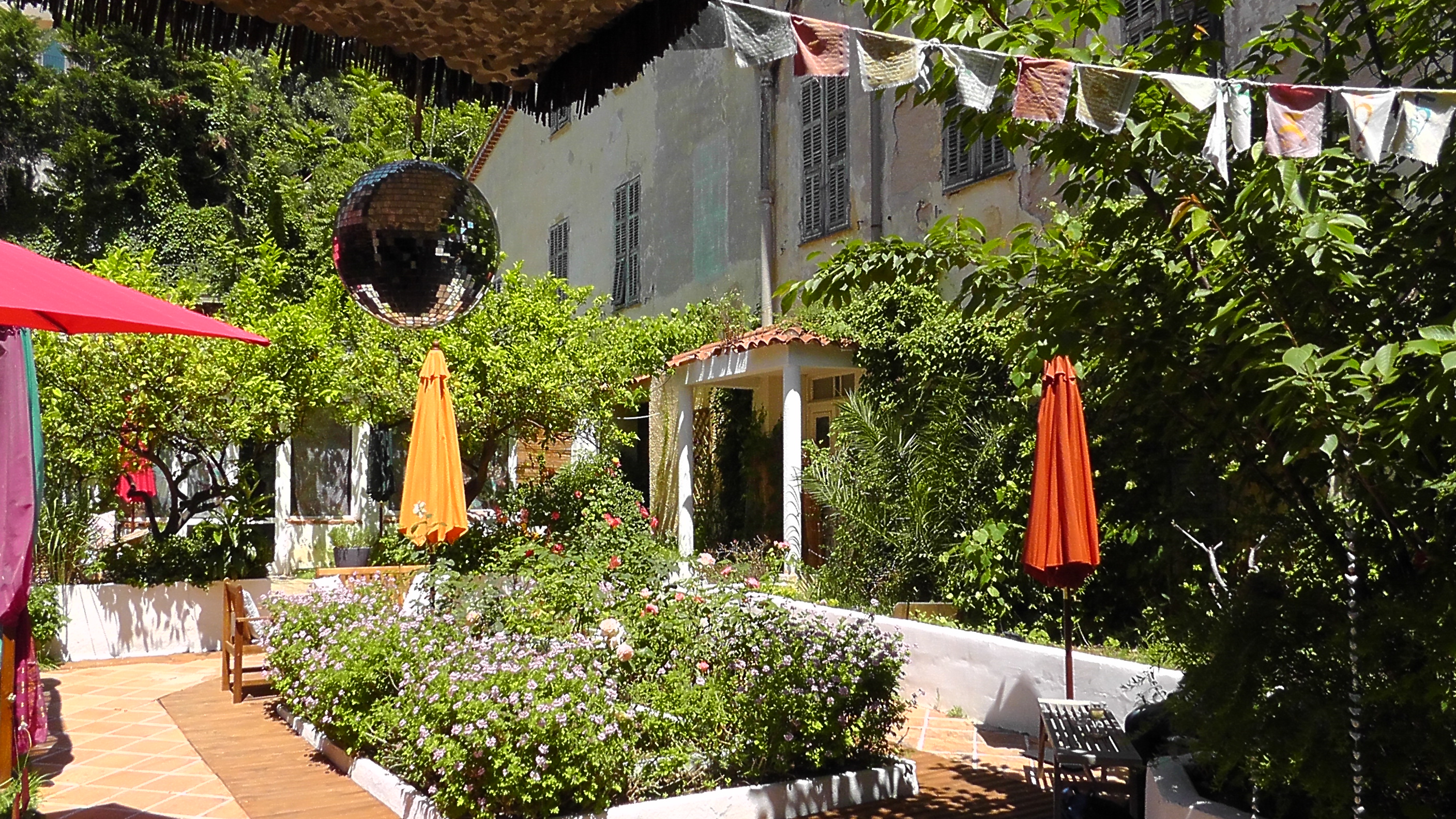
Nice was bright and sunny when Jim and Colin arrived on Wednesday, May 22. They drove out to Monaco by the coast road, stopping on the way to check in to their regular hotel in Eze sur Mere. Little more than a railway station and a small café today, Eze in 1963 was somewhat more prosperous, boasting a couple of good restaurants, a garage and a small market. The Team Lotus hotel, LaBananeraie, was perfect for the group’s needs, boasting a spacious, secure, three-car garage out the back in which the Lotus 25s could be housed. Towing race cars to circuits on public roads was not only normal back then; it was a part of the show. Spectators would line the streets, awaiting their favourites – and sometimes, if the travel distances was short, the cars would be driven under their own power. Nothing clears a crowd faster than a quick blast of Ferrari V12…
Jim had brought with him to Europe his newly-painted Bell Magnum helmet and wore it for the first time at Monaco on Thursday, when he was fastest. The overall look was completely different: it was as if the slightly thicker Bell had been specifically designed for the gorgeous, slow-slung lines of the Lotus 25. And Jim again wore a white peak! It was as if the ’63 season was entering a new phase, and the Jim Clark era was now upon us.
Jim was unnerved for a second or two on Thursday when he spied a black cat running across the track by the pits. He wasn’t about to label himself “superstitious” but, in that world, back then, he wasn’t going to go out of his way to walk under ladders or spill salt on the table. He was delighted, then, to see the car suddenly freeze and scamper back the way it had came. Nor was he reluctant to tell a few of his friends about it, either!
Practice over – and the temporary pole secured – Jim then joined his fellow drivers in a GPDA meeting at the Hotel Metropole. These gatherings had been a regular fixtures at F1 races ever since the drivers had first got together in a formal way at Monaco, in 1960. As a group, they were now respected by the team owners and by the circuit organizers – something that couldn’t be said about the drivers’ group of the 1950s, the UPPI (Union of Professional Pilotes International). Jo Bonner presided over the GPDA meetings; Autocar’s Sports Editor, Peter Garnier, recorded the minutes for posterity. As well as discussing important safety and organizational issues, the drivers also took time to talk to one another. In Jim’s case, he was keen to learn about Dan Gurney’s first drive in the new Brabham (Dan had been eighth quickest on a troublesome day) and to discuss the growing shortage of Coventry Climax Mk 111 engines. Just as Dan had been obliged to miss Silverstone, now Jack Brabham himself was flying straight back to England to pick up a replacement for the engine that had failed that morning. There was also general chit-chat about the new, sticker Dunlop R6s, now re-designed around the 1962-spec 28 deg cord angle. In theory, this greatly improved the tyre’s breakaway without detracting from its better adhesion. A bit like Pirelli reverting to Kevlar casing in 2013!
Problem was, the new Dunlops were also in short supply. The bulk of them would only reach Monaco, by truck, late on Thursday night.
Matters of Moment in that GPDA meeting: the prize for the best-run Grand Prix would go to Zandvoort. The Taffy von Trips trophy for the best private entrant would go to Count Carel de Beaufort; and Graham Hill would receive a Roy Nockolds painting for winning the 1962 World Championship.
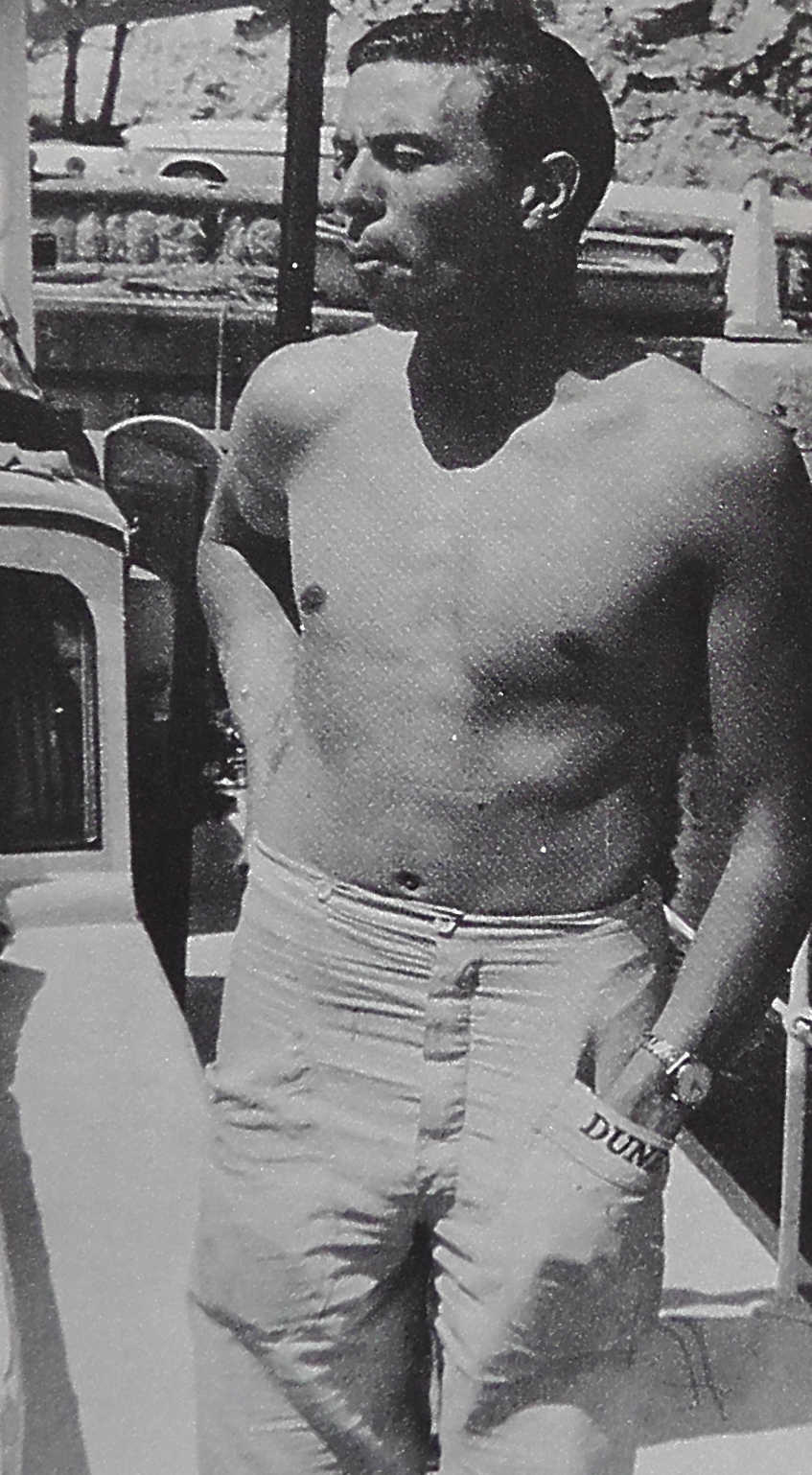
F1 practice was also held on Friday back then – but at the absurdly early hour of 7:30am, by which time two Formula Junior sessions had also been staged. The idea was to have everything over by 9:00am, thus allowing the town to go about its usual business. The track was cold but Jim was faster still. Then, with the day still ahead, it was all over. Jim joined other drivers on Carribee, the yacht hired by Ken Gregory (Stirling Moss’s manager) and the former driver, Mike McKee. After a few hours in the sun, enjoying life with his mates Bruce McLaren, Dan Gurney and Lorenzo Bandini, it was back to Eze for a look at the cars and an early dinner at La Bananeraie. It turned out that Cedric Selzer and the boys had had a relatively easy day with the 25s – particularly as a nice blonde seemed to have joined the team as wheel-polisher and go-fer. Jack Brabham, meanwhile, had flown his own single-engined Cessna 180 back to England to pick up a replacement Climax engine. He planned to be back in Monaco by late afternoon but was held up by bad weather in France. He didn’t make it until about 5:00pm on Saturday – by which time the Climax in Dan’s car had also burned a piston.
Jim was again quick on Saturday afternoon, when the session was run from 2:00pm – 3:15pm. Perenniel gearbox worries aside, the 25 was running perfectly – so much so that Jim was happy to run full tanks for most of the afternoon while he pushed the R6s to the limit. (With more grip on line, he was only a second slower than his Thursday, empty-tank, pole time.) Jim also completed a few laps in the spare car (fitted with the old carburettored Climax engine), lapping as quickly as the Ferraris and fourth-fastest overall. The Brabham engine issues remined dire but everyone was deeply moved when Jack stood aside to let Dan have the only spare Climax for the race on Sunday. Drawn to Jack because of his decision to run a Lotus 24 for the first half of the previous season (while he was working on his own car) – and also because of the Indy ties with Dan – Colin Chapman then offered the spare Team Lotus 25 for Jack to race on Sunday. The 1959-60 World Champion readily agreed, even though he would be unable to put in a single lap with it before the flag dropped.
Serious work over for the day – Jim was on the pole from Graham Hill, John Surtees, Innes Ireland and Dan Gurney – everyone settled back to watch the Formula Junior race. An electrical problem had ruined his day when he was leading the FJ race by a mile in 1960, so he was not really surprised when Peter Arundell, who had won his heat in the Team Lotus 27, retired from the final early with a blown engine. Richard Attwood went on to win in the MRP Lola from an excellent Frank Gardner (Brabham).
Sunday, May 26, 1963 was a gorgeous day – much like May 26, 2013. There were no support races; instead, great F1 drivers from the past were paraded in open sports cars. Prince Rainier drove a few laps of the circuit in his Porsche Super 90. The drivers, staring at 100 laps of Monaco, gathered in the pits beneath the trees.
Louis Chiron, Clerk of the Course, presided over a shambolic drivers’ briefing on the grid. Photographers pushed and shoved; some drivers listened, others joked with friends. “Remember it is a sport,” said Chiron. “Good racing, good driving, good amusement and God bless you.” As Bruce McLaren later, “We knew how hot it was going to be and we knew that it wasn’t exactly going to be very amusing…”
Jim was instantly in trouble. In total contrast to his full-tanks run on Saturday, his engine coughed badly under acceleration. He couldn’t believe it. Perhaps it was a plug or something. Perhaps it would clear itself over the opening lap.
It did not. The mis-fire persisted. Graham had unsurprisingly out-dragged him into Ste Devote and down out of Casino Square, and into Mirabeau and the Station Hairpin, he was all over the BRM. Out on the seafront, however, and on the fast run through Tabac and towards the Gasworks Hairpin, the BRM pulled away as it was a 2-litre car.
Jim couldn’t understand what was happening. And so he just drove with the problem, trying to apply the power in different throttle loads – and trying, of course, to find ways of braking so late that he could sustain an attack.
It’s interesting to note, I think, that very, very few reports of the day mention Clark’s problems in this early phase of the race. Observers and spectators were enthralled, instead, by Jim’s attempts to outbrake Graham and his BRM team-mate, Ritchie Ginther, into the Gasworks Hairpin – and by the BRM drivers always regaining the initiative under acceleration. It never occurred to reporters that Clark was adjusting his driving in order to compensate for a problem. They saw Jim hit the cement dust bags protecting a fire hydrant with the left rear wheel on about lap 15 and they put it down to “Clark under pressure”. They saw Jim throwing the 25 around with armfulls of opposite lock and they just assumed he was having fun…
It was when the engine problem began to go away that Jim worked out for himself what had been happening: “The trouble stemmed from the two little pipes which stuck up behind my head and above the engine. These were fuel tank breathers and at the start, with full tanks, they tended to blow excess fuel out of the top whenever I accelerated hard. This would blow fuel straight back down the injector pipes and thus richen the mixture. The engine would bang and splutter. It was murder. Whenever I was out on my own with no-one around I could scramble through the corners and have the car running properly before anyone noticed but when, in the early phase of the race, I was fighting both Graham and Ritchie, I kept losing places. I’d pass Ritchie into a corner and then there would be this bubble, bubble, snort, bang and while I was trying to clear the system Richie would pass me again. Eventually, though, I managed to get with it, pass Ritchie and pull away. Of course, as the race progressed, less and less fuel came up the breathers and the trouble gradually disappeared.”
Jim was leading easily – just as he had led the FJ race in 1960 and then again the Grand Prix in 1962 – when it all went suddenly, finally, wrong. Wary of the gear selection trouble that had coloured the early-season races, he was now changing gear nice and precisely, easing the lever into the next slot without any strain. Suddenly, into Tabac, changing from fourth to third, the gearbox jammed. He still had drive – in fourth gear – but the gear lever was in “neutral”. He tried the lever again – and suddenly the car was in second, spinning itself to a standstill in the middle of the Gasworks Hairpin. Declutching did nothing. The car was locked in second. Jim’s first reaction was to jump from the 25 and thus to warn a fast-approaching Graham Hill, who at that point was ten seconds behind. Then, drained, he walked quickly back to the pits.
Thus ended Jim’s first Championship Grand Prix of 1963. The gearbox problems would continue (both Trevor Taylor and Jack had transmission problems in the race) but Cedric Selzer was not slow in coming up with solution to the fuel mixture issue: he fitted a motorcycle tap to the cockpit for Spa and gave Jim an instruction he would never forget: “It’s like a factory. It opens up and it closes down!”
They had an early night at La Bananeraie: on Monday, May 27, Colin, Jim and Dan flew from Nice to London on the 6:00am BOAC Comet. From there, via New York and Chicago, they would fly again to Indianapolis. The 500 would take place on Thursday, May 30.
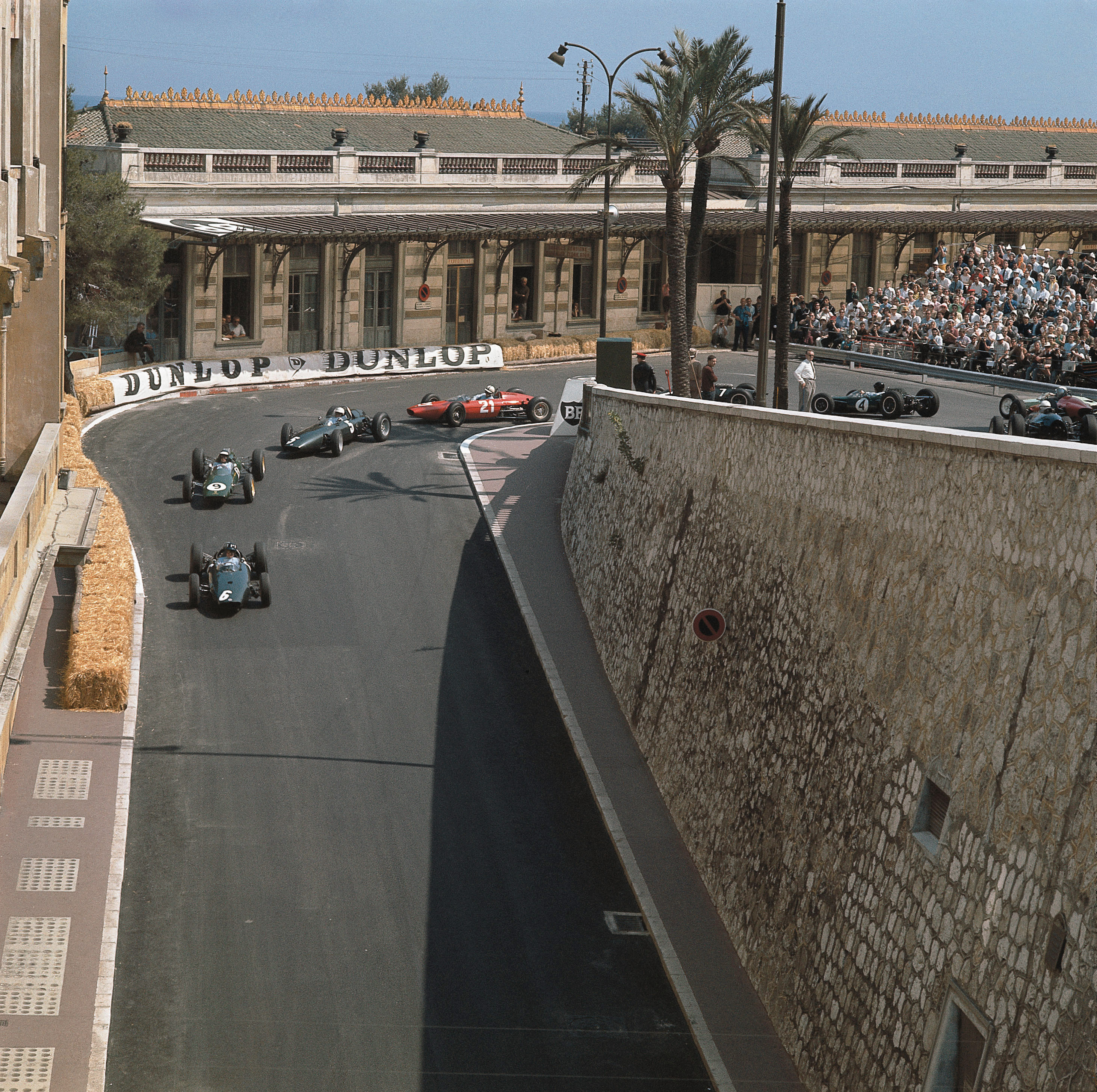
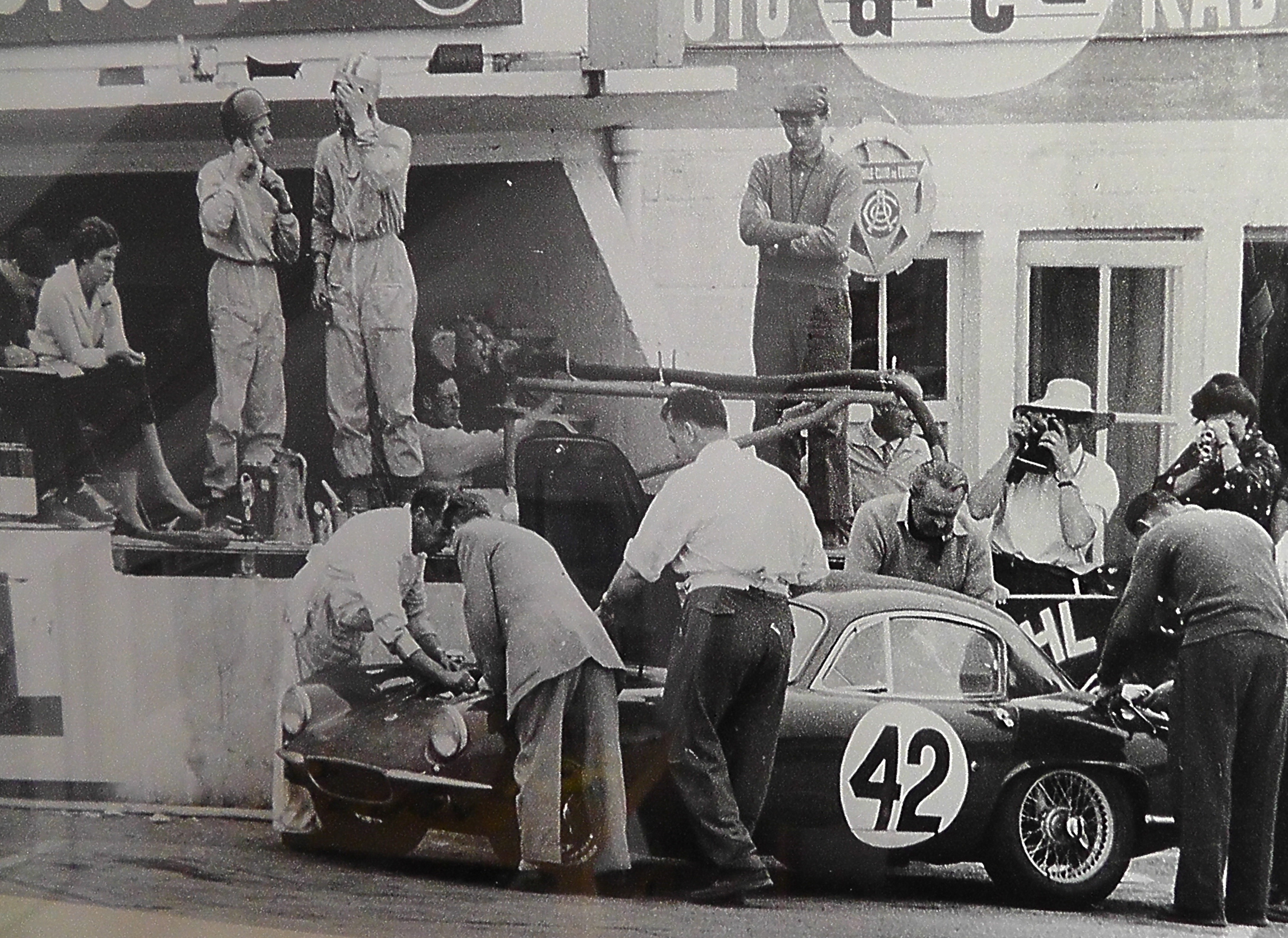
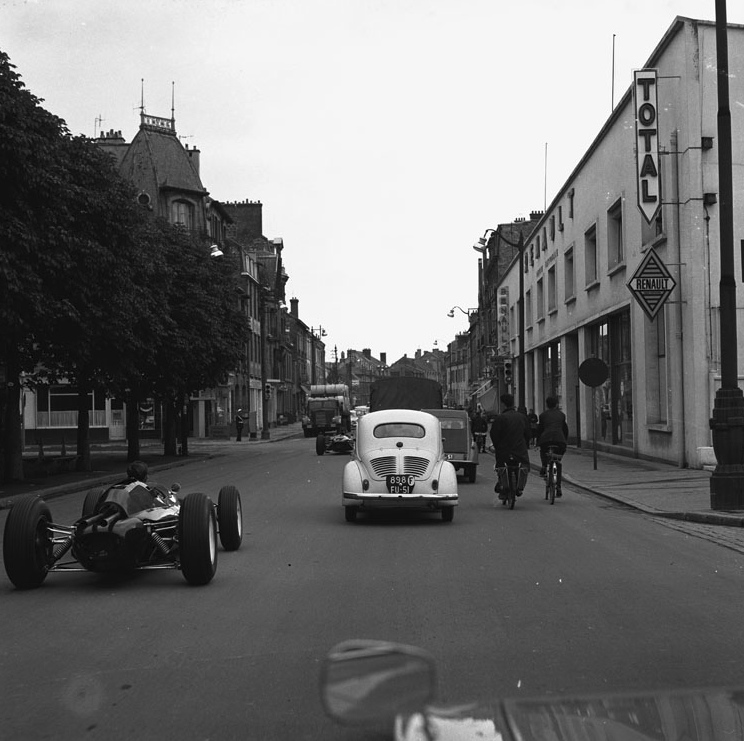
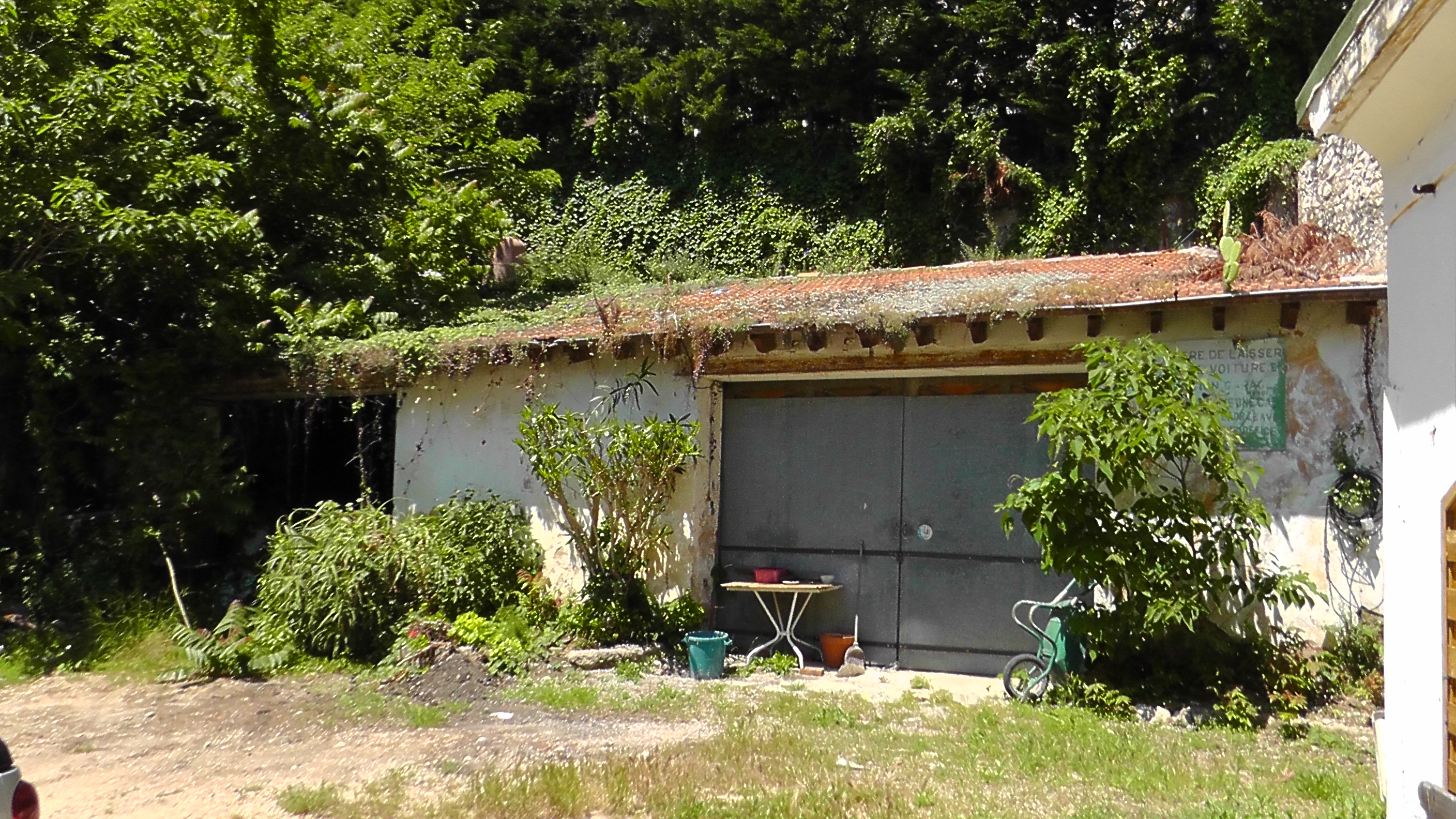
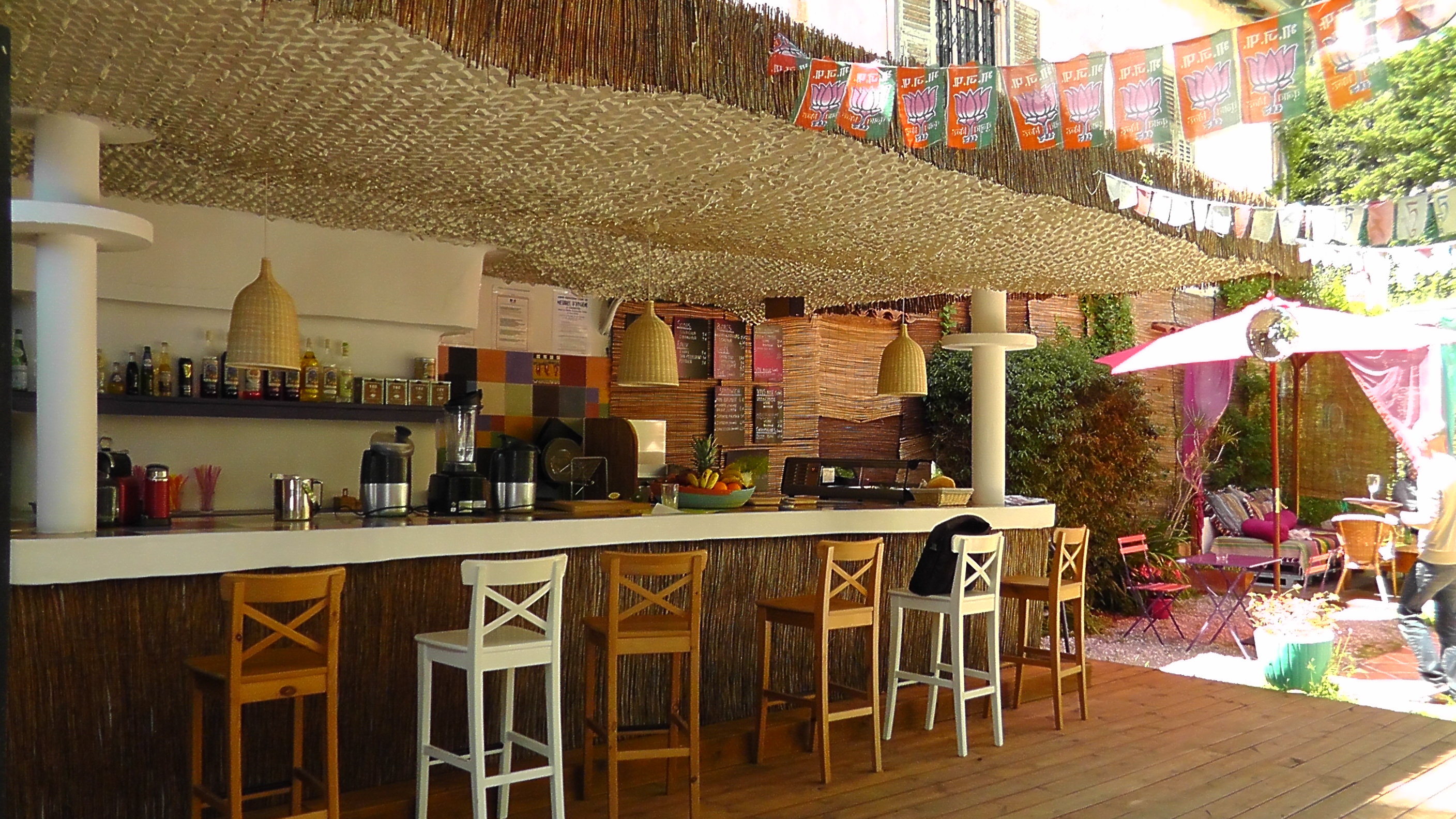
Captions, from top: Lap one, Monaco, 1963. Graham Hill leads for BRM, with Jim lying second in the mis-firing Lotus 25-Climax. Then come Ritchie Ginther (BRM) and John Surtees (Ferrari); Jim Clark and Sir John Whitmore compare notes at Le Mans in 1959 while Ian Scott-Watson’s Lotus Elite is given unscheduled attention. Ian can be seen to the right of Sir John’s legs – and that’s Jabby Crombac with arms folded; Jim shares a laugh with the very excellent Alan Stacey; La Bananeraie as it is today, now run by the grandson of the of the original owners. It’s overgrown but Bohemian: the bulk of the hotel is now an artist’s studio but the bar is still pretty much as it was; F1 cars often split the everyday traffic en route to the track. This is (I think) Bernard Collomb’s Lotus 24; Louis T Stanley’s shot of Jim aboard the good ship Carribbee after early practice on Friday. Note the Dunlop race trousers!; the garages around the back of La Bananarie; the bar/restaurant where Team Lotus refreshed in May, 1963; Cedric Selzer (right) and Colin Chapman (checked shirt) shepherd Jim back to the Lotus pit after his retirement. Photos: Sir John Whitmore, Louis T Stanley, LAT Photographic, Peter Windsor Collection
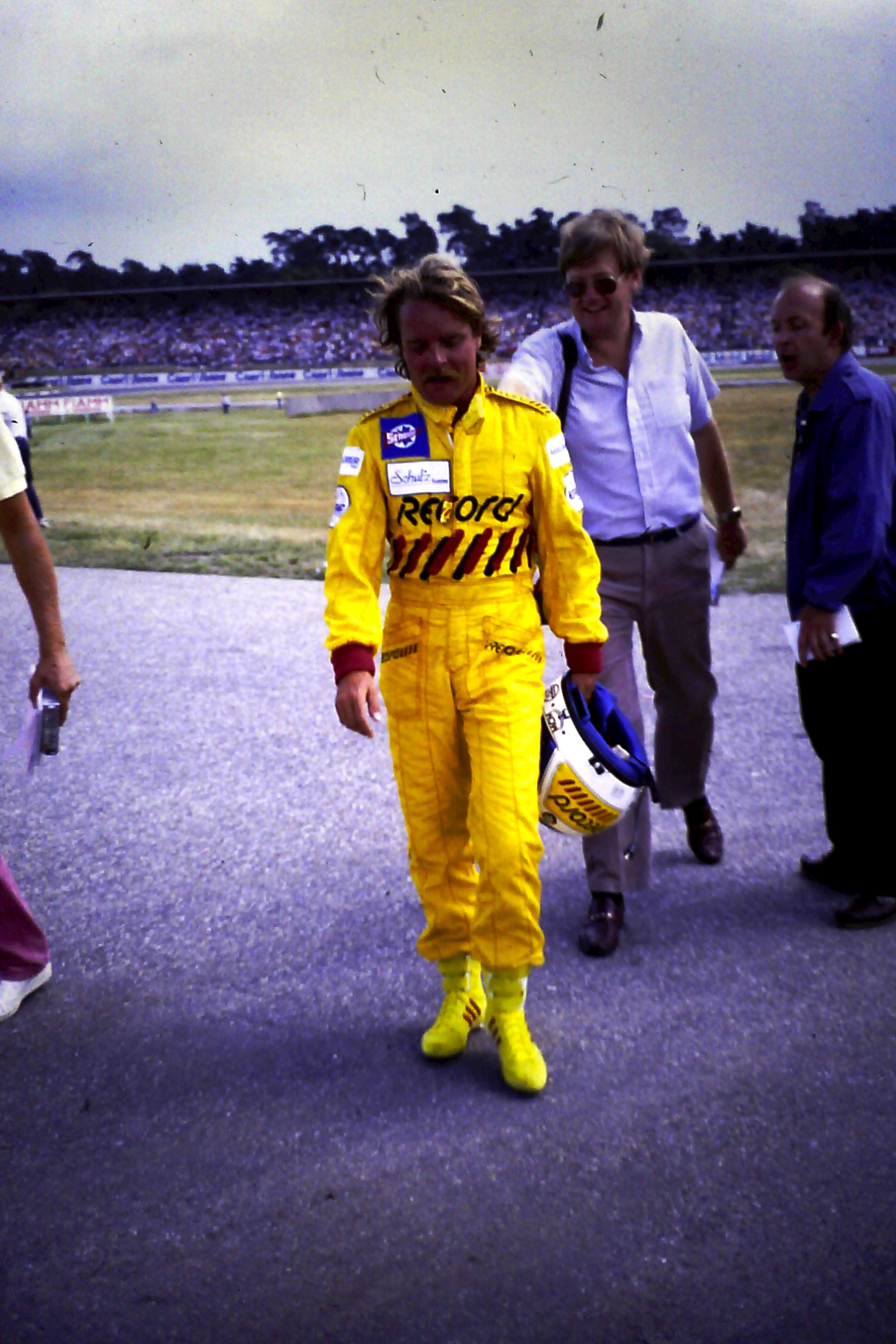 This being the week of Rosbergmania, especially in Germany, let’s have a look at Nico’s Dad, Keijo “Keke” Rosberg, in full yellow (ICI Fibres) regalia at Hockenheim, 1984. That’s Alan Henry and Nigel Roebuck in the background; both of them, to this day, remain close friends with Keke. Note Keke’s attention to detail: he was always immaculate. When he wasn’t in race kit he was usually seen either in a Hard Rock “Save the Planet” leather bomber jacket (long before the rest of the world discovered them) or with something from Etienne Aigner or MCM. Nor is it difficult to see from where Nico’s yellow colour-coding (helmet, gloves, etc) originates. Continuing the Rosberg theme, how about the shot below for good measure? I took this at the Kyalami Ranch, South Africa, also in 1984. Alain Prost’s reading L’Equipe; Nelson Piquet Jnr’s Mum, Sylvia, is walking out of picture in the red bikini; ace photojournalist, Jeff Hutchinson, is thinking about his next story for Autosport; and Nico’s Mum (also walking) and Dad can be seen to Jeff’s left.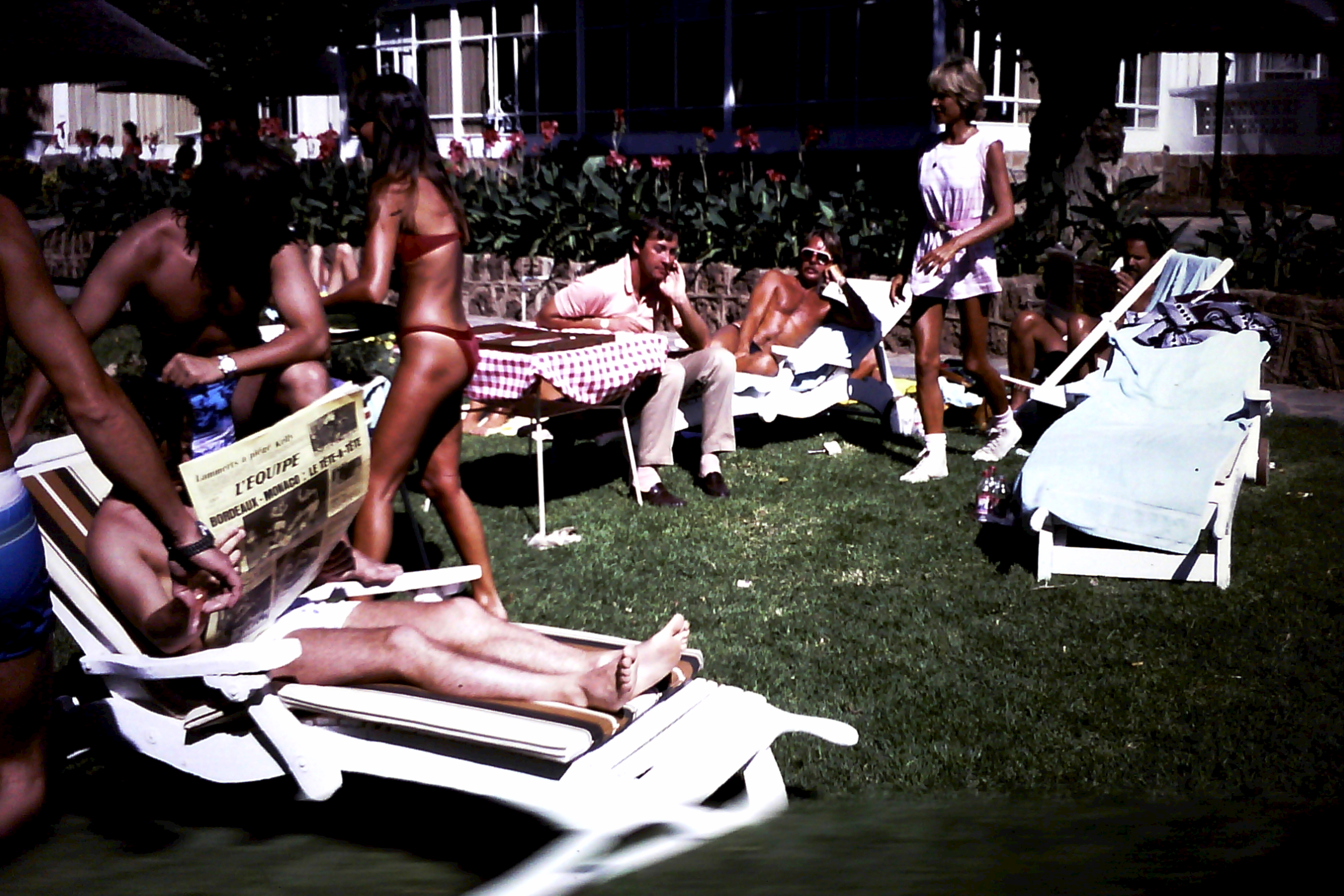

















 peterwindsor.com